
StudyMafia.Org Submitted To: Submitted By:




Description: StudyMafia.Org Submitted To: Submitted By: Studymafia.org Studymafia.org Oral Cancer Table Contents Definition Introduction Symptoms of Oral Cancer Causes of Oral Cancer Risk-Factors of Oral Cancer Prevention of Oral Cancer Diagnosis of
Related Topics
Download Presentation
"StudyMafia.Org Submitted To: Submitted By:" is the property of its rightful owner. Permission is granted to download and print the materials on this website for personal, non-commercial use only, and to display it on your personal computer provided you do not modify the materials and that you retain all copyright notices contained in the materials. By downloading content from our website, you accept the terms of this agreement.
Presentation Transcript
slide1. StudyMafia.Org Submitted To: Submitted By:
Studymafia.org Studymafia.org Oral Cancer<br>
slide2. Table Contents Definition
Introduction
Symptoms of Oral Cancer
Causes of Oral Cancer
Risk-Factors of Oral Cancer
Prevention of Oral Cancer
Diagnosis of Oral Cancer
Treatment of Oral Cancer
Conclusion 2<br>
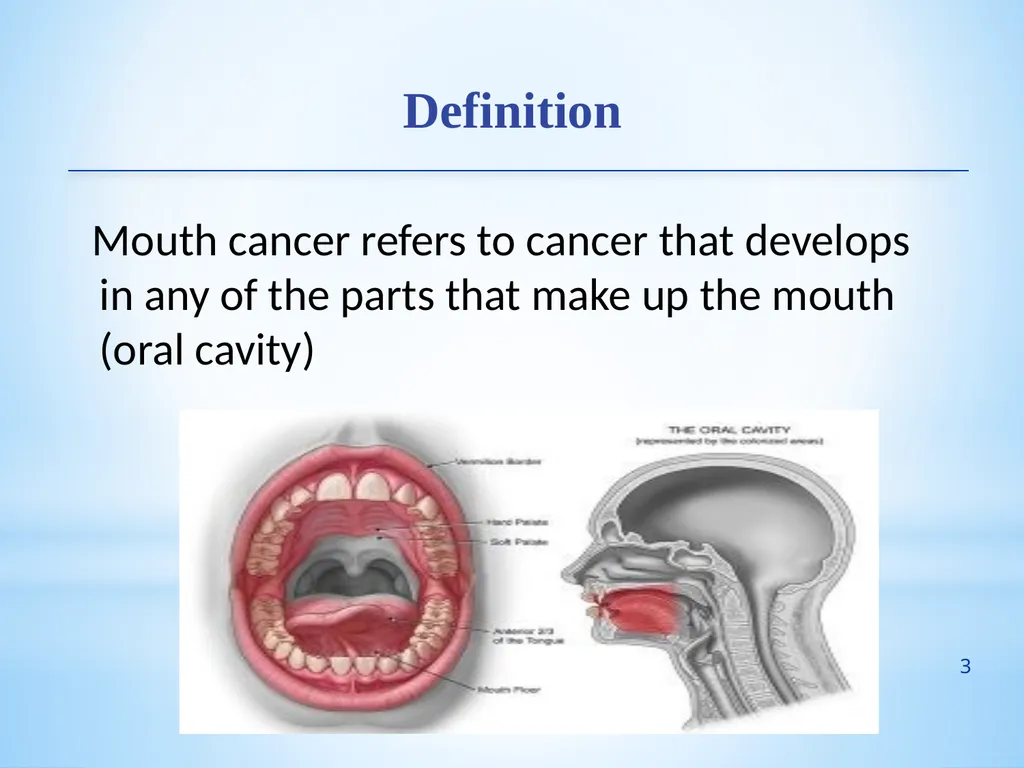
slide3. Definition Mouth cancer refers to cancer that develops in any of the parts that make up the mouth (oral cavity) 3<br>
slide4. Introduction Cancer that occurs on the inside of the mouth is sometimes called oral cancer or oral cavity cancer.
Mouth cancer is one of several types of cancers grouped in a category called head and neck cancers. Mouth cancer and other head and neck cancers are often treated similarly. 4<br>
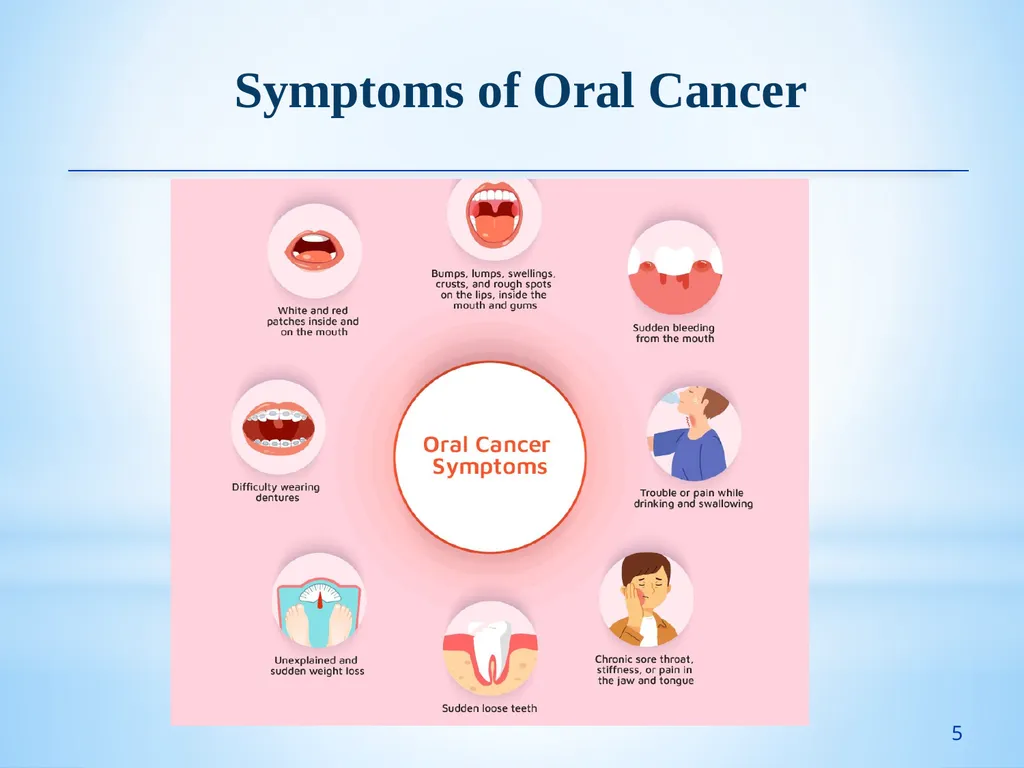
slide5. 5 Symptoms of Oral Cancer<br>
slide6. Causes of Oral Cancer Mouth cancers form when cells on the lips or in the mouth develop changes (mutations) in their DNA. A cell's DNA contains the instructions that tell a cell what to do.
The mutations changes tell the cells to continue growing and dividing when healthy cells would die. The accumulating abnormal mouth cancer cells can form a tumor. ●●●
6<br>
slide7. Causes of Oral Cancer Mouth cancers most commonly begin in the flat, thin cells (squamous cells) that line your lips and the inside of your mouth.
It's not clear what causes the mutations in squamous cells that lead to mouth cancer. But doctors have identified factors that may increase the risk of mouth cancer. 7<br>
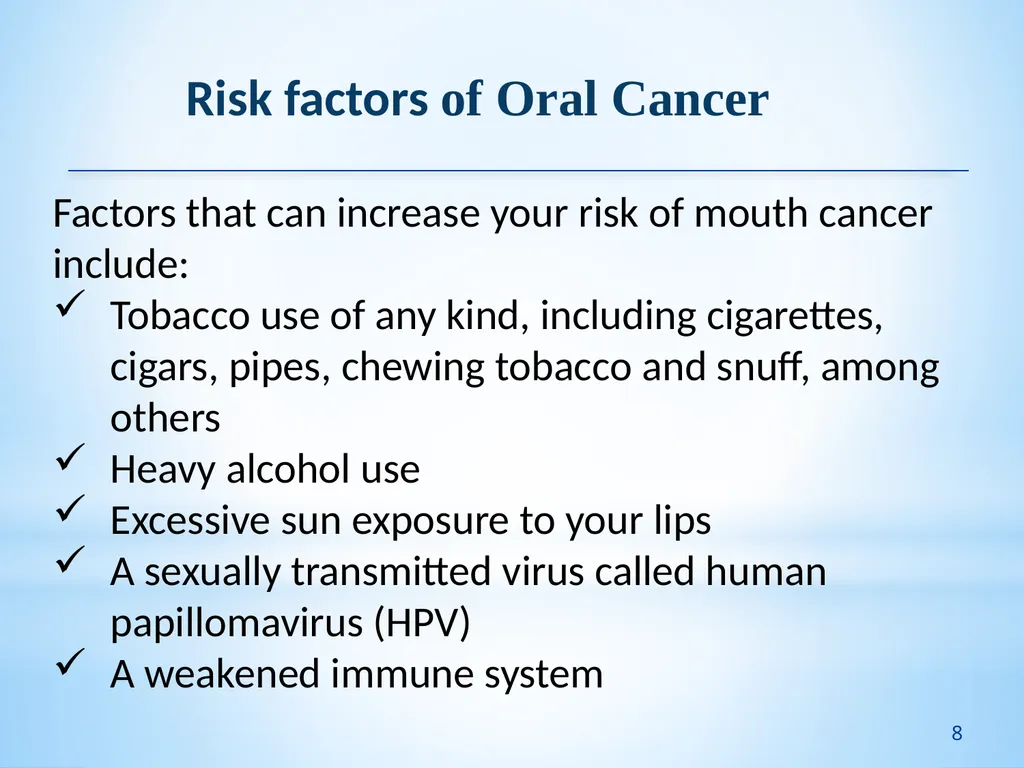
slide8. Risk factors of Oral Cancer Factors that can increase your risk of mouth cancer include:
Tobacco use of any kind, including cigarettes, cigars, pipes, chewing tobacco and snuff, among others
Heavy alcohol use
Excessive sun exposure to your lips
A sexually transmitted virus called human papillomavirus (HPV)
A weakened immune system 8<br>
slide9. Prevention of Oral Cancer Stop using tobacco or don't start:
If you use tobacco, stop. If you don't use tobacco, don't start.
Using tobacco, whether smoked or chewed, exposes the cells in your mouth to dangerous cancer-causing chemicals. ●●●
9<br>
slide10. Prevention of Oral Cancer Drink alcohol only in moderation, if at all:
Chronic excessive alcohol use can irritate the cells in your mouth, making them vulnerable to mouth cancer. If you choose to drink alcohol, do so in moderation.
For healthy adults, that means up to one drink a day for women of all ages and men older than age 65, and up to two drinks a day for men age 65 and younger. ●●●
10<br>
slide11. Prevention of Oral Cancer Avoid excessive sun exposure to your lips:
Protect the skin on your lips from the sun by staying in the shade when possible. Wear a broad-brimmed hat that effectively shades your entire face, including your mouth.
Apply a sunscreen lip product as part of your routine sun protection regimen. ●●●
11<br>
slide12. Prevention of Oral Cancer See your dentist regularly:
As part of a routine dental exam, ask your dentist to inspect your entire mouth for abnormal areas that may indicate mouth cancer or precancerous changes. 12<br>
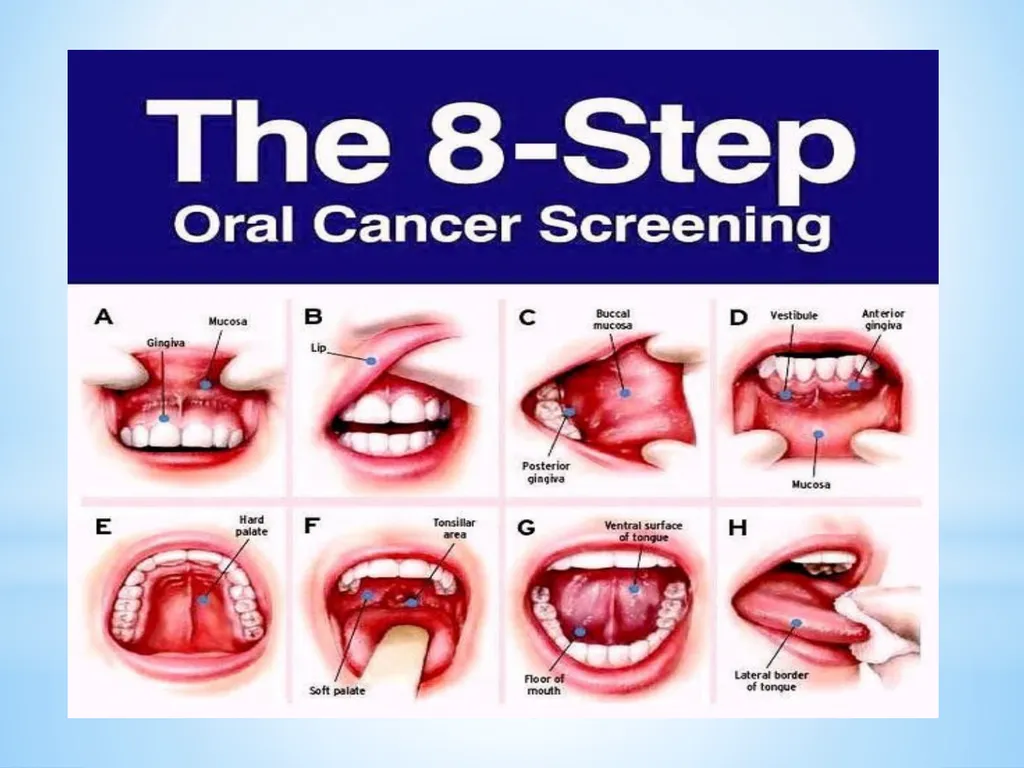
slide13. Diagnosis of Oral Cancer Physical exam. Your doctor or dentist will examine your lips and mouth to look for abnormalities — areas of irritation, such as sores and white patches (leukoplakia).
Removal of tissue for testing (biopsy). If a suspicious area is found, your doctor or dentist may remove a sample of cells for laboratory testing in a procedure called a biopsy. 13<br>
slide14. Treatment of Oral Cancer Surgery carries a risk of bleeding and infection. Surgery for mouth cancer often affects your appearance, as well as your ability to speak, eat and swallow.
Radiation therapy uses high-energy beams, such as X-rays and protons, to kill cancer cells. Radiation therapy is most often delivered from a machine outside of your body (external beam radiation), though it can also come from radioactive seeds and wires placed near your cancer (brachytherapy). ●●●
14<br>
slide15. Treatment of Oral Cancer Chemotherapy is a treatment that uses chemicals to kill cancer cells. Chemotherapy drugs can be given alone, in combination with other chemotherapy drugs or in combination with other cancer treatments.
Targeted drugs treat mouth cancer by altering specific aspects of cancer cells that fuel their growth. 15<br>
slide16. 16<br>
slide17. Conclusion Oral cancer, also called mouth cancer, forms in the oral cavity, which includes all parts of your mouth that you can see if you open wide and look in the mirror.
Your lips, gums, tongue, cheeks, roof or floor of the mouth. Oral cancer forms when cells on the lips or in the mouth mutate. 17<br>
slide18. References Google.com
Wikipedia.org
Studymafia.org
Slidespanda.com<br>
slide19. Thanks To StudyMafia.org<br>
Studymafia.org Studymafia.org Oral Cancer<br>
slide2. Table Contents Definition
Introduction
Symptoms of Oral Cancer
Causes of Oral Cancer
Risk-Factors of Oral Cancer
Prevention of Oral Cancer
Diagnosis of Oral Cancer
Treatment of Oral Cancer
Conclusion 2<br>
slide3. Definition Mouth cancer refers to cancer that develops in any of the parts that make up the mouth (oral cavity) 3<br>
slide4. Introduction Cancer that occurs on the inside of the mouth is sometimes called oral cancer or oral cavity cancer.
Mouth cancer is one of several types of cancers grouped in a category called head and neck cancers. Mouth cancer and other head and neck cancers are often treated similarly. 4<br>
slide5. 5 Symptoms of Oral Cancer<br>
slide6. Causes of Oral Cancer Mouth cancers form when cells on the lips or in the mouth develop changes (mutations) in their DNA. A cell's DNA contains the instructions that tell a cell what to do.
The mutations changes tell the cells to continue growing and dividing when healthy cells would die. The accumulating abnormal mouth cancer cells can form a tumor. ●●●
6<br>
slide7. Causes of Oral Cancer Mouth cancers most commonly begin in the flat, thin cells (squamous cells) that line your lips and the inside of your mouth.
It's not clear what causes the mutations in squamous cells that lead to mouth cancer. But doctors have identified factors that may increase the risk of mouth cancer. 7<br>
slide8. Risk factors of Oral Cancer Factors that can increase your risk of mouth cancer include:
Tobacco use of any kind, including cigarettes, cigars, pipes, chewing tobacco and snuff, among others
Heavy alcohol use
Excessive sun exposure to your lips
A sexually transmitted virus called human papillomavirus (HPV)
A weakened immune system 8<br>
slide9. Prevention of Oral Cancer Stop using tobacco or don't start:
If you use tobacco, stop. If you don't use tobacco, don't start.
Using tobacco, whether smoked or chewed, exposes the cells in your mouth to dangerous cancer-causing chemicals. ●●●
9<br>
slide10. Prevention of Oral Cancer Drink alcohol only in moderation, if at all:
Chronic excessive alcohol use can irritate the cells in your mouth, making them vulnerable to mouth cancer. If you choose to drink alcohol, do so in moderation.
For healthy adults, that means up to one drink a day for women of all ages and men older than age 65, and up to two drinks a day for men age 65 and younger. ●●●
10<br>
slide11. Prevention of Oral Cancer Avoid excessive sun exposure to your lips:
Protect the skin on your lips from the sun by staying in the shade when possible. Wear a broad-brimmed hat that effectively shades your entire face, including your mouth.
Apply a sunscreen lip product as part of your routine sun protection regimen. ●●●
11<br>
slide12. Prevention of Oral Cancer See your dentist regularly:
As part of a routine dental exam, ask your dentist to inspect your entire mouth for abnormal areas that may indicate mouth cancer or precancerous changes. 12<br>
slide13. Diagnosis of Oral Cancer Physical exam. Your doctor or dentist will examine your lips and mouth to look for abnormalities — areas of irritation, such as sores and white patches (leukoplakia).
Removal of tissue for testing (biopsy). If a suspicious area is found, your doctor or dentist may remove a sample of cells for laboratory testing in a procedure called a biopsy. 13<br>
slide14. Treatment of Oral Cancer Surgery carries a risk of bleeding and infection. Surgery for mouth cancer often affects your appearance, as well as your ability to speak, eat and swallow.
Radiation therapy uses high-energy beams, such as X-rays and protons, to kill cancer cells. Radiation therapy is most often delivered from a machine outside of your body (external beam radiation), though it can also come from radioactive seeds and wires placed near your cancer (brachytherapy). ●●●
14<br>
slide15. Treatment of Oral Cancer Chemotherapy is a treatment that uses chemicals to kill cancer cells. Chemotherapy drugs can be given alone, in combination with other chemotherapy drugs or in combination with other cancer treatments.
Targeted drugs treat mouth cancer by altering specific aspects of cancer cells that fuel their growth. 15<br>
slide16. 16<br>
slide17. Conclusion Oral cancer, also called mouth cancer, forms in the oral cavity, which includes all parts of your mouth that you can see if you open wide and look in the mirror.
Your lips, gums, tongue, cheeks, roof or floor of the mouth. Oral cancer forms when cells on the lips or in the mouth mutate. 17<br>
slide18. References Google.com
Wikipedia.org
Studymafia.org
Slidespanda.com<br>
slide19. Thanks To StudyMafia.org<br>