
StudyMafia.Org Submitted To: Submitted By:





Description: StudyMafia.Org Submitted To: Submitted By: Studymafia.org Studymafia.org Ranula Table Contents Definition Introduction Facts About Ranula Causes of Ranula Diagnosis of Ranula Treatment of Ranula Complications of Ranula Conclusion 2
Related Topics
Download Presentation
"StudyMafia.Org Submitted To: Submitted By:" is the property of its rightful owner. Permission is granted to download and print the materials on this website for personal, non-commercial use only, and to display it on your personal computer provided you do not modify the materials and that you retain all copyright notices contained in the materials. By downloading content from our website, you accept the terms of this agreement.
Presentation Transcript
slide1. StudyMafia.Org Submitted To: Submitted By:
Studymafia.org Studymafia.org Ranula<br>
slide2. Table Contents Definition
Introduction
Facts About Ranula
Causes of Ranula
Diagnosis of Ranula
Treatment of Ranula
Complications of Ranula
Conclusion 2<br>
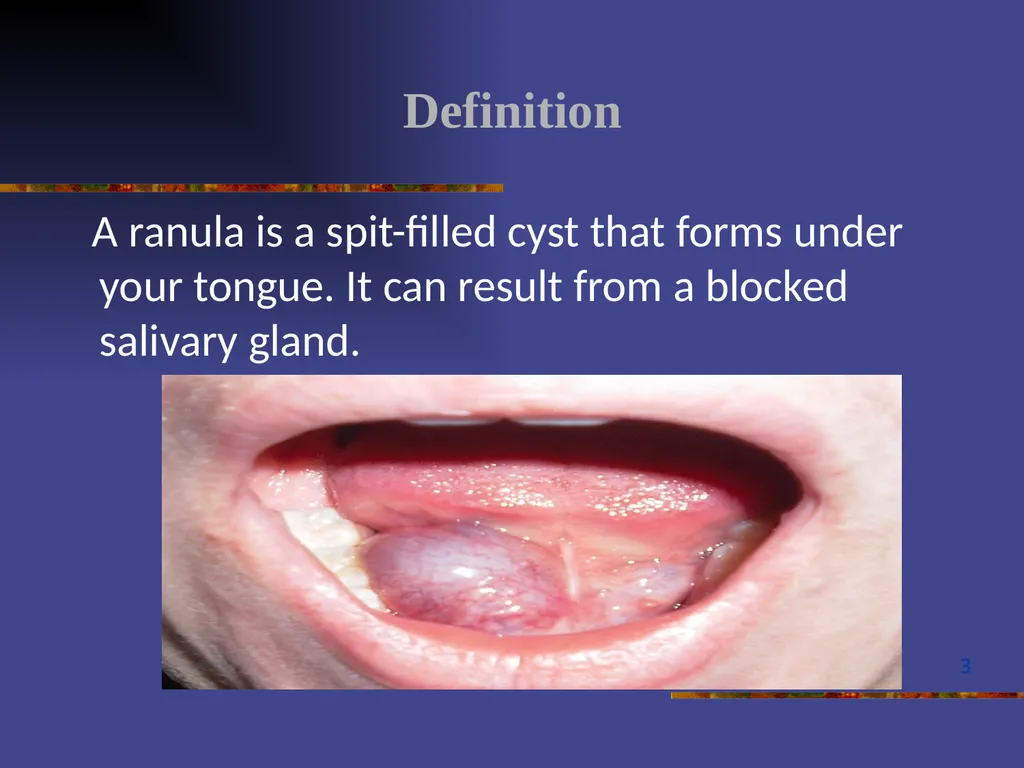
slide3. Definition A ranula is a spit-filled cyst that forms under your tongue. It can result from a blocked salivary gland. 3<br>
slide4. Introduction A healthy salivary gland empties saliva directly into your mouth.
A blocked or damaged salivary gland may cause saliva to drain into surrounding tissues instead.
As a result, saliva continues to build up until a cyst or “bubble” develops.
There are two types of ranulas: simple and plunging. A simple ranula causes swelling that’s limited to the floor of your mouth. 4<br>
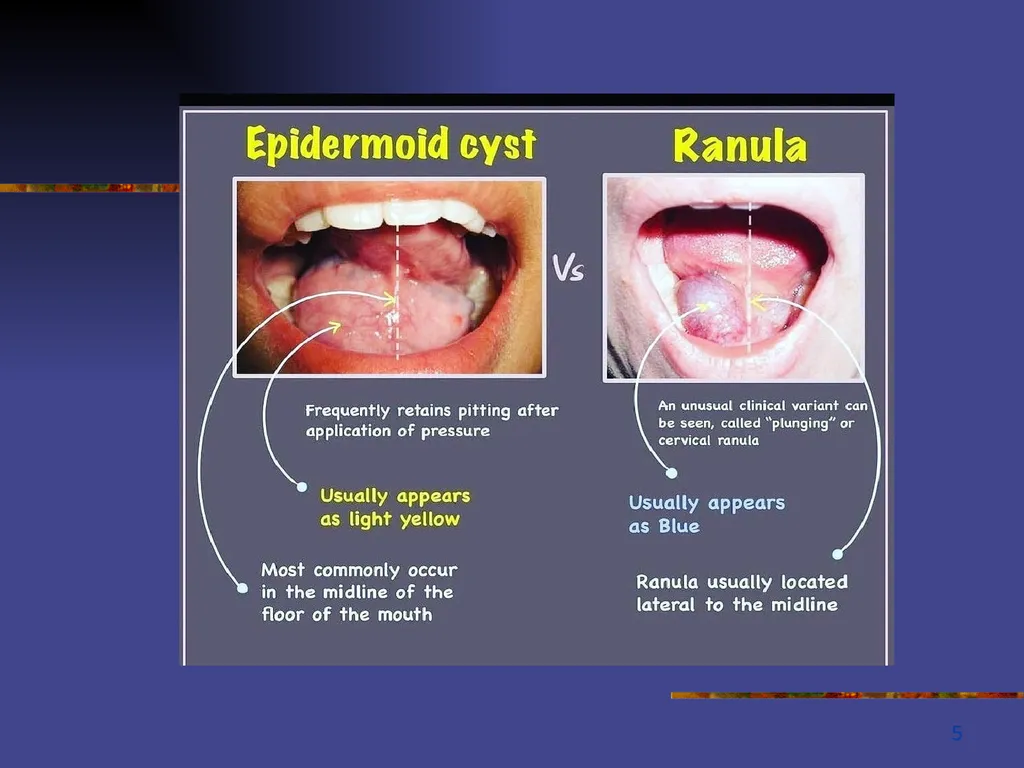
slide5. 5<br>
slide6. Facts About Ranula Is a ranula serious?
Ranulas aren’t dangerous or cancerous, and some may even go away on their own.
But, some ranulas grow so large that they interfere with breathing or swallowing.
In these cases, treatment is necessary. ●●●
6<br>
slide7. Facts About Ranula Who gets ranulas?
People of any age and gender can get ranulas. Statistically, they’re more common in children and adults ages 20 to 40.
Ranulas are also more common in people from certain parts of the world, such as the Maori people of New Zealand and Pacific Island Polynesians. ●●●
7<br>
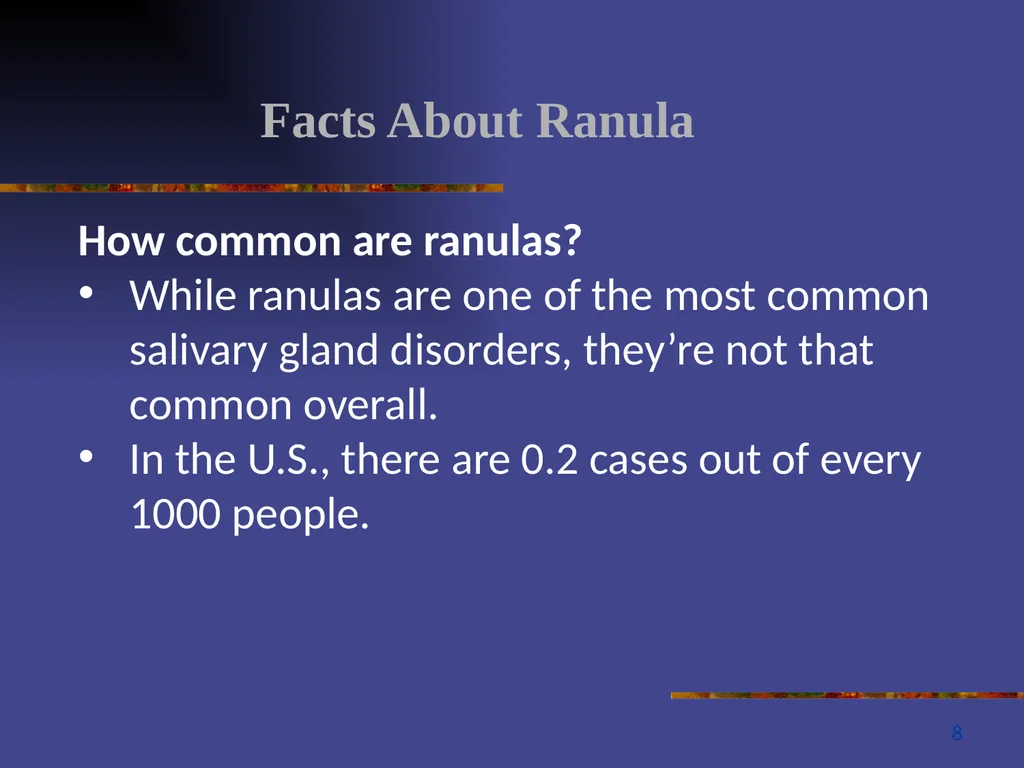
slide8. Facts About Ranula How common are ranulas?
While ranulas are one of the most common salivary gland disorders, they’re not that common overall.
In the U.S., there are 0.2 cases out of every 1000 people. 8<br>
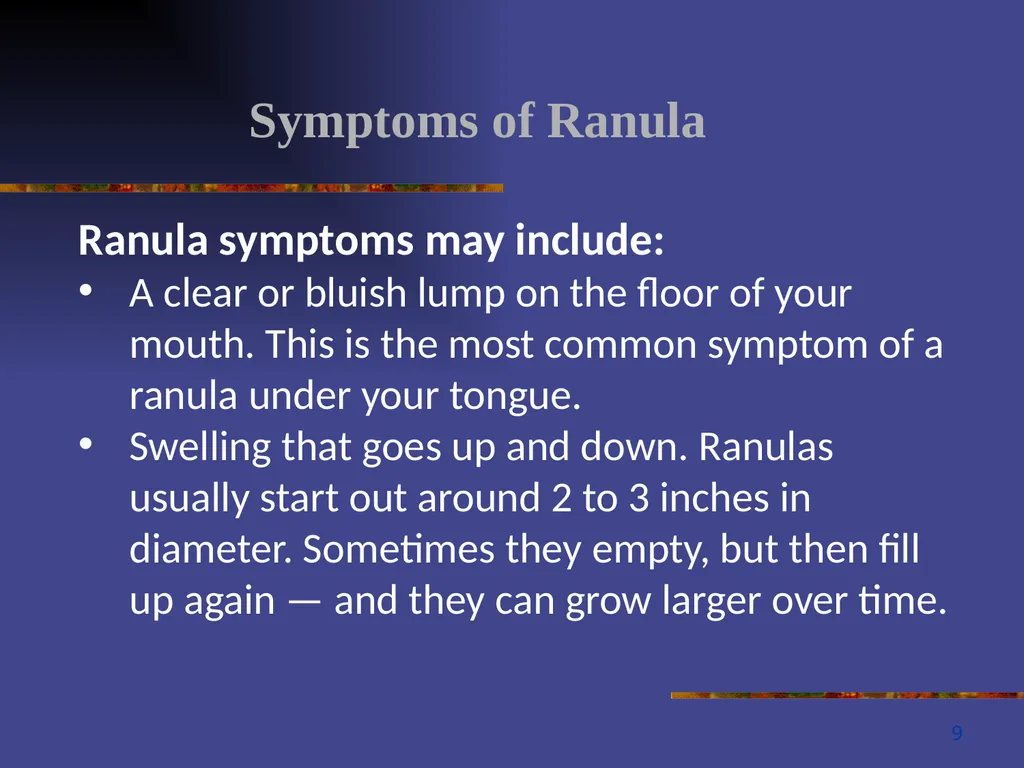
slide9. Symptoms of Ranula 9 Ranula symptoms may include:
A clear or bluish lump on the floor of your mouth. This is the most common symptom of a ranula under your tongue.
Swelling that goes up and down. Ranulas usually start out around 2 to 3 inches in diameter. Sometimes they empty, but then fill up again — and they can grow larger over time.<br>
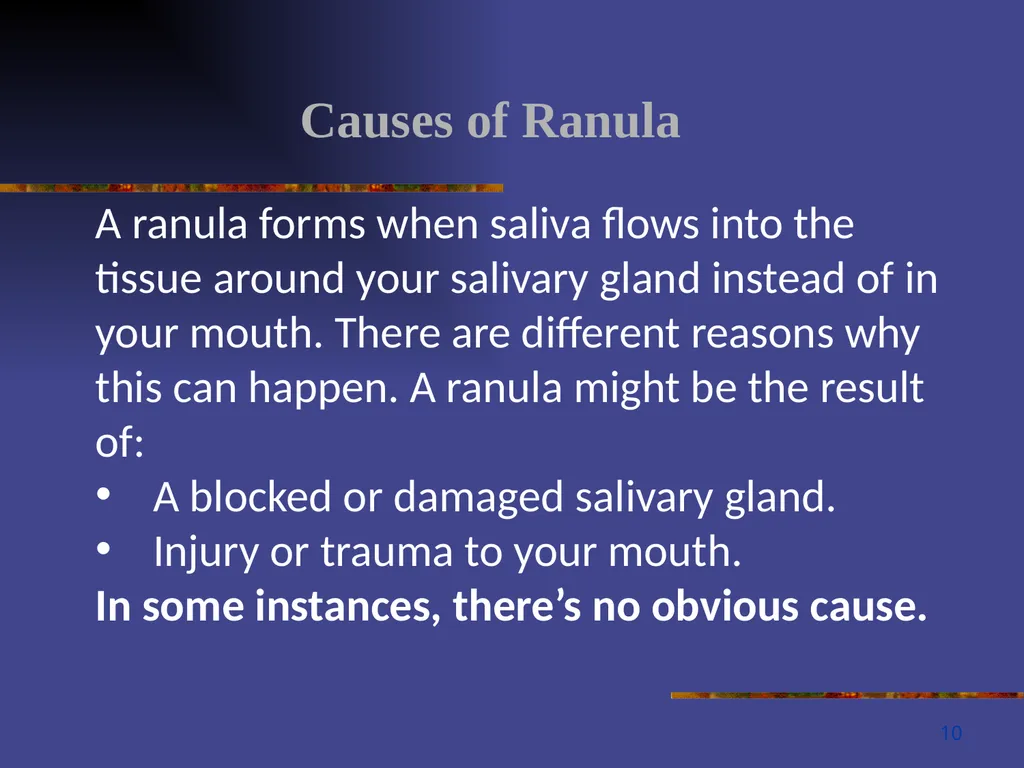
slide10. Causes of Ranula A ranula forms when saliva flows into the tissue around your salivary gland instead of in your mouth. There are different reasons why this can happen. A ranula might be the result of:
A blocked or damaged salivary gland.
Injury or trauma to your mouth.
In some instances, there’s no obvious cause. 10<br>
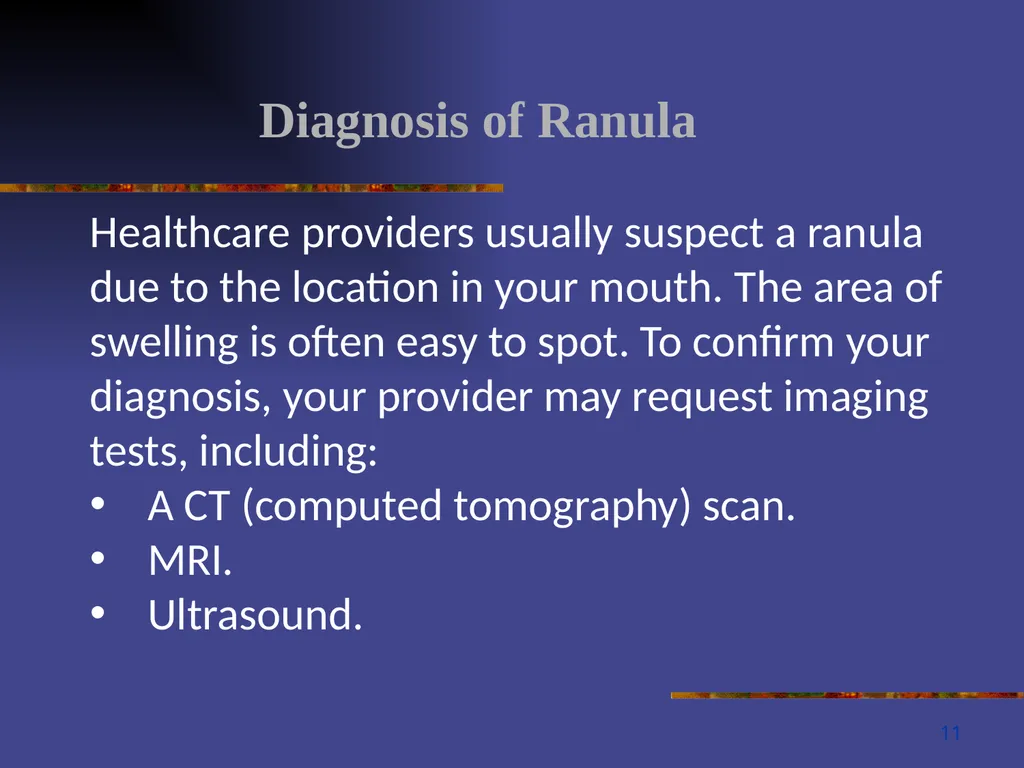
slide11. Diagnosis of Ranula Healthcare providers usually suspect a ranula due to the location in your mouth. The area of swelling is often easy to spot. To confirm your diagnosis, your provider may request imaging tests, including:
A CT (computed tomography) scan.
MRI.
Ultrasound. 11<br>
slide12. Treatment of Ranula While some simple ranulas go away on their own over time, many need treatment.
Ranula treatment depends on the size of the cyst and the severity of your symptoms.
Your healthcare provider may recommend needle aspiration, incision and draining, marsupialization or surgical removal of the ranula. ●●●
12<br>
slide13. Treatment of Ranula Needle aspiration
Your healthcare provider uses a needle to withdraw the fluid from the ranula.
Because this procedure doesn’t repair the underlying issue, the ranula may eventually reappear. ●●●
13<br>
slide14. Treatment of Ranula Incision and draining
Your provider makes a small incision (cut) to drain the ranula.
Like needle aspiration, this procedure doesn’t repair the underlying problem, so, recurrence (return) is possible. ●●●
14<br>
slide15. Treatment of Ranula Marsupialization
This type of ranula treatment involves making a small incision in the cyst and suturing (stitching) the edges to keep it open.
This allows the ranula to drain freely on its own. ●●●
15<br>
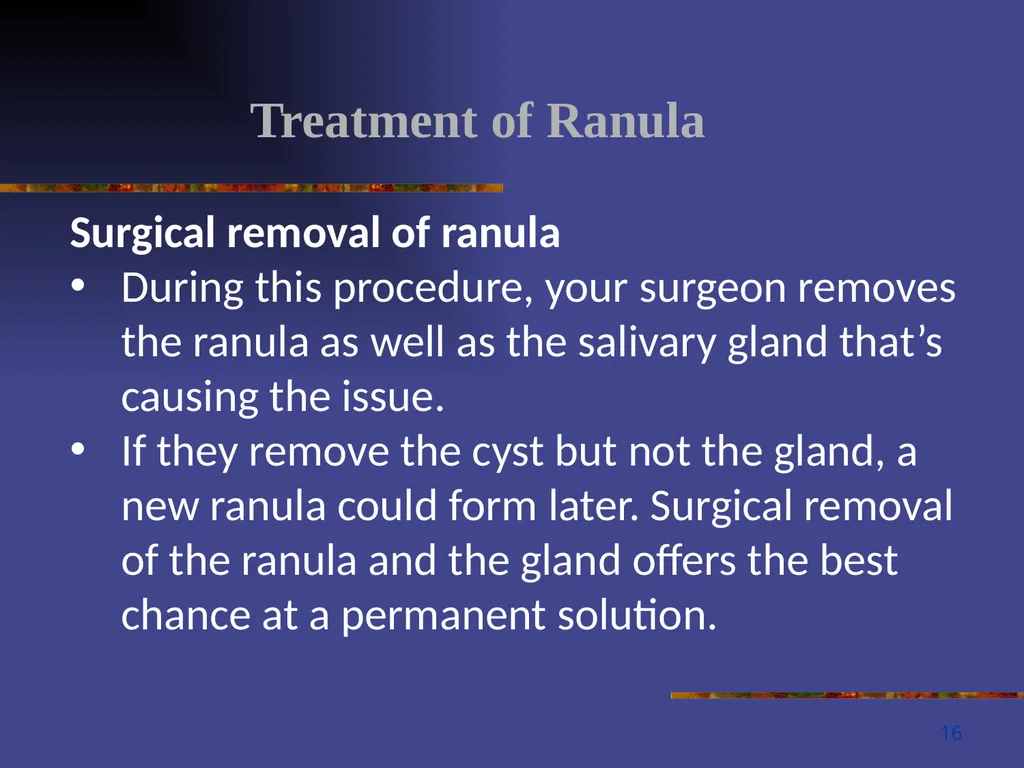
slide16. Treatment of Ranula Surgical removal of ranula
During this procedure, your surgeon removes the ranula as well as the salivary gland that’s causing the issue.
If they remove the cyst but not the gland, a new ranula could form later. Surgical removal of the ranula and the gland offers the best chance at a permanent solution. 16<br>
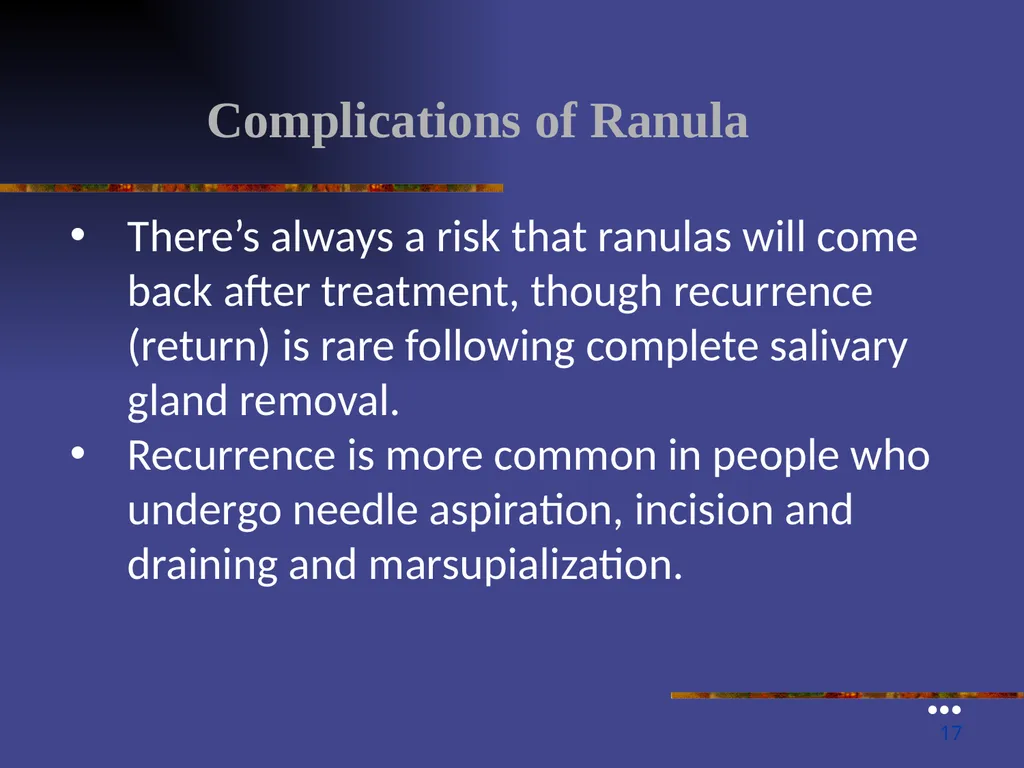
slide17. Complications of Ranula There’s always a risk that ranulas will come back after treatment, though recurrence (return) is rare following complete salivary gland removal.
Recurrence is more common in people who undergo needle aspiration, incision and draining and marsupialization. ●●●
17<br>
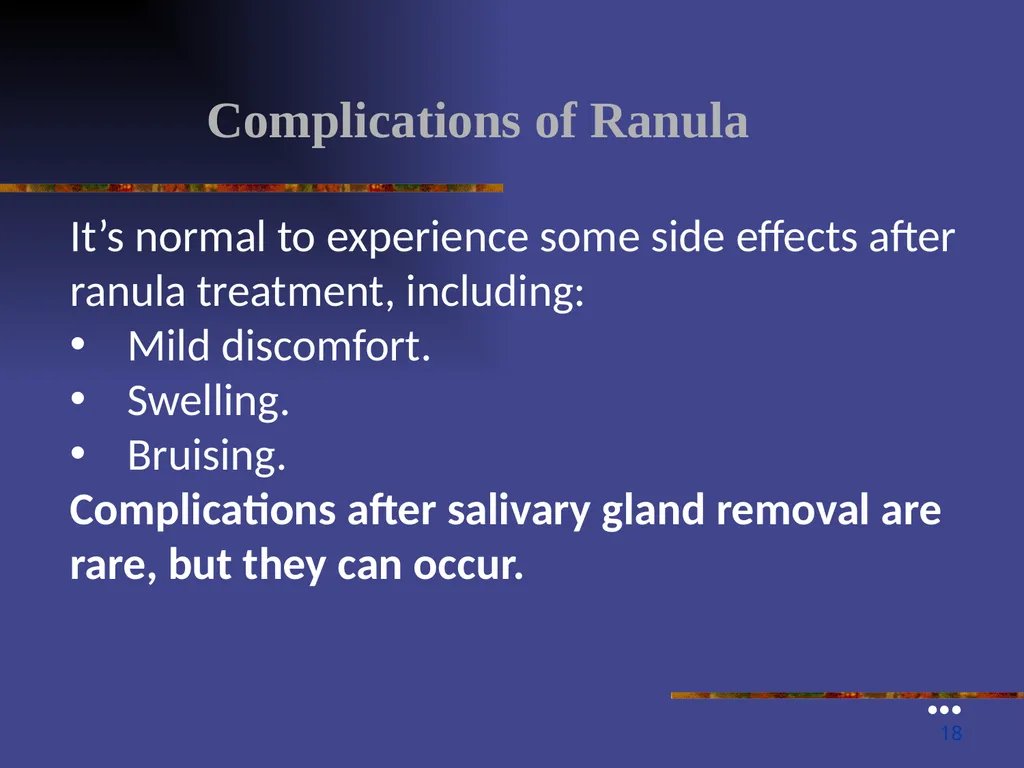
slide18. Complications of Ranula It’s normal to experience some side effects after ranula treatment, including:
Mild discomfort.
Swelling.
Bruising.
Complications after salivary gland removal are rare, but they can occur. ●●●
18<br>
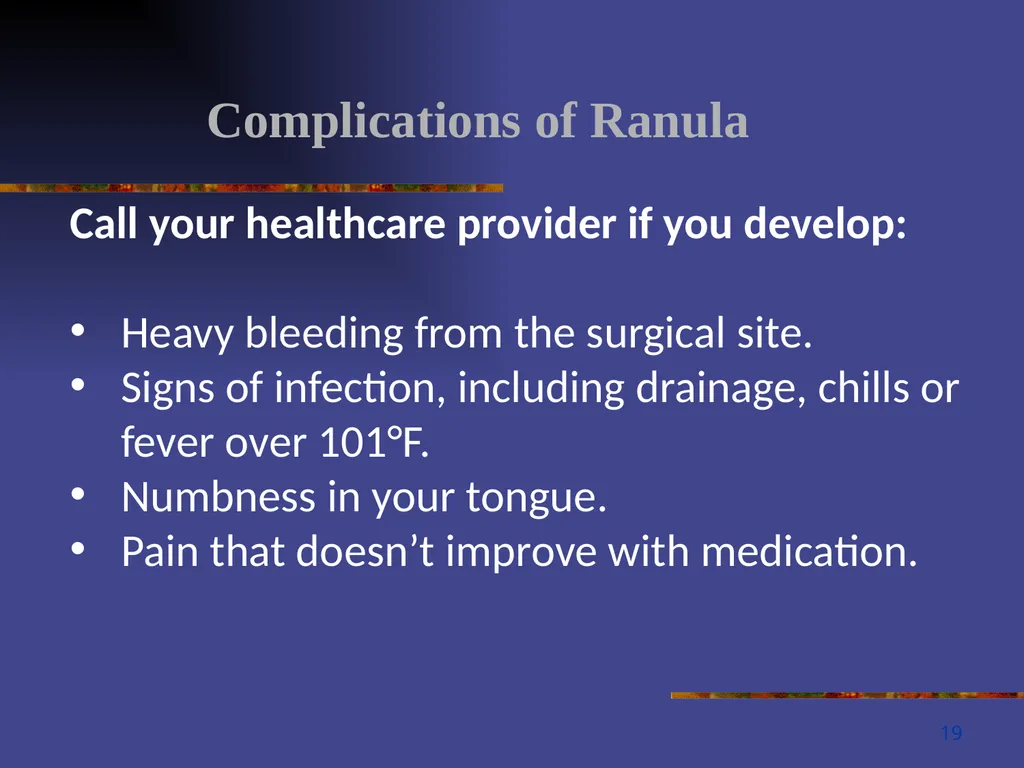
slide19. Complications of Ranula Call your healthcare provider if you develop:
Heavy bleeding from the surgical site.
Signs of infection, including drainage, chills or fever over 101°F.
Numbness in your tongue.
Pain that doesn’t improve with medication. 19<br>
slide20. Conclusion A ranula is a clear or bluish cyst that can form under your tongue. It can happen spontaneously, or as a result of trauma or injury to your mouth. Ranulas aren’t cancerous or dangerous.
But, if you have a ranula that becomes enlarged or starts to spread, it’s important to seek medical care right away. 20<br>
slide21. Thanks To StudyMafia.org<br>
Studymafia.org Studymafia.org Ranula<br>
slide2. Table Contents Definition
Introduction
Facts About Ranula
Causes of Ranula
Diagnosis of Ranula
Treatment of Ranula
Complications of Ranula
Conclusion 2<br>
slide3. Definition A ranula is a spit-filled cyst that forms under your tongue. It can result from a blocked salivary gland. 3<br>
slide4. Introduction A healthy salivary gland empties saliva directly into your mouth.
A blocked or damaged salivary gland may cause saliva to drain into surrounding tissues instead.
As a result, saliva continues to build up until a cyst or “bubble” develops.
There are two types of ranulas: simple and plunging. A simple ranula causes swelling that’s limited to the floor of your mouth. 4<br>
slide5. 5<br>
slide6. Facts About Ranula Is a ranula serious?
Ranulas aren’t dangerous or cancerous, and some may even go away on their own.
But, some ranulas grow so large that they interfere with breathing or swallowing.
In these cases, treatment is necessary. ●●●
6<br>
slide7. Facts About Ranula Who gets ranulas?
People of any age and gender can get ranulas. Statistically, they’re more common in children and adults ages 20 to 40.
Ranulas are also more common in people from certain parts of the world, such as the Maori people of New Zealand and Pacific Island Polynesians. ●●●
7<br>
slide8. Facts About Ranula How common are ranulas?
While ranulas are one of the most common salivary gland disorders, they’re not that common overall.
In the U.S., there are 0.2 cases out of every 1000 people. 8<br>
slide9. Symptoms of Ranula 9 Ranula symptoms may include:
A clear or bluish lump on the floor of your mouth. This is the most common symptom of a ranula under your tongue.
Swelling that goes up and down. Ranulas usually start out around 2 to 3 inches in diameter. Sometimes they empty, but then fill up again — and they can grow larger over time.<br>
slide10. Causes of Ranula A ranula forms when saliva flows into the tissue around your salivary gland instead of in your mouth. There are different reasons why this can happen. A ranula might be the result of:
A blocked or damaged salivary gland.
Injury or trauma to your mouth.
In some instances, there’s no obvious cause. 10<br>
slide11. Diagnosis of Ranula Healthcare providers usually suspect a ranula due to the location in your mouth. The area of swelling is often easy to spot. To confirm your diagnosis, your provider may request imaging tests, including:
A CT (computed tomography) scan.
MRI.
Ultrasound. 11<br>
slide12. Treatment of Ranula While some simple ranulas go away on their own over time, many need treatment.
Ranula treatment depends on the size of the cyst and the severity of your symptoms.
Your healthcare provider may recommend needle aspiration, incision and draining, marsupialization or surgical removal of the ranula. ●●●
12<br>
slide13. Treatment of Ranula Needle aspiration
Your healthcare provider uses a needle to withdraw the fluid from the ranula.
Because this procedure doesn’t repair the underlying issue, the ranula may eventually reappear. ●●●
13<br>
slide14. Treatment of Ranula Incision and draining
Your provider makes a small incision (cut) to drain the ranula.
Like needle aspiration, this procedure doesn’t repair the underlying problem, so, recurrence (return) is possible. ●●●
14<br>
slide15. Treatment of Ranula Marsupialization
This type of ranula treatment involves making a small incision in the cyst and suturing (stitching) the edges to keep it open.
This allows the ranula to drain freely on its own. ●●●
15<br>
slide16. Treatment of Ranula Surgical removal of ranula
During this procedure, your surgeon removes the ranula as well as the salivary gland that’s causing the issue.
If they remove the cyst but not the gland, a new ranula could form later. Surgical removal of the ranula and the gland offers the best chance at a permanent solution. 16<br>
slide17. Complications of Ranula There’s always a risk that ranulas will come back after treatment, though recurrence (return) is rare following complete salivary gland removal.
Recurrence is more common in people who undergo needle aspiration, incision and draining and marsupialization. ●●●
17<br>
slide18. Complications of Ranula It’s normal to experience some side effects after ranula treatment, including:
Mild discomfort.
Swelling.
Bruising.
Complications after salivary gland removal are rare, but they can occur. ●●●
18<br>
slide19. Complications of Ranula Call your healthcare provider if you develop:
Heavy bleeding from the surgical site.
Signs of infection, including drainage, chills or fever over 101°F.
Numbness in your tongue.
Pain that doesn’t improve with medication. 19<br>
slide20. Conclusion A ranula is a clear or bluish cyst that can form under your tongue. It can happen spontaneously, or as a result of trauma or injury to your mouth. Ranulas aren’t cancerous or dangerous.
But, if you have a ranula that becomes enlarged or starts to spread, it’s important to seek medical care right away. 20<br>
slide21. Thanks To StudyMafia.org<br>