StudyMafia.Org Submitted To: Submitted By: Studymafia.org Studymafia.org Pregnancy Induced Hypertension Table Contents Definition Introduction Symptoms of PIH Why it is a concern? Causes of PIH Complications of PIH Prevention of PIH
"StudyMafia.Org Submitted To: Submitted By:" is the property of its rightful owner. Permission is granted to
download and print the materials on this website for personal, non-commercial use only, and to display it
on your personal computer provided you do not modify the materials and that you retain all copyright
notices contained in the materials. By downloading content from our website, you accept the terms of this
agreement.
Share
Embed code
Presentation Transcript
01
StudyMafia.Org Submitted To: Submitted By:
Studymafia.org Studymafia.org Pregnancy Induced Hypertension<br>
02
Table Contents Definition
Introduction
Symptoms of PIH
Why it is a concern?
Causes of PIH
Complications of PIH
Prevention of PIH
Diagnosis of PIH
Treatment of PIH
Conclusion 2<br>
03
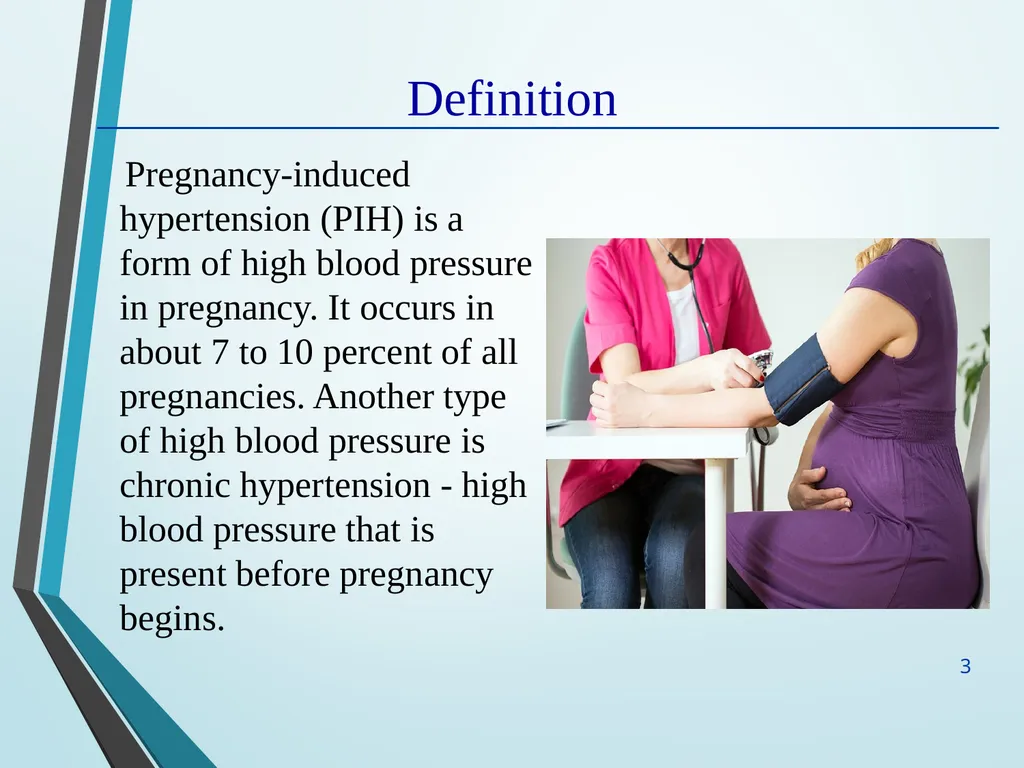
Definition Pregnancy-induced hypertension (PIH) is a form of high blood pressure in pregnancy. It occurs in about 7 to 10 percent of all pregnancies. Another type of high blood pressure is chronic hypertension - high blood pressure that is present before pregnancy begins. 3<br>
04
Introduction Pregnancy-induced hypertension is also called toxemia or preeclampsia. It occurs most often in young women with a first pregnancy. It is more common in twin pregnancies, and in women who had PIH in a previous pregnancy.
Usually, there are three primary characteristics of this condition, including the following:
High blood pressure (a blood pressure reading higher than 140/90 mm hg or a significant increase in one or both pressures)
Protein in the urine
Edema (swelling) 4<br>
05
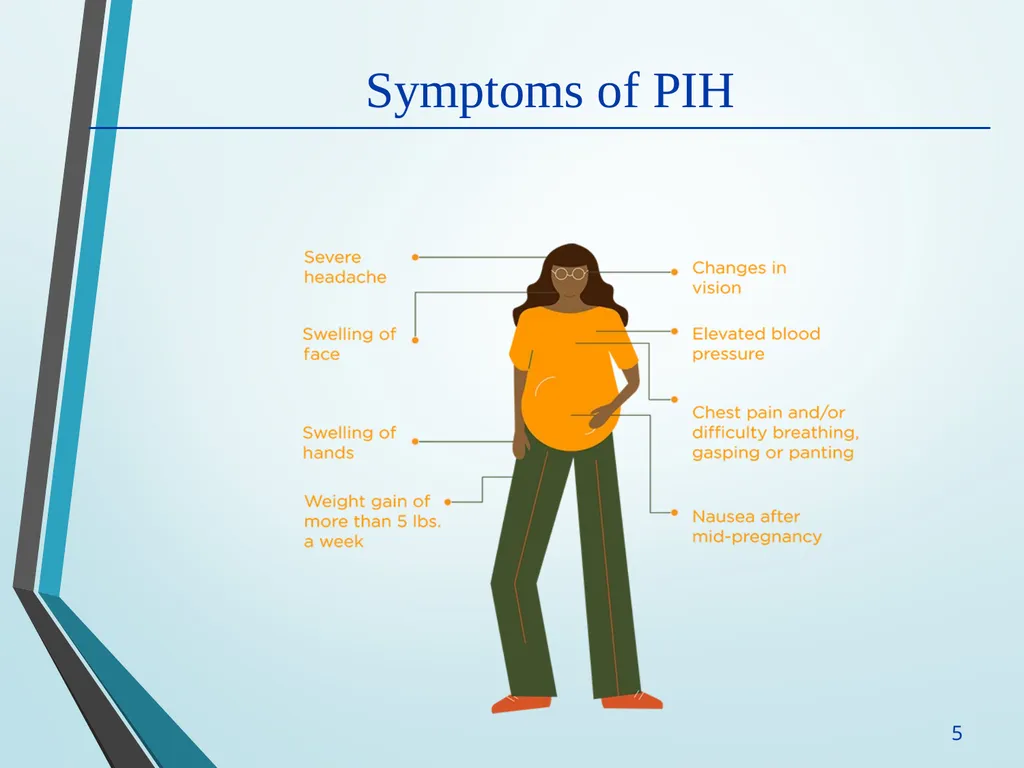
5 Symptoms of PIH<br>
06
With high blood pressure, there is an increase in the resistance of blood vessels. This may hinder blood flow in many different organ systems in the expectant mother including the liver, kidneys, brain, uterus, and placenta.
There are other problems that may develop as a result of PIH. Placental abruption (premature detachment of the placenta from the uterus) may occur in some pregnancies. ●●●
6 Why it is a Concern?<br>
07
PIH can also lead to fetal problems including intrauterine growth restriction (poor fetal growth) and stillbirth.
If untreated, severe PIH may cause dangerous seizures and even death in the mother and fetus. Because of these risks, it may be necessary for the baby to be delivered early, before 37 weeks gestation. 7 Why it is a Concern?<br>
08
Causes of PIH The cause of PIH is unknown. Some conditions may increase the risk of developing PIH, including the following:
Pre-existing hypertension (high blood pressure)
Kidney disease
Diabetes
PIH with a previous pregnancy
Mother's age younger than 20 or older than 40
Multiple fetuses (twins, triplets) 8<br>
09
Complications of PIH For the mother:
Preeclampsia external icon, eclampsia external icon, stroke, the need for labor induction (giving medicine to start labor to give birth), and placental abruption (the placenta separating from the wall of the uterus). ●●●
9<br>
10
Complications of PIH For the baby:
Preterm delivery (birth that happens before 37 weeks of pregnancy) and low birth weight (when a baby is born weighing less than 5 pounds, 8 ounces).1,6 The mother’s high blood pressure makes it more difficult for the baby to get enough oxygen and nutrients to grow, so the mother may have to deliver the baby early. 10<br>
11
Prevention of PIH Early identification of women at risk for pregnancy-induced hypertension may help prevent some complications of the disease.
Education about the warning symptoms is also important because early recognition may help women receive treatment and prevent worsening of the disease. 11<br>
12
Diagnosis of PIH Blood pressure measurement
Urine testing
Assessment of edema
Frequent weight measurements
Eye examination to check for retinal changes
Liver and kidney function tests
Blood clotting tests 12<br>
13
Treatment of PIH Your pregnancy, overall health and medical history
Extent of the disease
Your tolerance for specific medications, procedures, or therapies
Expectations for the course of the disease
Your opinion or preference.
Bedrest (either at home or in the hospital may be recommended). ●●●
13<br>
14
Treatment of PIH Hospitalization (as specialized personnel and equipment may be necessary).
Magnesium sulfate (or other antihypertensive medications for pih).
Fetal monitoring (to check the health of the fetus when the mother has pih) may include:
Fetal movement counting - keeping track of fetal kicks and movements. A change in the number or frequency may mean the fetus is under stress. ●●●
14<br>
15
Treatment of PIH Continued laboratory testing of urine and blood (for changes that may signal worsening of PIH).
Medications, called corticosteroids, that may help mature the lungs of the fetus (lung immaturity is a major problem of premature babies).
Delivery of the baby (if treatments do not control pih or if the fetus or mother is in danger). Cesarean delivery may be recommended, in some cases. 15<br>
16
Conclusion High blood pressure (hypertension) during pregnancy typically goes away after the baby is delivered but increases the risk of high blood pressure and heart disease in the future.
Women who had chronic hypertension before pregnancy will usually still have the condition after delivery. Sometimes, blood pressure can remain high after delivery, requiring treatment with medication. 16<br>