"StudyMafia.Org Submitted To: Submitted By:" is the property of its rightful owner. Permission is granted to
download and print the materials on this website for personal, non-commercial use only, and to display it
on your personal computer provided you do not modify the materials and that you retain all copyright
notices contained in the materials. By downloading content from our website, you accept the terms of this
agreement.
Presentation Transcript
01
StudyMafia.Org Submitted To: Submitted By:
Studymafia.org Studymafia.org Neurogenic Bladder<br>
02
Table Contents Definition
Introduction
Symptoms of Neurogenic Bladder
Causes of Neurogenic Bladder
Complications of Neurogenic Bladder
Diagnosis of Neurogenic Bladder
Treatment of Neurogenic Bladder
Conclusion 2<br>
03
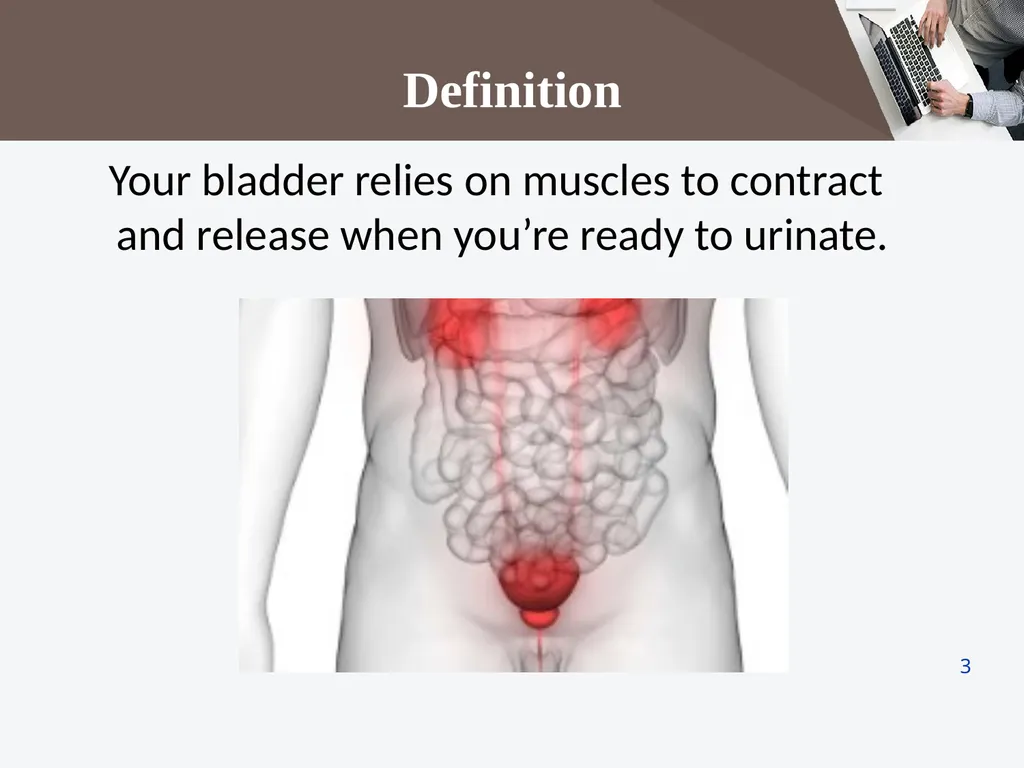
Definition Your bladder relies on muscles to contract and release when you’re ready to urinate. 3<br>
04
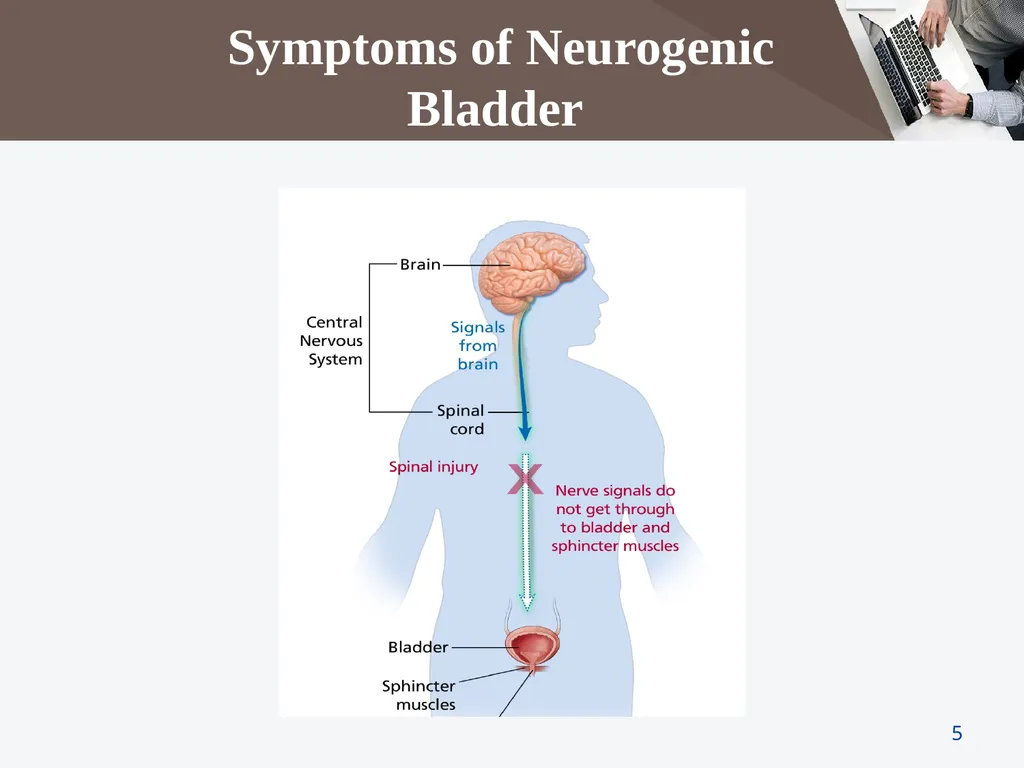
Introduction Your brain typically regulates this process, but sometimes the message that you need to urinate isn’t sent from your brain to your bladder.
This is a condition known as neurogenic bladder. Treatment for this condition can help you regain control. 4<br>
05
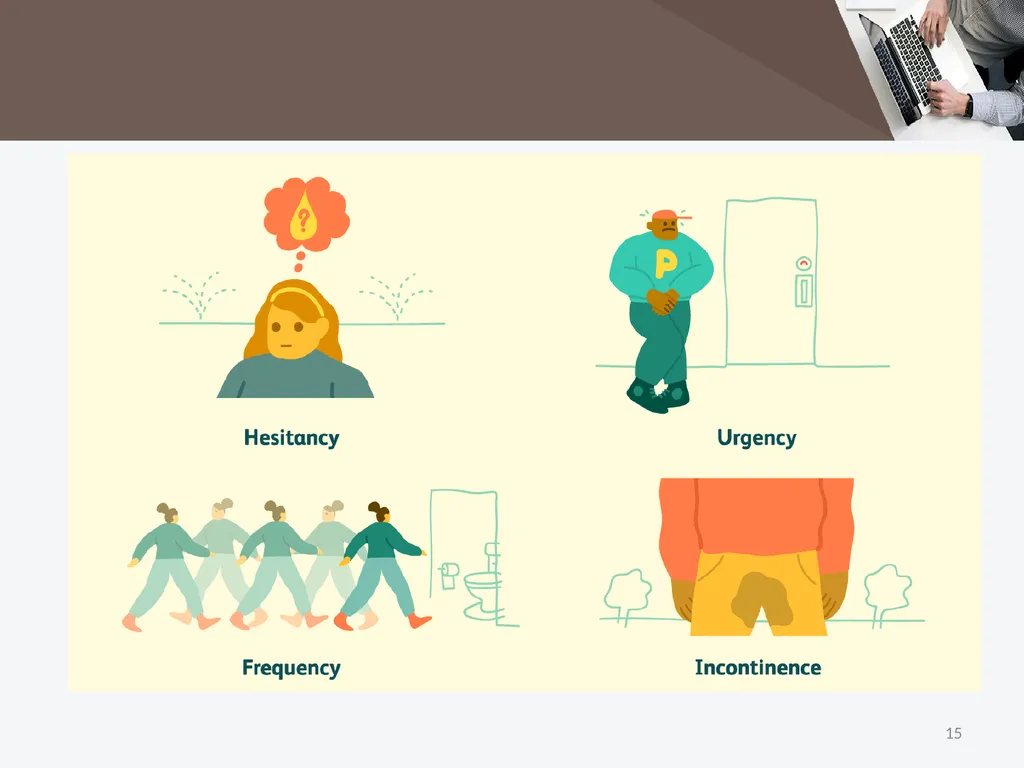
5 Symptoms of Neurogenic
Bladder<br>
06
Causes of Neurogenic
Bladder Examples of brain disorders that can cause neurogenic bladder include:
Alzheimer’s disease
Tumors of the brain or spinal cord
Multiple sclerosis
Parkinson’s disease
Injury to the spinal cord
Spinal cord birth defects, such as spina bifida
Stroke ●●●
6<br>
07
Causes of Neurogenic
Bladder Conditions that affect the bladder muscles include:
Diabetes, which can cause nerve damage
Long-term alcohol abuse
Pelvic surgery, which can cause nerve damage
Spinal nerve damage 7<br>
08
Complications of Neurogenic
Bladder Because this condition causes you to lose the sensation to urinate, your bladder can fill beyond typical capacity and leak.
But your bladder may not empty fully. This is called urinary retention. ●●●
8<br>
09
Complications of Neurogenic
Bladder Urinary retention increases your risk of a UTI. Infection can result when urine remains in your bladder or kidneys for too long.
Frequent urinary tract and kidney infections can lead to damage over time. This can ultimately lead to kidney failure, which can be fatal. 9<br>
10
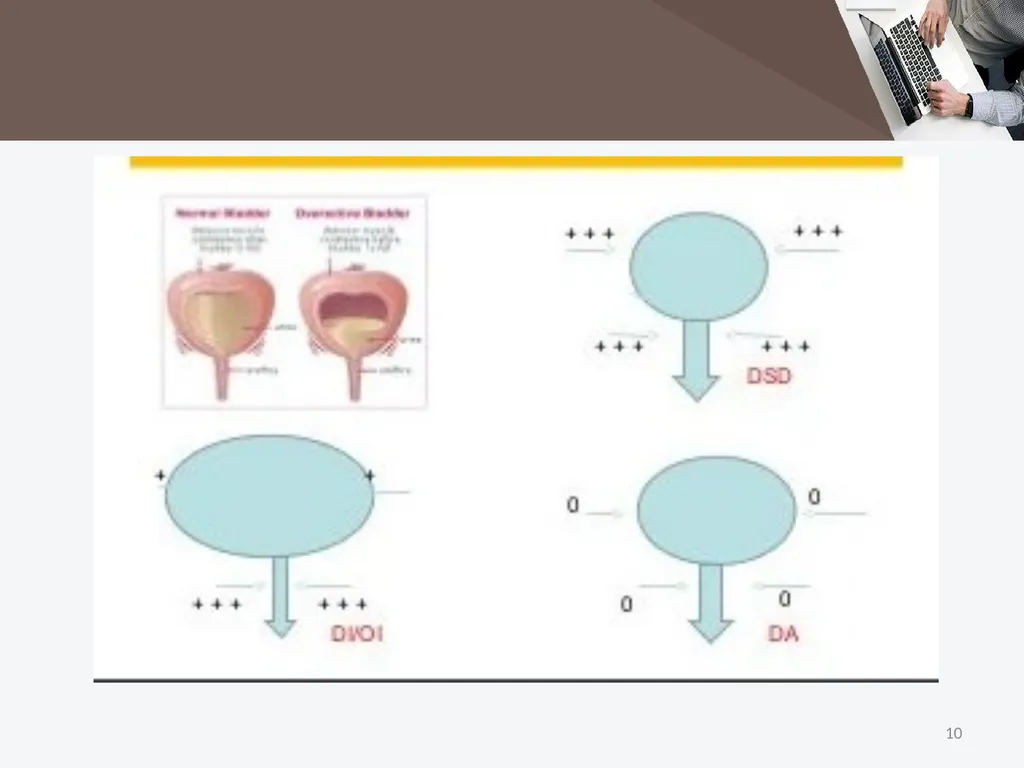
10<br>
11
Diagnosis of Neurogenic
Bladder In addition to reviewing your medical history and conducting a physical exam,
These may include:
A cystometrogram to test bladder function and capacity
An electromyography to test bladder muscle tone and coordination
Spinal and brain imaging
Kidney and bladder imaging 11<br>
12
Treatment of Neurogenic
Bladder Electrical stimulation therapy
Another treatment option is electrical stimulation therapy. This therapy involves placing small electrodes on the bladder. When stimulated, the electrodes can send impulses to the brain, telling it you need to urinate. ●●●
12<br>
13
Treatment of Neurogenic
Bladder Medications
There are no medications to treat or control neurogenic bladder specifically. However, some medications can reduce or enhance muscle contractions.
Catheterization
In some instances, your doctor may recommend catheterization to ensure complete bladder emptying. ●●●
13<br>
14
Treatment of Neurogenic
Bladder Surgery
Your doctor can insert an artificial sphincter into your body that compresses the urethra to prevent urinary leakage which can then be manually released to allow emptying of the bladder. Other surgical options include bladder reconstruction surgery which may help with bladder control. 14<br>
15
15<br>
16
Conclusion In neurogenic bladder, the nerves that carry messages back-and-forth between the bladder and the spinal cord and brain don't work the way they should.
Damage or changes in the nervous system and infection can cause neurogenic bladder. 16<br>