StudyMafia.Org Submitted To: Submitted By: Studymafia.org Studymafia.org Early Childhood Caries Table Contents Definition Introduction Causes of Early Childhood Caries Prevention of Early Childhood Caries Conclusion 2 Definition Early
"StudyMafia.Org Submitted To: Submitted By:" is the property of its rightful owner. Permission is granted to
download and print the materials on this website for personal, non-commercial use only, and to display it
on your personal computer provided you do not modify the materials and that you retain all copyright
notices contained in the materials. By downloading content from our website, you accept the terms of this
agreement.
Presentation Transcript
01
StudyMafia.Org Submitted To: Submitted By:
Studymafia.org Studymafia.org Early Childhood Caries<br>
02
Table Contents Definition
Introduction
Causes of Early Childhood Caries
Prevention of Early Childhood Caries
Conclusion 2<br>
03
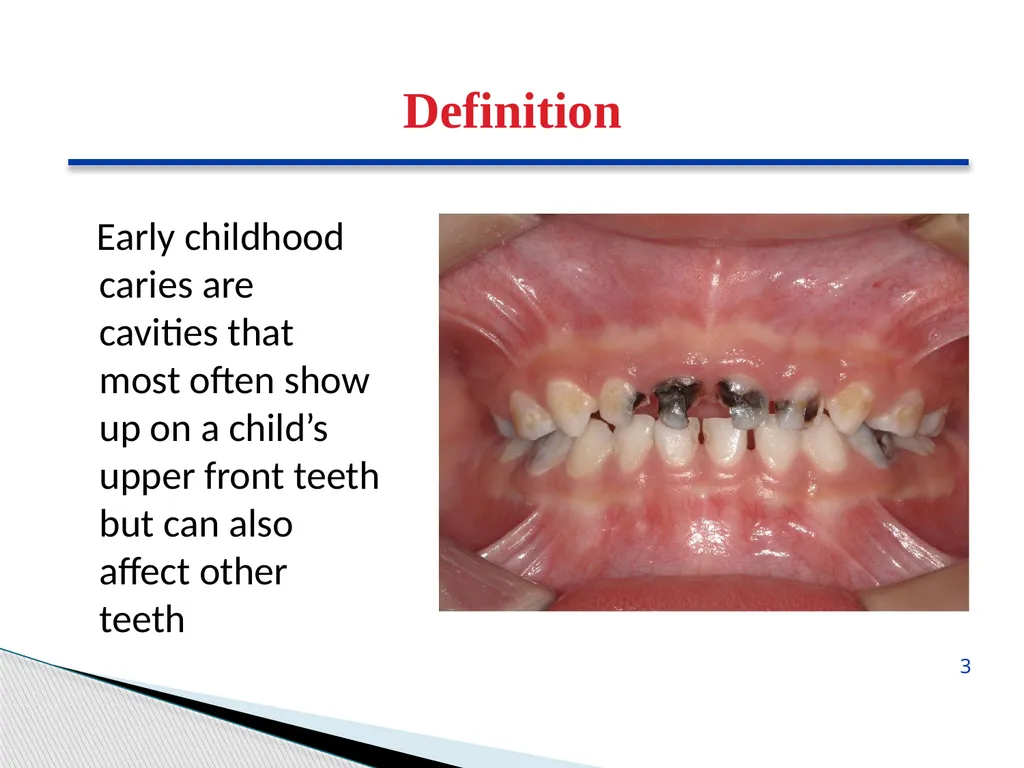
Definition Early childhood caries are cavities that most often show up on a child’s upper front teeth but can also affect other teeth 3<br>
04
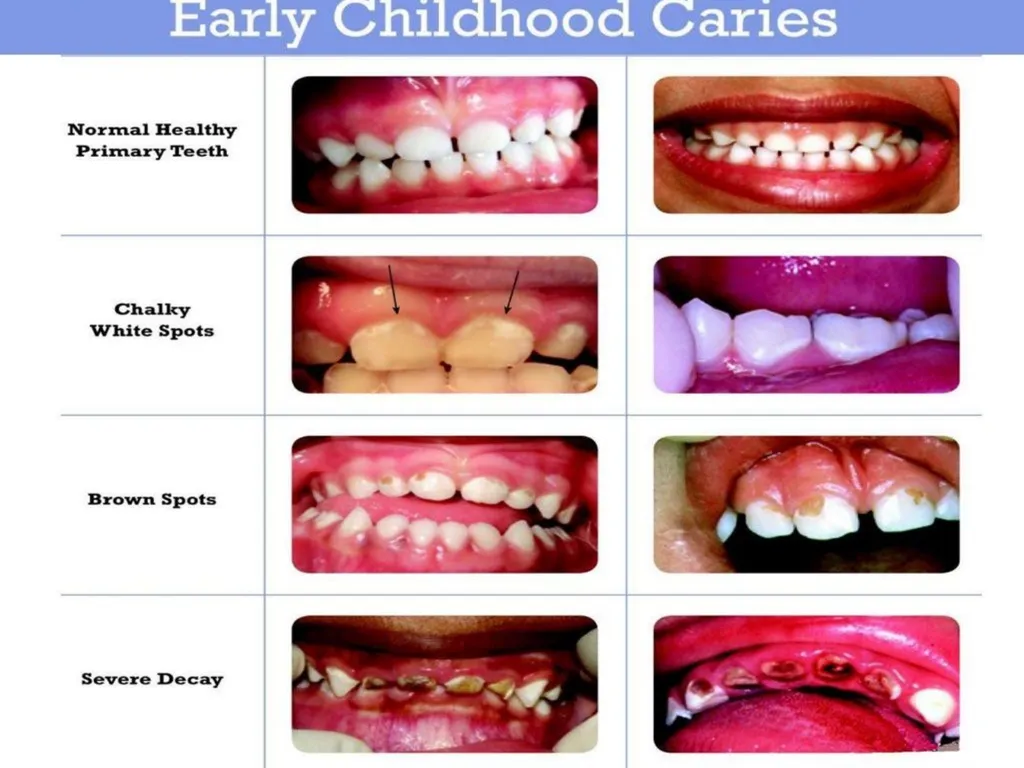
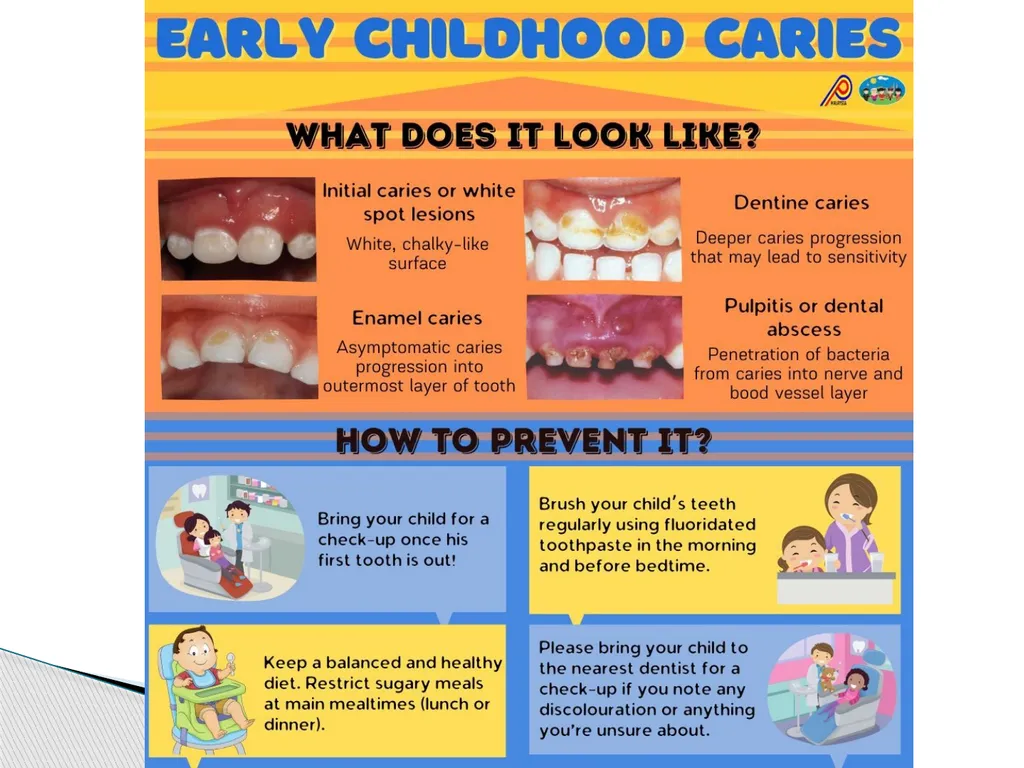
Introduction It first shows up as white spots near the gum line. These spots are hard to see at first, but if caught early can be stopped from progressing into cavities.
As it gets worse, they can look like brown spots, holes or broken teeth which will require more involved procedures to fix. It is very important to get treatment early to stop the decay from getting worse. 4<br>
05
5<br>
06
Causes of Early Childhood Caries It happens when liquids and foods that contain sugar, like milk and juice, are left in your child’s mouth for many hours.
Bacteria love sugar and use it to make acids that, overtime, destroy your child’s teeth ●●●
6<br>
07
Causes of Early Childhood Caries “These and other factors involved, such as the frequency of feedings, oral hygiene, medications, other medical and dental conditions, determine your child’s caries risk, or the likelihood that he or she will develop caries,” says Dr. Polido. 7<br>
08
Prevention of Early Childhood Caries One of the easiest ways to prevent caries is not putting your child to bed with a bottle filled with milk, formula, juice or other sweet liquids.
According to the American Academy of Pediatrics (AAP), most children who are seven or eight months of age no longer need to feed during the night. ●●●
8<br>
09
Prevention of Early Childhood Caries Other prevention methods include:
Only giving your child a bottle during meals. Do not allow your child to walk around with it or drink from it throughout the day.
Adopting a healthy balanced diet for your child and limit starchy, sugary snacks and sugary drinks. ●●●
9<br>
10
Prevention of Early Childhood Caries Cleaning your baby’s gums with a soft toothbrush or cloth and water starting at birth. Once their first tooth erupts, use a soft toothbrush twice a day. Use a “smear” of toothpaste if your child is under two years of age and a “pea-size” amount if they are between two and five years of age.
The use of fluoridated toothpaste is dictated by your child’s caries risk, as determined by the dental or medical provider. ●●●
10<br>
11
Prevention of Early Childhood Caries Teaching your child to start drinking from a cup as early as possible, preferably before they turn one year of age. By drinking from a cup, the liquid is less likely to pool around the front teeth.
The American Academy of Pediatrics states, “Children who use a bottle after 15 months of age or have sweets or starchy snacks more than three times a day are at higher risk of getting ECC.”
Not dipping pacifiers in any sweetened liquid. ●●●
11<br>
12
Prevention of Early Childhood Caries Take your child to a pediatric dentist for an early evaluation by their first birthday.
The pediatric dentist will discuss the risk of your child developing cavities and the best way to prevent them. 12<br>
13
Conclusion Remember, baby teeth are very important for speaking and chewing. If early childhood caries causes your child to lose teeth too early, your child’s permanent teeth may come in crooked or crowded.
By following these suggestions today, you can help your child start a lifetime of good dental habits. 14<br>