StudyMafia.Org Submitted To: Submitted By: Studymafia.org Studymafia.org Acid Fast Stain Table Contents Definition Introduction Principle of Acid Fast Stain Procedure of Acid Fast Stain Conclusion 2 Definition It is the differential
"StudyMafia.Org Submitted To: Submitted By:" is the property of its rightful owner. Permission is granted to
download and print the materials on this website for personal, non-commercial use only, and to display it
on your personal computer provided you do not modify the materials and that you retain all copyright
notices contained in the materials. By downloading content from our website, you accept the terms of this
agreement.
Presentation Transcript
01
StudyMafia.Org Submitted To: Submitted By:
Studymafia.org Studymafia.org Acid Fast Stain<br>
02
Table Contents Definition
Introduction
Principle of Acid Fast Stain
Procedure of Acid Fast Stain
Conclusion 2<br>
03
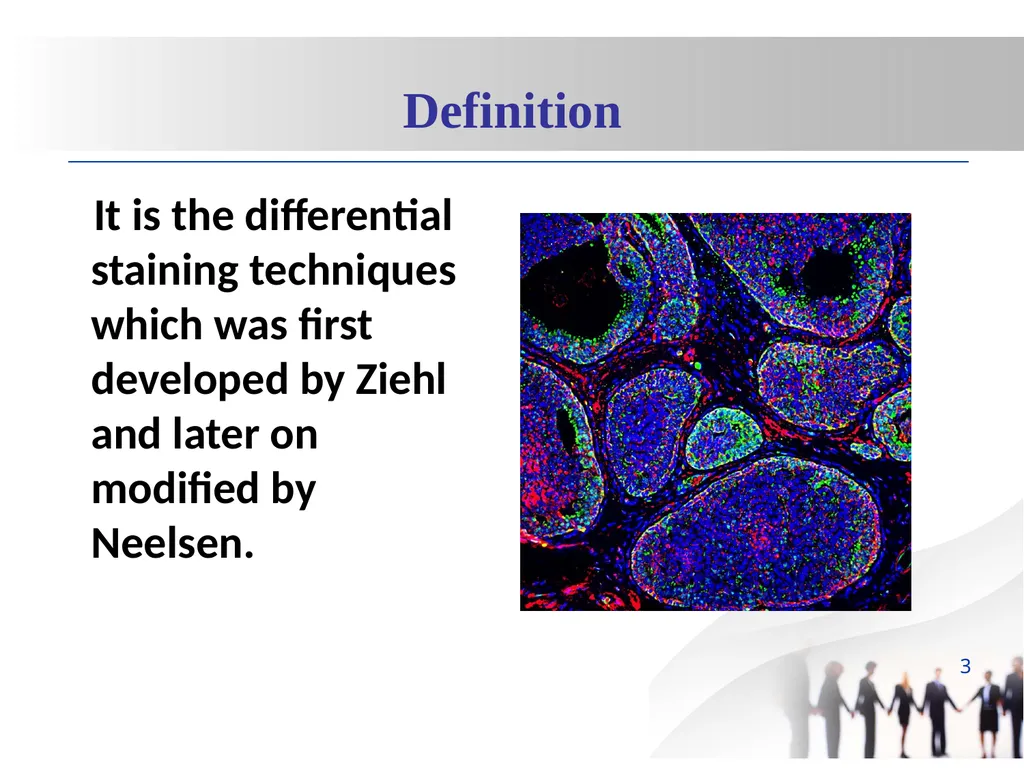
Definition It is the differential staining techniques which was first developed by Ziehl and later on modified by Neelsen. 3<br>
04
Introduction The main aim of this staining is to differentiate bacteria into acid fast group and non-acid fast groups.
This method is used for those microorganisms which are not staining by simple or Gram staining method, particularly the member of genus Mycobacterium, are resistant and can only be visualized by acid-fast staining. 4<br>
05
5<br>
06
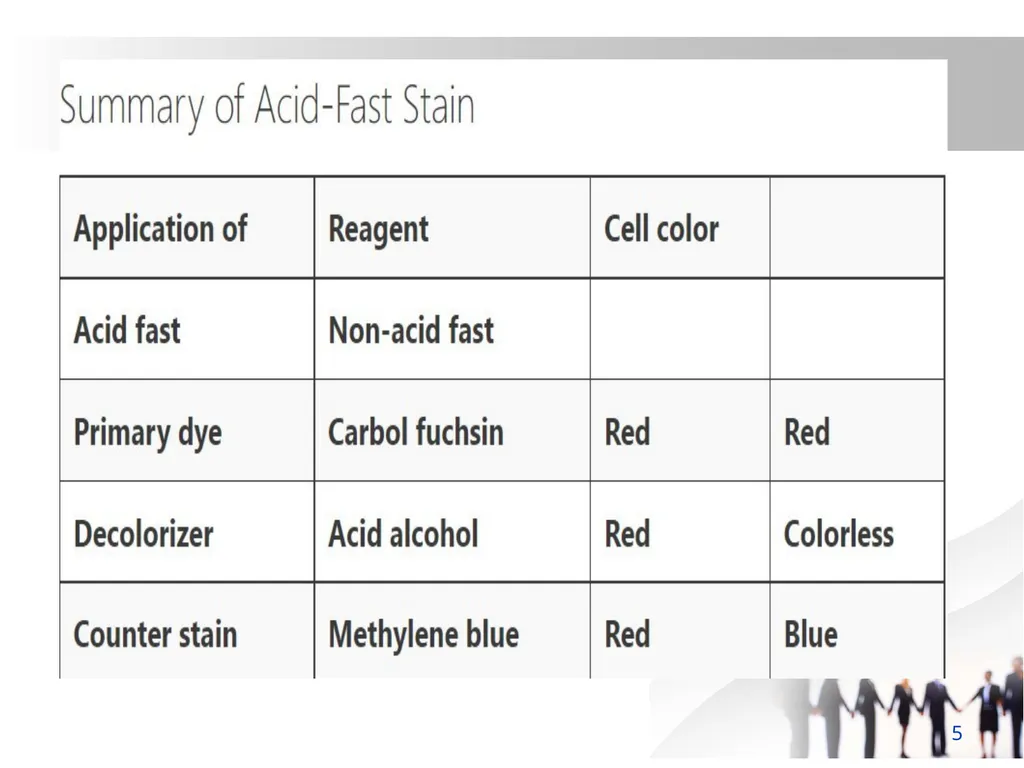
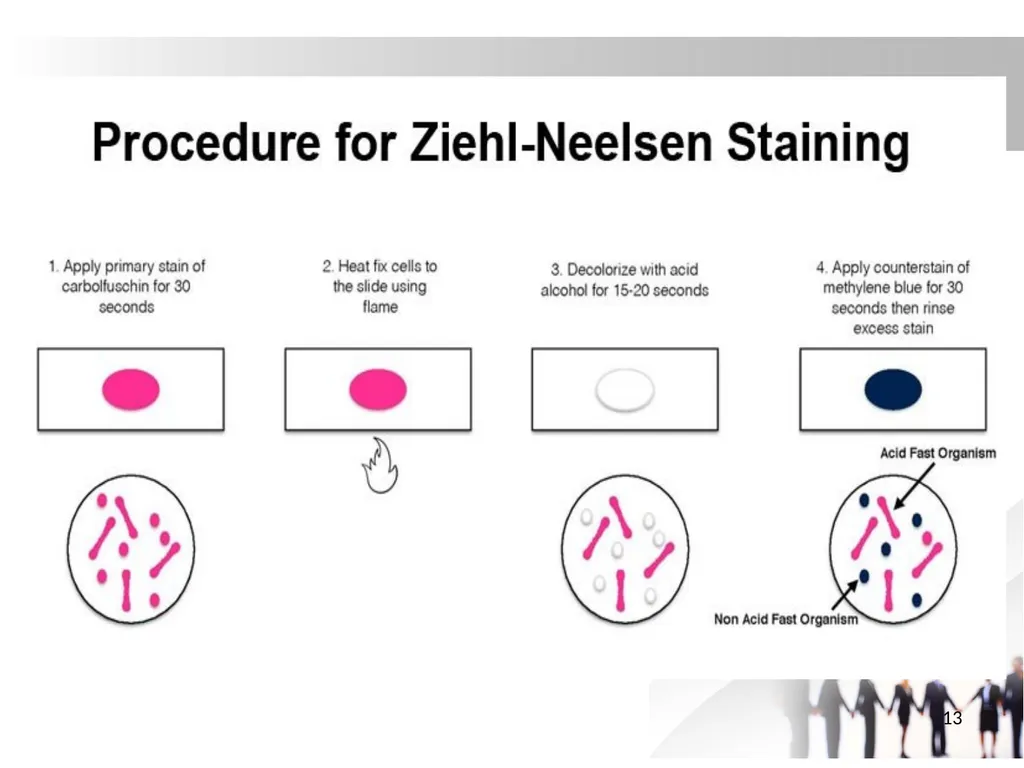
Principle of Acid-Fast Stain When the smear is stained with carbol fuchsin, it solubilizes the lipoidal material present in the Mycobacterial cell wall but by the application of heat, carbol fuchsin further penetrates through lipoidal wall and enters into cytoplasm.
Then after all cell appears red. ●●●
6<br>
07
Principle of Acid-Fast Stain Then the smear is decolorized with decolorizing agent (3% HCL in 95% alcohol) but the acid fast cells are resistant due to the presence of large amount of lipoidal material in their cell wall which prevents the penetration of decolorizing solution. ●●●
7<br>
08
Principle of Acid-Fast Stain The non-acid fast organism lack the lipoidal material in their cell wall due to which they are easily decolorized, leaving the cells colorless.
Then the smear is stained with counterstain, methylene blue. Only decolorized cells absorb the counter stain and take its color and appears blue while acid-fast cells retain the red color. 8<br>
09
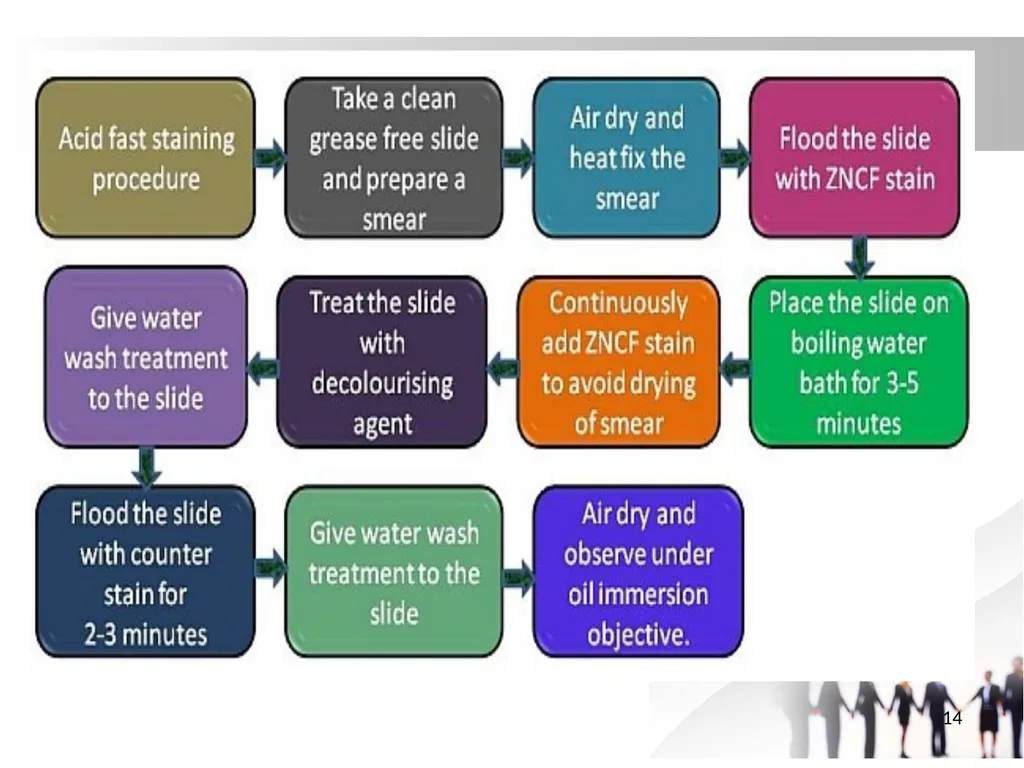
Procedure of Acid-Fast Stain Prepare bacterial smear on clean and grease free slide, using sterile technique.
Allow smear to air dry and then heat fix.
Alcohol-fixation: This is recommended when the smear has not been prepared from sodium hypochlorite (bleach) treated sputum and will not be stained immediately. M. tuberculosis is killed by bleach and during the staining process. ●●●
9<br>
10
Procedure of Acid-Fast Stain Cover the smear with carbol fuchsin stain.
Heat the stain until vapour just begins to rise (i.e. about 60 C). Do not overheat. Allow the heated stain to remain on the slide for 5 minutes.
Heating the stain: Great care must be taken when heating the carbol fuchsin especially if staining is carried out over a tray or other container in which highly fiammable chemicals have collected from previous staining. ●●●
10<br>
11
Procedure of Acid-Fast Stain Wash off the stain with clean water.
Note: When the tap water is not clean, wash the smear with filtered water or clean boiled rainwater.
Cover the smear with 3% v/v acid alcohol for 5 minutes or until the smear is sufficiently decolorized, i.e. pale pink. ●●●
11<br>
12
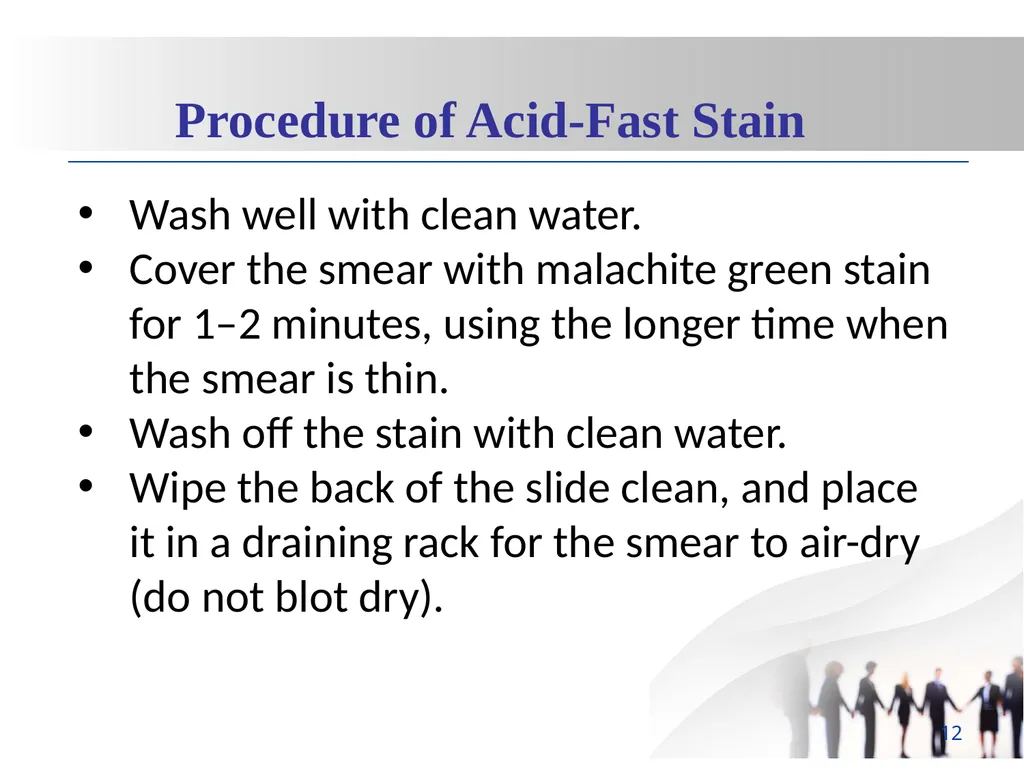
Procedure of Acid-Fast Stain Wash well with clean water.
Cover the smear with malachite green stain for 1–2 minutes, using the longer time when the smear is thin.
Wash off the stain with clean water.
Wipe the back of the slide clean, and place it in a draining rack for the smear to air-dry (do not blot dry). 12<br>
13
13<br>
14
14<br>
15
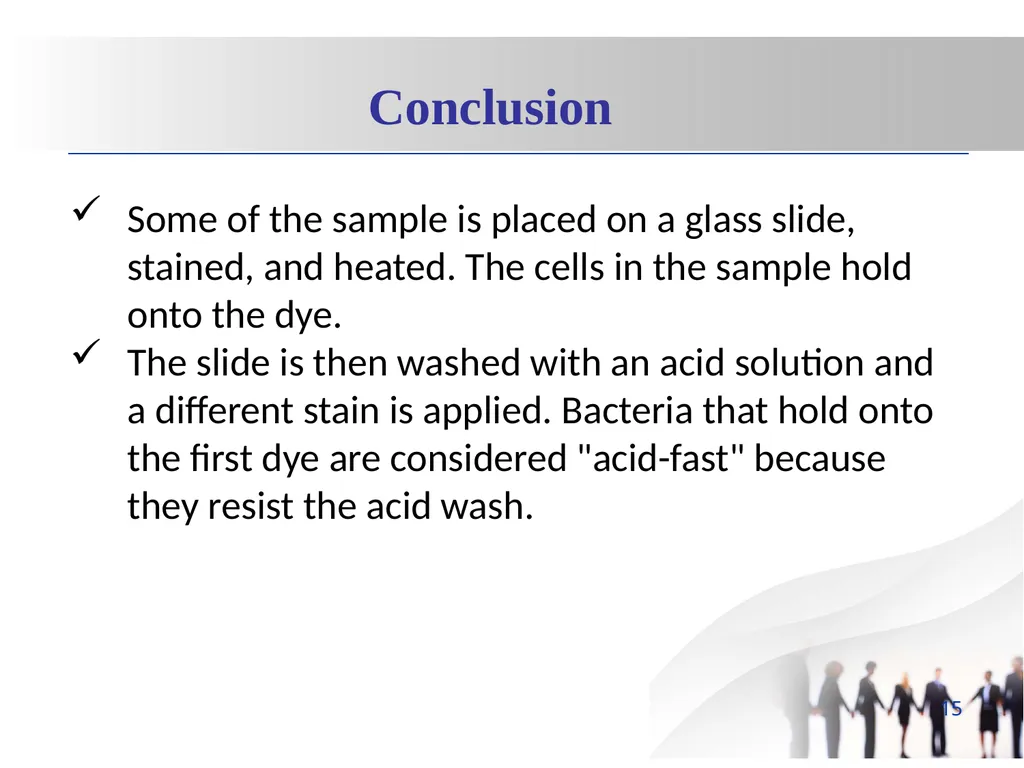
Conclusion Some of the sample is placed on a glass slide, stained, and heated. The cells in the sample hold onto the dye.
The slide is then washed with an acid solution and a different stain is applied. Bacteria that hold onto the first dye are considered "acid-fast" because they resist the acid wash. 15<br>