
Tishk International University Education Faculty
SN
Published · 31 slides · 0 views

1 / 1


Description
Tishk International University Education Faculty ELT Department ENGLISH LITERATURE 2rd Grade- Spring Semester 2020-2021 Literary Genres-Drama Lecturer: Sami Hussein Topics covered: Genres (types) Of Literature (Fiction, Non-fiction, Poetry
Related Topics
Share
Embed code
Download this presentation From Below
"Tishk International University Education Faculty" is the property of its rightful owner. Permission is granted to download and print the materials on this website for personal, non-commercial use only, and to display it on your personal computer provided you do not modify the materials and that you retain all copyright notices contained in the materials. By downloading content from our website, you accept the terms of this agreement.
Presentation Transcript
01
Tishk International University
Education Faculty
ELT Department ENGLISH LITERATURE 2rd Grade- Spring Semester 2020-2021 Literary Genres-Drama Lecturer: Sami Hussein<br>
02
Topics covered: Genres (types) Of Literature (Fiction, Non-fiction, Poetry & drama)
What is drama?
Origins and a Brief History of Drama
Elements of Drama
What makes Drama Unique
Genres (types) of Drama (Tragedy, Comedy & Melodrama)
The Elements of Good Drama (specifically tragedy) according to Aristotle (384-322 BC)<br>
03
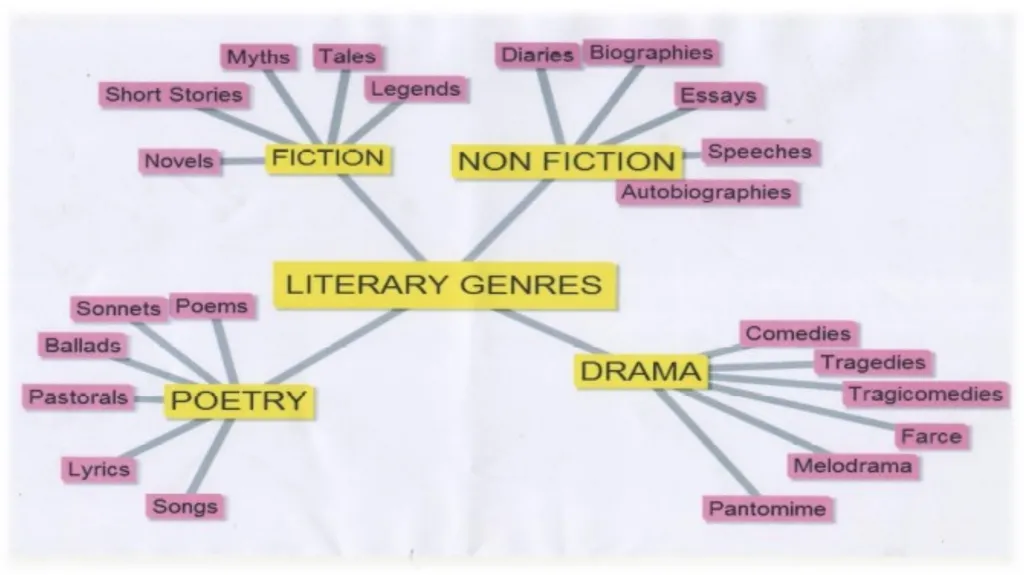
Literary Genres Literature has many different types, generally written either in prose or in verse (poetry). These types are known as genres. As a literary term, “genre” refers to any particular type of literary writing, characterized by special conventions, and by recognizable features in form, style, or subject matter, shared by all works of this type.
Convention is a characteristic of a literary genre that is understood and accepted by audiences because it has come, through usage and time, to be recognized as a familiar technique. For example, the division of a play into acts and scenes is a dramatic convention; whereas meter and rhyme are poetic conventions.<br>
04
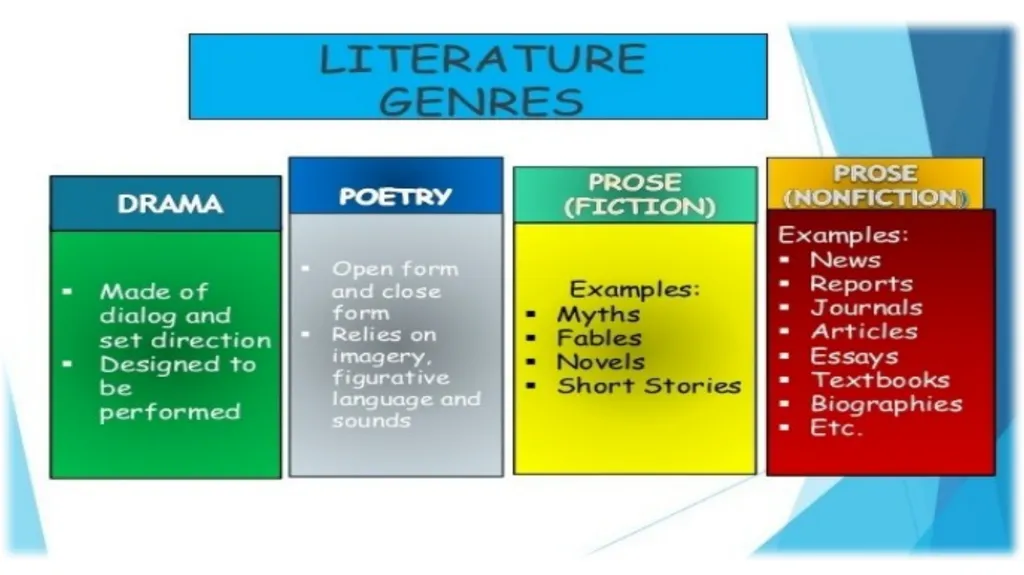
Genres (types) Of Literature Basic Genres of Literature
Poetry Drama Fiction Non-Fiction
Generally, Literature is divided into two (2) kinds, namely, Fictional and Non-Fictional Literature.
Fictional Literature is imaginary composed writing or work of art that is meant to provide some sorts of information and entertainment to the reader. It features imaginary characters and events. In other words, fictional literature is based on the writer’s imagination rather than reality.
Non – fictional Literature is factual writing or written work that is gives facts that can be proved as it provides real places, events, characters, times or reality rather than imaginary things.<br>
05
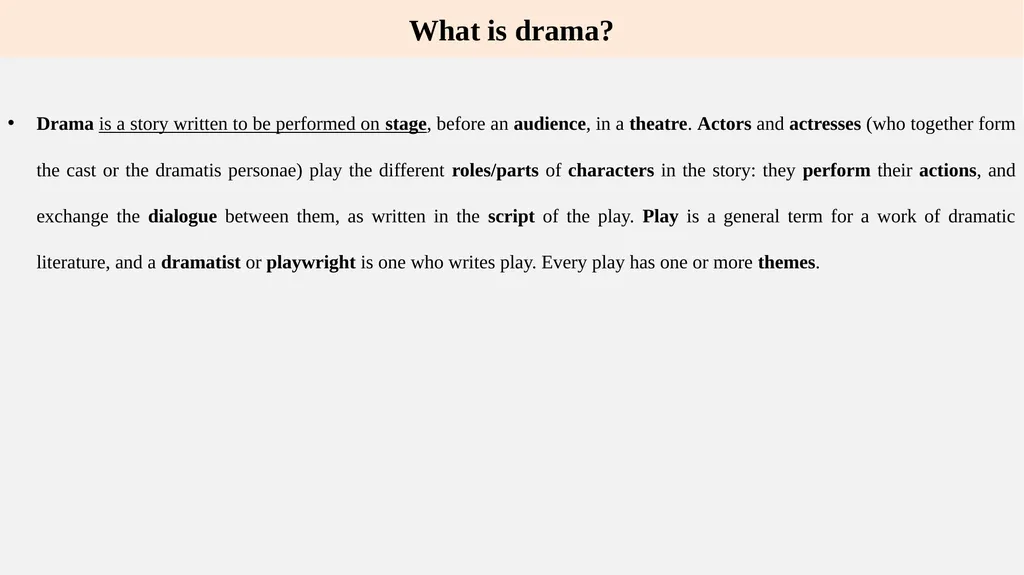
What is drama? Drama is a story written to be performed on stage, before an audience, in a theatre. Actors and actresses (who together form the cast or the dramatis personae) play the different roles/parts of characters in the story: they perform their actions, and exchange the dialogue between them, as written in the script of the play. Play is a general term for a work of dramatic literature, and a dramatist or playwright is one who writes play. Every play has one or more themes.<br>
06
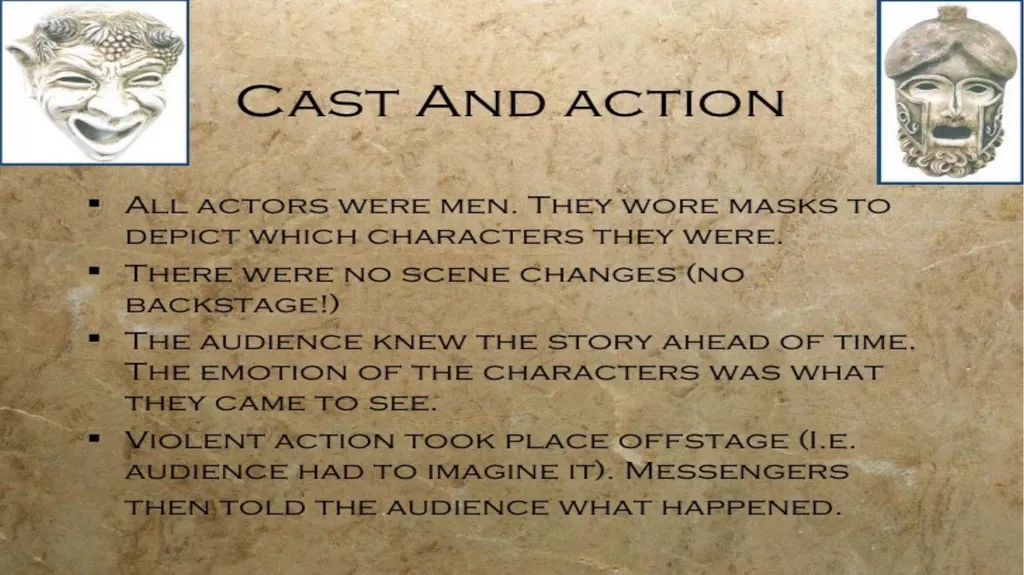
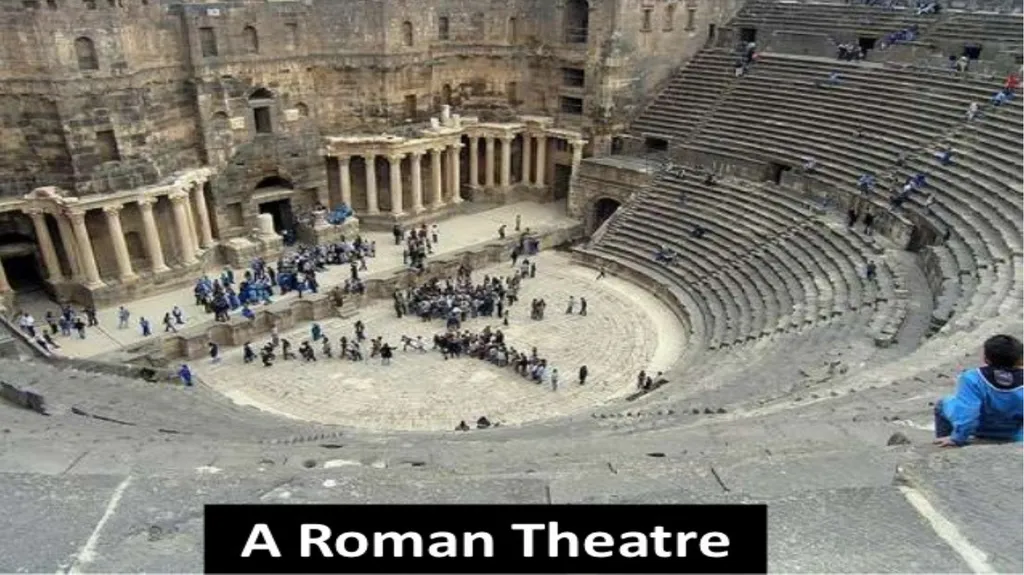
Origins and a Brief History of Drama The oldest drama known is Greek drama. Its beginning dates back to the sixth century B.C.
In Greece, dramatic performances were associated with religious festivals.
The Greeks were the first to write good drama.
The Greeks were the first to hold contests in drama adaptation and performance, held during annual festivals.
The Greeks were the first to build a special place for performance, supplied with special facilities.
And the Greeks were the first to standardize drama (namely, tragedy & comedy) and to set rules for it.
This is why Greek drama is considered the origin of this genre. With the three great masters of Greek tragedy Aeschylus (c.525- c.456 BC), Sophocles (c. 496- 406 BC), and Euripides (c. 480- 406 BC), drama reached its first golden age, whereas Aristotle (384-322 BC) was the first philosopher to set rules for good tragedy.<br>
07
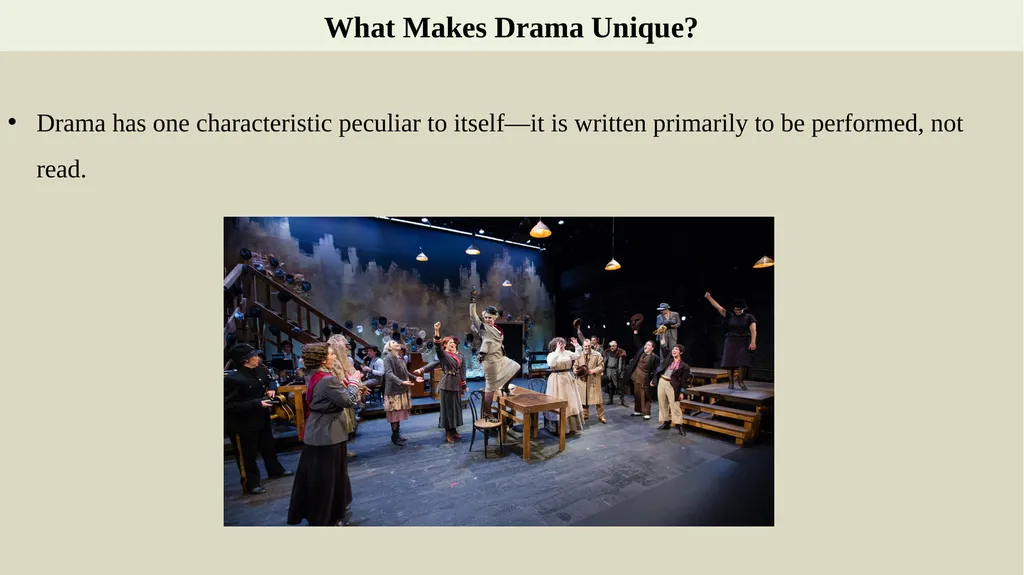
What Makes Drama Unique? Drama has one characteristic peculiar to itself—it is written primarily to be performed, not read.<br>
08
Problems While Drama is Read Lack of Music
Identification of Characters
Human Element<br>
09
Elements of Drama The main elements of drama are setting, character, and plot.
1. Setting: is the physical and social context in which the action of the story occurs. The major elements of setting are time, place that frame the events and characters. Setting may largely affect the reader’s understanding and judgment, and can be used to evoke a mood or an atmosphere that will prepare the reader for what is to come. Often, writers choose a particular setting because of traditional associations with that setting that are closely related to the action of the story.<br>
10
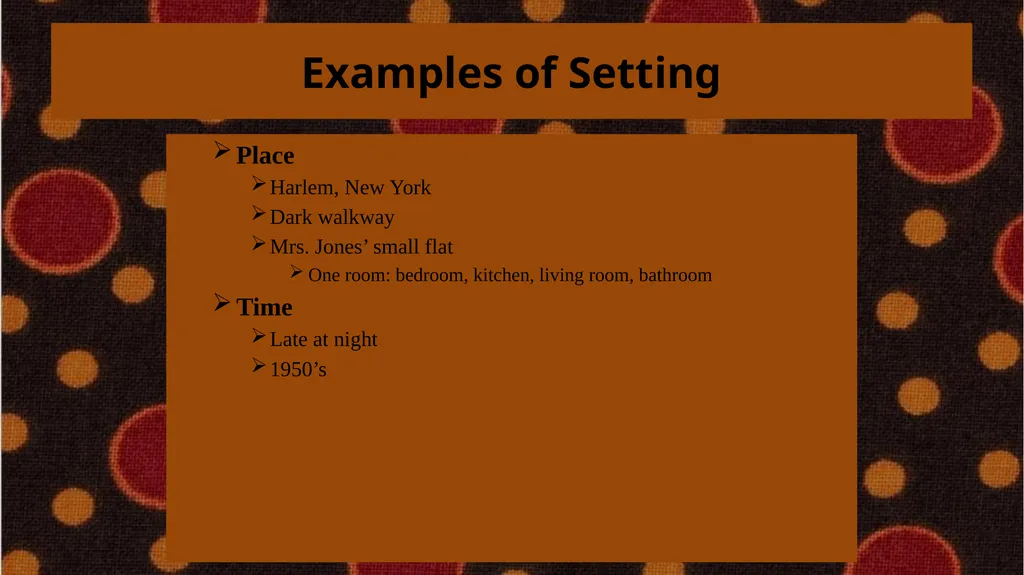
Examples of Setting Place
Harlem, New York
Dark walkway
Mrs. Jones’ small flat
One room: bedroom, kitchen, living room, bathroom
Time
Late at night
1950’s<br>
11
2. Character A character is a person presented in a dramatic or narrative work, and characterization is the process by which a writer gives personality to characters, and makes them seem real.
In a play, there are usually major and minor characters. A hero (or heroine, for a female), often called the protagonist, is the central character who engages the reader’s interest and empathy. The antagonist is the character, force or collection of forces that stands directly opposed to the protagonist and gives rise to the conflict of the story.<br>
12
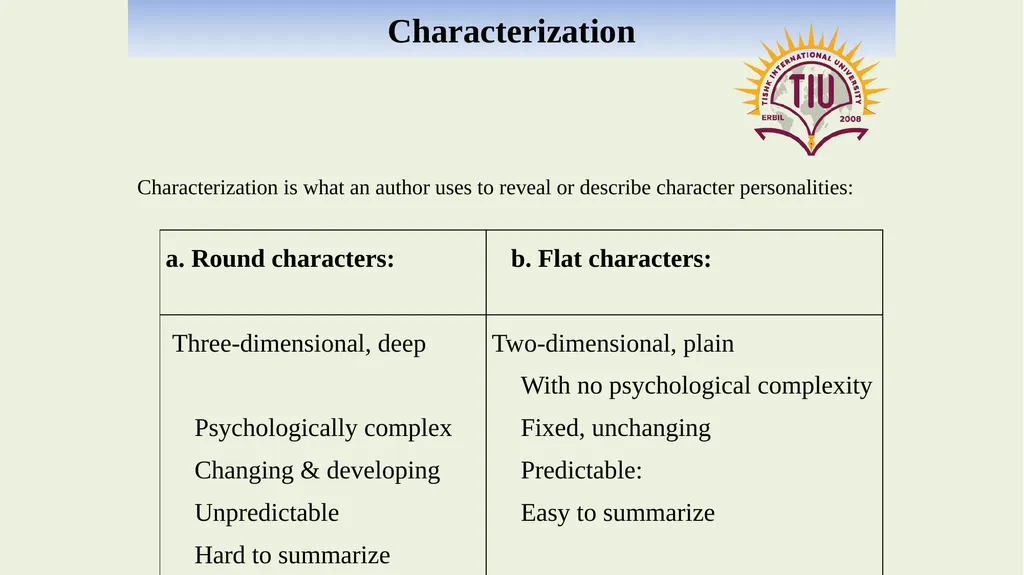
Characterization Characterization is what an author uses to reveal or describe character personalities:<br>
13
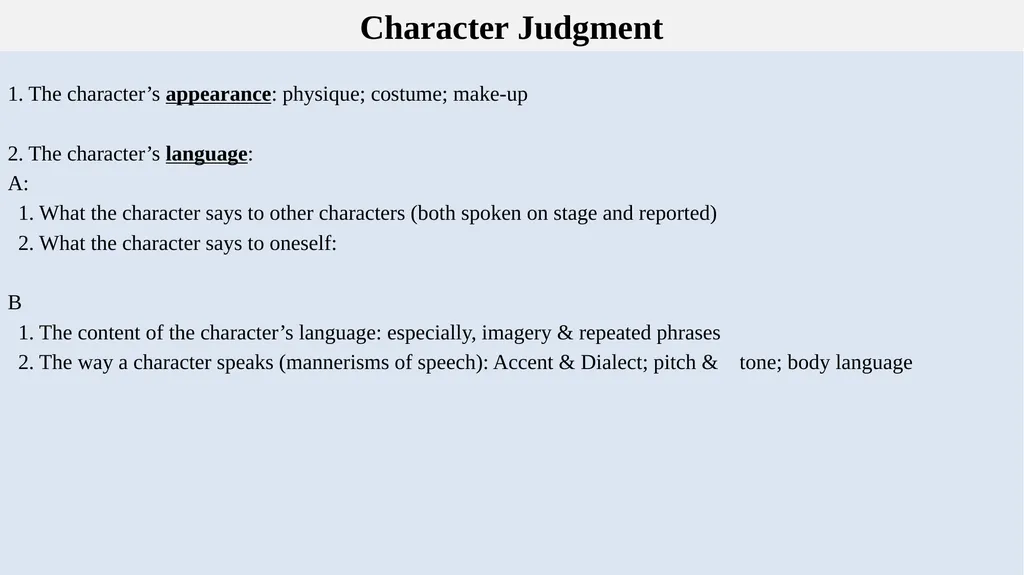
Character Judgment 1. The character’s appearance: physique; costume; make-up
2. The character’s language:
A:
1. What the character says to other characters (both spoken on stage and reported)
2. What the character says to oneself:
B
1. The content of the character’s language: especially, imagery & repeated phrases
2. The way a character speaks (mannerisms of speech): Accent & Dialect; pitch & tone; body language<br>
14
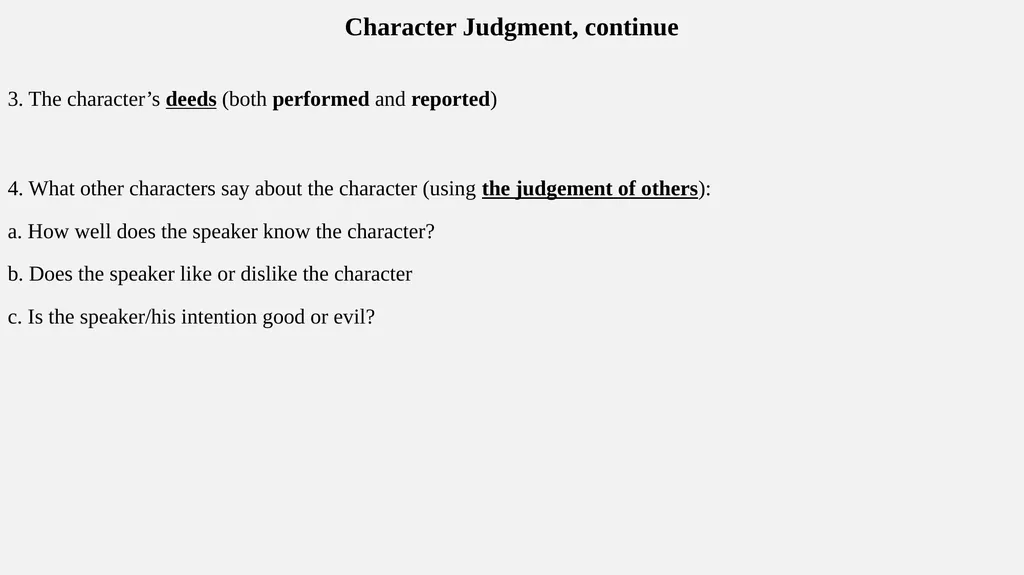
Character Judgment, continue 3. The character’s deeds (both performed and reported)
4. What other characters say about the character (using the judgement of others):
a. How well does the speaker know the character?
b. Does the speaker like or dislike the character
c. Is the speaker/his intention good or evil?<br>
15
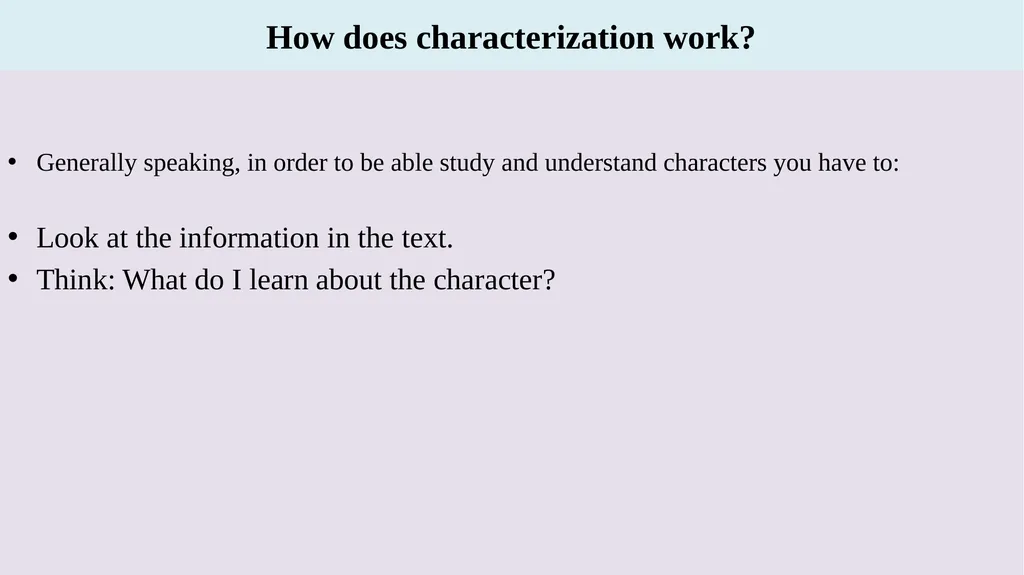
How does characterization work? Generally speaking, in order to be able study and understand characters you have to:
Look at the information in the text.
Think: What do I learn about the character?<br>
16
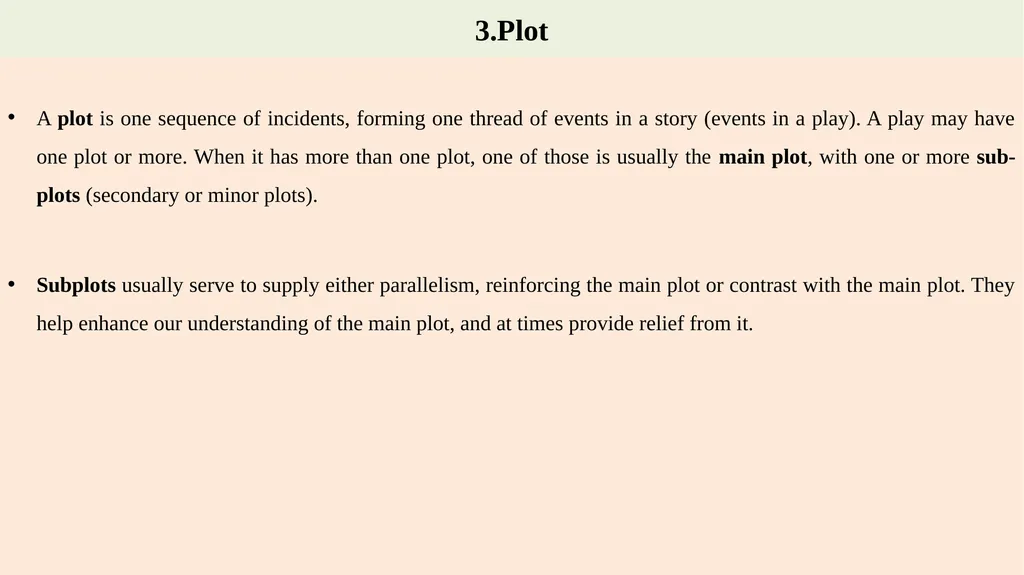
3.Plot A plot is one sequence of incidents, forming one thread of events in a story (events in a play). A play may have one plot or more. When it has more than one plot, one of those is usually the main plot, with one or more sub-plots (secondary or minor plots).
Subplots usually serve to supply either parallelism, reinforcing the main plot or contrast with the main plot. They help enhance our understanding of the main plot, and at times provide relief from it.<br>
17
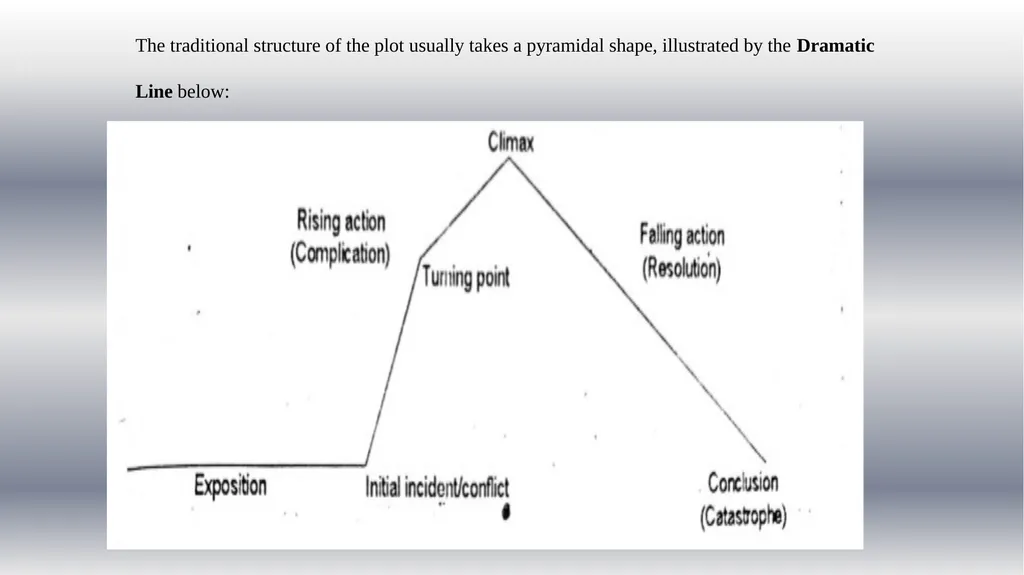
The traditional structure of the plot usually takes a pyramidal shape, illustrated by the Dramatic Line below:<br>
18
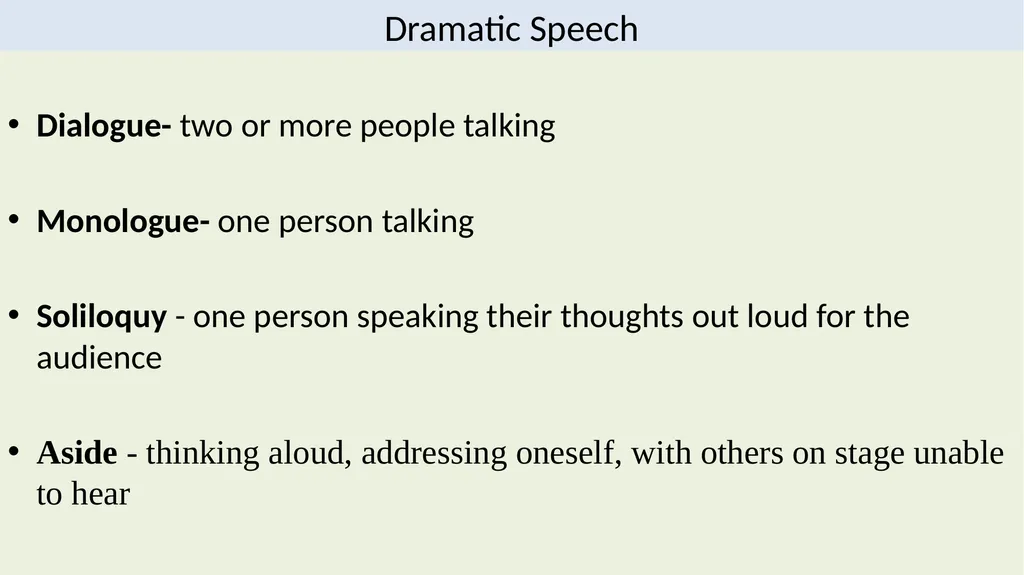
Dramatic Speech Dialogue- two or more people talking
Monologue- one person talking
Soliloquy - one person speaking their thoughts out loud for the audience
Aside - thinking aloud, addressing oneself, with others on stage unable to hear<br>
19
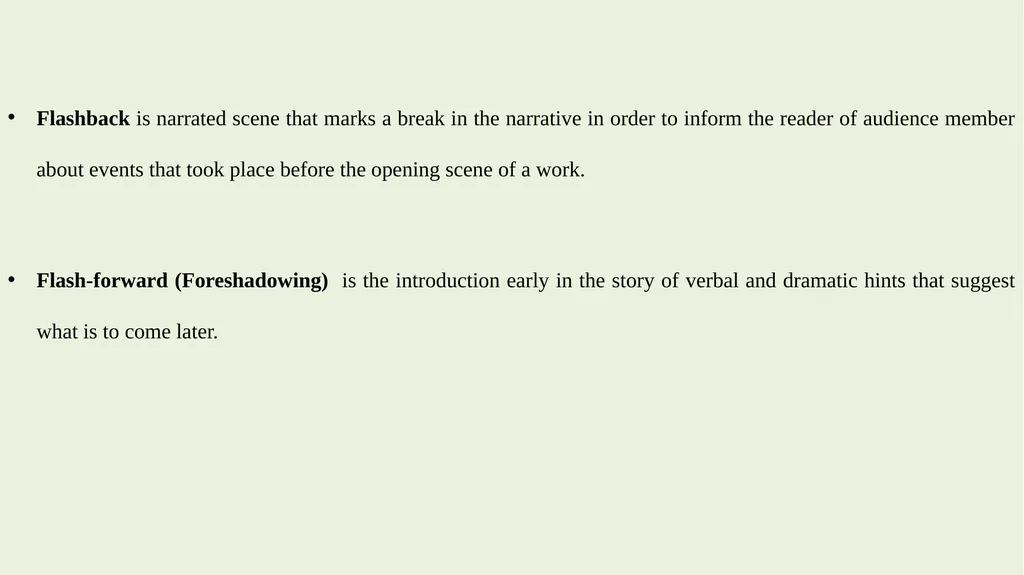
Flashback is narrated scene that marks a break in the narrative in order to inform the reader of audience member about events that took place before the opening scene of a work.
Flash-forward (Foreshadowing) is the introduction early in the story of verbal and dramatic hints that suggest what is to come later.<br>
20
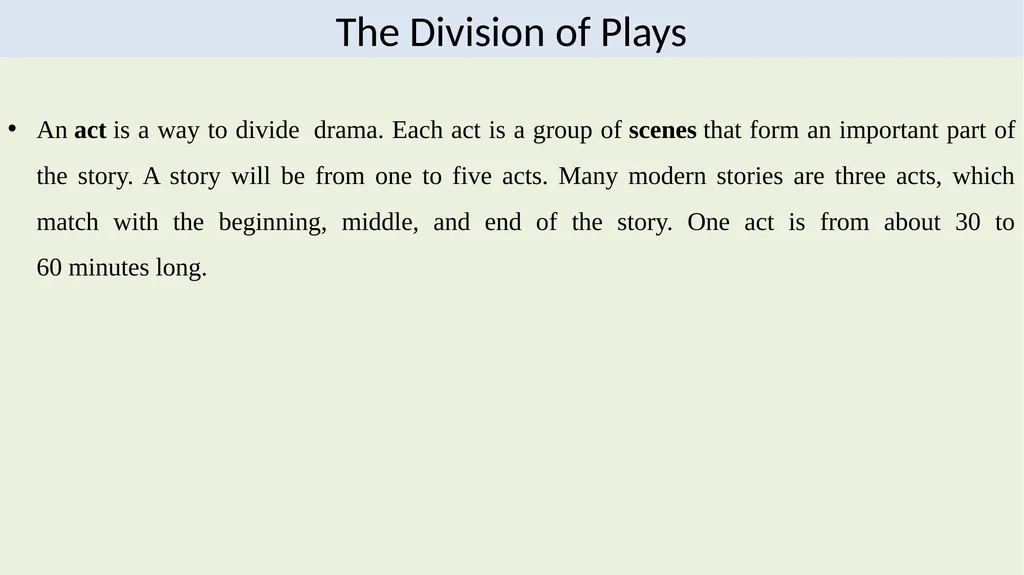
The Division of Plays An act is a way to divide drama. Each act is a group of scenes that form an important part of the story. A story will be from one to five acts. Many modern stories are three acts, which match with the beginning, middle, and end of the story. One act is from about 30 to 60 minutes long.<br>
21
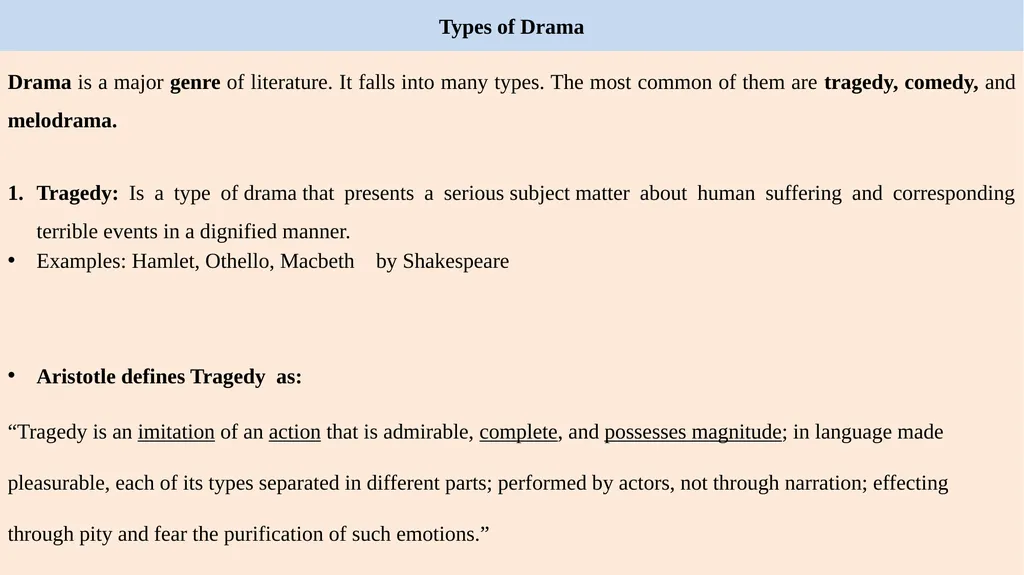
Types of Drama Drama is a major genre of literature. It falls into many types. The most common of them are tragedy, comedy, and melodrama.
Tragedy: Is a type of drama that presents a serious subject matter about human suffering and corresponding terrible events in a dignified manner.
Examples: Hamlet, Othello, Macbeth by Shakespeare
Aristotle defines Tragedy as:
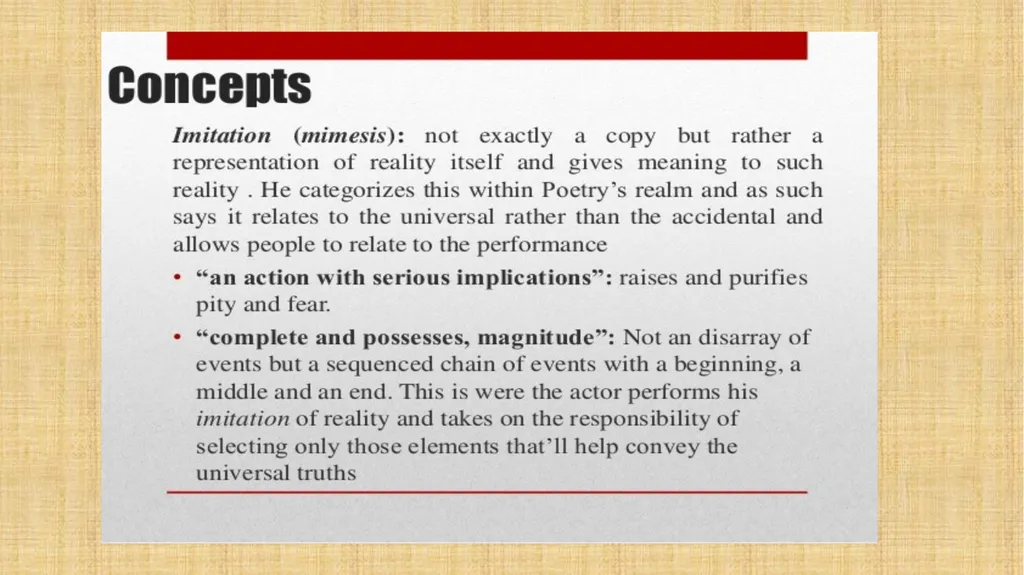
“Tragedy is an imitation of an action that is admirable, complete, and possesses magnitude; in language made pleasurable, each of its types separated in different parts; performed by actors, not through narration; effecting through pity and fear the purification of such emotions.”<br>
22
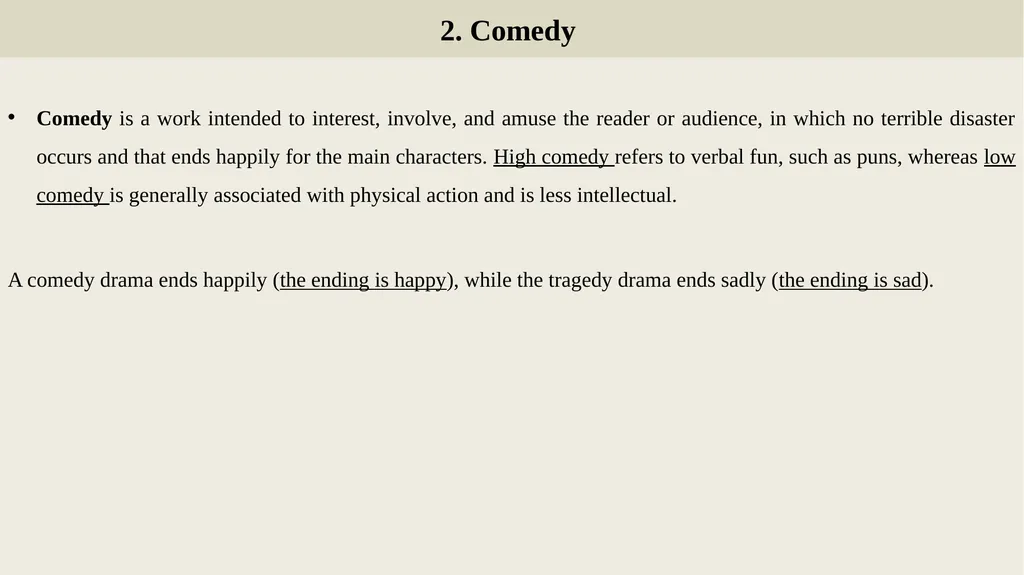
2. Comedy Comedy is a work intended to interest, involve, and amuse the reader or audience, in which no terrible disaster occurs and that ends happily for the main characters. High comedy refers to verbal fun, such as puns, whereas low comedy is generally associated with physical action and is less intellectual.
A comedy drama ends happily (the ending is happy), while the tragedy drama ends sadly (the ending is sad).<br>
23
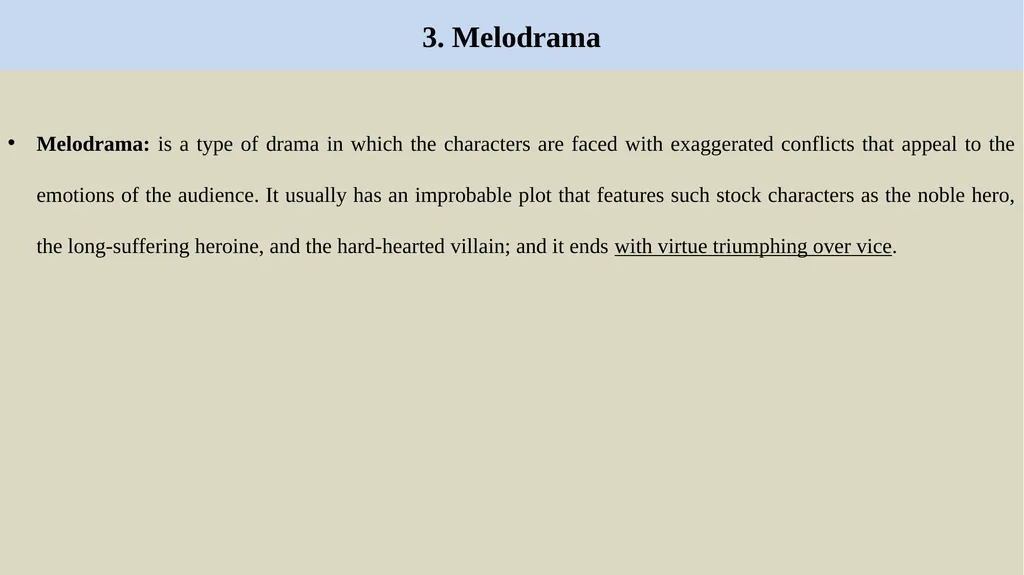
3. Melodrama Melodrama: is a type of drama in which the characters are faced with exaggerated conflicts that appeal to the emotions of the audience. It usually has an improbable plot that features such stock characters as the noble hero, the long-suffering heroine, and the hard-hearted villain; and it ends with virtue triumphing over vice.<br>
24
The Elements of Good Drama (specifically tragedy) according to Aristotle (384-322 BC) A good drama (specifically tragedy) has to include 6 elements: plot, character, thought, diction, music, and spectacle.
Plot: “The plot, then, is the first principle, and, as it were, the soul of a tragedy”.
2. Character: “Character is that which reveals moral purpose, showing what kind of things a man chooses or avoids”.
3. Thought: “Thought is the talent of saying what is possible and relevant in given circumstances”.
4. Diction: “Diction; by which I mean, as has been already said, the expression of the meaning in words; and its essence is the same both in verse and prose.”
5. Music: “Song holds the chief place among the embellishments”.
6. Spectacle: “The Spectacle has, indeed, an emotional attraction of its own, but, of all the parts, it is the least artistic”<br>