What is Communication Communication From the Latin
Description: What is Communication Communication From the Latin word Communicare(to share) or Communis (to make common) -Act of transferringtransmitting receiving ideas, information and message from one person to another Two way process between
Related Topics
Download Presentation
"What is Communication Communication From the Latin" is the property of its rightful owner. Permission is granted to download and print the materials on this website for personal, non-commercial use only, and to display it on your personal computer provided you do not modify the materials and that you retain all copyright notices contained in the materials. By downloading content from our website, you accept the terms of this agreement.
Presentation Transcript
slide1. What is Communication<br>
slide2. Communication From the Latin word “Communicare”(to share) or “Communis” (to make common)
-Act of transferring/transmitting & receiving ideas, information and message from one person to another
Two way process between SENDER & RECEIVER
A dynamic process, continuous process
Information, ideas & messages are transmitted through mutually understood signs
-It is the creation and exchange of meaning<br>
slide3. 2 Basic types of Communication- Oral & Written The Process of Communication-
Communication is the active process of sending and receiving messages through verbal & non verbal means including speech (words & language), writing and graphical representations (pictures, maps, chart), signs & signals and behaviour.
-The process of communication involves various stages/ components.
- It is related with sharing & understanding of information.<br>
slide4. Objective of Communication Deliver a message, idea & information
Create Understanding
Definitions-
Keith Davis- Communication is a process of passing information and understanding from one person to another
Louis Allen- Communication is a bridge of meaning. It involves a systematic and continuous process of telling, listening and understanding.<br>
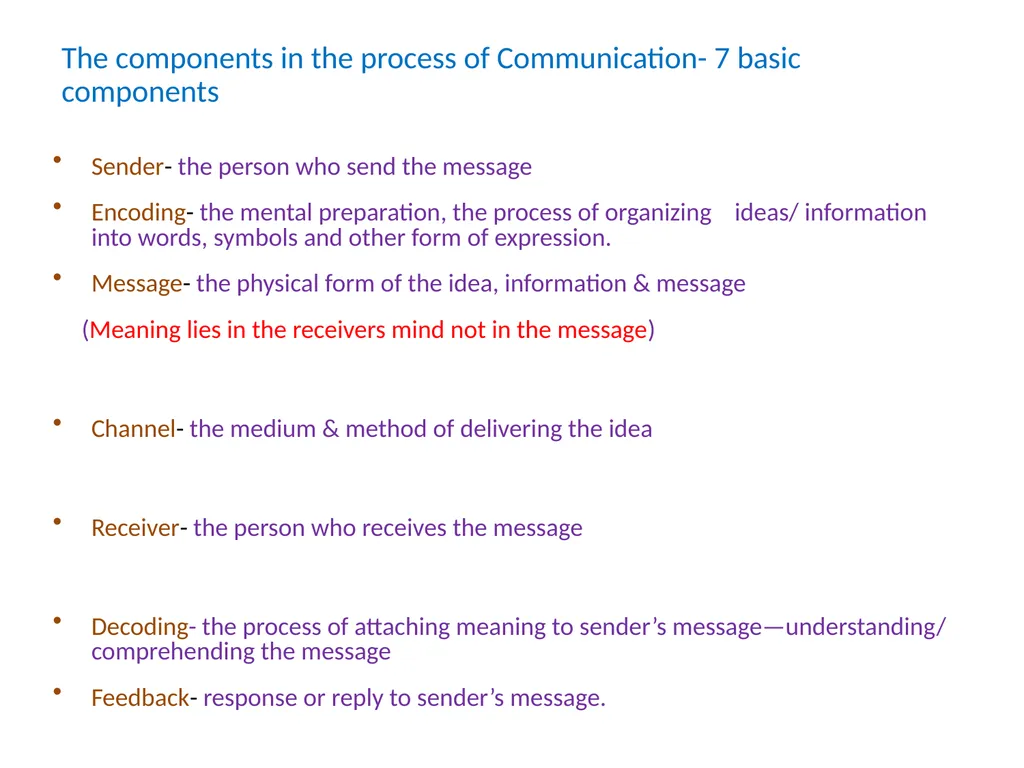
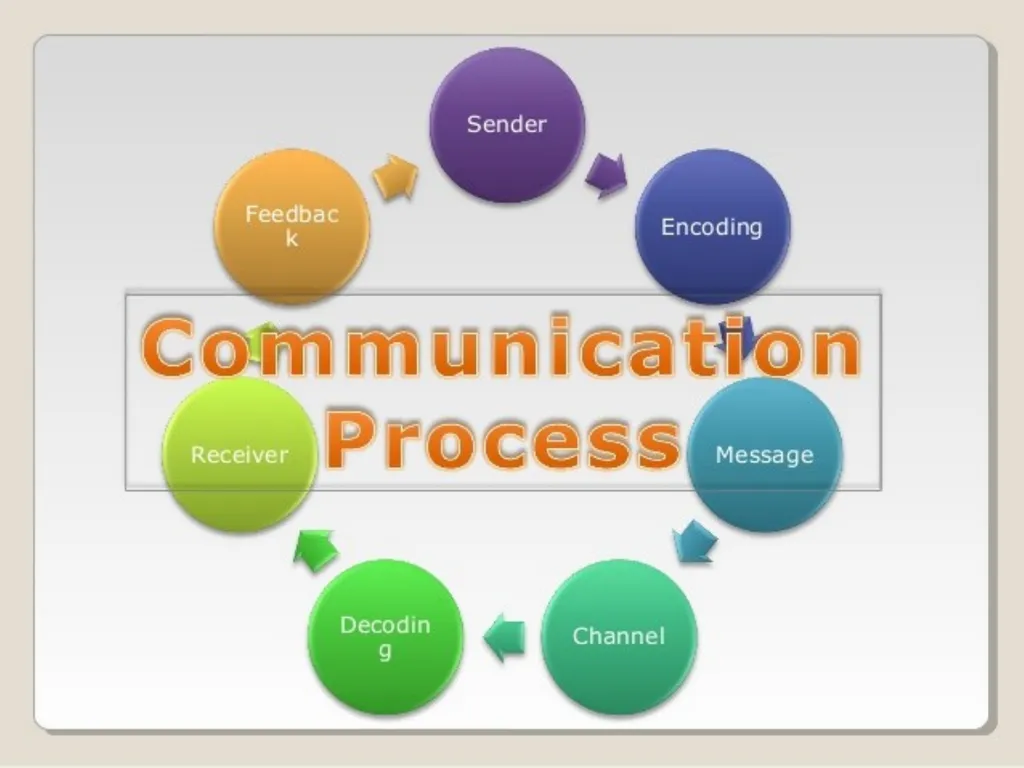
slide5. The components in the process of Communication- 7 basic components Sender- the person who send the message
Encoding- the mental preparation, the process of organizing ideas/ information into words, symbols and other form of expression.
Message- the physical form of the idea, information & message
(Meaning lies in the receivers mind not in the message)
Channel- the medium & method of delivering the idea
Receiver- the person who receives the message
Decoding- the process of attaching meaning to sender’s message—understanding/ comprehending the message
Feedback- response or reply to sender’s message.<br>
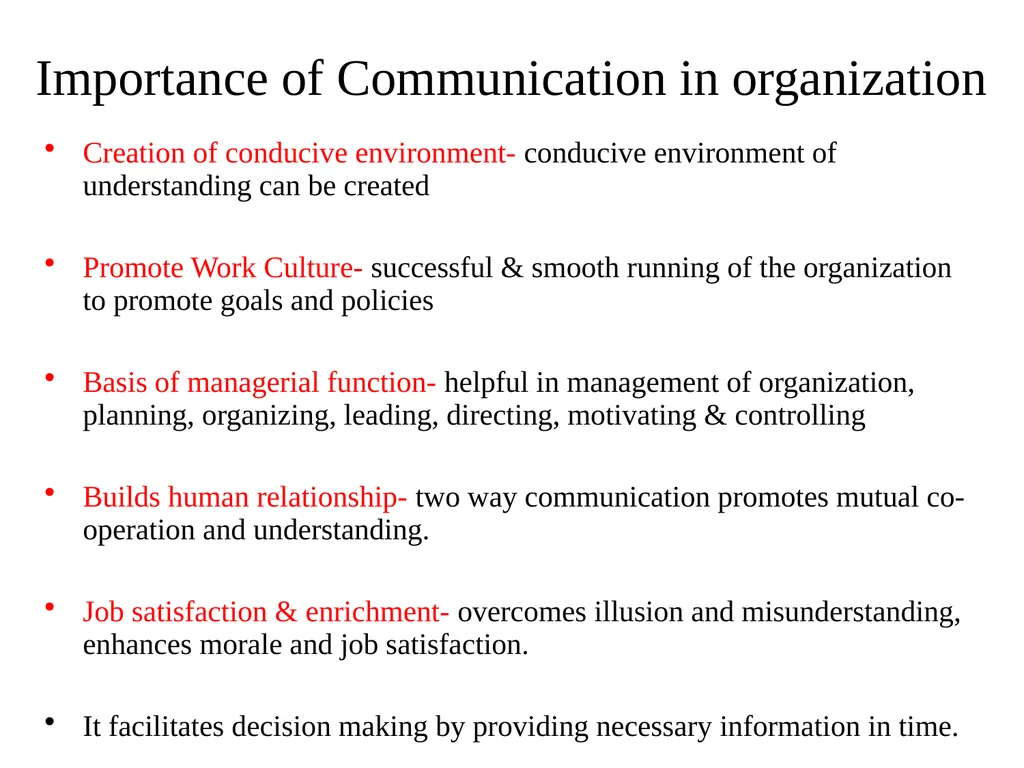
slide7. Importance of Communication in organization Creation of conducive environment- conducive environment of understanding can be created
Promote Work Culture- successful & smooth running of the organization to promote goals and policies
Basis of managerial function- helpful in management of organization, planning, organizing, leading, directing, motivating & controlling
Builds human relationship- two way communication promotes mutual co-operation and understanding.
Job satisfaction & enrichment- overcomes illusion and misunderstanding, enhances morale and job satisfaction.
It facilitates decision making by providing necessary information in time.<br>
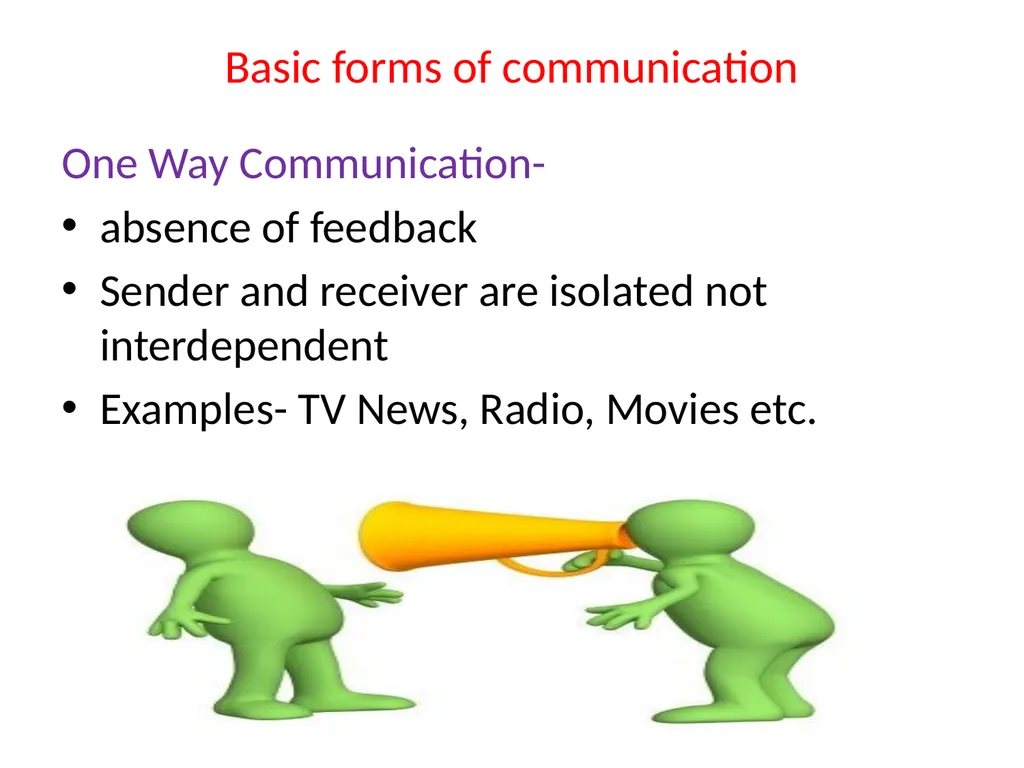
slide8. Basic forms of communication One Way Communication-
absence of feedback
Sender and receiver are isolated not interdependent
Examples- TV News, Radio, Movies etc.<br>
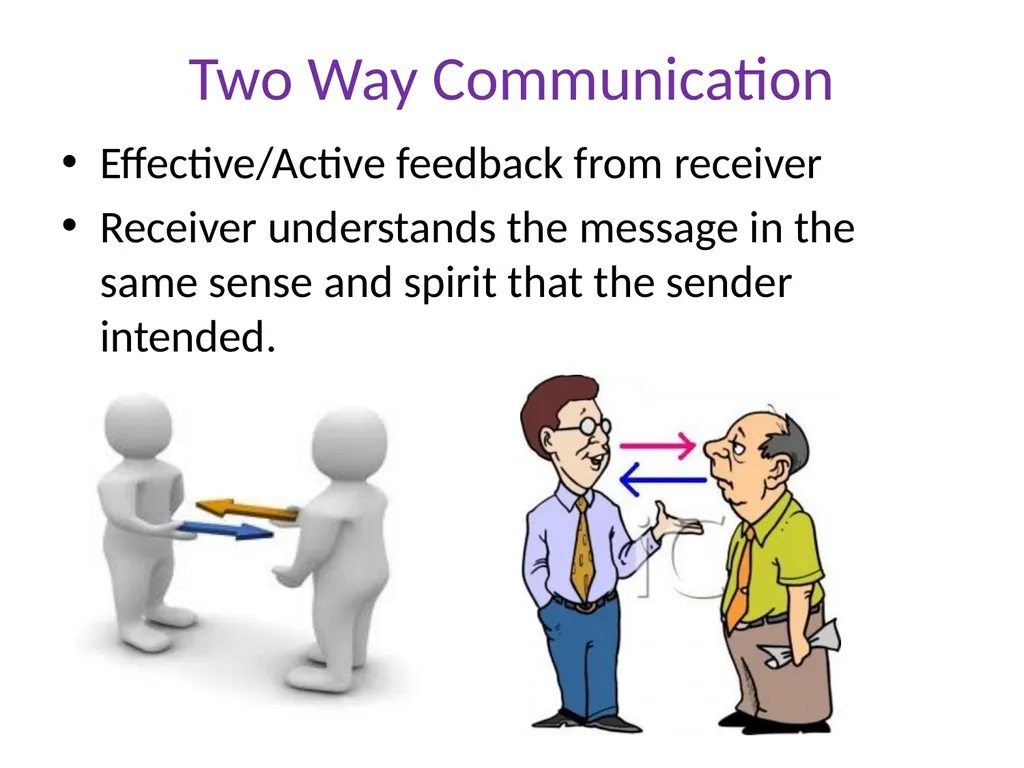
slide9. Two Way Communication Effective/Active feedback from receiver
Receiver understands the message in the same sense and spirit that the sender intended.<br>
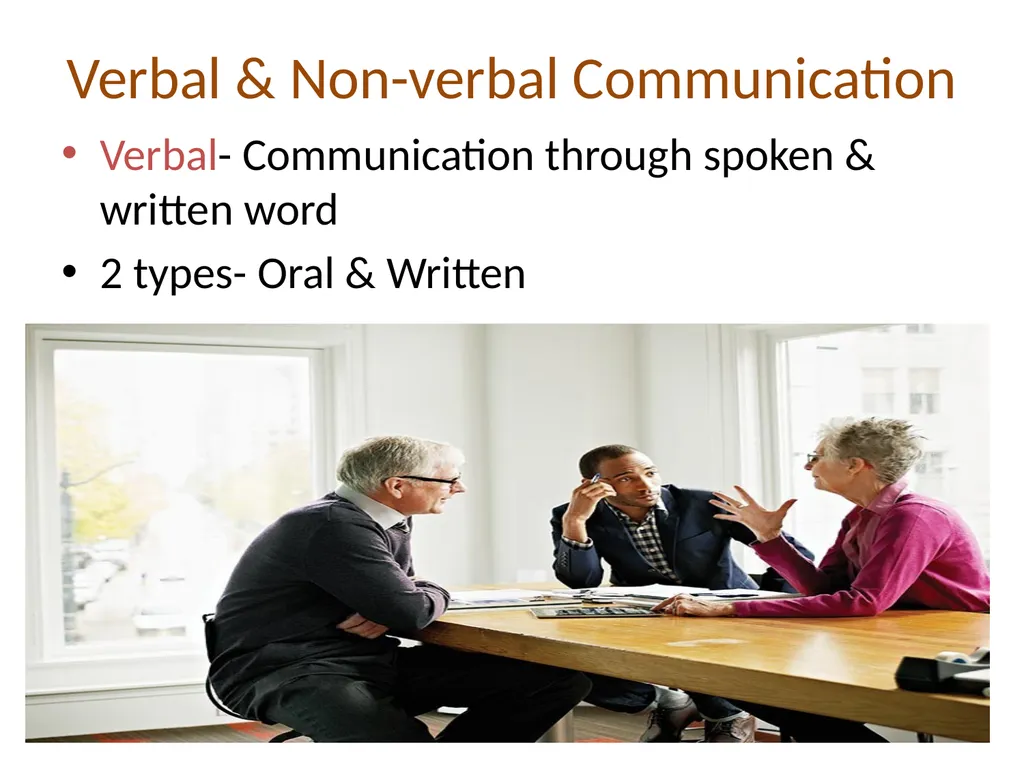
slide10. Verbal & Non-verbal Communication Verbal- Communication through spoken & written word
2 types- Oral & Written<br>
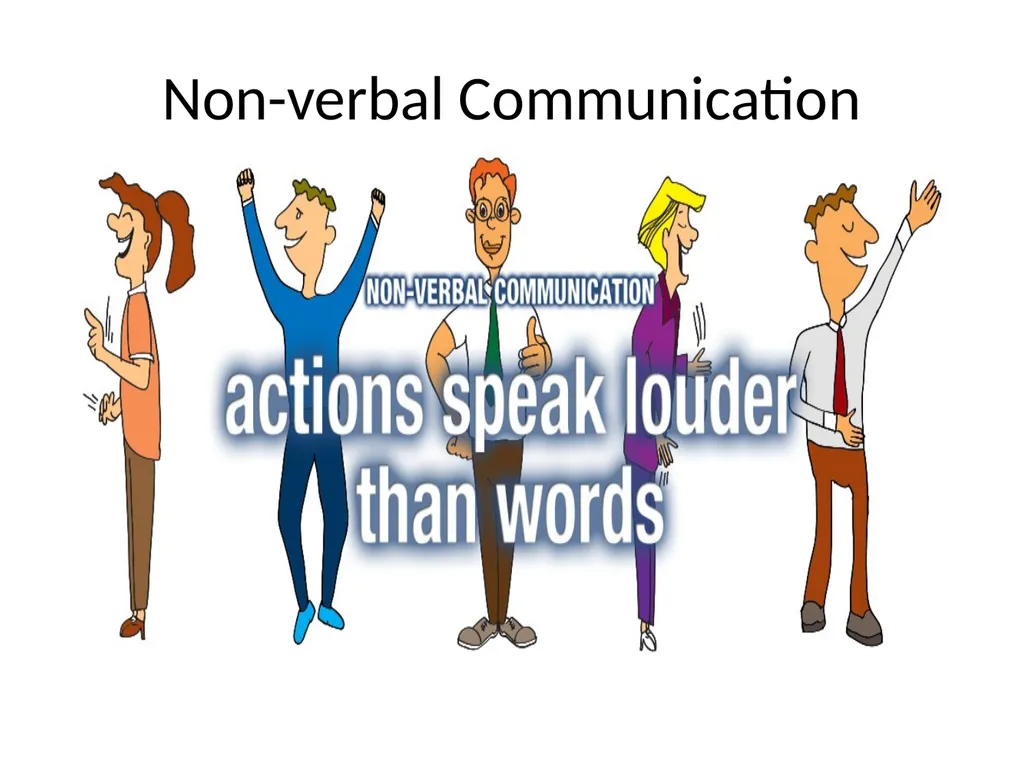
slide11. Non-verbal Communication<br>
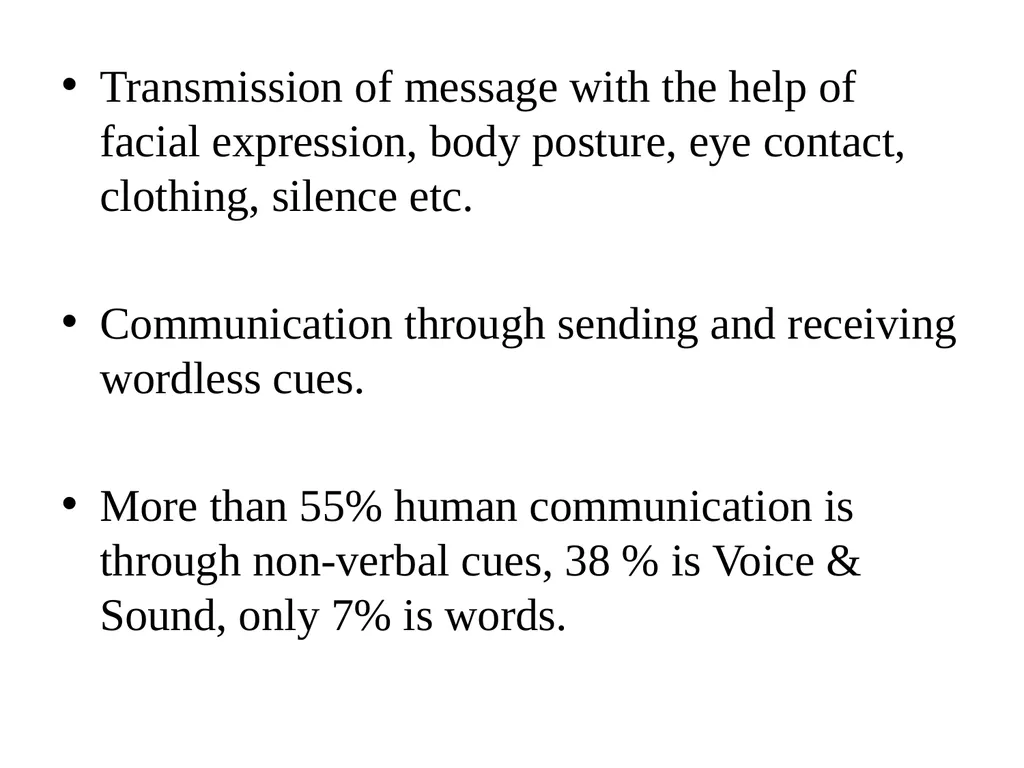
slide12. Transmission of message with the help of facial expression, body posture, eye contact, clothing, silence etc.
Communication through sending and receiving wordless cues.
More than 55% human communication is through non-verbal cues, 38 % is Voice & Sound, only 7% is words.<br>
slide13. Through facial-expression, body postures, eye contacts, clothing, silence etc
Instinctive and spontaneous
God given language
Types of Non-Verbal Communication:
A. Kinesics
B. Proxemics
C. Chronemics
D. Paralanguage
E. Haptics<br>
slide14. Formal & Informal Communication Communication inside the official set up regarding official matters
It is structured on the basis of hierarchy, authority & accountability
Information can move both horizontally & vertically
Examples- Departmental meetings, conferences, circulars, company news, interviews etc.<br>
slide15. Informal Communication Communication of the members of the organization regarding unofficial matters
It takes place outside the formally prescribed & planned network or channel
It is spontaneous & off the record communication between peers, colleagues, classmates etc.
No set rules & regulations and no particular direction.<br>
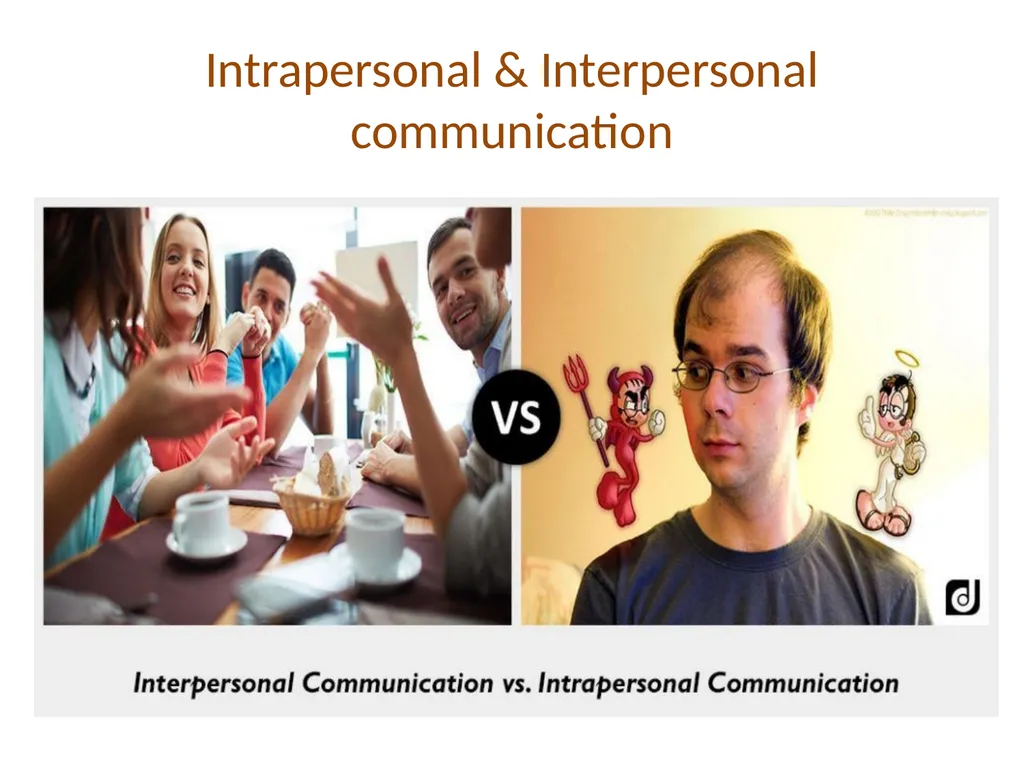
slide16. Intrapersonal & Interpersonal communication<br>
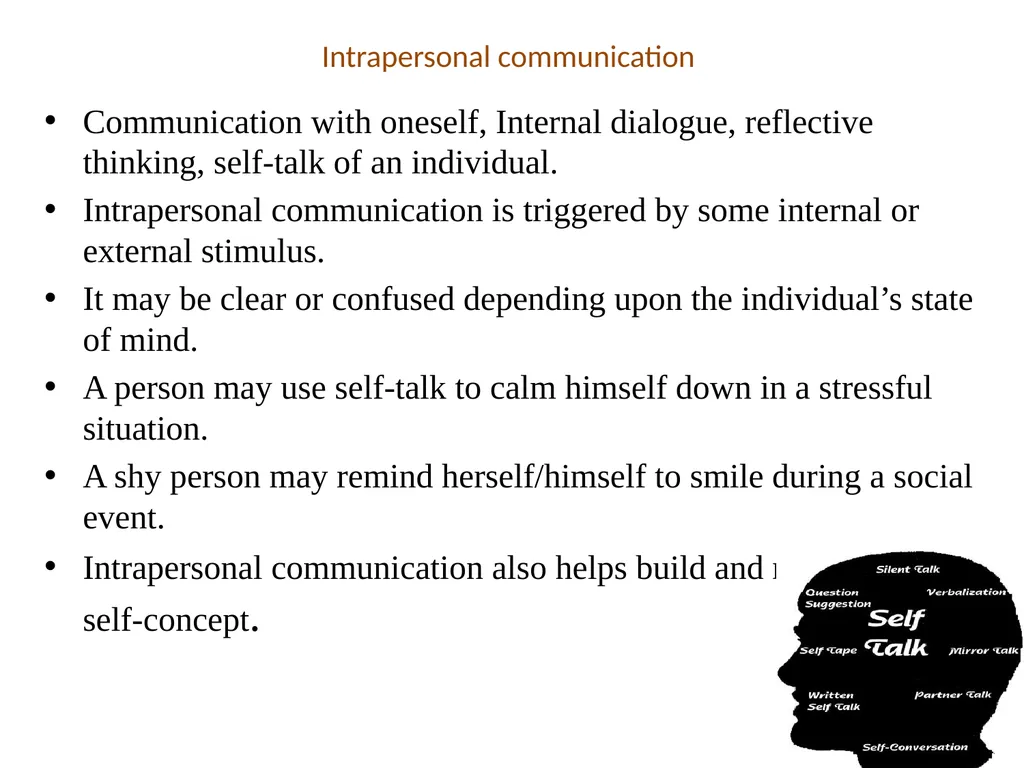
slide17. Intrapersonal communication Communication with oneself, Internal dialogue, reflective thinking, self-talk of an individual.
Intrapersonal communication is triggered by some internal or external stimulus.
It may be clear or confused depending upon the individual’s state of mind.
A person may use self-talk to calm himself down in a stressful situation.
A shy person may remind herself/himself to smile during a social event.
Intrapersonal communication also helps build and maintain our self-concept.<br>
slide18. Interpersonal Communication Communication between two or more people whose lives mutually influence one another. we spend more time engaged in interpersonal communication than the other forms of communication.
Interpersonal communication builds, maintains, and ends our relationships.
It signifies positive, personal, internal, and interactive relationship between the persons involved.
Interpersonal communication can be planned or unplanned,
More structured and influenced by social expectations than intrapersonal communication.
Interpersonal communication is also more goal oriented than intrapersonal communication and fulfills instrumental and relational needs.<br>
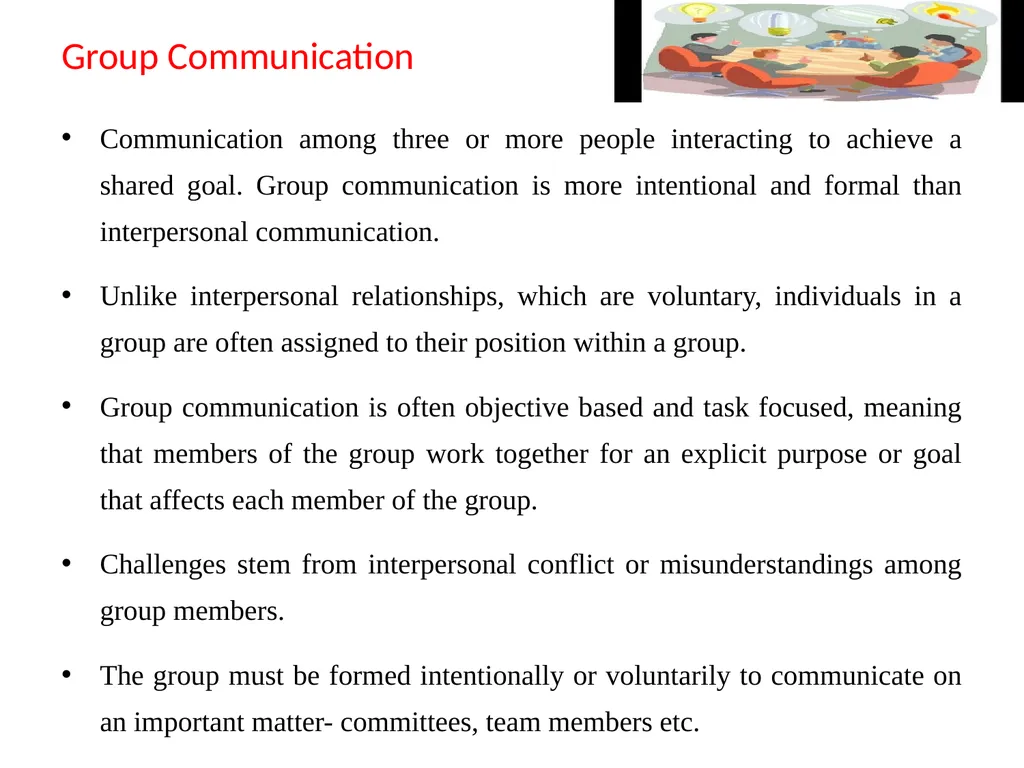
slide19. Group Communication Communication among three or more people interacting to achieve a shared goal. Group communication is more intentional and formal than interpersonal communication.
Unlike interpersonal relationships, which are voluntary, individuals in a group are often assigned to their position within a group.
Group communication is often objective based and task focused, meaning that members of the group work together for an explicit purpose or goal that affects each member of the group.
Challenges stem from interpersonal conflict or misunderstandings among group members.
The group must be formed intentionally or voluntarily to communicate on an important matter- committees, team members etc.<br>
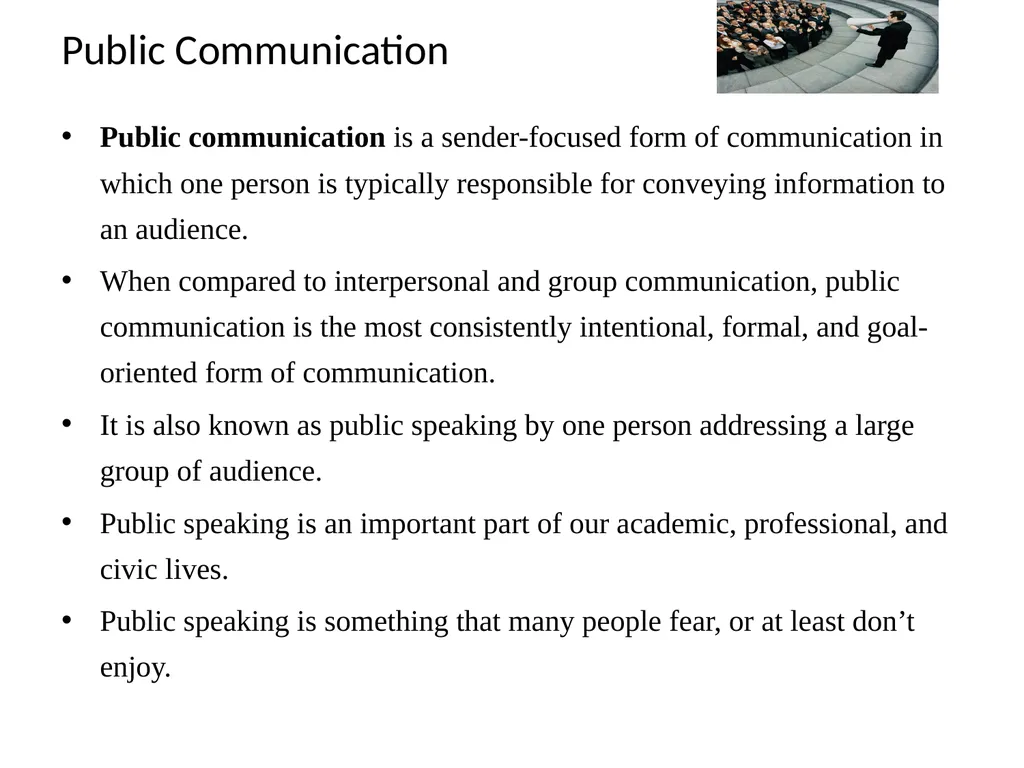
slide20. Public Communication Public communication is a sender-focused form of communication in which one person is typically responsible for conveying information to an audience.
When compared to interpersonal and group communication, public communication is the most consistently intentional, formal, and goal-oriented form of communication.
It is also known as public speaking by one person addressing a large group of audience.
Public speaking is an important part of our academic, professional, and civic lives.
Public speaking is something that many people fear, or at least don’t enjoy.<br>
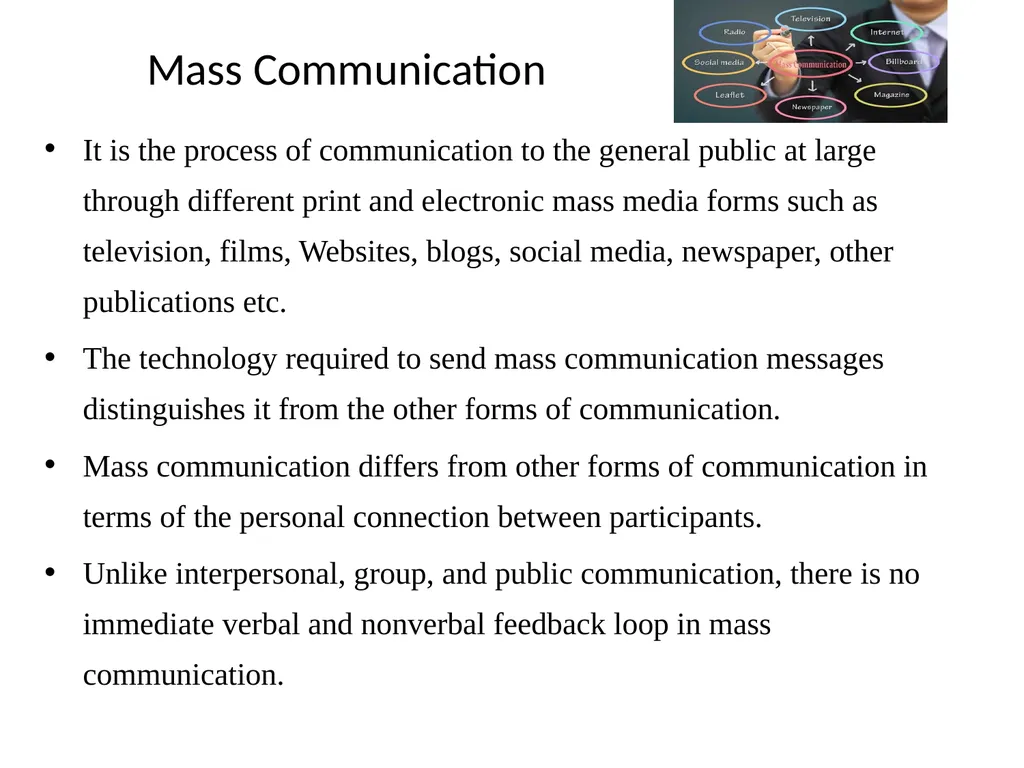
slide21. Mass Communication It is the process of communication to the general public at large through different print and electronic mass media forms such as television, films, Websites, blogs, social media, newspaper, other publications etc.
The technology required to send mass communication messages distinguishes it from the other forms of communication.
Mass communication differs from other forms of communication in terms of the personal connection between participants.
Unlike interpersonal, group, and public communication, there is no immediate verbal and nonverbal feedback loop in mass communication.<br>

slide2. Communication From the Latin word “Communicare”(to share) or “Communis” (to make common)
-Act of transferring/transmitting & receiving ideas, information and message from one person to another
Two way process between SENDER & RECEIVER
A dynamic process, continuous process
Information, ideas & messages are transmitted through mutually understood signs
-It is the creation and exchange of meaning<br>
slide3. 2 Basic types of Communication- Oral & Written The Process of Communication-
Communication is the active process of sending and receiving messages through verbal & non verbal means including speech (words & language), writing and graphical representations (pictures, maps, chart), signs & signals and behaviour.
-The process of communication involves various stages/ components.
- It is related with sharing & understanding of information.<br>
slide4. Objective of Communication Deliver a message, idea & information
Create Understanding
Definitions-
Keith Davis- Communication is a process of passing information and understanding from one person to another
Louis Allen- Communication is a bridge of meaning. It involves a systematic and continuous process of telling, listening and understanding.<br>
slide5. The components in the process of Communication- 7 basic components Sender- the person who send the message
Encoding- the mental preparation, the process of organizing ideas/ information into words, symbols and other form of expression.
Message- the physical form of the idea, information & message
(Meaning lies in the receivers mind not in the message)
Channel- the medium & method of delivering the idea
Receiver- the person who receives the message
Decoding- the process of attaching meaning to sender’s message—understanding/ comprehending the message
Feedback- response or reply to sender’s message.<br>
slide7. Importance of Communication in organization Creation of conducive environment- conducive environment of understanding can be created
Promote Work Culture- successful & smooth running of the organization to promote goals and policies
Basis of managerial function- helpful in management of organization, planning, organizing, leading, directing, motivating & controlling
Builds human relationship- two way communication promotes mutual co-operation and understanding.
Job satisfaction & enrichment- overcomes illusion and misunderstanding, enhances morale and job satisfaction.
It facilitates decision making by providing necessary information in time.<br>
slide8. Basic forms of communication One Way Communication-
absence of feedback
Sender and receiver are isolated not interdependent
Examples- TV News, Radio, Movies etc.<br>
slide9. Two Way Communication Effective/Active feedback from receiver
Receiver understands the message in the same sense and spirit that the sender intended.<br>
slide10. Verbal & Non-verbal Communication Verbal- Communication through spoken & written word
2 types- Oral & Written<br>
slide11. Non-verbal Communication<br>
slide12. Transmission of message with the help of facial expression, body posture, eye contact, clothing, silence etc.
Communication through sending and receiving wordless cues.
More than 55% human communication is through non-verbal cues, 38 % is Voice & Sound, only 7% is words.<br>
slide13. Through facial-expression, body postures, eye contacts, clothing, silence etc
Instinctive and spontaneous
God given language
Types of Non-Verbal Communication:
A. Kinesics
B. Proxemics
C. Chronemics
D. Paralanguage
E. Haptics<br>
slide14. Formal & Informal Communication Communication inside the official set up regarding official matters
It is structured on the basis of hierarchy, authority & accountability
Information can move both horizontally & vertically
Examples- Departmental meetings, conferences, circulars, company news, interviews etc.<br>
slide15. Informal Communication Communication of the members of the organization regarding unofficial matters
It takes place outside the formally prescribed & planned network or channel
It is spontaneous & off the record communication between peers, colleagues, classmates etc.
No set rules & regulations and no particular direction.<br>
slide16. Intrapersonal & Interpersonal communication<br>
slide17. Intrapersonal communication Communication with oneself, Internal dialogue, reflective thinking, self-talk of an individual.
Intrapersonal communication is triggered by some internal or external stimulus.
It may be clear or confused depending upon the individual’s state of mind.
A person may use self-talk to calm himself down in a stressful situation.
A shy person may remind herself/himself to smile during a social event.
Intrapersonal communication also helps build and maintain our self-concept.<br>
slide18. Interpersonal Communication Communication between two or more people whose lives mutually influence one another. we spend more time engaged in interpersonal communication than the other forms of communication.
Interpersonal communication builds, maintains, and ends our relationships.
It signifies positive, personal, internal, and interactive relationship between the persons involved.
Interpersonal communication can be planned or unplanned,
More structured and influenced by social expectations than intrapersonal communication.
Interpersonal communication is also more goal oriented than intrapersonal communication and fulfills instrumental and relational needs.<br>
slide19. Group Communication Communication among three or more people interacting to achieve a shared goal. Group communication is more intentional and formal than interpersonal communication.
Unlike interpersonal relationships, which are voluntary, individuals in a group are often assigned to their position within a group.
Group communication is often objective based and task focused, meaning that members of the group work together for an explicit purpose or goal that affects each member of the group.
Challenges stem from interpersonal conflict or misunderstandings among group members.
The group must be formed intentionally or voluntarily to communicate on an important matter- committees, team members etc.<br>
slide20. Public Communication Public communication is a sender-focused form of communication in which one person is typically responsible for conveying information to an audience.
When compared to interpersonal and group communication, public communication is the most consistently intentional, formal, and goal-oriented form of communication.
It is also known as public speaking by one person addressing a large group of audience.
Public speaking is an important part of our academic, professional, and civic lives.
Public speaking is something that many people fear, or at least don’t enjoy.<br>
slide21. Mass Communication It is the process of communication to the general public at large through different print and electronic mass media forms such as television, films, Websites, blogs, social media, newspaper, other publications etc.
The technology required to send mass communication messages distinguishes it from the other forms of communication.
Mass communication differs from other forms of communication in terms of the personal connection between participants.
Unlike interpersonal, group, and public communication, there is no immediate verbal and nonverbal feedback loop in mass communication.<br>