What is Going On? How do cognitive processes Affect Information gathered in Research interviews: - a work in progress AES Conference September 2011 by David Roberts RobertsBrown www.robertsbrown.com davidrobertsbrown.com Thesis Thesis on
"What is Going On? How do cognitive processes" is the property of its rightful owner. Permission is granted to
download and print the materials on this website for personal, non-commercial use only, and to display it
on your personal computer provided you do not modify the materials and that you retain all copyright
notices contained in the materials. By downloading content from our website, you accept the terms of this
agreement.
Presentation Transcript
01
What is Going On? How do cognitive processes Affect Information gathered in Research interviews: - a work in progress AES Conference September 2011
by David Roberts
RobertsBrown
www.robertsbrown.com
david@robertsbrown.com<br>
02
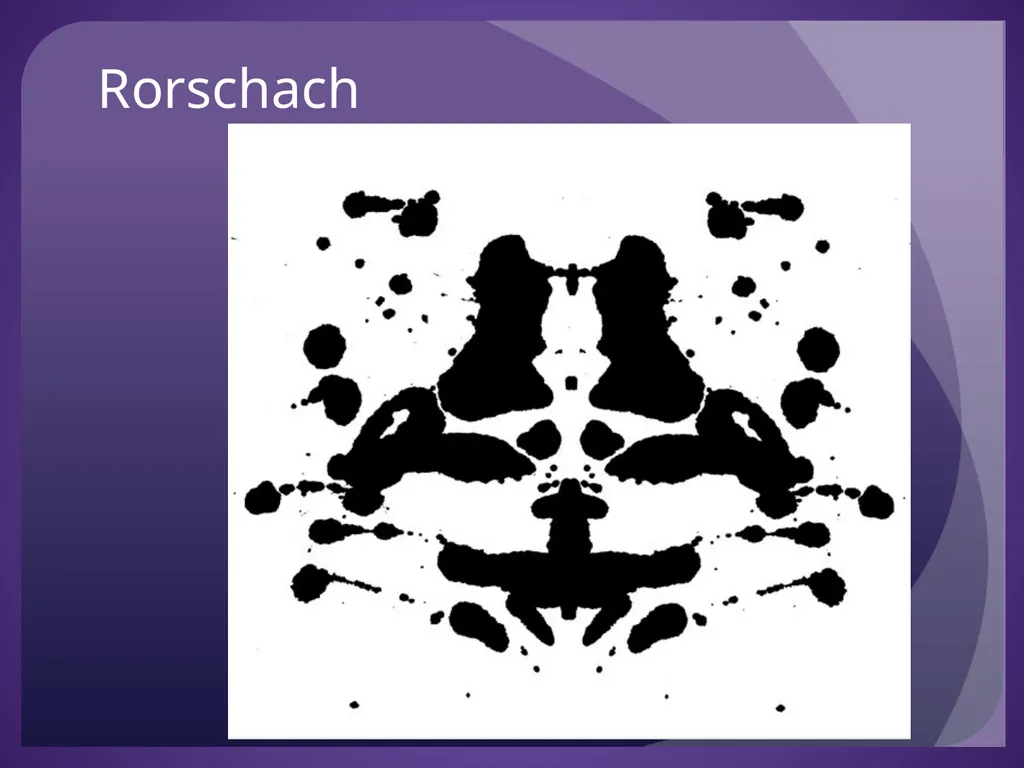
Thesis Thesis on psychological basis of projective techniques
Reviewed the literature on
qualitative interviewing,
cognitive schema and
use of projective stimuli.
Conducted interviews using one projective technique
Followed up with cognitive interviews to explore the cognitive processing<br>
03
Outline Describe projection
Talk about schemata as a way of understanding how projection works
Describe the techniques I used
TAT
Category Instance Generation
Outline some of what happened
Discuss<br>
04
RobertsBrown<br>
05
Rorschach<br>
06
RobertsBrown<br>
07
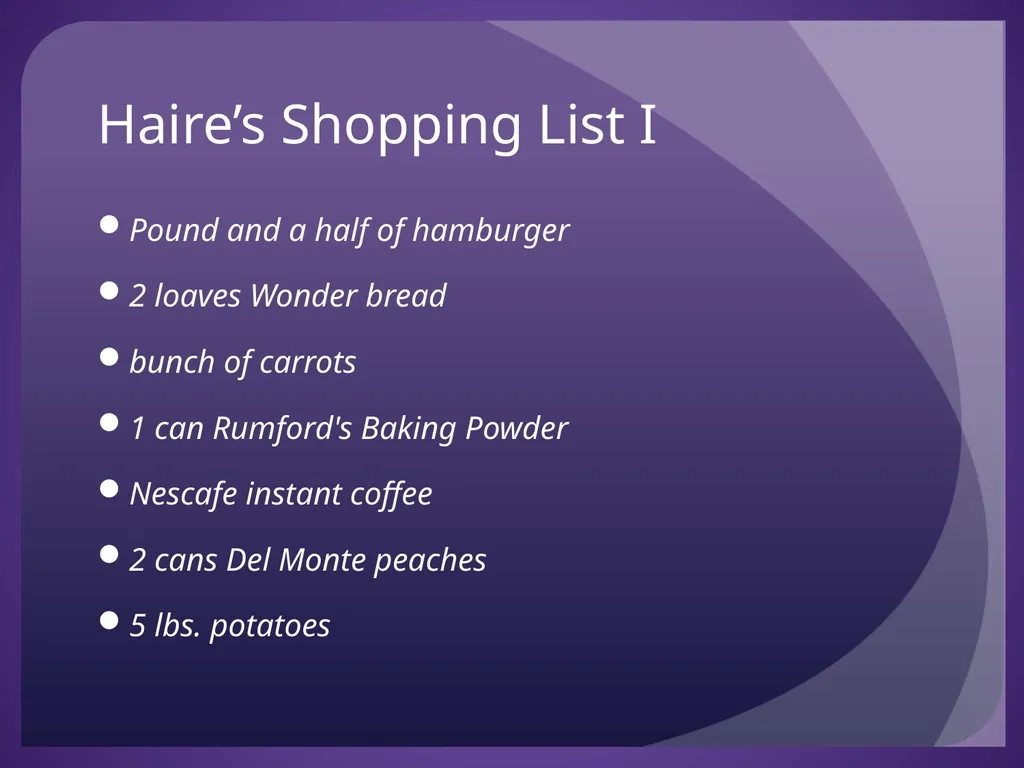
Haire’s Shopping List I Pound and a half of hamburger
2 loaves Wonder bread
bunch of carrots
1 can Rumford's Baking Powder
Nescafe instant coffee
2 cans Del Monte peaches
5 lbs. potatoes<br>
08
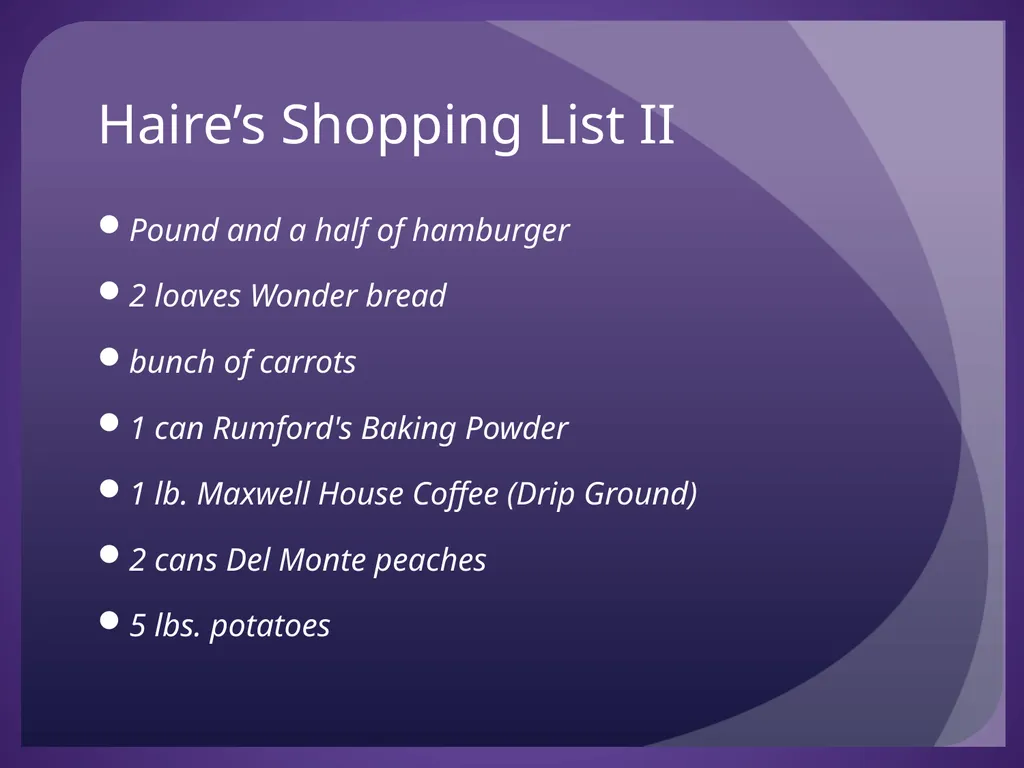
Haire’s Shopping List II Pound and a half of hamburger
2 loaves Wonder bread
bunch of carrots
1 can Rumford's Baking Powder
1 lb. Maxwell House Coffee (Drip Ground)
2 cans Del Monte peaches
5 lbs. potatoes<br>
09
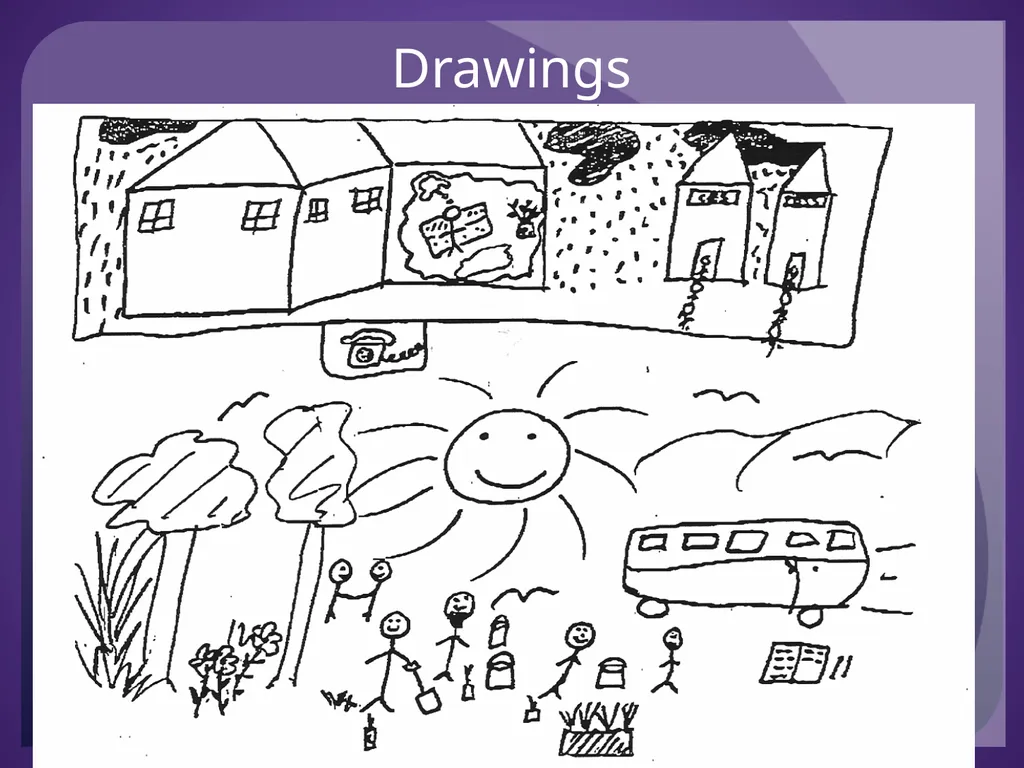
Drawings<br>
10
Use of Projection Allow the researcher to get past “defences” (Donoghue 2000)
get “beneath the surface” (Keegan 2009) responses
collect information that is hidden from direct questioning
when dealing with children (Keats 1993; Patton 2002)
those who are ‘anxious’ (Keats 1993)
where language is a problem.<br>
11
How do they work? Participants “need to make sense of, by drawing on their own experiences, thoughts, feelings and imagination.” (Catterall & Ibbotson 2000)
Make the familiar unfamiliar – problematic (Mannay 2010)
“engage in various acts of orientation” towards the issue …
“the researcher is able to gain insight into participants’ interpretative processes and the multi-faceted nature of their ‘stock of knowledge’” (Jenkins et al 2010)<br>
12
Most Behaviour is automatic or driven by emotions Driving a car turning a corner
Going to the movies
“Most of what drives behaviour is below conscious awareness (adaptive unconscious)” (Gladwell 2005 quoted in Keegan 2010)<br>
13
Schema Socially constructed cognitive structure
Act without analysis of every detail
Triggered quickly form very few cues
Simplified representation of the world
Assumptions and emotional stances
Specific memories
Specific values<br>
14
Thematic Apperception Testing Describe the person in the picture
What would the person do when you hand over the report? How would they behave?
How would they use the report?<br>
15
Cognitive Interview Reviewed video
Asked them to tell me what they were thinking when the picked the photo,
why that photo,
if it reminded them of someone
Stopped whenever made a generalisation, used a metaphor, made a face, laughed etc.
Asked them to give me examples (Category Instance Generation)<br>
16
What Happened Most people talked about the person in the photo as if they were real
Several made the point they were responding to a photo but talked about the person
A lot of them talked about how their responses were stereotypes or cliches
“We shouldn’t make judgements” – but they did (even one person who was quite resistant to the idea)<br>
17
About the Photo Reminded me of a client
“empty suit” (110815M)
“He doesn’t look at it, he puts it on the table and gushes” (110815M)
“Subsequently, after I’ve left the room, I assume he passes the report onto someone else.” (110815M)
“… annoys the hell out of me when I read one of these academic papers where the theory is talking to itself about itself in complex language.” (110815M)<br>
18
About the process -1 “I was at the moment of handing over the report” (110815M)
“Rush of images and sounds” (110815M)
Eliminated categories very quickly
Intuitive judgements very quickly
elaborated and supported the judgement with words based on details in the photo
“thoughtful and reflective second”
Some tested the judgement or qualified it<br>
19
About the process - 2 Responded to the person in the photo and to the photo itself
Responses based on ‘stereotypes’
“demonstrate the cliches” (110815M)
trust this cliché but not that
Personal theory
Based on experiences
Frequent experiences
“an amalgam of people” (110801A) “reminded me of a good number of experiences” (110815M)
Memorable recent experience
Experiences include reading and writing and imagination<br>
20
Thoughts for analysis Good support for the notion of schema
Salience of experience is crucial
Where do I go from here?<br>
21
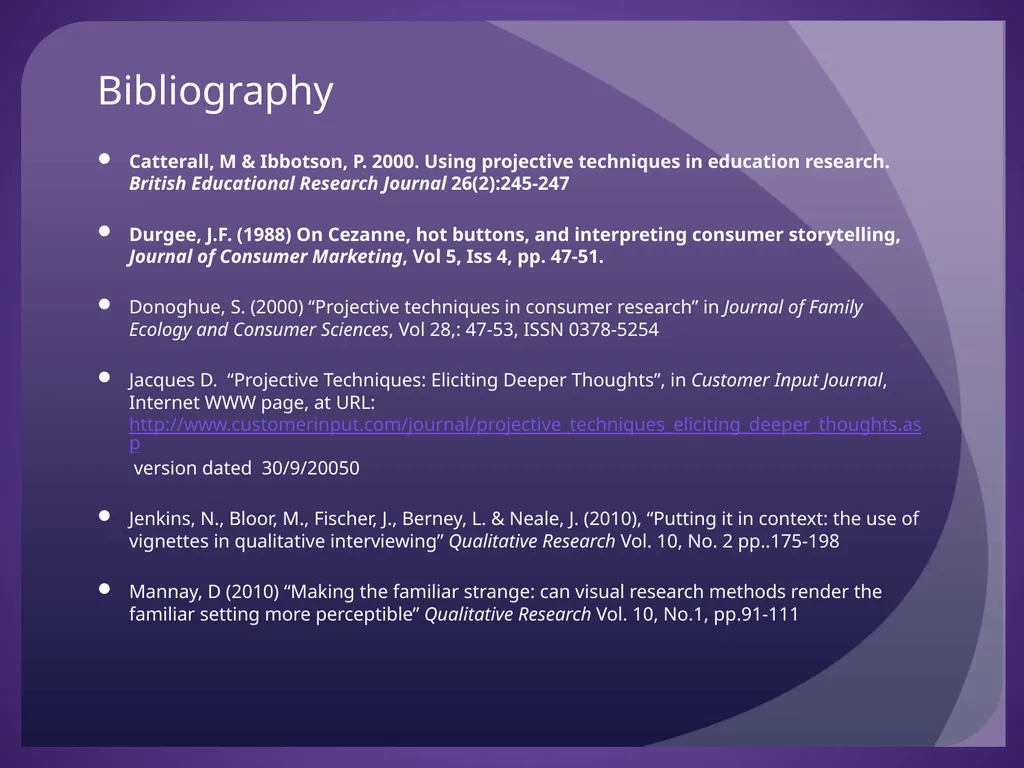
Bibliography Catterall, M & Ibbotson, P. 2000. Using projective techniques in education research. British Educational Research Journal 26(2):245-247
Durgee, J.F. (1988) On Cezanne, hot buttons, and interpreting consumer storytelling, Journal of Consumer Marketing, Vol 5, Iss 4, pp. 47-51.
Donoghue, S. (2000) “Projective techniques in consumer research” in Journal of Family Ecology and Consumer Sciences, Vol 28,: 47-53, ISSN 0378-5254
Jacques D. “Projective Techniques: Eliciting Deeper Thoughts”, in Customer Input Journal, Internet WWW page, at URL: http://www.customerinput.com/journal/projective_techniques_eliciting_deeper_thoughts.asp version dated 30/9/20050
Jenkins, N., Bloor, M., Fischer, J., Berney, L. & Neale, J. (2010), “Putting it in context: the use of vignettes in qualitative interviewing” Qualitative Research Vol. 10, No. 2 pp..175-198
Mannay, D (2010) “Making the familiar strange: can visual research methods render the familiar setting more perceptible” Qualitative Research Vol. 10, No.1, pp.91-111<br>