What You Need to Know About Generational Differences in Your Volunteer Workforce Cathy Grady and Emily Crenner Generation V(olunteer)! Generation Theory Generation- An identifiable group that shares birth years, age location, and
"What You Need to Know About Generational" is the property of its rightful owner. Permission is granted to
download and print the materials on this website for personal, non-commercial use only, and to display it
on your personal computer provided you do not modify the materials and that you retain all copyright
notices contained in the materials. By downloading content from our website, you accept the terms of this
agreement.
Presentation Transcript
01
What You Need to Know About Generational Differences in Your Volunteer Workforce
Cathy Grady and Emily Crenner Generation V(olunteer)!<br>
02
Generation Theory Generation- “An identifiable group that shares birth years, age location, and significant events at critical development states.”
Kupperschmidt, 2000<br>
03
Disclaimers Everybody is different and generational traits are only one part of who we are
There is no one agreed upon start and end year for each generation – there is no one icon or event that characterizes each
“The specific affectations of a generation’s formative years DO bind them together in exclusive ways.”
Generations at Work, Zemke, Raines and Filipczak<br>
04
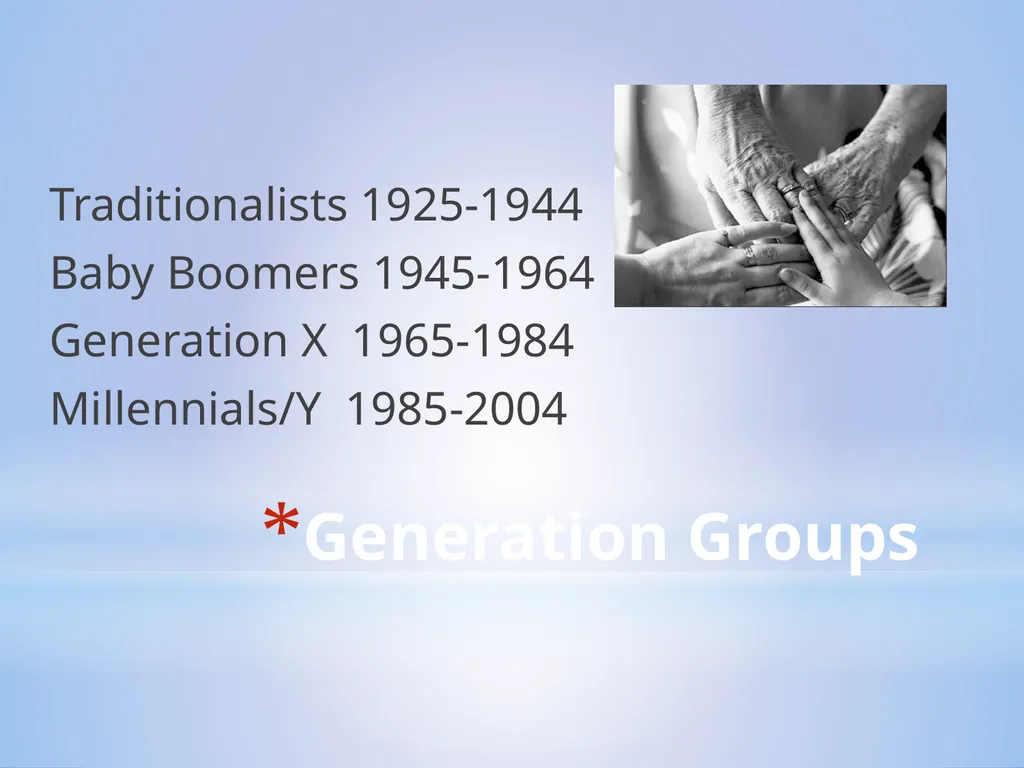
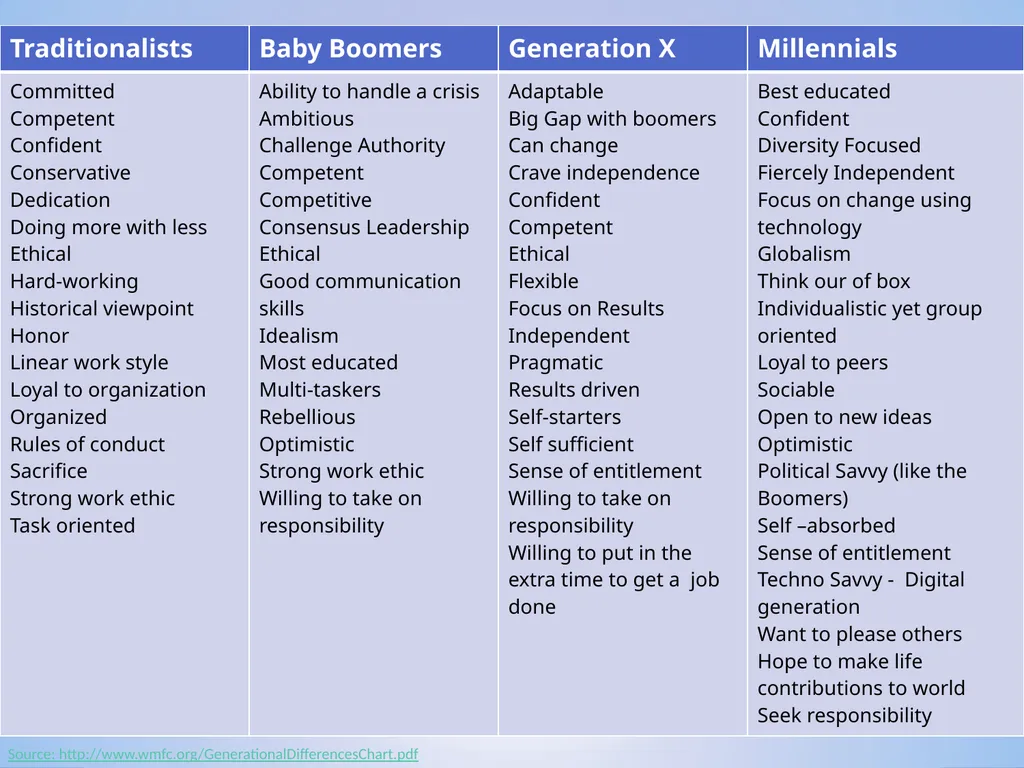
Generation Groups Traditionalists 1925-1944
Baby Boomers 1945-1964
Generation X 1965-1984
Millennials/Y 1985-2004<br>
05
My Generation Do you believe in generational differences?
What people, places, things, events that define your generation?
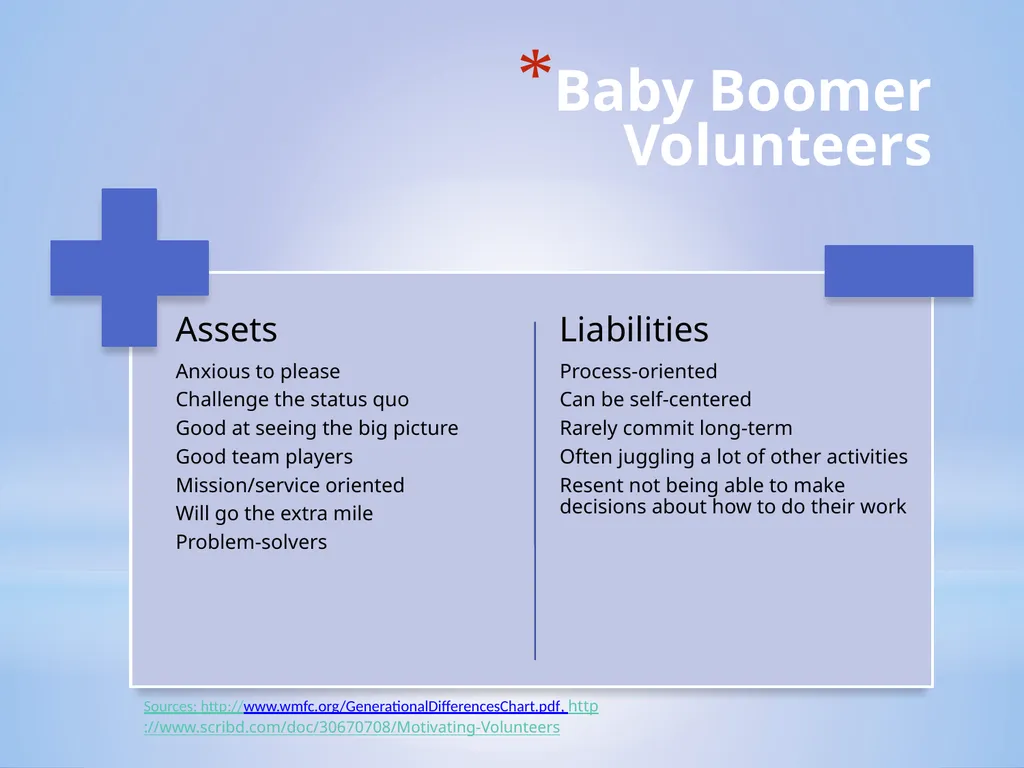
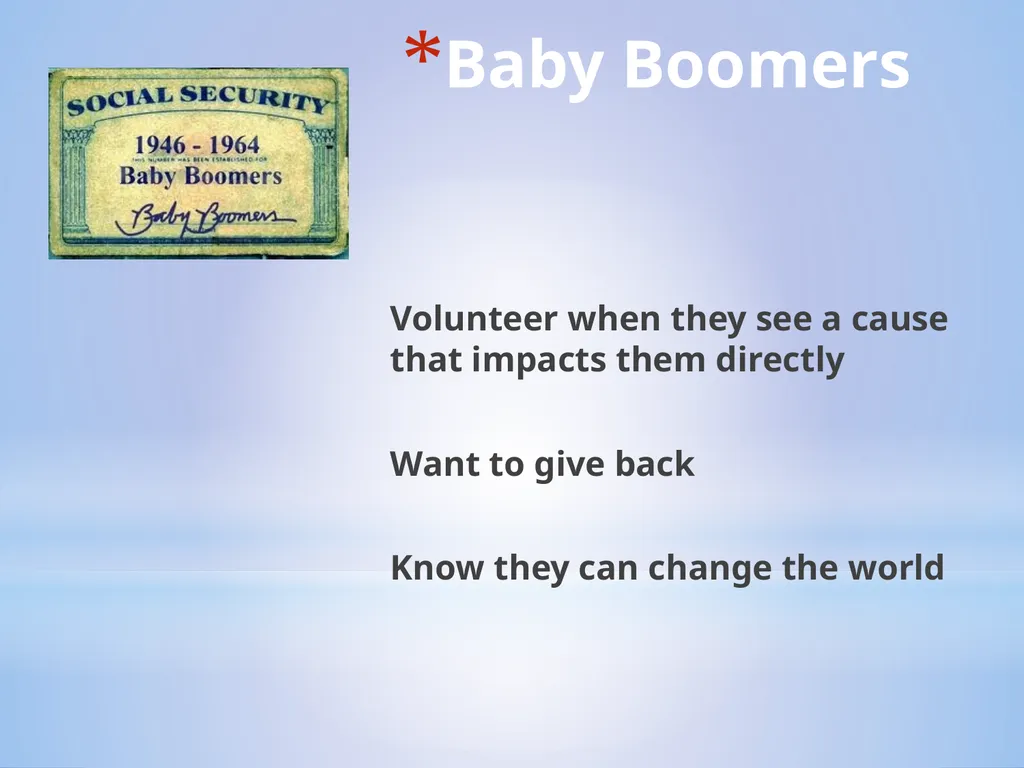
Baby Boomers Volunteer when they see a cause that impacts them directly
Want to give back
Know they can change the world<br>
14
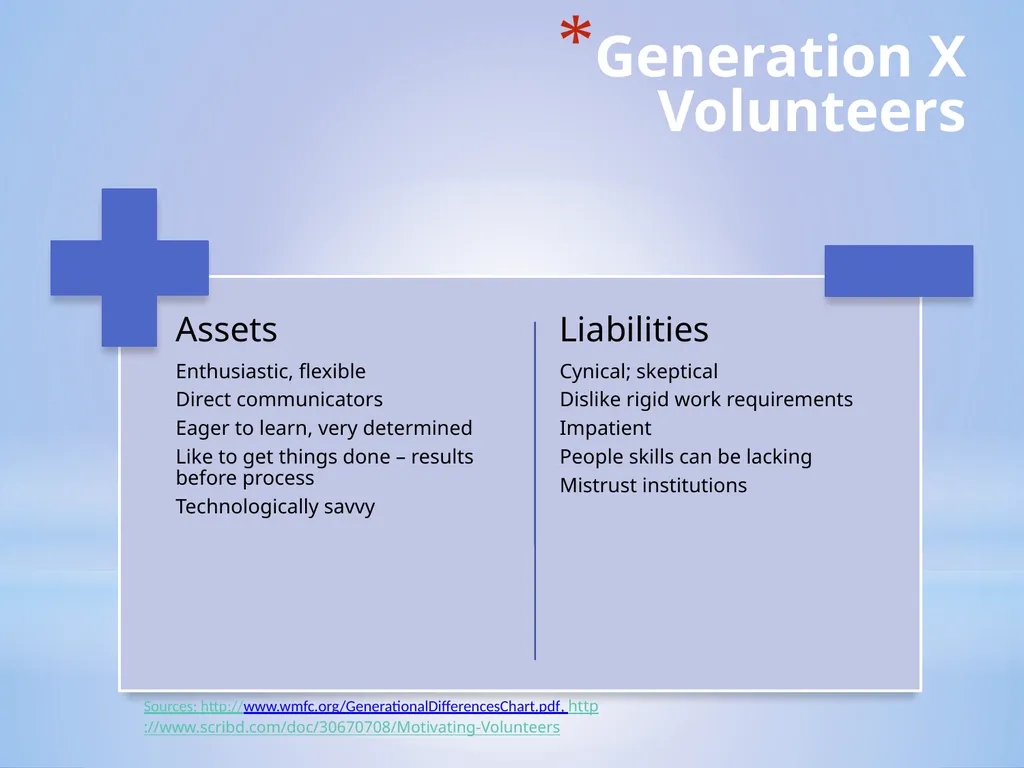
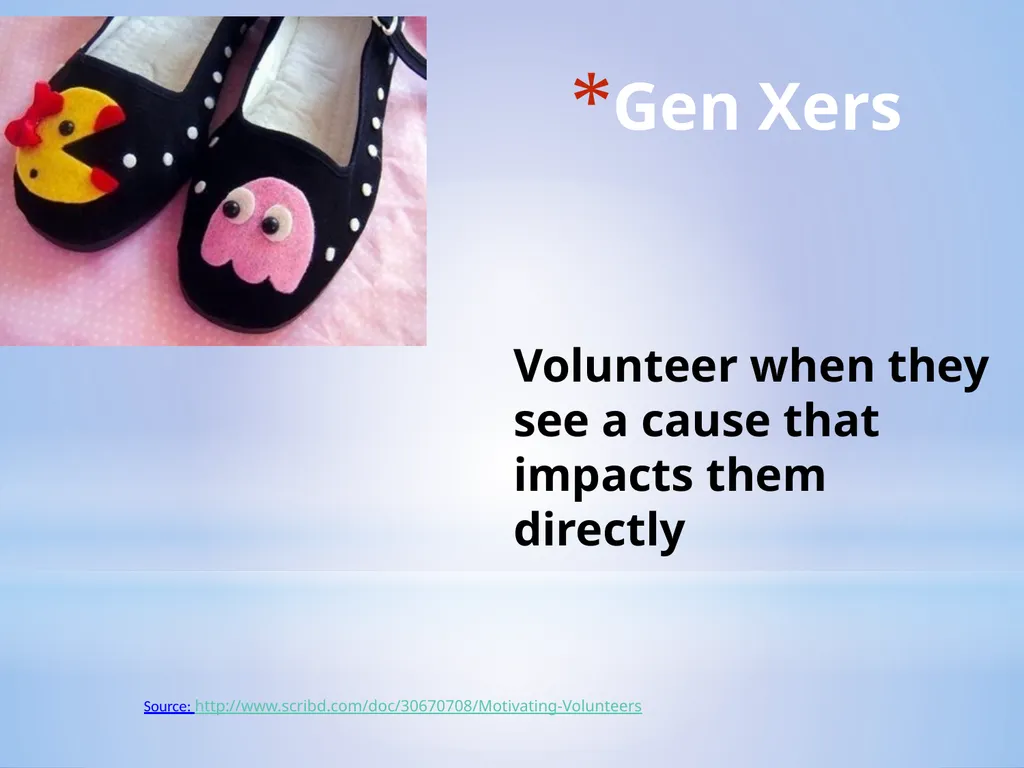
Gen Xers Source: http://www.scribd.com/doc/30670708/Motivating-Volunteers Volunteer when they see a cause that impacts them directly<br>
15
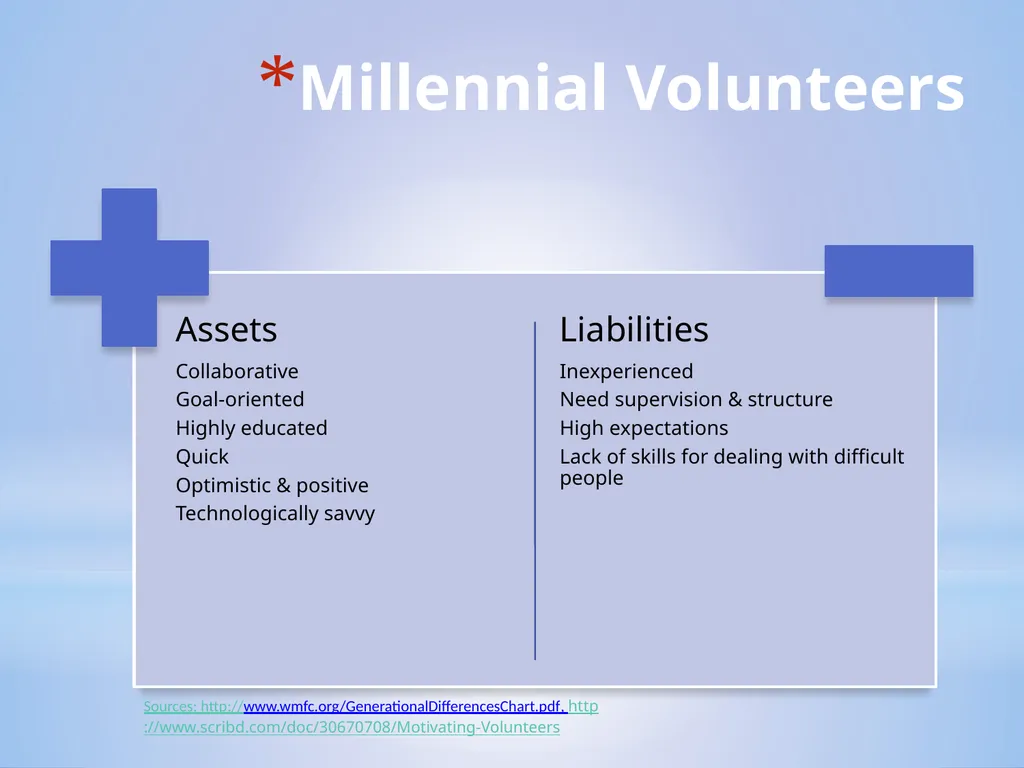
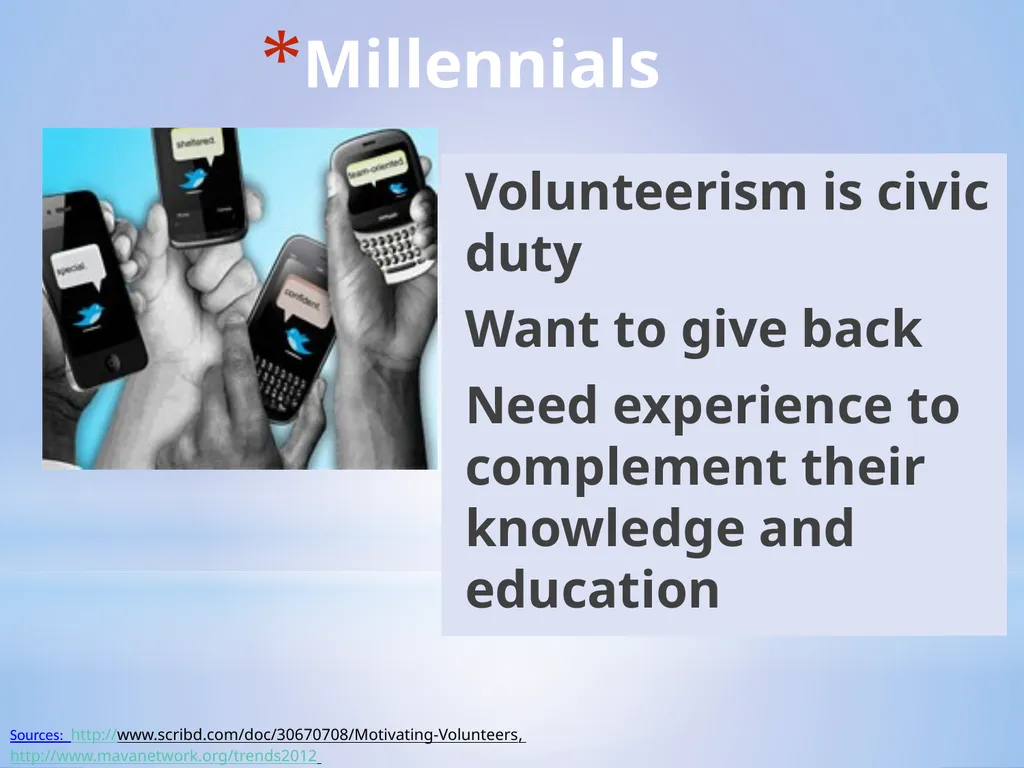
Millennials Volunteerism is civic duty
Want to give back
Need experience to complement their knowledge and education Sources: http://www.scribd.com/doc/30670708/Motivating-Volunteers, http://www.mavanetwork.org/trends2012<br>
16
The Numbers<br>
17
http://www.youtube.com/watch?v=fVHnug8H1MM<br>
18
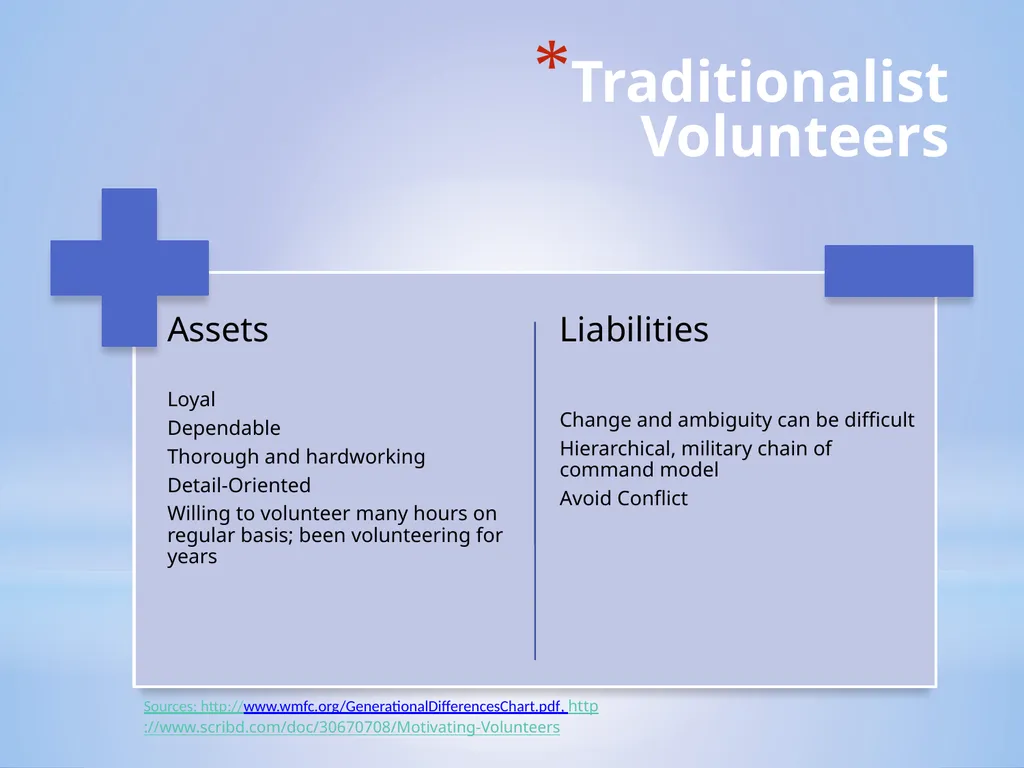
Is your volunteer program based on a “traditionalist” model?<br>
19
Considering these generational differences, how might you change your approach to volunteer:
Recruitment?
Job design/management?
Recognition?<br>
20
Best Practices for Engaging Boomers (and generations to follow) from the Minnesota Association for Volunteer Administration (MAVA) Understand volunteers’ deep-seated need to have impact and use that understanding in all facets of how you involve them as volunteers
Focus the volunteer interview on learning the prospective volunteer’s passions, mutually designing his/her volunteer role and helping the volunteer determine if your organization is the right place to realize the impact he/she wants to have
Offer a wide choice of volunteer opportunities in all aspects of the organization’s operations and offer short-term and seasonal opportunities to maximize involvement.<br>
21
Best Practices for Engaging and Managing Generation X Volunteers Establish project-driven relationships, not “touchy-feely" relationships with them.
Recruit younger volunteers to work on teams with dynamic leaders who will act as mentors, care about them, and demand high performance.
Stay in touch, offering constant very specific feedback.
Never micromanage.
Let them be creative and do things their way.
Listen to them express their opinion.
Value their new ideas. Source: http://www.volunteerpower.com/articles/GenX.asp<br>
22
Be specific about the end results of the project they are working on.
Be sure they understand that you are depending on them to meet the deadlines.
Establish certain checkpoints during the course of the project.<br>
23
Empower younger volunteers to work at their pace, making their own day-to-day decisions, mistakes and creative solutions. Let them know that you are holding them responsible for the end result.<br>
24
Xers:Best Practices Encourage questions and be generous in sharing information about the organization and the project.<br>
25
Train younger volunteers on skills and competencies that not only help your organization but also are something that interest them. They love win/win contractual relationships. They love to win and be rewarded for the effort that they put in. Xers: Best Practices<br>
26
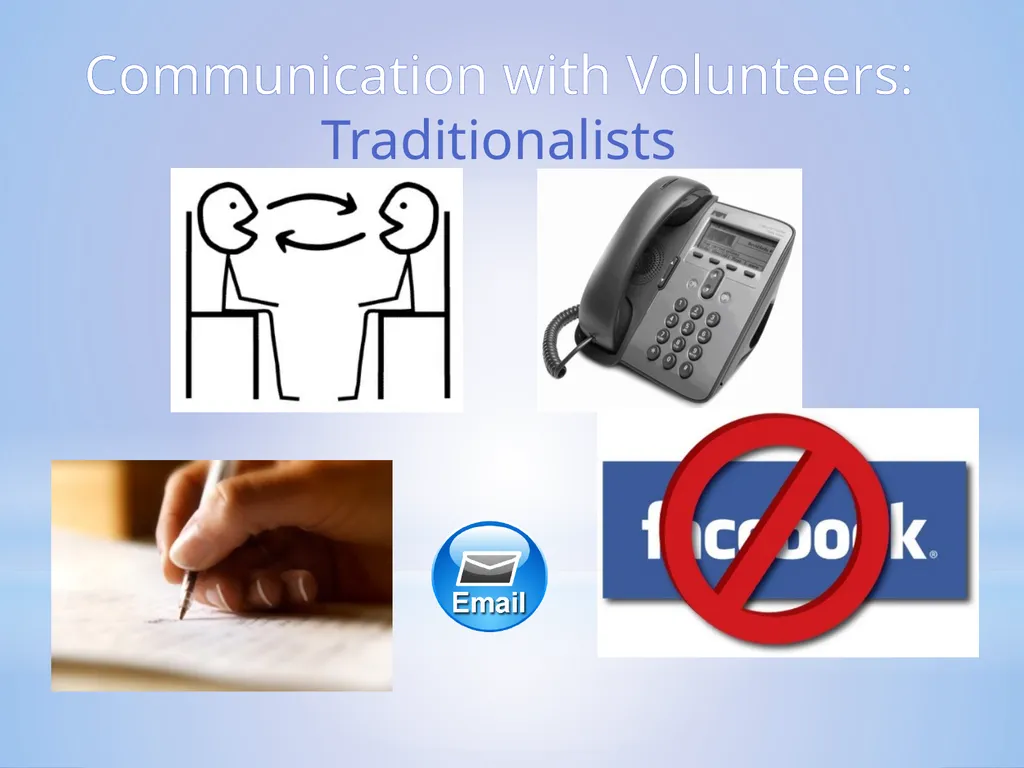
Communication with Volunteers: Traditionalists<br>
27
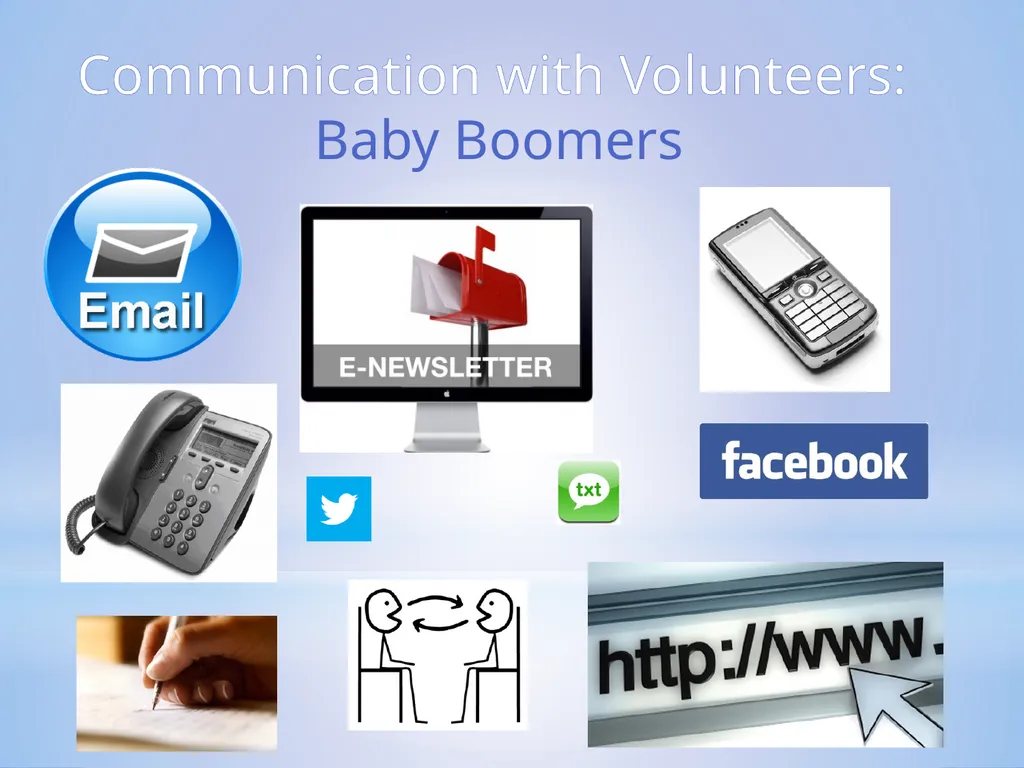
Communication with Volunteers:
Baby Boomers<br>
28
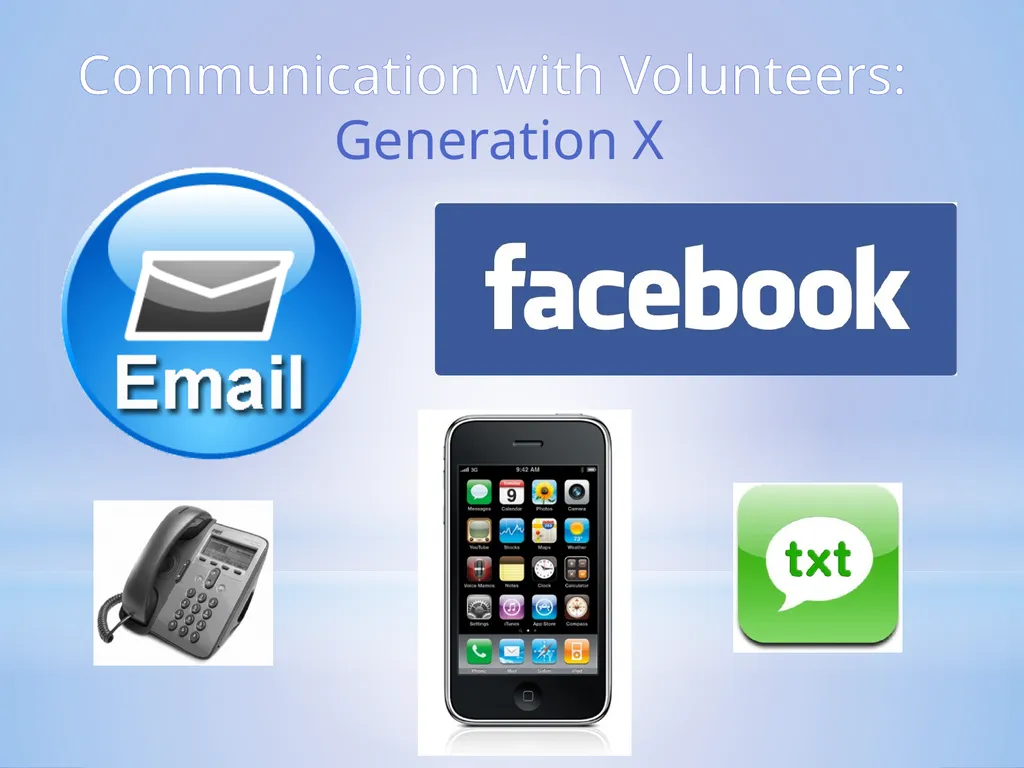
Communication with Volunteers:
Generation X<br>
29
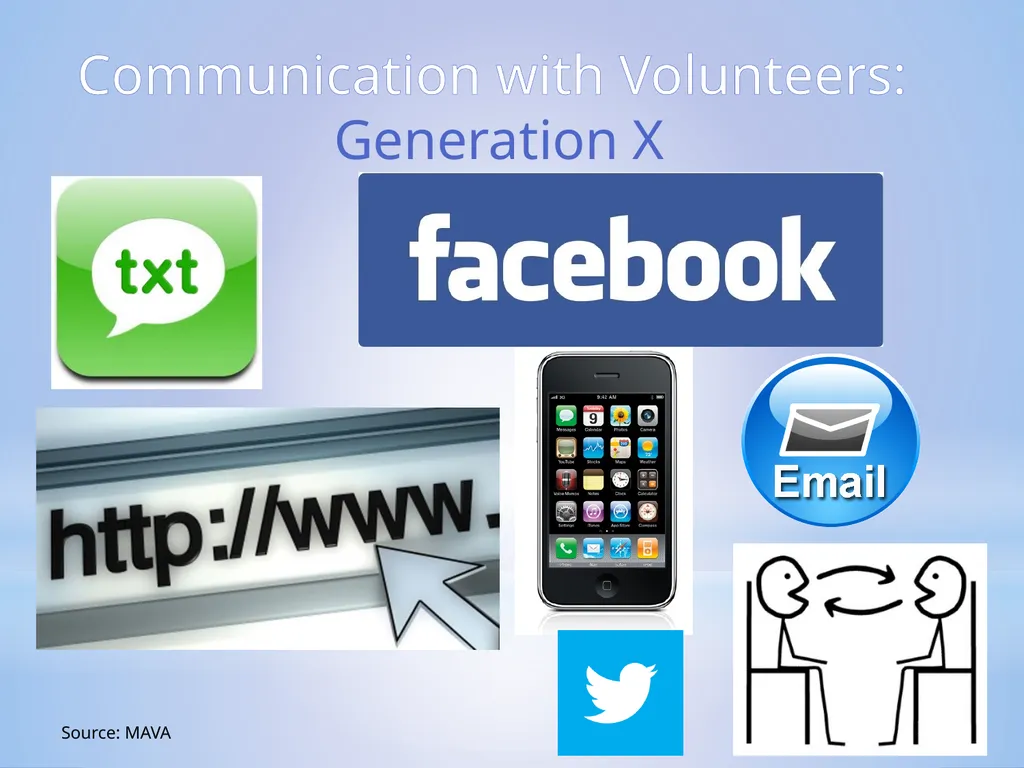
Communication with Volunteers:
Generation X Source: MAVA<br>