
An Introduction to the Thrust Parallel Algorithms

Description: An Introduction to the Thrust Parallel Algorithms Library What is Thrust? High-Level Parallel Algorithms Library Parallel Analog of the C Standard Template Library (STL) Performance-Portable Abstraction Layer Productive way to program
Related Topics
Download Presentation
"An Introduction to the Thrust Parallel Algorithms" is the property of its rightful owner. Permission is granted to download and print the materials on this website for personal, non-commercial use only, and to display it on your personal computer provided you do not modify the materials and that you retain all copyright notices contained in the materials. By downloading content from our website, you accept the terms of this agreement.
Presentation Transcript
slide1. An Introduction to the
Thrust Parallel Algorithms Library<br>
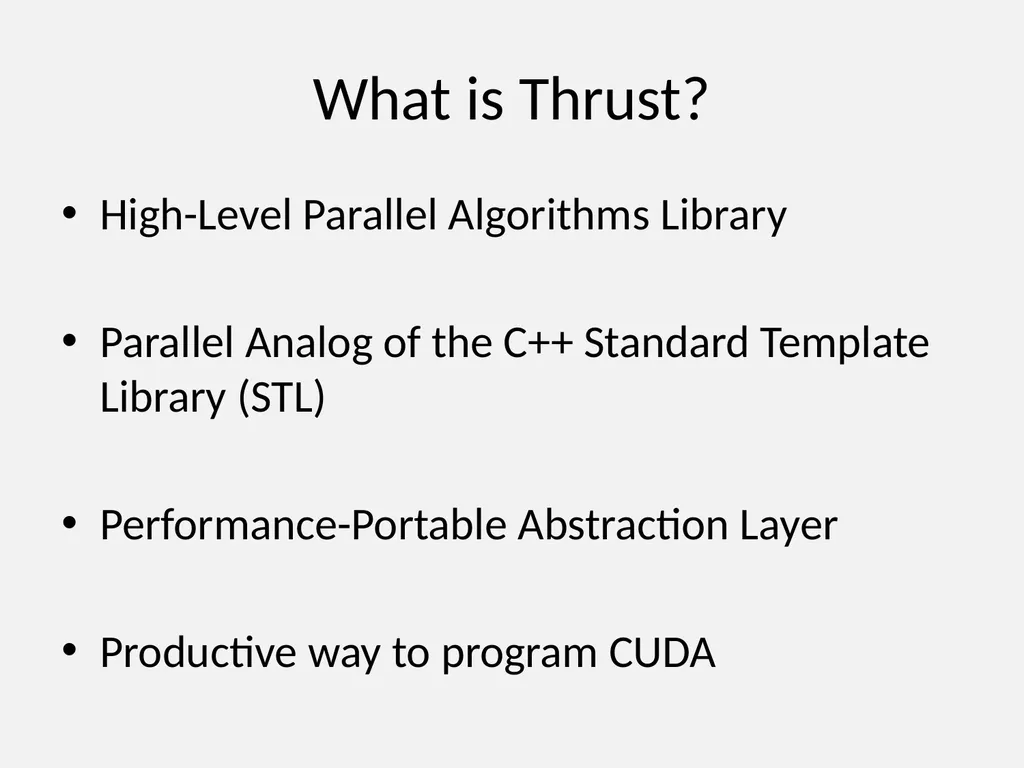
slide2. What is Thrust? High-Level Parallel Algorithms Library
Parallel Analog of the C++ Standard Template Library (STL)
Performance-Portable Abstraction Layer
Productive way to program CUDA<br>
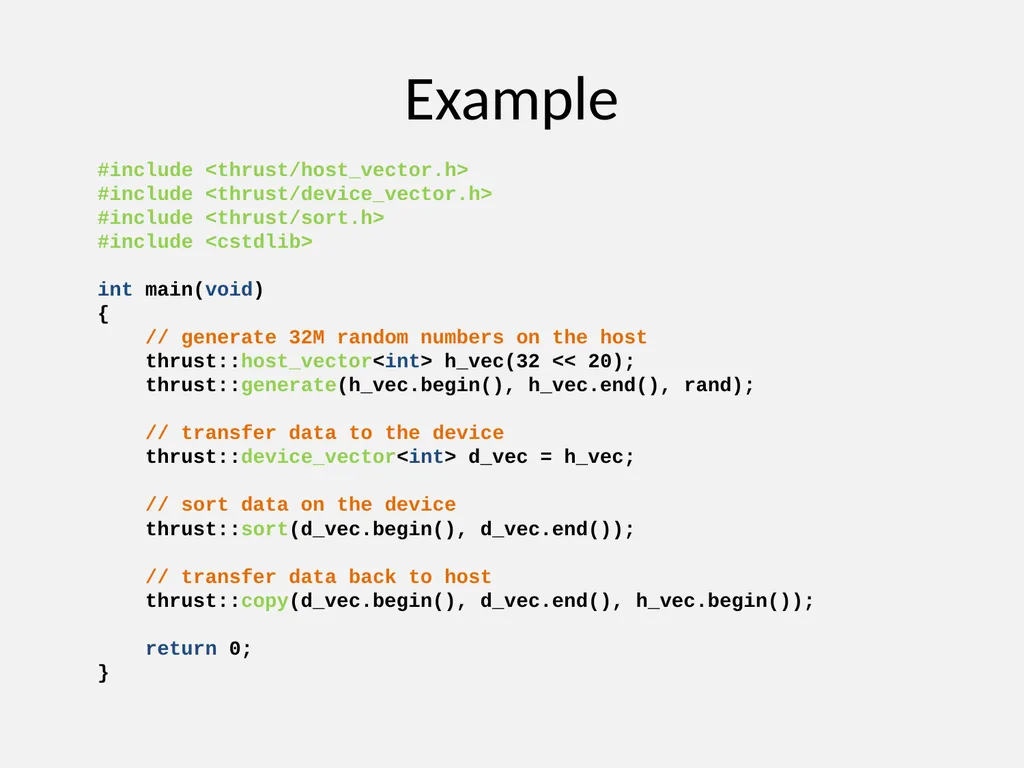
slide3. Example #include <thrust/host_vector.h>
#include <thrust/device_vector.h>
#include <thrust/sort.h>
#include <cstdlib>
int main(void)
{
// generate 32M random numbers on the host
thrust::host_vector<int> h_vec(32 << 20);
thrust::generate(h_vec.begin(), h_vec.end(), rand);
// transfer data to the device
thrust::device_vector<int> d_vec = h_vec;
// sort data on the device
thrust::sort(d_vec.begin(), d_vec.end());
// transfer data back to host
thrust::copy(d_vec.begin(), d_vec.end(), h_vec.begin());
return 0;
}<br>
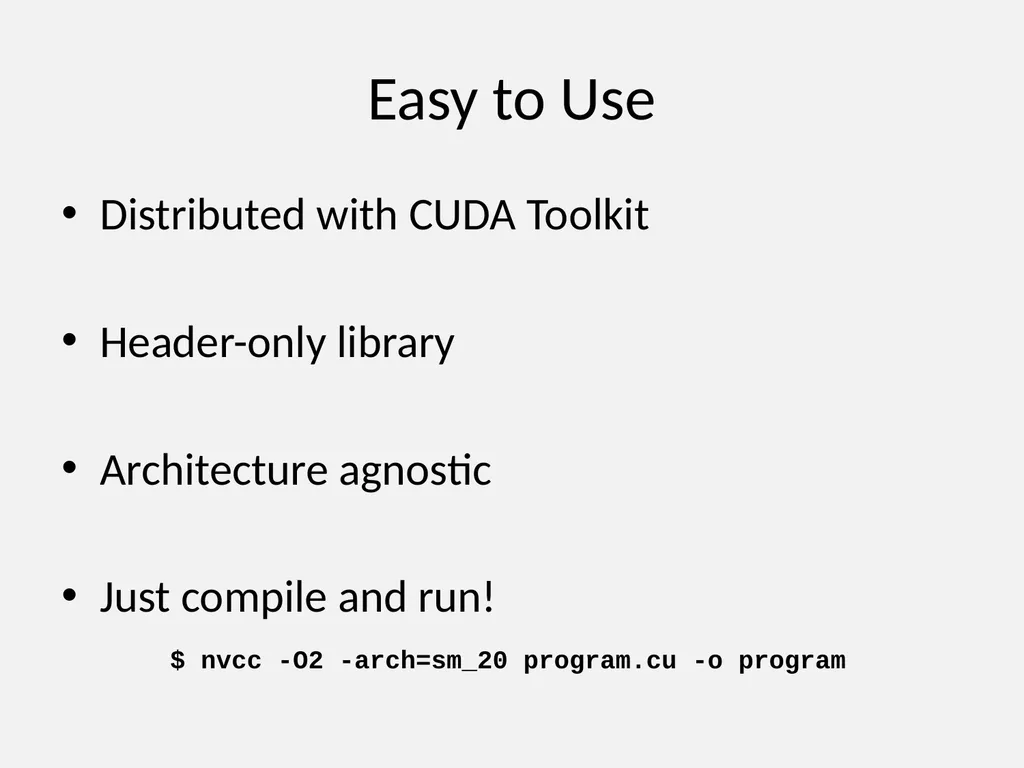
slide4. Easy to Use Distributed with CUDA Toolkit
Header-only library
Architecture agnostic
Just compile and run! $ nvcc -O2 -arch=sm_20 program.cu -o program<br>
slide5. Why should I use Thrust?<br>
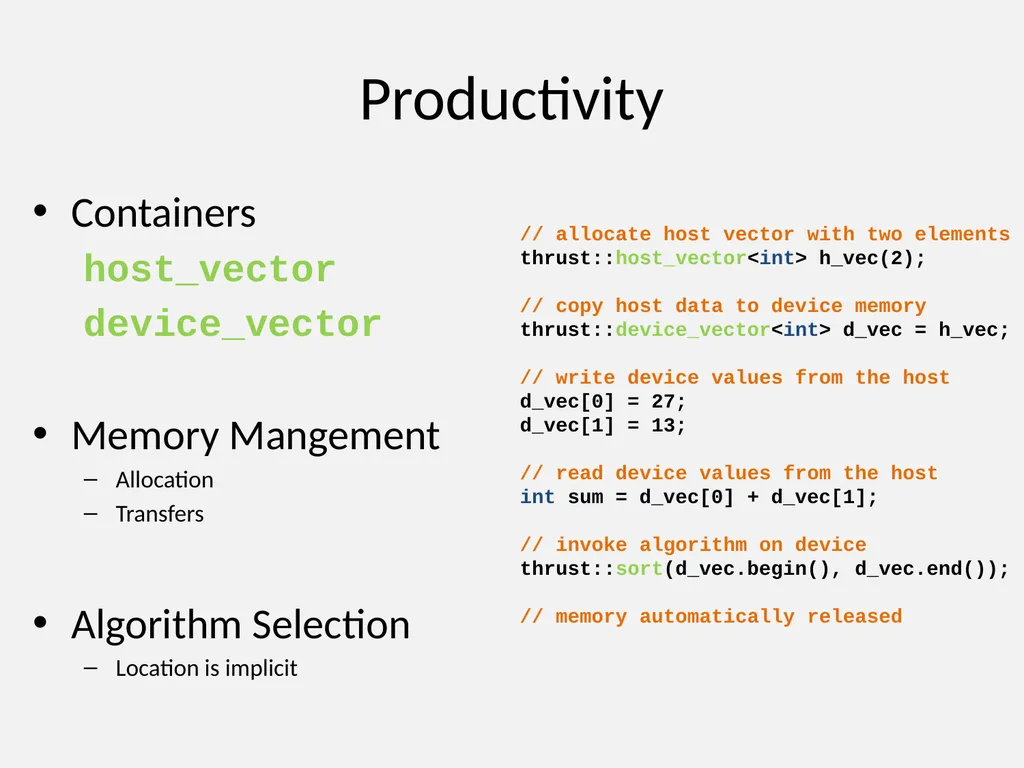
slide6. Productivity Containers
host_vector
device_vector
Memory Mangement
Allocation
Transfers
Algorithm Selection
Location is implicit // allocate host vector with two elements
thrust::host_vector<int> h_vec(2);
// copy host data to device memory
thrust::device_vector<int> d_vec = h_vec;
// write device values from the host
d_vec[0] = 27;
d_vec[1] = 13;
// read device values from the host
int sum = d_vec[0] + d_vec[1];
// invoke algorithm on device
thrust::sort(d_vec.begin(), d_vec.end());
// memory automatically released<br>
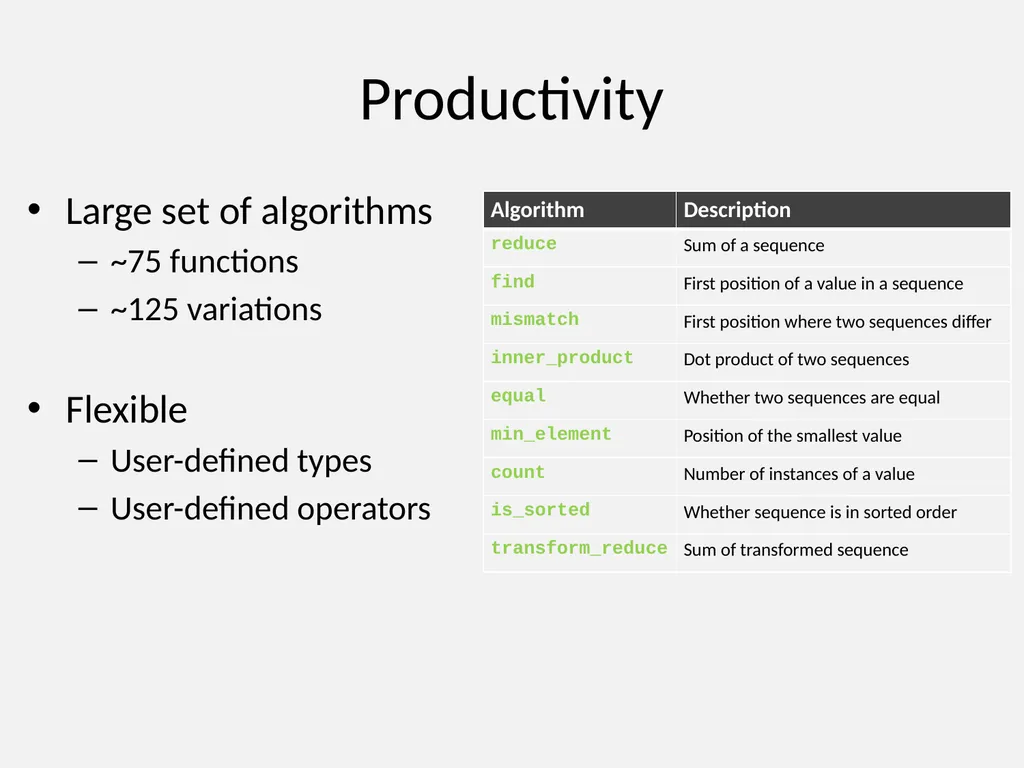
slide7. Productivity Large set of algorithms
~75 functions
~125 variations
Flexible
User-defined types
User-defined operators<br>
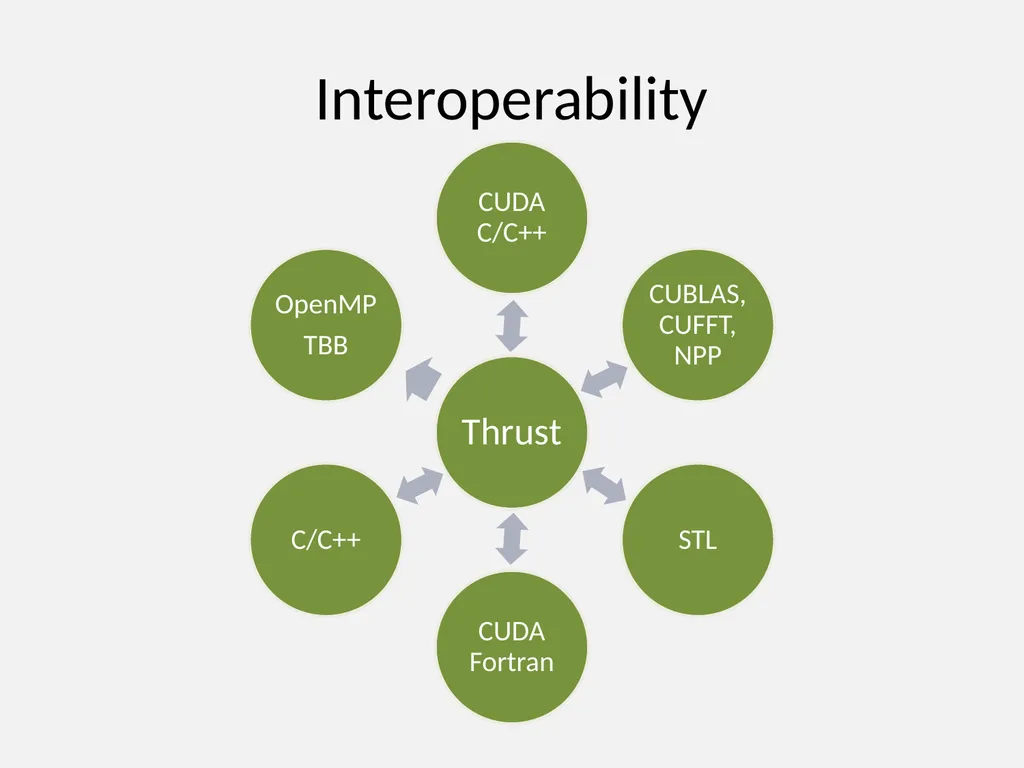
slide8. Interoperability<br>
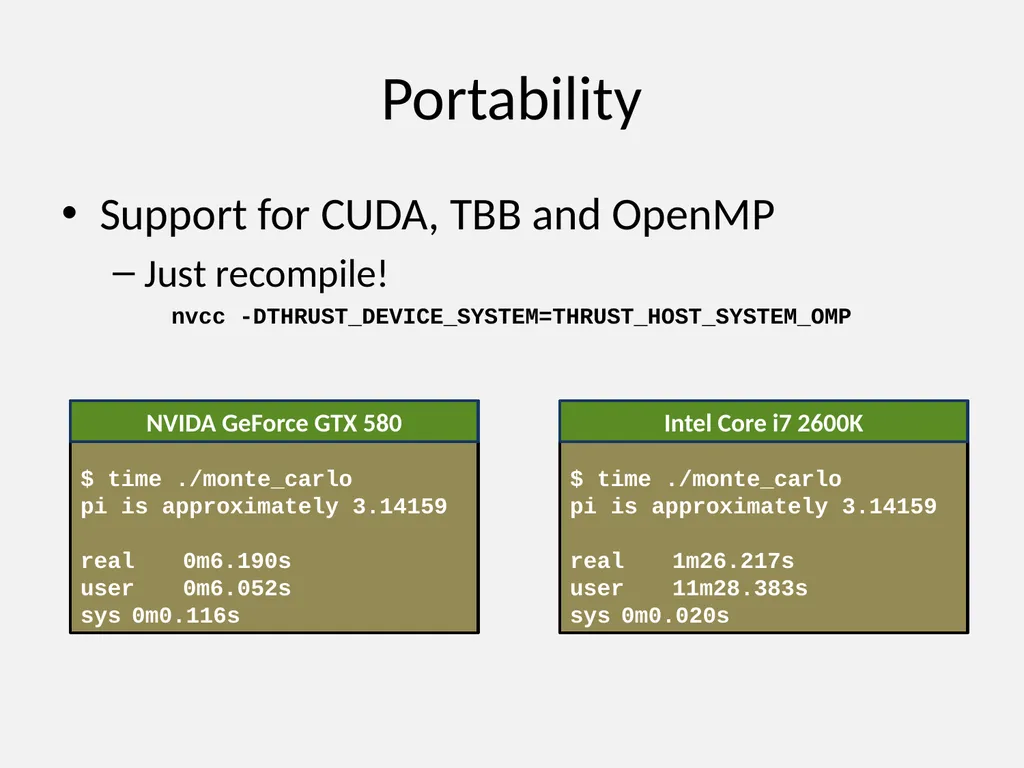
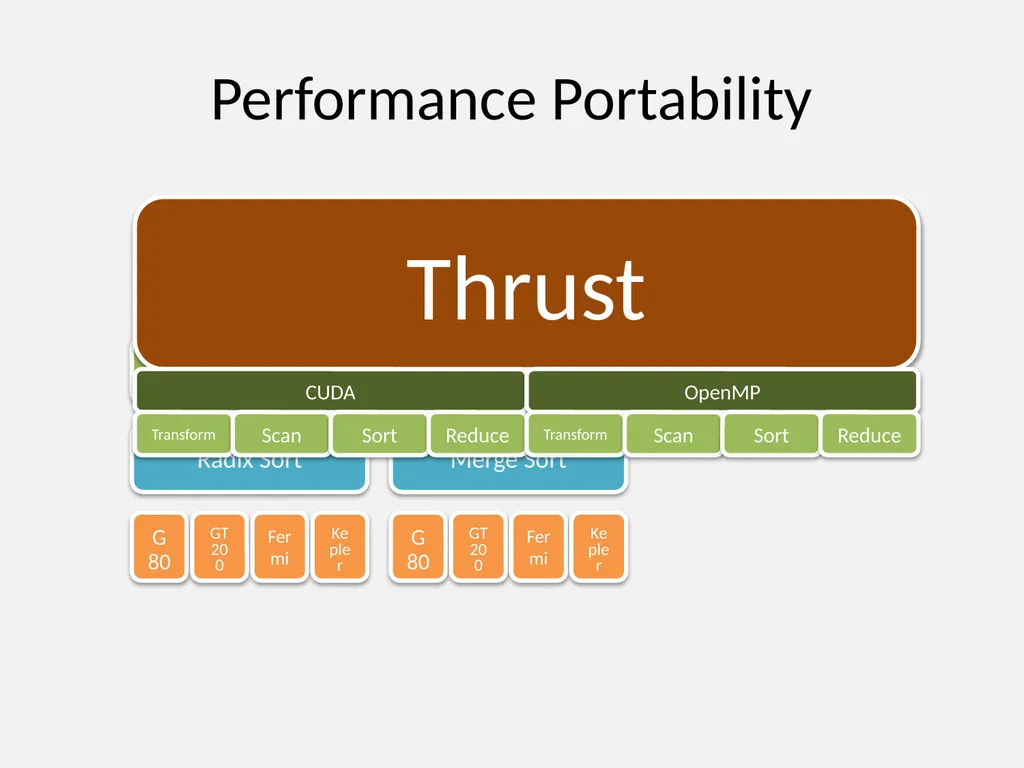
slide9. Portability Support for CUDA, TBB and OpenMP
Just recompile! nvcc -DTHRUST_DEVICE_SYSTEM=THRUST_HOST_SYSTEM_OMP<br>
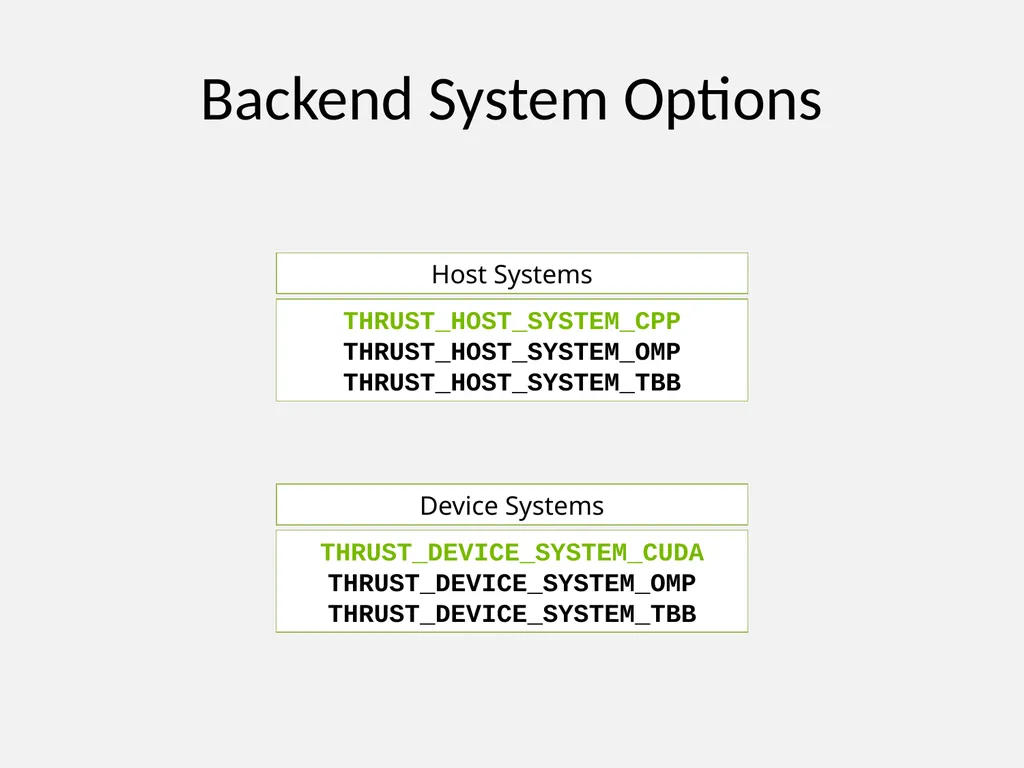
slide10. Backend System Options<br>
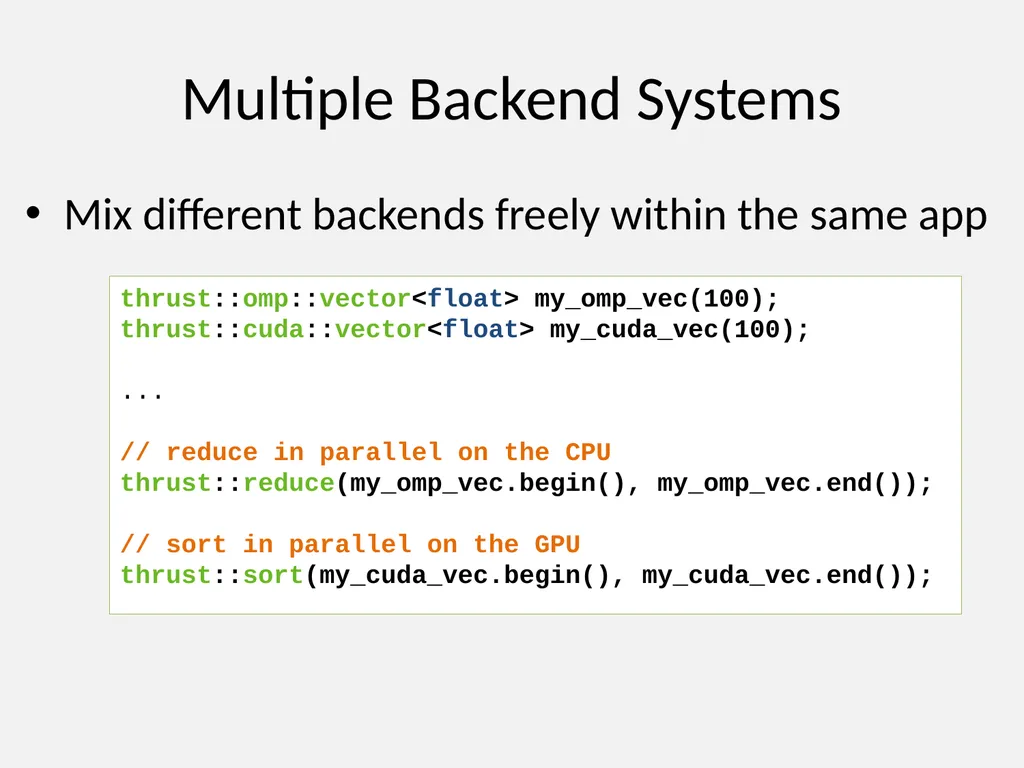
slide11. Multiple Backend Systems Mix different backends freely within the same app thrust::omp::vector<float> my_omp_vec(100);
thrust::cuda::vector<float> my_cuda_vec(100);
...
// reduce in parallel on the CPU
thrust::reduce(my_omp_vec.begin(), my_omp_vec.end());
// sort in parallel on the GPU
thrust::sort(my_cuda_vec.begin(), my_cuda_vec.end());<br>
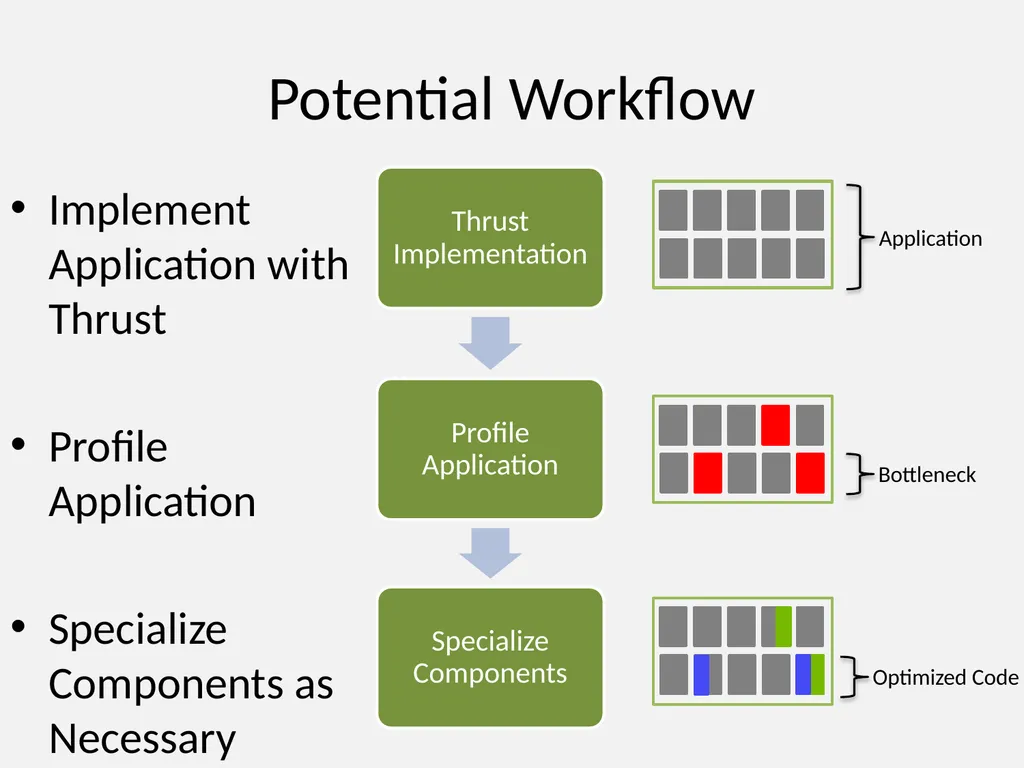
slide12. Potential Workflow Implement Application with Thrust
Profile Application
Specialize Components as Necessary Application Bottleneck Optimized Code<br>
slide13. Performance Portability<br>
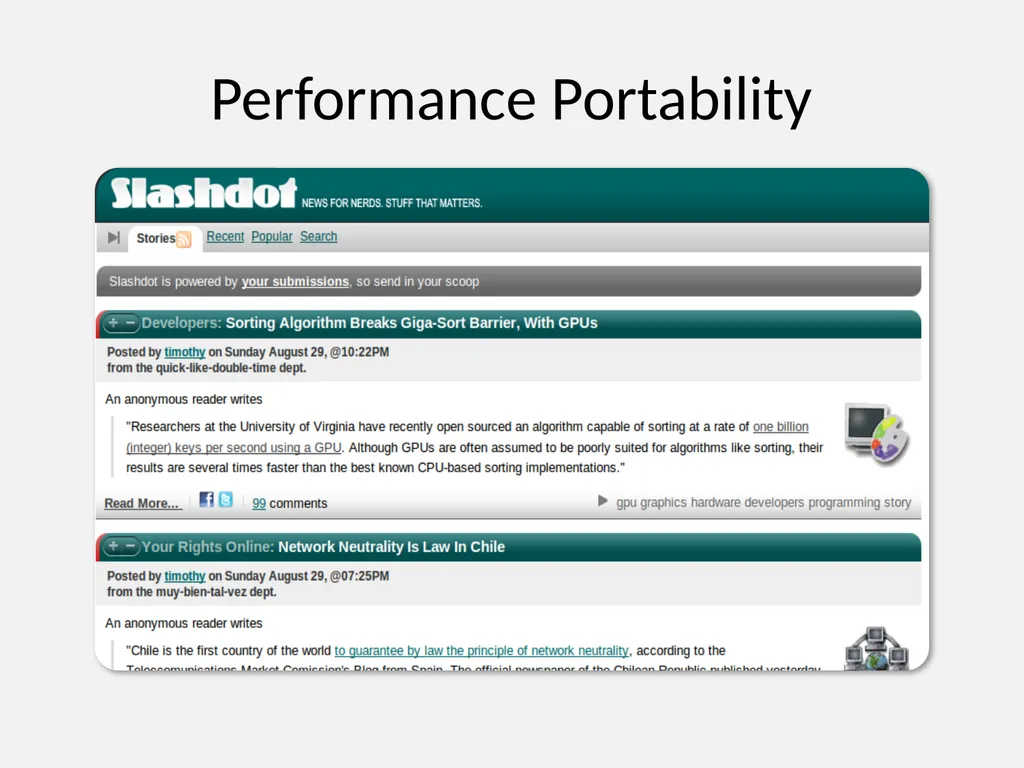
slide14. Performance Portability<br>
slide15. Extensibility Customize temporary allocation
Create new backend systems
Modify algorithm behavior
New in Thrust v1.6<br>
slide16. Robustness Reliable
Supports all CUDA-capable GPUs
Well-tested
~850 unit tests run daily
Robust
Handles many pathological use cases<br>
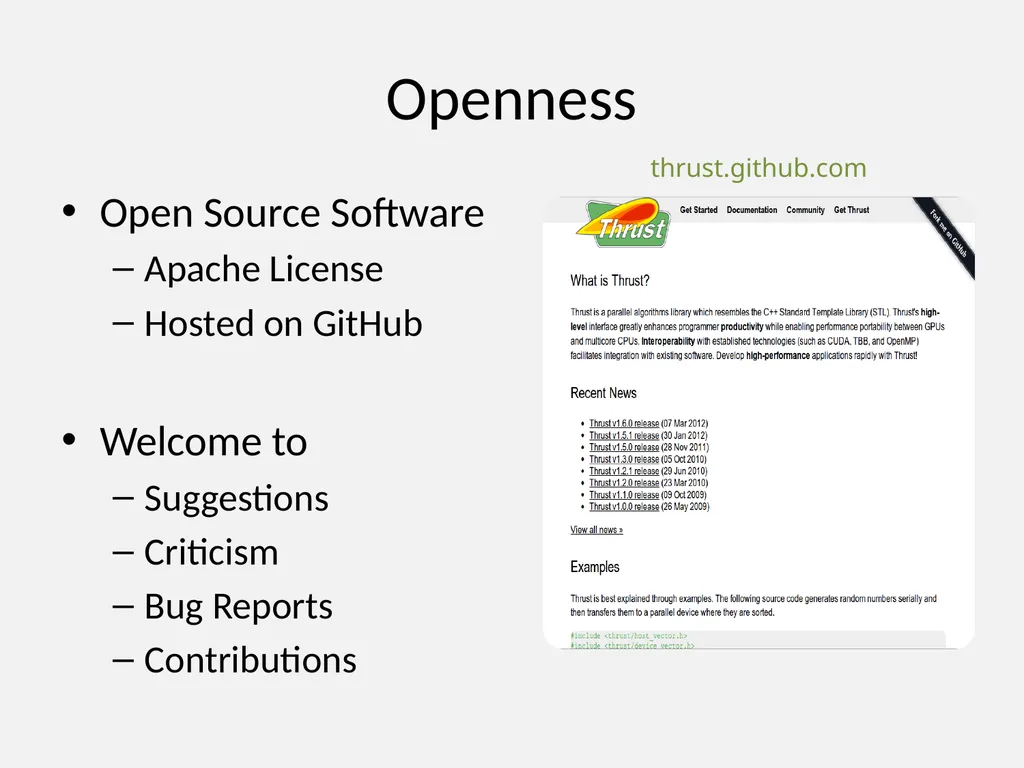
slide17. Openness Open Source Software
Apache License
Hosted on GitHub
Welcome to
Suggestions
Criticism
Bug Reports
Contributions thrust.github.com<br>
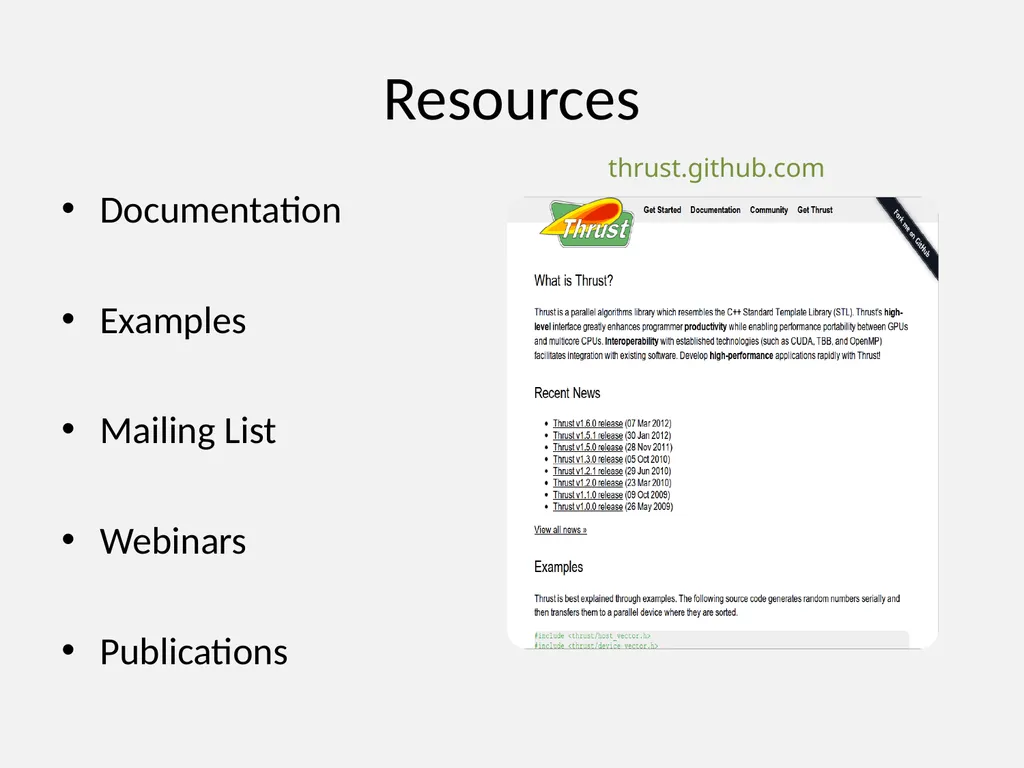
slide18. Resources Documentation
Examples
Mailing List
Webinars
Publications thrust.github.com<br>
Thrust Parallel Algorithms Library<br>
slide2. What is Thrust? High-Level Parallel Algorithms Library
Parallel Analog of the C++ Standard Template Library (STL)
Performance-Portable Abstraction Layer
Productive way to program CUDA<br>
slide3. Example #include <thrust/host_vector.h>
#include <thrust/device_vector.h>
#include <thrust/sort.h>
#include <cstdlib>
int main(void)
{
// generate 32M random numbers on the host
thrust::host_vector<int> h_vec(32 << 20);
thrust::generate(h_vec.begin(), h_vec.end(), rand);
// transfer data to the device
thrust::device_vector<int> d_vec = h_vec;
// sort data on the device
thrust::sort(d_vec.begin(), d_vec.end());
// transfer data back to host
thrust::copy(d_vec.begin(), d_vec.end(), h_vec.begin());
return 0;
}<br>
slide4. Easy to Use Distributed with CUDA Toolkit
Header-only library
Architecture agnostic
Just compile and run! $ nvcc -O2 -arch=sm_20 program.cu -o program<br>
slide5. Why should I use Thrust?<br>
slide6. Productivity Containers
host_vector
device_vector
Memory Mangement
Allocation
Transfers
Algorithm Selection
Location is implicit // allocate host vector with two elements
thrust::host_vector<int> h_vec(2);
// copy host data to device memory
thrust::device_vector<int> d_vec = h_vec;
// write device values from the host
d_vec[0] = 27;
d_vec[1] = 13;
// read device values from the host
int sum = d_vec[0] + d_vec[1];
// invoke algorithm on device
thrust::sort(d_vec.begin(), d_vec.end());
// memory automatically released<br>
slide7. Productivity Large set of algorithms
~75 functions
~125 variations
Flexible
User-defined types
User-defined operators<br>
slide8. Interoperability<br>
slide9. Portability Support for CUDA, TBB and OpenMP
Just recompile! nvcc -DTHRUST_DEVICE_SYSTEM=THRUST_HOST_SYSTEM_OMP<br>
slide10. Backend System Options<br>
slide11. Multiple Backend Systems Mix different backends freely within the same app thrust::omp::vector<float> my_omp_vec(100);
thrust::cuda::vector<float> my_cuda_vec(100);
...
// reduce in parallel on the CPU
thrust::reduce(my_omp_vec.begin(), my_omp_vec.end());
// sort in parallel on the GPU
thrust::sort(my_cuda_vec.begin(), my_cuda_vec.end());<br>
slide12. Potential Workflow Implement Application with Thrust
Profile Application
Specialize Components as Necessary Application Bottleneck Optimized Code<br>
slide13. Performance Portability<br>
slide14. Performance Portability<br>
slide15. Extensibility Customize temporary allocation
Create new backend systems
Modify algorithm behavior
New in Thrust v1.6<br>
slide16. Robustness Reliable
Supports all CUDA-capable GPUs
Well-tested
~850 unit tests run daily
Robust
Handles many pathological use cases<br>
slide17. Openness Open Source Software
Apache License
Hosted on GitHub
Welcome to
Suggestions
Criticism
Bug Reports
Contributions thrust.github.com<br>
slide18. Resources Documentation
Examples
Mailing List
Webinars
Publications thrust.github.com<br>