
CHAPTER 15 Biological Hazards Learning Objectives
Description: CHAPTER 15 Biological Hazards Learning Objectives Identify the industries where workers are at risk of exposure to hazardous biological agents and infectious diseases. Describe the common pathways and routes of exposure of hazardous
Related Topics
Download Presentation
"CHAPTER 15 Biological Hazards Learning Objectives" is the property of its rightful owner. Permission is granted to download and print the materials on this website for personal, non-commercial use only, and to display it on your personal computer provided you do not modify the materials and that you retain all copyright notices contained in the materials. By downloading content from our website, you accept the terms of this agreement.
Presentation Transcript
slide1. CHAPTER 15 Biological Hazards<br>
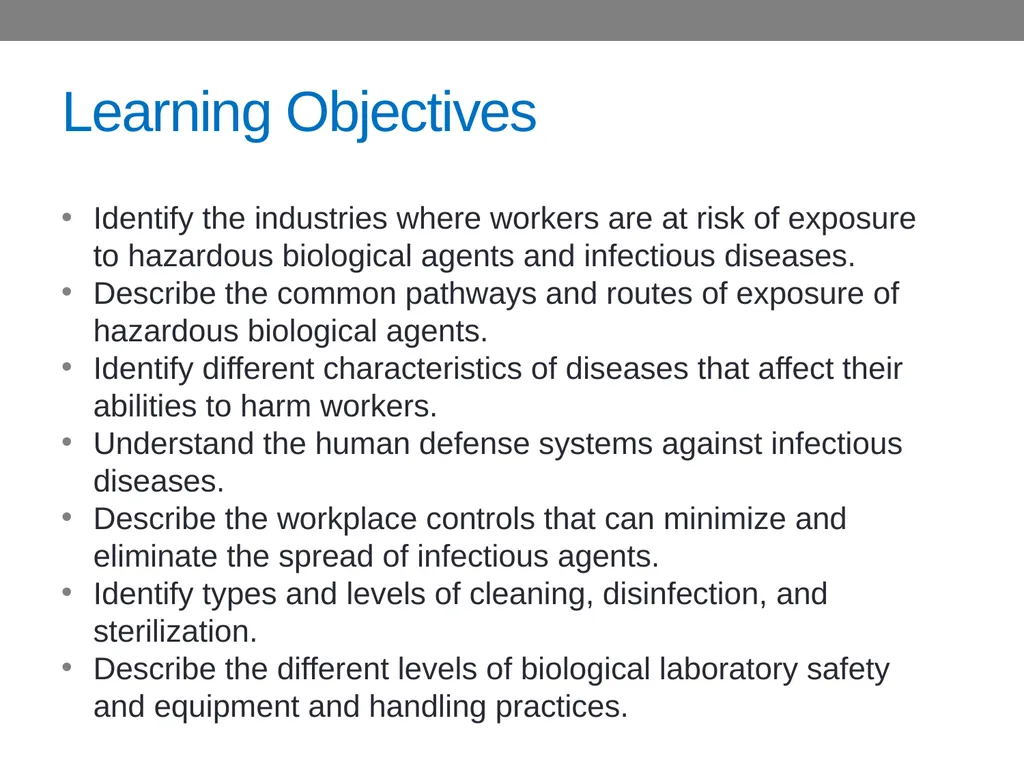
slide2. Learning Objectives Identify the industries where workers are at risk of exposure to hazardous biological agents and infectious diseases.
Describe the common pathways and routes of exposure of hazardous biological agents.
Identify different characteristics of diseases that affect their abilities to harm workers.
Understand the human defense systems against infectious diseases.
Describe the workplace controls that can minimize and eliminate the spread of infectious agents.
Identify types and levels of cleaning, disinfection, and sterilization.
Describe the different levels of biological laboratory safety and equipment and handling practices.<br>
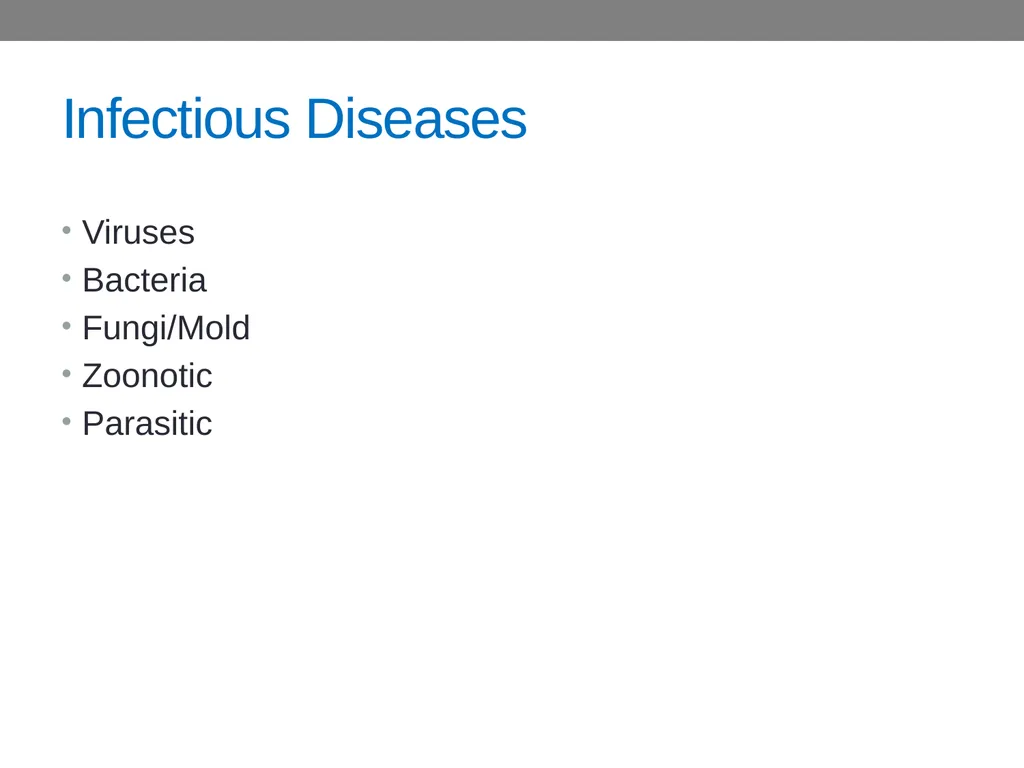
slide3. Infectious Diseases Viruses
Bacteria
Fungi/Mold
Zoonotic
Parasitic<br>
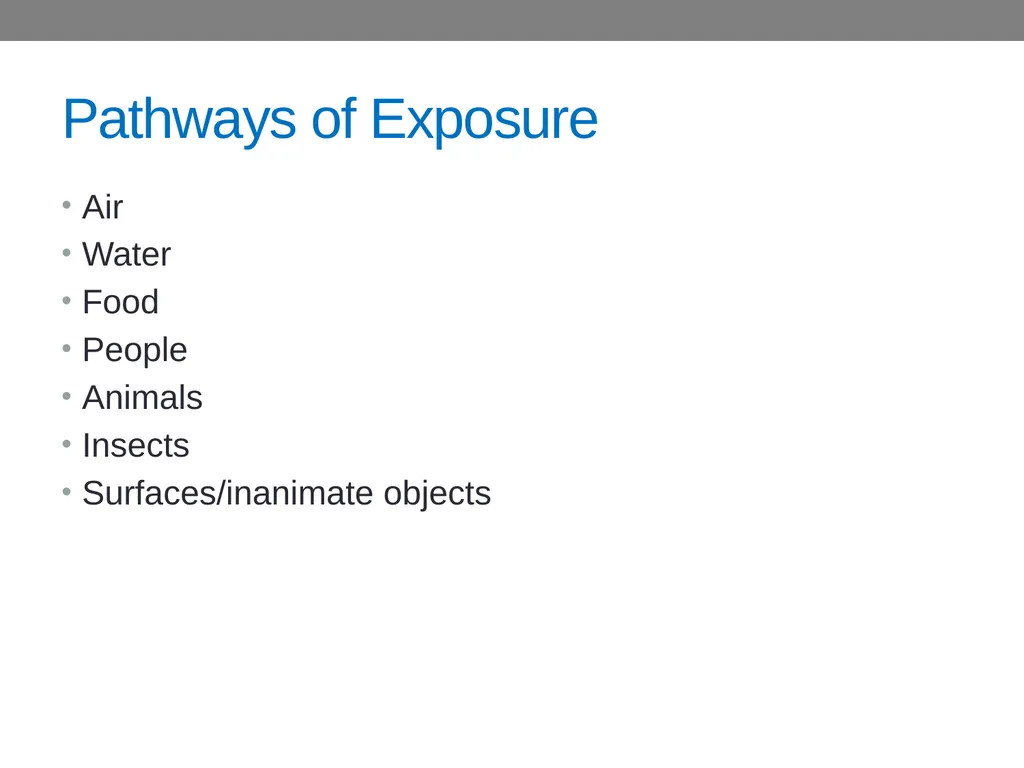
slide4. Pathways of Exposure Air
Water
Food
People
Animals
Insects
Surfaces/inanimate objects<br>
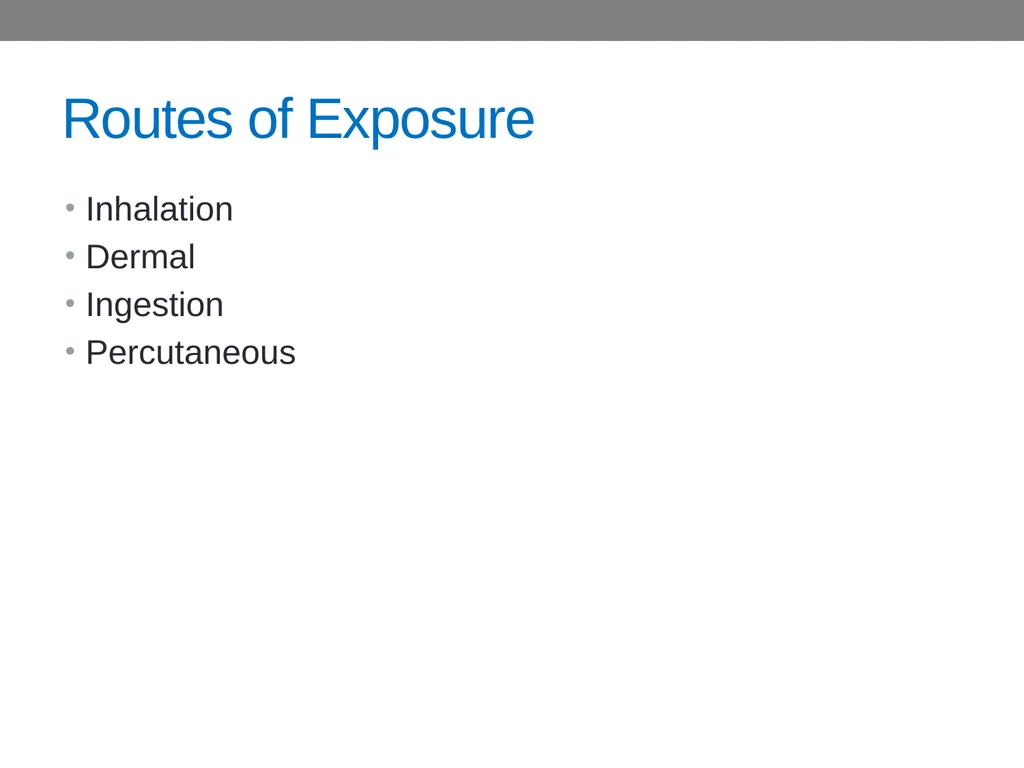
slide5. Routes of Exposure Inhalation
Dermal
Ingestion
Percutaneous<br>
slide6. Factors of Infection Environmental viability
Infectiveness
Virulence<br>
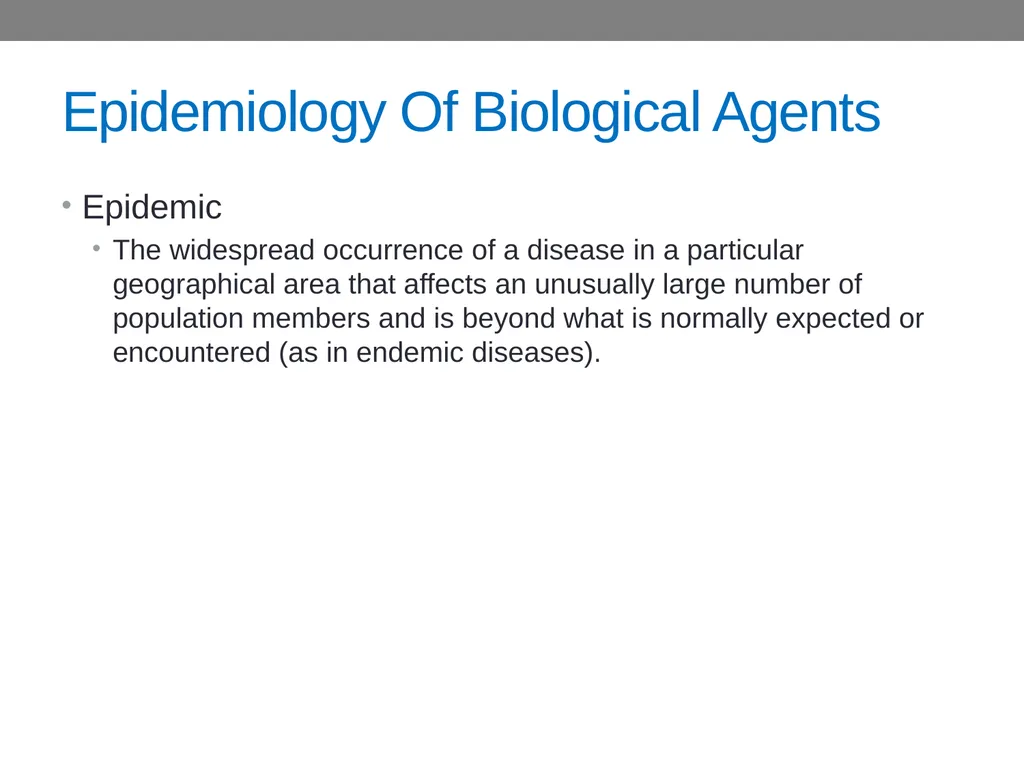
slide7. Epidemiology Of Biological Agents Epidemic
The widespread occurrence of a disease in a particular geographical area that affects an unusually large number of population members and is beyond what is normally expected or encountered (as in endemic diseases).<br>
slide8. Epidemiology of Biological Agents (cont.) Pandemic
Epidemics that spread to geographical areas where the disease is not typically expected to occur affecting a much larger population.<br>
slide9. Workplace Exposures Agriculture
Healthcare
Law enforcement/prisons<br>
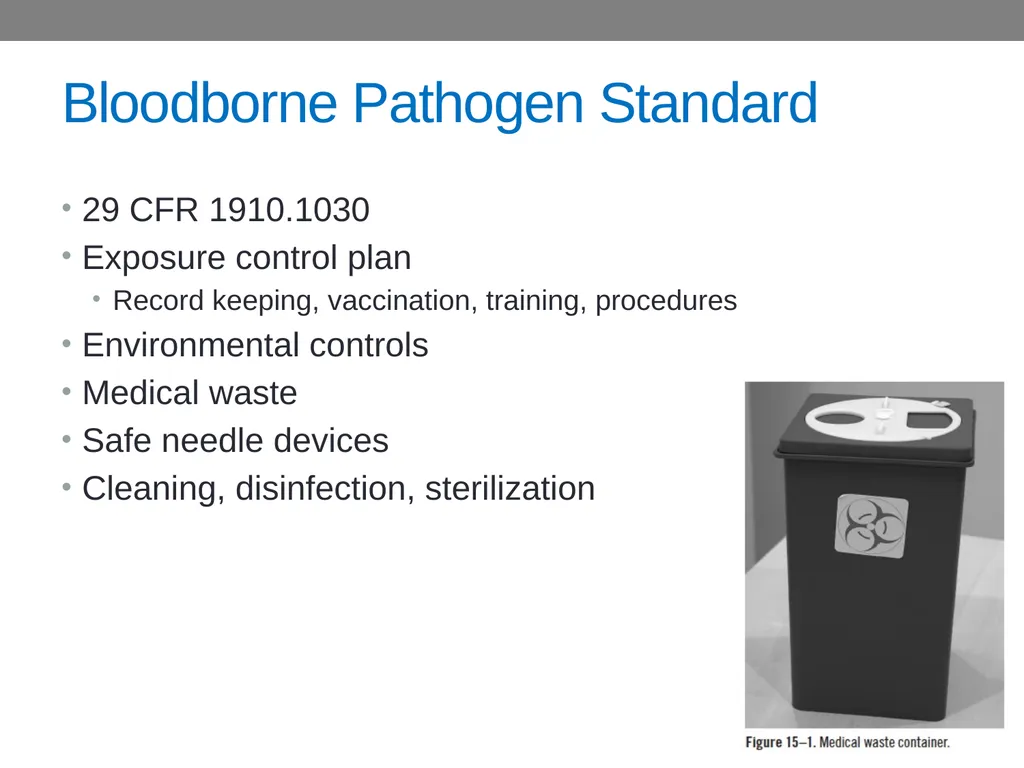
slide10. Bloodborne Pathogen Standard 29 CFR 1910.1030
Exposure control plan
Record keeping, vaccination, training, procedures
Environmental controls
Medical waste
Safe needle devices
Cleaning, disinfection, sterilization<br>
slide11. Biological Laboratories and Infectious Disease Research OSHA
American Biological Safety Association
Centers for Disease Prevention and Control
Bureau of Labor and Statistics<br>
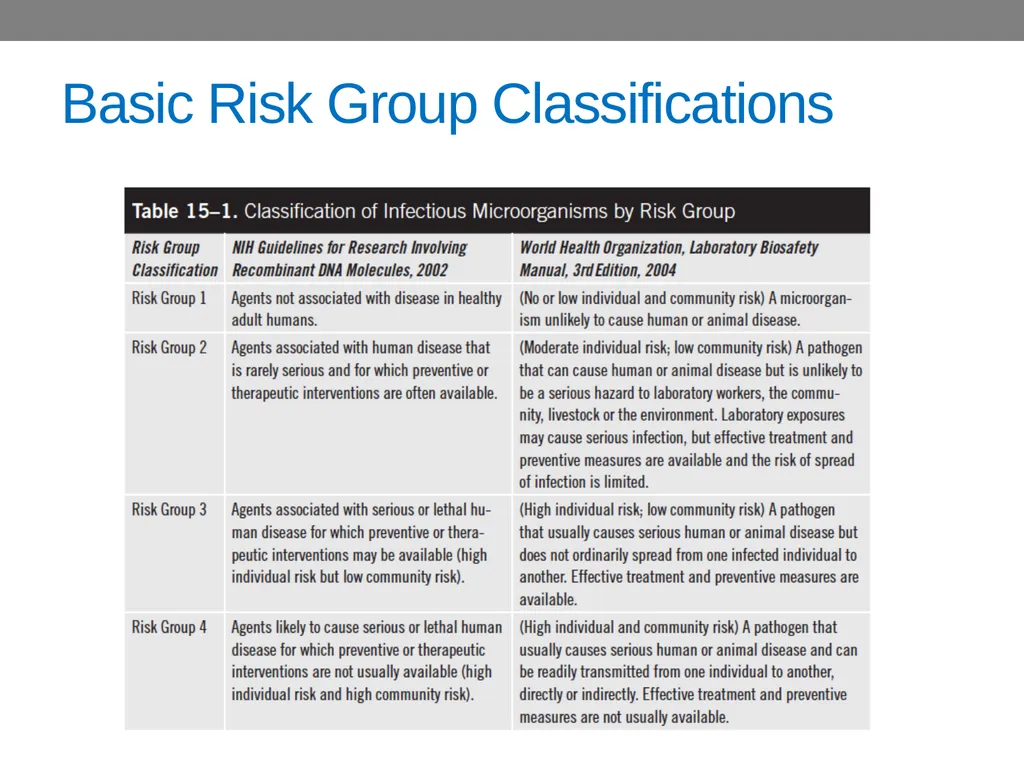
slide12. Basic Risk Group Classifications<br>
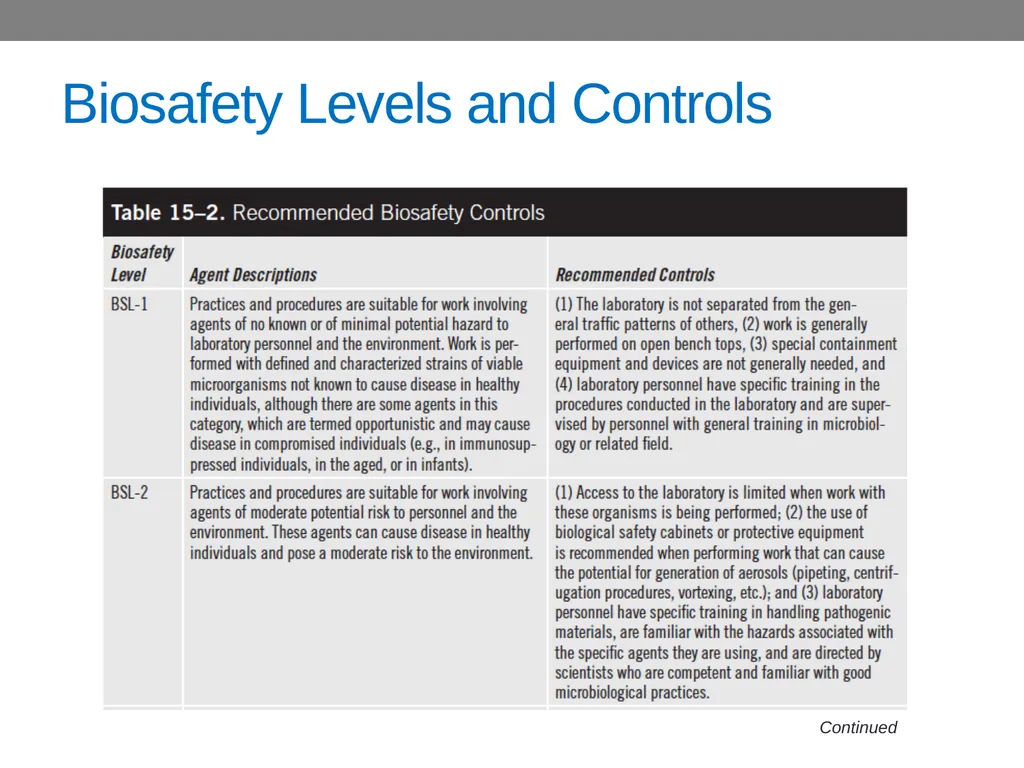
slide13. Biosafety Levels and Controls Continued<br>
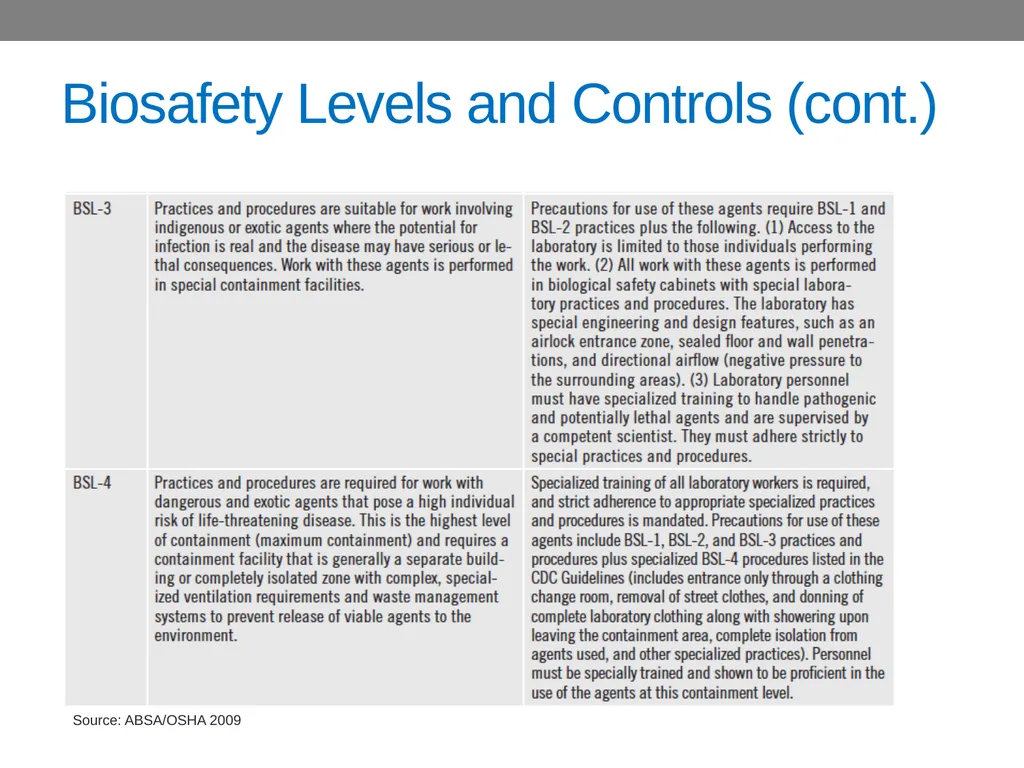
slide14. Source: ABSA/OSHA 2009 Biosafety Levels and Controls (cont.)<br>
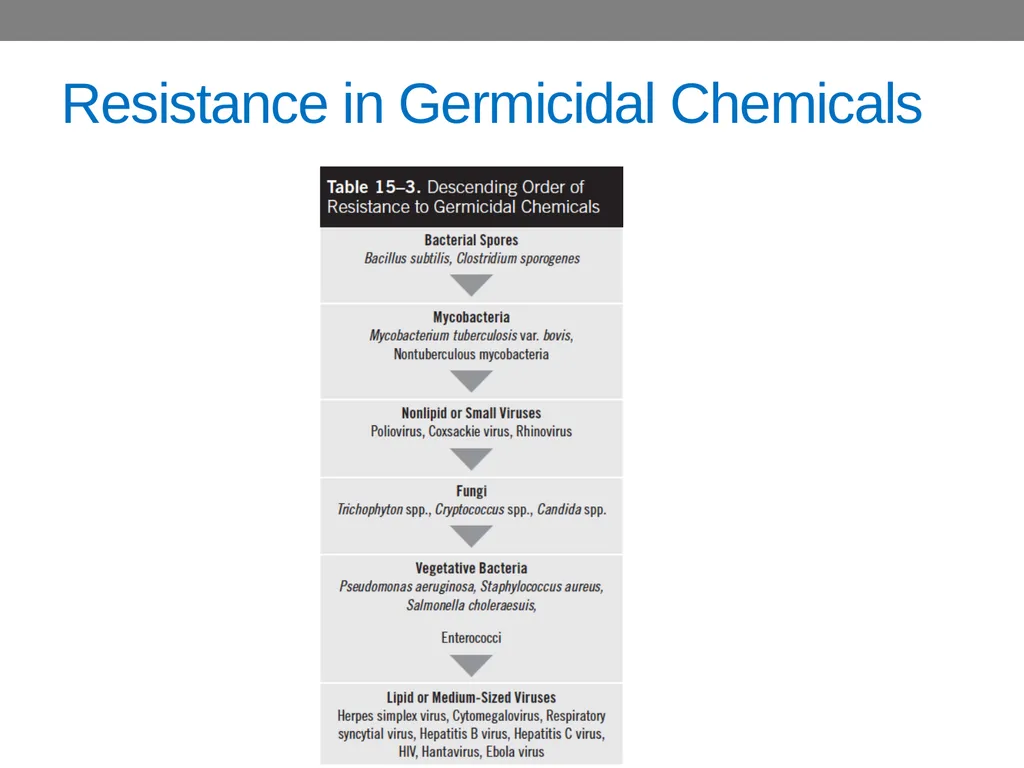
slide15. Resistance in Germicidal Chemicals<br>
slide2. Learning Objectives Identify the industries where workers are at risk of exposure to hazardous biological agents and infectious diseases.
Describe the common pathways and routes of exposure of hazardous biological agents.
Identify different characteristics of diseases that affect their abilities to harm workers.
Understand the human defense systems against infectious diseases.
Describe the workplace controls that can minimize and eliminate the spread of infectious agents.
Identify types and levels of cleaning, disinfection, and sterilization.
Describe the different levels of biological laboratory safety and equipment and handling practices.<br>
slide3. Infectious Diseases Viruses
Bacteria
Fungi/Mold
Zoonotic
Parasitic<br>
slide4. Pathways of Exposure Air
Water
Food
People
Animals
Insects
Surfaces/inanimate objects<br>
slide5. Routes of Exposure Inhalation
Dermal
Ingestion
Percutaneous<br>
slide6. Factors of Infection Environmental viability
Infectiveness
Virulence<br>
slide7. Epidemiology Of Biological Agents Epidemic
The widespread occurrence of a disease in a particular geographical area that affects an unusually large number of population members and is beyond what is normally expected or encountered (as in endemic diseases).<br>
slide8. Epidemiology of Biological Agents (cont.) Pandemic
Epidemics that spread to geographical areas where the disease is not typically expected to occur affecting a much larger population.<br>
slide9. Workplace Exposures Agriculture
Healthcare
Law enforcement/prisons<br>
slide10. Bloodborne Pathogen Standard 29 CFR 1910.1030
Exposure control plan
Record keeping, vaccination, training, procedures
Environmental controls
Medical waste
Safe needle devices
Cleaning, disinfection, sterilization<br>
slide11. Biological Laboratories and Infectious Disease Research OSHA
American Biological Safety Association
Centers for Disease Prevention and Control
Bureau of Labor and Statistics<br>
slide12. Basic Risk Group Classifications<br>
slide13. Biosafety Levels and Controls Continued<br>
slide14. Source: ABSA/OSHA 2009 Biosafety Levels and Controls (cont.)<br>
slide15. Resistance in Germicidal Chemicals<br>