CONFLICT RESOLUTION: USING NON-VIOLENT COMMUNICATION (NVC) Gemma Perella, gemmathesli.co.uk ABOUT THIS SESSION Learn the essential steps of Non Violent Communication (NVC) Learn 4 steps for talking about conflict diplomatically and
"CONFLICT RESOLUTION: USING NON-VIOLENT" is the property of its rightful owner. Permission is granted to
download and print the materials on this website for personal, non-commercial use only, and to display it
on your personal computer provided you do not modify the materials and that you retain all copyright
notices contained in the materials. By downloading content from our website, you accept the terms of this
agreement.
Presentation Transcript
01
CONFLICT RESOLUTION: USING NON-VIOLENT COMMUNICATION (NVC) Gemma Perella, gemma@thesli.co.uk<br>
02
ABOUT THIS SESSION Learn the essential steps of Non Violent Communication (NVC)
Learn 4 steps for talking about conflict diplomatically and empathetically
Practice drawing out and expressing the underlying needs of a conflict – using your own example
Learn how to use NVC to work towards constructive solutions<br>
03
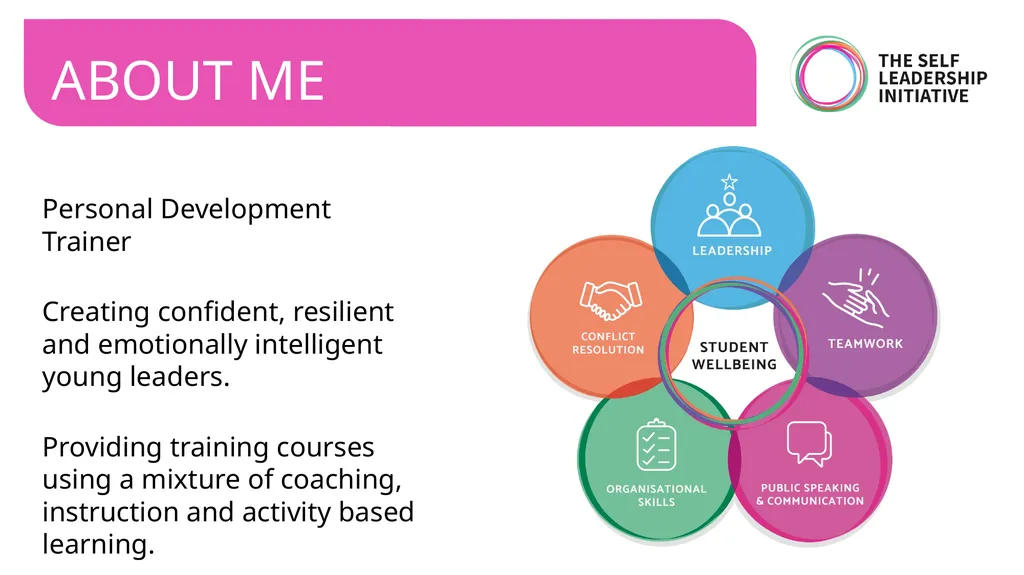
ABOUT ME Personal Development Trainer
Creating confident, resilient and emotionally intelligent young leaders.
Providing training courses using a mixture of coaching, instruction and activity based learning.<br>
04
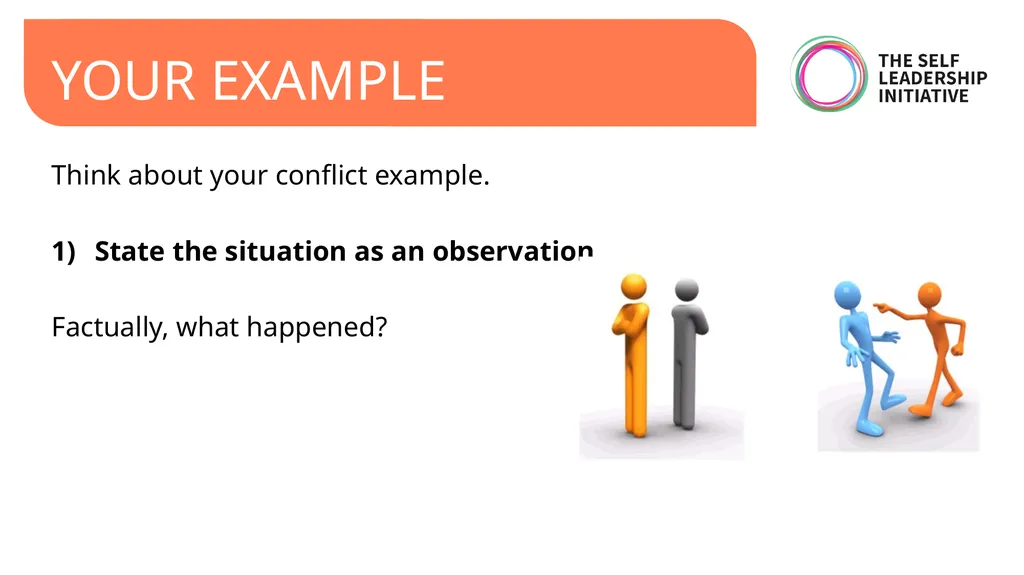
YOUR EXAMPLE Identify a conflict in your life
0-4 in difficulty out of 10
Something you can talk about
Does NOT involve the person sitting next to you
OK if it was resolved or unresolved
OK if it is work, study or personal<br>
05
CONFLICT RESOLUTION Active listening
Assertiveness
Structuring a difficult conversation
Negotiation skills
Looking for collaborative solutions
Understanding conflict drivers
Non Violent communication<br>
06
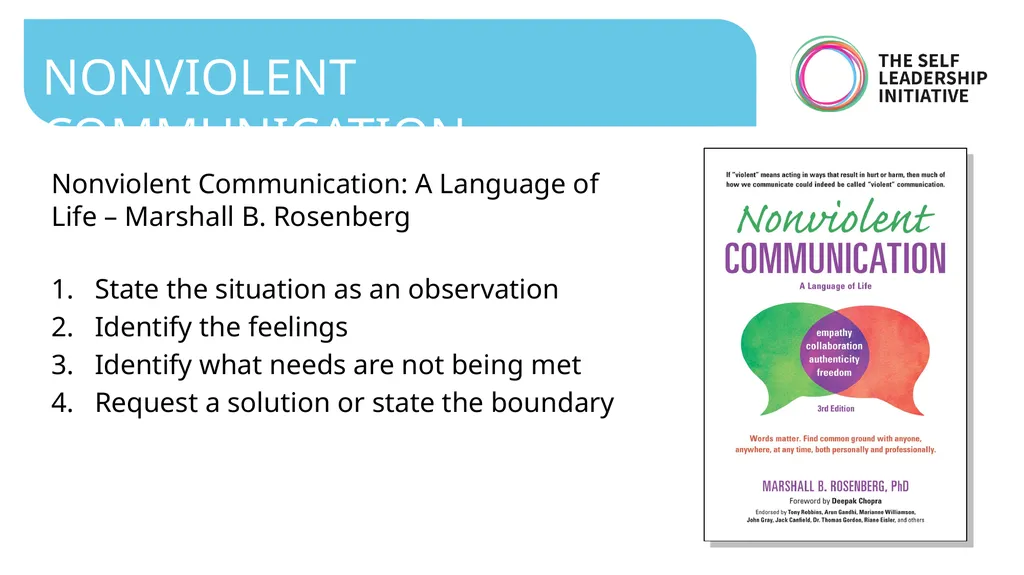
NONVIOLENT COMMUNICATION Nonviolent Communication: A Language of Life – Marshall B. Rosenberg State the situation as an observation
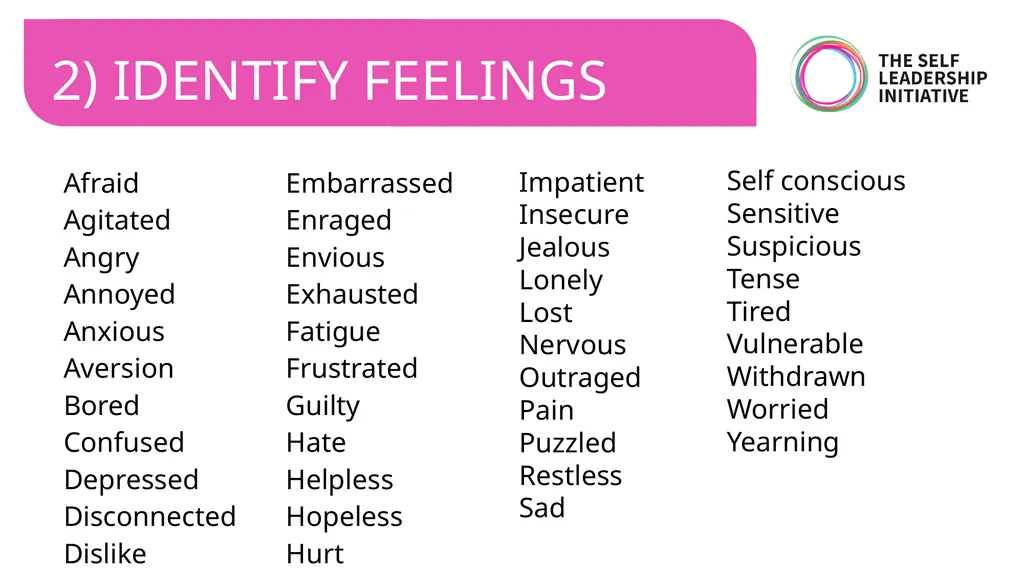
Identify the feelings
Identify what needs are not being met
Request a solution or state the boundary<br>
07
1) MAKE OBSERVATIONS Judgements are our opinions, interpretations, assumptions, exaggerations, guesses and even ‘spin’
Observations are the things we can see as definitely true – like we are watching the scenario on a video recording.<br>
08
A colleague waltzed by my desk on Friday afternoon and pressured me into doing last minute social media for their campaign - and I gave in to them. 1) MAKE OBSERVATIONS A colleague waltzed by my desk on Friday afternoon and pressured me into doing last minute social media for their campaign - and I gave in to them. A colleague came to my desk at 3.30pm on Friday afternoon and said “This campaign needs a final push before 5.30pm and I have too much to do. You are really good at communications, you should do it.”
Even though I knew I was busy I agreed to take on the work.<br>
09
You derailed our meeting into talking about your latest fad project so that you could justify some extra resources. 1) MAKE OBSERVATIONS You derailed our meeting into talking about your latest fad project so that you could justify some extra resources. In our last team meeting you raised a point that was not on our agenda. We spent 20 minutes talking about a new project you are running and you asked for extra resources.<br>
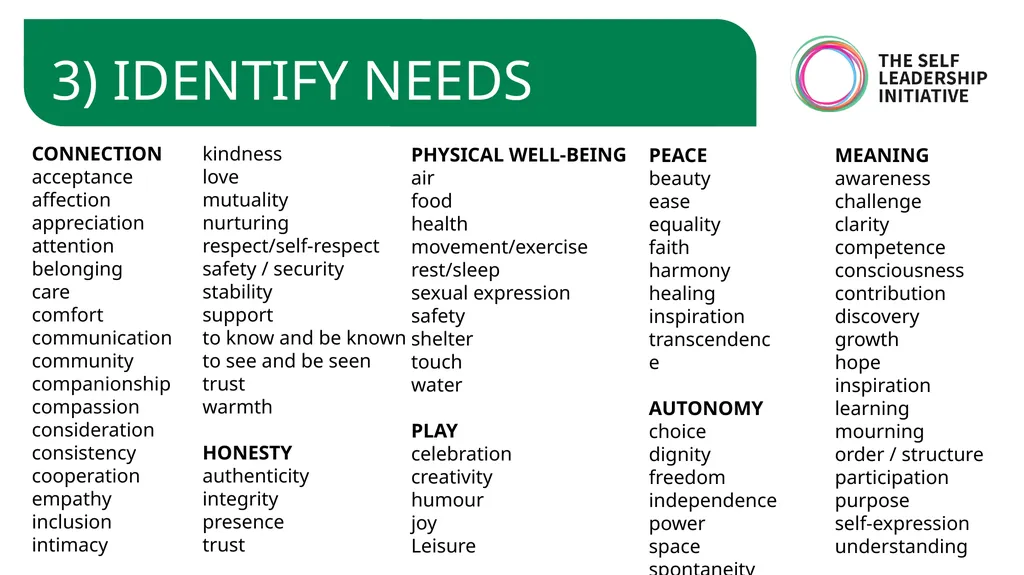
3) IDENTIFY NEEDS CONNECTION
acceptance
affection
appreciation
attention
belonging
care
comfort
communication
community
companionship
compassion
consideration
consistency
cooperation
empathy
inclusion
intimacy kindness
love
mutuality
nurturing
respect/self-respect
safety / security
stability
support
to know and be known
to see and be seen
trust
warmth
HONESTY
authenticity
integrity
presence
trust PHYSICAL WELL-BEING
air
food
health
movement/exercise
rest/sleep
sexual expression
safety
shelter
touch
water
PLAY
celebration
creativity
humour
joy
Leisure PEACE
beauty
ease
equality
faith
harmony
healing
inspiration
transcendence
AUTONOMY
choice
dignity
freedom
independence
power
space
spontaneity MEANING
awareness
challenge
clarity
competence
consciousness
contribution
discovery
growth
hope
inspiration
learning
mourning
order / structure
participation
purpose
self-expression
understanding<br>
14
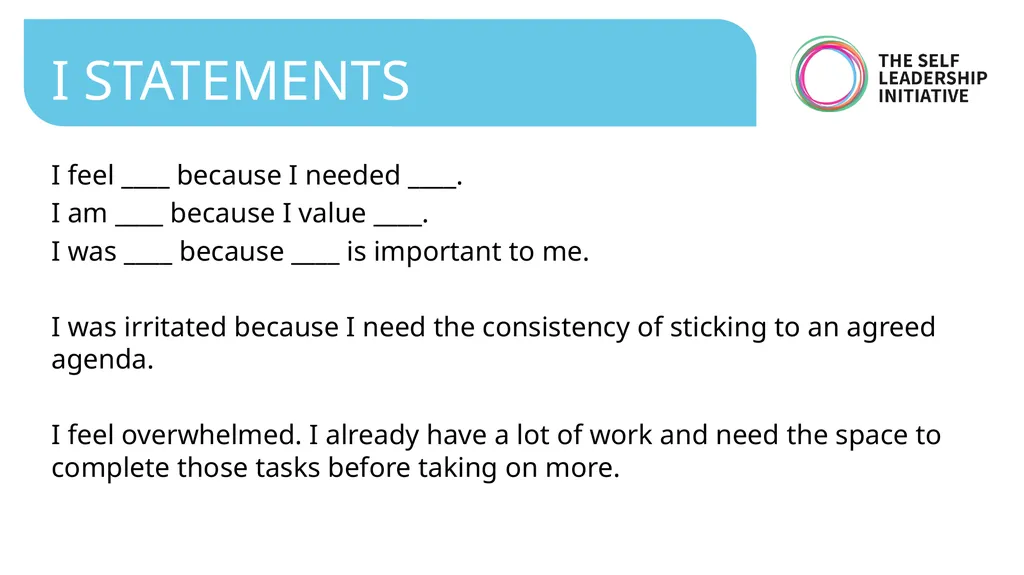
I STATEMENTS I feel ____ because I needed ____.
I am ____ because I value ____.
I was ____ because ____ is important to me.
I was irritated because I need the consistency of sticking to an agreed agenda.
I feel overwhelmed. I already have a lot of work and need the space to complete those tasks before taking on more.<br>
15
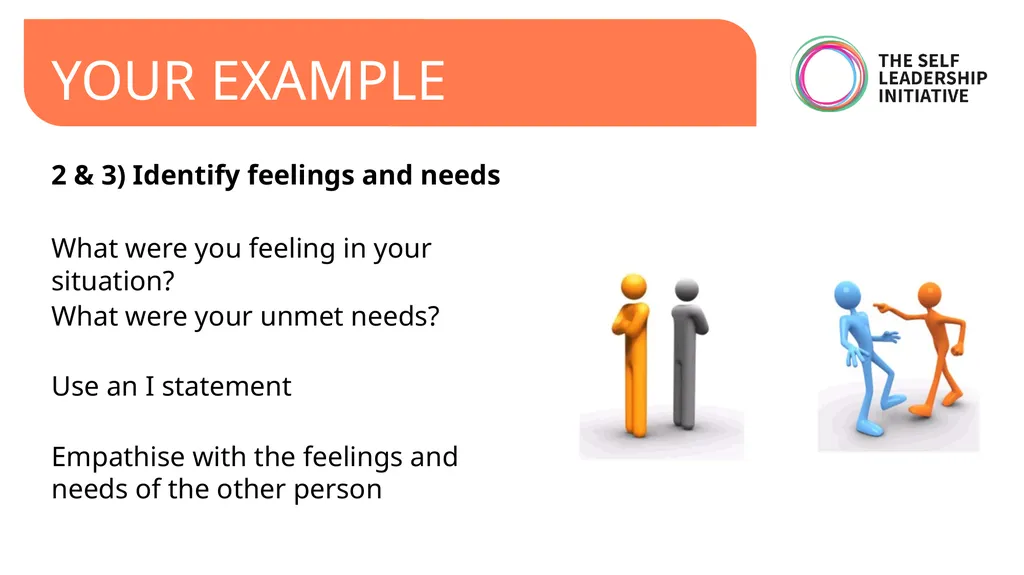
YOUR EXAMPLE 2 & 3) Identify feelings and needs
What were you feeling in your situation?
What were your unmet needs?
Use an I statement
Empathise with the feelings and needs of the other person<br>
16
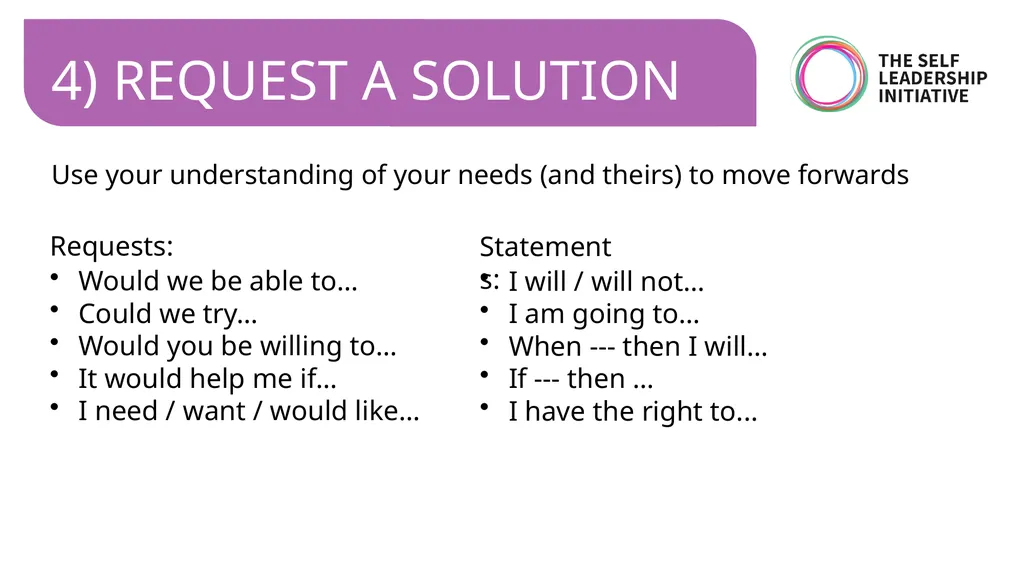
4) REQUEST A SOLUTION Use your understanding of your needs (and theirs) to move forwards Requests: Would we be able to…
Could we try…
Would you be willing to…
It would help me if…
I need / want / would like… Statements: I will / will not…
I am going to…
When --- then I will…
If --- then …
I have the right to...<br>
17
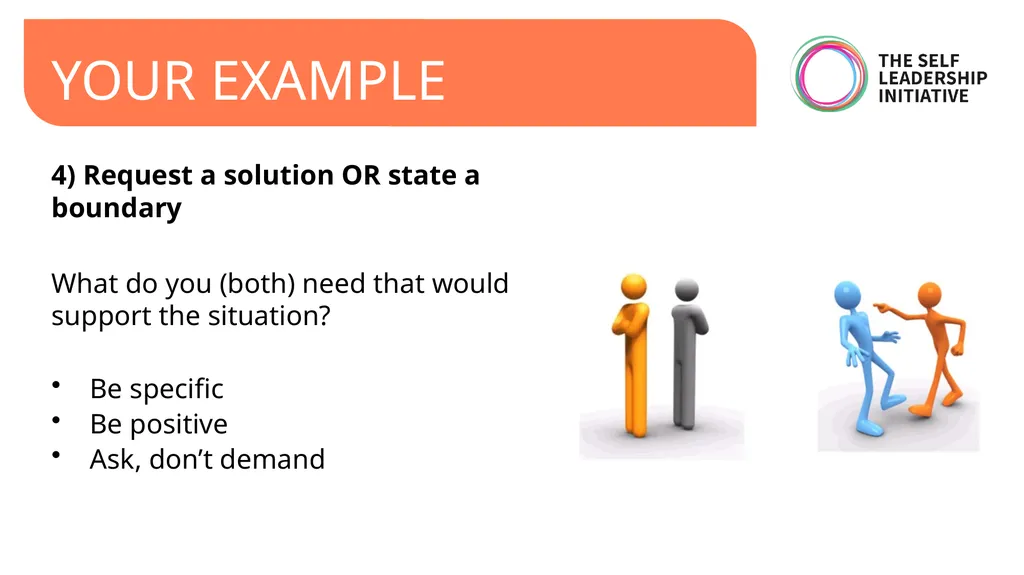
YOUR EXAMPLE 4) Request a solution OR state a boundary
What do you (both) need that would support the situation?
Be specific
Be positive
Ask, don’t demand<br>
18
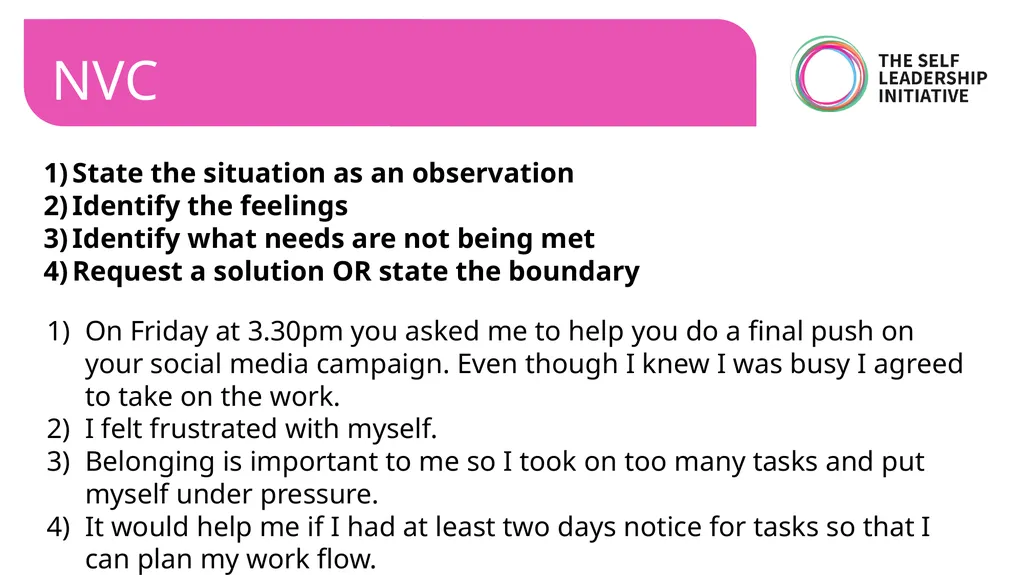
NVC State the situation as an observation
Identify the feelings
Identify what needs are not being met
Request a solution OR state the boundary On Friday at 3.30pm you asked me to help you do a final push on your social media campaign. Even though I knew I was busy I agreed to take on the work.
I felt frustrated with myself.
Belonging is important to me so I took on too many tasks and put myself under pressure.
It would help me if I had at least two days notice for tasks so that I can plan my work flow.<br>
19
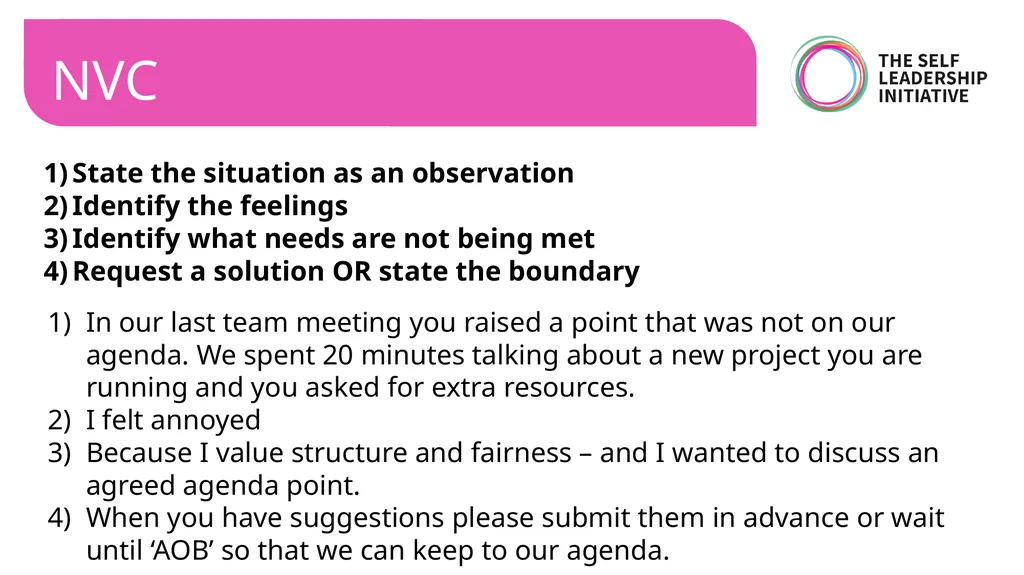
NVC State the situation as an observation
Identify the feelings
Identify what needs are not being met
Request a solution OR state the boundary In our last team meeting you raised a point that was not on our agenda. We spent 20 minutes talking about a new project you are running and you asked for extra resources.
I felt annoyed
Because I value structure and fairness – and I wanted to discuss an agreed agenda point.
When you have suggestions please submit them in advance or wait until ‘AOB’ so that we can keep to our agenda.<br>
20
WRAPPING UP Learned the 4 step NVC model for discussing conflict
Practiced articulating what you need to find a solution
Conflict resolution skills take time, practice and complimentary skills<br>
21
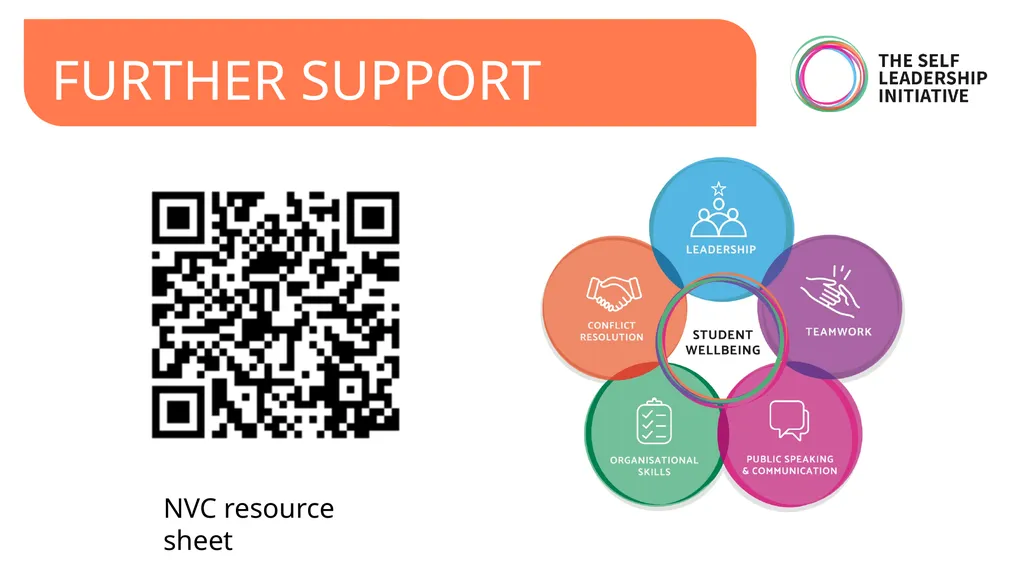
FURTHER SUPPORT NVC resource sheet<br>
22
CONFLICT RESOLUTION: USING NON-VIOLENT COMMUNICATION (NVC) Gemma Perella, gemma@thesli.co.uk www.thesli.co.uk
Training programmes
Coaching
Resources and blogs
Mailing list<br>