
Grażyna Bacewicz Overture Primary / KS2 / 2nd



Description: Grażyna Bacewicz Overture Primary KS2 2nd Level Classroom Lesson Plan Written by Rachel Leach Trailblazer Polish composer, Grażyna Bacewicz, wrote music at a time when being a female composer was very unusual, during the Second World
Related Topics
Download Presentation
"Grażyna Bacewicz Overture Primary / KS2 / 2nd" is the property of its rightful owner. Permission is granted to download and print the materials on this website for personal, non-commercial use only, and to display it on your personal computer provided you do not modify the materials and that you retain all copyright notices contained in the materials. By downloading content from our website, you accept the terms of this agreement.
Presentation Transcript
slide2. Grażyna Bacewicz Overture
Primary / KS2 / 2nd Level Classroom Lesson Plan Written by
Rachel Leach<br>
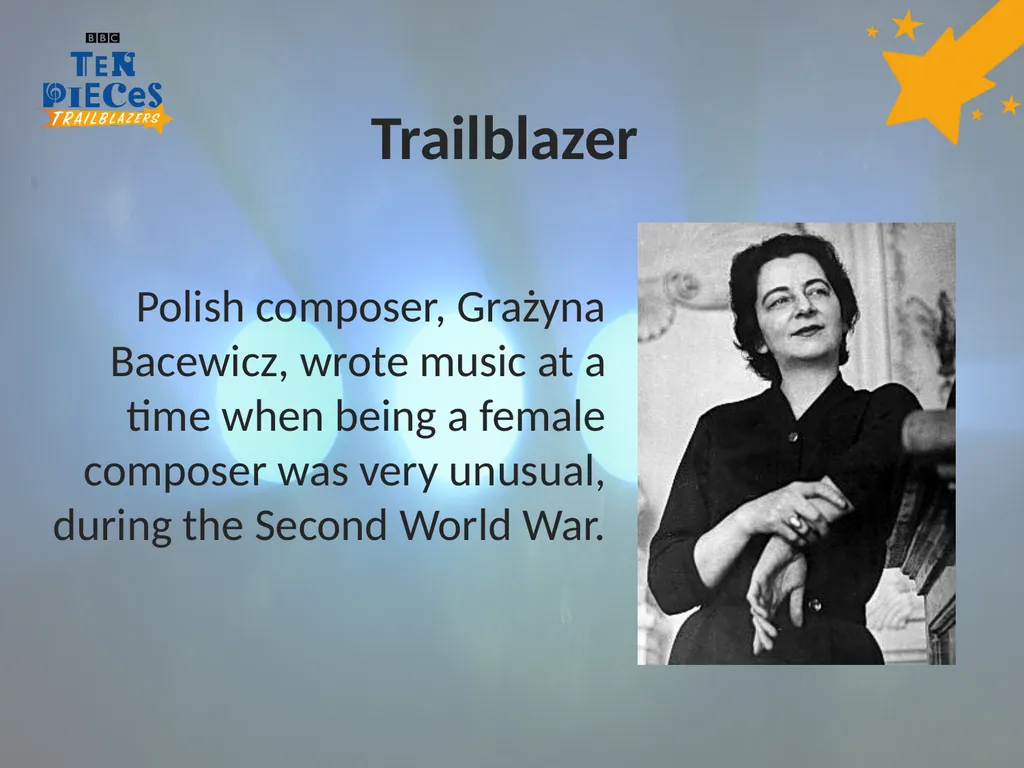
slide3. Trailblazer Polish composer, Grażyna Bacewicz, wrote music at a time when being a female composer was very unusual, during the Second World War.<br>
slide4. Lesson outcomes After this lesson, pupils will be able to:
listen and reflect on a piece of orchestral music
invent their own musical motifs and structure them into a piece
perform as an ensemble
learn musical language appropriate to the task<br>
slide5. Curriculum checklist Learners will:
play and perform in ensemble contexts, using voices and playing musical instruments
improvise and compose music for a range of purposes using the interrelated dimensions of music
listen with attention to detail and recall sounds with increasing aural memory<br>
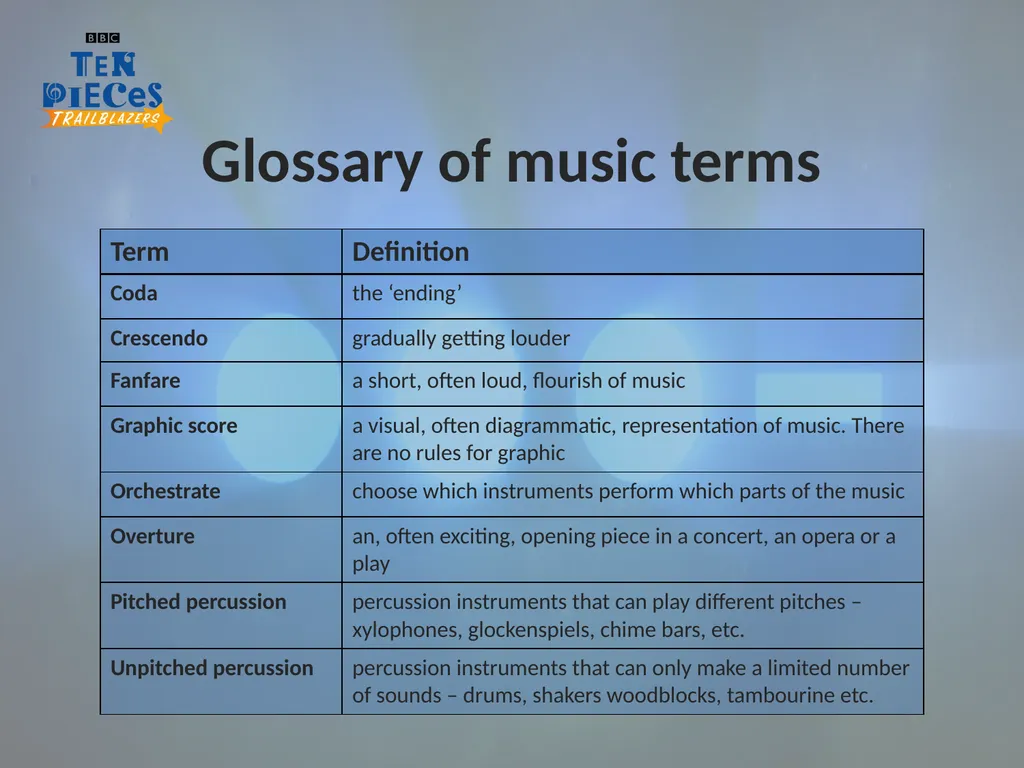
slide6. Glossary of music terms<br>
slide7. Lesson 1
Watching and listening<br>
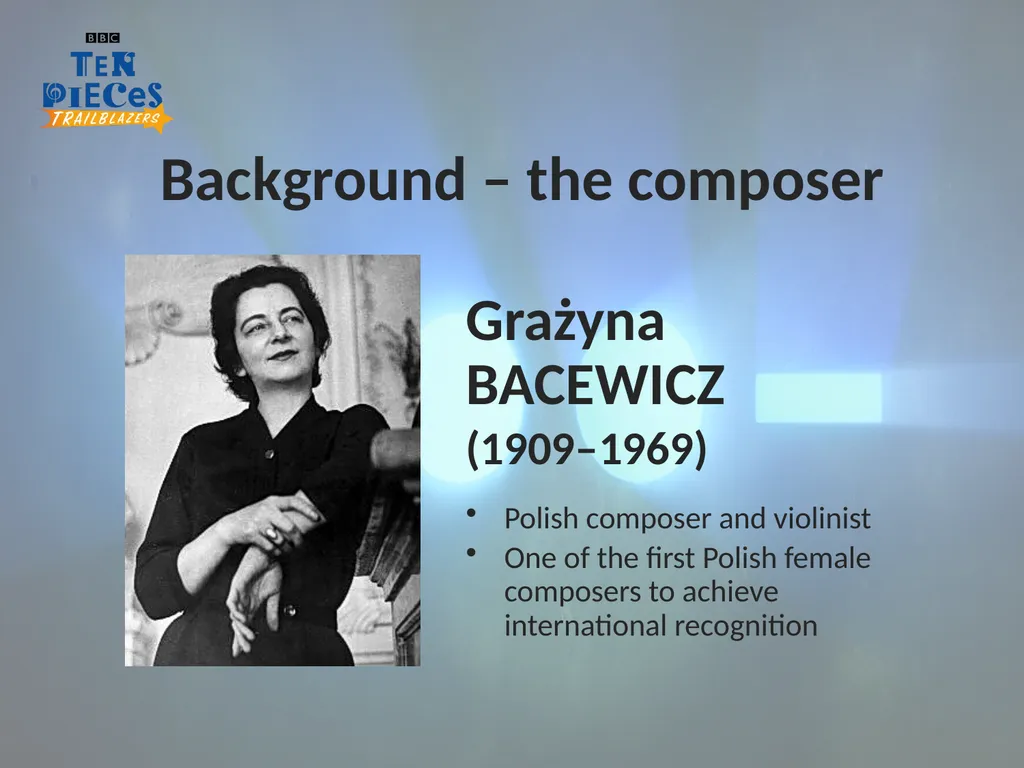
slide8. Background – the composer Grażyna BACEWICZ
(1909–1969)
Polish composer and violinist
One of the first Polish female composers to achieve international recognition<br>
slide9. Background – the music Overture
Written in 1943, during World War 2. Bacewicz was writing her music in secret at this point and giving underground concerts
Bacewicz had to wait until the war was over to hear this piece
An overture is a short, often exciting piece that acts as an opener to a concert or an opera
This overture begins with secret messages in Morse Code and then becomes an exciting burst of energy<br>
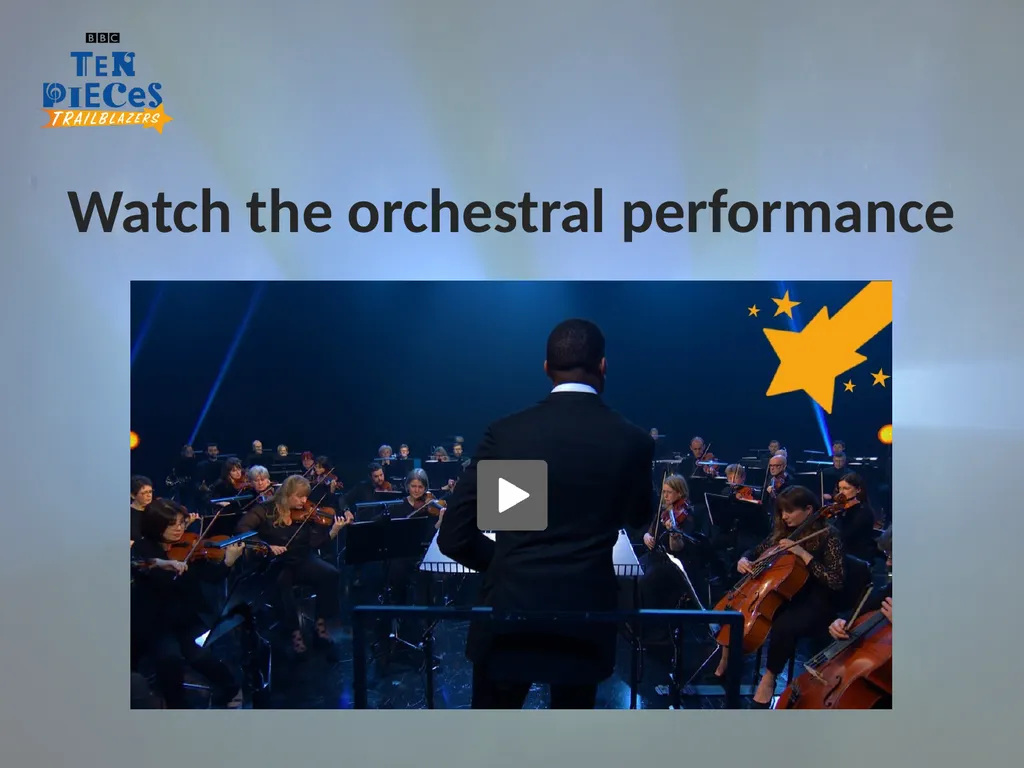
slide10. Watch the orchestral performance<br>
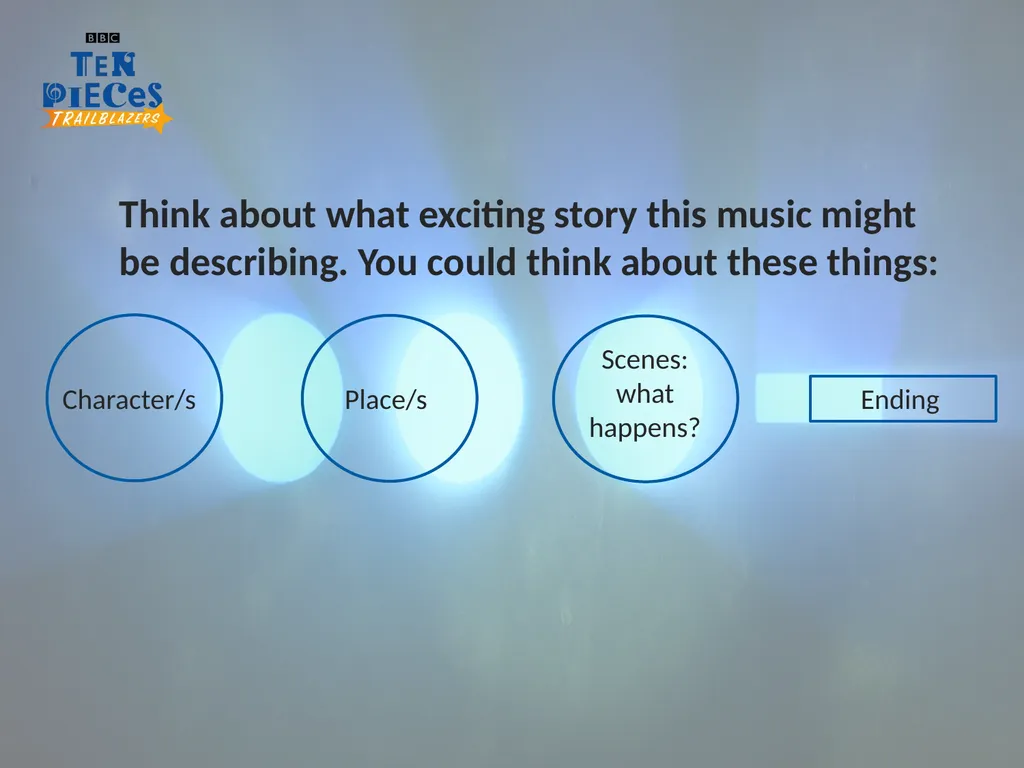
slide11. Think about what exciting story this music might be describing. You could think about these things: Character/s Place/s Scenes:
what happens? Ending<br>
slide12. Lesson 2
Exciting beginning<br>
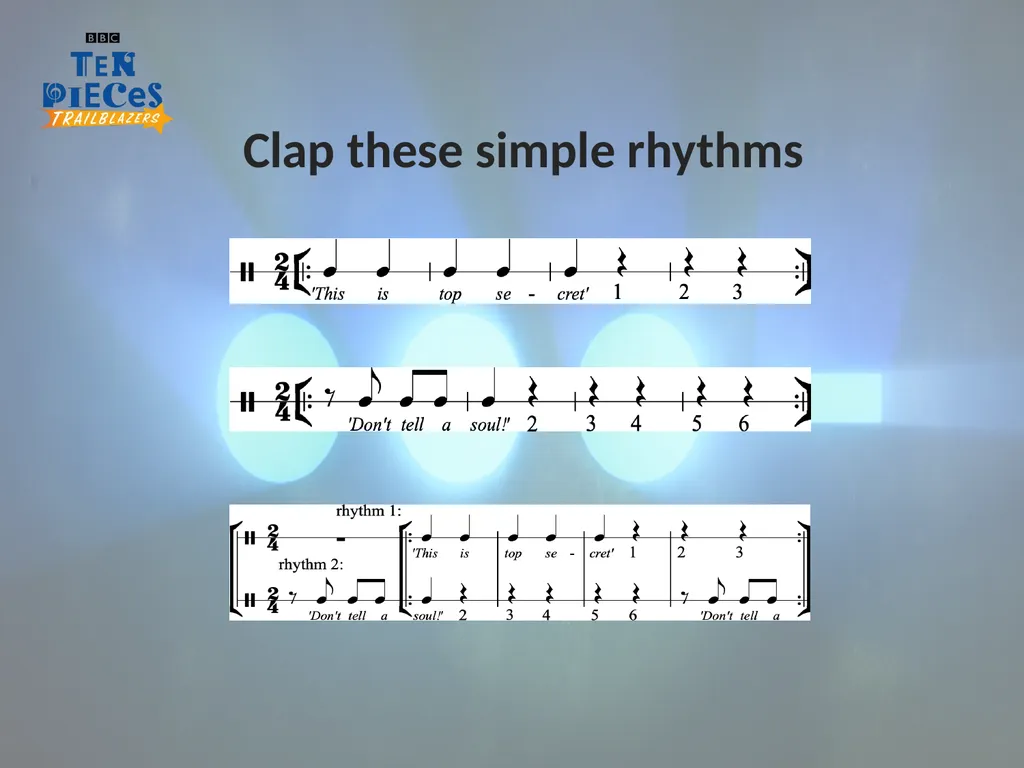
slide13. Clap these simple rhythms<br>
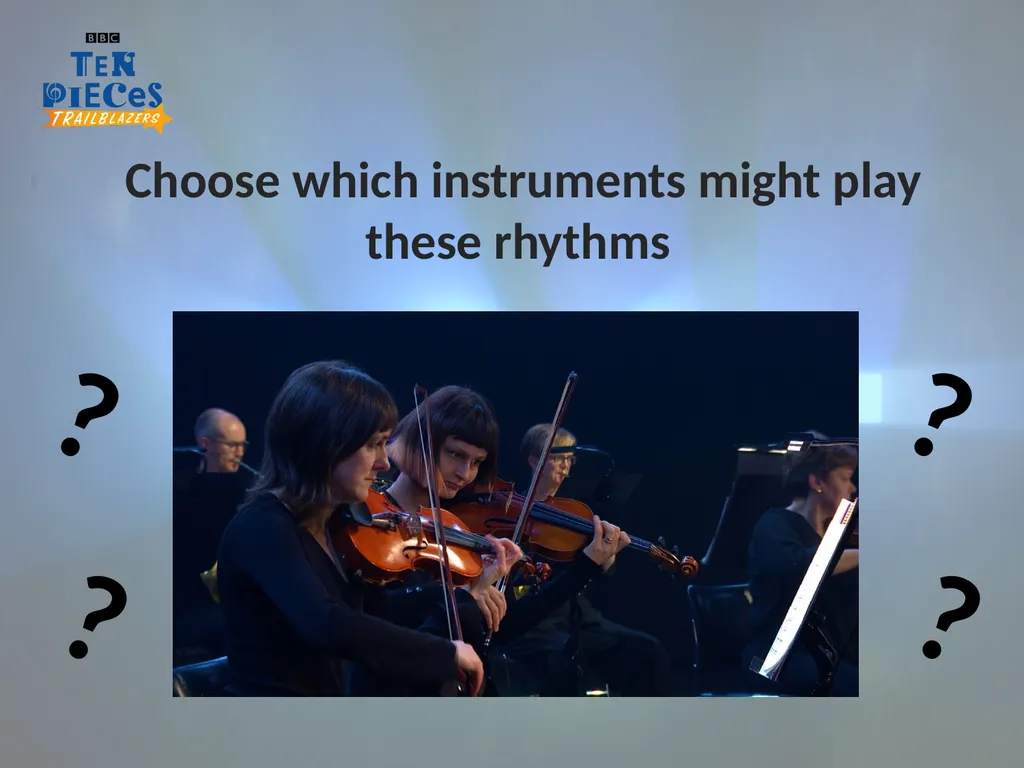
slide14. Choose which instruments might play these rhythms ? ? ? ?<br>
slide15. Lesson 3
Hidden messages<br>
slide16. Warm up!<br>
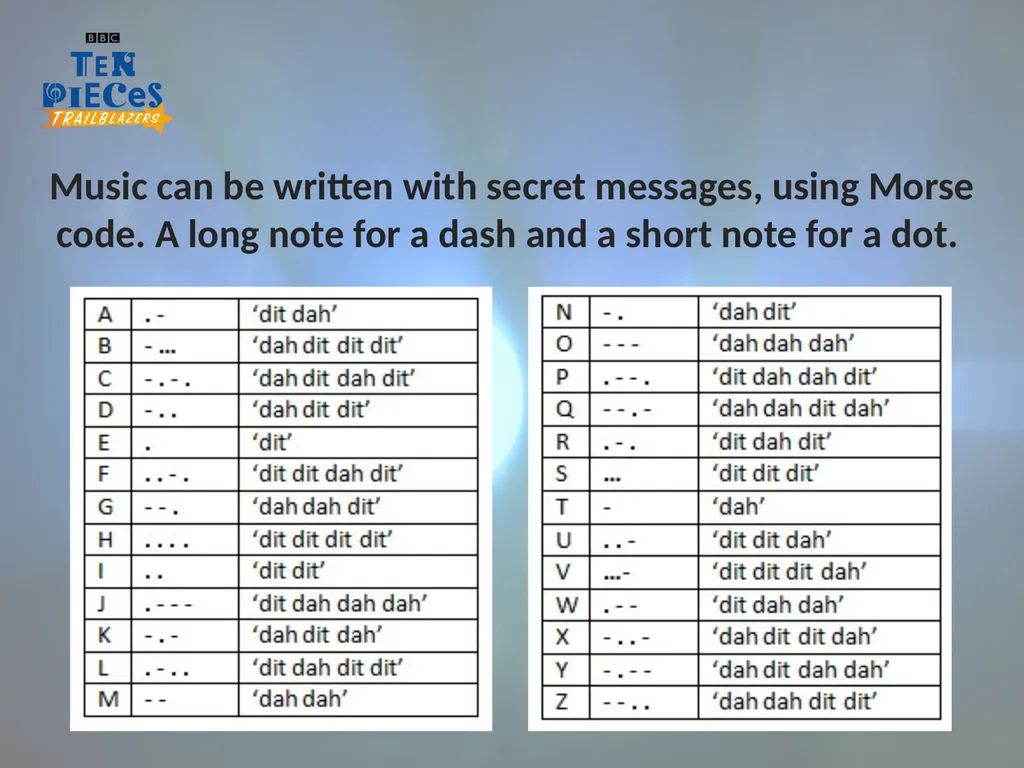
slide17. Music can be written with secret messages, using Morse code. A long note for a dash and a short note for a dot.<br>
slide18. Turn a short word into a Morse code pattern and play it!<br>
slide19. Lesson 4
Morse code music<br>
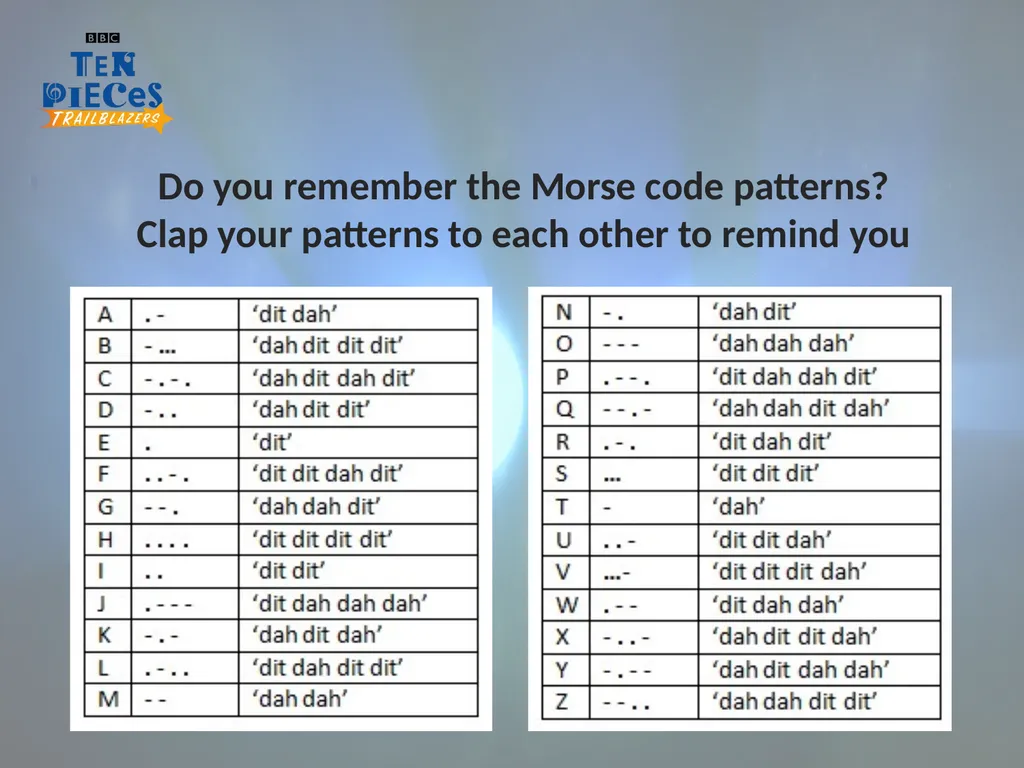
slide20. Do you remember the Morse code patterns? Clap your patterns to each other to remind you<br>
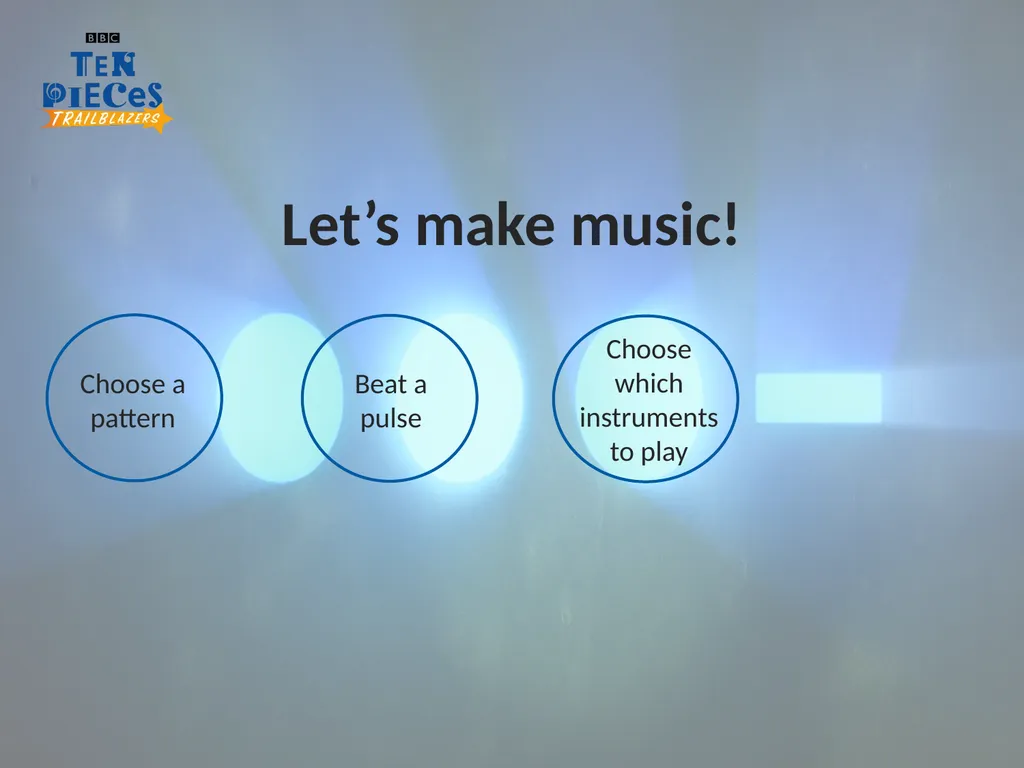
slide21. Let’s make music! Choose a pattern Beat a pulse Choose which instruments to play<br>
slide22. Lesson 5
Sad solo<br>
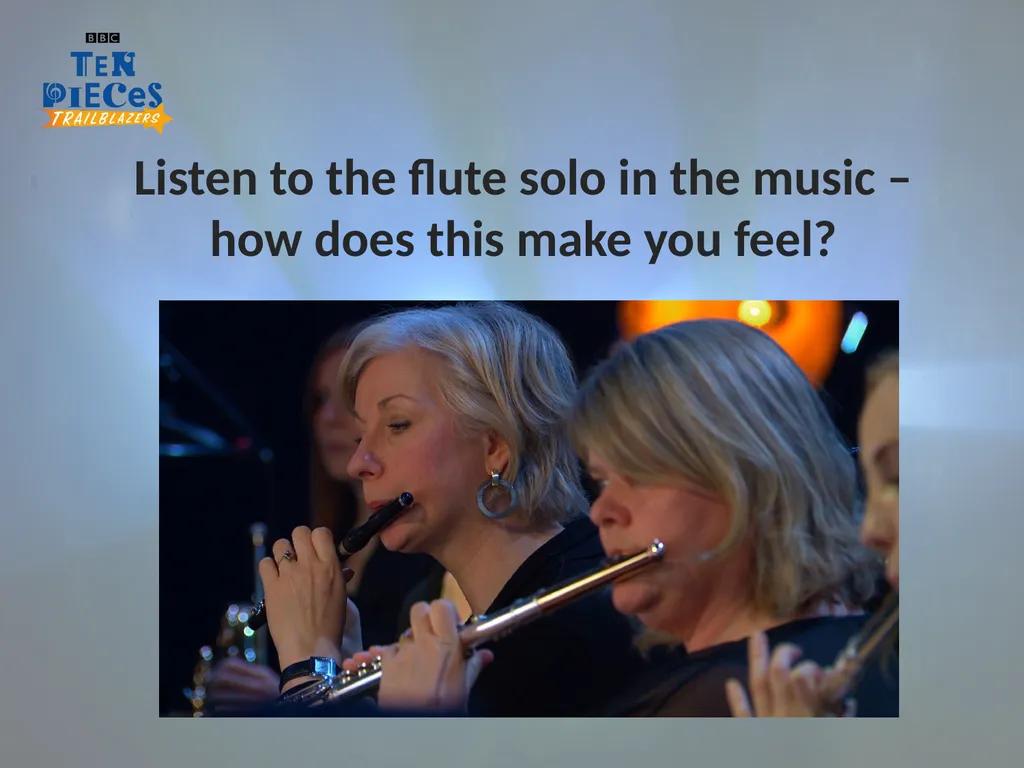
slide23. Listen to the flute solo in the music – how does this make you feel?<br>
slide24. Create a graphic score! Choose a colour that matches the mood of the music
Draw the shape of the flute solo<br>
slide25. Lesson 6
Performance time!<br>
slide26. Recap Introduction Morse code
music Sad flute solo<br>
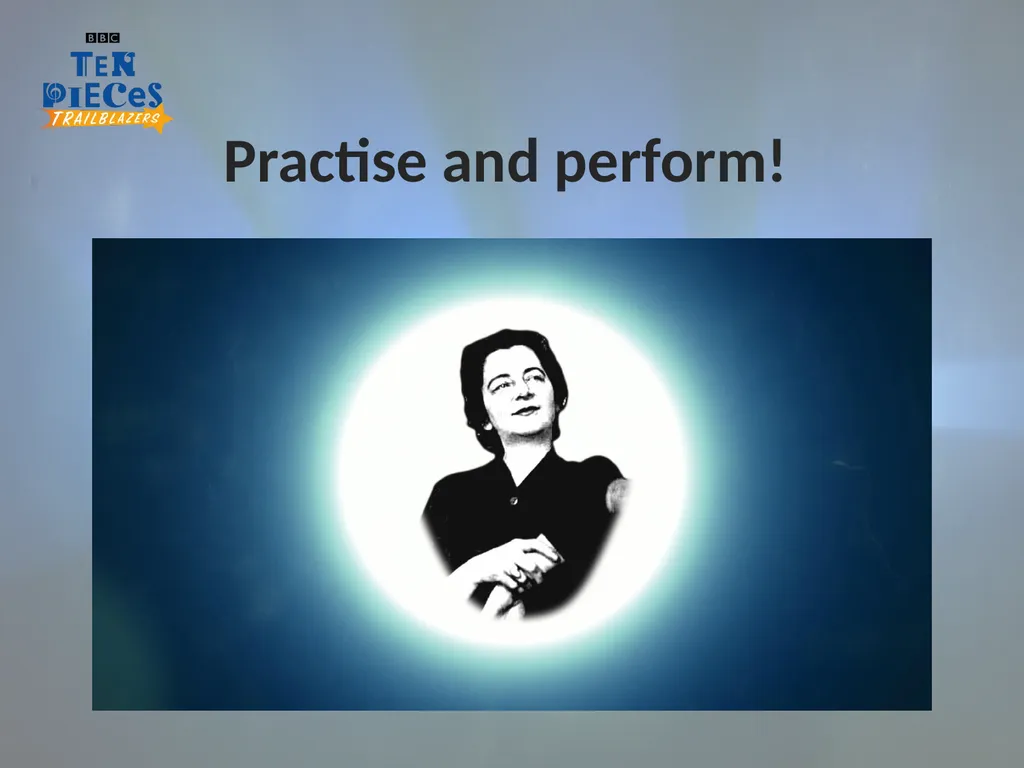
slide27. Practise and perform!<br>
slide28. Taking it further – cross-curricular activities MUSIC: Many other composers used codes within their music to pass on secret messages. Bach and Shostakovich wrote their names within their pieces. Alban Berg used numerology in his music particularly his Violin Concerto, and Edward Elgar’s whole Enigma Variations features a mysterious puzzle that is still unsolved. Bach, Shostakovich and Elgar are all composers featured in BBC Ten Pieces.
RESEARCH: Bacewicz was writing during World War 2 in Nazi occupied Poland. Research what day-to-day life must have been like for her and her friends and family at this time.
LITERACY: Write and perform the story you invented in lesson 1 inspired by Bacewicz’s overture or write a story about her fascinating life. When she wasn’t composing, she was travelling the world as a very, very famous violinist.
UPLOAD: Show us what you’ve created! Submit your creative responses using our Uploader for a chance to be featured on the Ten Pieces website.<br>
Primary / KS2 / 2nd Level Classroom Lesson Plan Written by
Rachel Leach<br>
slide3. Trailblazer Polish composer, Grażyna Bacewicz, wrote music at a time when being a female composer was very unusual, during the Second World War.<br>
slide4. Lesson outcomes After this lesson, pupils will be able to:
listen and reflect on a piece of orchestral music
invent their own musical motifs and structure them into a piece
perform as an ensemble
learn musical language appropriate to the task<br>
slide5. Curriculum checklist Learners will:
play and perform in ensemble contexts, using voices and playing musical instruments
improvise and compose music for a range of purposes using the interrelated dimensions of music
listen with attention to detail and recall sounds with increasing aural memory<br>
slide6. Glossary of music terms<br>
slide7. Lesson 1
Watching and listening<br>
slide8. Background – the composer Grażyna BACEWICZ
(1909–1969)
Polish composer and violinist
One of the first Polish female composers to achieve international recognition<br>
slide9. Background – the music Overture
Written in 1943, during World War 2. Bacewicz was writing her music in secret at this point and giving underground concerts
Bacewicz had to wait until the war was over to hear this piece
An overture is a short, often exciting piece that acts as an opener to a concert or an opera
This overture begins with secret messages in Morse Code and then becomes an exciting burst of energy<br>
slide10. Watch the orchestral performance<br>
slide11. Think about what exciting story this music might be describing. You could think about these things: Character/s Place/s Scenes:
what happens? Ending<br>
slide12. Lesson 2
Exciting beginning<br>
slide13. Clap these simple rhythms<br>
slide14. Choose which instruments might play these rhythms ? ? ? ?<br>
slide15. Lesson 3
Hidden messages<br>
slide16. Warm up!<br>
slide17. Music can be written with secret messages, using Morse code. A long note for a dash and a short note for a dot.<br>
slide18. Turn a short word into a Morse code pattern and play it!<br>
slide19. Lesson 4
Morse code music<br>
slide20. Do you remember the Morse code patterns? Clap your patterns to each other to remind you<br>
slide21. Let’s make music! Choose a pattern Beat a pulse Choose which instruments to play<br>
slide22. Lesson 5
Sad solo<br>
slide23. Listen to the flute solo in the music – how does this make you feel?<br>
slide24. Create a graphic score! Choose a colour that matches the mood of the music
Draw the shape of the flute solo<br>
slide25. Lesson 6
Performance time!<br>
slide26. Recap Introduction Morse code
music Sad flute solo<br>
slide27. Practise and perform!<br>
slide28. Taking it further – cross-curricular activities MUSIC: Many other composers used codes within their music to pass on secret messages. Bach and Shostakovich wrote their names within their pieces. Alban Berg used numerology in his music particularly his Violin Concerto, and Edward Elgar’s whole Enigma Variations features a mysterious puzzle that is still unsolved. Bach, Shostakovich and Elgar are all composers featured in BBC Ten Pieces.
RESEARCH: Bacewicz was writing during World War 2 in Nazi occupied Poland. Research what day-to-day life must have been like for her and her friends and family at this time.
LITERACY: Write and perform the story you invented in lesson 1 inspired by Bacewicz’s overture or write a story about her fascinating life. When she wasn’t composing, she was travelling the world as a very, very famous violinist.
UPLOAD: Show us what you’ve created! Submit your creative responses using our Uploader for a chance to be featured on the Ten Pieces website.<br>