
New Employee Safety Orientation General Industry
CB
Published · 44 slides · 0 views

1 / 1



Description
New Employee Safety Orientation General Industry October 2024 Injury Statistics References www.bls.govnews.releasepdfcfoi.pdf injuryfacts.nsc.orgworkwork-overviewtop-work-related-injury-causesdata
Related Topics
Share
Embed code
Download this presentation From Below
"New Employee Safety Orientation General Industry" is the property of its rightful owner. Permission is granted to download and print the materials on this website for personal, non-commercial use only, and to display it on your personal computer provided you do not modify the materials and that you retain all copyright notices contained in the materials. By downloading content from our website, you accept the terms of this agreement.
Presentation Transcript
01
New Employee Safety Orientation General Industry October 2024<br>
02
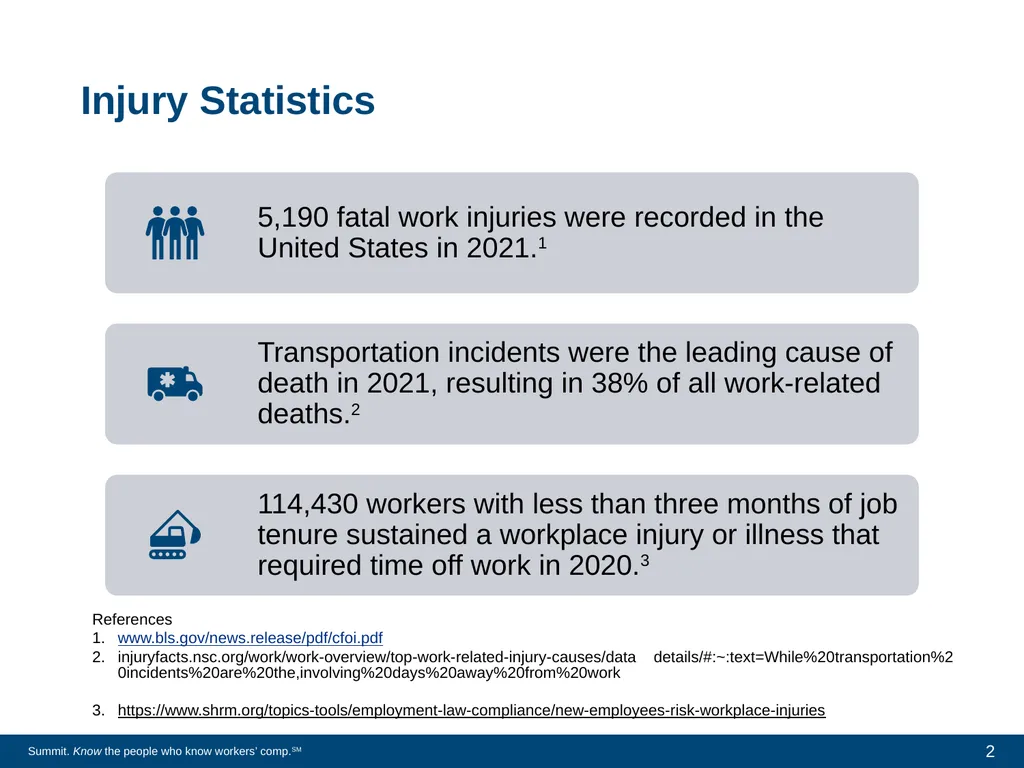
Injury Statistics References
www.bls.gov/news.release/pdf/cfoi.pdf
injuryfacts.nsc.org/work/work-overview/top-work-related-injury-causes/data details/#:~:text=While%20transportation%20incidents%20are%20the,involving%20days%20away%20from%20work
https://www.shrm.org/topics-tools/employment-law-compliance/new-employees-risk-workplace-injuries 2<br>
www.bls.gov/news.release/pdf/cfoi.pdf
injuryfacts.nsc.org/work/work-overview/top-work-related-injury-causes/data details/#:~:text=While%20transportation%20incidents%20are%20the,involving%20days%20away%20from%20work
https://www.shrm.org/topics-tools/employment-law-compliance/new-employees-risk-workplace-injuries 2<br>
03
Your Role in Safety Our goal as a company is to achieve safe work practices to help create a safe environment for everyone. Your role in safety is to:
Participate in safety training.
Identify hazards.
Report hazards, incidents and near misses.
Maintain an attitude of safety.
Ask for help. Reference: www.osha.gov/safety-management/worker-participation 3<br>
Participate in safety training.
Identify hazards.
Report hazards, incidents and near misses.
Maintain an attitude of safety.
Ask for help. Reference: www.osha.gov/safety-management/worker-participation 3<br>
04
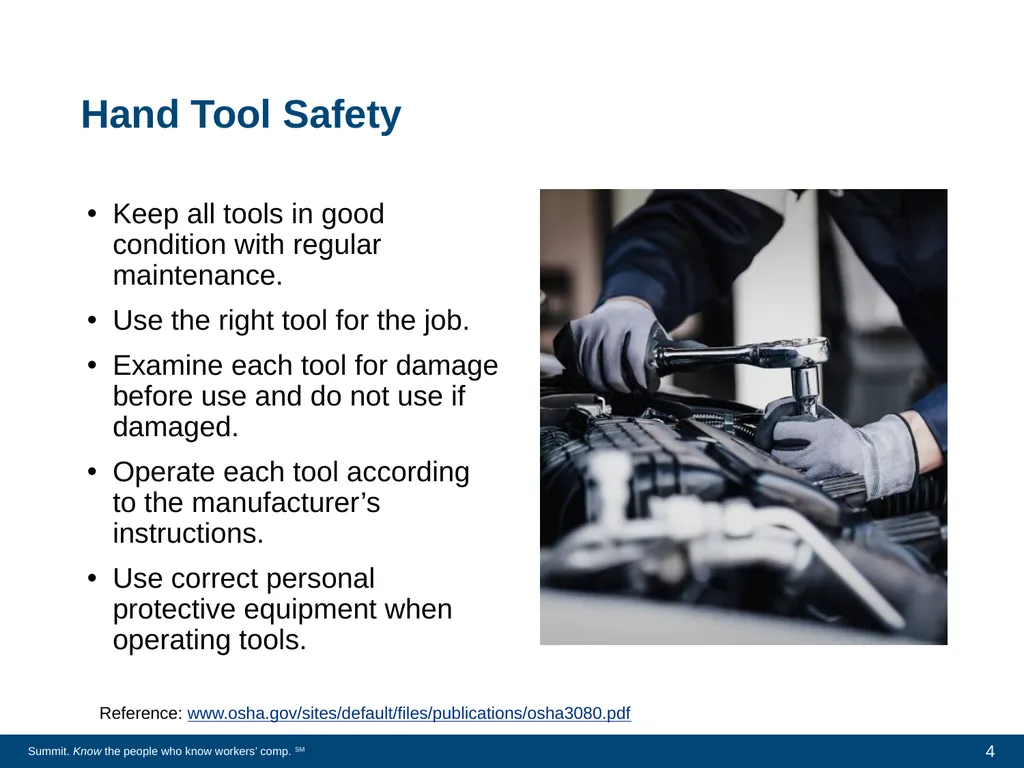
Hand Tool Safety Keep all tools in good condition with regular maintenance.
Use the right tool for the job.
Examine each tool for damage before use and do not use if damaged.
Operate each tool according to the manufacturer’s instructions.
Use correct personal protective equipment when operating tools. Reference: www.osha.gov/sites/default/files/publications/osha3080.pdf 4<br>
Use the right tool for the job.
Examine each tool for damage before use and do not use if damaged.
Operate each tool according to the manufacturer’s instructions.
Use correct personal protective equipment when operating tools. Reference: www.osha.gov/sites/default/files/publications/osha3080.pdf 4<br>
05
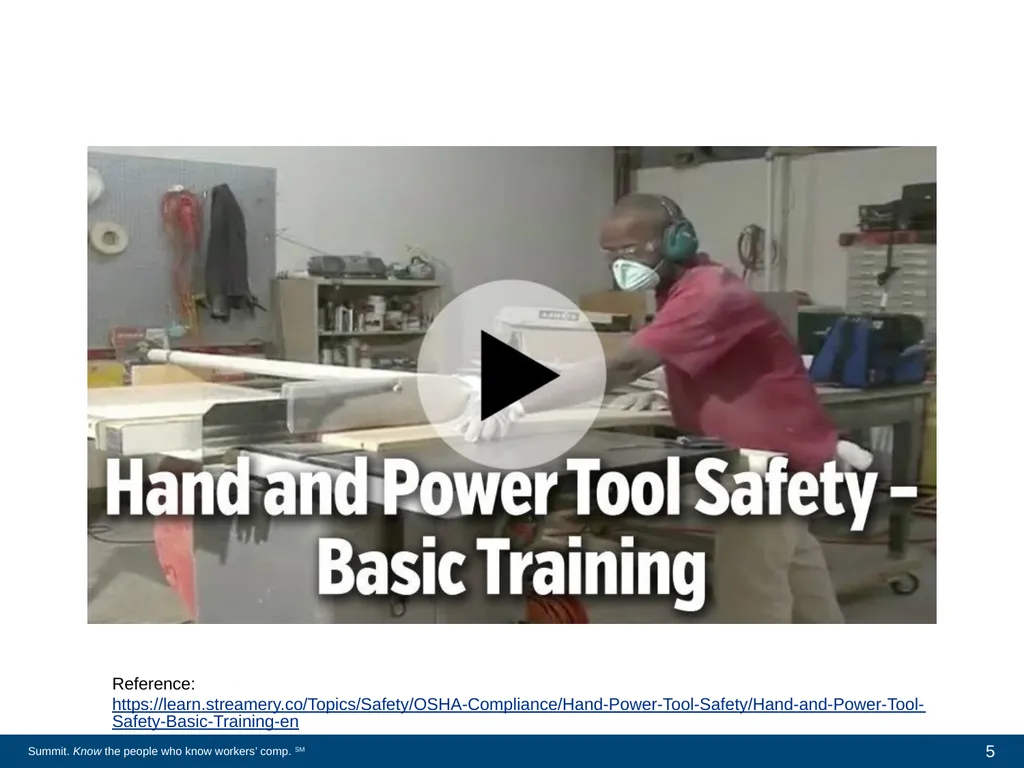
5 Reference: https://learn.streamery.co/Topics/Safety/OSHA-Compliance/Hand-Power-Tool-Safety/Hand-and-Power-Tool-Safety-Basic-Training-en<br>
06
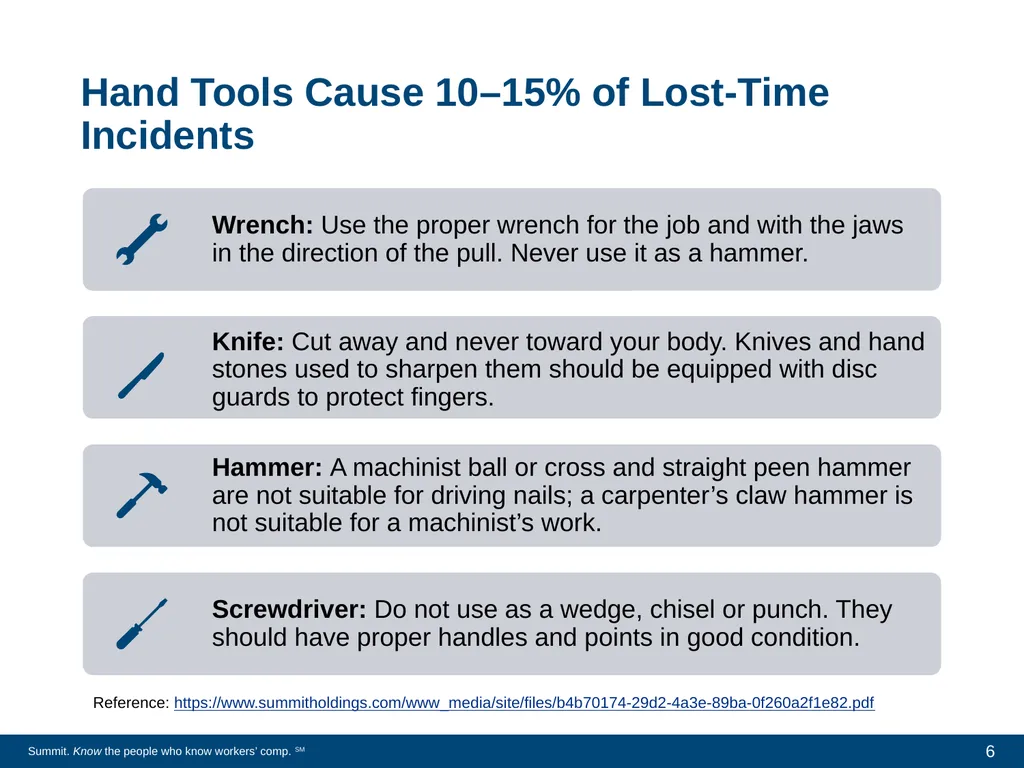
Hand Tools Cause 10–15% of Lost-Time Incidents Reference: https://www.summitholdings.com/www_media/site/files/b4b70174-29d2-4a3e-89ba-0f260a2f1e82.pdf 6<br>
07
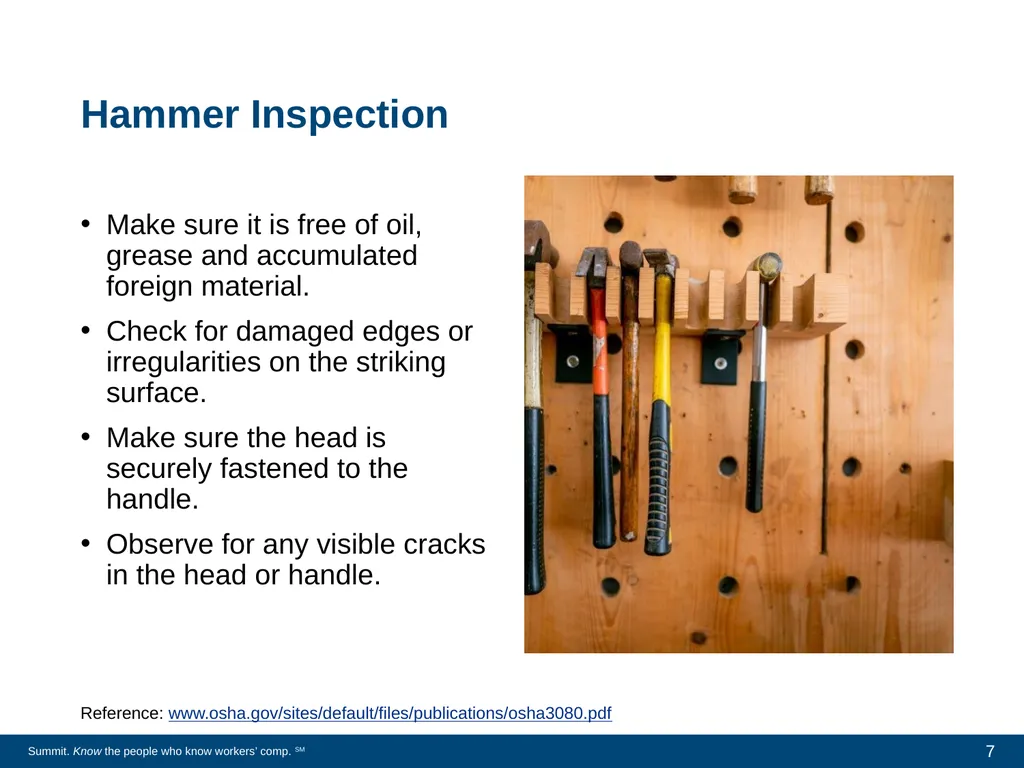
Hammer Inspection Make sure it is free of oil, grease and accumulated foreign material.
Check for damaged edges or irregularities on the striking surface.
Make sure the head is securely fastened to the handle.
Observe for any visible cracks in the head or handle. Reference: www.osha.gov/sites/default/files/publications/osha3080.pdf 7<br>
Check for damaged edges or irregularities on the striking surface.
Make sure the head is securely fastened to the handle.
Observe for any visible cracks in the head or handle. Reference: www.osha.gov/sites/default/files/publications/osha3080.pdf 7<br>
08
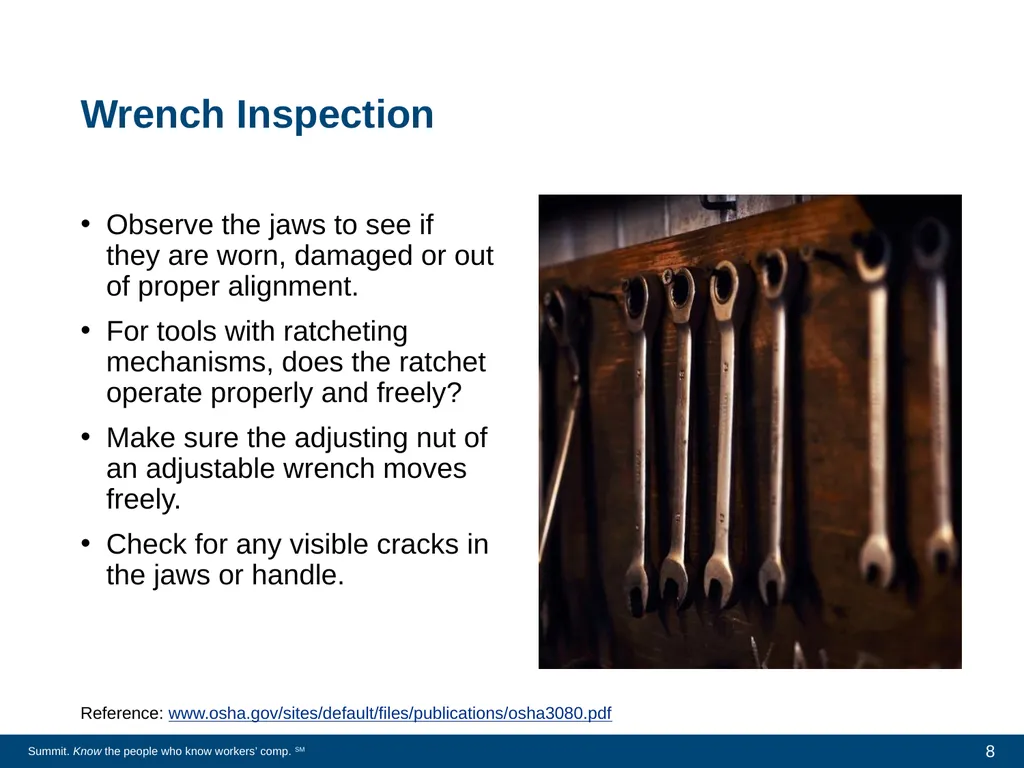
Wrench Inspection Observe the jaws to see if they are worn, damaged or out of proper alignment.
For tools with ratcheting mechanisms, does the ratchet operate properly and freely?
Make sure the adjusting nut of an adjustable wrench moves freely.
Check for any visible cracks in the jaws or handle. Reference: www.osha.gov/sites/default/files/publications/osha3080.pdf 8<br>
For tools with ratcheting mechanisms, does the ratchet operate properly and freely?
Make sure the adjusting nut of an adjustable wrench moves freely.
Check for any visible cracks in the jaws or handle. Reference: www.osha.gov/sites/default/files/publications/osha3080.pdf 8<br>
09
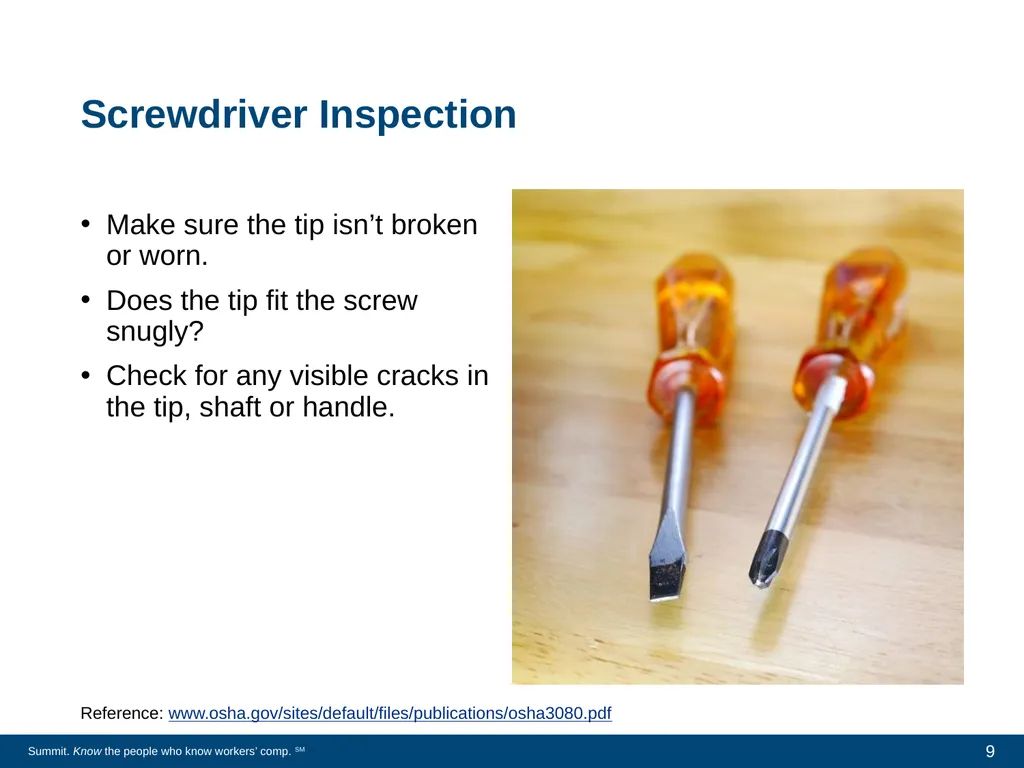
Screwdriver Inspection Make sure the tip isn’t broken or worn.
Does the tip fit the screw snugly?
Check for any visible cracks in the tip, shaft or handle. Reference: www.osha.gov/sites/default/files/publications/osha3080.pdf 9<br>
Does the tip fit the screw snugly?
Check for any visible cracks in the tip, shaft or handle. Reference: www.osha.gov/sites/default/files/publications/osha3080.pdf 9<br>
10
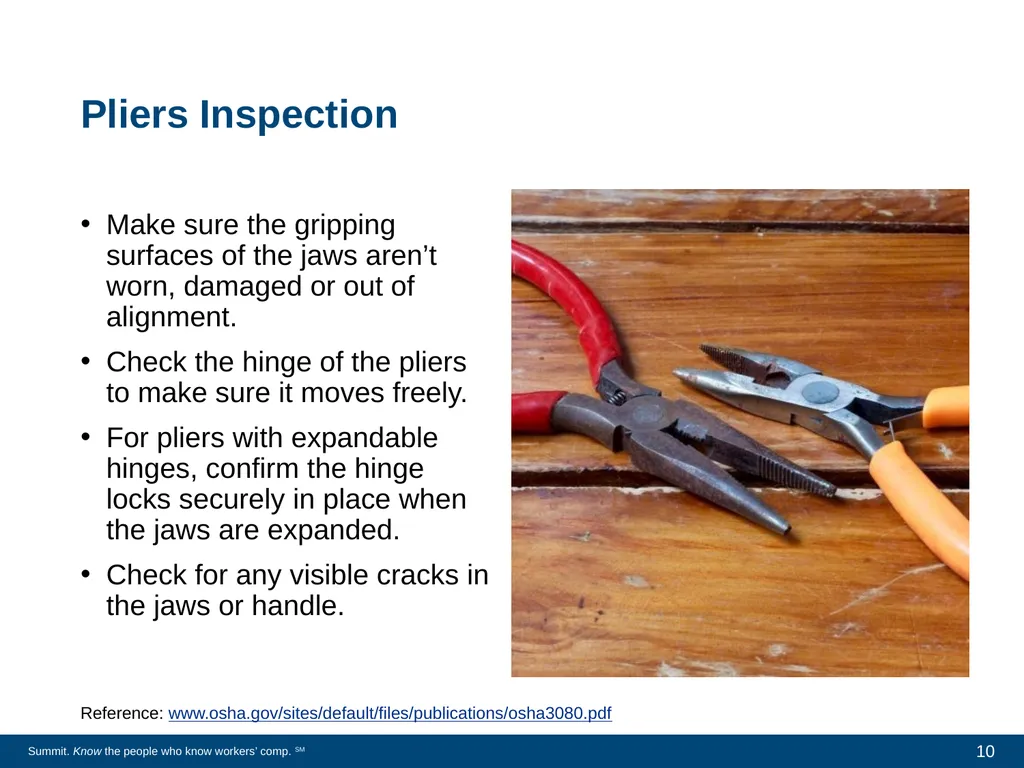
Pliers Inspection Make sure the gripping surfaces of the jaws aren’t worn, damaged or out of alignment.
Check the hinge of the pliers to make sure it moves freely.
For pliers with expandable hinges, confirm the hinge locks securely in place when the jaws are expanded.
Check for any visible cracks in the jaws or handle. Reference: www.osha.gov/sites/default/files/publications/osha3080.pdf 10<br>
Check the hinge of the pliers to make sure it moves freely.
For pliers with expandable hinges, confirm the hinge locks securely in place when the jaws are expanded.
Check for any visible cracks in the jaws or handle. Reference: www.osha.gov/sites/default/files/publications/osha3080.pdf 10<br>
11
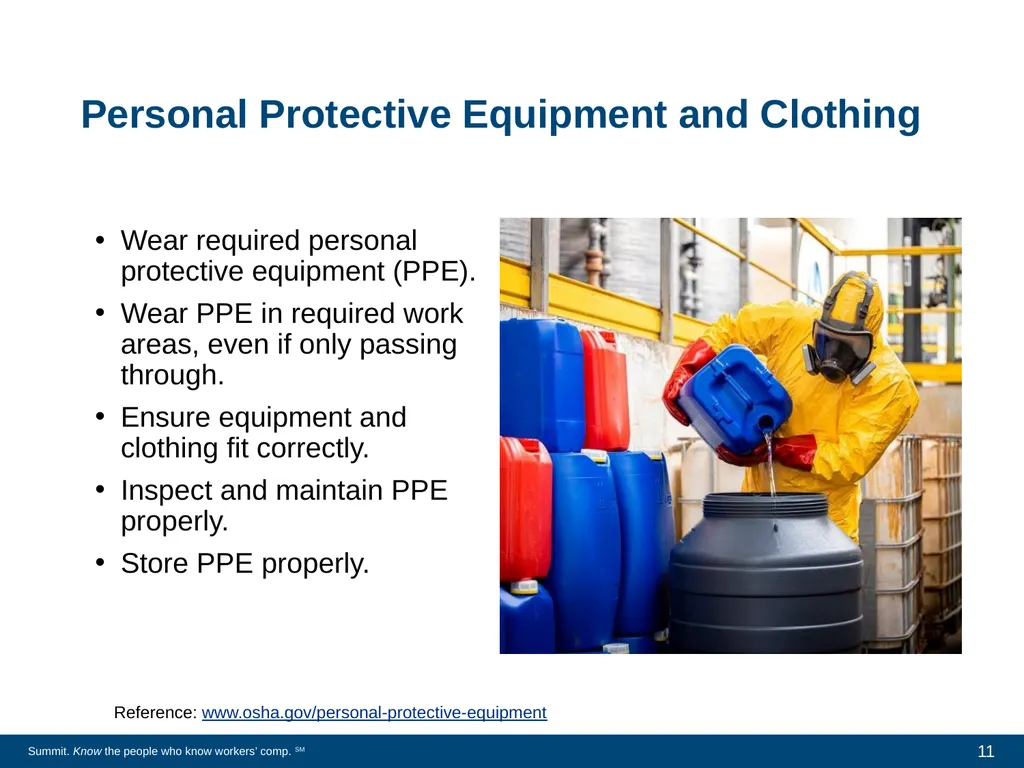
Personal Protective Equipment and Clothing Wear required personal protective equipment (PPE).
Wear PPE in required work areas, even if only passing through.
Ensure equipment and clothing fit correctly.
Inspect and maintain PPE properly.
Store PPE properly. Reference: www.osha.gov/personal-protective-equipment 11<br>
Wear PPE in required work areas, even if only passing through.
Ensure equipment and clothing fit correctly.
Inspect and maintain PPE properly.
Store PPE properly. Reference: www.osha.gov/personal-protective-equipment 11<br>
12
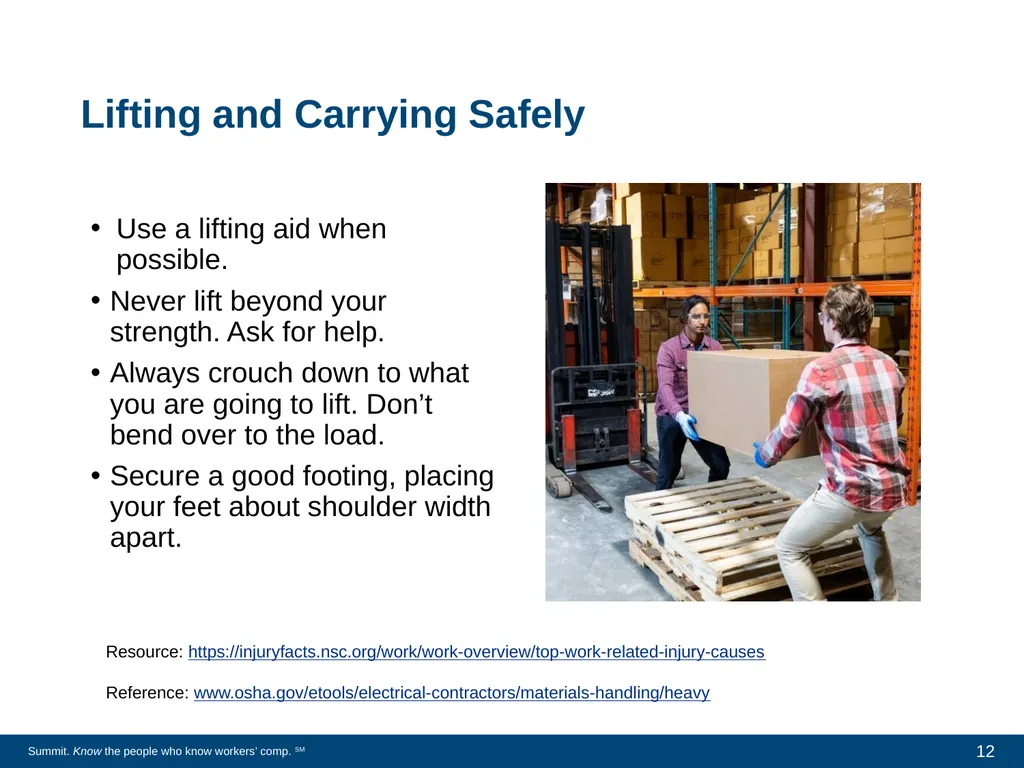
Lifting and Carrying Safely Use a lifting aid when possible.
Never lift beyond your strength. Ask for help.
Always crouch down to what you are going to lift. Don’t bend over to the load.
Secure a good footing, placing your feet about shoulder width apart. Resource: https://injuryfacts.nsc.org/work/work-overview/top-work-related-injury-causes
Reference: www.osha.gov/etools/electrical-contractors/materials-handling/heavy 12<br>
Never lift beyond your strength. Ask for help.
Always crouch down to what you are going to lift. Don’t bend over to the load.
Secure a good footing, placing your feet about shoulder width apart. Resource: https://injuryfacts.nsc.org/work/work-overview/top-work-related-injury-causes
Reference: www.osha.gov/etools/electrical-contractors/materials-handling/heavy 12<br>
13
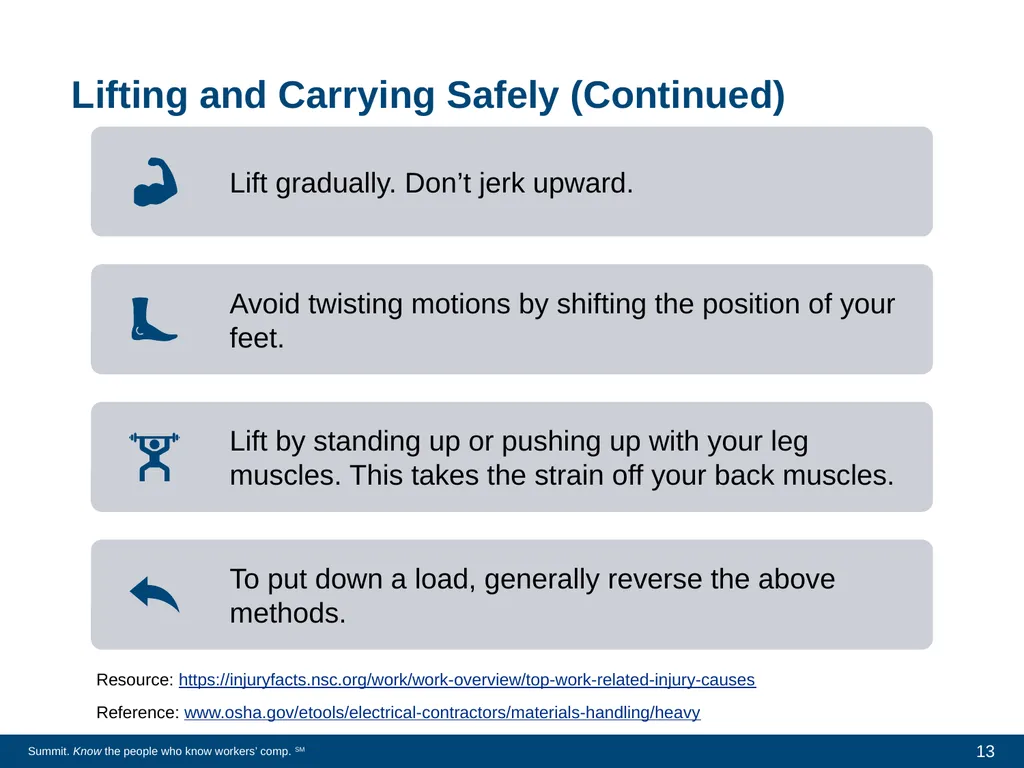
Lifting and Carrying Safely (Continued) Resource: https://injuryfacts.nsc.org/work/work-overview/top-work-related-injury-causes
Reference: www.osha.gov/etools/electrical-contractors/materials-handling/heavy 13<br>
Reference: www.osha.gov/etools/electrical-contractors/materials-handling/heavy 13<br>
14
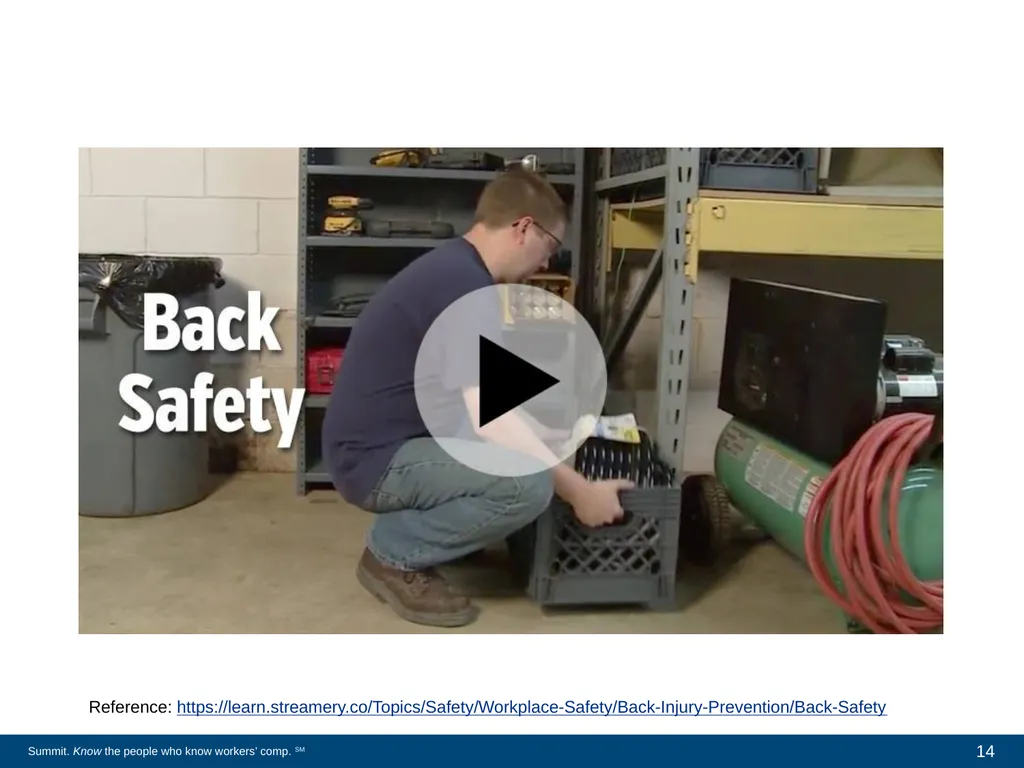
14 Reference: https://learn.streamery.co/Topics/Safety/Workplace-Safety/Back-Injury-Prevention/Back-Safety<br>
15
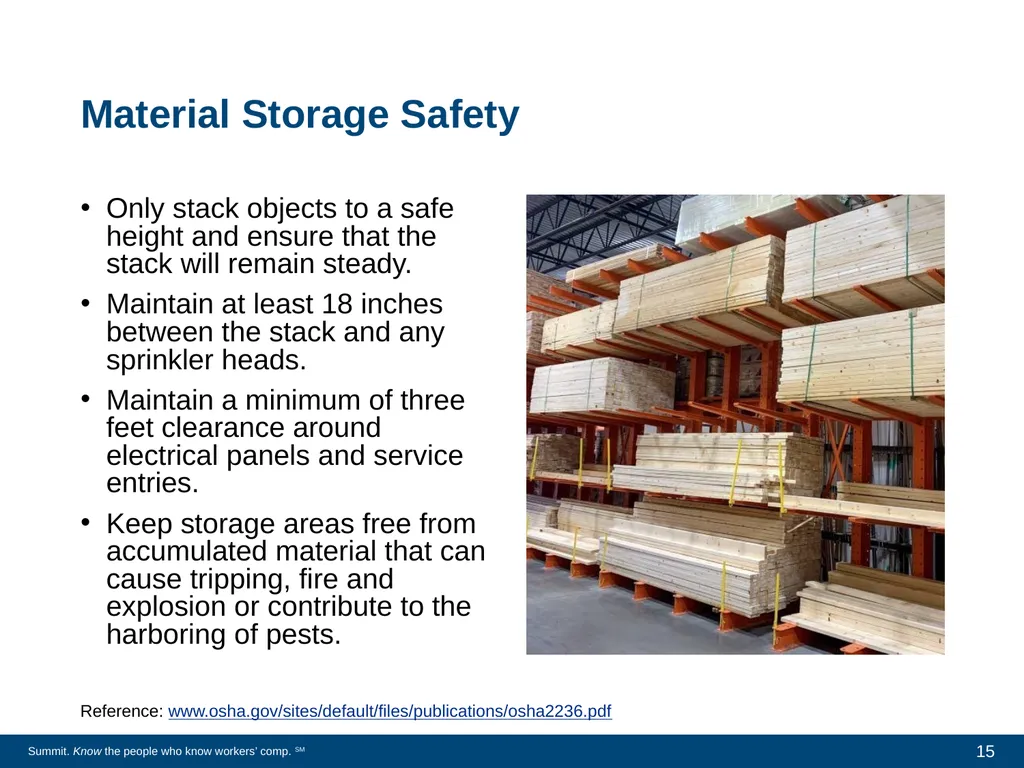
Material Storage Safety Only stack objects to a safe height and ensure that the stack will remain steady.
Maintain at least 18 inches between the stack and any sprinkler heads.
Maintain a minimum of three feet clearance around electrical panels and service entries.
Keep storage areas free from accumulated material that can cause tripping, fire and explosion or contribute to the harboring of pests. Reference: www.osha.gov/sites/default/files/publications/osha2236.pdf 15<br>
Maintain at least 18 inches between the stack and any sprinkler heads.
Maintain a minimum of three feet clearance around electrical panels and service entries.
Keep storage areas free from accumulated material that can cause tripping, fire and explosion or contribute to the harboring of pests. Reference: www.osha.gov/sites/default/files/publications/osha2236.pdf 15<br>
16
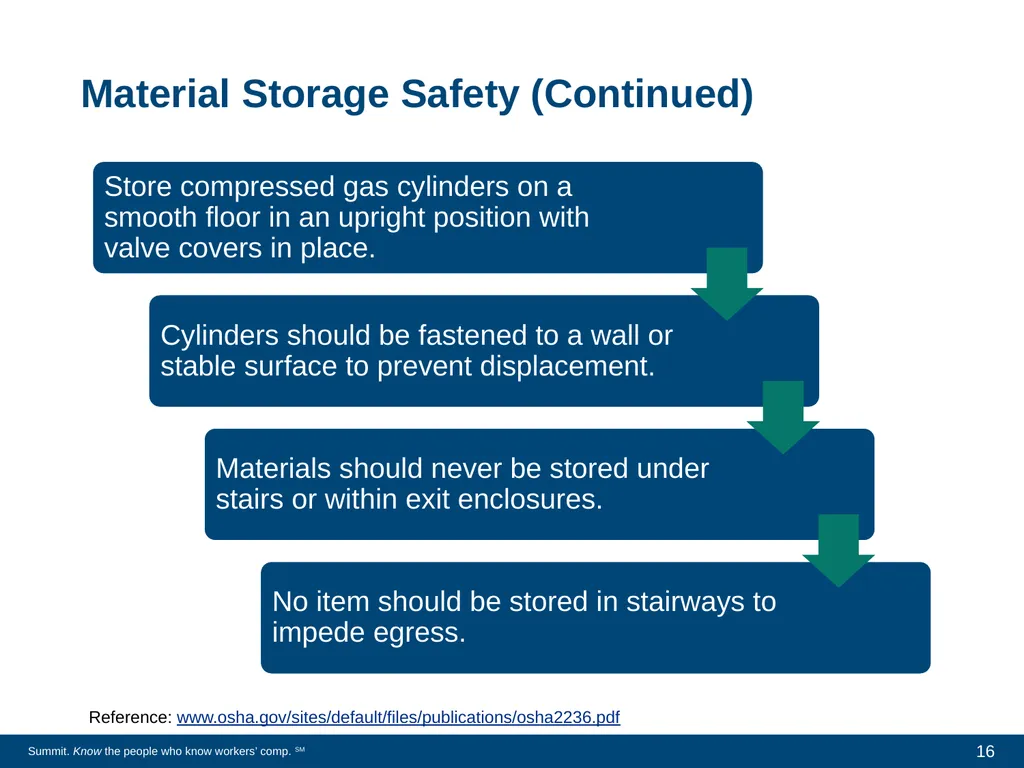
Material Storage Safety (Continued) Reference: www.osha.gov/sites/default/files/publications/osha2236.pdf 16<br>
17
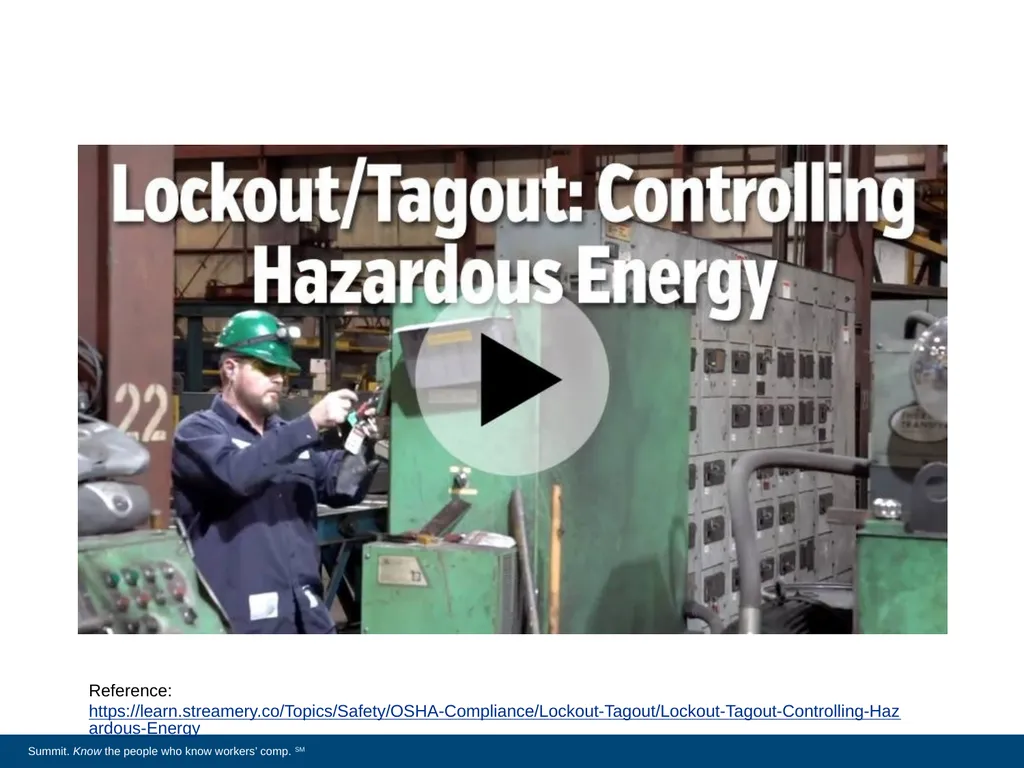
Reference: https://learn.streamery.co/Topics/Safety/OSHA-Compliance/Lockout-Tagout/Lockout-Tagout-Controlling-Hazardous-Energy<br>
18
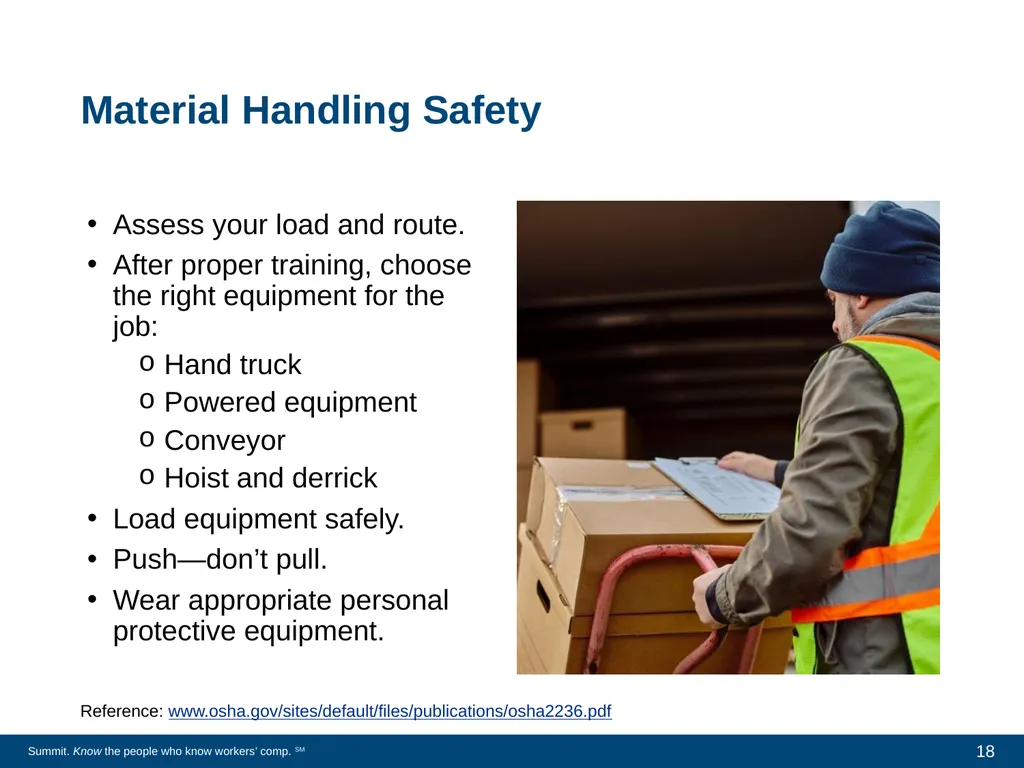
Material Handling Safety Assess your load and route.
After proper training, choose the right equipment for the job:
Hand truck
Powered equipment
Conveyor
Hoist and derrick
Load equipment safely.
Push—don’t pull.
Wear appropriate personal protective equipment. Reference: www.osha.gov/sites/default/files/publications/osha2236.pdf 18<br>
After proper training, choose the right equipment for the job:
Hand truck
Powered equipment
Conveyor
Hoist and derrick
Load equipment safely.
Push—don’t pull.
Wear appropriate personal protective equipment. Reference: www.osha.gov/sites/default/files/publications/osha2236.pdf 18<br>
19
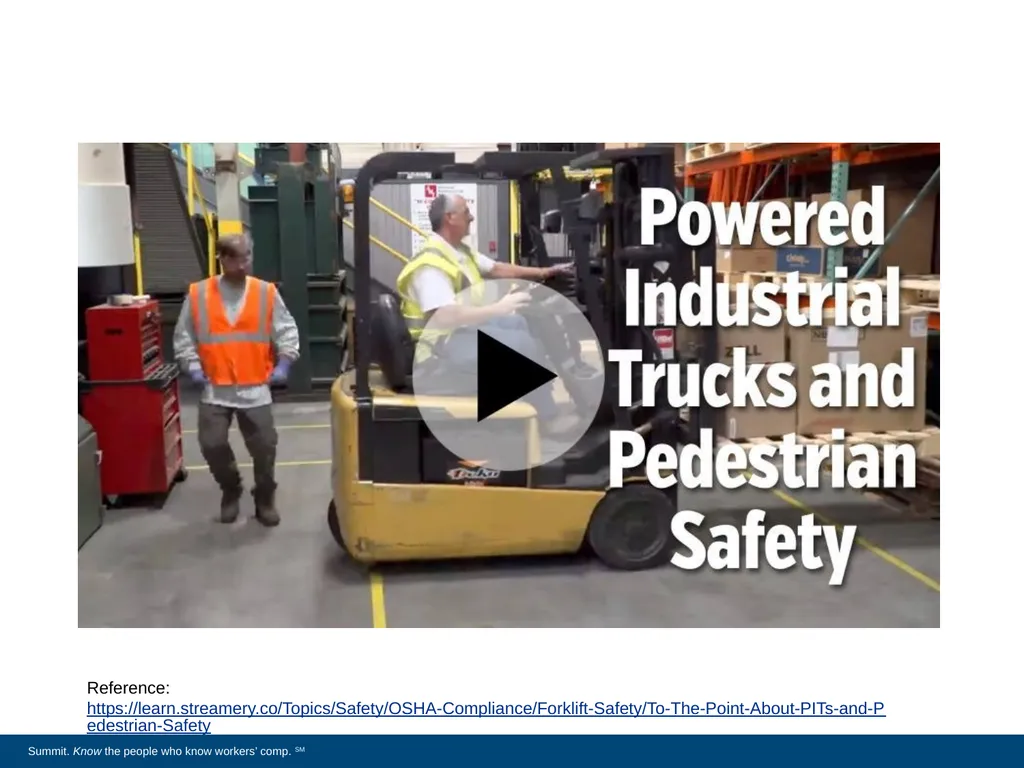
Reference: https://learn.streamery.co/Topics/Safety/OSHA-Compliance/Forklift-Safety/To-The-Point-About-PITs-and-Pedestrian-Safety<br>
20
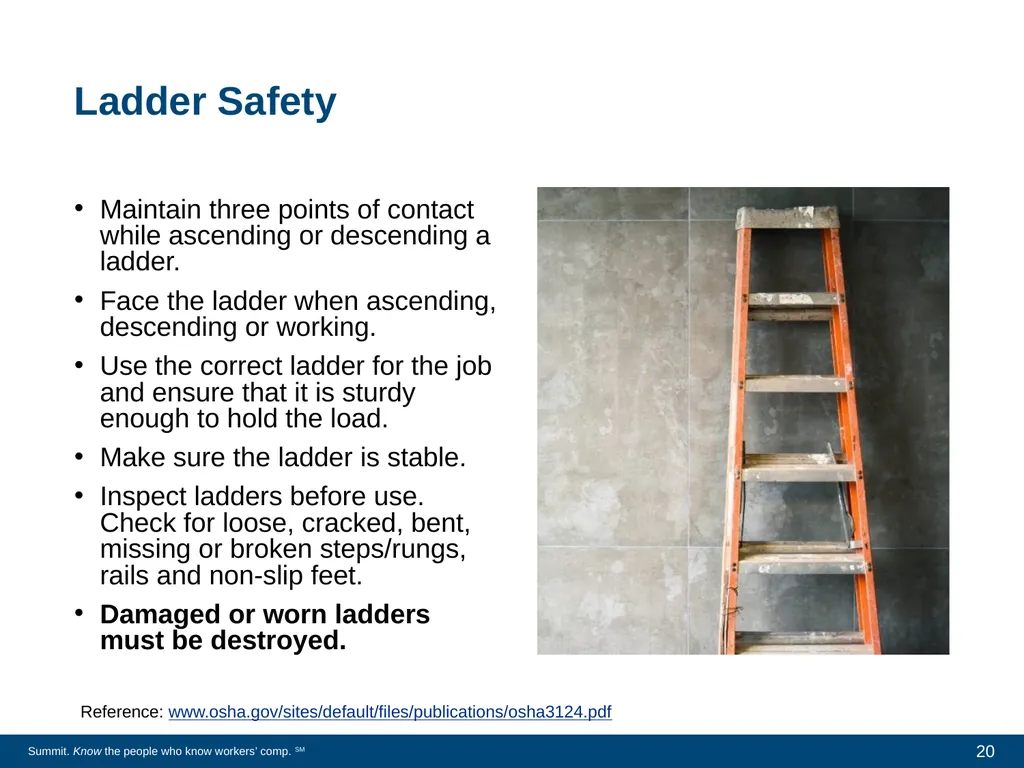
Ladder Safety Maintain three points of contact while ascending or descending a ladder.
Face the ladder when ascending, descending or working.
Use the correct ladder for the job and ensure that it is sturdy enough to hold the load.
Make sure the ladder is stable.
Inspect ladders before use. Check for loose, cracked, bent, missing or broken steps/rungs, rails and non-slip feet.
Damaged or worn ladders must be destroyed. Reference: www.osha.gov/sites/default/files/publications/osha3124.pdf 20<br>
Face the ladder when ascending, descending or working.
Use the correct ladder for the job and ensure that it is sturdy enough to hold the load.
Make sure the ladder is stable.
Inspect ladders before use. Check for loose, cracked, bent, missing or broken steps/rungs, rails and non-slip feet.
Damaged or worn ladders must be destroyed. Reference: www.osha.gov/sites/default/files/publications/osha3124.pdf 20<br>
21
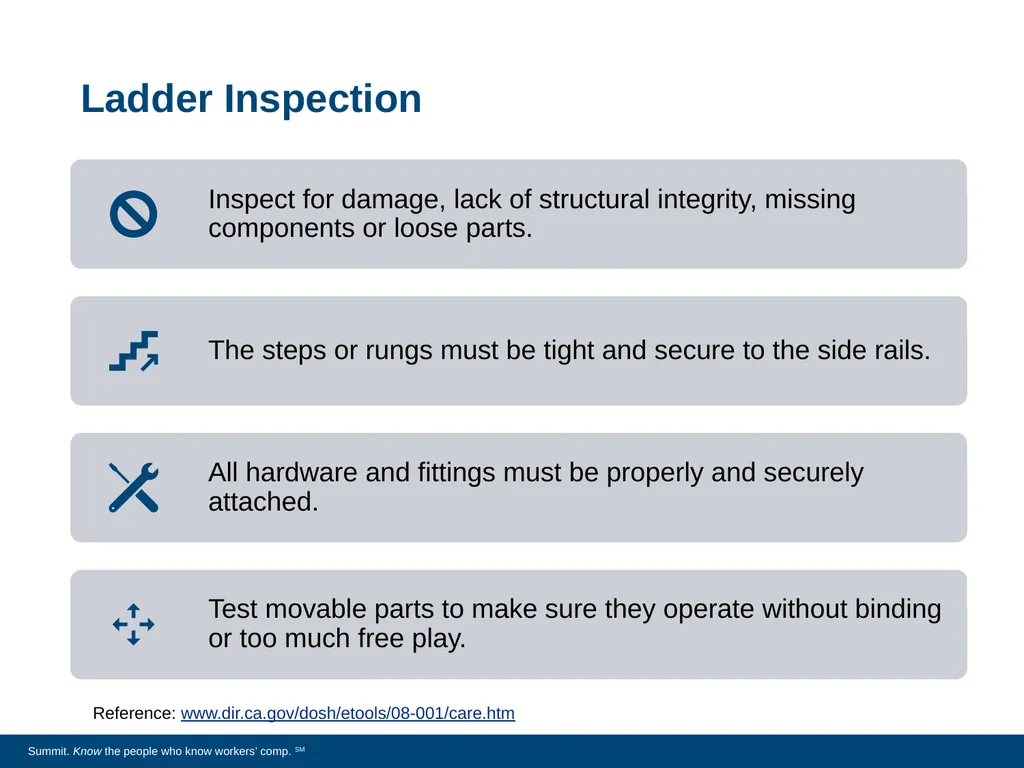
Ladder Inspection Reference: www.dir.ca.gov/dosh/etools/08-001/care.htm<br>
22
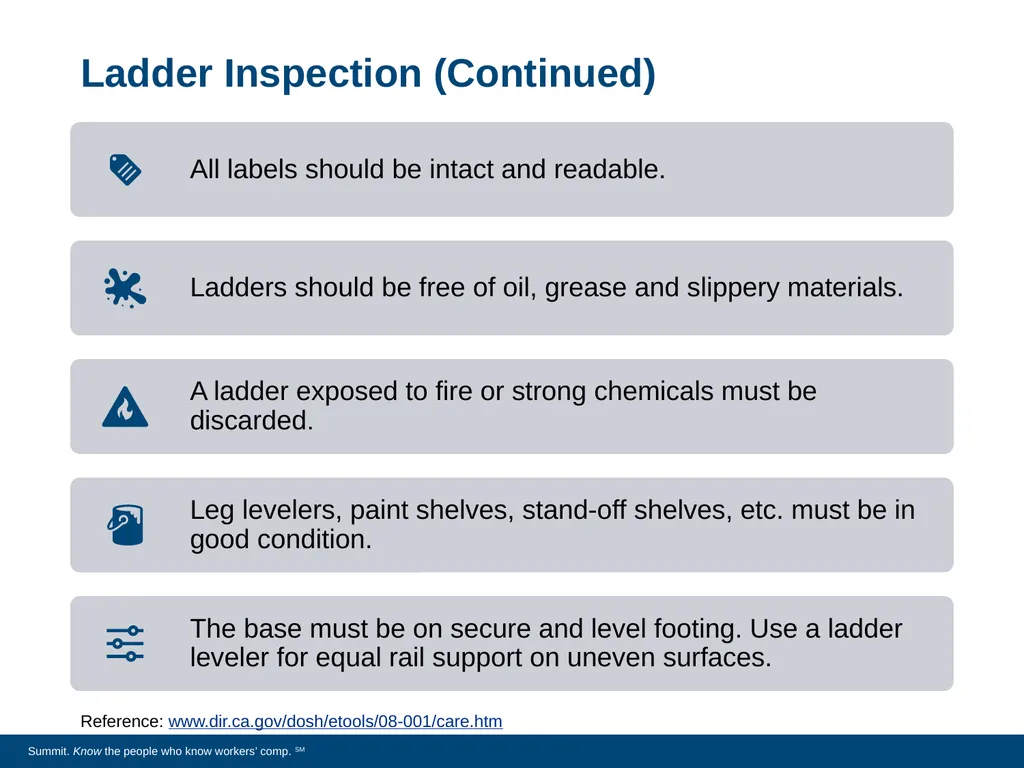
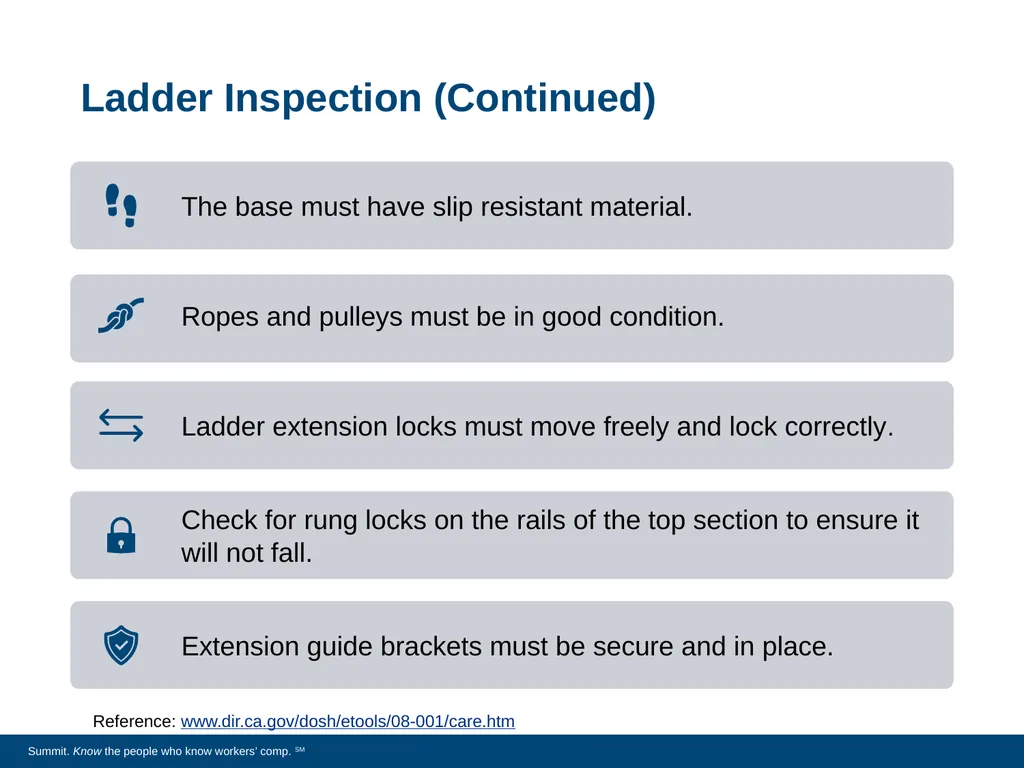
Ladder Inspection (Continued) Reference: www.dir.ca.gov/dosh/etools/08-001/care.htm<br>
23
Ladder Inspection (Continued) Reference: www.dir.ca.gov/dosh/etools/08-001/care.htm<br>
24
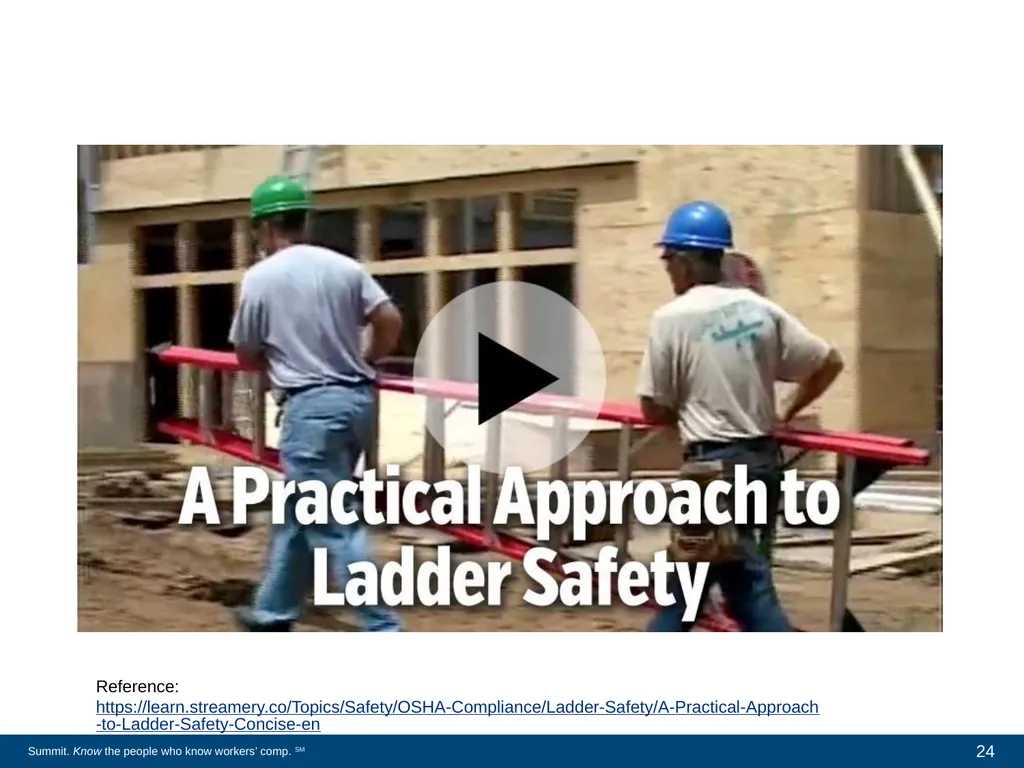
24 Reference: https://learn.streamery.co/Topics/Safety/OSHA-Compliance/Ladder-Safety/A-Practical-Approach-to-Ladder-Safety-Concise-en<br>
25
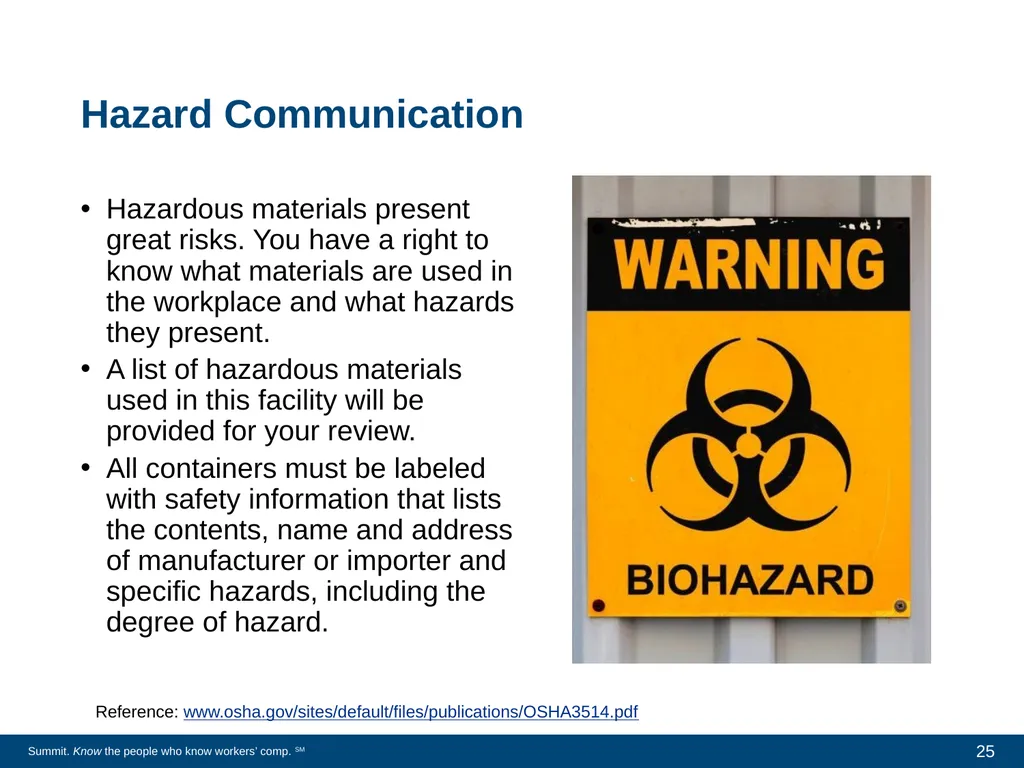
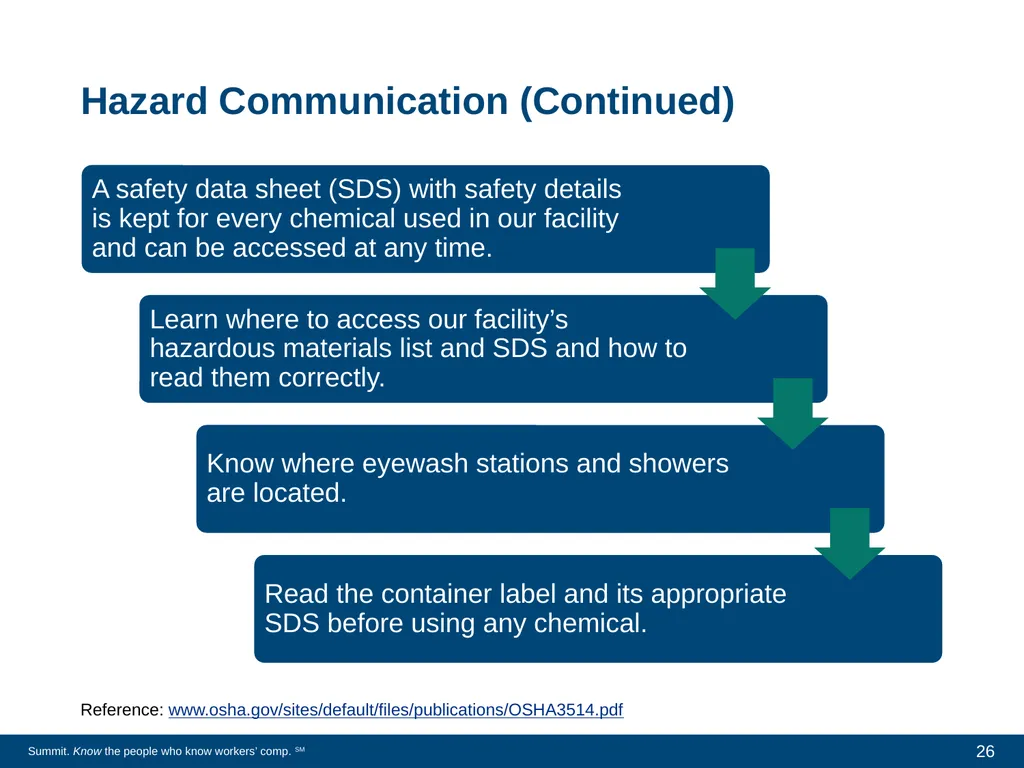
Hazard Communication Hazardous materials present great risks. You have a right to know what materials are used in the workplace and what hazards they present.
A list of hazardous materials used in this facility will be provided for your review.
All containers must be labeled with safety information that lists the contents, name and address of manufacturer or importer and specific hazards, including the degree of hazard. Reference: www.osha.gov/sites/default/files/publications/OSHA3514.pdf 25<br>
A list of hazardous materials used in this facility will be provided for your review.
All containers must be labeled with safety information that lists the contents, name and address of manufacturer or importer and specific hazards, including the degree of hazard. Reference: www.osha.gov/sites/default/files/publications/OSHA3514.pdf 25<br>
26
Hazard Communication (Continued) Reference: www.osha.gov/sites/default/files/publications/OSHA3514.pdf 26<br>
27
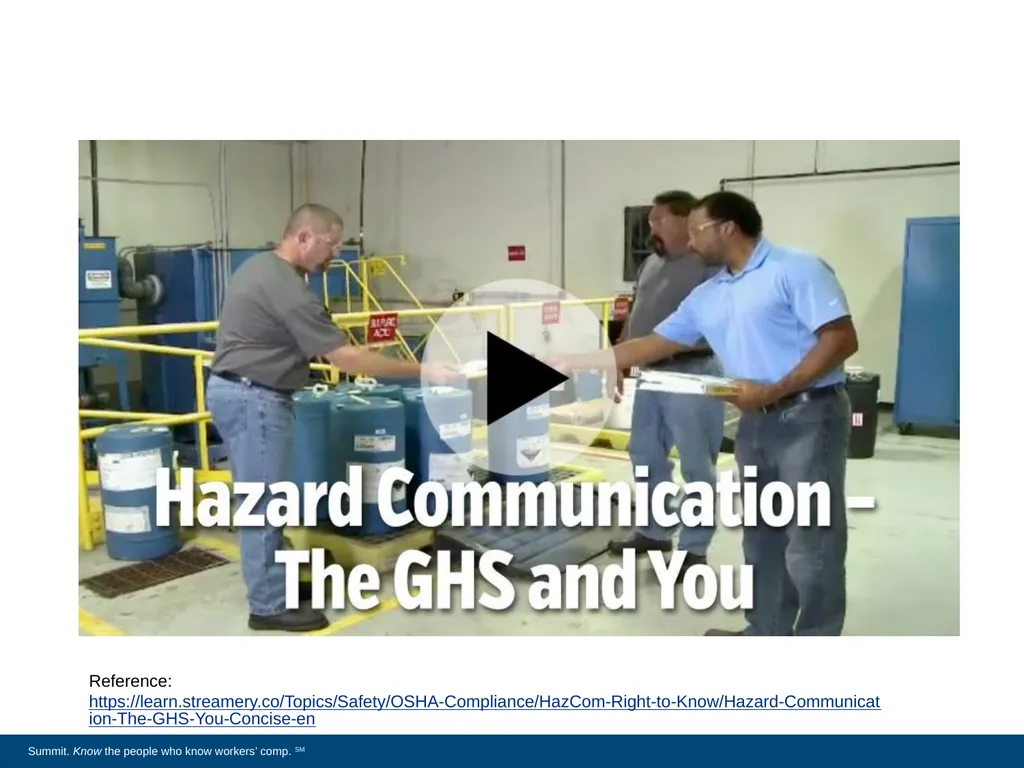
Reference: https://learn.streamery.co/Topics/Safety/OSHA-Compliance/HazCom-Right-to-Know/Hazard-Communication-The-GHS-You-Concise-en<br>
28
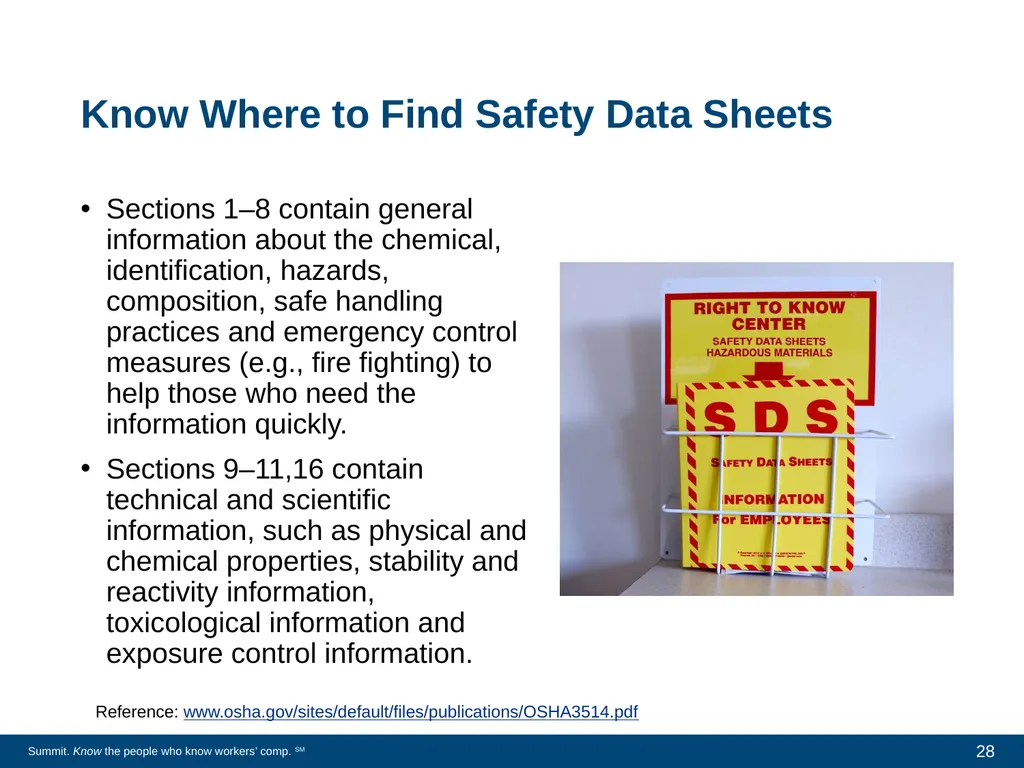
Know Where to Find Safety Data Sheets Sections 1–8 contain general information about the chemical, identification, hazards, composition, safe handling practices and emergency control measures (e.g., fire fighting) to help those who need the information quickly.
Sections 9–11,16 contain technical and scientific information, such as physical and chemical properties, stability and reactivity information, toxicological information and exposure control information. Reference: www.osha.gov/sites/default/files/publications/OSHA3514.pdf 28<br>
Sections 9–11,16 contain technical and scientific information, such as physical and chemical properties, stability and reactivity information, toxicological information and exposure control information. Reference: www.osha.gov/sites/default/files/publications/OSHA3514.pdf 28<br>
29
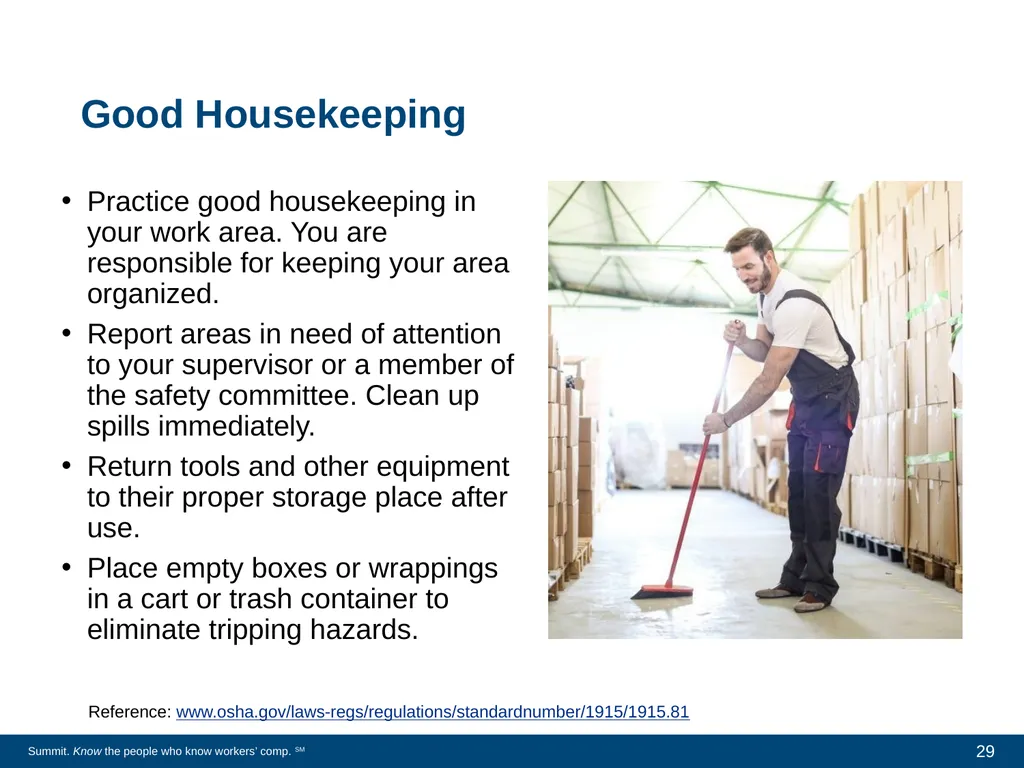
Good Housekeeping Practice good housekeeping in your work area. You are responsible for keeping your area organized.
Report areas in need of attention to your supervisor or a member of the safety committee. Clean up spills immediately.
Return tools and other equipment to their proper storage place after use.
Place empty boxes or wrappings in a cart or trash container to eliminate tripping hazards. Reference: www.osha.gov/laws-regs/regulations/standardnumber/1915/1915.81 29<br>
Report areas in need of attention to your supervisor or a member of the safety committee. Clean up spills immediately.
Return tools and other equipment to their proper storage place after use.
Place empty boxes or wrappings in a cart or trash container to eliminate tripping hazards. Reference: www.osha.gov/laws-regs/regulations/standardnumber/1915/1915.81 29<br>
30
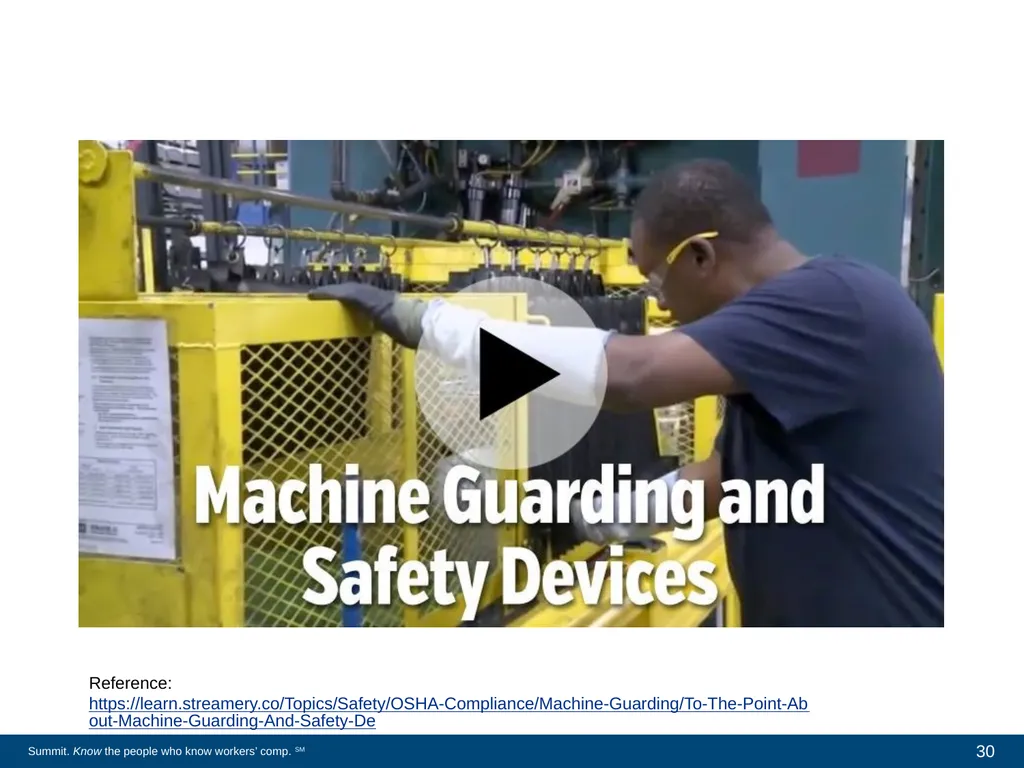
30 Reference: https://learn.streamery.co/Topics/Safety/OSHA-Compliance/Machine-Guarding/To-The-Point-About-Machine-Guarding-And-Safety-De<br>
31
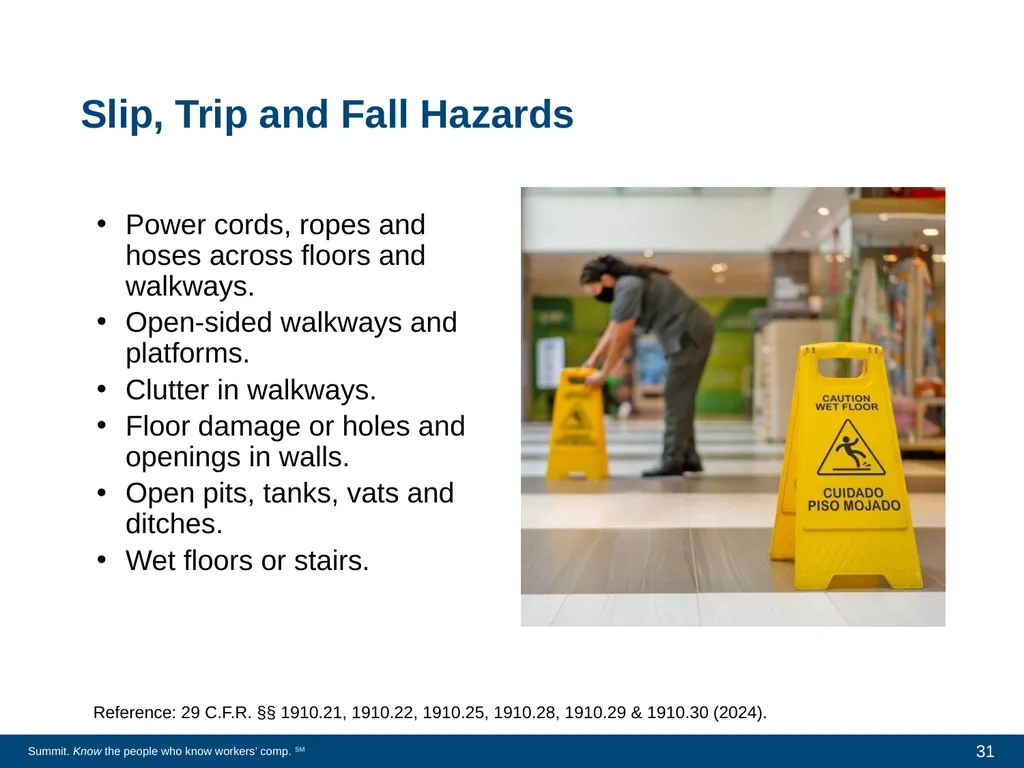
Slip, Trip and Fall Hazards Power cords, ropes and hoses across floors and walkways.
Open-sided walkways and platforms.
Clutter in walkways.
Floor damage or holes and openings in walls.
Open pits, tanks, vats and ditches.
Wet floors or stairs. Reference: 29 C.F.R. §§ 1910.21, 1910.22, 1910.25, 1910.28, 1910.29 & 1910.30 (2024). 31<br>
Open-sided walkways and platforms.
Clutter in walkways.
Floor damage or holes and openings in walls.
Open pits, tanks, vats and ditches.
Wet floors or stairs. Reference: 29 C.F.R. §§ 1910.21, 1910.22, 1910.25, 1910.28, 1910.29 & 1910.30 (2024). 31<br>
32
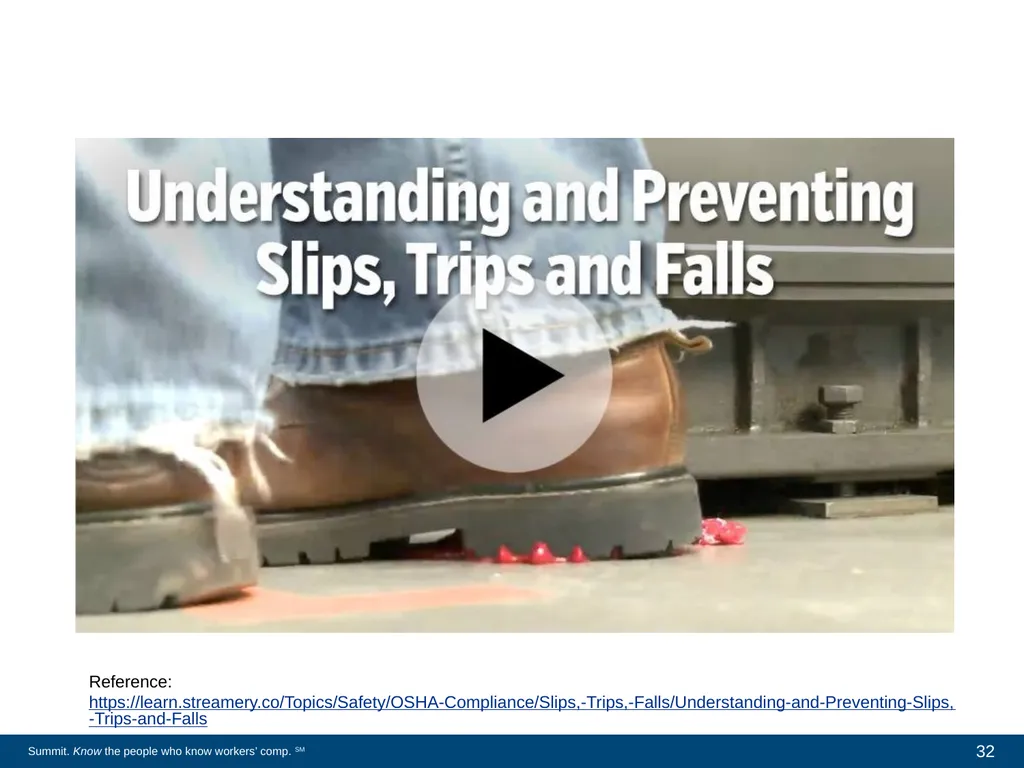
32 Reference: https://learn.streamery.co/Topics/Safety/OSHA-Compliance/Slips,-Trips,-Falls/Understanding-and-Preventing-Slips,-Trips-and-Falls<br>
33
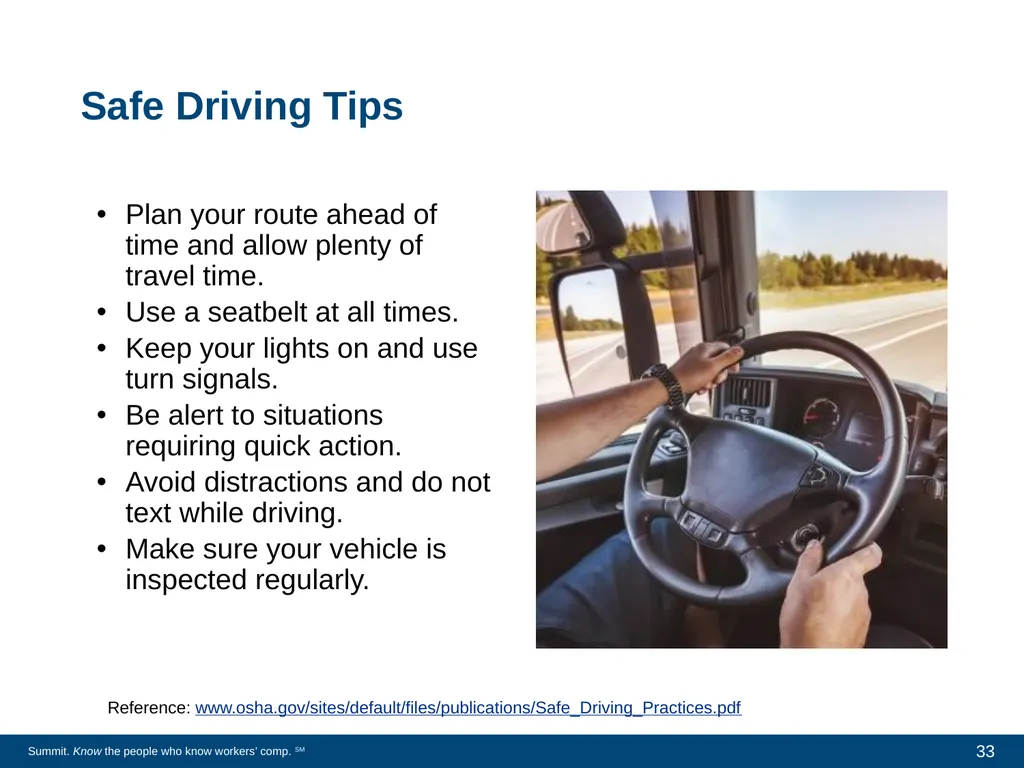
Safe Driving Tips Plan your route ahead of time and allow plenty of travel time.
Use a seatbelt at all times.
Keep your lights on and use turn signals.
Be alert to situations requiring quick action.
Avoid distractions and do not text while driving.
Make sure your vehicle is inspected regularly. 33 Reference: www.osha.gov/sites/default/files/publications/Safe_Driving_Practices.pdf<br>
Use a seatbelt at all times.
Keep your lights on and use turn signals.
Be alert to situations requiring quick action.
Avoid distractions and do not text while driving.
Make sure your vehicle is inspected regularly. 33 Reference: www.osha.gov/sites/default/files/publications/Safe_Driving_Practices.pdf<br>
34
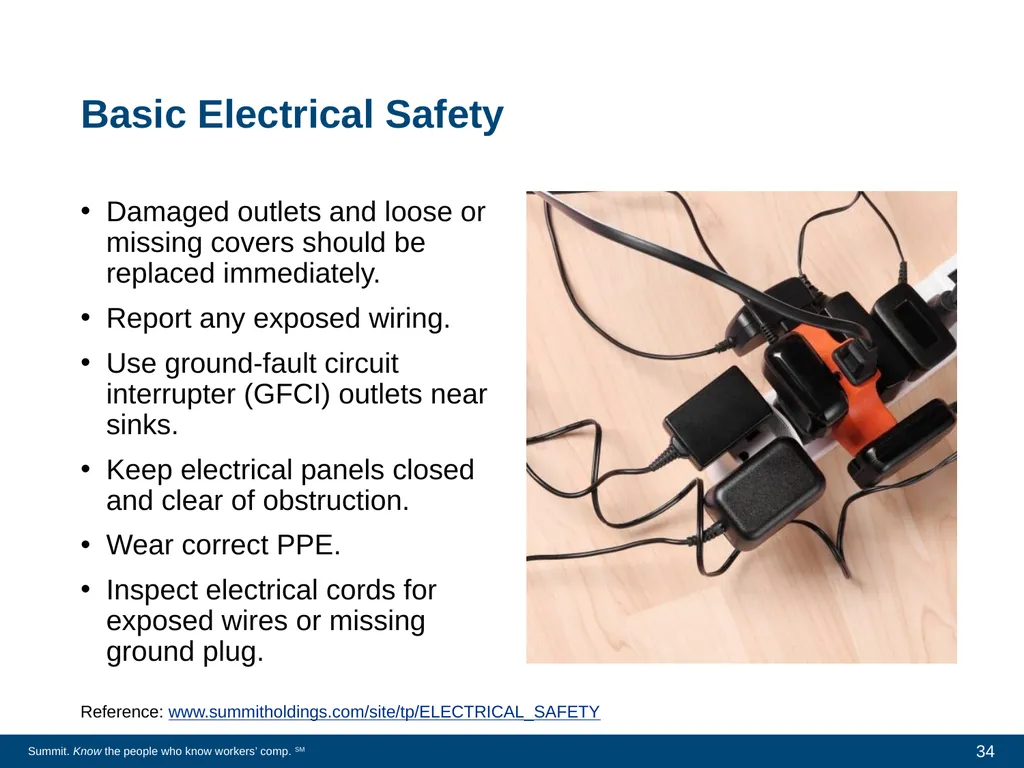
Basic Electrical Safety Damaged outlets and loose or missing covers should be replaced immediately.
Report any exposed wiring.
Use ground-fault circuit interrupter (GFCI) outlets near sinks.
Keep electrical panels closed and clear of obstruction.
Wear correct PPE.
Inspect electrical cords for exposed wires or missing ground plug. 34 Reference: www.summitholdings.com/site/tp/ELECTRICAL_SAFETY<br>
Report any exposed wiring.
Use ground-fault circuit interrupter (GFCI) outlets near sinks.
Keep electrical panels closed and clear of obstruction.
Wear correct PPE.
Inspect electrical cords for exposed wires or missing ground plug. 34 Reference: www.summitholdings.com/site/tp/ELECTRICAL_SAFETY<br>
35
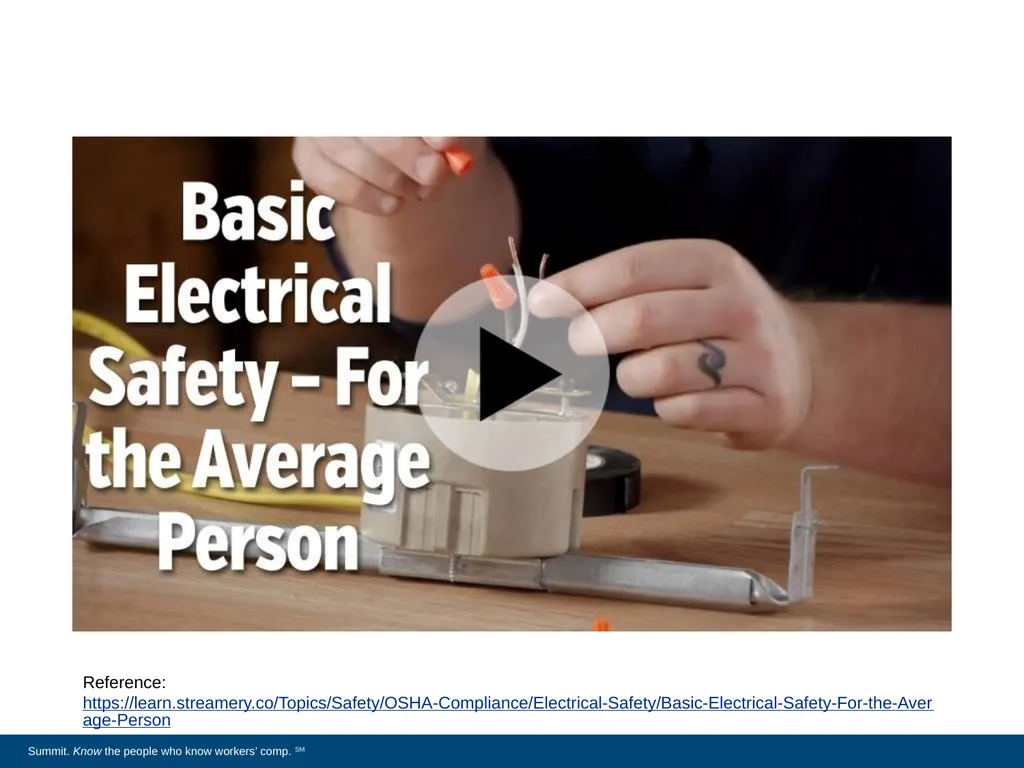
Reference: https://learn.streamery.co/Topics/Safety/OSHA-Compliance/Electrical-Safety/Basic-Electrical-Safety-For-the-Average-Person<br>
36
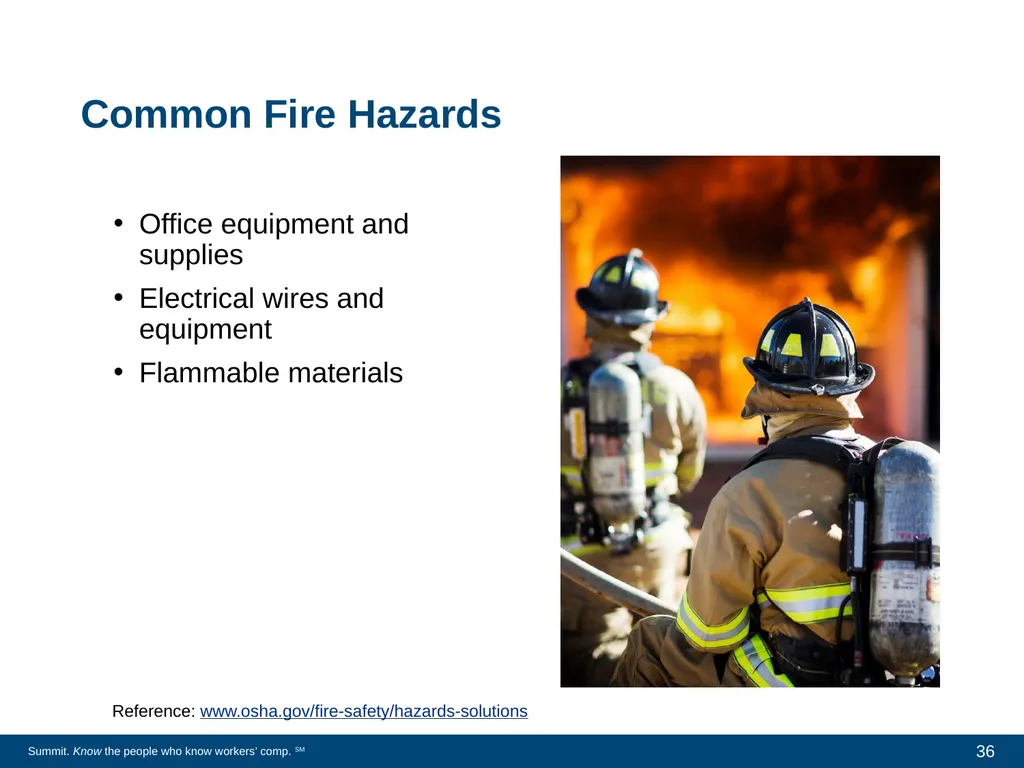
Common Fire Hazards Office equipment and supplies
Electrical wires and equipment
Flammable materials 36 Reference: www.osha.gov/fire-safety/hazards-solutions<br>
Electrical wires and equipment
Flammable materials 36 Reference: www.osha.gov/fire-safety/hazards-solutions<br>
37
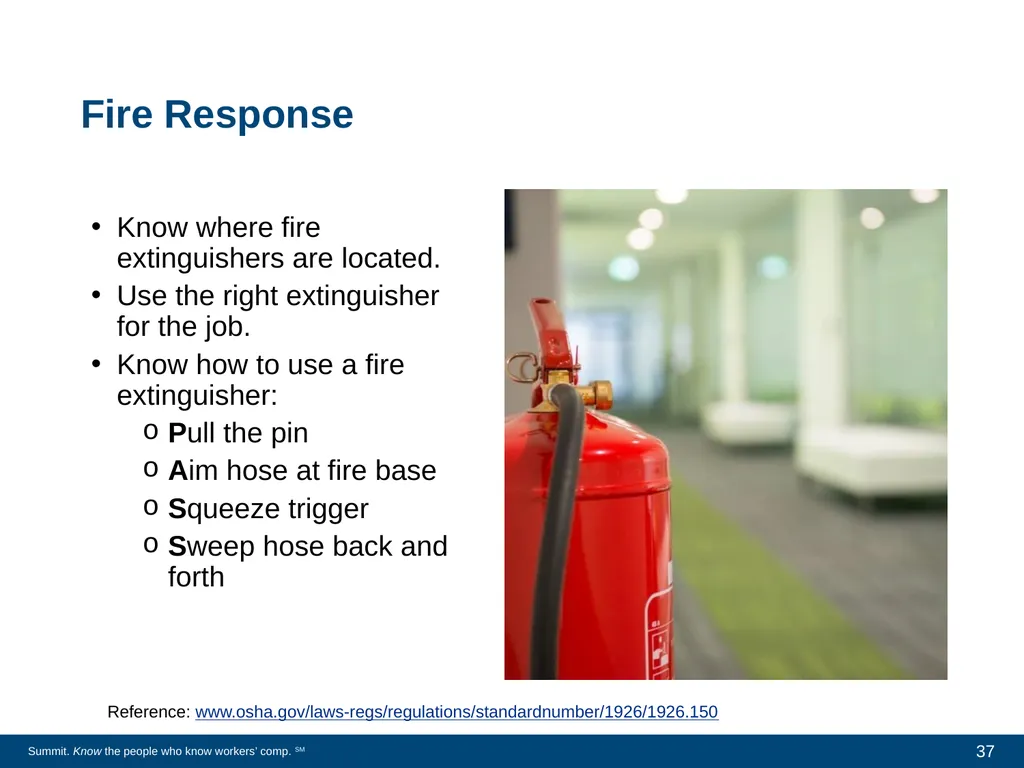
Fire Response Know where fire extinguishers are located.
Use the right extinguisher for the job.
Know how to use a fire extinguisher:
Pull the pin
Aim hose at fire base
Squeeze trigger
Sweep hose back and forth Reference: www.osha.gov/laws-regs/regulations/standardnumber/1926/1926.150 37<br>
Use the right extinguisher for the job.
Know how to use a fire extinguisher:
Pull the pin
Aim hose at fire base
Squeeze trigger
Sweep hose back and forth Reference: www.osha.gov/laws-regs/regulations/standardnumber/1926/1926.150 37<br>
38
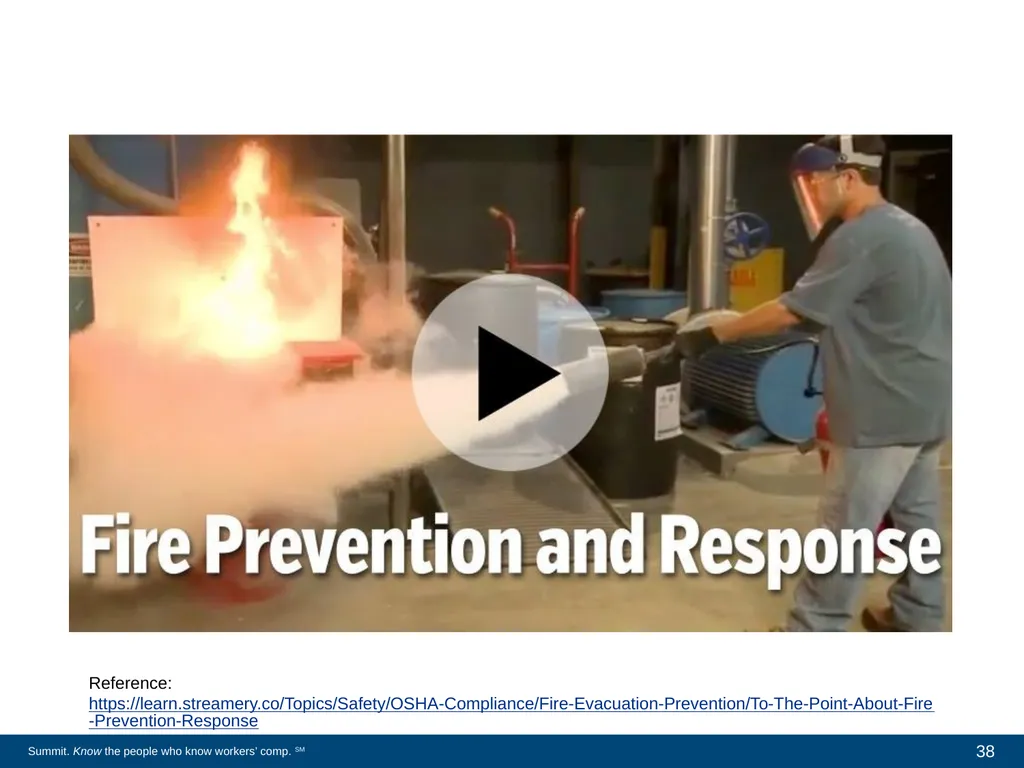
38 Reference: https://learn.streamery.co/Topics/Safety/OSHA-Compliance/Fire-Evacuation-Prevention/To-The-Point-About-Fire-Prevention-Response<br>
39
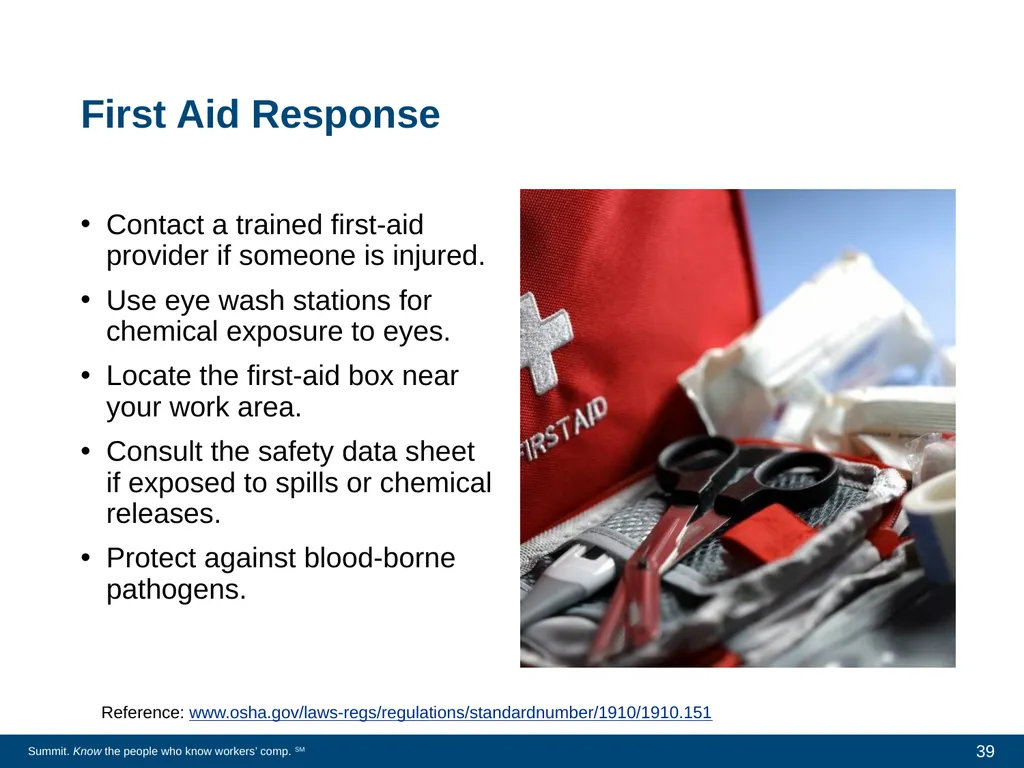
First Aid Response Contact a trained first-aid provider if someone is injured.
Use eye wash stations for chemical exposure to eyes.
Locate the first-aid box near your work area.
Consult the safety data sheet if exposed to spills or chemical releases.
Protect against blood-borne pathogens. 39 Reference: www.osha.gov/laws-regs/regulations/standardnumber/1910/1910.151<br>
Use eye wash stations for chemical exposure to eyes.
Locate the first-aid box near your work area.
Consult the safety data sheet if exposed to spills or chemical releases.
Protect against blood-borne pathogens. 39 Reference: www.osha.gov/laws-regs/regulations/standardnumber/1910/1910.151<br>
40
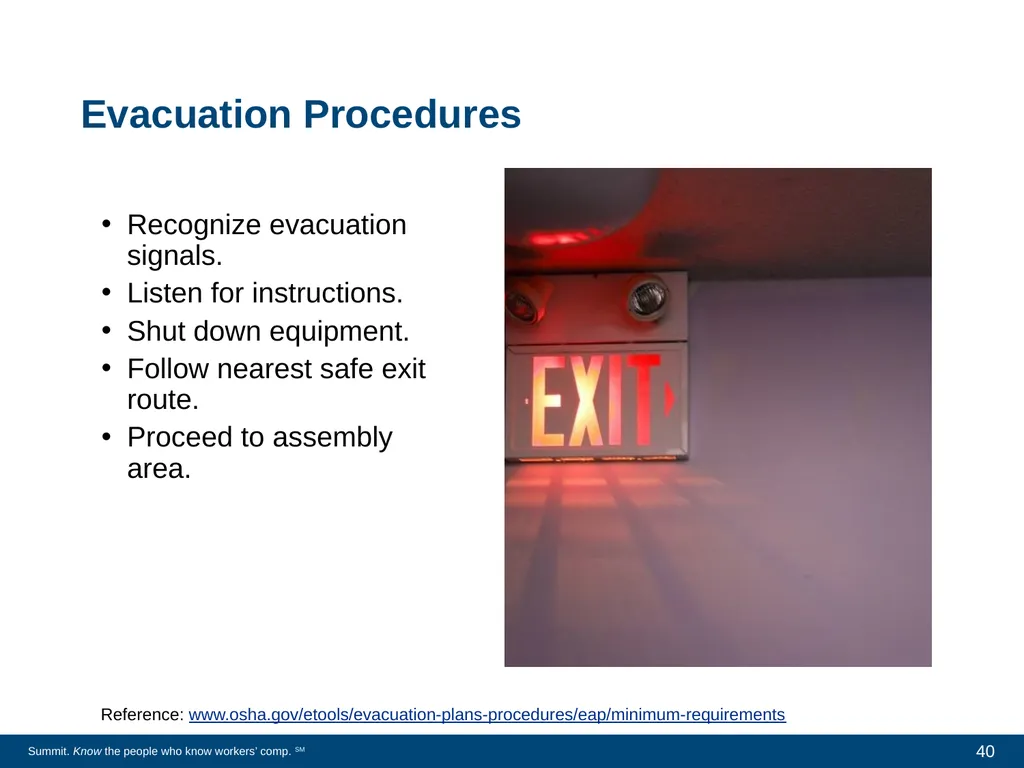
Evacuation Procedures Recognize evacuation
signals.
Listen for instructions.
Shut down equipment.
Follow nearest safe exit route.
Proceed to assembly area. 40 Reference: www.osha.gov/etools/evacuation-plans-procedures/eap/minimum-requirements<br>
Listen for instructions.
Shut down equipment.
Follow nearest safe exit route.
Proceed to assembly area. 40 Reference: www.osha.gov/etools/evacuation-plans-procedures/eap/minimum-requirements<br>
41
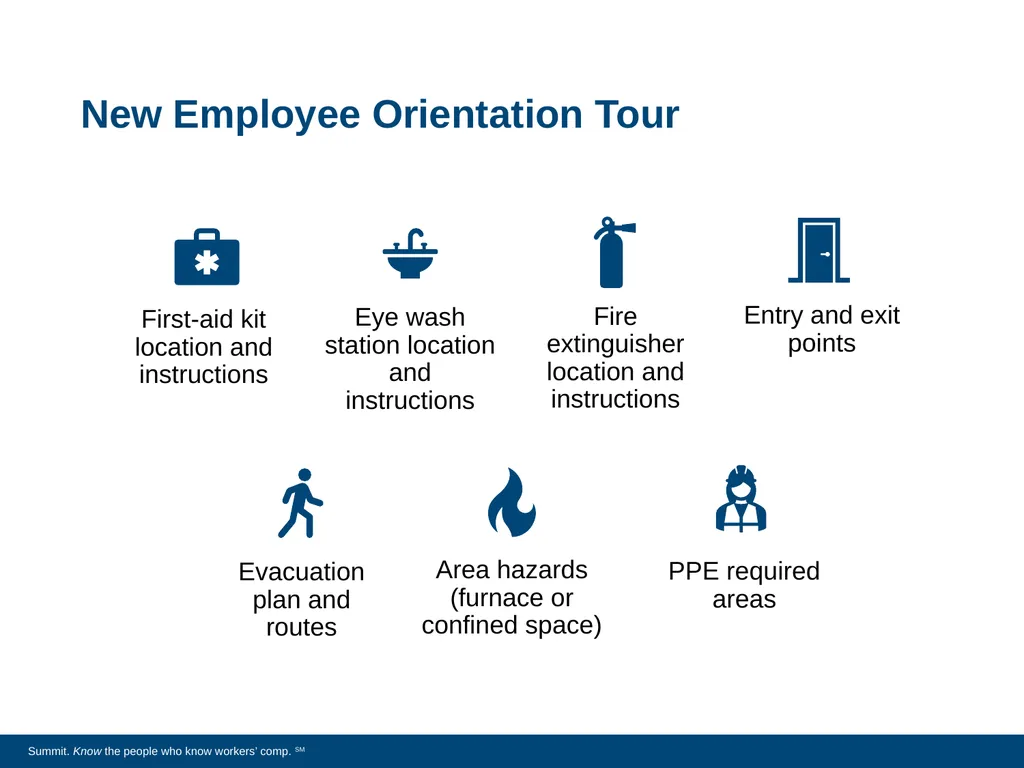
New Employee Orientation Tour<br>
42
Pamphlet Review 42<br>
43
Your Safety Orientation Is Complete Any Questions? 43<br>
44
Summit is a leading regional provider of workers’ compensation services with more than 40 years of experience.
Visit summitholdings.com to learn more. The information presented in this publication is intended to provide guidance and is not intended as a legal interpretation of any federal, state or local laws, rules or regulations applicable to your business. The loss prevention information provided is intended only to assist policyholders of Summit managed insurers in the management of potential loss producing conditions involving their premises and/or operations based on generally accepted safe practices. In providing such information, Summit Consulting LLC does not warrant that all potential hazards or conditions have been evaluated or can be controlled. It is not intended as an offer to write insurance for such conditions or exposures. The liability of Summit Consulting LLC and its managed insurers is limited to the terms, limits and conditions of the insurance policies underwritten by any of them.
5/24 (23-292) © 2024 Summit Consulting LLC (DBA Summit. Know the people who know workers’ comp. LLC) PO Box 988, Lakeland, FL 33802. All rights reserved. 44<br>
Visit summitholdings.com to learn more. The information presented in this publication is intended to provide guidance and is not intended as a legal interpretation of any federal, state or local laws, rules or regulations applicable to your business. The loss prevention information provided is intended only to assist policyholders of Summit managed insurers in the management of potential loss producing conditions involving their premises and/or operations based on generally accepted safe practices. In providing such information, Summit Consulting LLC does not warrant that all potential hazards or conditions have been evaluated or can be controlled. It is not intended as an offer to write insurance for such conditions or exposures. The liability of Summit Consulting LLC and its managed insurers is limited to the terms, limits and conditions of the insurance policies underwritten by any of them.
5/24 (23-292) © 2024 Summit Consulting LLC (DBA Summit. Know the people who know workers’ comp. LLC) PO Box 988, Lakeland, FL 33802. All rights reserved. 44<br>