
Post-development Theories “We must accept the
MY
Published · 11 slides · 0 views
1 / 1
Description
Post-development Theories We must accept the cultural differences between societies ALL MOST SOME Starter -
Related Topics
Share
Embed code
Download this presentation From Below
"Post-development Theories “We must accept the" is the property of its rightful owner. Permission is granted to download and print the materials on this website for personal, non-commercial use only, and to display it on your personal computer provided you do not modify the materials and that you retain all copyright notices contained in the materials. By downloading content from our website, you accept the terms of this agreement.
Presentation Transcript
01
Post-development Theories
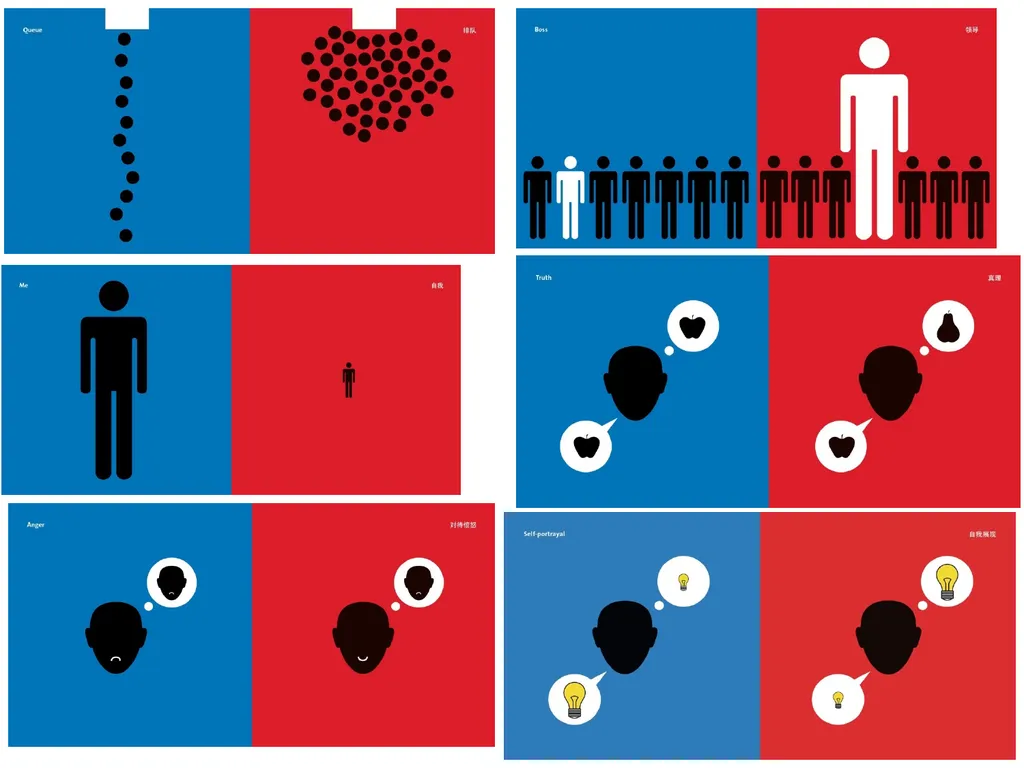
“We must accept the cultural differences between societies” ALL
MOST
SOME Starter - http://qz.com/567479/the-cultural-differences-between-east-and-west-according-to-one-artist/?utm_source=KWFBUKQZ&kwp_0=273877&kwp_4=1053200&kwp_1=495188<br>
MOST
SOME Starter - http://qz.com/567479/the-cultural-differences-between-east-and-west-according-to-one-artist/?utm_source=KWFBUKQZ&kwp_0=273877&kwp_4=1053200&kwp_1=495188<br>
02
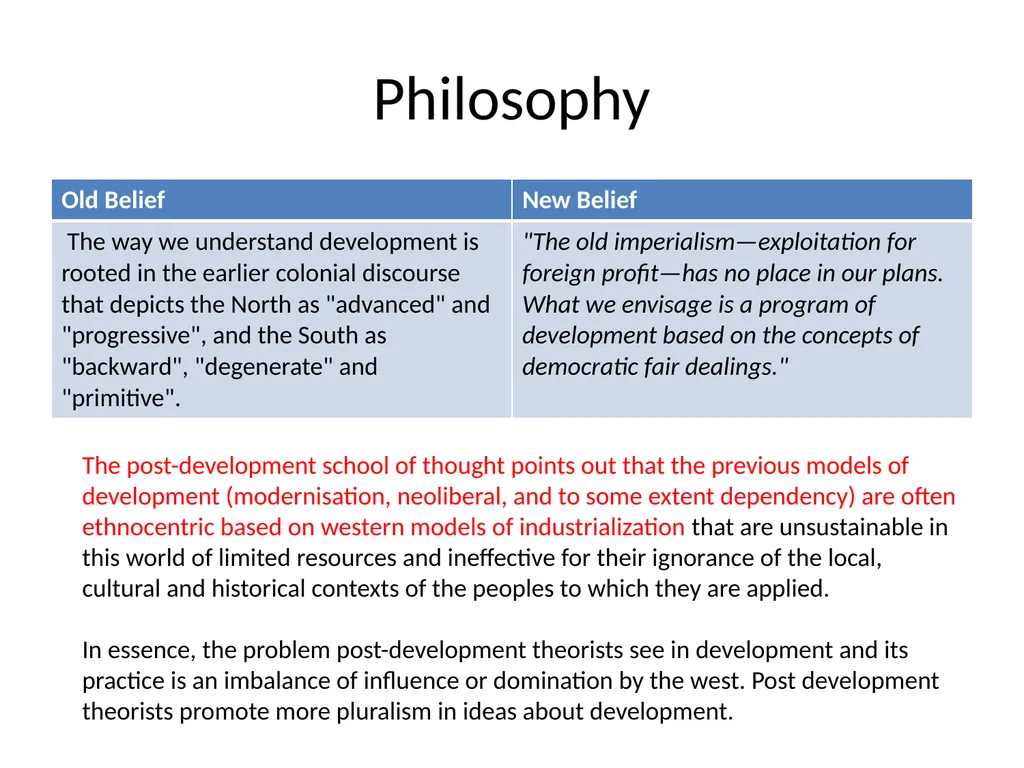
Philosophy The post-development school of thought points out that the previous models of development (modernisation, neoliberal, and to some extent dependency) are often ethnocentric based on western models of industrialization that are unsustainable in this world of limited resources and ineffective for their ignorance of the local, cultural and historical contexts of the peoples to which they are applied.
In essence, the problem post-development theorists see in development and its practice is an imbalance of influence or domination by the west. Post development theorists promote more pluralism in ideas about development.<br>
In essence, the problem post-development theorists see in development and its practice is an imbalance of influence or domination by the west. Post development theorists promote more pluralism in ideas about development.<br>
03
Alternatives to Development Escobar:
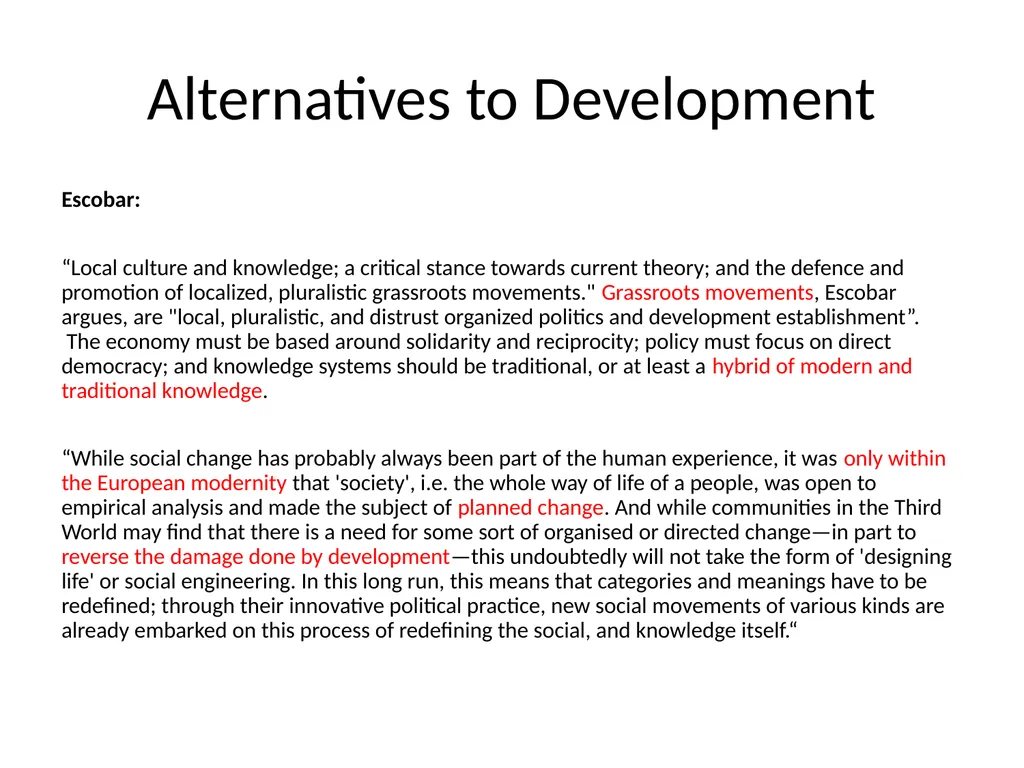
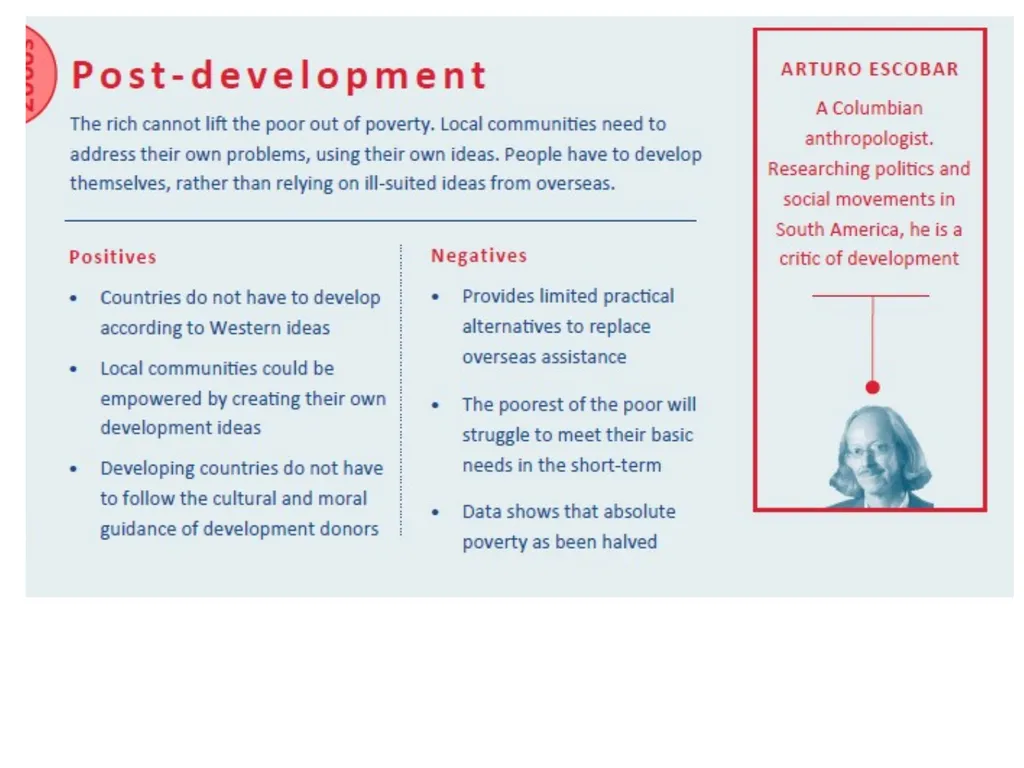
“Local culture and knowledge; a critical stance towards current theory; and the defence and promotion of localized, pluralistic grassroots movements." Grassroots movements, Escobar argues, are "local, pluralistic, and distrust organized politics and development establishment”. The economy must be based around solidarity and reciprocity; policy must focus on direct democracy; and knowledge systems should be traditional, or at least a hybrid of modern and traditional knowledge.
“While social change has probably always been part of the human experience, it was only within the European modernity that 'society', i.e. the whole way of life of a people, was open to empirical analysis and made the subject of planned change. And while communities in the Third World may find that there is a need for some sort of organised or directed change—in part to reverse the damage done by development—this undoubtedly will not take the form of 'designing life' or social engineering. In this long run, this means that categories and meanings have to be redefined; through their innovative political practice, new social movements of various kinds are already embarked on this process of redefining the social, and knowledge itself.“<br>
“Local culture and knowledge; a critical stance towards current theory; and the defence and promotion of localized, pluralistic grassroots movements." Grassroots movements, Escobar argues, are "local, pluralistic, and distrust organized politics and development establishment”. The economy must be based around solidarity and reciprocity; policy must focus on direct democracy; and knowledge systems should be traditional, or at least a hybrid of modern and traditional knowledge.
“While social change has probably always been part of the human experience, it was only within the European modernity that 'society', i.e. the whole way of life of a people, was open to empirical analysis and made the subject of planned change. And while communities in the Third World may find that there is a need for some sort of organised or directed change—in part to reverse the damage done by development—this undoubtedly will not take the form of 'designing life' or social engineering. In this long run, this means that categories and meanings have to be redefined; through their innovative political practice, new social movements of various kinds are already embarked on this process of redefining the social, and knowledge itself.“<br>
04
Where now for development? Rajid Rahnema
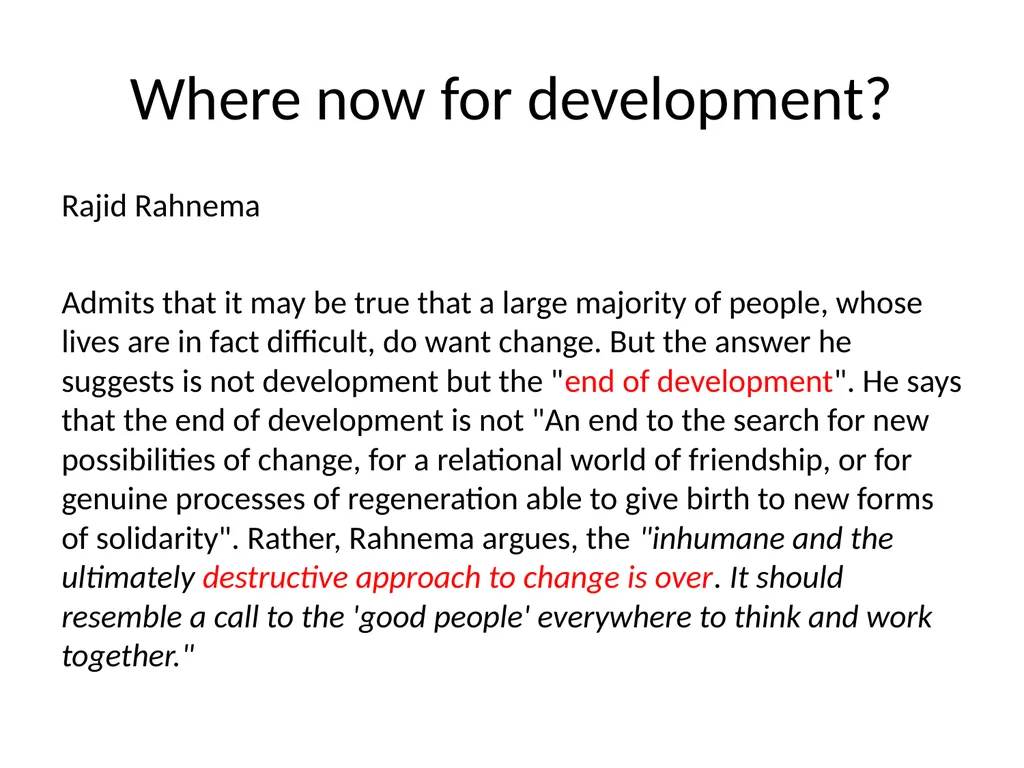
Admits that it may be true that a large majority of people, whose lives are in fact difficult, do want change. But the answer he suggests is not development but the "end of development". He says that the end of development is not "An end to the search for new possibilities of change, for a relational world of friendship, or for genuine processes of regeneration able to give birth to new forms of solidarity". Rather, Rahnema argues, the "inhumane and the ultimately destructive approach to change is over. It should resemble a call to the 'good people' everywhere to think and work together."<br>
Admits that it may be true that a large majority of people, whose lives are in fact difficult, do want change. But the answer he suggests is not development but the "end of development". He says that the end of development is not "An end to the search for new possibilities of change, for a relational world of friendship, or for genuine processes of regeneration able to give birth to new forms of solidarity". Rather, Rahnema argues, the "inhumane and the ultimately destructive approach to change is over. It should resemble a call to the 'good people' everywhere to think and work together."<br>
05
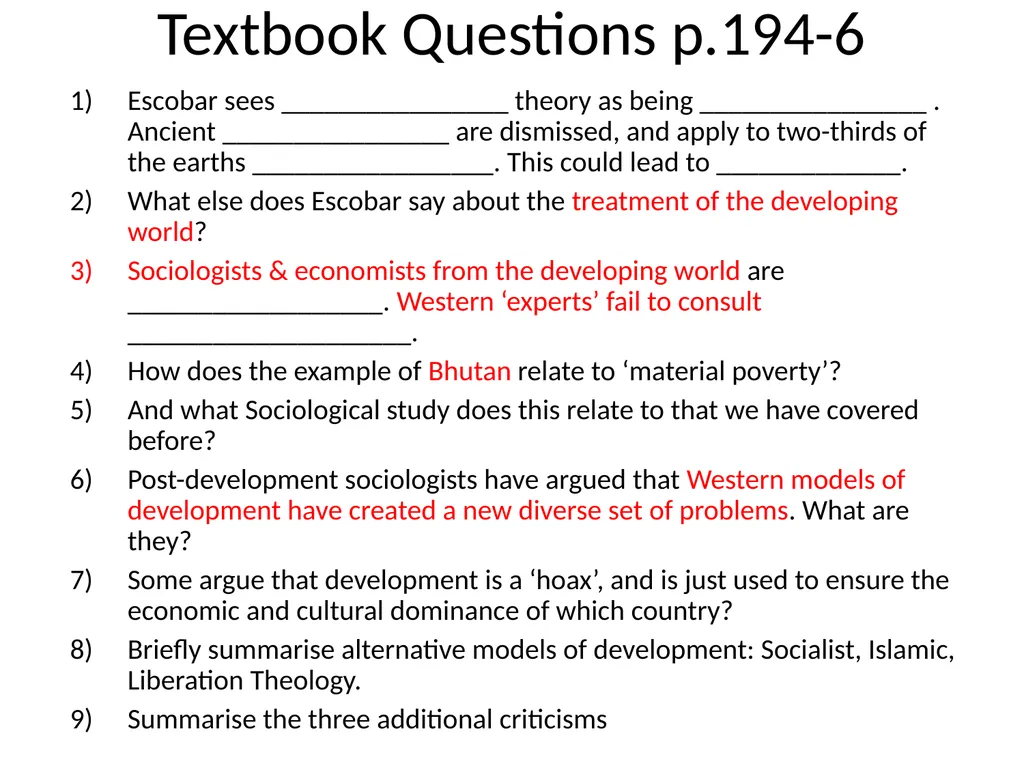
Textbook Questions p.194-6 Escobar sees ________________ theory as being ________________ . Ancient ________________ are dismissed, and apply to two-thirds of the earths _________________. This could lead to _____________.
What else does Escobar say about the treatment of the developing world?
Sociologists & economists from the developing world are __________________. Western ‘experts’ fail to consult ____________________.
How does the example of Bhutan relate to ‘material poverty’?
And what Sociological study does this relate to that we have covered before?
Post-development sociologists have argued that Western models of development have created a new diverse set of problems. What are they?
Some argue that development is a ‘hoax’, and is just used to ensure the economic and cultural dominance of which country?
Briefly summarise alternative models of development: Socialist, Islamic, Liberation Theology.
Summarise the three additional criticisms<br>
What else does Escobar say about the treatment of the developing world?
Sociologists & economists from the developing world are __________________. Western ‘experts’ fail to consult ____________________.
How does the example of Bhutan relate to ‘material poverty’?
And what Sociological study does this relate to that we have covered before?
Post-development sociologists have argued that Western models of development have created a new diverse set of problems. What are they?
Some argue that development is a ‘hoax’, and is just used to ensure the economic and cultural dominance of which country?
Briefly summarise alternative models of development: Socialist, Islamic, Liberation Theology.
Summarise the three additional criticisms<br>
06
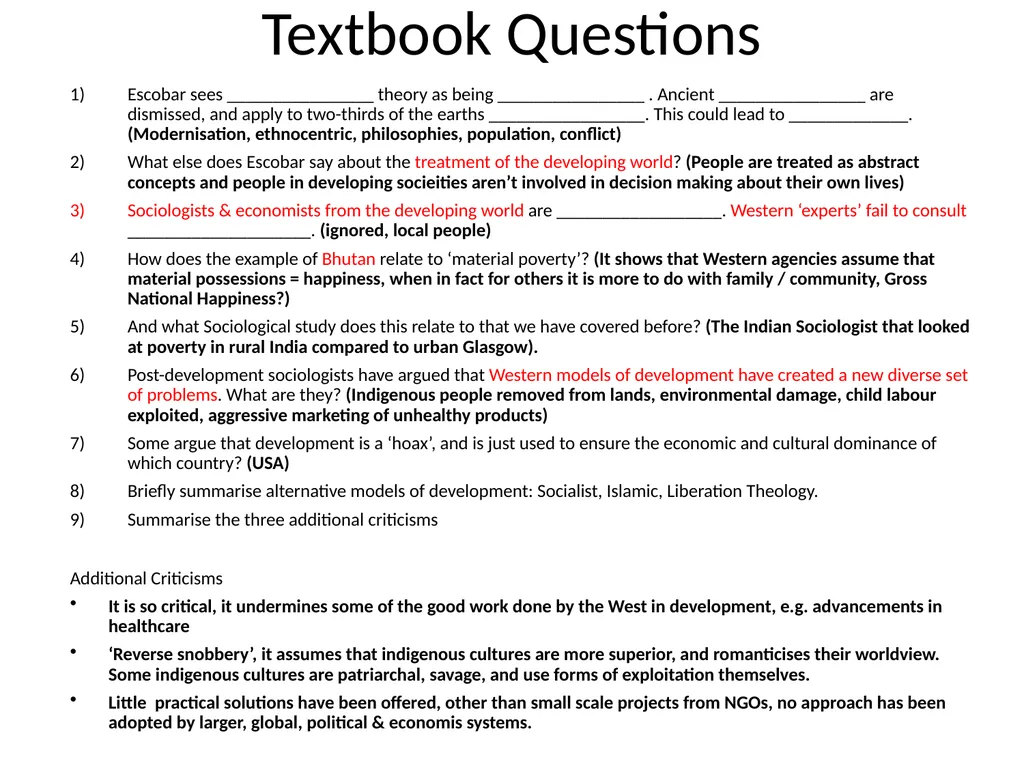
Textbook Questions Escobar sees ________________ theory as being ________________ . Ancient ________________ are dismissed, and apply to two-thirds of the earths _________________. This could lead to _____________. (Modernisation, ethnocentric, philosophies, population, conflict)
What else does Escobar say about the treatment of the developing world? (People are treated as abstract concepts and people in developing socieities aren’t involved in decision making about their own lives)
Sociologists & economists from the developing world are __________________. Western ‘experts’ fail to consult ____________________. (ignored, local people)
How does the example of Bhutan relate to ‘material poverty’? (It shows that Western agencies assume that material possessions = happiness, when in fact for others it is more to do with family / community, Gross National Happiness?)
And what Sociological study does this relate to that we have covered before? (The Indian Sociologist that looked at poverty in rural India compared to urban Glasgow).
Post-development sociologists have argued that Western models of development have created a new diverse set of problems. What are they? (Indigenous people removed from lands, environmental damage, child labour exploited, aggressive marketing of unhealthy products)
Some argue that development is a ‘hoax’, and is just used to ensure the economic and cultural dominance of which country? (USA)
Briefly summarise alternative models of development: Socialist, Islamic, Liberation Theology.
Summarise the three additional criticisms
Additional Criticisms
It is so critical, it undermines some of the good work done by the West in development, e.g. advancements in healthcare
‘Reverse snobbery’, it assumes that indigenous cultures are more superior, and romanticises their worldview. Some indigenous cultures are patriarchal, savage, and use forms of exploitation themselves.
Little practical solutions have been offered, other than small scale projects from NGOs, no approach has been adopted by larger, global, political & economis systems.<br>
What else does Escobar say about the treatment of the developing world? (People are treated as abstract concepts and people in developing socieities aren’t involved in decision making about their own lives)
Sociologists & economists from the developing world are __________________. Western ‘experts’ fail to consult ____________________. (ignored, local people)
How does the example of Bhutan relate to ‘material poverty’? (It shows that Western agencies assume that material possessions = happiness, when in fact for others it is more to do with family / community, Gross National Happiness?)
And what Sociological study does this relate to that we have covered before? (The Indian Sociologist that looked at poverty in rural India compared to urban Glasgow).
Post-development sociologists have argued that Western models of development have created a new diverse set of problems. What are they? (Indigenous people removed from lands, environmental damage, child labour exploited, aggressive marketing of unhealthy products)
Some argue that development is a ‘hoax’, and is just used to ensure the economic and cultural dominance of which country? (USA)
Briefly summarise alternative models of development: Socialist, Islamic, Liberation Theology.
Summarise the three additional criticisms
Additional Criticisms
It is so critical, it undermines some of the good work done by the West in development, e.g. advancements in healthcare
‘Reverse snobbery’, it assumes that indigenous cultures are more superior, and romanticises their worldview. Some indigenous cultures are patriarchal, savage, and use forms of exploitation themselves.
Little practical solutions have been offered, other than small scale projects from NGOs, no approach has been adopted by larger, global, political & economis systems.<br>
07
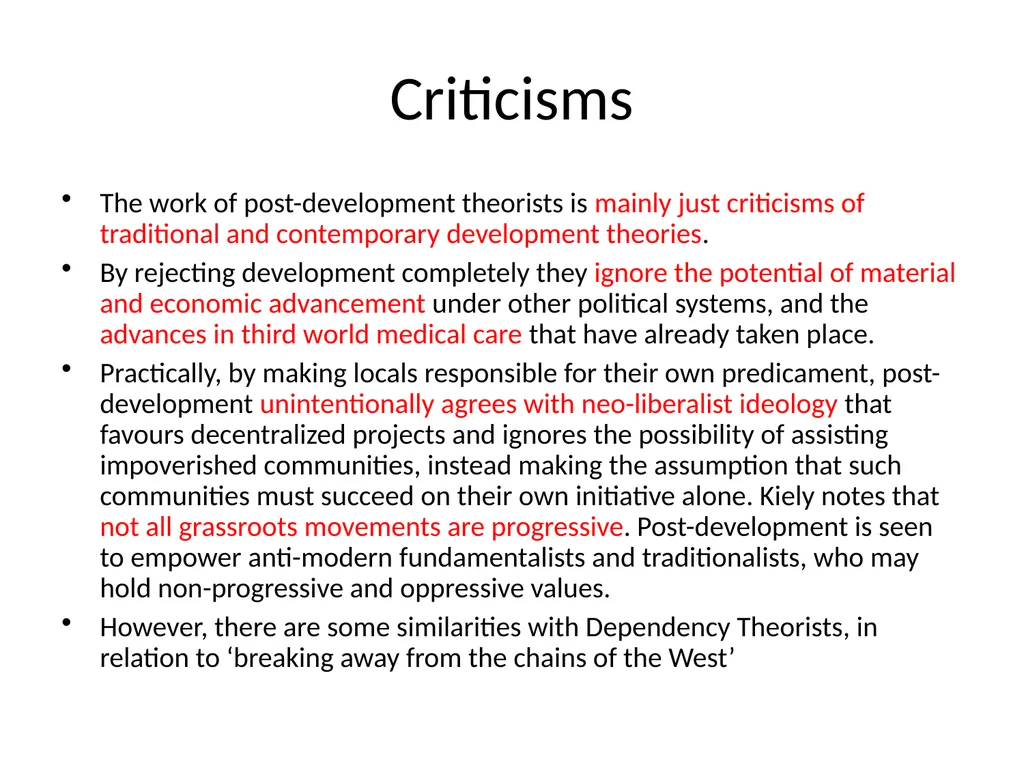
Criticisms The work of post-development theorists is mainly just criticisms of traditional and contemporary development theories.
By rejecting development completely they ignore the potential of material and economic advancement under other political systems, and the advances in third world medical care that have already taken place.
Practically, by making locals responsible for their own predicament, post-development unintentionally agrees with neo-liberalist ideology that favours decentralized projects and ignores the possibility of assisting impoverished communities, instead making the assumption that such communities must succeed on their own initiative alone. Kiely notes that not all grassroots movements are progressive. Post-development is seen to empower anti-modern fundamentalists and traditionalists, who may hold non-progressive and oppressive values.
However, there are some similarities with Dependency Theorists, in relation to ‘breaking away from the chains of the West’<br>
By rejecting development completely they ignore the potential of material and economic advancement under other political systems, and the advances in third world medical care that have already taken place.
Practically, by making locals responsible for their own predicament, post-development unintentionally agrees with neo-liberalist ideology that favours decentralized projects and ignores the possibility of assisting impoverished communities, instead making the assumption that such communities must succeed on their own initiative alone. Kiely notes that not all grassroots movements are progressive. Post-development is seen to empower anti-modern fundamentalists and traditionalists, who may hold non-progressive and oppressive values.
However, there are some similarities with Dependency Theorists, in relation to ‘breaking away from the chains of the West’<br>
08
Escobar Stretch – A/A* Activity
http://www.theguardian.com/global-development/2012/nov/05/arturo-escobar-post-development-thinker
Main Features of Theory
Comparisons / Links to other theories
Solutions proposed
Criticisms
Highlight the article in four different colours to show the three types of commentary.<br>
http://www.theguardian.com/global-development/2012/nov/05/arturo-escobar-post-development-thinker
Main Features of Theory
Comparisons / Links to other theories
Solutions proposed
Criticisms
Highlight the article in four different colours to show the three types of commentary.<br>
09
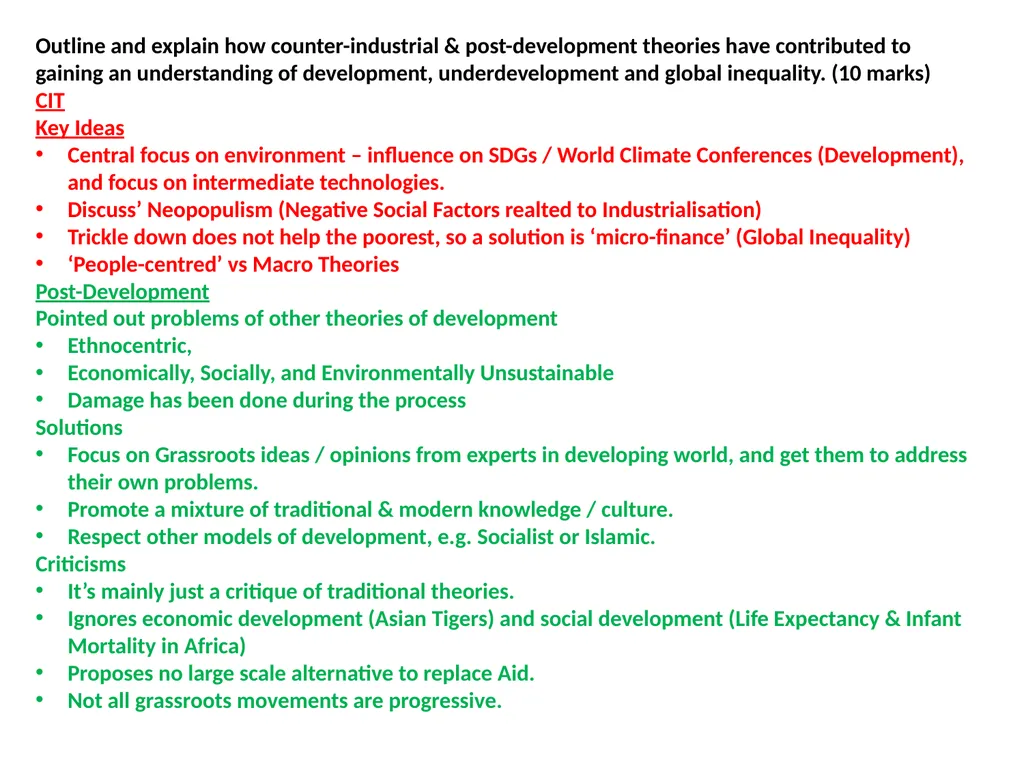
Outline and explain how counter-industrial & post-development theories have contributed to gaining an understanding of development, underdevelopment and global inequality. (10 marks)
CIT
Key Ideas
Central focus on environment – influence on SDGs / World Climate Conferences (Development), and focus on intermediate technologies.
Discuss’ Neopopulism (Negative Social Factors realted to Industrialisation)
Trickle down does not help the poorest, so a solution is ‘micro-finance’ (Global Inequality)
‘People-centred’ vs Macro Theories
Post-Development
Pointed out problems of other theories of development
Ethnocentric,
Economically, Socially, and Environmentally Unsustainable
Damage has been done during the process
Solutions
Focus on Grassroots ideas / opinions from experts in developing world, and get them to address their own problems.
Promote a mixture of traditional & modern knowledge / culture.
Respect other models of development, e.g. Socialist or Islamic.
Criticisms
It’s mainly just a critique of traditional theories.
Ignores economic development (Asian Tigers) and social development (Life Expectancy & Infant Mortality in Africa)
Proposes no large scale alternative to replace Aid.
Not all grassroots movements are progressive.<br>
CIT
Key Ideas
Central focus on environment – influence on SDGs / World Climate Conferences (Development), and focus on intermediate technologies.
Discuss’ Neopopulism (Negative Social Factors realted to Industrialisation)
Trickle down does not help the poorest, so a solution is ‘micro-finance’ (Global Inequality)
‘People-centred’ vs Macro Theories
Post-Development
Pointed out problems of other theories of development
Ethnocentric,
Economically, Socially, and Environmentally Unsustainable
Damage has been done during the process
Solutions
Focus on Grassroots ideas / opinions from experts in developing world, and get them to address their own problems.
Promote a mixture of traditional & modern knowledge / culture.
Respect other models of development, e.g. Socialist or Islamic.
Criticisms
It’s mainly just a critique of traditional theories.
Ignores economic development (Asian Tigers) and social development (Life Expectancy & Infant Mortality in Africa)
Proposes no large scale alternative to replace Aid.
Not all grassroots movements are progressive.<br>