
RHETORIC Ethos, Logos, Pathos This Lesson: Review:

Description: RHETORIC Ethos, Logos, Pathos This Lesson: Review: What is Rhetoric? What are the 3 types of Rhetoric? What are the 3 Persuasive Appeals? What is Rhetoric? the art of effective or persuasive speaking or writing, especially the
Related Topics
Download Presentation
"RHETORIC Ethos, Logos, Pathos This Lesson: Review:" is the property of its rightful owner. Permission is granted to download and print the materials on this website for personal, non-commercial use only, and to display it on your personal computer provided you do not modify the materials and that you retain all copyright notices contained in the materials. By downloading content from our website, you accept the terms of this agreement.
Presentation Transcript
slide1. RHETORIC Ethos, Logos, Pathos<br>
slide2. This Lesson: Review:
What is Rhetoric?
What are the 3 types of Rhetoric?
What are the 3 Persuasive Appeals?<br>
slide3. What is Rhetoric? … the art of effective or persuasive speaking or writing, especially the exploitation of figures of speech and other rhetorical devices.
… language designed to have a persuasive or impressive effect, but which is often regarded as lacking in sincerity or meaningful content.<br>
slide4. The 3 Types of Rhetoric Judicial Rhetoric: The Past
Demonstrative Rhetoric: The Present
Deliberative Rhetoric: The Future<br>
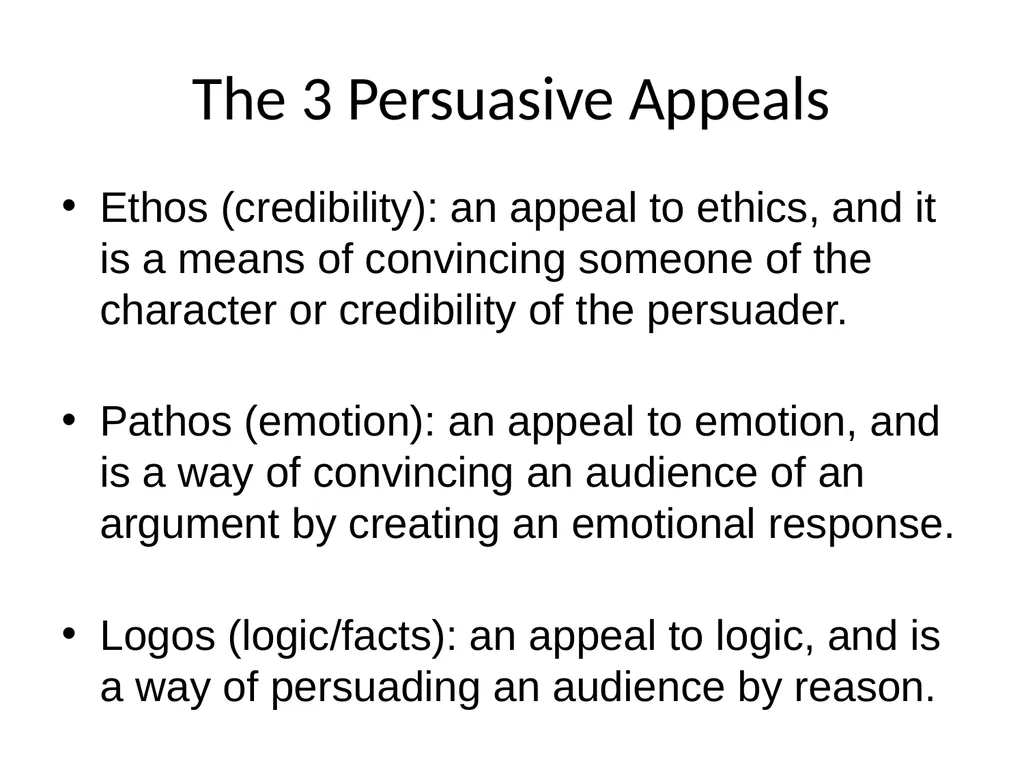
slide5. The 3 Persuasive Appeals Ethos (credibility): an appeal to ethics, and it is a means of convincing someone of the character or credibility of the persuader.
Pathos (emotion): an appeal to emotion, and is a way of convincing an audience of an argument by creating an emotional response.
Logos (logic/facts): an appeal to logic, and is a way of persuading an audience by reason.<br>
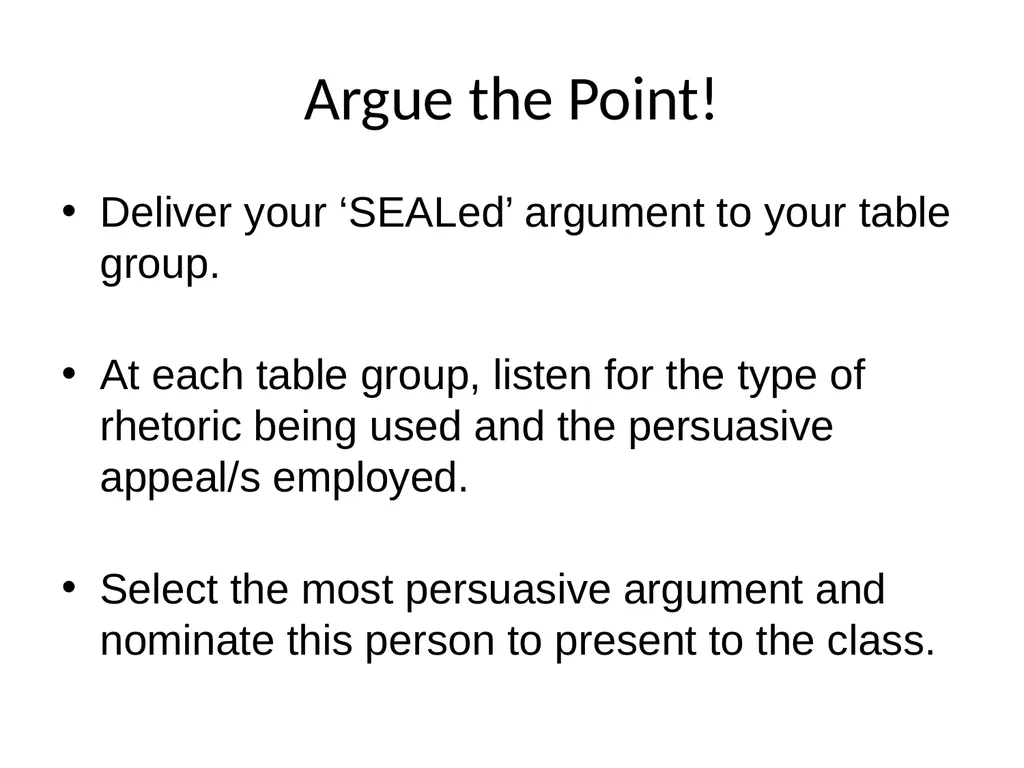
slide6. Argue the Point! Deliver your ‘SEALed’ argument to your table group.
At each table group, listen for the type of rhetoric being used and the persuasive appeal/s employed.
Select the most persuasive argument and nominate this person to present to the class.<br>
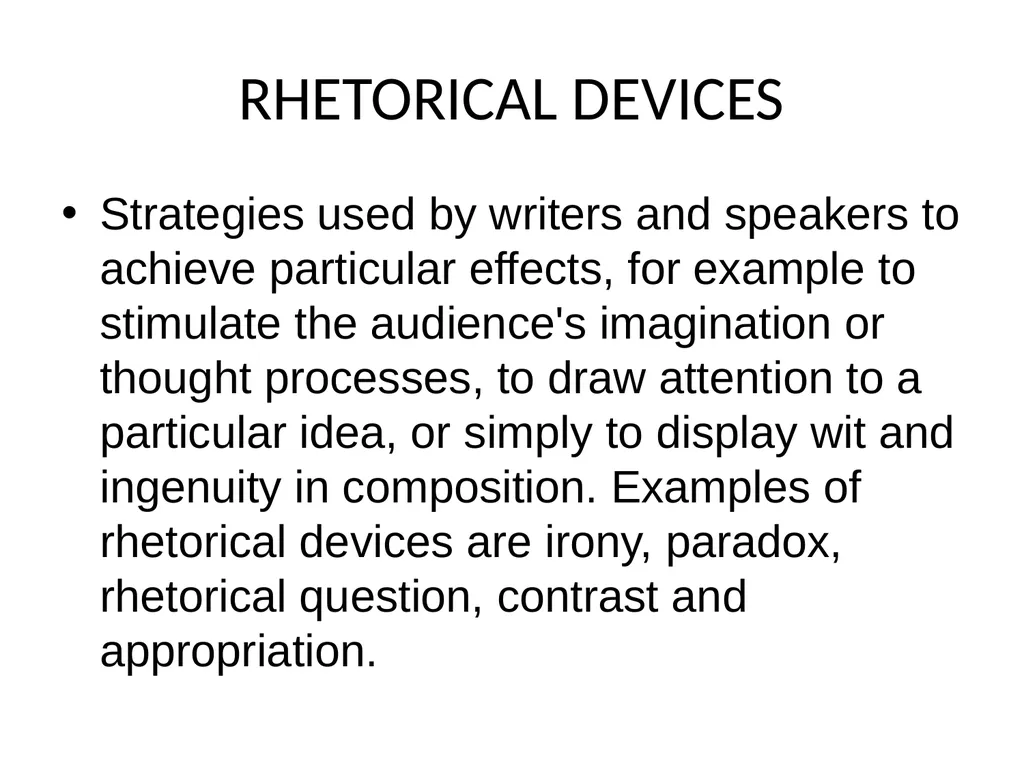
slide7. RHETORICAL DEVICES Strategies used by writers and speakers to achieve particular effects, for example to stimulate the audience's imagination or thought processes, to draw attention to a particular idea, or simply to display wit and ingenuity in composition. Examples of rhetorical devices are irony, paradox, rhetorical question, contrast and appropriation.<br>
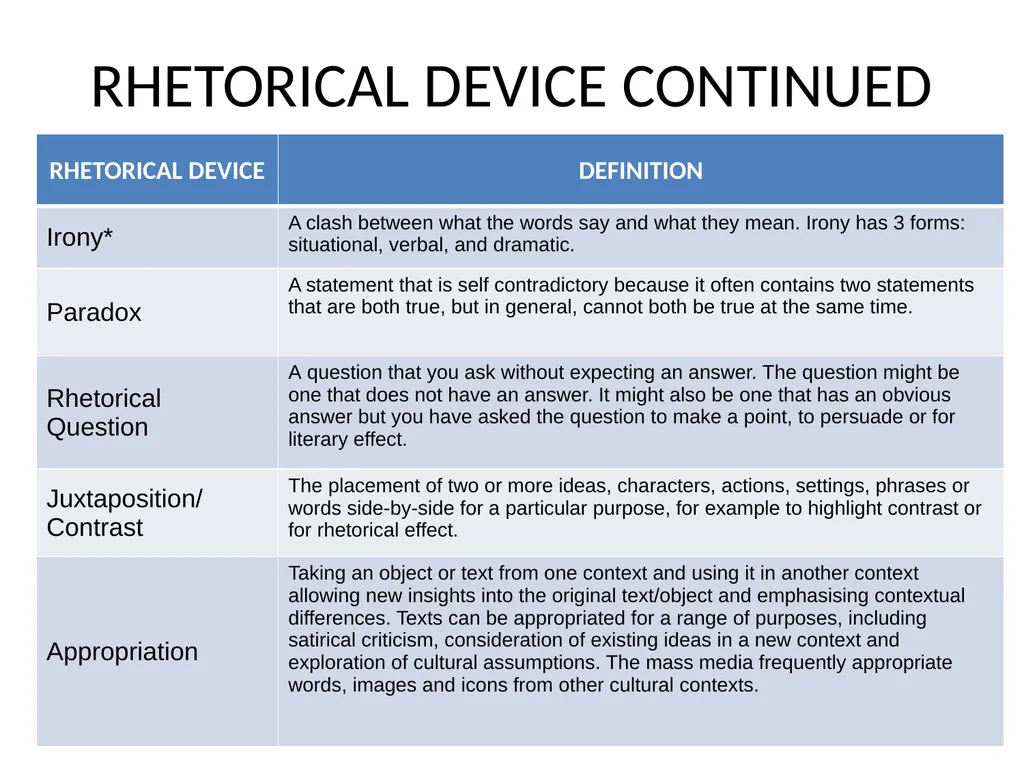
slide8. RHETORICAL DEVICE CONTINUED<br>
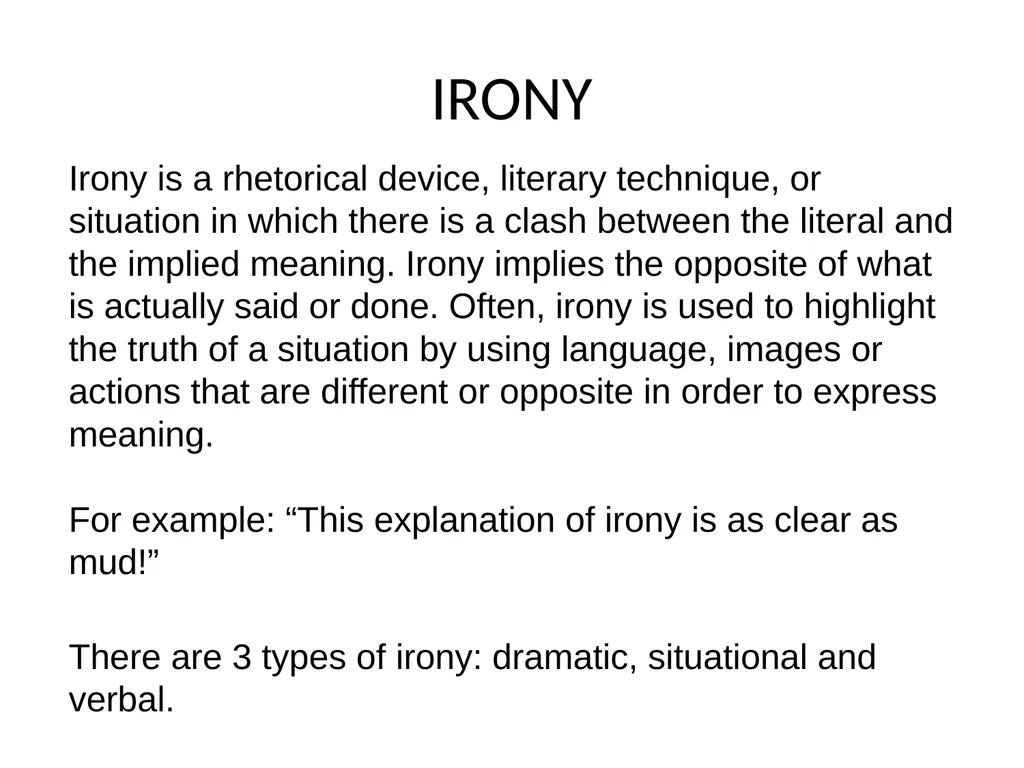
slide9. IRONY Irony is a rhetorical device, literary technique, or situation in which there is a clash between the literal and the implied meaning. Irony implies the opposite of what is actually said or done. Often, irony is used to highlight the truth of a situation by using language, images or actions that are different or opposite in order to express meaning. For example: “This explanation of irony is as clear as mud!”
There are 3 types of irony: dramatic, situational and verbal.<br>
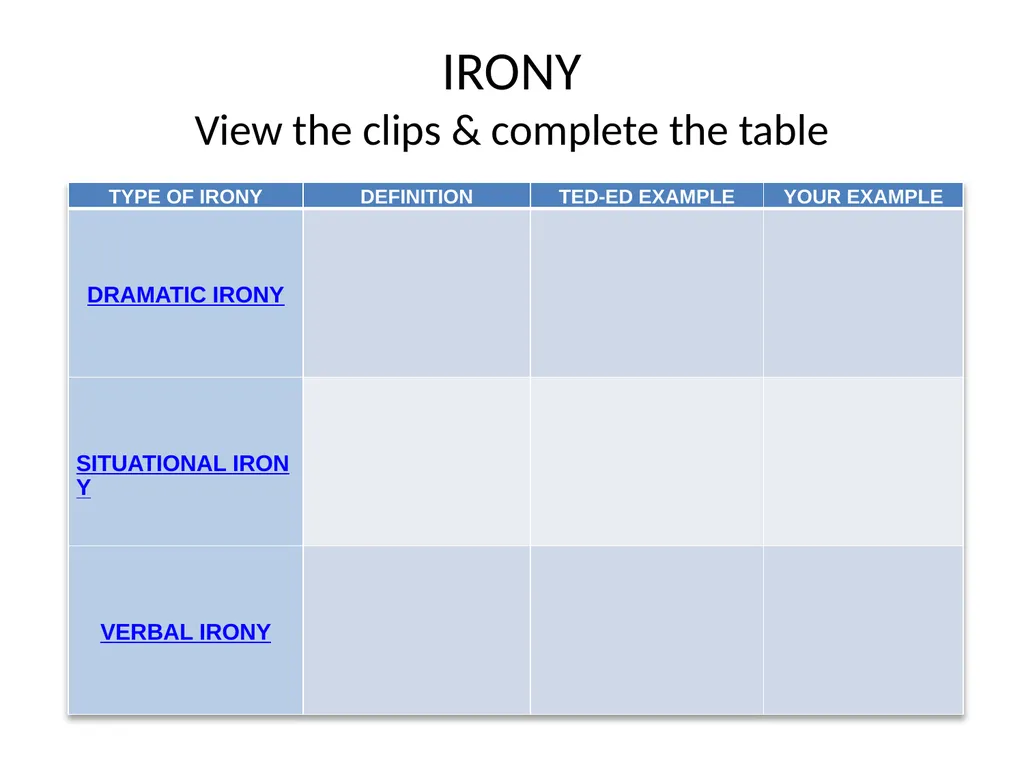
slide10. IRONY View the clips & complete the table<br>
slide2. This Lesson: Review:
What is Rhetoric?
What are the 3 types of Rhetoric?
What are the 3 Persuasive Appeals?<br>
slide3. What is Rhetoric? … the art of effective or persuasive speaking or writing, especially the exploitation of figures of speech and other rhetorical devices.
… language designed to have a persuasive or impressive effect, but which is often regarded as lacking in sincerity or meaningful content.<br>
slide4. The 3 Types of Rhetoric Judicial Rhetoric: The Past
Demonstrative Rhetoric: The Present
Deliberative Rhetoric: The Future<br>
slide5. The 3 Persuasive Appeals Ethos (credibility): an appeal to ethics, and it is a means of convincing someone of the character or credibility of the persuader.
Pathos (emotion): an appeal to emotion, and is a way of convincing an audience of an argument by creating an emotional response.
Logos (logic/facts): an appeal to logic, and is a way of persuading an audience by reason.<br>
slide6. Argue the Point! Deliver your ‘SEALed’ argument to your table group.
At each table group, listen for the type of rhetoric being used and the persuasive appeal/s employed.
Select the most persuasive argument and nominate this person to present to the class.<br>
slide7. RHETORICAL DEVICES Strategies used by writers and speakers to achieve particular effects, for example to stimulate the audience's imagination or thought processes, to draw attention to a particular idea, or simply to display wit and ingenuity in composition. Examples of rhetorical devices are irony, paradox, rhetorical question, contrast and appropriation.<br>
slide8. RHETORICAL DEVICE CONTINUED<br>
slide9. IRONY Irony is a rhetorical device, literary technique, or situation in which there is a clash between the literal and the implied meaning. Irony implies the opposite of what is actually said or done. Often, irony is used to highlight the truth of a situation by using language, images or actions that are different or opposite in order to express meaning. For example: “This explanation of irony is as clear as mud!”
There are 3 types of irony: dramatic, situational and verbal.<br>
slide10. IRONY View the clips & complete the table<br>