
StudyMafia.Org Submitted To: Submitted By:


Description: StudyMafia.Org Submitted To: Submitted By: Studymafia.org Studymafia.org Acid Base and Salts Table Contents Definition Introduction Acids Bases Salts Differences Conclusion 2 Definition Acid:- An acid is defined as a substance whose water
Related Topics
Download Presentation
"StudyMafia.Org Submitted To: Submitted By:" is the property of its rightful owner. Permission is granted to download and print the materials on this website for personal, non-commercial use only, and to display it on your personal computer provided you do not modify the materials and that you retain all copyright notices contained in the materials. By downloading content from our website, you accept the terms of this agreement.
Presentation Transcript
slide1. StudyMafia.Org Submitted To: Submitted By:
Studymafia.org Studymafia.org Acid Base and Salts<br>
slide2. Table Contents Definition
Introduction
Acids
Bases
Salts
Differences
Conclusion 2<br>
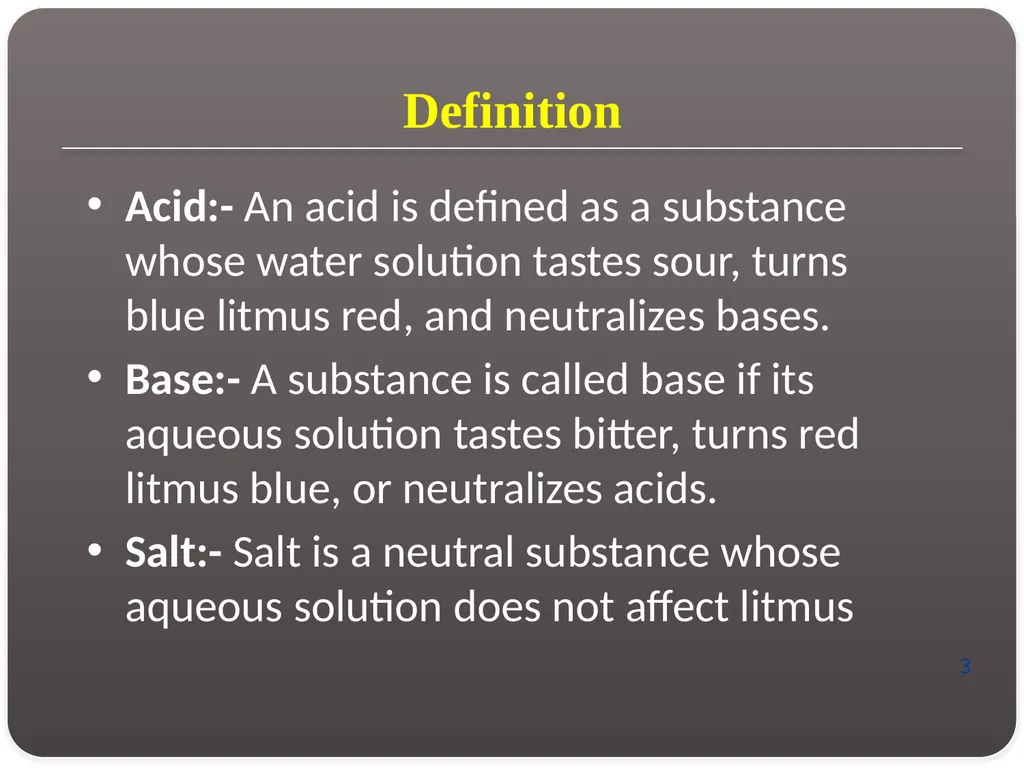
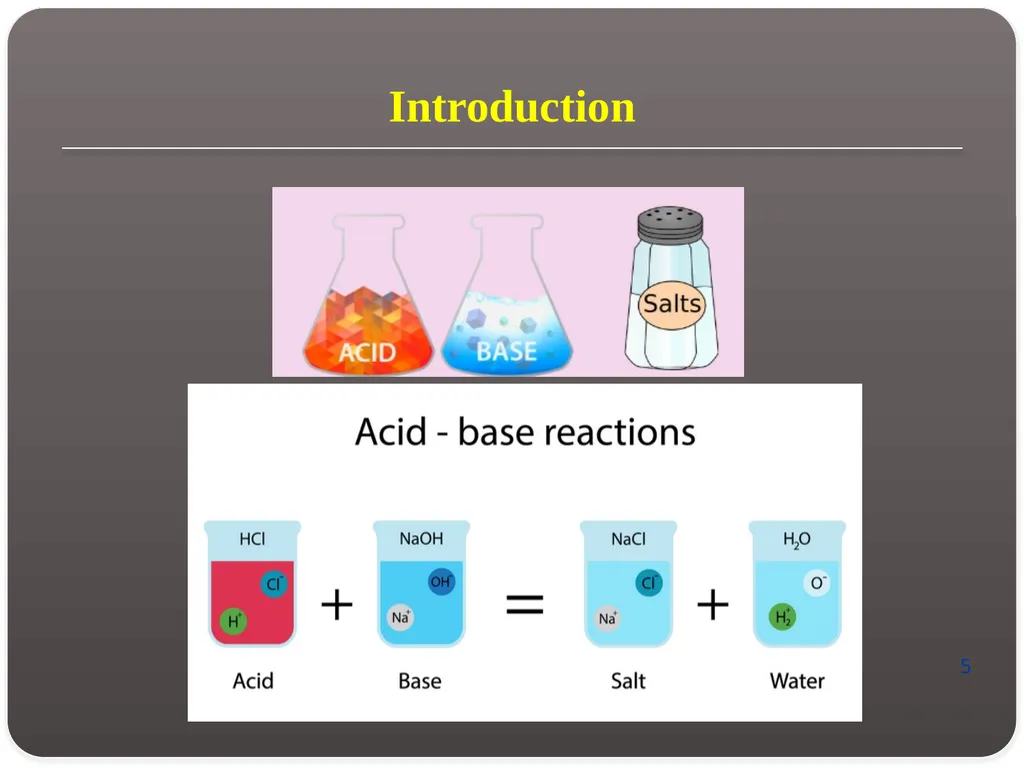
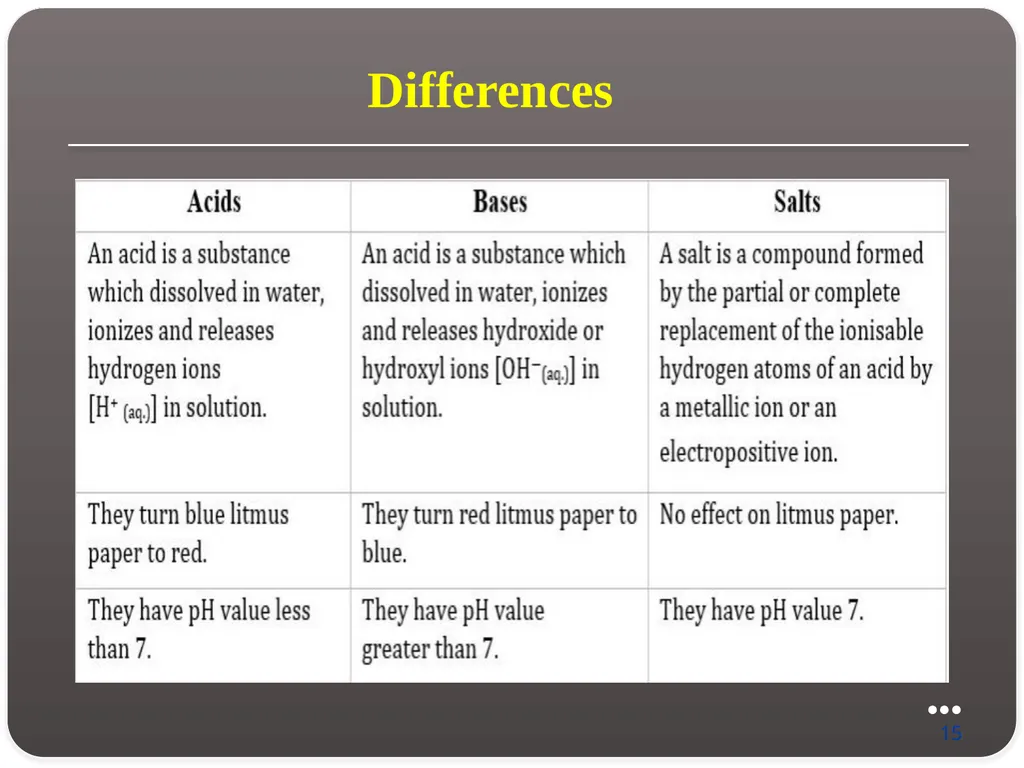
slide3. Definition Acid:- An acid is defined as a substance whose water solution tastes sour, turns blue litmus red, and neutralizes bases.
Base:- A substance is called base if its aqueous solution tastes bitter, turns red litmus blue, or neutralizes acids.
Salt:- Salt is a neutral substance whose aqueous solution does not affect litmus 3<br>
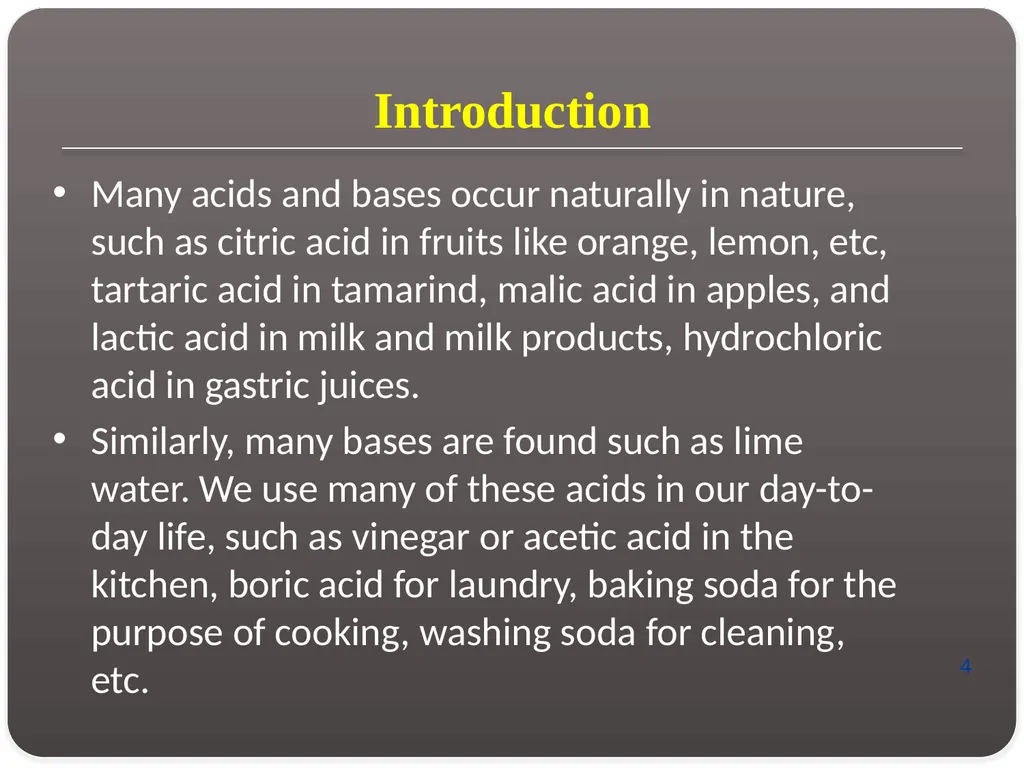
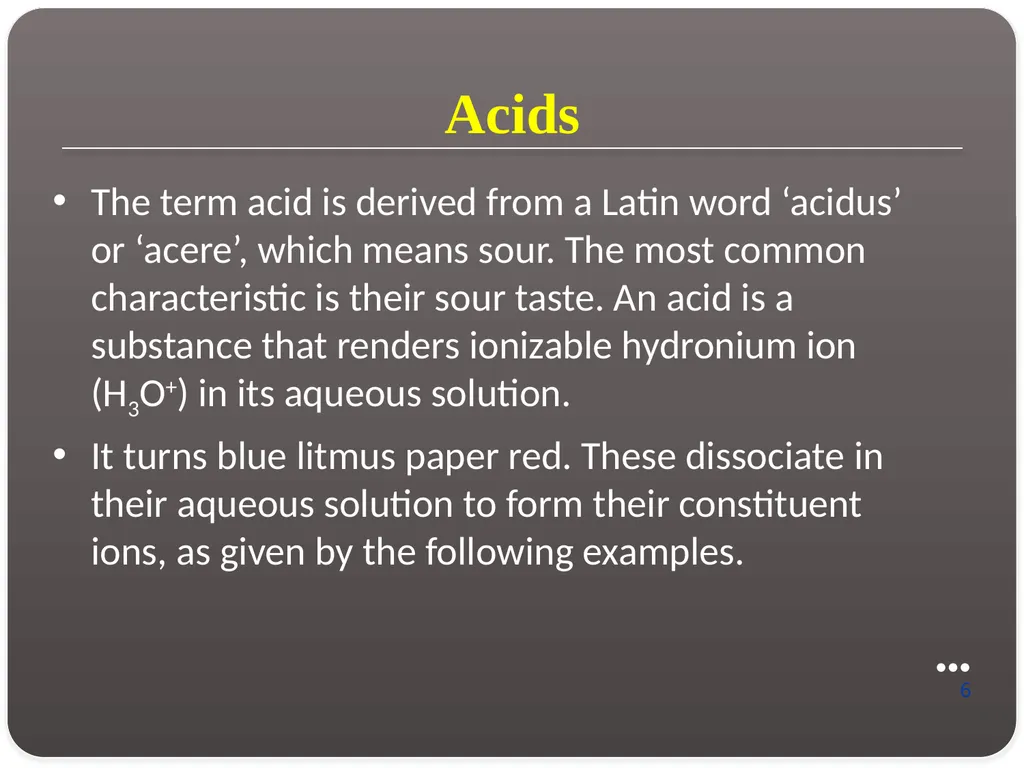
slide4. Introduction Many acids and bases occur naturally in nature, such as citric acid in fruits like orange, lemon, etc, tartaric acid in tamarind, malic acid in apples, and lactic acid in milk and milk products, hydrochloric acid in gastric juices.
Similarly, many bases are found such as lime water. We use many of these acids in our day-to-day life, such as vinegar or acetic acid in the kitchen, boric acid for laundry, baking soda for the purpose of cooking, washing soda for cleaning, etc. 4<br>
slide5. Introduction 5<br>
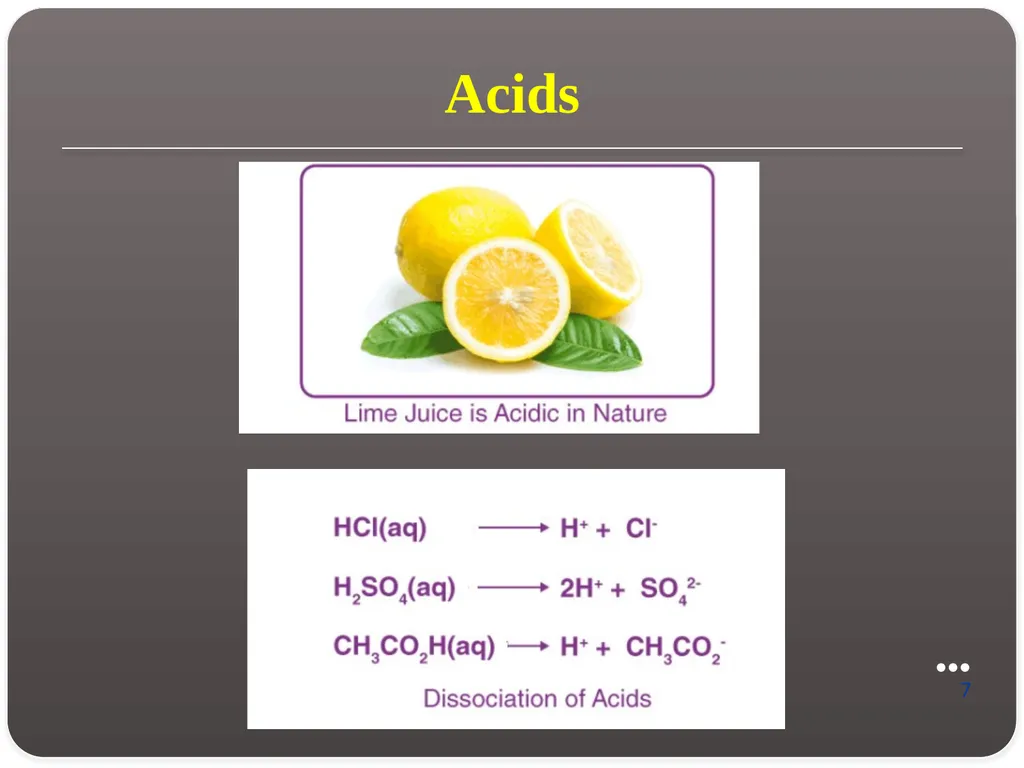
slide6. Acids The term acid is derived from a Latin word ‘acidus’ or ‘acere’, which means sour. The most common characteristic is their sour taste. An acid is a substance that renders ionizable hydronium ion (H3O+) in its aqueous solution.
It turns blue litmus paper red. These dissociate in their aqueous solution to form their constituent ions, as given by the following examples. ●●●
6<br>
slide7. Acids ●●●
7<br>
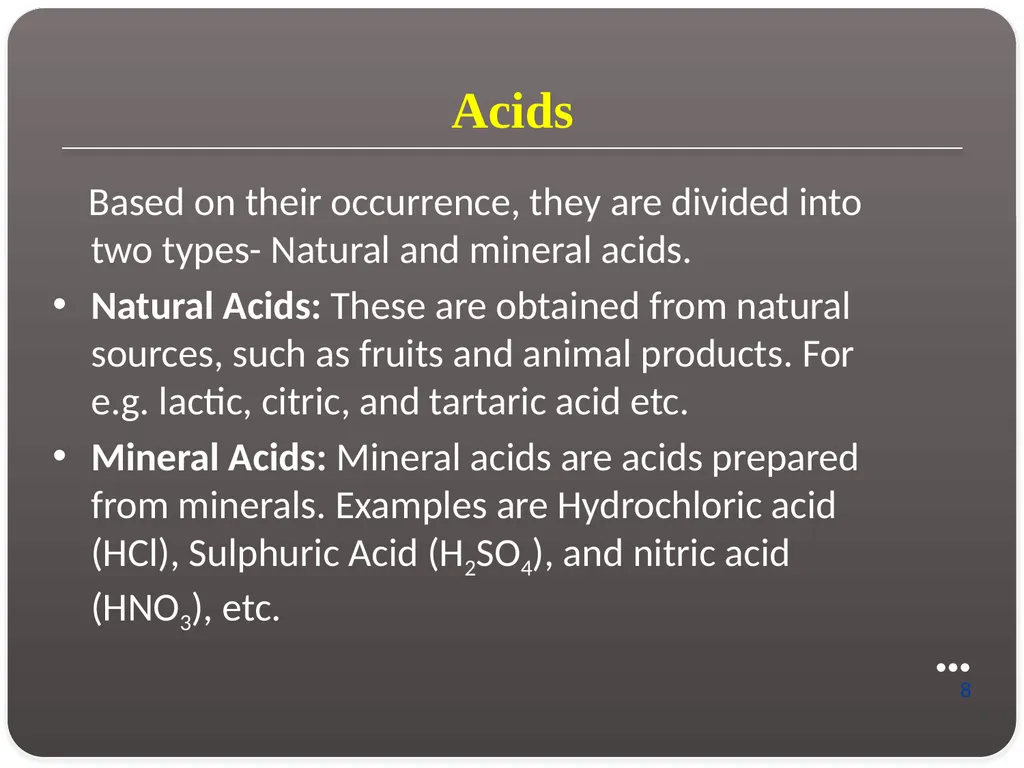
slide8. Acids Based on their occurrence, they are divided into two types- Natural and mineral acids.
Natural Acids: These are obtained from natural sources, such as fruits and animal products. For e.g. lactic, citric, and tartaric acid etc.
Mineral Acids: Mineral acids are acids prepared from minerals. Examples are Hydrochloric acid (HCl), Sulphuric Acid (H2SO4), and nitric acid (HNO3), etc. ●●●
8<br>
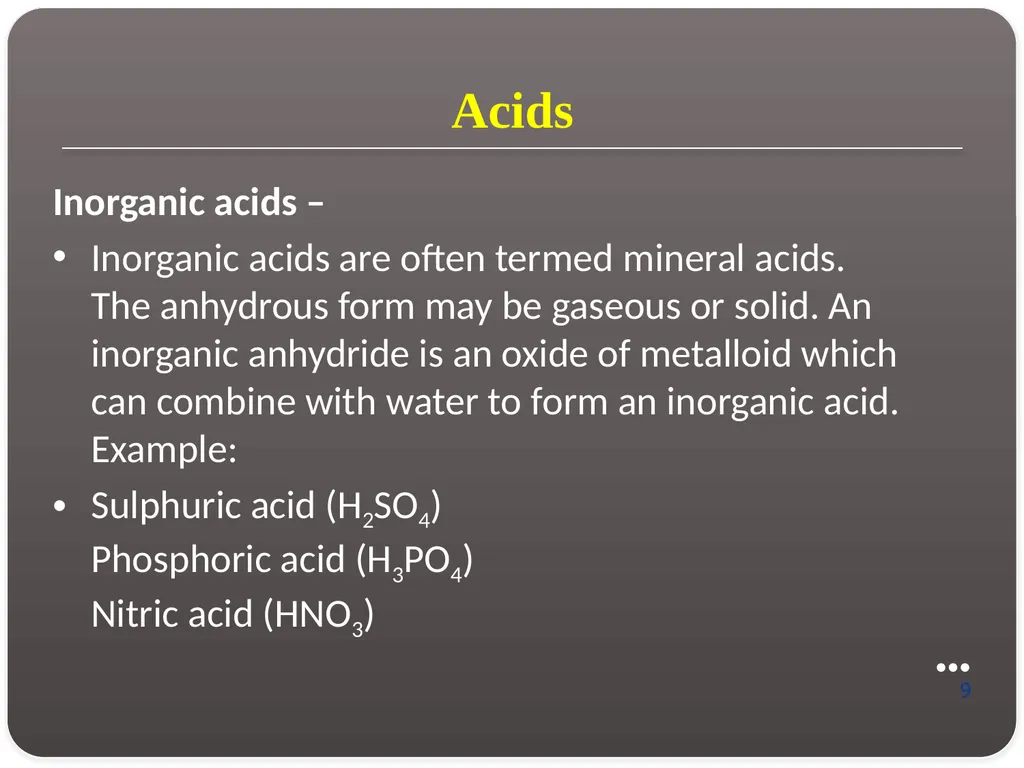
slide9. Acids Inorganic acids –
Inorganic acids are often termed mineral acids. The anhydrous form may be gaseous or solid. An inorganic anhydride is an oxide of metalloid which can combine with water to form an inorganic acid. Example:
Sulphuric acid (H2SO4) Phosphoric acid (H3PO4) Nitric acid (HNO3) ●●●
9<br>
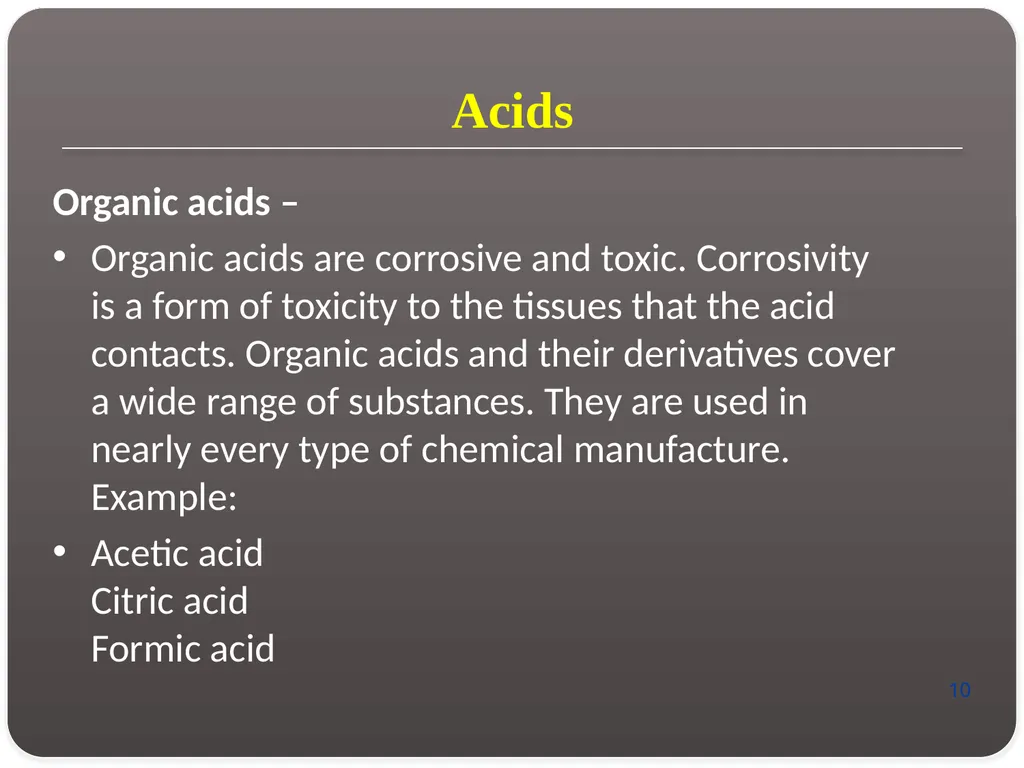
slide10. Acids Organic acids –
Organic acids are corrosive and toxic. Corrosivity is a form of toxicity to the tissues that the acid contacts. Organic acids and their derivatives cover a wide range of substances. They are used in nearly every type of chemical manufacture. Example:
Acetic acid Citric acid Formic acid 10<br>
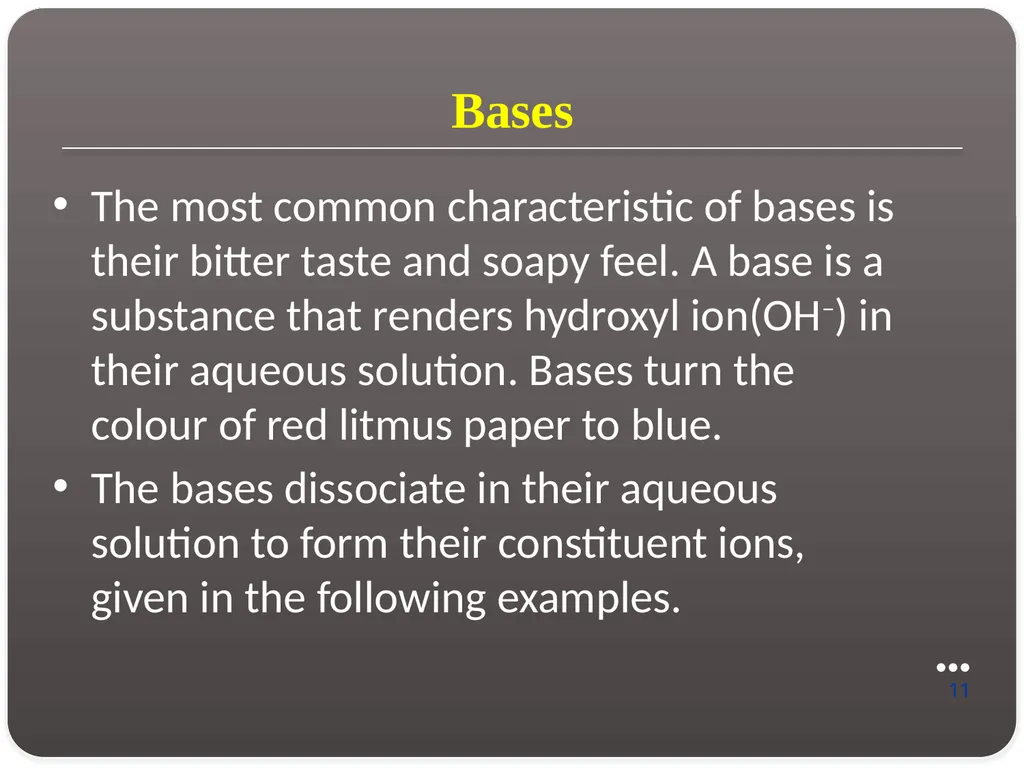
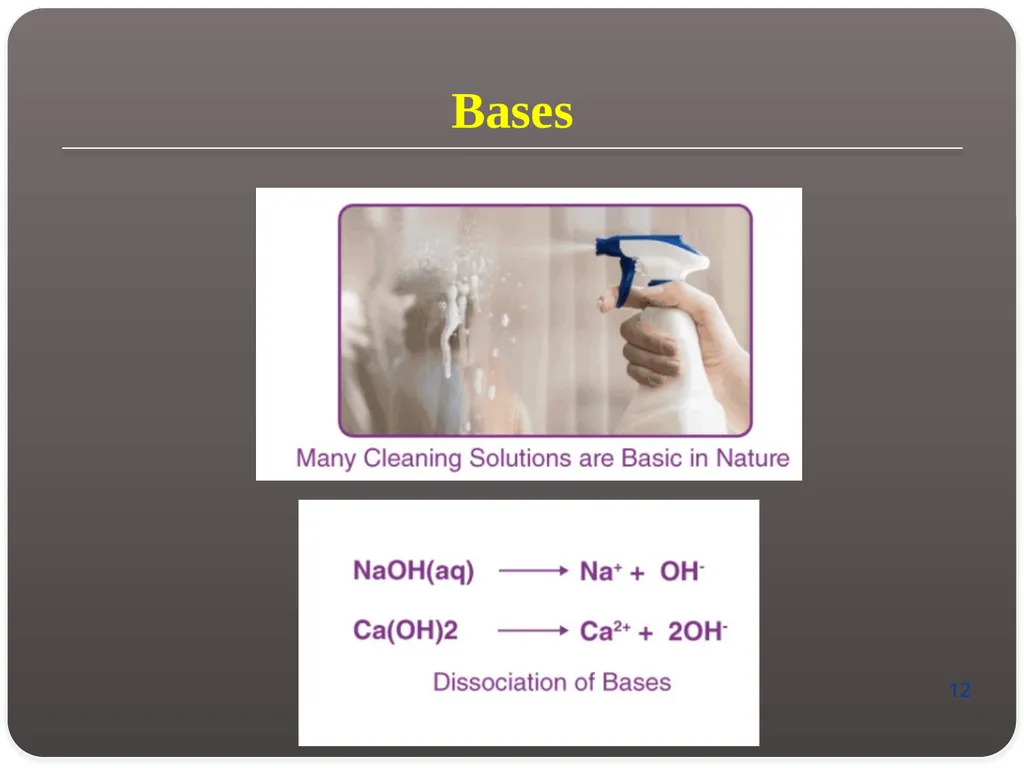
slide11. Bases The most common characteristic of bases is their bitter taste and soapy feel. A base is a substance that renders hydroxyl ion(OH–) in their aqueous solution. Bases turn the colour of red litmus paper to blue.
The bases dissociate in their aqueous solution to form their constituent ions, given in the following examples. ●●●
11<br>
slide12. Bases 12<br>
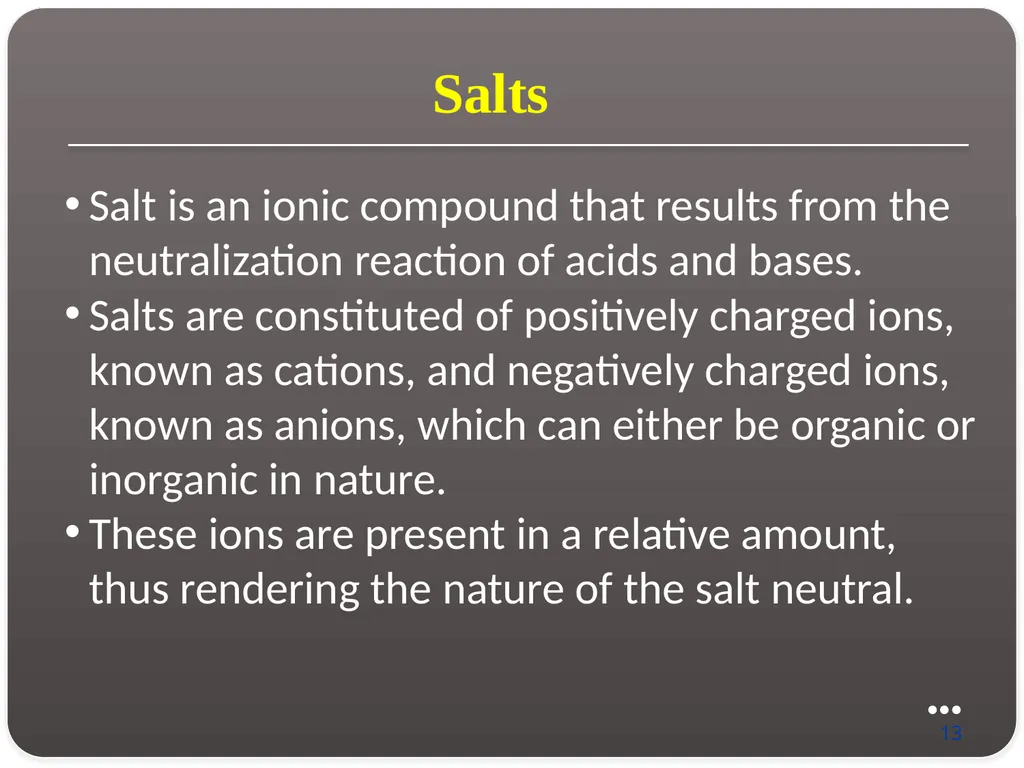
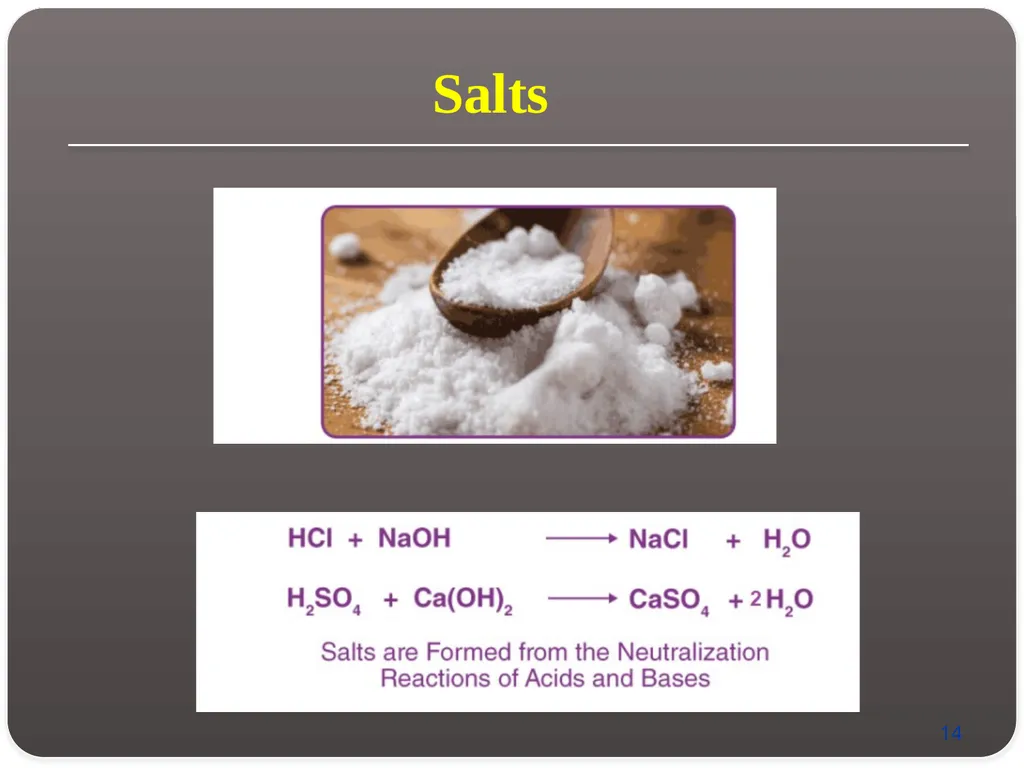
slide13. Salts Salt is an ionic compound that results from the neutralization reaction of acids and bases.
Salts are constituted of positively charged ions, known as cations, and negatively charged ions, known as anions, which can either be organic or inorganic in nature.
These ions are present in a relative amount, thus rendering the nature of the salt neutral. ●●●
13<br>
slide14. Salts 14<br>
slide15. Differences ●●●
15<br>
slide16. Conclusion Based on the information we have collected and investigated, we have come to a conclusion that acids and bases are very important to the modern society and in our daily lives.
We come in contact with acids and bases every single day, whether we realize it or not. It is in our body and in our surroundings. 16<br>
slide17. References Google.com
Wikipedia.org
Studymafia.org
Slidespanda.com<br>
slide18. Thanks To StudyMafia.org<br>
Studymafia.org Studymafia.org Acid Base and Salts<br>
slide2. Table Contents Definition
Introduction
Acids
Bases
Salts
Differences
Conclusion 2<br>
slide3. Definition Acid:- An acid is defined as a substance whose water solution tastes sour, turns blue litmus red, and neutralizes bases.
Base:- A substance is called base if its aqueous solution tastes bitter, turns red litmus blue, or neutralizes acids.
Salt:- Salt is a neutral substance whose aqueous solution does not affect litmus 3<br>
slide4. Introduction Many acids and bases occur naturally in nature, such as citric acid in fruits like orange, lemon, etc, tartaric acid in tamarind, malic acid in apples, and lactic acid in milk and milk products, hydrochloric acid in gastric juices.
Similarly, many bases are found such as lime water. We use many of these acids in our day-to-day life, such as vinegar or acetic acid in the kitchen, boric acid for laundry, baking soda for the purpose of cooking, washing soda for cleaning, etc. 4<br>
slide5. Introduction 5<br>
slide6. Acids The term acid is derived from a Latin word ‘acidus’ or ‘acere’, which means sour. The most common characteristic is their sour taste. An acid is a substance that renders ionizable hydronium ion (H3O+) in its aqueous solution.
It turns blue litmus paper red. These dissociate in their aqueous solution to form their constituent ions, as given by the following examples. ●●●
6<br>
slide7. Acids ●●●
7<br>
slide8. Acids Based on their occurrence, they are divided into two types- Natural and mineral acids.
Natural Acids: These are obtained from natural sources, such as fruits and animal products. For e.g. lactic, citric, and tartaric acid etc.
Mineral Acids: Mineral acids are acids prepared from minerals. Examples are Hydrochloric acid (HCl), Sulphuric Acid (H2SO4), and nitric acid (HNO3), etc. ●●●
8<br>
slide9. Acids Inorganic acids –
Inorganic acids are often termed mineral acids. The anhydrous form may be gaseous or solid. An inorganic anhydride is an oxide of metalloid which can combine with water to form an inorganic acid. Example:
Sulphuric acid (H2SO4) Phosphoric acid (H3PO4) Nitric acid (HNO3) ●●●
9<br>
slide10. Acids Organic acids –
Organic acids are corrosive and toxic. Corrosivity is a form of toxicity to the tissues that the acid contacts. Organic acids and their derivatives cover a wide range of substances. They are used in nearly every type of chemical manufacture. Example:
Acetic acid Citric acid Formic acid 10<br>
slide11. Bases The most common characteristic of bases is their bitter taste and soapy feel. A base is a substance that renders hydroxyl ion(OH–) in their aqueous solution. Bases turn the colour of red litmus paper to blue.
The bases dissociate in their aqueous solution to form their constituent ions, given in the following examples. ●●●
11<br>
slide12. Bases 12<br>
slide13. Salts Salt is an ionic compound that results from the neutralization reaction of acids and bases.
Salts are constituted of positively charged ions, known as cations, and negatively charged ions, known as anions, which can either be organic or inorganic in nature.
These ions are present in a relative amount, thus rendering the nature of the salt neutral. ●●●
13<br>
slide14. Salts 14<br>
slide15. Differences ●●●
15<br>
slide16. Conclusion Based on the information we have collected and investigated, we have come to a conclusion that acids and bases are very important to the modern society and in our daily lives.
We come in contact with acids and bases every single day, whether we realize it or not. It is in our body and in our surroundings. 16<br>
slide17. References Google.com
Wikipedia.org
Studymafia.org
Slidespanda.com<br>
slide18. Thanks To StudyMafia.org<br>