04
Considerations for accurate and practical sampling methods:
Sample type
Sample size
Random sampling vs. targeted sampling
Sampling duration and frequency
Sample areas/locations
Availability of diagnostic tests
Pooled testing USDA APHIS and CFSPH FAD PReP/NAHEMS Guidelines: Surveillance, Epi, and Tracing - Surveillance Part 2 Sampling Methods<br>
05
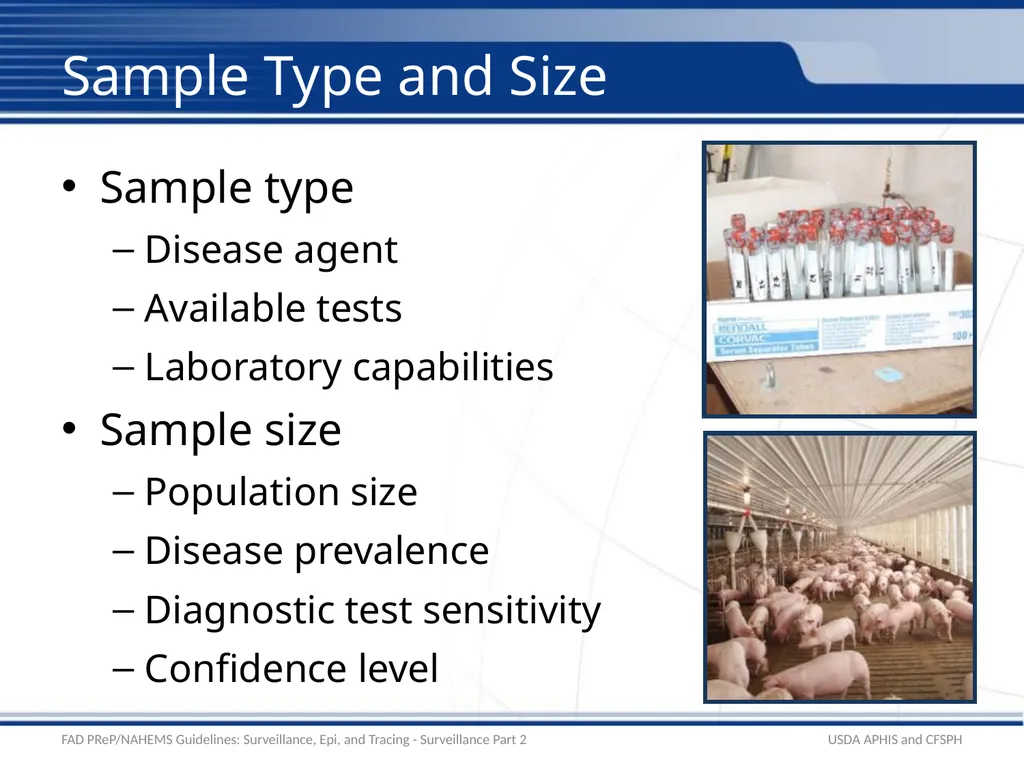
Sample type
Disease agent
Available tests
Laboratory capabilities
Sample size
Population size
Disease prevalence
Diagnostic test sensitivity
Confidence level USDA APHIS and CFSPH FAD PReP/NAHEMS Guidelines: Surveillance, Epi, and Tracing - Surveillance Part 2 Sample Type and Size<br>
06
Random sampling
Every animal in the targeted population has an equal chance of getting selected for testing
Targeted sampling
May choose animals for convenience or because a certain group has a specific risk factor or higher prevalence of disease USDA APHIS and CFSPH FAD PReP/NAHEMS Guidelines: Surveillance, Epi, and Tracing - Surveillance Part 2 Random vs. Targeted<br>
07
Comparison Random sampling Every animal has an equal chance of being selected for testing
Preferred over non-random sampling for determining prevalence or incidence of disease
Results are better extrapolated Targeted sampling Animals not chosen randomly
Usually preferred during a disease outbreak
Primary objective is to identify cases of disease
Cost effective and increases likelihood of finding new cases USDA APHIS and CFSPH FAD PReP/NAHEMS Guidelines: Surveillance, Epi, and Tracing - Surveillance Part 2<br>
08
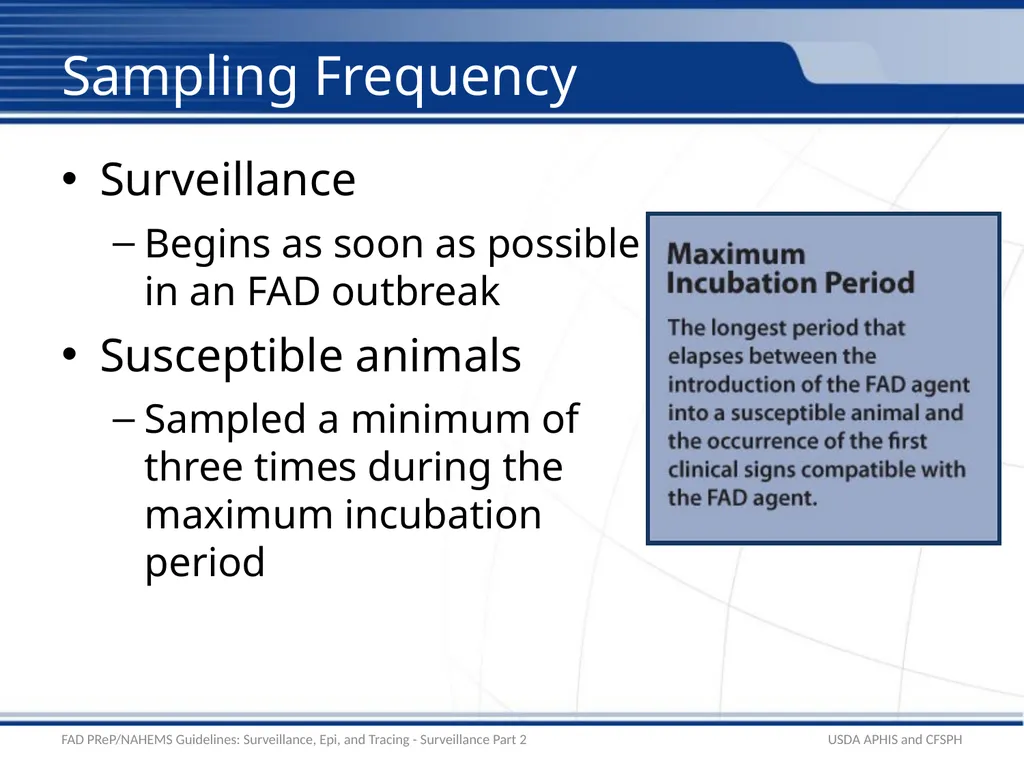
Surveillance
Begins as soon as possible in an FAD outbreak
Susceptible animals
Sampled a minimum of three times during the maximum incubation period USDA APHIS and CFSPH FAD PReP/NAHEMS Guidelines: Surveillance, Epi, and Tracing - Surveillance Part 2 Sampling Frequency<br>
09
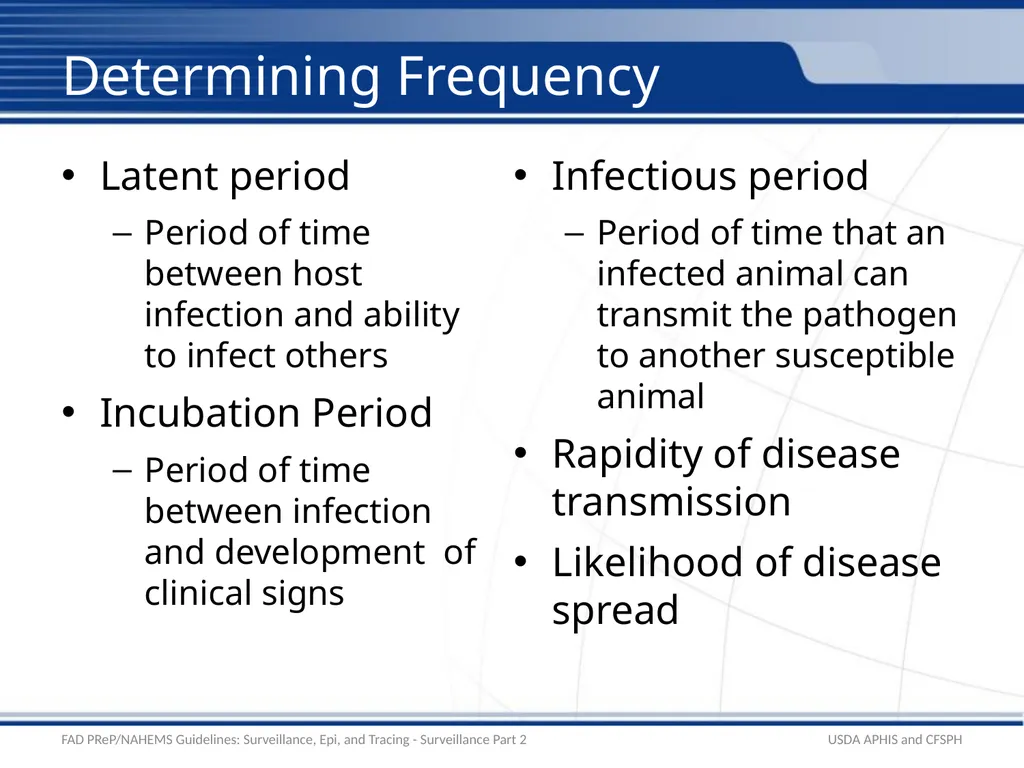
Determining Frequency Latent period
Period of time between host infection and ability to infect others
Incubation Period
Period of time between infection and development of clinical signs Infectious period
Period of time that an infected animal can transmit the pathogen to another susceptible animal
Rapidity of disease transmission
Likelihood of disease spread USDA APHIS and CFSPH FAD PReP/NAHEMS Guidelines: Surveillance, Epi, and Tracing - Surveillance Part 2<br>
10
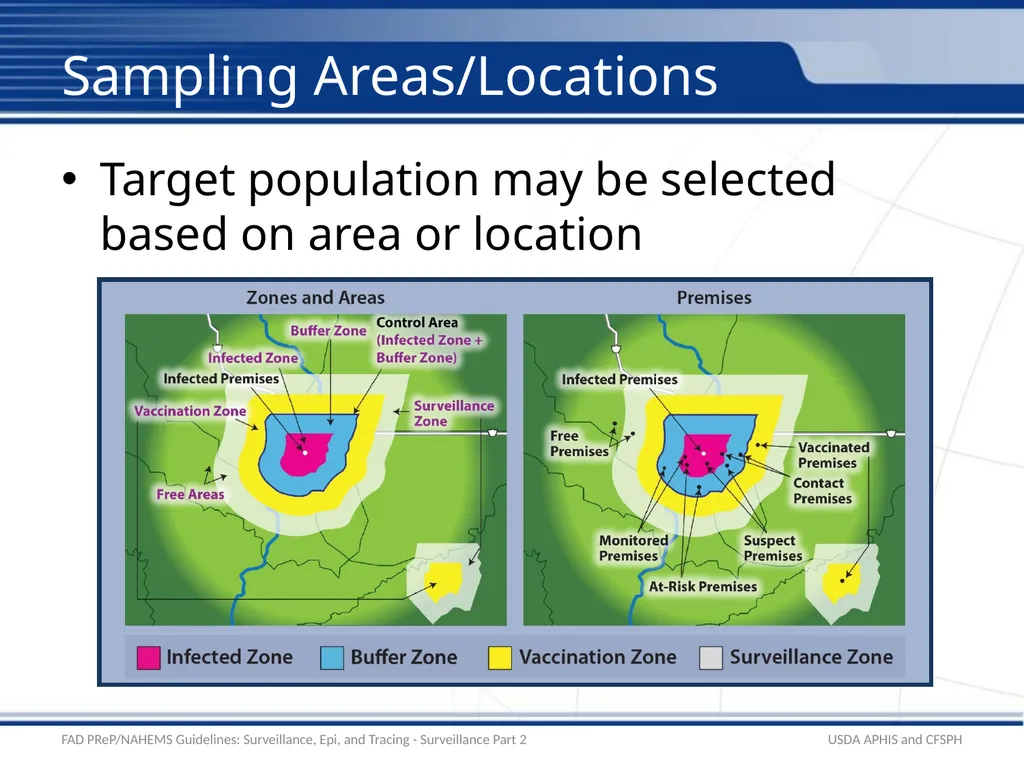
Target population may be selected based on area or location USDA APHIS and CFSPH FAD PReP/NAHEMS Guidelines: Surveillance, Epi, and Tracing - Surveillance Part 2 Sampling Areas/Locations<br>
11
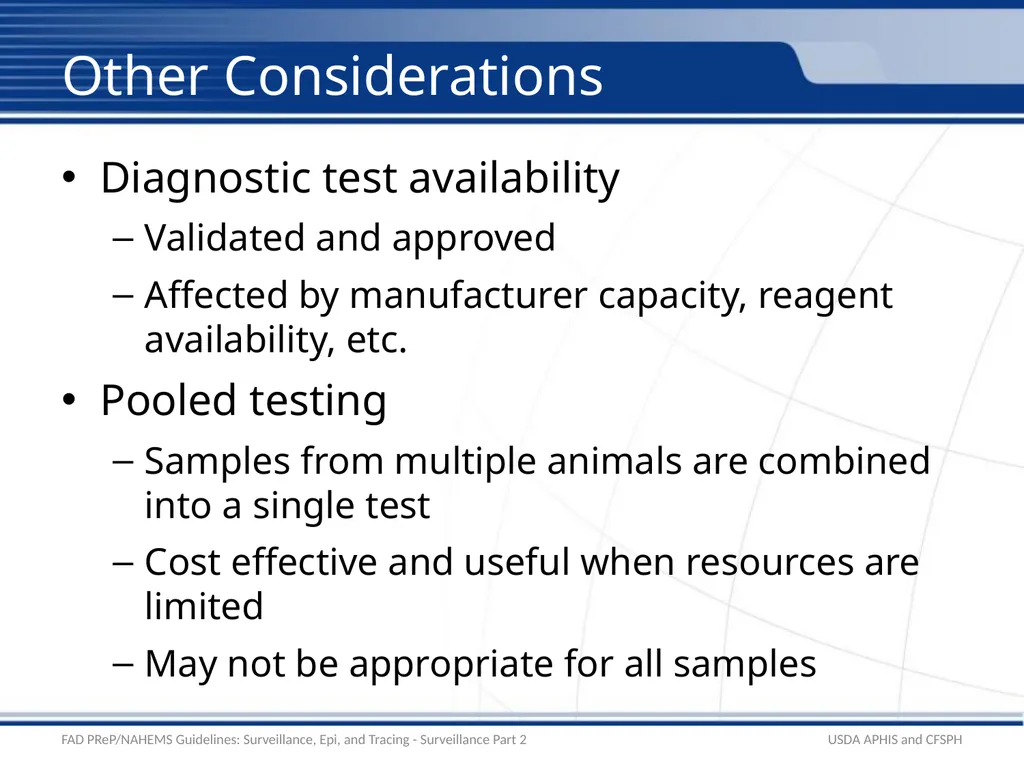
Diagnostic test availability
Validated and approved
Affected by manufacturer capacity, reagent availability, etc.
Pooled testing
Samples from multiple animals are combined into a single test
Cost effective and useful when resources are limited
May not be appropriate for all samples USDA APHIS and CFSPH FAD PReP/NAHEMS Guidelines: Surveillance, Epi, and Tracing - Surveillance Part 2 Other Considerations<br>
12
Diagnostic Tests USDA APHIS and CFSPH FAD PReP/NAHEMS Guidelines: Surveillance, Epi, and Tracing - Surveillance Part 2<br>
13
National Veterinary Services Laboratory (NVSL) determines which diagnostic tests will be used
Factors considered include:
Speed
Reliability and reproducibility
Precision and accuracy
Ease of use
Cost USDA APHIS and CFSPH FAD PReP/NAHEMS Guidelines: Surveillance, Epi, and Tracing - Surveillance Part 2 Choosing a Diagnostic Test<br>
14
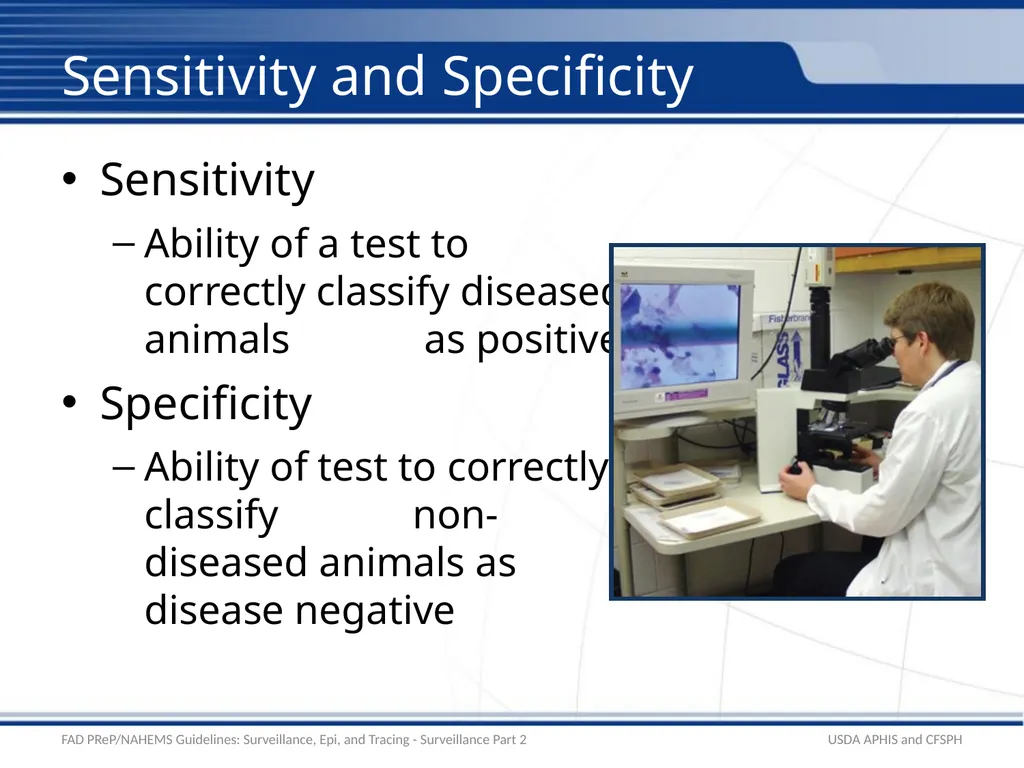
Sensitivity
Ability of a test to correctly classify diseased animals as positive
Specificity
Ability of test to correctly classify non-diseased animals as disease negative USDA APHIS and CFSPH FAD PReP/NAHEMS Guidelines: Surveillance, Epi, and Tracing - Surveillance Part 2 Sensitivity and Specificity<br>
15
Foreign Animal Disease Diagnostic Laboratory (FADDL)
Plum Island, NY
National Veterinary Services Laboratories (NVSL)
Ames, IA
National Animal Health Laboratory Network (NAHLN)
Various approved laboratories USDA APHIS and CFSPH FAD PReP/NAHEMS Guidelines: Surveillance, Epi, and Tracing - Surveillance Part 2 Laboratory Capacity<br>
16
Diagnostic Sample Collection USDA APHIS and CFSPH FAD PReP/NAHEMS Guidelines: Surveillance, Epi, and Tracing - Surveillance Part 2<br>
17
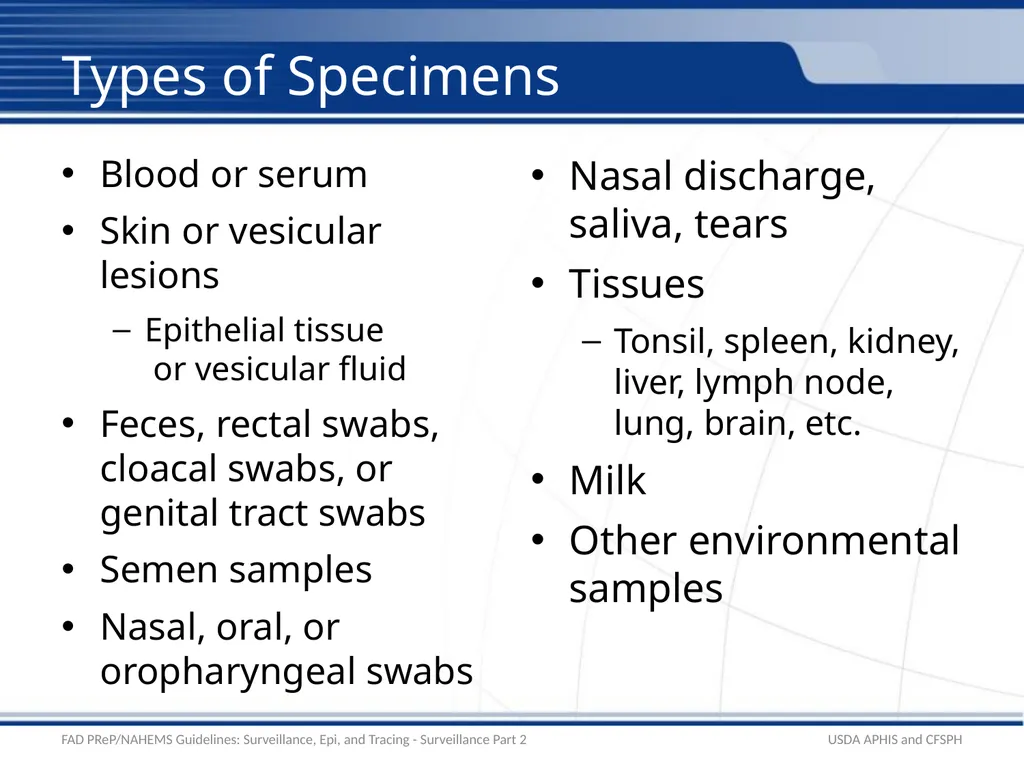
Types of Specimens Blood or serum
Skin or vesicular lesions
Epithelial tissue or vesicular fluid
Feces, rectal swabs, cloacal swabs, or genital tract swabs
Semen samples
Nasal, oral, or oropharyngeal swabs Nasal discharge, saliva, tears
Tissues
Tonsil, spleen, kidney, liver, lymph node, lung, brain, etc.
Milk
Other environmental samples USDA APHIS and CFSPH FAD PReP/NAHEMS Guidelines: Surveillance, Epi, and Tracing - Surveillance Part 2<br>
18
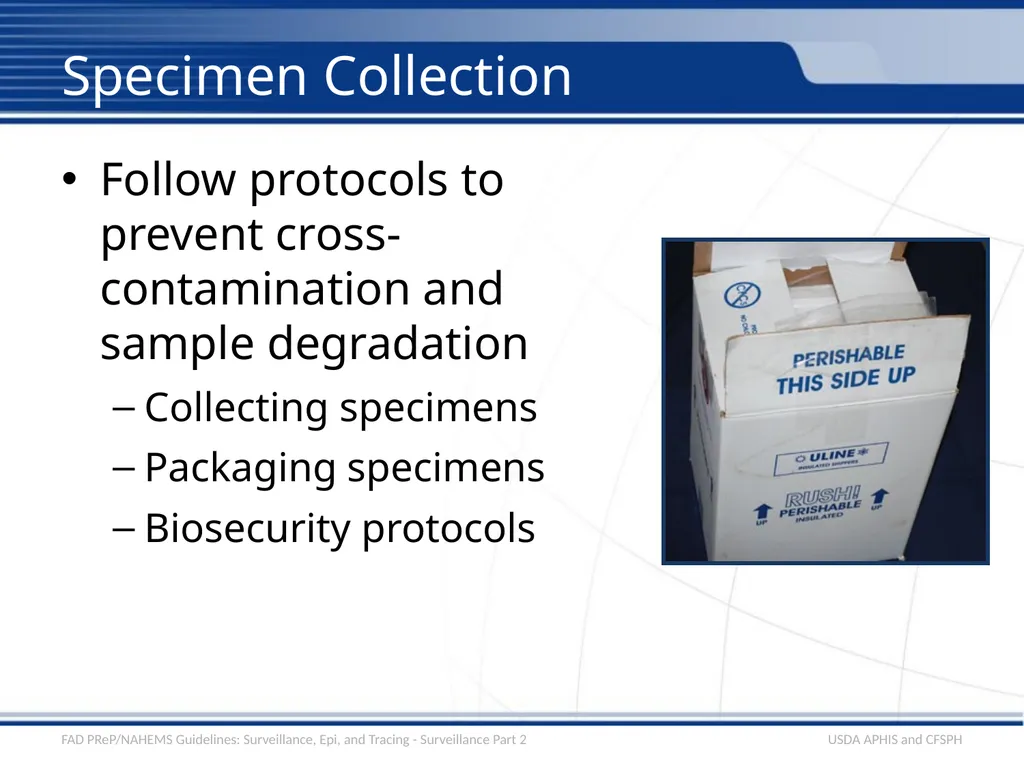
Follow protocols to prevent cross- contamination and sample degradation
Collecting specimens
Packaging specimens
Biosecurity protocols USDA APHIS and CFSPH FAD PReP/NAHEMS Guidelines: Surveillance, Epi, and Tracing - Surveillance Part 2 Specimen Collection<br>
19
Demonstrating freedom from infection is part of a surveillance plan
Freedom from infection
Implies the absence of the pathogen in a country, zone or compartment
Must be demonstrated to the World Organization for Animal Health (OIE)
Standards outlined in Chapter 1.4 of the OIE Terrestrial Animal Health Code USDA APHIS and CFSPH FAD PReP/NAHEMS Guidelines: Surveillance, Epi, and Tracing - Surveillance Part 2 Freedom from Infection<br>
20
Surveillance Planning Resources USDA APHIS and CFSPH FAD PReP/NAHEMS Guidelines: Surveillance, Epi, and Tracing - Surveillance Part 2<br>
21
Outbreak Surveillance Toolbox
Assists in surveillance plan development
Provides:
Case definitions and case classifications
Premises classifications
Disease control zones
Sampling plans USDA APHIS and CFSPH FAD PReP/NAHEMS Guidelines: Surveillance, Epi, and Tracing - Surveillance Part 2 Planning Resources<br>
22
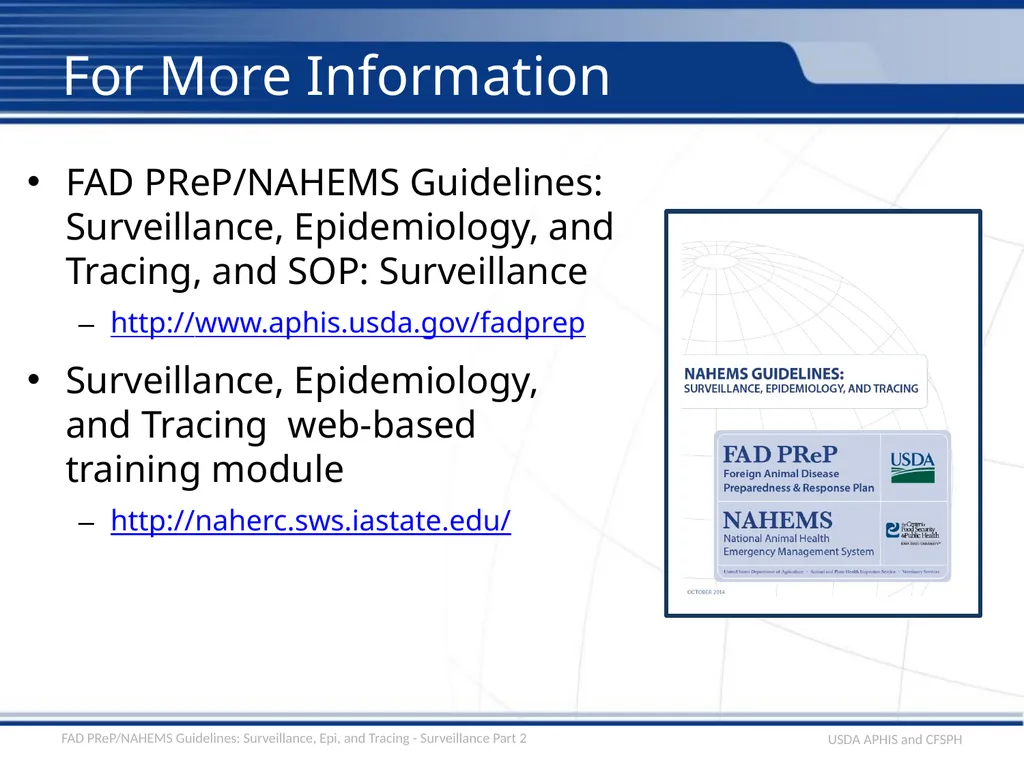
FAD PReP/NAHEMS Guidelines: Surveillance, Epidemiology, and Tracing, and SOP: Surveillance
http://www.aphis.usda.gov/fadprep
Surveillance, Epidemiology, �and Tracing web-based �training module
http://naherc.sws.iastate.edu/ USDA APHIS and CFSPH FAD PReP/NAHEMS Guidelines: Surveillance, Epi, and Tracing - Surveillance Part 2 For More Information<br>
23
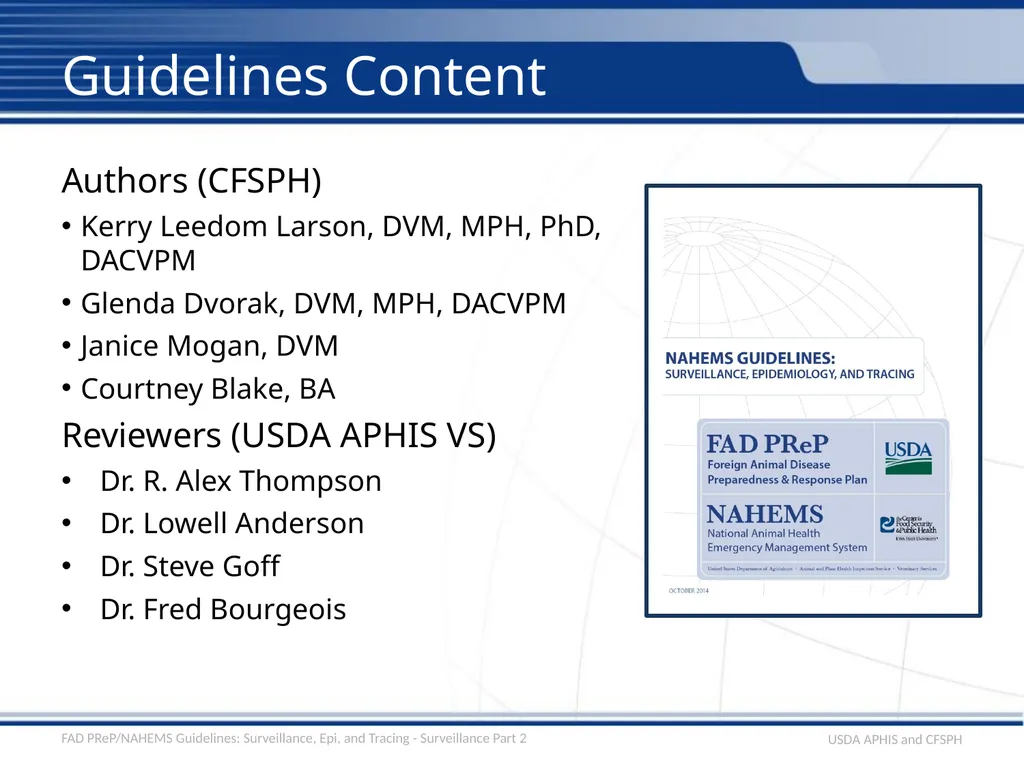
Authors (CFSPH)
Kerry Leedom Larson, DVM, MPH, PhD, DACVPM
Glenda Dvorak, DVM, MPH, DACVPM
Janice Mogan, DVM
Courtney Blake, BA
Reviewers (USDA APHIS VS)
Dr. R. Alex Thompson
Dr. Lowell Anderson
Dr. Steve Goff
Dr. Fred Bourgeois USDA APHIS and CFSPH FAD PReP/NAHEMS Guidelines: Surveillance, Epi, and Tracing - Surveillance Part 2 Guidelines Content<br>
24
Acknowledgments Development of this presentation was by the Center for Food Security and Public Health at Iowa State University through funding from the USDA APHIS Veterinary Services PPT Authors: Patricia Futoma, Veterinary Student; Kerry Leedom Larson, DVM, MPH, PhD, DACVPM
Reviewers: Janice Mogan, DVM; Melissa Lang, BS<br>