The Rhetorical Triangle: Ethos, Pathos, Logos Ethos Ethos is the credibility of the speaker or writer. In order to engage an audience on a particular topic, the person presenting the information must first establish him or herself as
"The Rhetorical Triangle: Ethos, Pathos, Logos" is the property of its rightful owner. Permission is granted to
download and print the materials on this website for personal, non-commercial use only, and to display it
on your personal computer provided you do not modify the materials and that you retain all copyright
notices contained in the materials. By downloading content from our website, you accept the terms of this
agreement.
Presentation Transcript
01
The Rhetorical Triangle:
Ethos, Pathos, Logos<br>
02
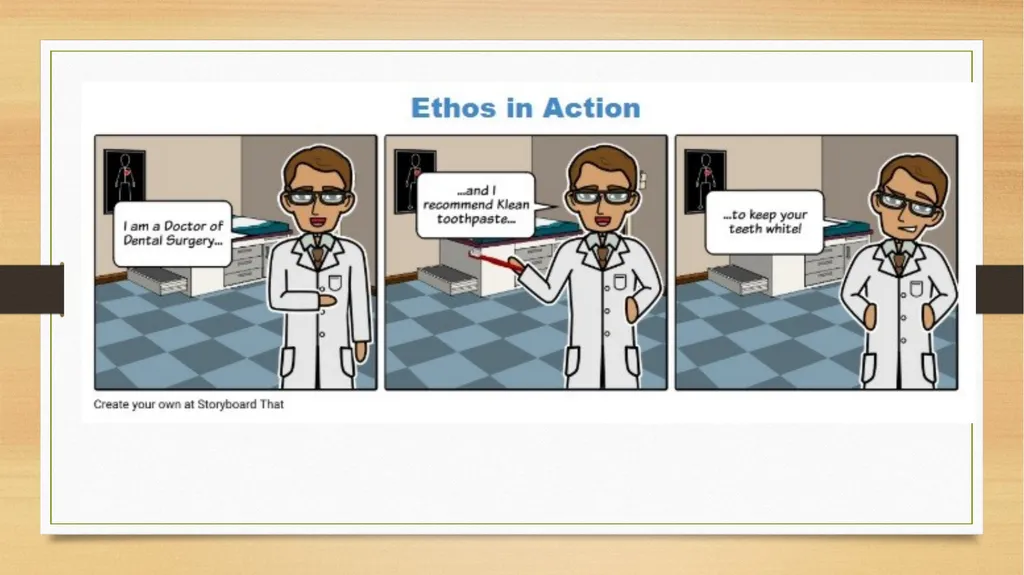
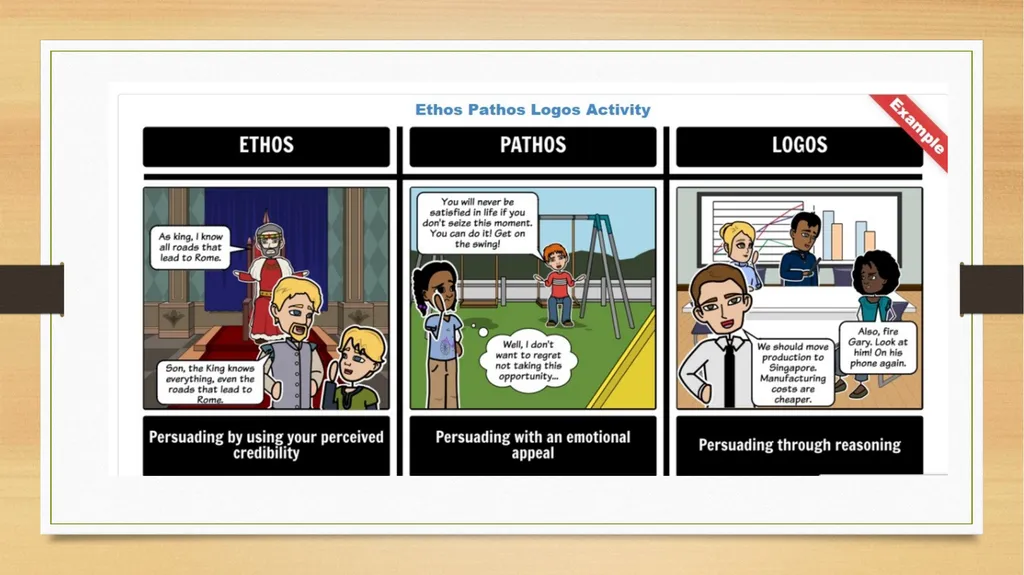
Ethos Ethos is the credibility of the speaker or writer. In order to engage an audience on a particular topic, the person presenting the information must first establish him or herself as someone that can be trusted, or as someone who has a lot of experience with the topic. This is also known as ethics.<br>
03
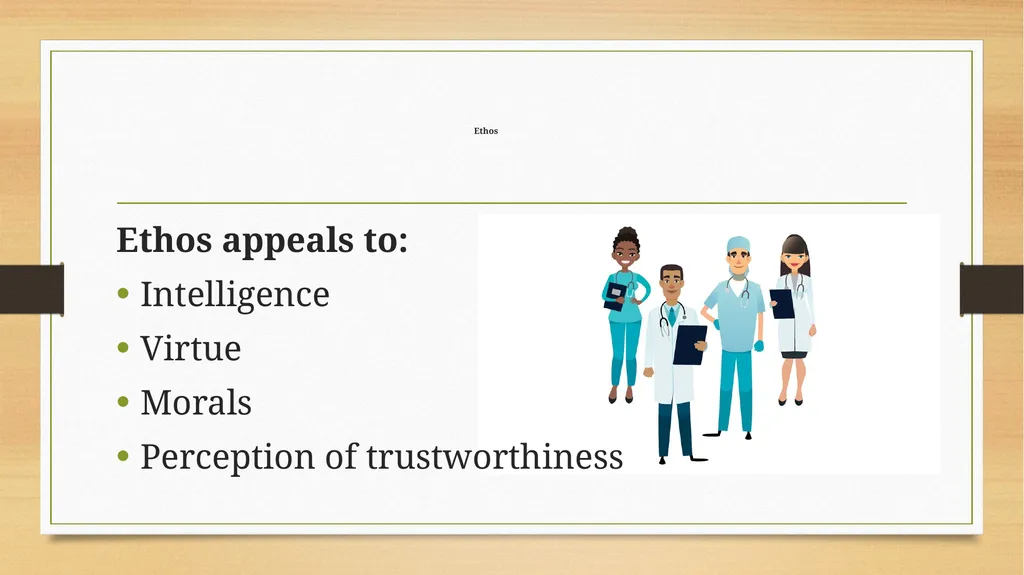
Ethos Ethos appeals to:
Intelligence
Virtue
Morals
Perception of trustworthiness<br>
04
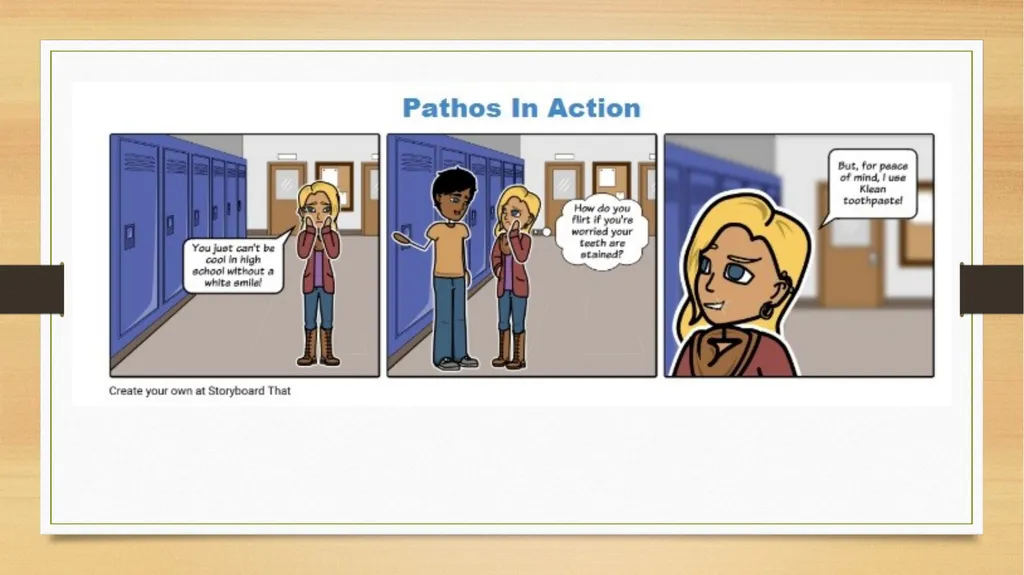
Pathos Pathos accesses the emotions and deeply held beliefs of the audience to draw them into the subject matter. Pathos often makes audiences feel like they have a personal stake in the information being provided and is often the catalyst that drives them into action.<br>
05
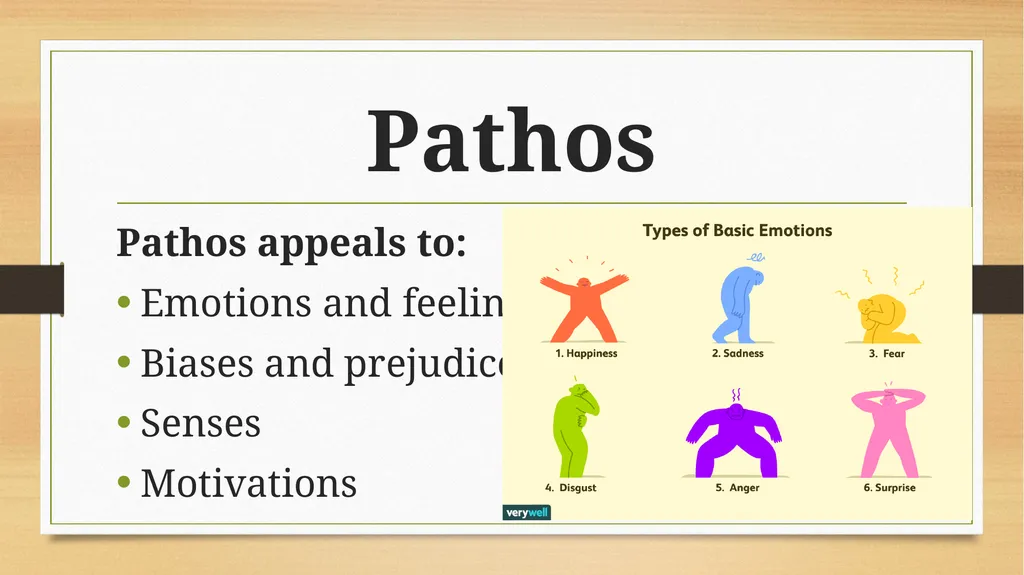
Pathos Pathos appeals to:
Emotions and feelings
Biases and prejudices
Senses
Motivations<br>
06
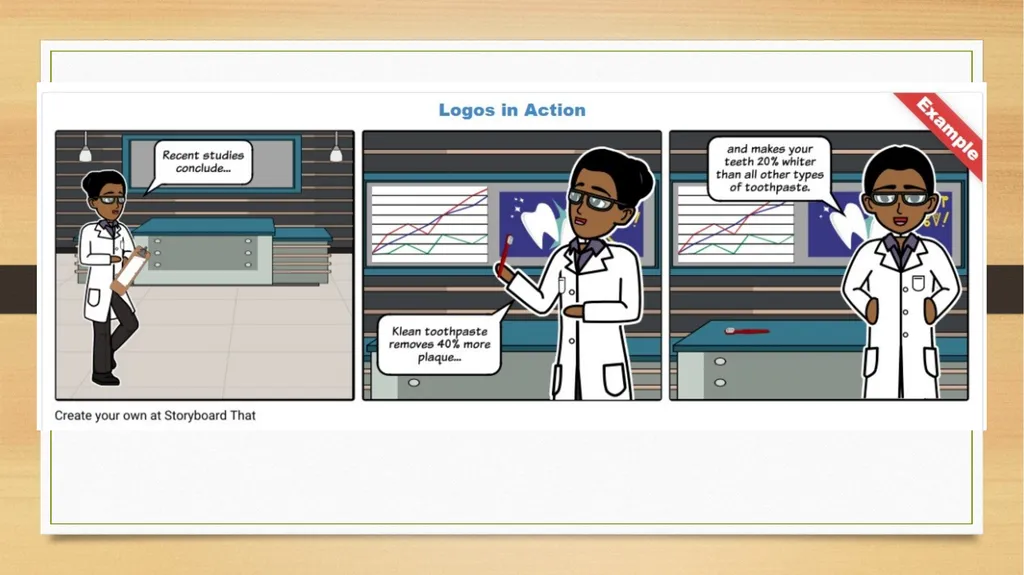
Logos Logos uses logic, reasoning, evidence, and facts to support an argument. Logos appeals to the more rational side of the audience’s minds, and provides support for the subject matter. Logos strategies can often be used to strengthen the impact pathos has on the audience.<br>
07
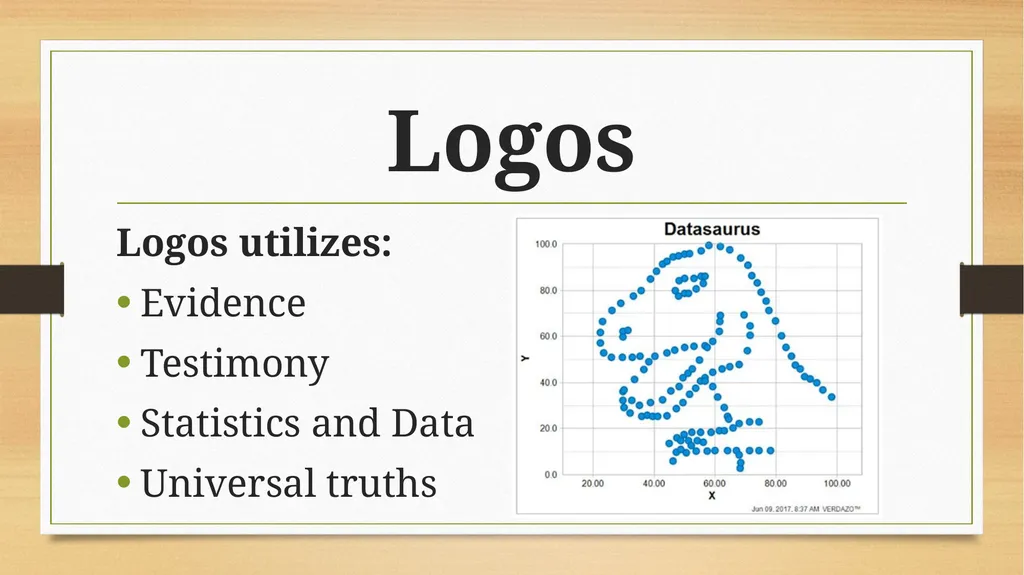
Logos Logos utilizes:
Evidence
Testimony
Statistics and Data
Universal truths<br>
08
The End? By recognizing the tactics of a persuasive argument, students learn to utilize it themselves and recognize these tactics in daily life.<br>
09
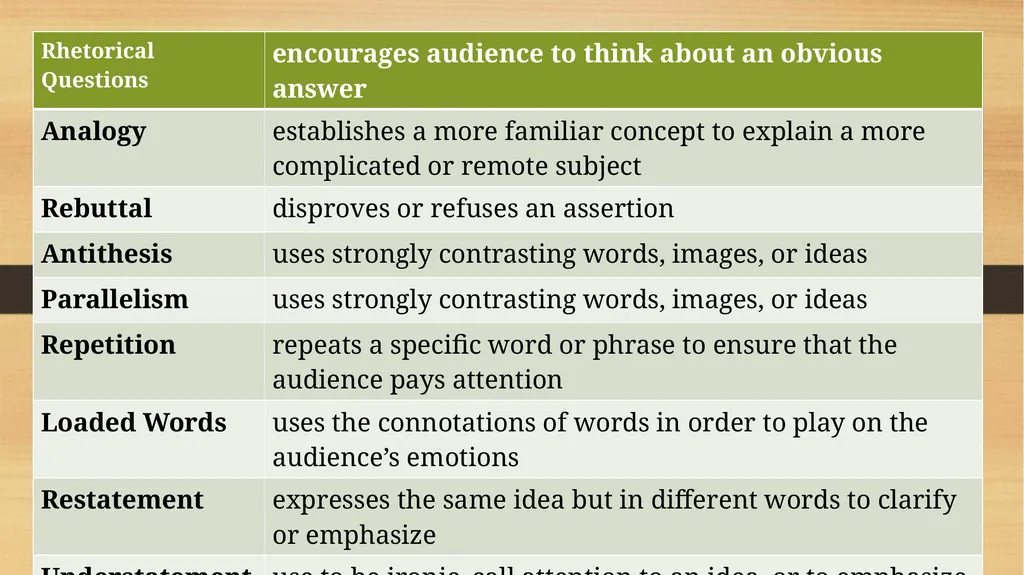
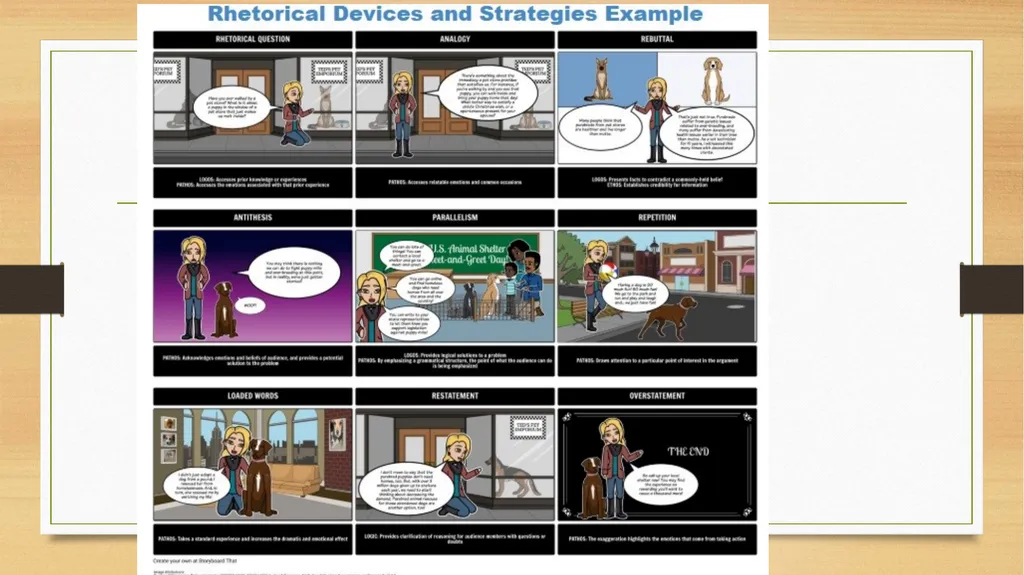
Rhetorical Strategies and Devices The successful implementation of ethos, pathos, and logos in writing or speech depends on the effectiveness of different rhetorical strategies. There are many different rhetorical strategies (and rhetorical fallacies!) that can strengthen or weaken an argument. A few of the more familiar strategies to students include:<br>
10
Assignment Use storyboards to create advertisements for products using Ethos, Pathos, or Logos to convince potential buyers.
Use a storyboard to create an “argument diagram” of a famous speech. Students can break the speech up into tactics, then show an example of those tactics in each cell.
Ask students to create a persuasive storyboard about a topic that is important to them. Require them to use one, or all, of the tactics in the rhetorical triangle.
Have students collaborate and promote an unpopular school rule, consequence, homework, or even cafeteria food. Have them utilize rhetorical tactics and strategies in their promotion. Having to flip a negative idea into a positive one is also a great way to teach propaganda.
Give students an empty storyboard as part of an assessment and ask them to explain and give an example of each: ethos, pathos, logos.<br>