TRAINING OBJECTIVES Understand the I Welcome global campaign and AIUK campaign priorities Understand the issues surrounding the refugee crisis and be able to effectively communicate these to others Gain skills, awareness and confidence to
"TRAINING OBJECTIVES Understand the I Welcome" is the property of its rightful owner. Permission is granted to
download and print the materials on this website for personal, non-commercial use only, and to display it
on your personal computer provided you do not modify the materials and that you retain all copyright
notices contained in the materials. By downloading content from our website, you accept the terms of this
agreement.
Presentation Transcript
01
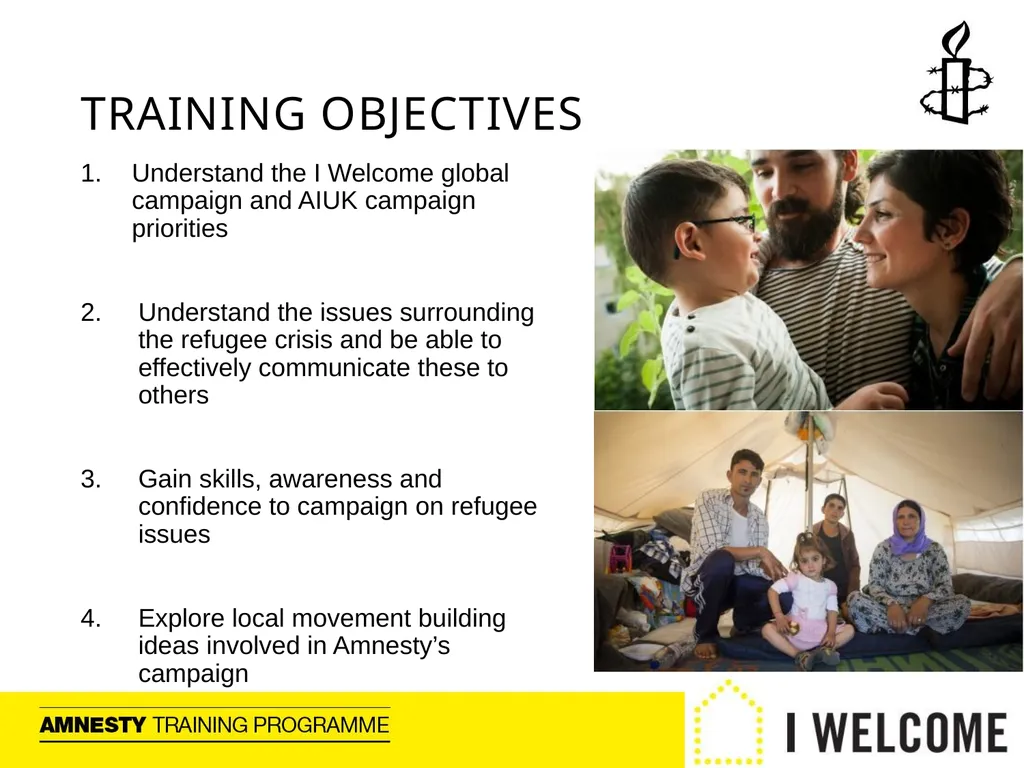
TRAINING OBJECTIVES Understand the I Welcome global campaign and AIUK campaign priorities
Understand the issues surrounding the refugee crisis and be able to effectively communicate these to others
Gain skills, awareness and confidence to campaign on refugee issues
Explore local movement building ideas involved in Amnesty’s campaign<br>
02
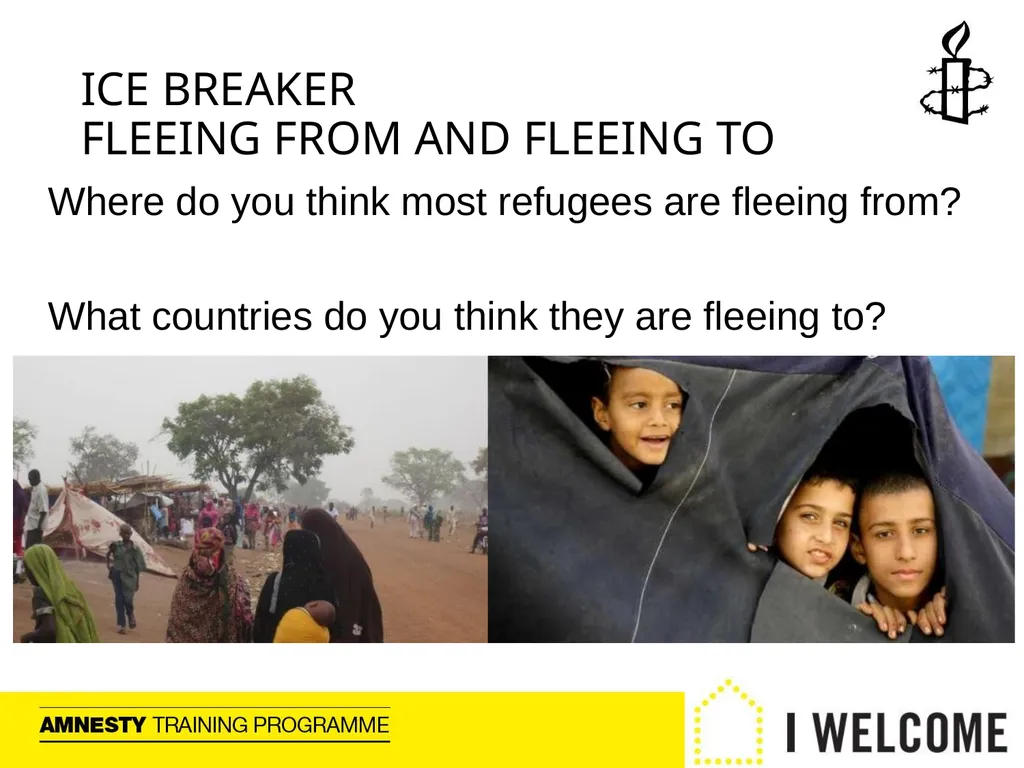
Ice breaker Fleeing from and fleeing to Where do you think most refugees are fleeing from?
What countries do you think they are fleeing to?<br>
03
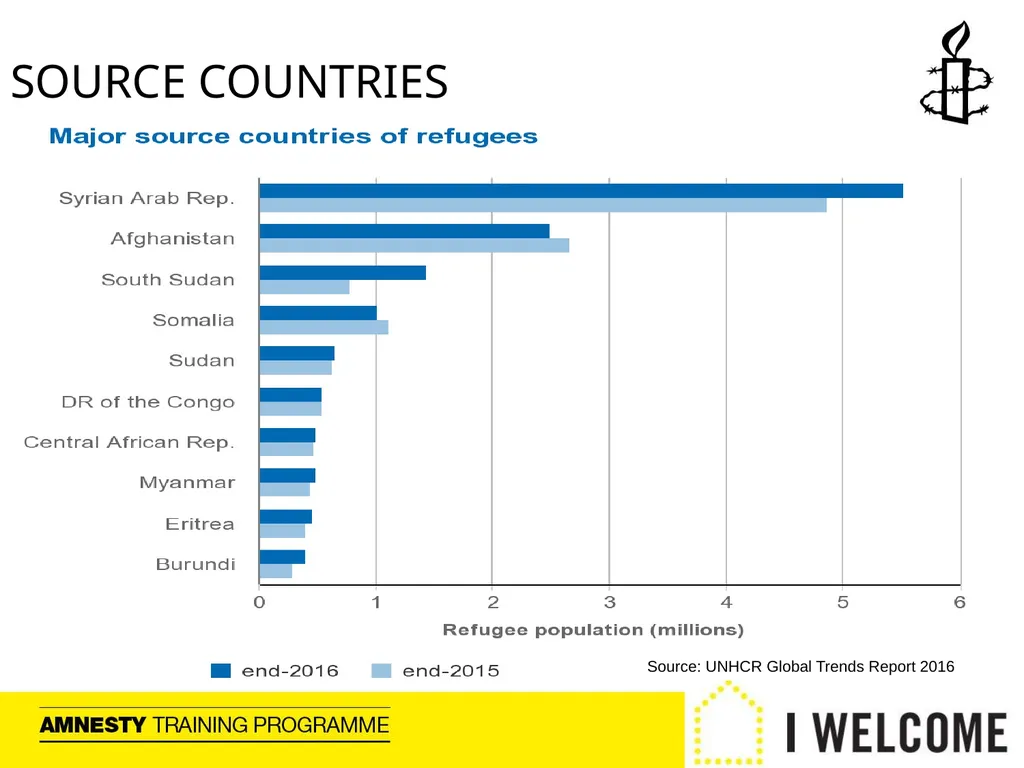
Source Countries Source: UNHCR Global Trends Report 2016<br>
04
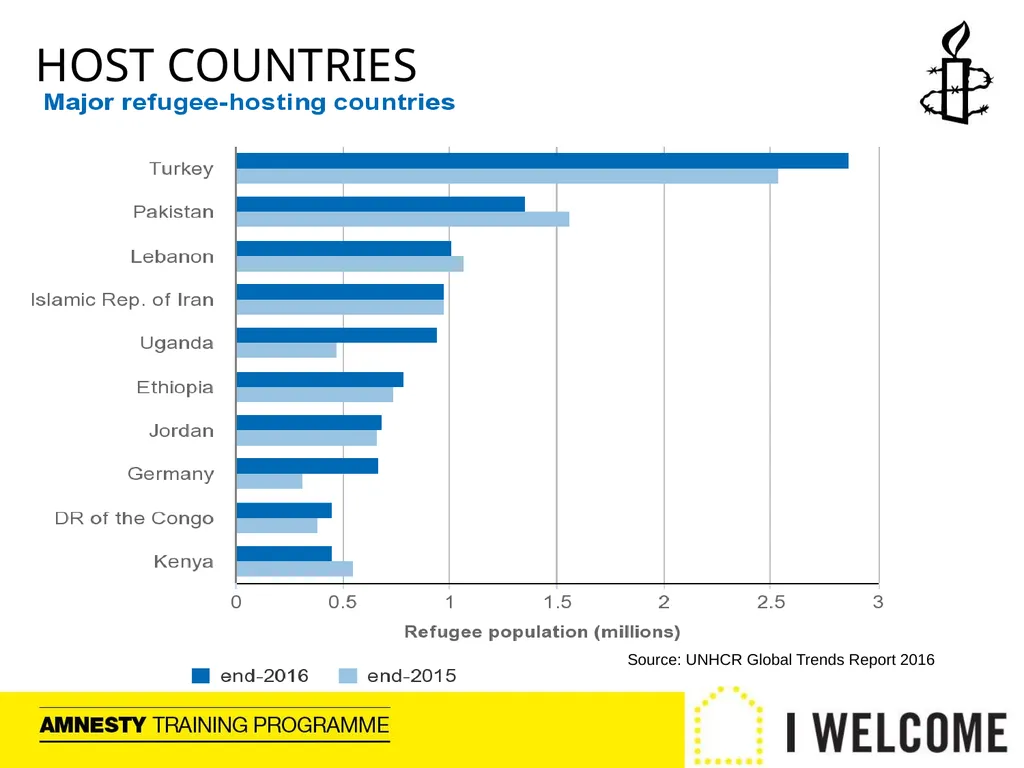
Host Countries Source: UNHCR Global Trends Report 2016<br>
05
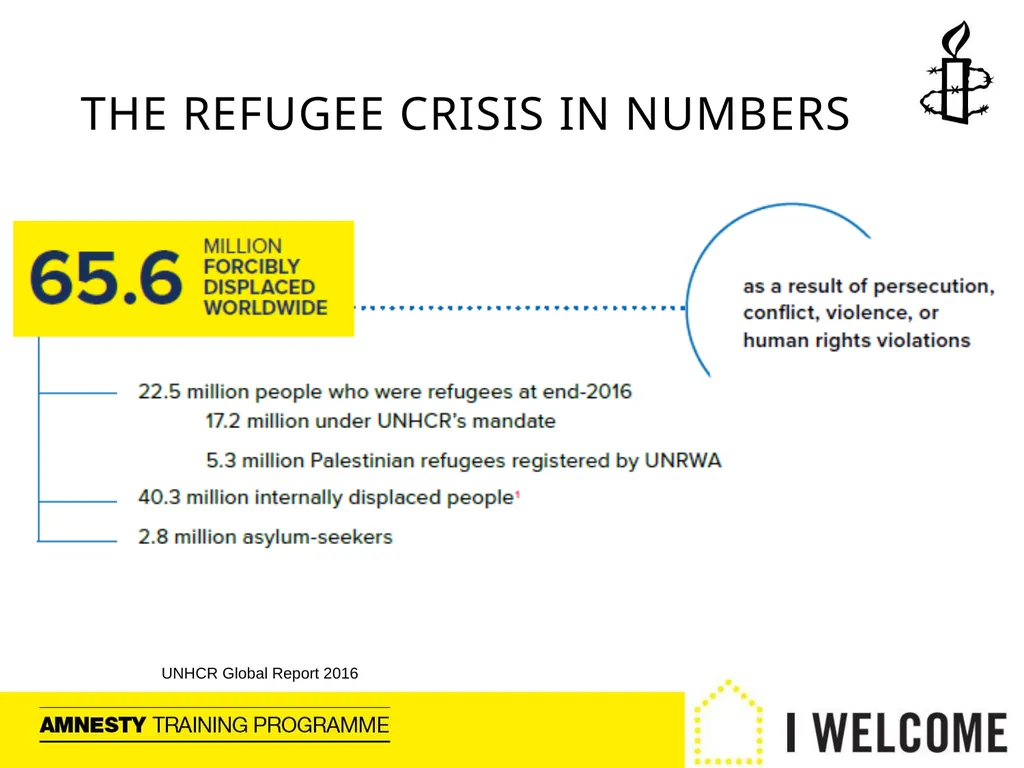
The refugee crisis in numbers UNHCR Global Report 2016<br>
06
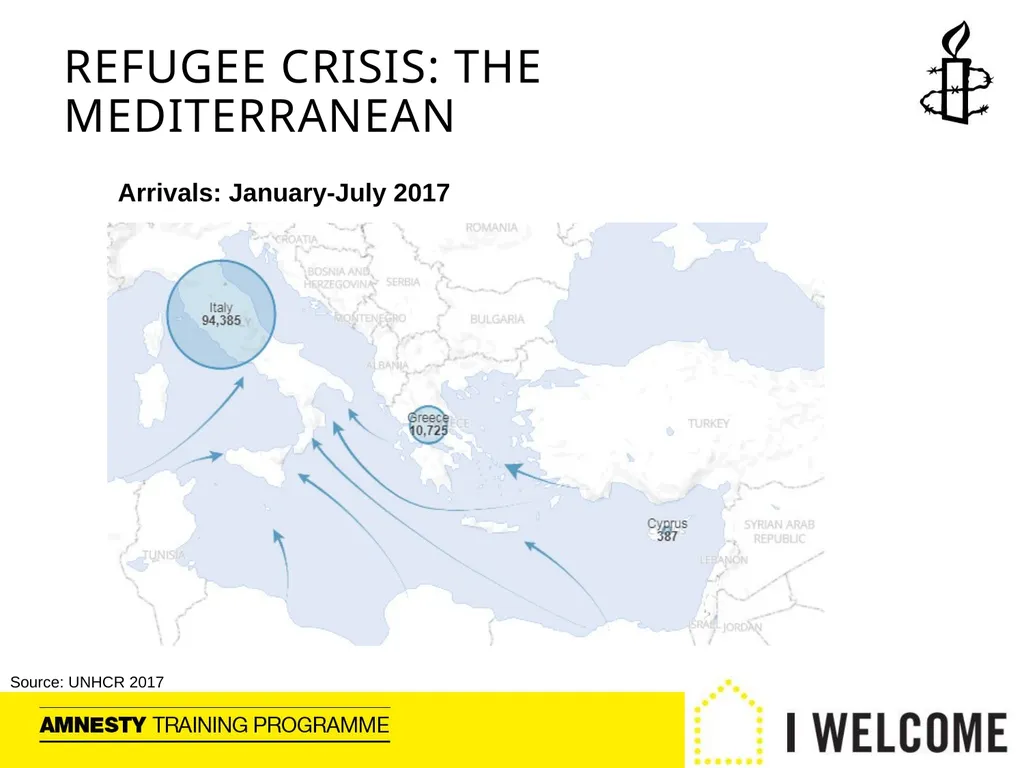
refugee crisis: The Mediterranean Source: UNHCR 2017 Arrivals: January-July 2017<br>
07
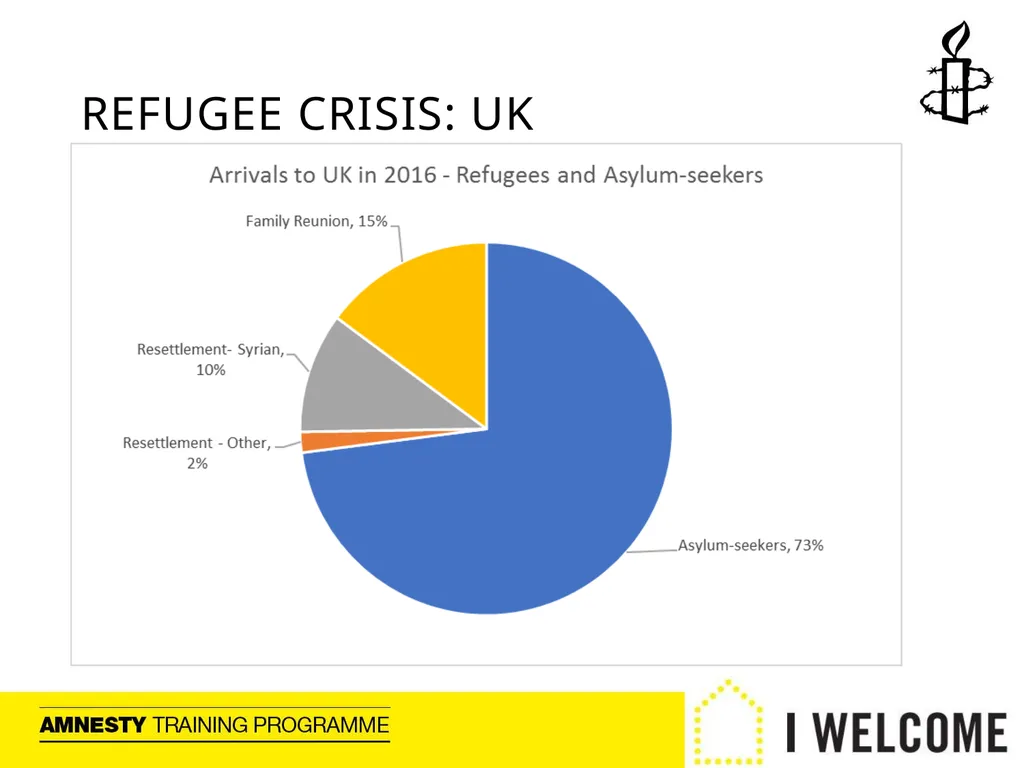
refugee crisis: Uk<br>
08
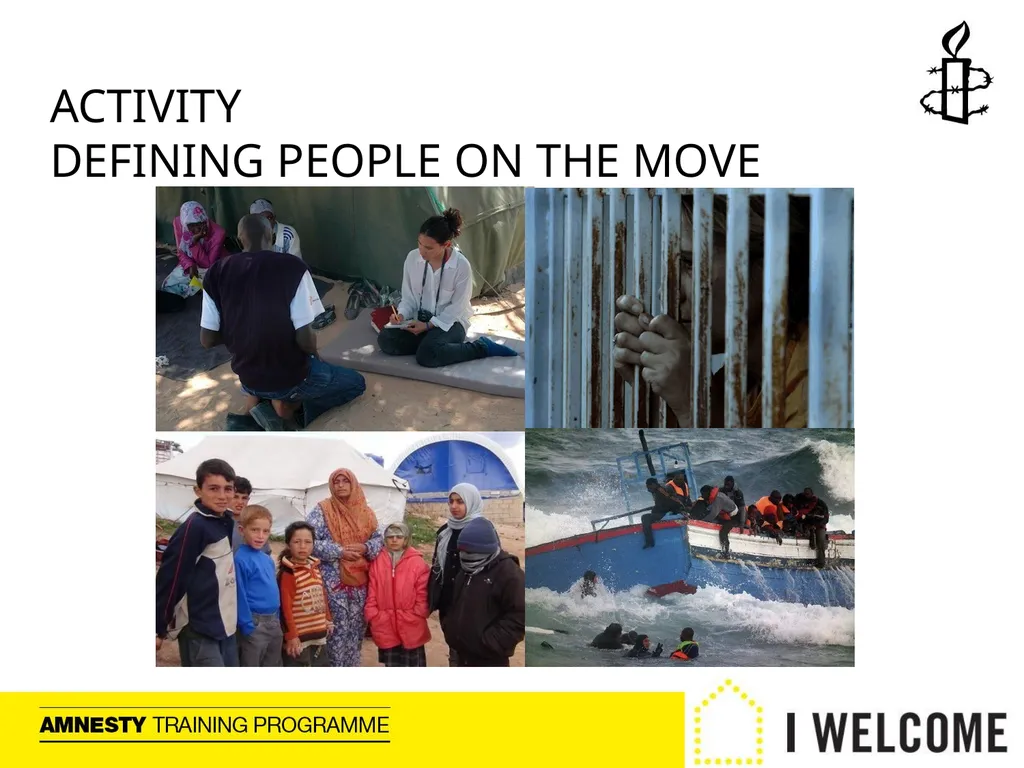
Activity
Defining People on the Move<br>
09
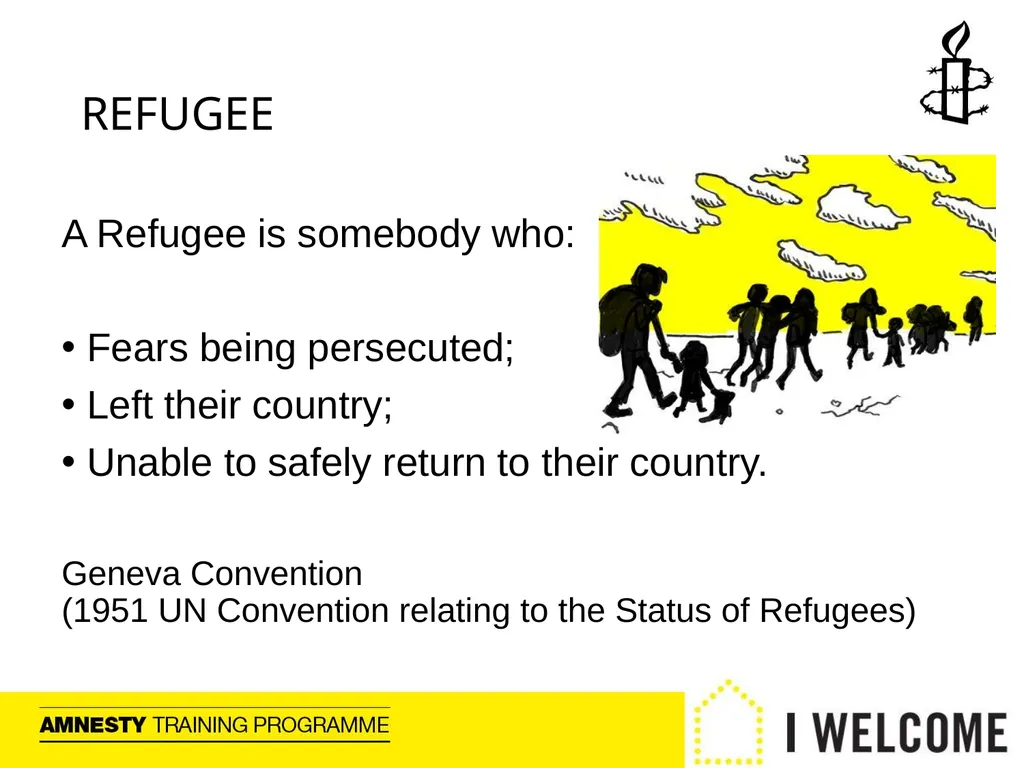
Refugee A Refugee is somebody who:
Fears being persecuted;
Left their country;
Unable to safely return to their country.
Geneva Convention (1951 UN Convention relating to the Status of Refugees)<br>
10
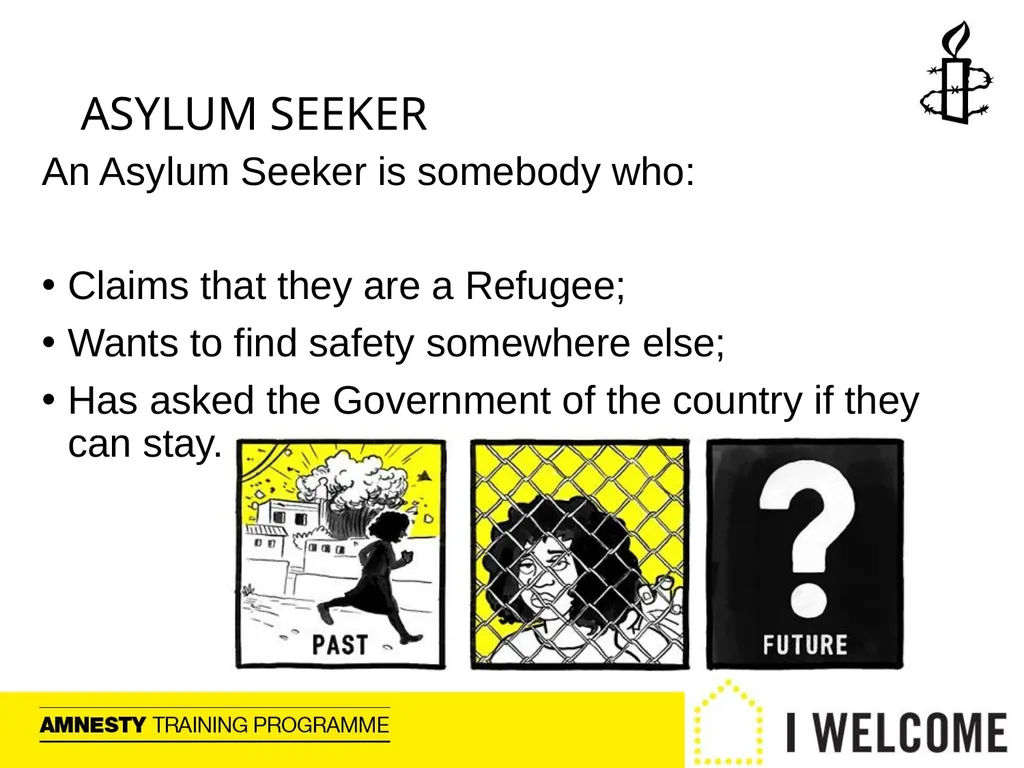
Asylum Seeker An Asylum Seeker is somebody who:
Claims that they are a Refugee;
Wants to find safety somewhere else;
Has asked the Government of the country if they can stay.<br>
11
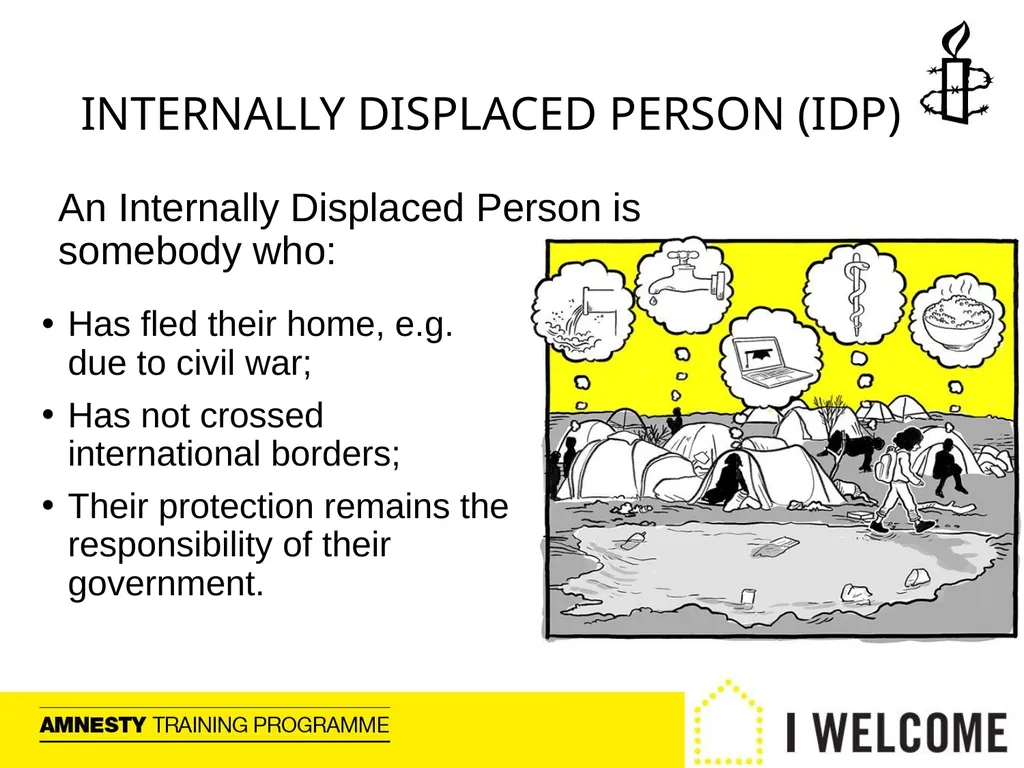
Internally Displaced Person (IDP) Has fled their home, e.g. due to civil war;
Has not crossed international borders;
Their protection remains the responsibility of their government. An Internally Displaced Person is somebody who:<br>
12
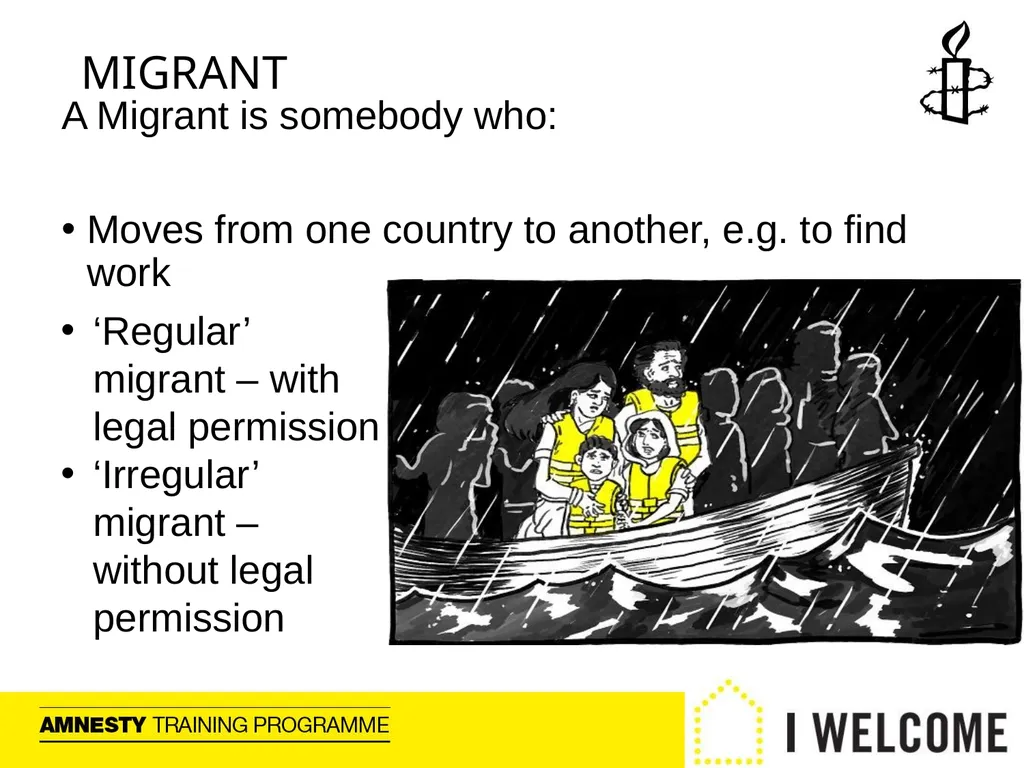
Migrant A Migrant is somebody who:
Moves from one country to another, e.g. to find work ‘Regular’ migrant – with legal permission
‘Irregular’ migrant – without legal permission<br>
13
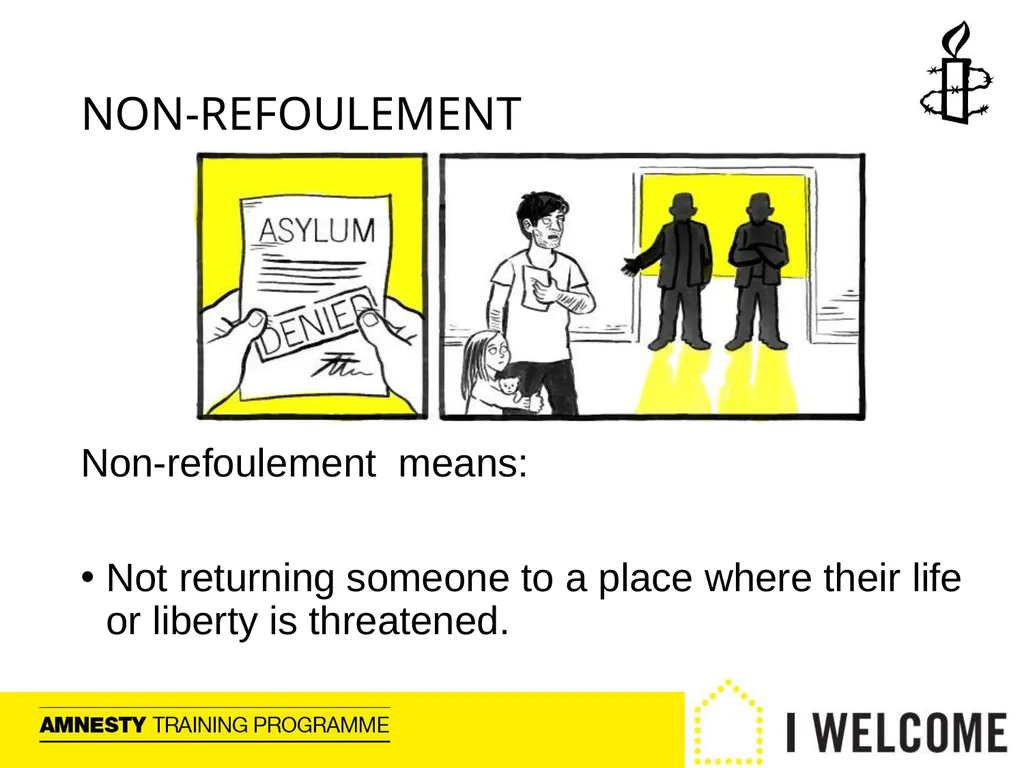
Non-refoulement Non-refoulement means:
Not returning someone to a place where their life or liberty is threatened.<br>
14
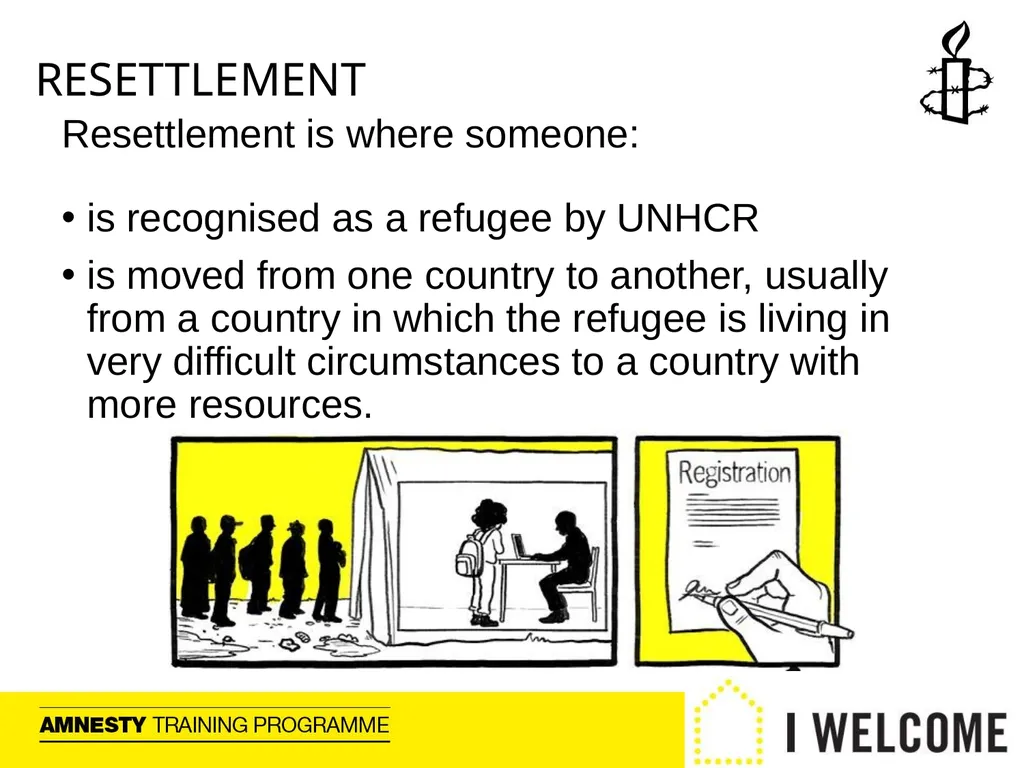
Resettlement Resettlement is where someone:
is recognised as a refugee by UNHCR
is moved from one country to another, usually from a country in which the refugee is living in very difficult circumstances to a country with more resources.<br>
15
REFUGEE Rights and international protections<br>
16
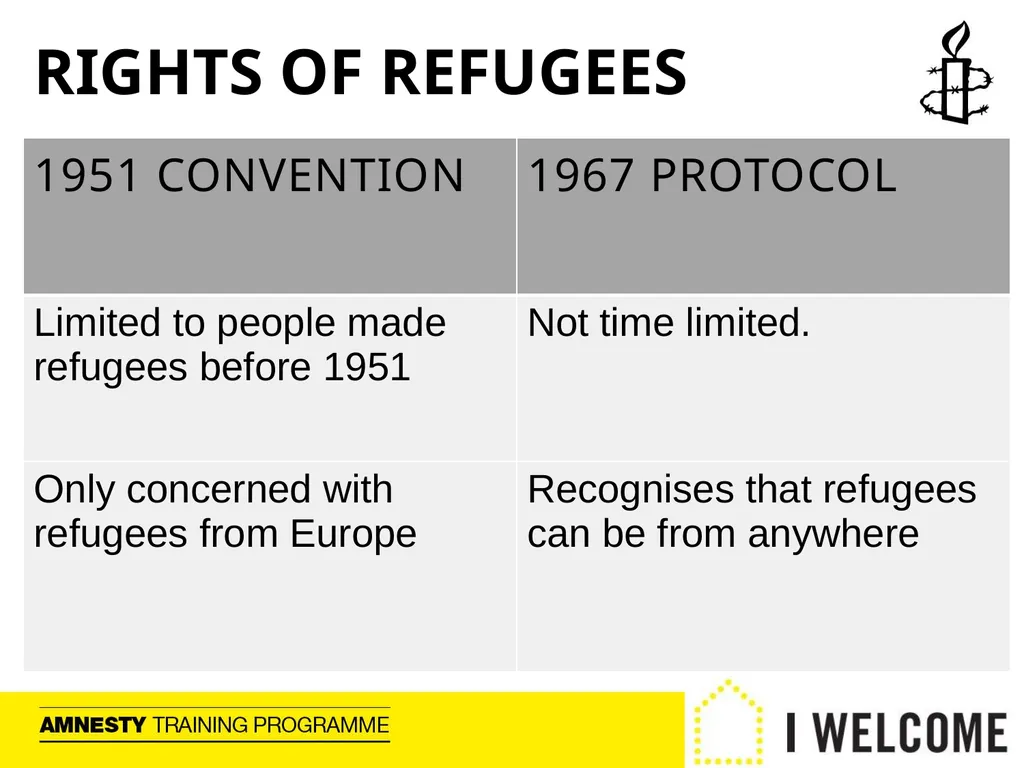
RIGHTS OF REFUGEES<br>
17
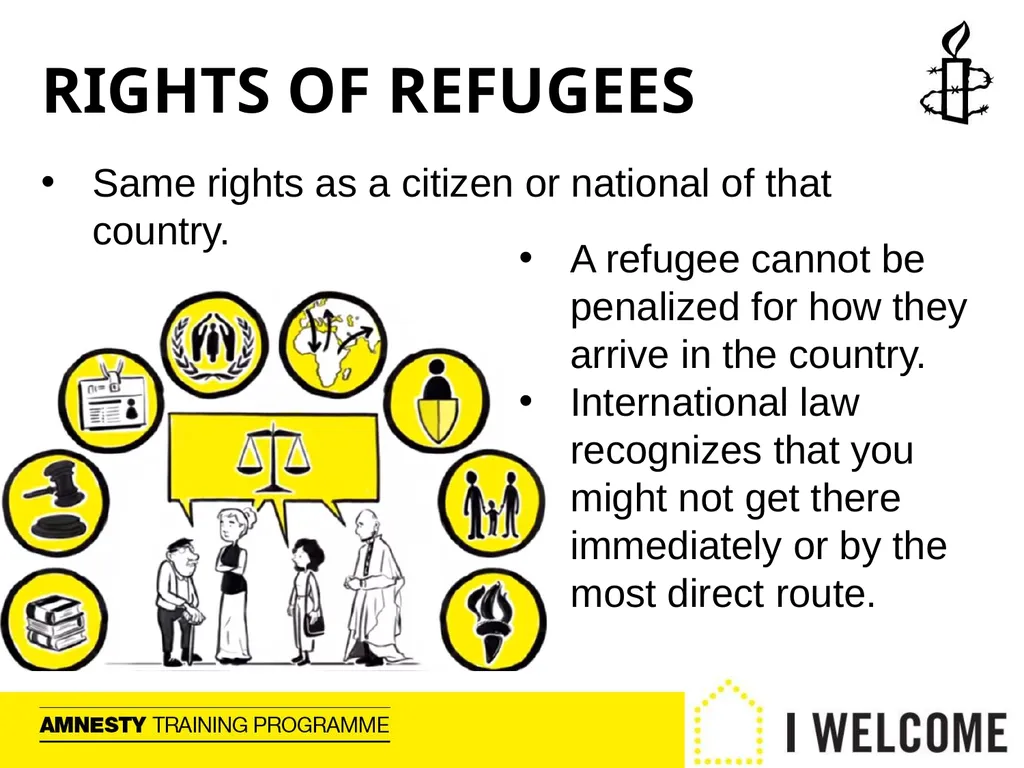
RIGHTS OF REFUGEES A refugee cannot be penalized for how they arrive in the country.
International law recognizes that you might not get there immediately or by the most direct route. Same rights as a citizen or national of that country.<br>
18
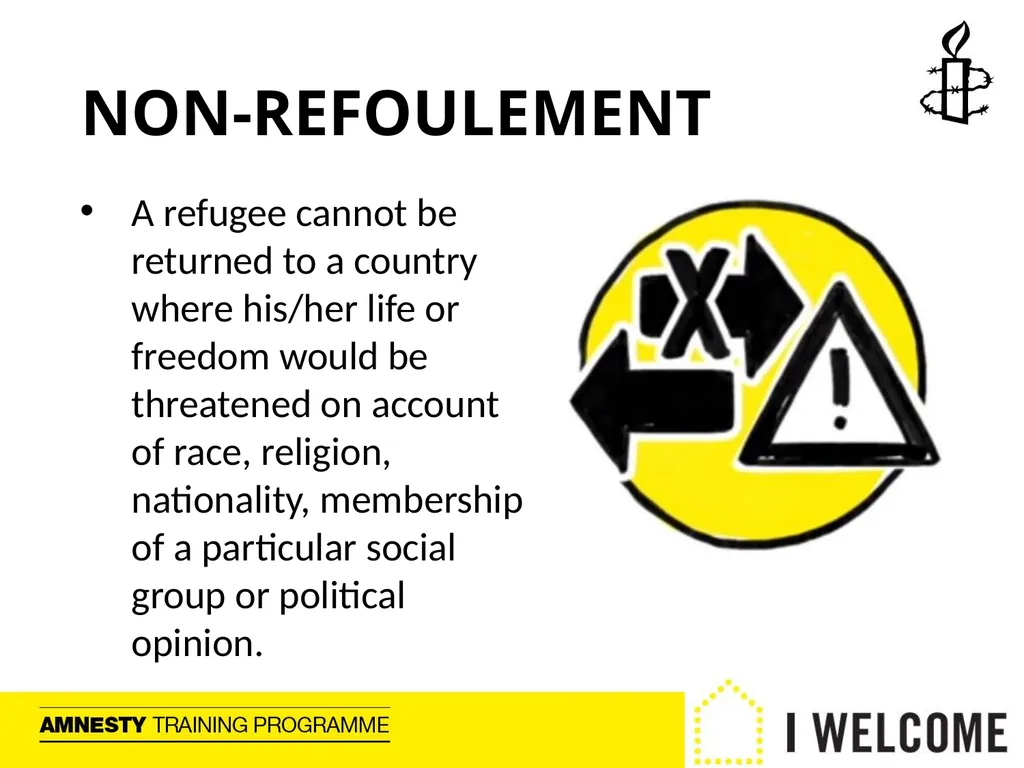
NON-REFOULEMENT A refugee cannot be returned to a country where his/her life or freedom would be threatened on account of race, religion, nationality, membership of a particular social group or political opinion.<br>
19
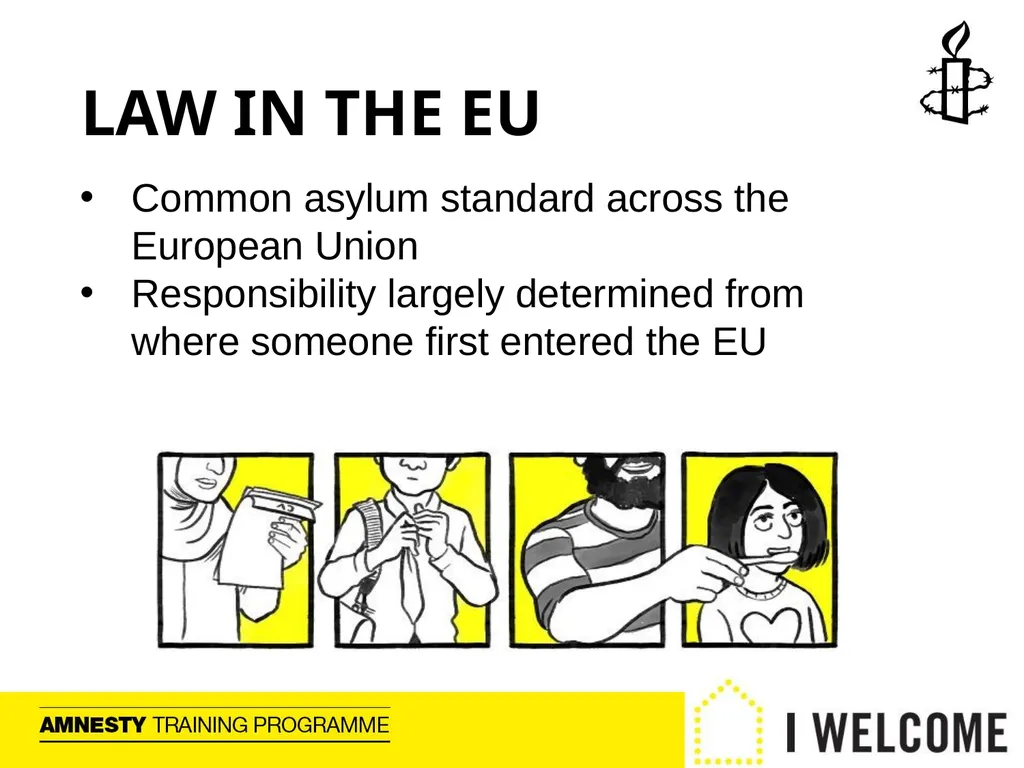
LAW IN THE EU Common asylum standard across the European Union
Responsibility largely determined from where someone first entered the EU<br>
20
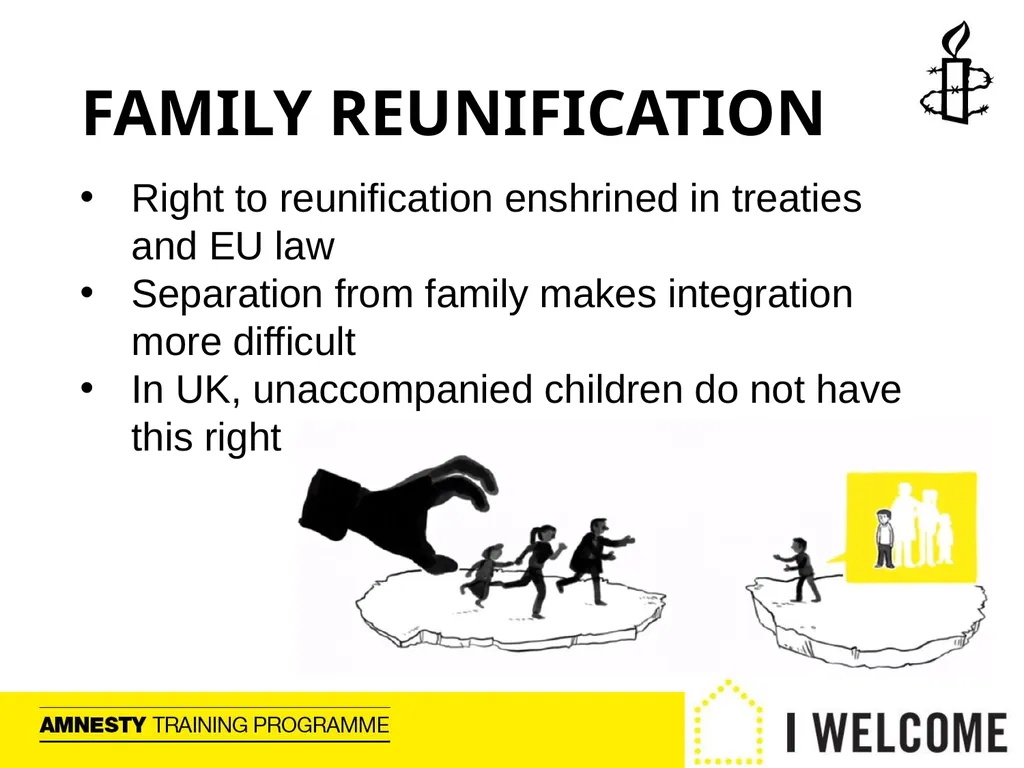
FAMILY REUNIFICATION Right to reunification enshrined in treaties and EU law
Separation from family makes integration more difficult
In UK, unaccompanied children do not have this right<br>
21
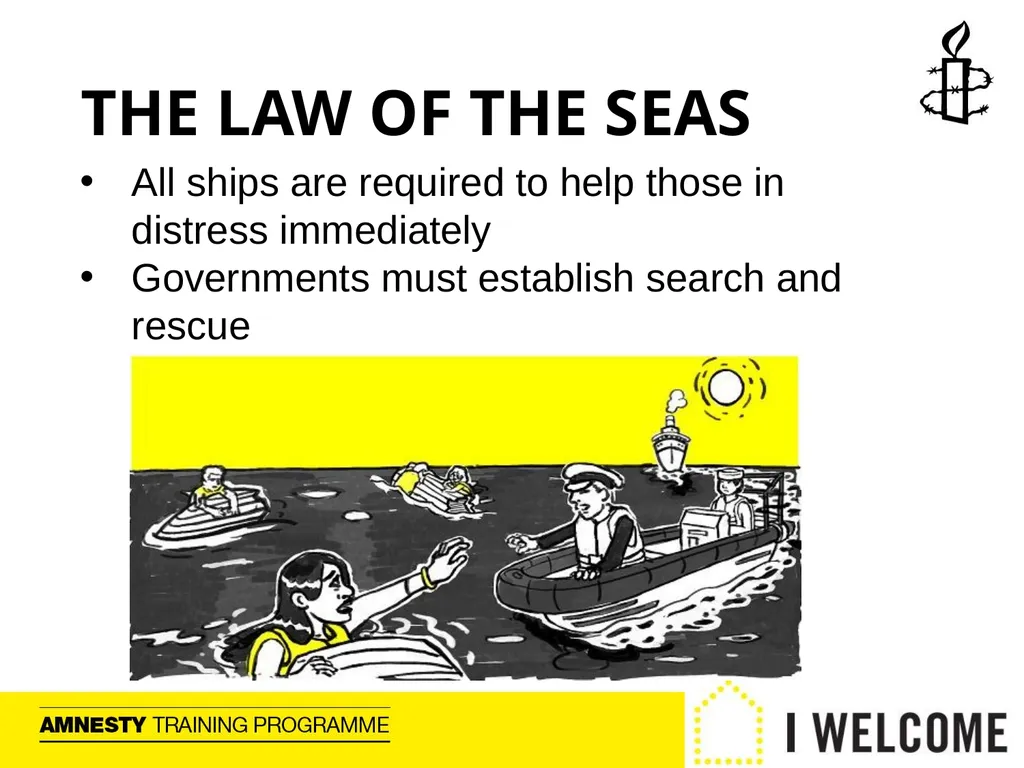
THE LAW OF THE SEAS All ships are required to help those in distress immediately
Governments must establish search and rescue<br>
22
NEXT STEPS Take the Amnesty MOOC on refugees
Take Action! – on the Amnesty website, you can find the latest actions to support refugees More Training – find out more about the campaign and how to get involved<br>