
Urbanization After 1865 Terms and People



Description: Urbanization After 1865 Terms and People urbanization expansion of cities accompanied by an increase in the number of people living in them rural-to-urban migrant a person who moves from an agricultural area to a city to obtain a job
Related Topics
Download Presentation
"Urbanization After 1865 Terms and People" is the property of its rightful owner. Permission is granted to download and print the materials on this website for personal, non-commercial use only, and to display it on your personal computer provided you do not modify the materials and that you retain all copyright notices contained in the materials. By downloading content from our website, you accept the terms of this agreement.
Presentation Transcript
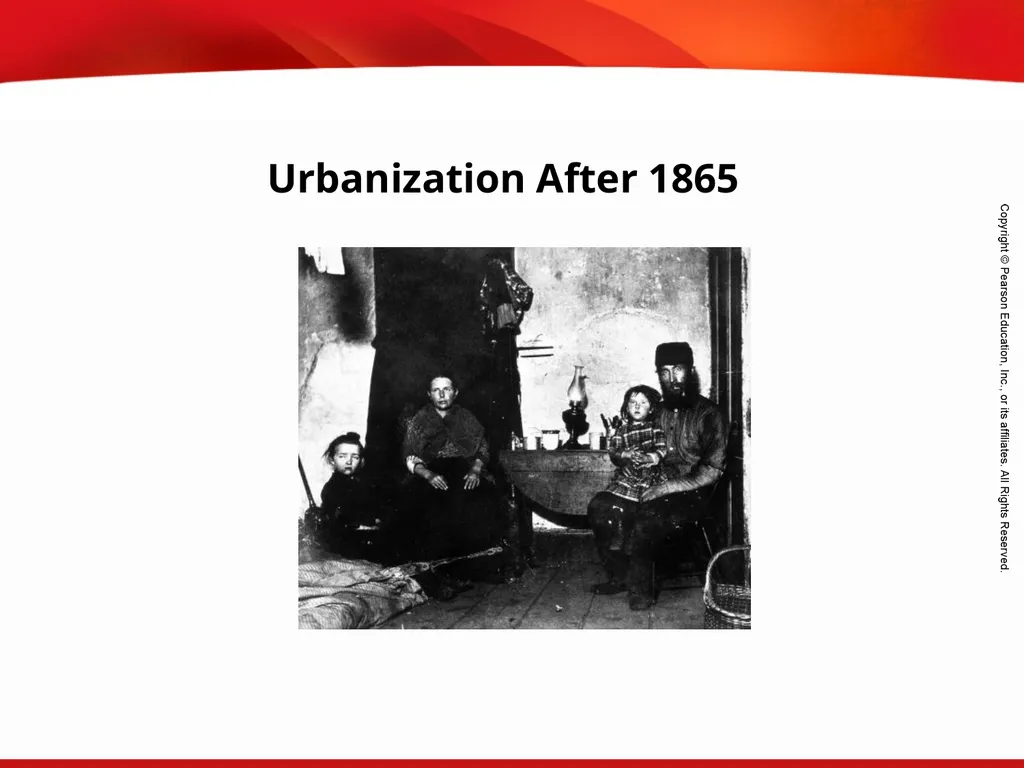
slide1. Urbanization After 1865<br>
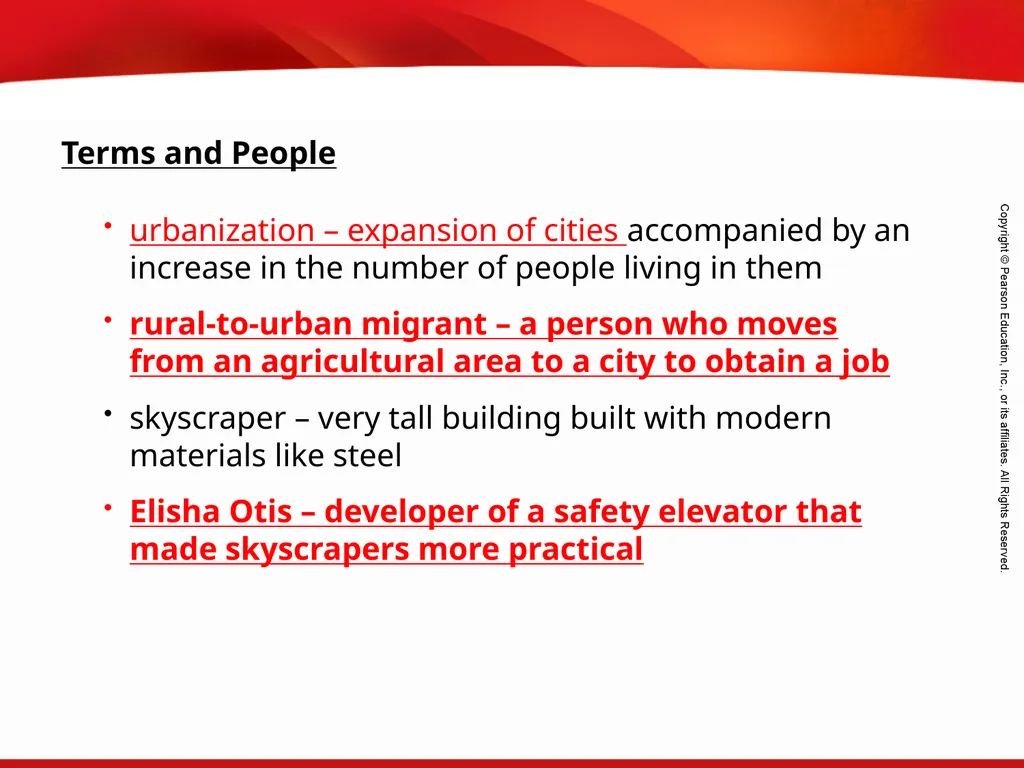
slide2. Terms and People urbanization – expansion of cities accompanied by an increase in the number of people living in them
rural-to-urban migrant – a person who moves from an agricultural area to a city to obtain a job
skyscraper – very tall building built with modern materials like steel
Elisha Otis – developer of a safety elevator that made skyscrapers more practical<br>
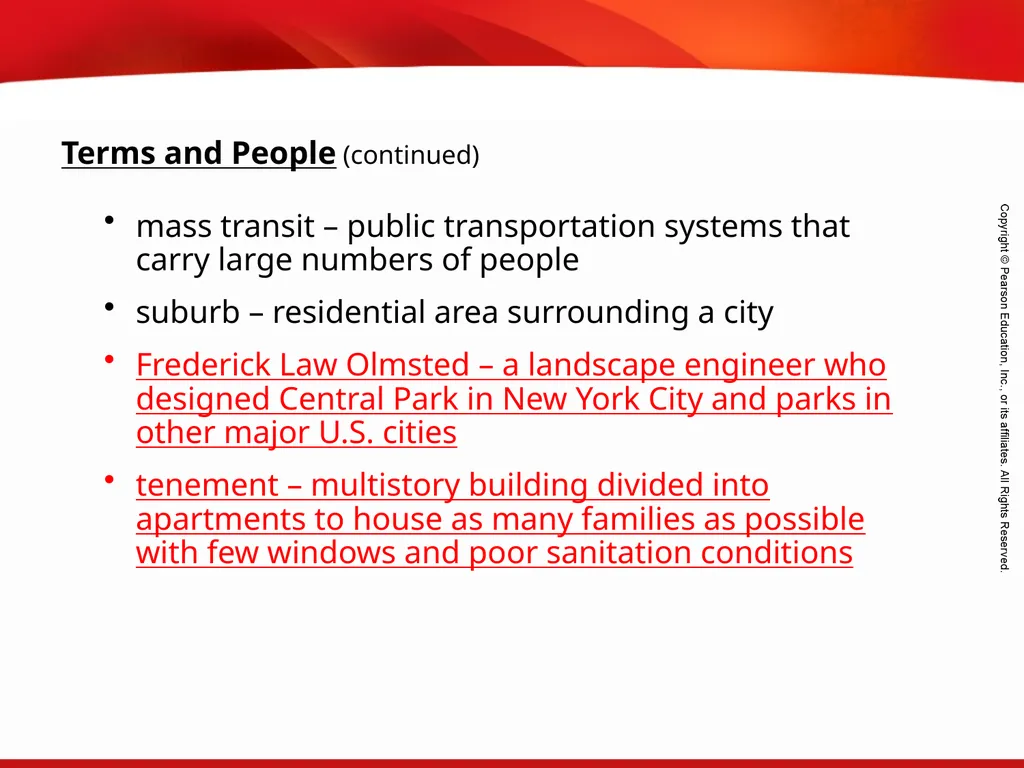
slide3. mass transit – public transportation systems that carry large numbers of people
suburb – residential area surrounding a city
Frederick Law Olmsted – a landscape engineer who designed Central Park in New York City and parks in other major U.S. cities
tenement – multistory building divided into apartments to house as many families as possible with few windows and poor sanitation conditions Terms and People (continued)<br>
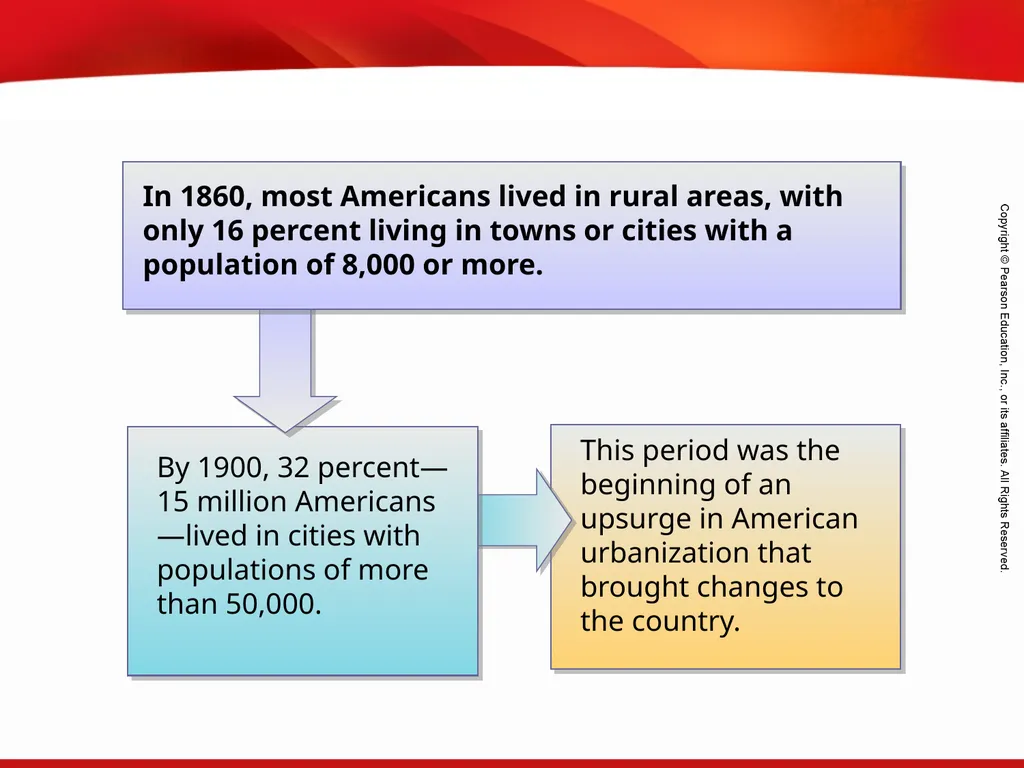
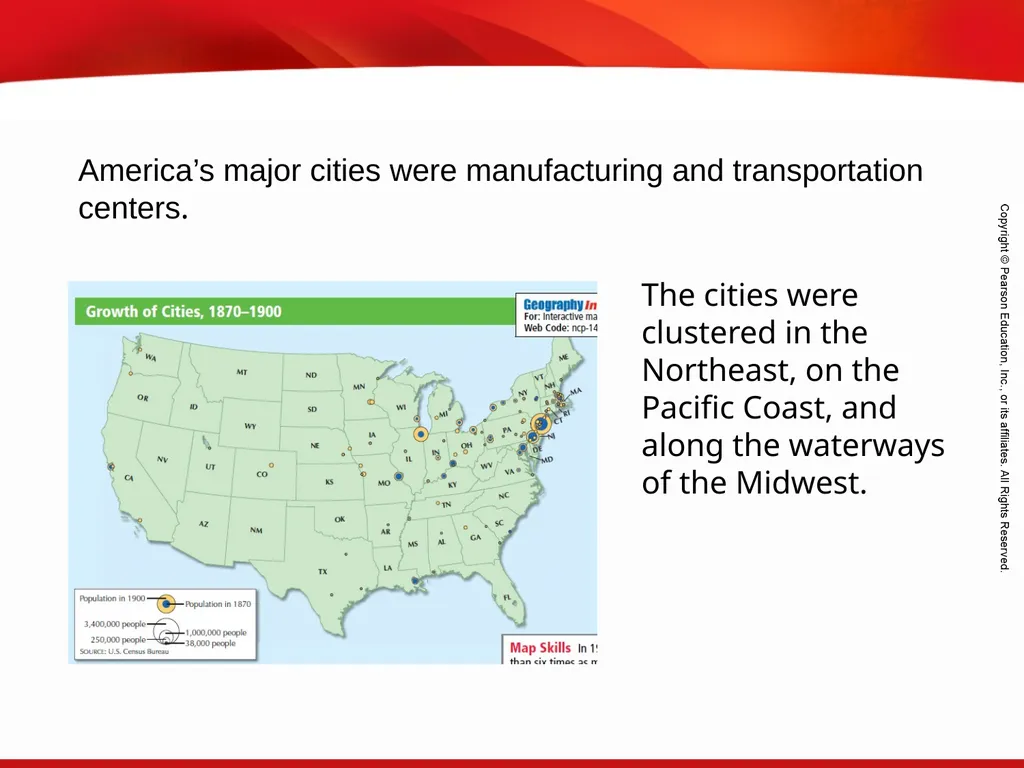
slide5. America’s major cities were manufacturing and transportation centers. The cities were clustered in the Northeast, on the Pacific Coast, and along the waterways of the Midwest.<br>
slide6. Immigrants and rural Americans were attracted by jobs in factories or service industries.
People with money opened shops.
With the growth of urban areas, women’s opportunities dramatically expanded. They could work in factories, take in boarders, or be domestic servants. People moved to cities
to seize opportunities.<br>
slide7. Rural-to-urban migrants moved from farms to cities in the 1890s.<br>
slide8. Life was hard in the city, but most people preferred it to the country. Workers’ children could attend city schools.
Churches, theaters, social clubs, and museums offered companionship and entertainment.
Most city workers were able to enjoy a higher standard of living, and some moved into the growing middle class.<br>
slide9. As cities swelled in size, American innovators developed new technologies to improve living conditions.<br>
slide10. Mass transit reshaped the nation’s cities. In 1888, Richmond, Virginia started using the first streetcars powered by overhead electric cables.
Within a decade, every other major city followed.
Electric streetcars were quieter, cleaner, and more efficient than coal-driven commuter trains or horse-drawn trolleys.<br>
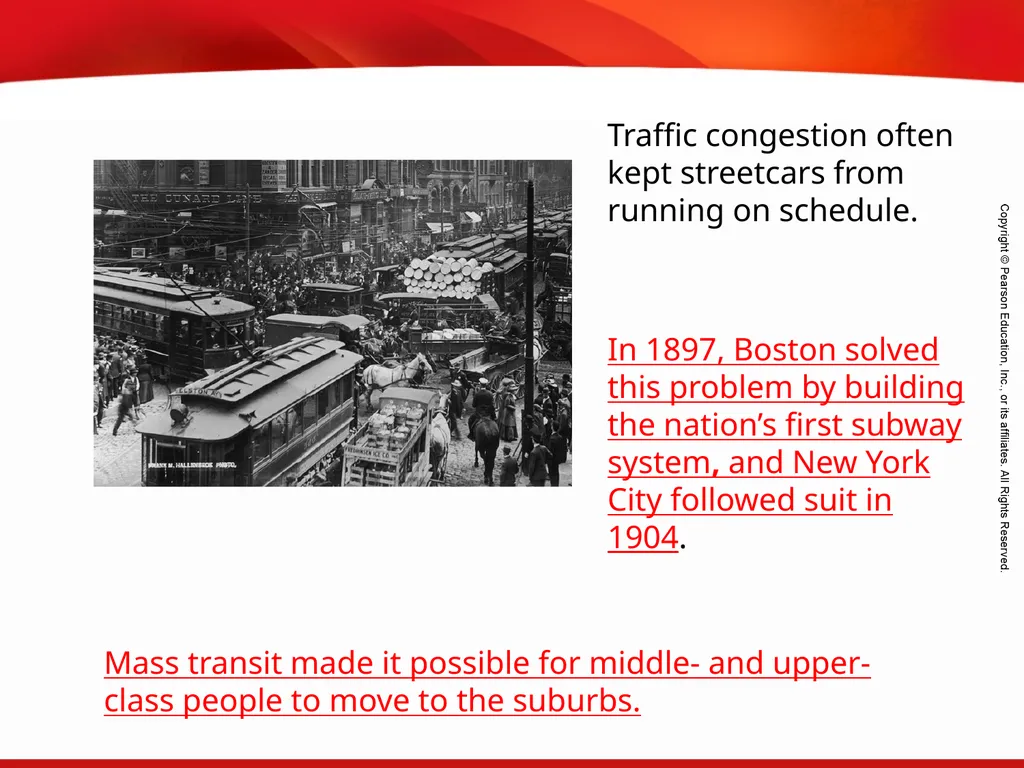
slide11. Traffic congestion often kept streetcars from running on schedule. In 1897, Boston solved this problem by building the nation’s first subway system, and New York City followed suit in 1904. Mass transit made it possible for middle- and upper-class people to move to the suburbs.<br>
slide12. As cities grew, planners designated different parts of cities for different functions. Parks were also important to plan for. Frederick Law Olmsted designed many well-known parks, including New York City’s Central Park.<br>
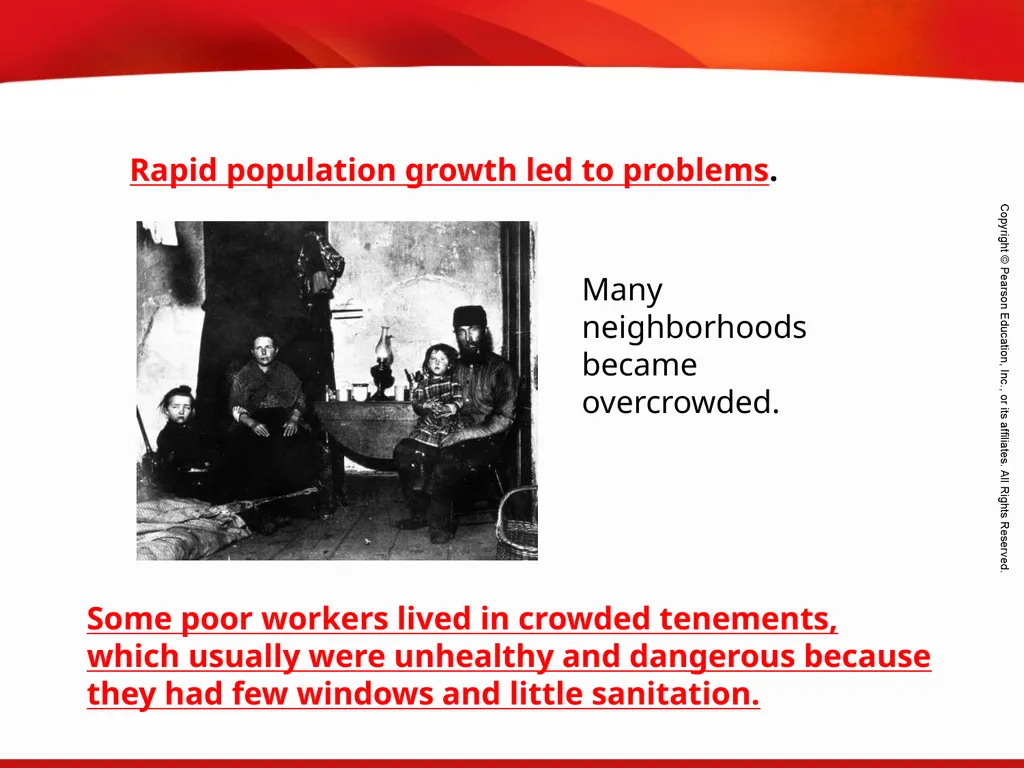
slide13. Some poor workers lived in crowded tenements, which usually were unhealthy and dangerous because they had few windows and little sanitation. Many neighborhoods became overcrowded. Rapid population growth led to problems.<br>
slide14. Cities had filthy, unpaved streets and sanitation problems, conditions perfect for breeding epidemics. To solve these problems, governments and city planners tried to regulate housing, sanitation, sewers, and public health.
They began to take water from clean reservoirs and to use water filtration systems.<br>
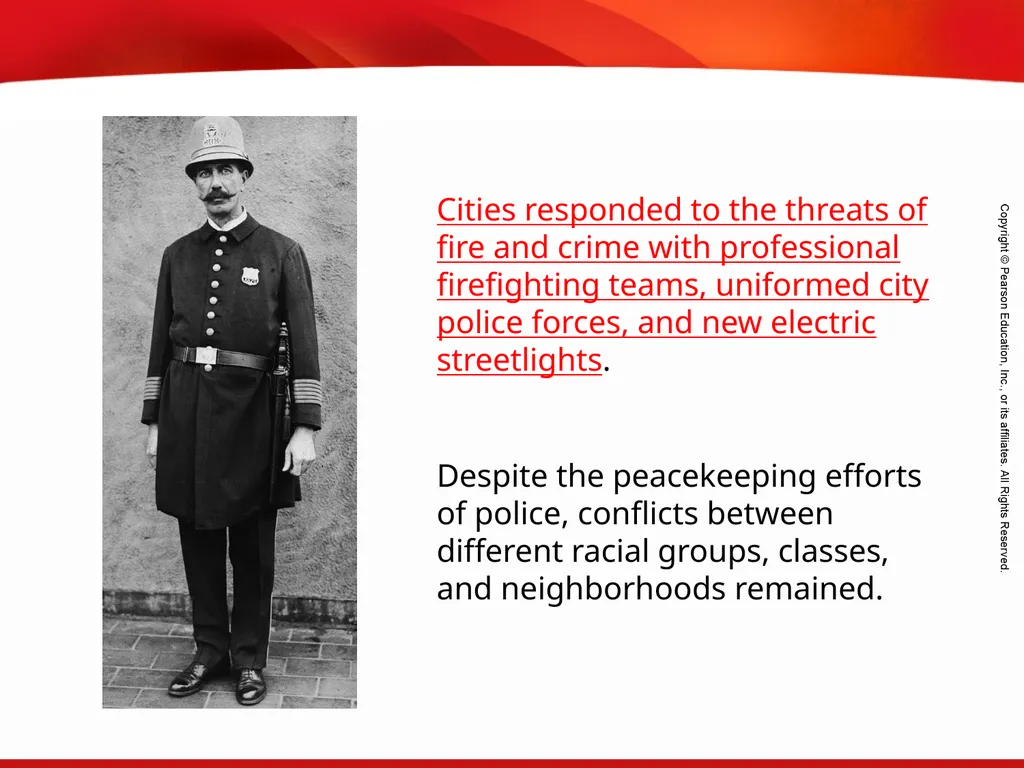
slide15. Cities responded to the threats of fire and crime with professional firefighting teams, uniformed city police forces, and new electric streetlights. Despite the peacekeeping efforts of police, conflicts between different racial groups, classes, and neighborhoods remained.<br>
slide2. Terms and People urbanization – expansion of cities accompanied by an increase in the number of people living in them
rural-to-urban migrant – a person who moves from an agricultural area to a city to obtain a job
skyscraper – very tall building built with modern materials like steel
Elisha Otis – developer of a safety elevator that made skyscrapers more practical<br>
slide3. mass transit – public transportation systems that carry large numbers of people
suburb – residential area surrounding a city
Frederick Law Olmsted – a landscape engineer who designed Central Park in New York City and parks in other major U.S. cities
tenement – multistory building divided into apartments to house as many families as possible with few windows and poor sanitation conditions Terms and People (continued)<br>
slide5. America’s major cities were manufacturing and transportation centers. The cities were clustered in the Northeast, on the Pacific Coast, and along the waterways of the Midwest.<br>
slide6. Immigrants and rural Americans were attracted by jobs in factories or service industries.
People with money opened shops.
With the growth of urban areas, women’s opportunities dramatically expanded. They could work in factories, take in boarders, or be domestic servants. People moved to cities
to seize opportunities.<br>
slide7. Rural-to-urban migrants moved from farms to cities in the 1890s.<br>
slide8. Life was hard in the city, but most people preferred it to the country. Workers’ children could attend city schools.
Churches, theaters, social clubs, and museums offered companionship and entertainment.
Most city workers were able to enjoy a higher standard of living, and some moved into the growing middle class.<br>
slide9. As cities swelled in size, American innovators developed new technologies to improve living conditions.<br>
slide10. Mass transit reshaped the nation’s cities. In 1888, Richmond, Virginia started using the first streetcars powered by overhead electric cables.
Within a decade, every other major city followed.
Electric streetcars were quieter, cleaner, and more efficient than coal-driven commuter trains or horse-drawn trolleys.<br>
slide11. Traffic congestion often kept streetcars from running on schedule. In 1897, Boston solved this problem by building the nation’s first subway system, and New York City followed suit in 1904. Mass transit made it possible for middle- and upper-class people to move to the suburbs.<br>
slide12. As cities grew, planners designated different parts of cities for different functions. Parks were also important to plan for. Frederick Law Olmsted designed many well-known parks, including New York City’s Central Park.<br>
slide13. Some poor workers lived in crowded tenements, which usually were unhealthy and dangerous because they had few windows and little sanitation. Many neighborhoods became overcrowded. Rapid population growth led to problems.<br>
slide14. Cities had filthy, unpaved streets and sanitation problems, conditions perfect for breeding epidemics. To solve these problems, governments and city planners tried to regulate housing, sanitation, sewers, and public health.
They began to take water from clean reservoirs and to use water filtration systems.<br>
slide15. Cities responded to the threats of fire and crime with professional firefighting teams, uniformed city police forces, and new electric streetlights. Despite the peacekeeping efforts of police, conflicts between different racial groups, classes, and neighborhoods remained.<br>