Why is cultural diversity planning important? Why does cultural diversity matter? Cultural diversity is the lens through which we see and understand the world around us Diversity is a measure of our society At the heart of cultural
"Why is cultural diversity planning important? Why" is the property of its rightful owner. Permission is granted to
download and print the materials on this website for personal, non-commercial use only, and to display it
on your personal computer provided you do not modify the materials and that you retain all copyright
notices contained in the materials. By downloading content from our website, you accept the terms of this
agreement.
Presentation Transcript
01
Why is cultural diversity planning important?<br>
02
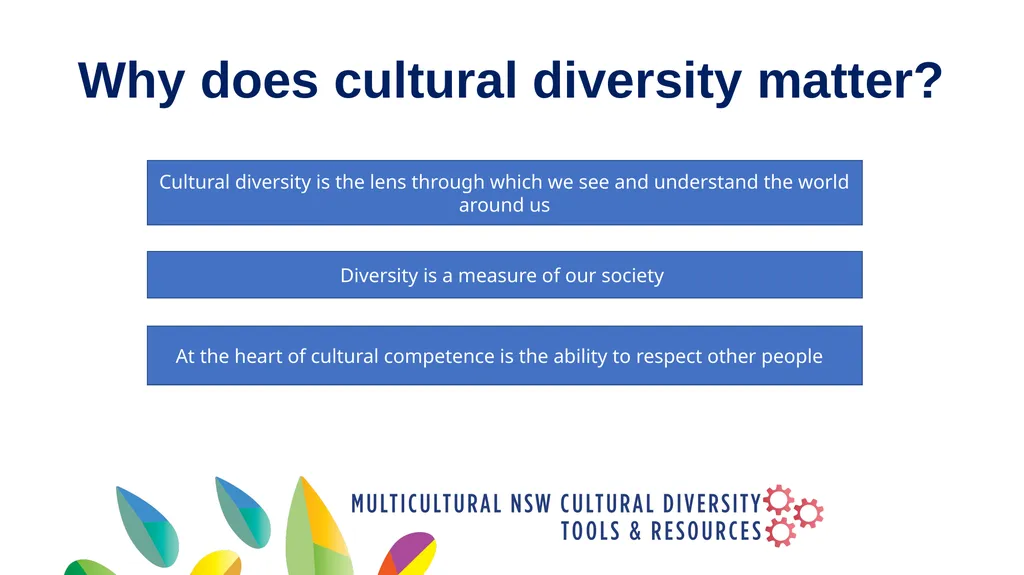
Why does cultural diversity matter? Cultural diversity is the lens through which we see and understand the world around us Diversity is a measure of our society At the heart of cultural competence is the ability to respect other people<br>
03
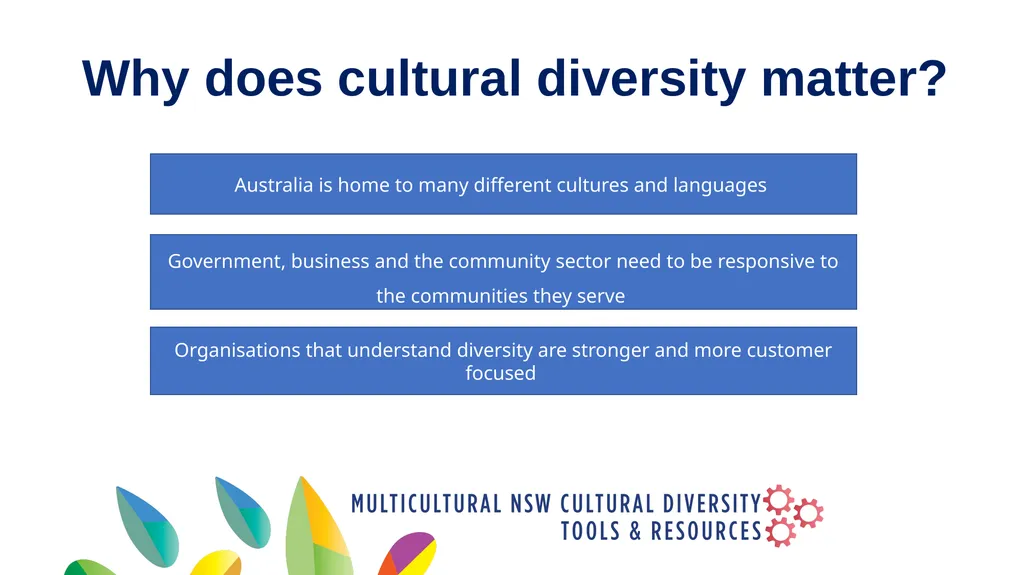
Australia is home to many different cultures and languages Government, business and the community sector need to be responsive to the communities they serve Organisations that understand diversity are stronger and more customer focused Why does cultural diversity matter?<br>
04
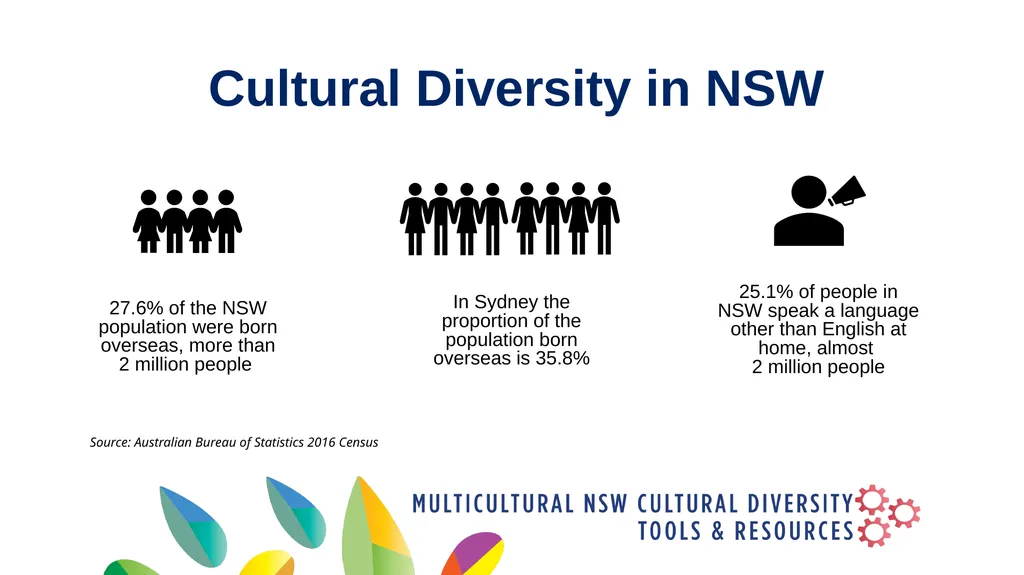
27.6% of the NSW population were born overseas, more than 2 million people 25.1% of people in NSW speak a language other than English at home, almost 2 million people In Sydney the proportion of the population born overseas is 35.8% Cultural Diversity in NSW Source: Australian Bureau of Statistics 2016 Census<br>
05
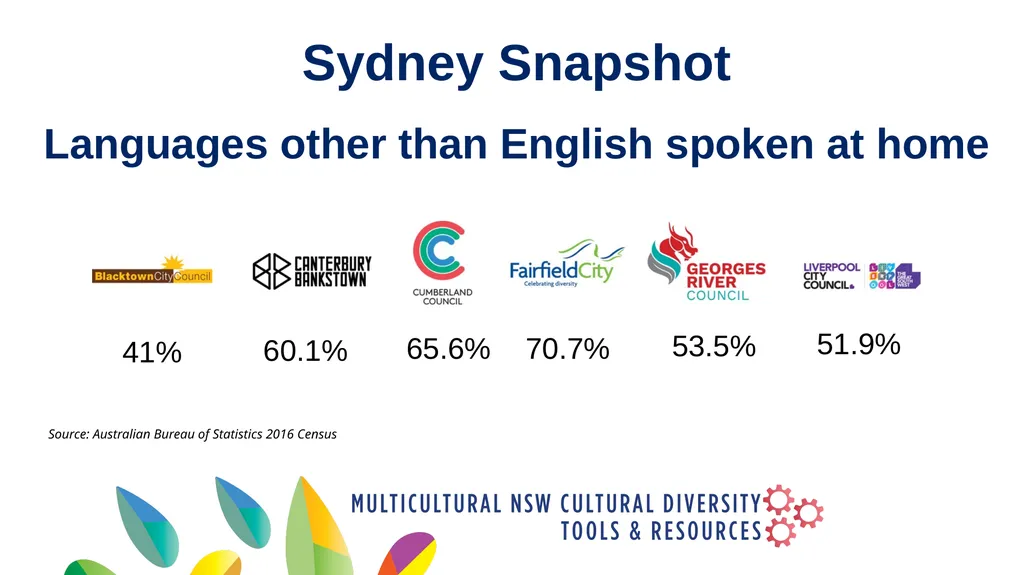
41% 60.1% 65.6% 70.7% 51.9% 53.5% Sydney Snapshot
Languages other than English spoken at home Source: Australian Bureau of Statistics 2016 Census<br>
06
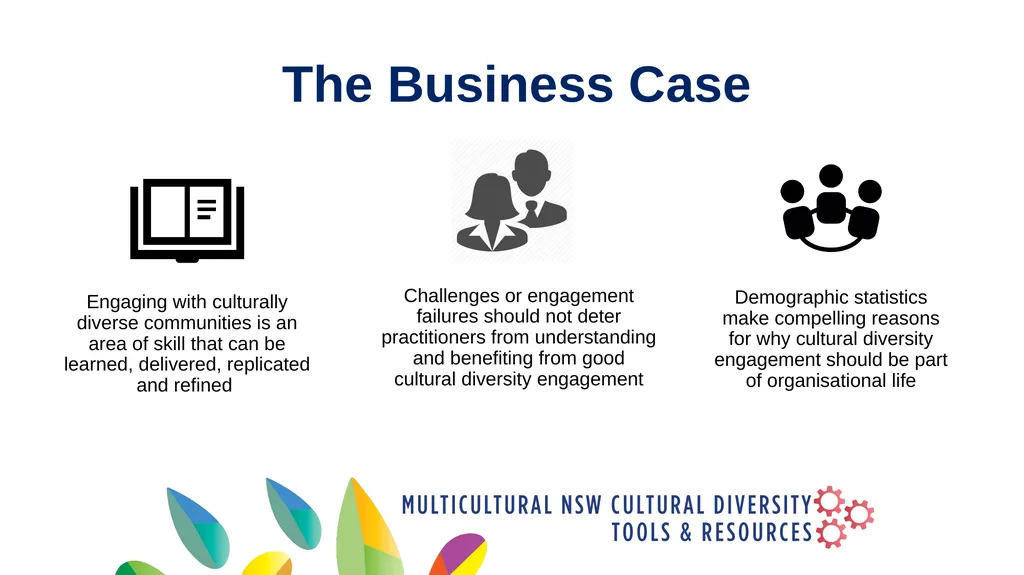
Engaging with culturally diverse communities is an area of skill that can be learned, delivered, replicated and refined Challenges or engagement failures should not deter practitioners from understanding and benefiting from good cultural diversity engagement Demographic statistics make compelling reasons for why cultural diversity engagement should be part of organisational life The Business Case<br>
07
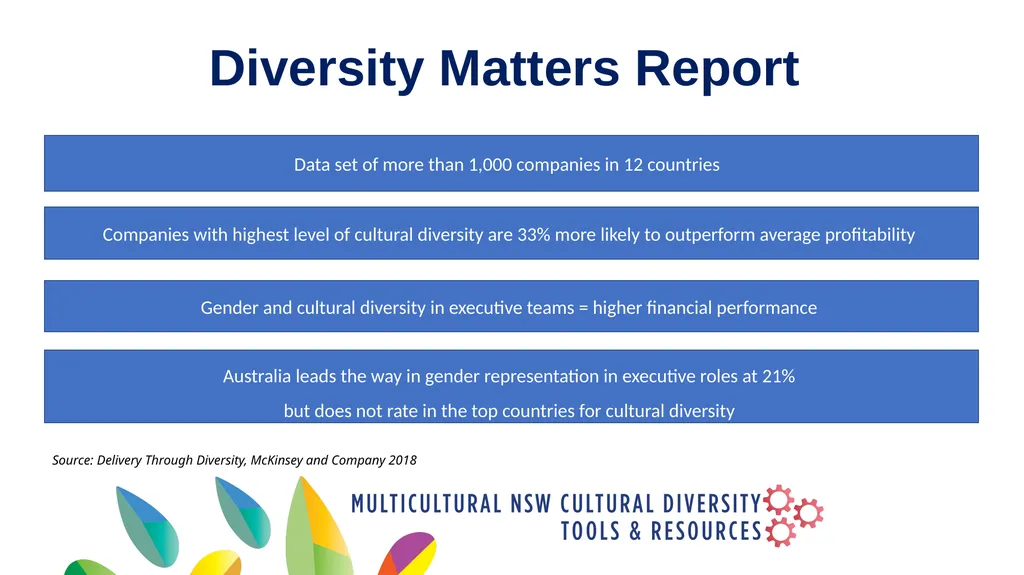
Diversity Matters Report Data set of more than 1,000 companies in 12 countries Companies with highest level of cultural diversity are 33% more likely to outperform average profitability Australia leads the way in gender representation in executive roles at 21%
but does not rate in the top countries for cultural diversity Gender and cultural diversity in executive teams = higher financial performance Source: Delivery Through Diversity, McKinsey and Company 2018<br>
08
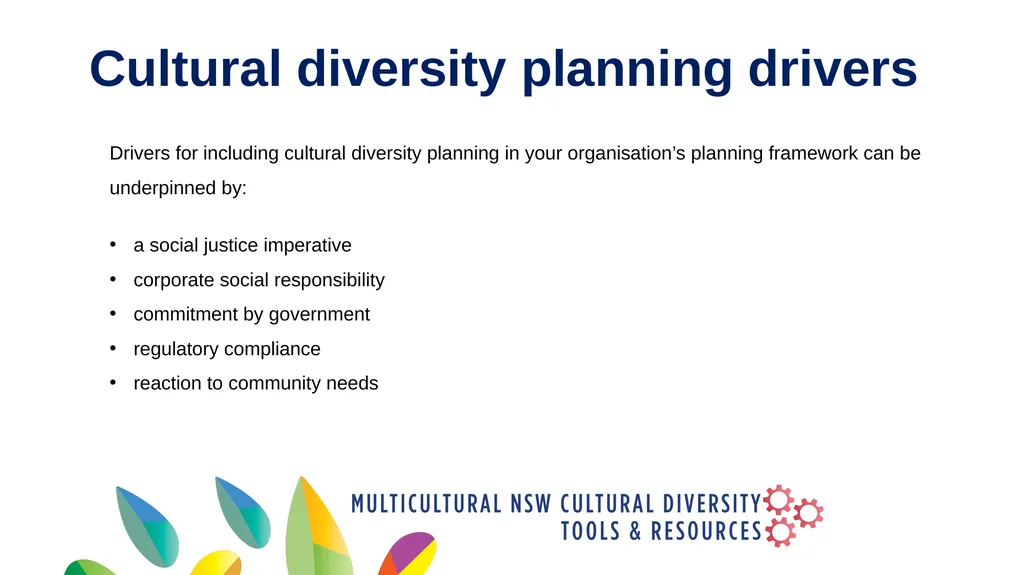
Cultural diversity planning drivers Drivers for including cultural diversity planning in your organisation’s planning framework can be underpinned by:
a social justice imperative
corporate social responsibility
commitment by government
regulatory compliance
reaction to community needs<br>
09
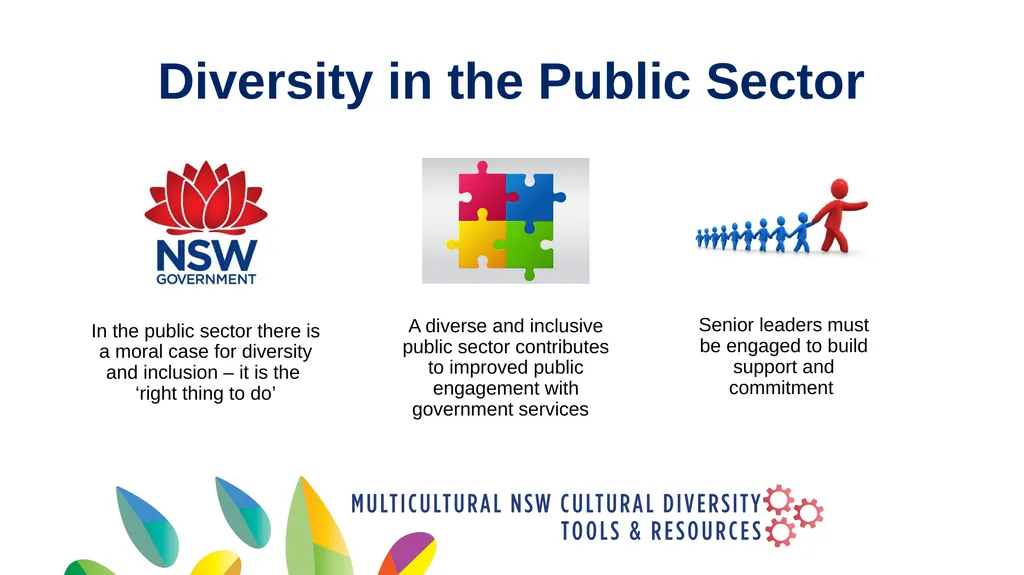
In the public sector there is a moral case for diversity and inclusion – it is the ‘right thing to do’ A diverse and inclusive public sector contributes to improved public engagement with government services Senior leaders must be engaged to build support and commitment Diversity in the Public Sector<br>
10
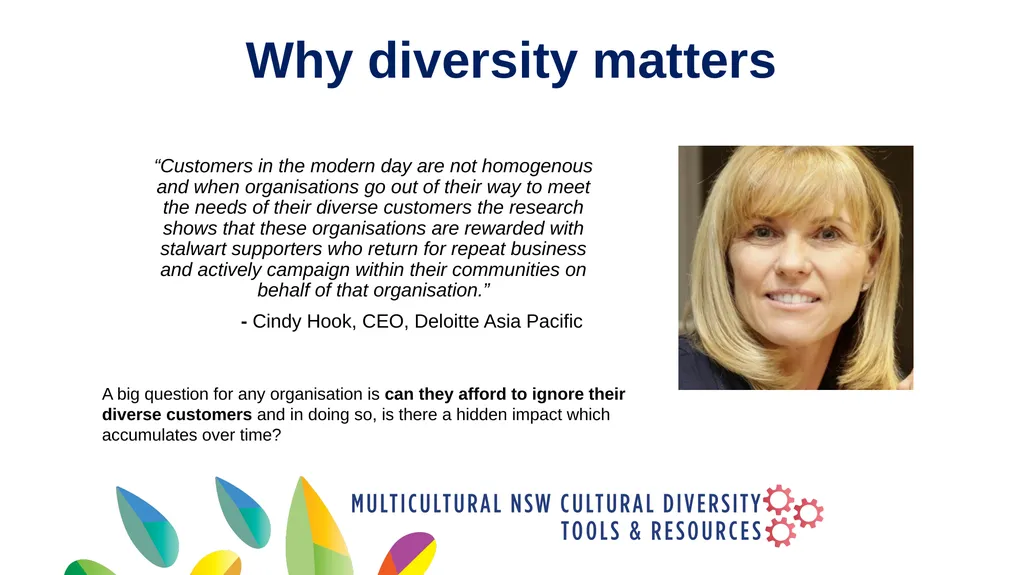
Why diversity matters A big question for any organisation is can they afford to ignore their diverse customers and in doing so, is there a hidden impact which accumulates over time? “Customers in the modern day are not homogenous and when organisations go out of their way to meet the needs of their diverse customers the research shows that these organisations are rewarded with stalwart supporters who return for repeat business and actively campaign within their communities on behalf of that organisation.”
- Cindy Hook, CEO, Deloitte Asia Pacific<br>
11
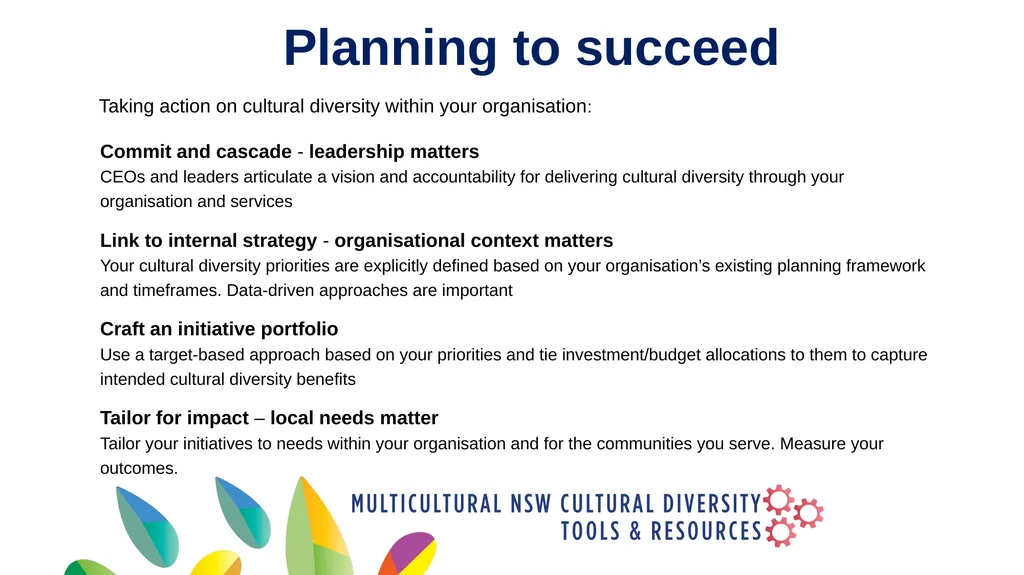
Planning to succeed Taking action on cultural diversity within your organisation: Commit and cascade - leadership matters
CEOs and leaders articulate a vision and accountability for delivering cultural diversity through your organisation and services
Link to internal strategy - organisational context matters
Your cultural diversity priorities are explicitly defined based on your organisation’s existing planning framework and timeframes. Data-driven approaches are important
Craft an initiative portfolio
Use a target-based approach based on your priorities and tie investment/budget allocations to them to capture intended cultural diversity benefits
Tailor for impact – local needs matter
Tailor your initiatives to needs within your organisation and for the communities you serve. Measure your outcomes.<br>
12
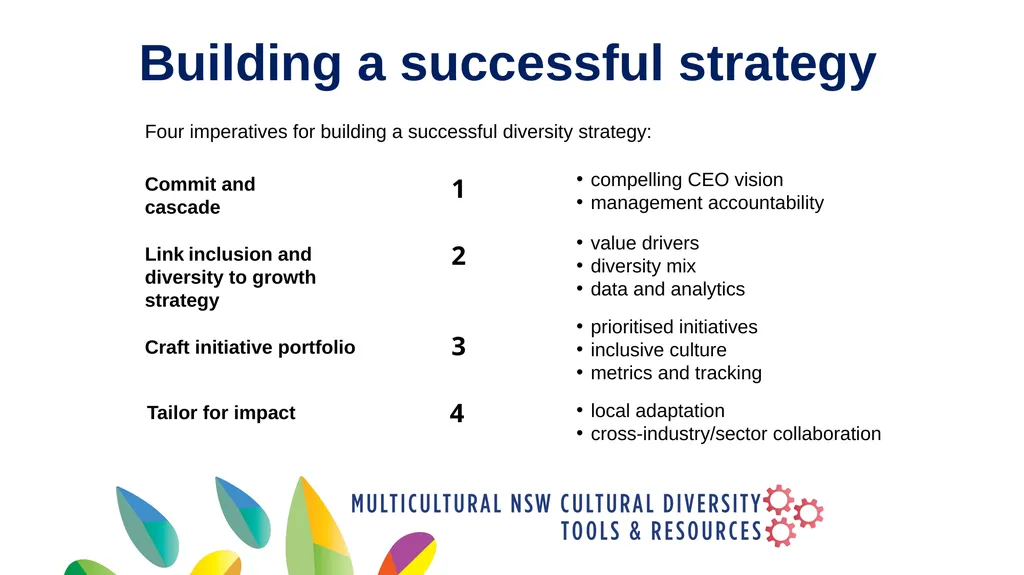
Building a successful strategy 1 2 4 3 Commit and cascade Link inclusion and diversity to growth strategy Craft initiative portfolio Tailor for impact compelling CEO vision
management accountability value drivers
diversity mix
data and analytics prioritised initiatives
inclusive culture
metrics and tracking local adaptation
cross-industry/sector collaboration Four imperatives for building a successful diversity strategy:<br>