
Customer Behavior and Customer Relationship


Description: Customer Behavior and Customer Relationship Management Who are we in business for? Key Issues Different customer strategies Consumer behavior Business behavior Customer retention (i.e., the focus of customer relationship management, CRM)
Related Topics
Download Presentation
"Customer Behavior and Customer Relationship" is the property of its rightful owner. Permission is granted to download and print the materials on this website for personal, non-commercial use only, and to display it on your personal computer provided you do not modify the materials and that you retain all copyright notices contained in the materials. By downloading content from our website, you accept the terms of this agreement.
Presentation Transcript
slide1. Customer Behavior and Customer Relationship Management Who are we in business for?<br>
slide2. Key Issues Different customer strategies
Consumer behavior
Business behavior
Customer retention (i.e., the focus of customer relationship management, CRM)<br>
slide3. Customer Strategies Get more customers (market share)
Acquire profitable ones
Keep customers longer
Retain them
Reduces costs of serving them
Grow current customers into bigger customers (share of customer)
Up-selling additional products for one problem
Cross-selling other products for different problems
Give them benefits for referrals
“Fire” unprofitable customers
1-4 Frequently stated as an OBJECTIVE in the marketing planning process<br>
slide4. To fulfill customer objectives…. have to understand customers<br>
slide5. What do customers expect? What are they?
Do we meet them?
Expectancy-Disconfirmation Model
Applies to organizational and consumer markets<br>
slide6. Discuss Why do you think many firms do such a poor job of understanding the needs, wants, and expectations of their customers? Do they buy into the “better mousetrap” philosophy and believe that quality is the only necessary requirement of maintaining customer relationships? Explain.<br>
slide7. Satisfaction Metrics Where Satisfaction = Expectations – Perceptions:
Financial Performance
Marketing Performance
Customer Retention rates
Customer Attrition Rate
Customer Recovery Rate
Referrals
Viral marketing (what they say on the Internet)
Importance Performance Evaluations<br>
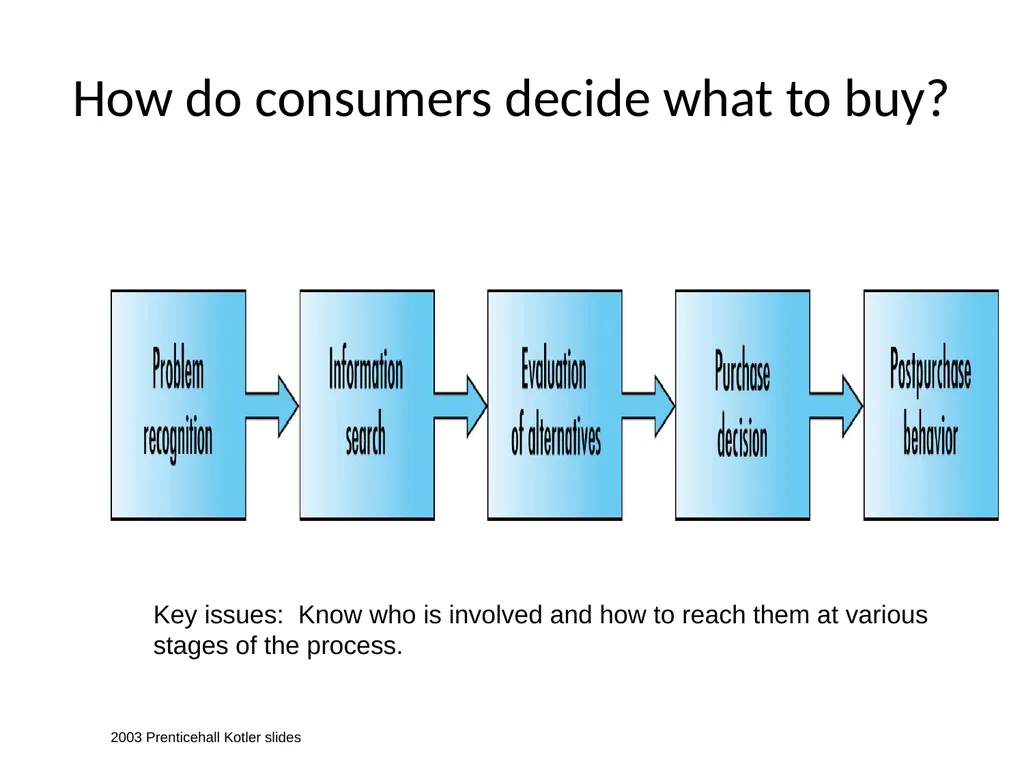
slide8. How do consumers decide what to buy? Key issues: Know who is involved and how to reach them at various stages of the process. 2003 Prenticehall Kotler slides<br>
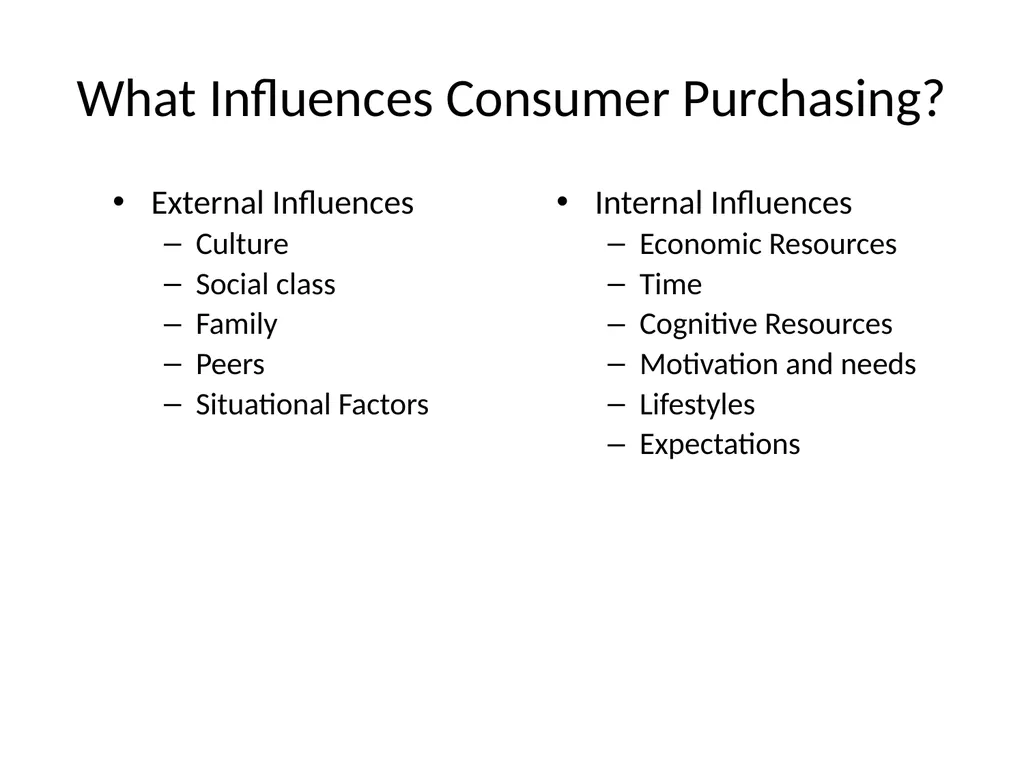
slide9. What Influences Consumer Purchasing? External Influences
Culture
Social class
Family
Peers
Situational Factors Internal Influences
Economic Resources
Time
Cognitive Resources
Motivation and needs
Lifestyles
Expectations<br>
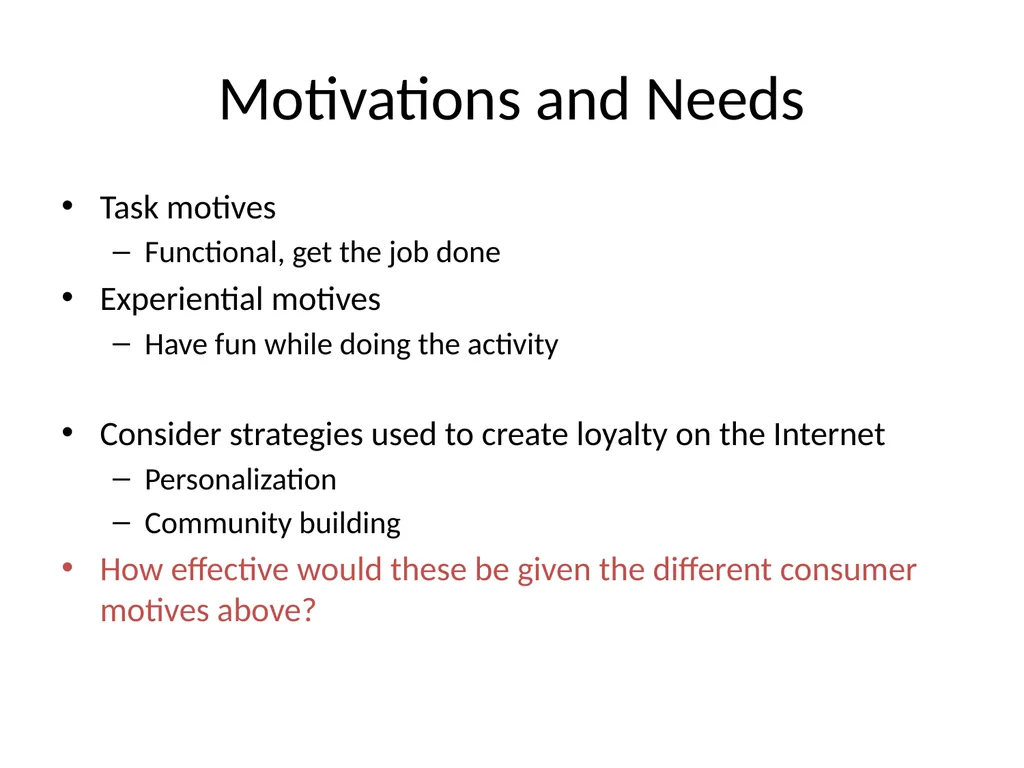
slide10. Motivations and Needs Task motives
Functional, get the job done
Experiential motives
Have fun while doing the activity
Consider strategies used to create loyalty on the Internet
Personalization
Community building
How effective would these be given the different consumer motives above?<br>
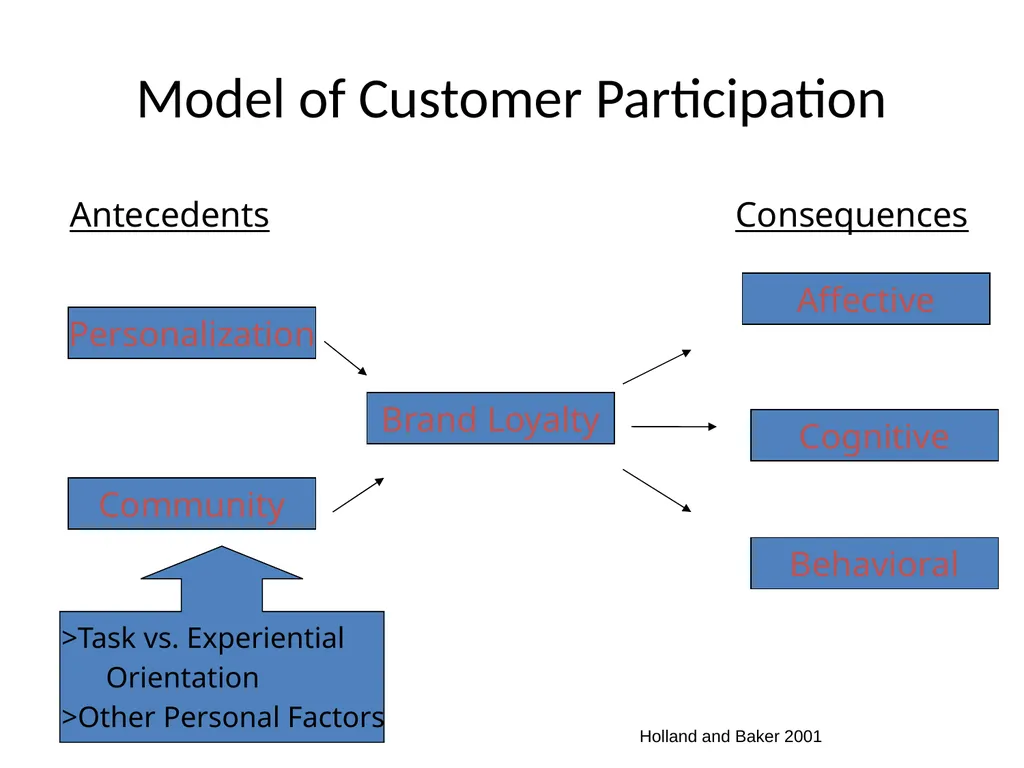
slide11. Model of Customer Participation Personalization Community Brand Loyalty Affective Cognitive Behavioral Antecedents Consequences >Task vs. Experiential
Orientation
>Other Personal Factors Holland and Baker 2001<br>
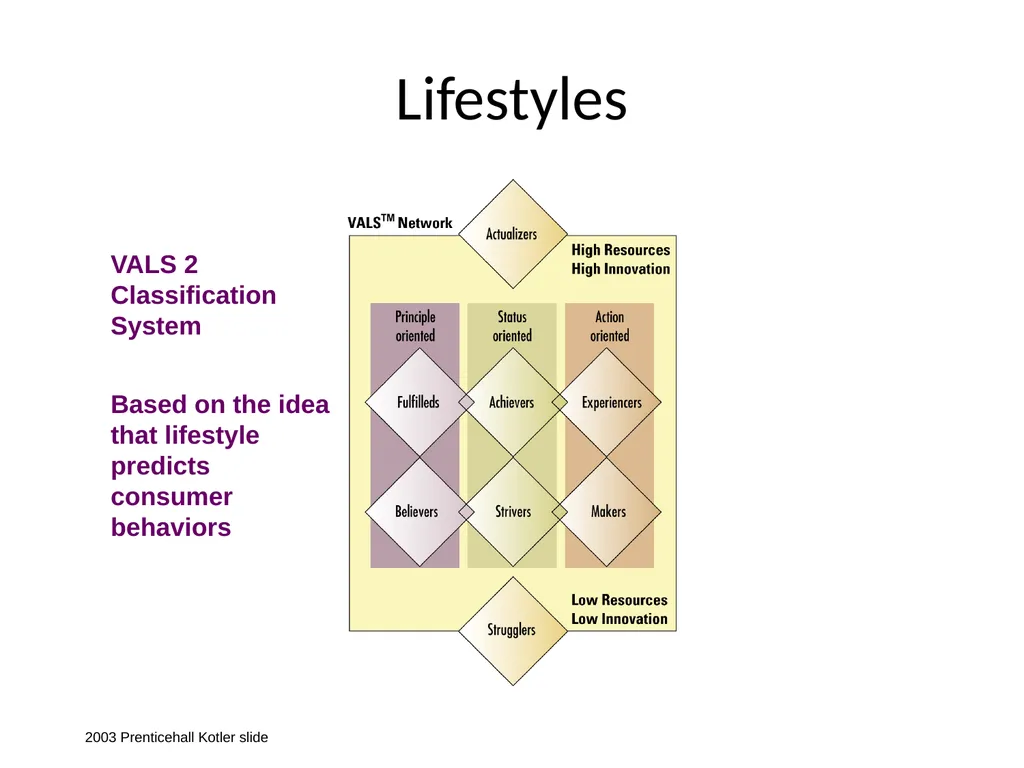
slide12. Lifestyles VALS 2 Classification System
Based on the idea that lifestyle predicts consumer behaviors 2003 Prenticehall Kotler slide<br>
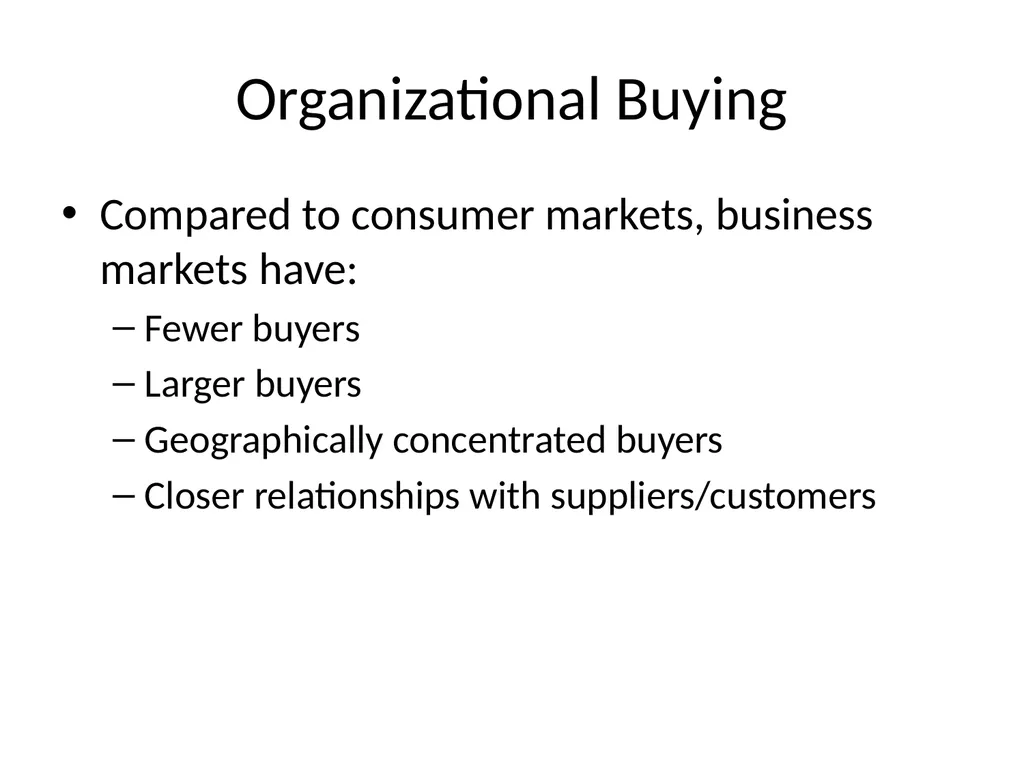
slide13. Organizational Buying Compared to consumer markets, business markets have:
Fewer buyers
Larger buyers
Geographically concentrated buyers
Closer relationships with suppliers/customers<br>
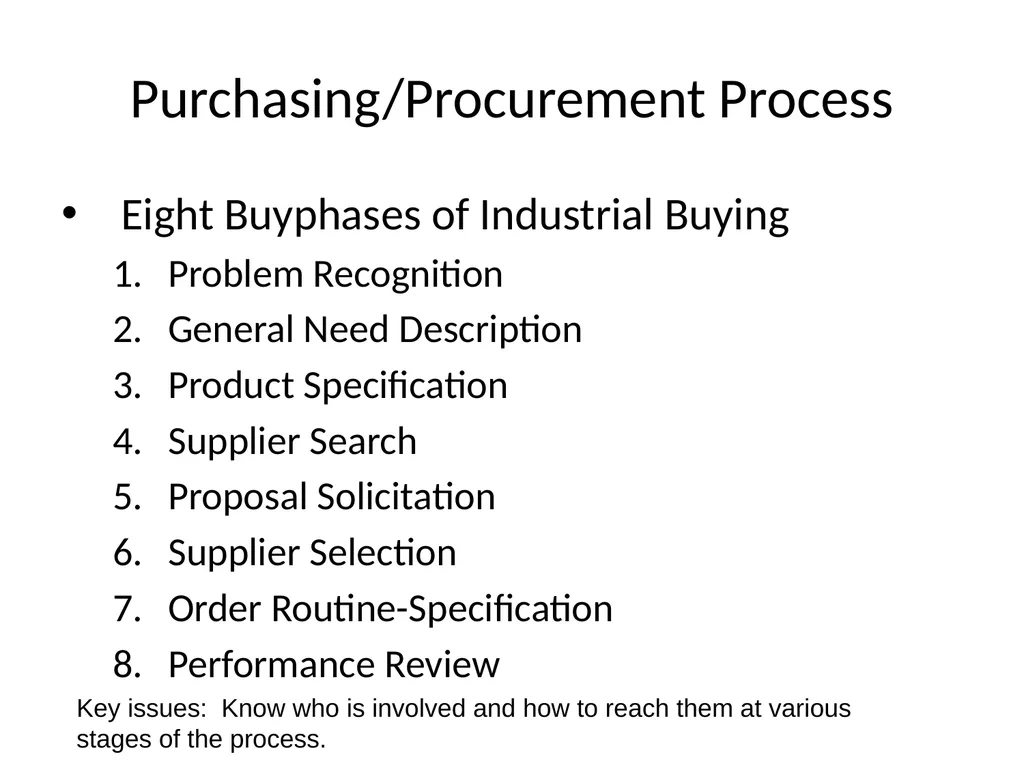
slide14. Purchasing/Procurement Process Eight Buyphases of Industrial Buying
Problem Recognition
General Need Description
Product Specification
Supplier Search
Proposal Solicitation
Supplier Selection
Order Routine-Specification
Performance Review Key issues: Know who is involved and how to reach them at various stages of the process.<br>
slide15. Influences on Business Buyers Figure 7-1: Major Influences on Business Buying Behavior 2003 Prenticehall Kotler slide<br>
slide16. Influences on Business Buyers Plastics.com offers buyers and sellers of plastics a marketplace plus news and information 2003 Prenticehall Kotler slide<br>
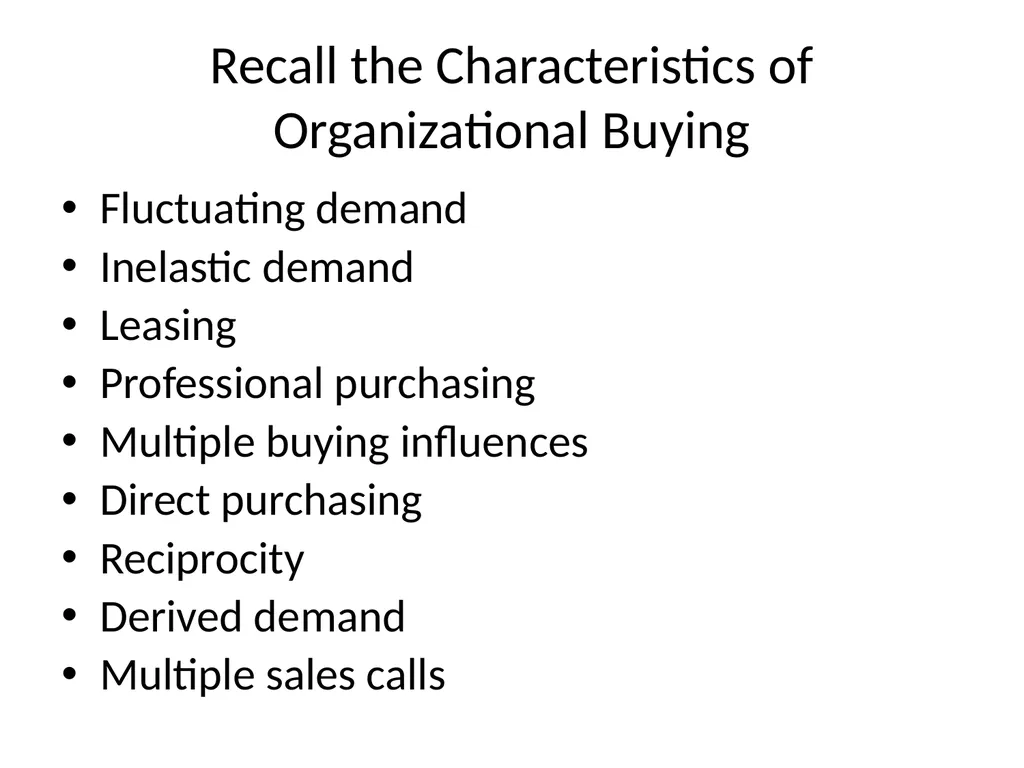
slide17. Recall the Characteristics of Organizational Buying Fluctuating demand
Inelastic demand
Leasing
Professional purchasing
Multiple buying influences
Direct purchasing
Reciprocity
Derived demand
Multiple sales calls<br>
slide18. Organizational Buying The Business Market Includes For-Profit Companies and Two Specialized Groups:
The institutional market
Schools, hospitals, prisons, etc. with a “captive” audience
Cost and quality standards drive purchases
The government market
Bidding process awards contracts<br>
slide19. Discussion Your firm is interested in targeting the government market.
How might this decision influence the marketing mix?
How is selling to the government market different from selling to other business markets? How do needs differ?<br>
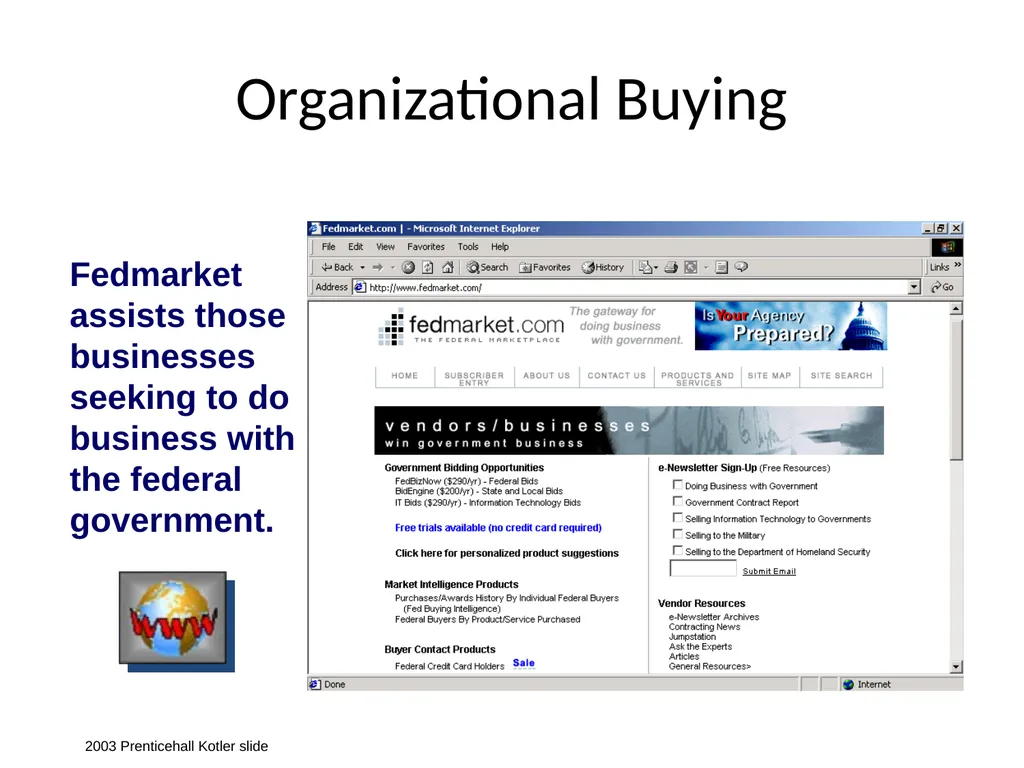
slide20. Organizational Buying Fedmarket assists those businesses seeking to do business with the federal government. 2003 Prenticehall Kotler slide<br>
slide21. Customer Retention Focus Recognizes leaky bucket*
Recognizes polygamous loyalty
Directs marketing efforts to current customers (relationships)
Opposite of conquest marketing
Always offering discounts to get new customers<br>
slide22. Discuss Businesses commonly lose 15-20% of their customers each year
For what reasons do people defect?<br>
slide23. Types of defectors Price
Product
Service
Market
Technological
Organizational
Snob<br>
slide24. Benefits of C.R. from the Firm’s Perspective Profits derived from sales
Reducing defections by 5% can boost profits 25-85%
Profits from reduced operating costs
It is 3-5 times cheaper to keep a customer than recruit a new one
Profits from referrals
Positive effects of W.O.M.<br>
slide25. Discuss What is the 20/80/30 Rule? Why is it important to remember this rule?<br>
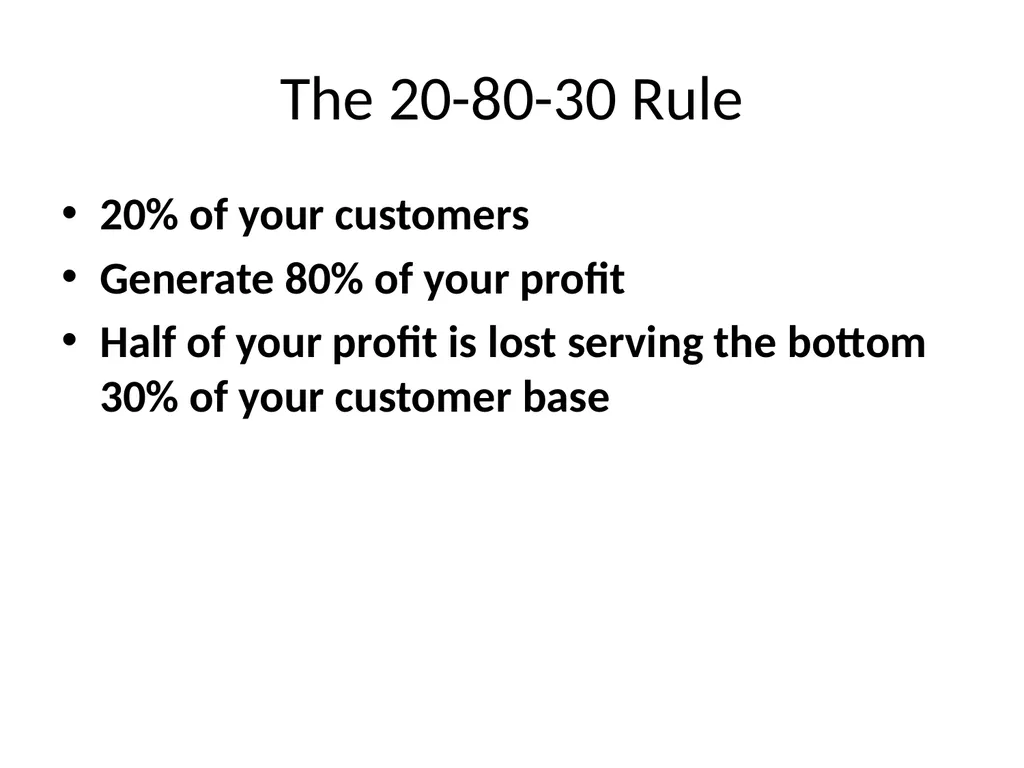
slide26. The 20-80-30 Rule 20% of your customers
Generate 80% of your profit
Half of your profit is lost serving the bottom 30% of your customer base<br>
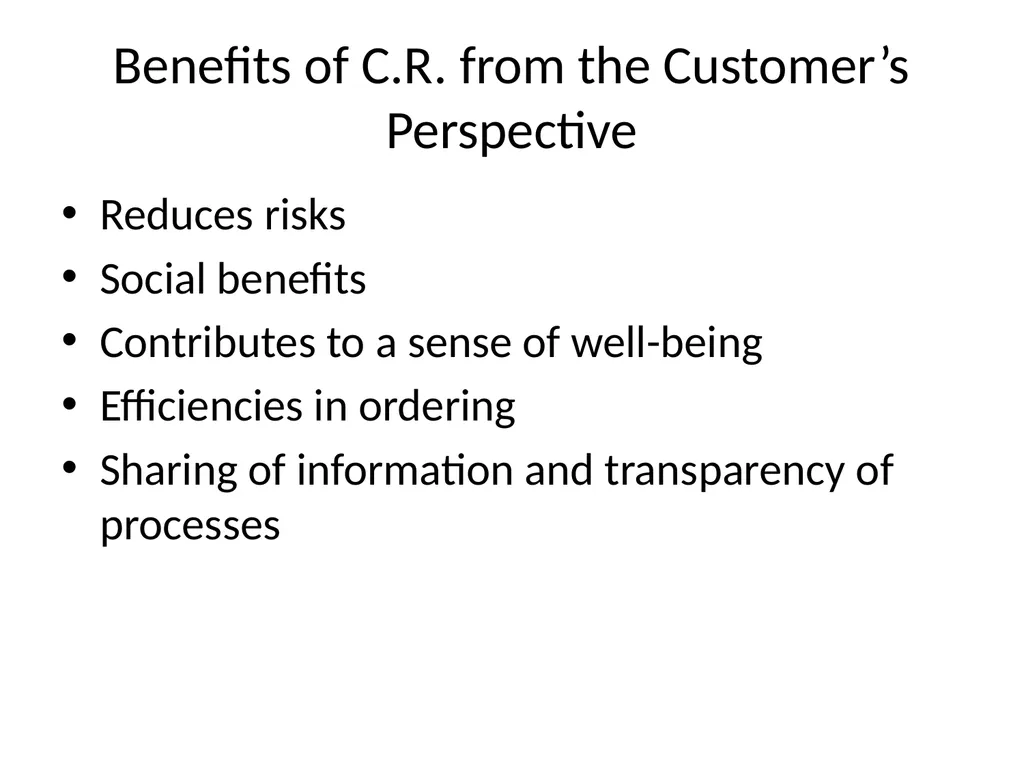
slide27. Benefits of C.R. from the Customer’s Perspective Reduces risks
Social benefits
Contributes to a sense of well-being
Efficiencies in ordering
Sharing of information and transparency of processes<br>
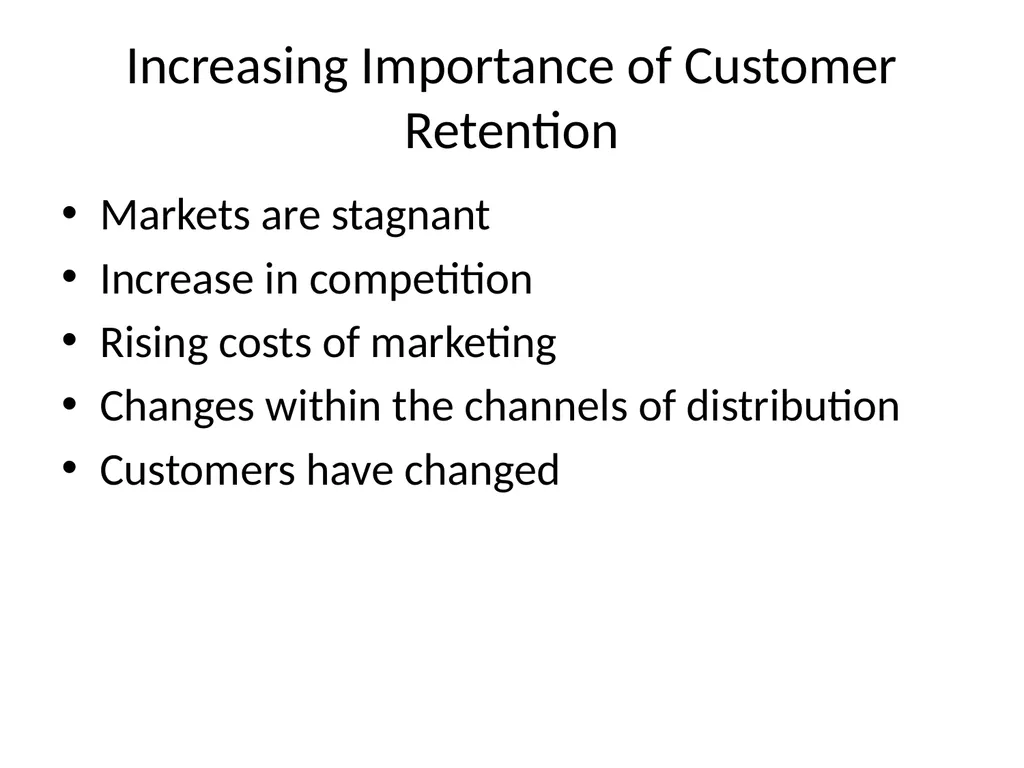
slide28. Increasing Importance of Customer Retention Markets are stagnant
Increase in competition
Rising costs of marketing
Changes within the channels of distribution
Customers have changed<br>
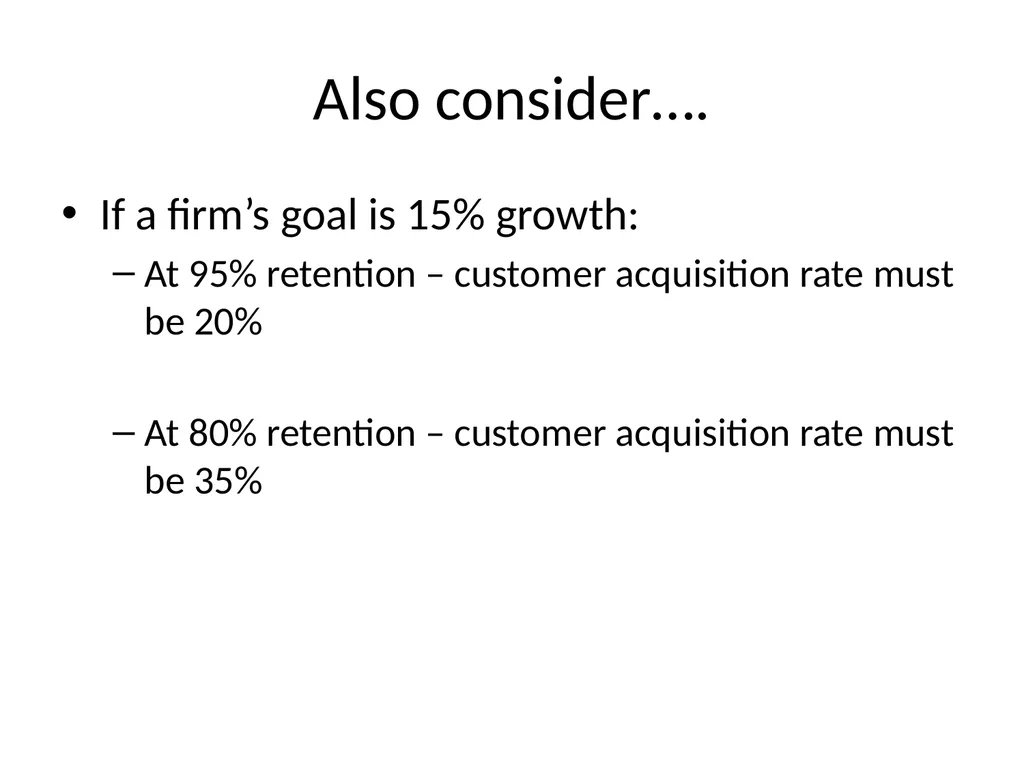
slide29. Also consider…. If a firm’s goal is 15% growth:
At 95% retention – customer acquisition rate must be 20%
At 80% retention – customer acquisition rate must be 35%<br>
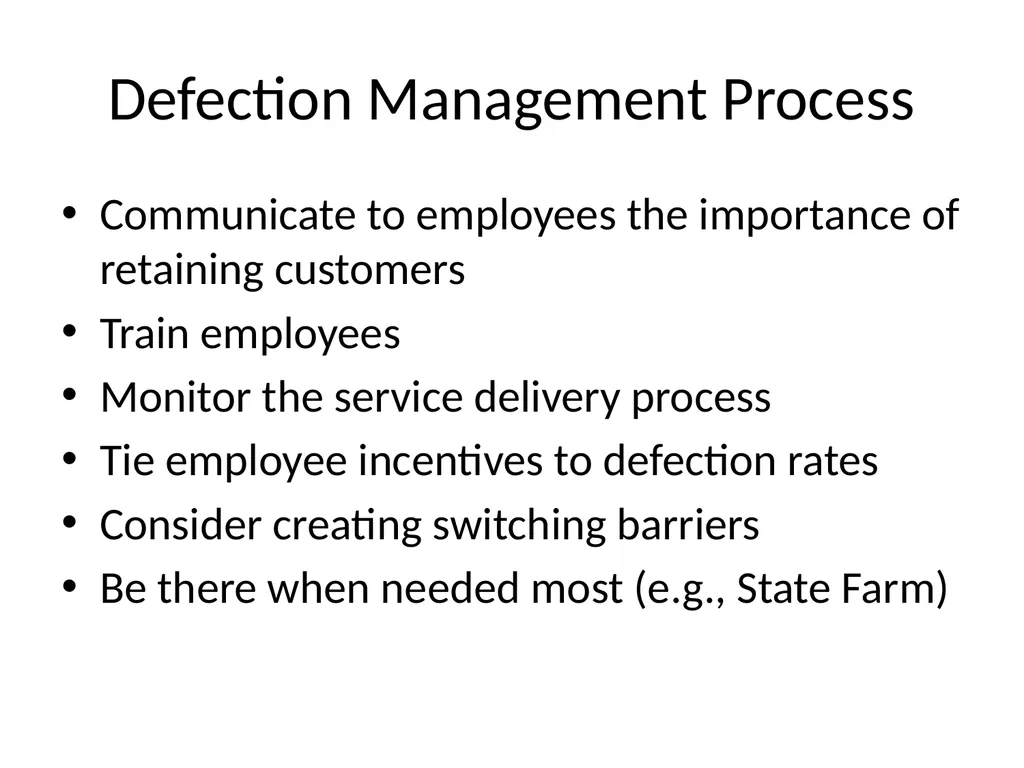
slide30. Defection Management Process Communicate to employees the importance of retaining customers
Train employees
Monitor the service delivery process
Tie employee incentives to defection rates
Consider creating switching barriers
Be there when needed most (e.g., State Farm)<br>
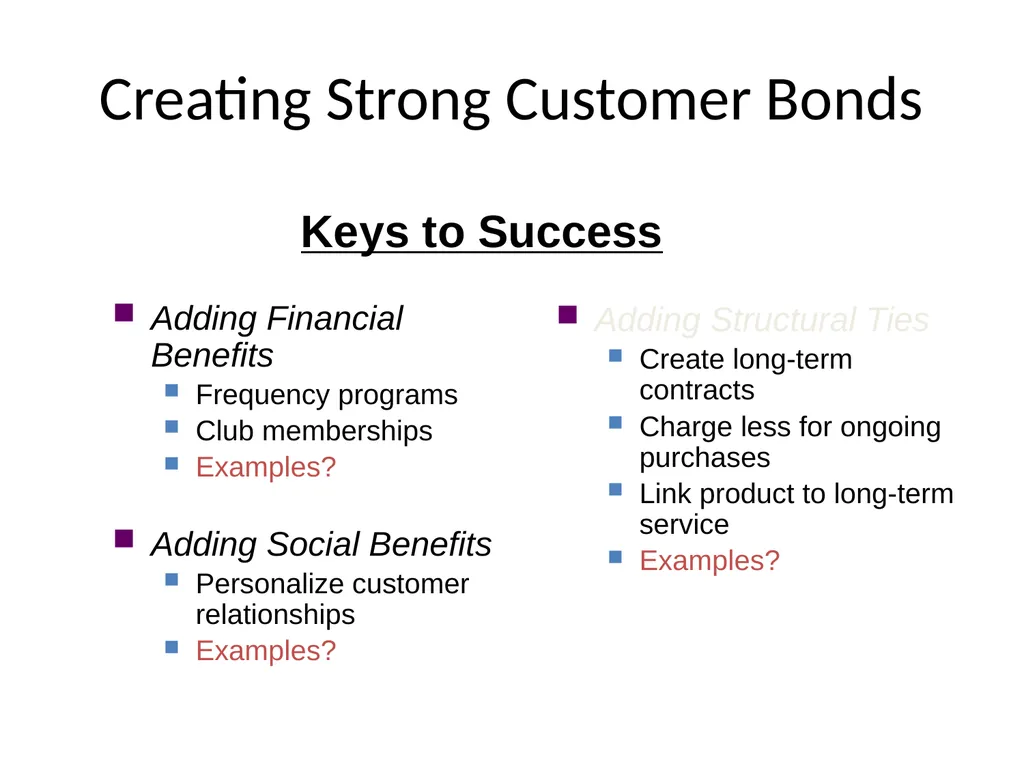
slide31. Creating Strong Customer Bonds Adding Financial Benefits
Frequency programs
Club memberships
Examples?
Adding Social Benefits
Personalize customer relationships
Examples? Adding Structural Ties
Create long-term contracts
Charge less for ongoing purchases
Link product to long-term service
Examples? Keys to Success<br>
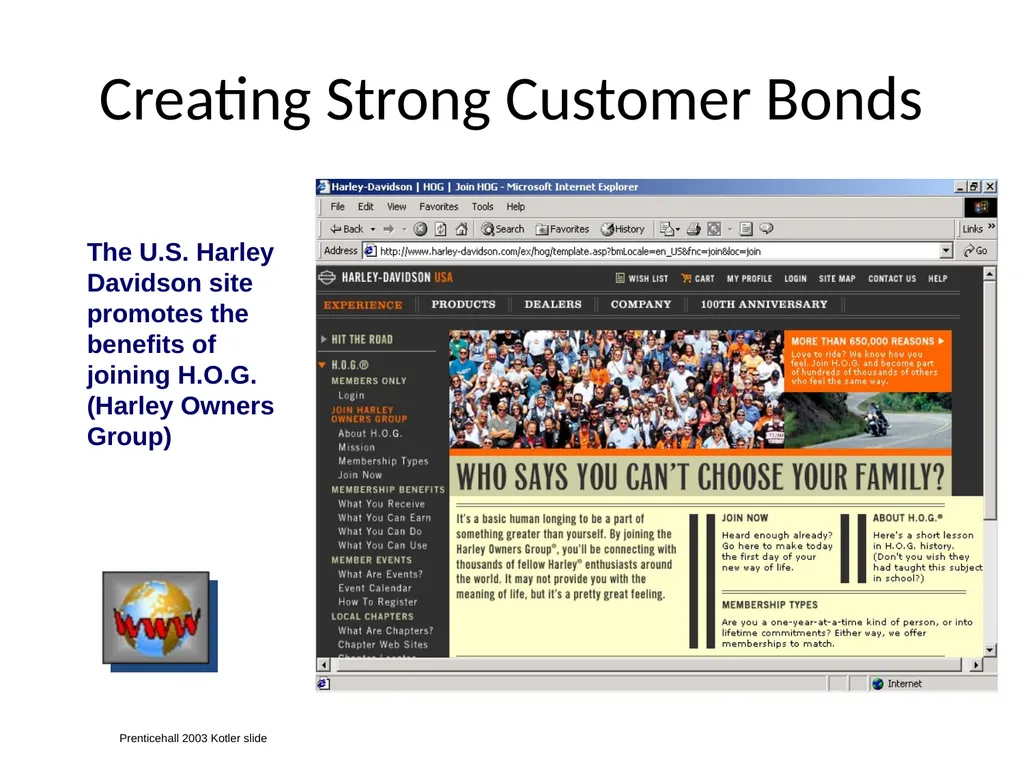
slide32. Creating Strong Customer Bonds The U.S. Harley Davidson site promotes the benefits of joining H.O.G. (Harley Owners Group) Prenticehall 2003 Kotler slide<br>
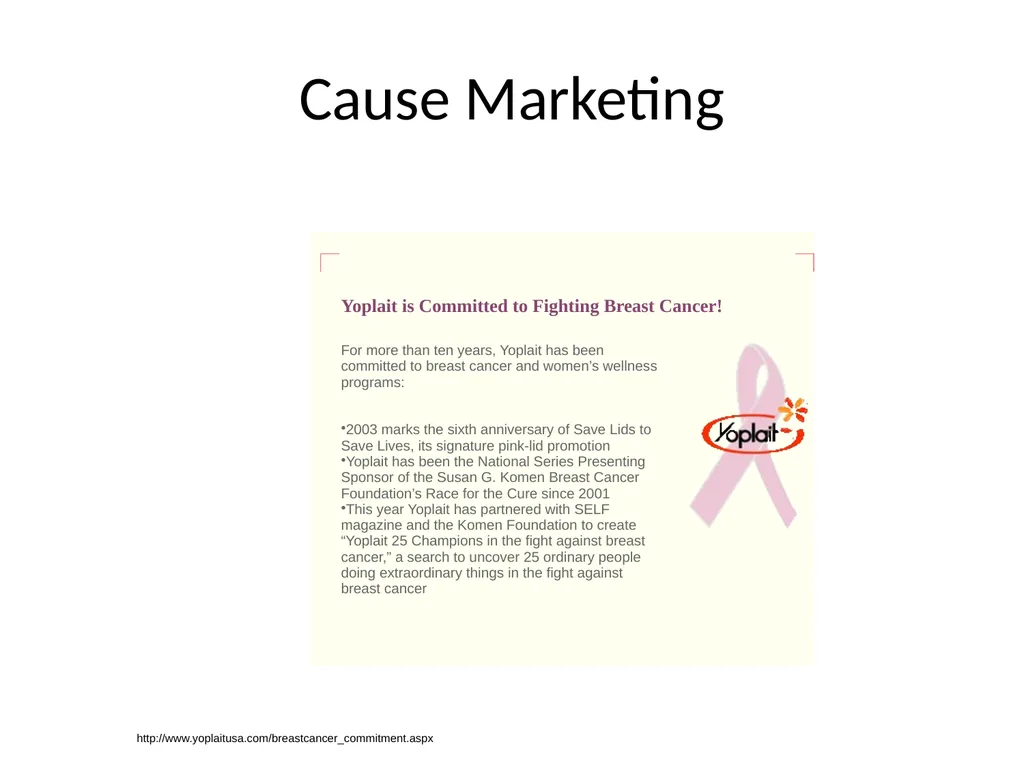
slide33. Other Retention Programs Cause marketing
Data-base targeting/marketing
Aftermarketing
Service guarantees<br>
slide34. Cause Marketing http://www.yoplaitusa.com/breastcancer_commitment.aspx<br>
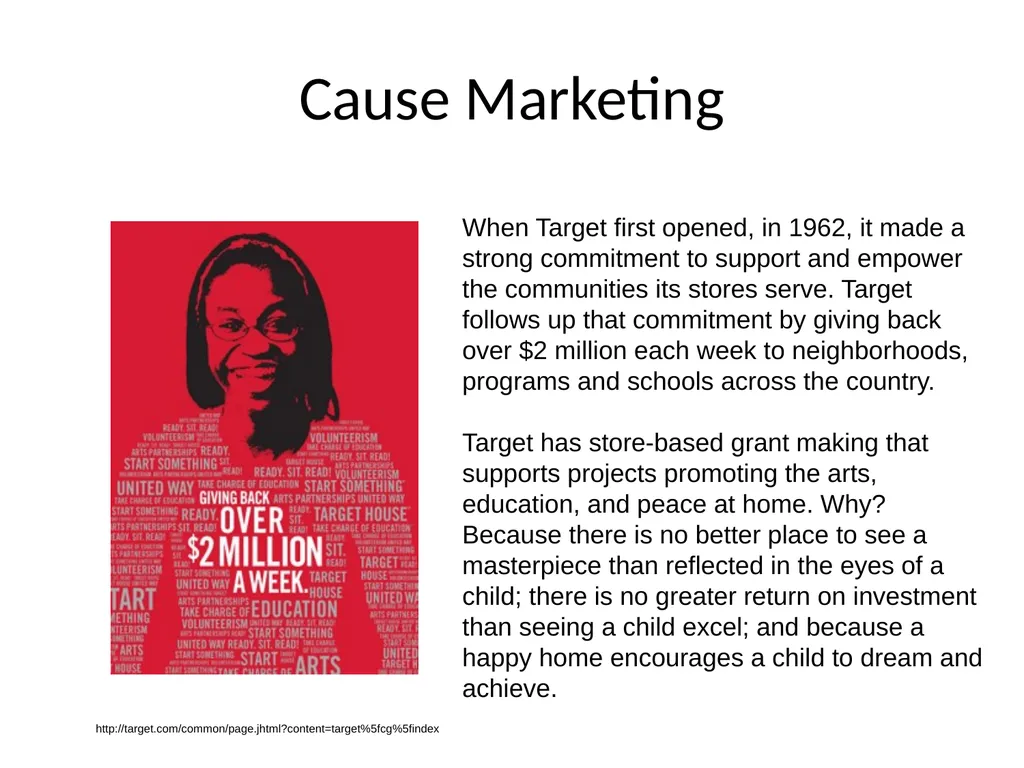
slide35. Cause Marketing When Target first opened, in 1962, it made a strong commitment to support and empower the communities its stores serve. Target follows up that commitment by giving back over $2 million each week to neighborhoods, programs and schools across the country. Target has store-based grant making that supports projects promoting the arts, education, and peace at home. Why? Because there is no better place to see a masterpiece than reflected in the eyes of a child; there is no greater return on investment than seeing a child excel; and because a happy home encourages a child to dream and achieve. http://target.com/common/page.jhtml?content=target%5fcg%5findex<br>
slide36. Database Targeting Learns your preferences and caters to those preferences……
CDNow.com
Amazon.com
Hilton
Coldwater Creek<br>
slide37. Aftermarketing Follow-up after the sale…
Chevy Venture Warner Brothers Version
DVD’s, “soccer” blanket, bag, toys for kids, gift certificate to buy off of WarnerBrothers.com, service coupons
Piano
Metronome<br>
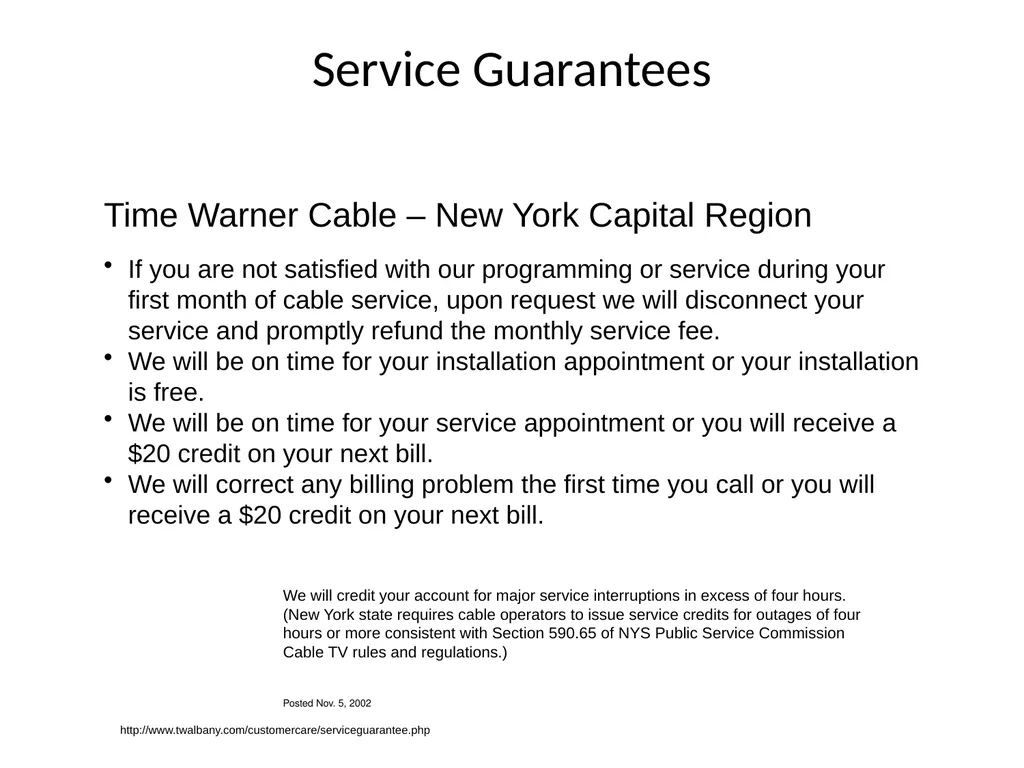
slide38. Service Guarantees Time Warner Cable – New York Capital Region
If you are not satisfied with our programming or service during your first month of cable service, upon request we will disconnect your service and promptly refund the monthly service fee.
We will be on time for your installation appointment or your installation is free.
We will be on time for your service appointment or you will receive a $20 credit on your next bill.
We will correct any billing problem the first time you call or you will receive a $20 credit on your next bill. We will credit your account for major service interruptions in excess of four hours. (New York state requires cable operators to issue service credits for outages of four hours or more consistent with Section 590.65 of NYS Public Service Commission Cable TV rules and regulations.) Posted Nov. 5, 2002 http://www.twalbany.com/customercare/serviceguarantee.php<br>
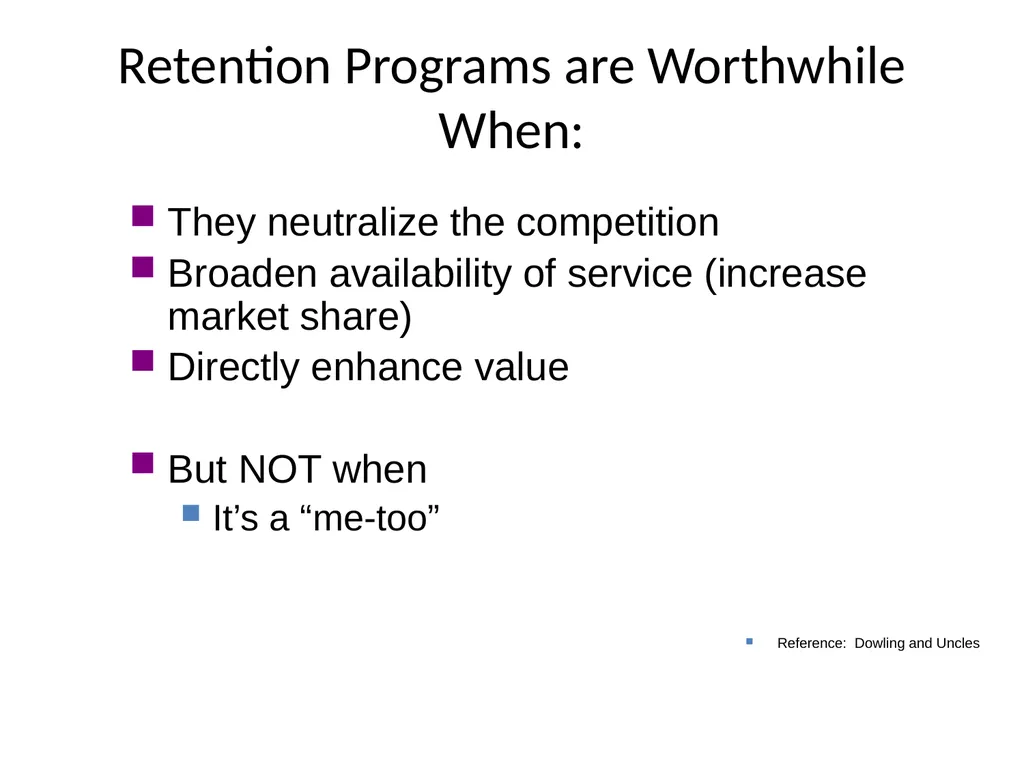
slide39. Retention Programs are Worthwhile When: They neutralize the competition
Broaden availability of service (increase market share)
Directly enhance value
But NOT when
It’s a “me-too”
Reference: Dowling and Uncles<br>
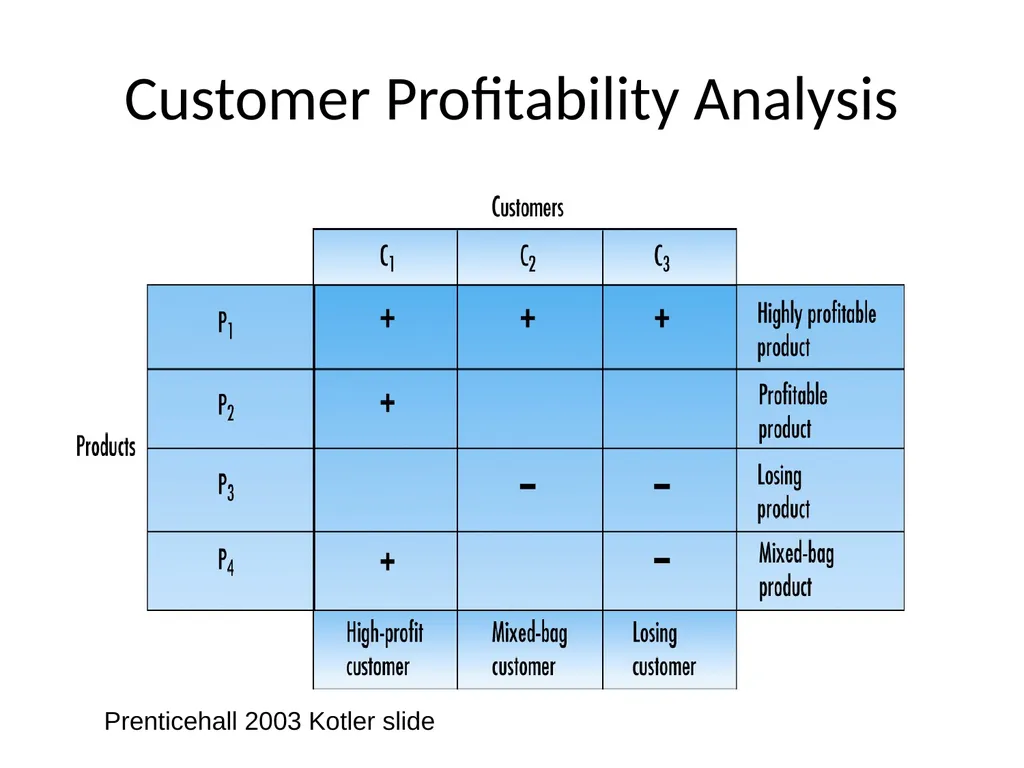
slide40. Customer Profitability Analysis Prenticehall 2003 Kotler slide<br>
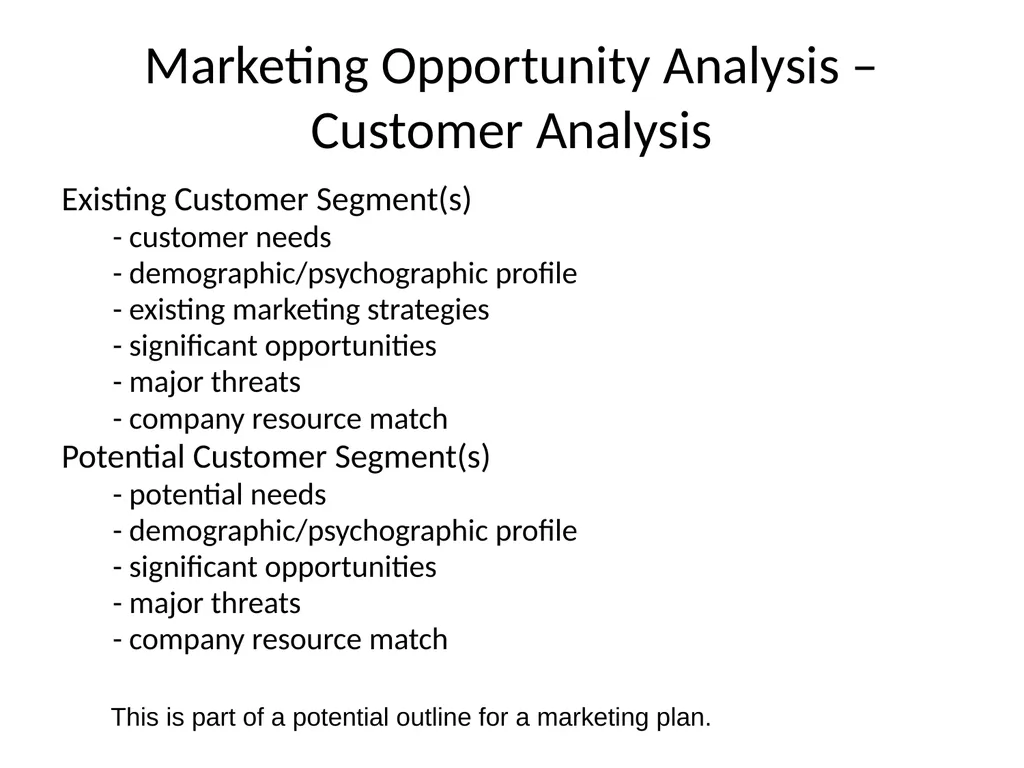
slide41. Marketing Opportunity Analysis – Customer Analysis Existing Customer Segment(s)
- customer needs
- demographic/psychographic profile
- existing marketing strategies
- significant opportunities
- major threats
- company resource match
Potential Customer Segment(s)
- potential needs
- demographic/psychographic profile
- significant opportunities
- major threats
- company resource match This is part of a potential outline for a marketing plan.<br>
slide2. Key Issues Different customer strategies
Consumer behavior
Business behavior
Customer retention (i.e., the focus of customer relationship management, CRM)<br>
slide3. Customer Strategies Get more customers (market share)
Acquire profitable ones
Keep customers longer
Retain them
Reduces costs of serving them
Grow current customers into bigger customers (share of customer)
Up-selling additional products for one problem
Cross-selling other products for different problems
Give them benefits for referrals
“Fire” unprofitable customers
1-4 Frequently stated as an OBJECTIVE in the marketing planning process<br>
slide4. To fulfill customer objectives…. have to understand customers<br>
slide5. What do customers expect? What are they?
Do we meet them?
Expectancy-Disconfirmation Model
Applies to organizational and consumer markets<br>
slide6. Discuss Why do you think many firms do such a poor job of understanding the needs, wants, and expectations of their customers? Do they buy into the “better mousetrap” philosophy and believe that quality is the only necessary requirement of maintaining customer relationships? Explain.<br>
slide7. Satisfaction Metrics Where Satisfaction = Expectations – Perceptions:
Financial Performance
Marketing Performance
Customer Retention rates
Customer Attrition Rate
Customer Recovery Rate
Referrals
Viral marketing (what they say on the Internet)
Importance Performance Evaluations<br>
slide8. How do consumers decide what to buy? Key issues: Know who is involved and how to reach them at various stages of the process. 2003 Prenticehall Kotler slides<br>
slide9. What Influences Consumer Purchasing? External Influences
Culture
Social class
Family
Peers
Situational Factors Internal Influences
Economic Resources
Time
Cognitive Resources
Motivation and needs
Lifestyles
Expectations<br>
slide10. Motivations and Needs Task motives
Functional, get the job done
Experiential motives
Have fun while doing the activity
Consider strategies used to create loyalty on the Internet
Personalization
Community building
How effective would these be given the different consumer motives above?<br>
slide11. Model of Customer Participation Personalization Community Brand Loyalty Affective Cognitive Behavioral Antecedents Consequences >Task vs. Experiential
Orientation
>Other Personal Factors Holland and Baker 2001<br>
slide12. Lifestyles VALS 2 Classification System
Based on the idea that lifestyle predicts consumer behaviors 2003 Prenticehall Kotler slide<br>
slide13. Organizational Buying Compared to consumer markets, business markets have:
Fewer buyers
Larger buyers
Geographically concentrated buyers
Closer relationships with suppliers/customers<br>
slide14. Purchasing/Procurement Process Eight Buyphases of Industrial Buying
Problem Recognition
General Need Description
Product Specification
Supplier Search
Proposal Solicitation
Supplier Selection
Order Routine-Specification
Performance Review Key issues: Know who is involved and how to reach them at various stages of the process.<br>
slide15. Influences on Business Buyers Figure 7-1: Major Influences on Business Buying Behavior 2003 Prenticehall Kotler slide<br>
slide16. Influences on Business Buyers Plastics.com offers buyers and sellers of plastics a marketplace plus news and information 2003 Prenticehall Kotler slide<br>
slide17. Recall the Characteristics of Organizational Buying Fluctuating demand
Inelastic demand
Leasing
Professional purchasing
Multiple buying influences
Direct purchasing
Reciprocity
Derived demand
Multiple sales calls<br>
slide18. Organizational Buying The Business Market Includes For-Profit Companies and Two Specialized Groups:
The institutional market
Schools, hospitals, prisons, etc. with a “captive” audience
Cost and quality standards drive purchases
The government market
Bidding process awards contracts<br>
slide19. Discussion Your firm is interested in targeting the government market.
How might this decision influence the marketing mix?
How is selling to the government market different from selling to other business markets? How do needs differ?<br>
slide20. Organizational Buying Fedmarket assists those businesses seeking to do business with the federal government. 2003 Prenticehall Kotler slide<br>
slide21. Customer Retention Focus Recognizes leaky bucket*
Recognizes polygamous loyalty
Directs marketing efforts to current customers (relationships)
Opposite of conquest marketing
Always offering discounts to get new customers<br>
slide22. Discuss Businesses commonly lose 15-20% of their customers each year
For what reasons do people defect?<br>
slide23. Types of defectors Price
Product
Service
Market
Technological
Organizational
Snob<br>
slide24. Benefits of C.R. from the Firm’s Perspective Profits derived from sales
Reducing defections by 5% can boost profits 25-85%
Profits from reduced operating costs
It is 3-5 times cheaper to keep a customer than recruit a new one
Profits from referrals
Positive effects of W.O.M.<br>
slide25. Discuss What is the 20/80/30 Rule? Why is it important to remember this rule?<br>
slide26. The 20-80-30 Rule 20% of your customers
Generate 80% of your profit
Half of your profit is lost serving the bottom 30% of your customer base<br>
slide27. Benefits of C.R. from the Customer’s Perspective Reduces risks
Social benefits
Contributes to a sense of well-being
Efficiencies in ordering
Sharing of information and transparency of processes<br>
slide28. Increasing Importance of Customer Retention Markets are stagnant
Increase in competition
Rising costs of marketing
Changes within the channels of distribution
Customers have changed<br>
slide29. Also consider…. If a firm’s goal is 15% growth:
At 95% retention – customer acquisition rate must be 20%
At 80% retention – customer acquisition rate must be 35%<br>
slide30. Defection Management Process Communicate to employees the importance of retaining customers
Train employees
Monitor the service delivery process
Tie employee incentives to defection rates
Consider creating switching barriers
Be there when needed most (e.g., State Farm)<br>
slide31. Creating Strong Customer Bonds Adding Financial Benefits
Frequency programs
Club memberships
Examples?
Adding Social Benefits
Personalize customer relationships
Examples? Adding Structural Ties
Create long-term contracts
Charge less for ongoing purchases
Link product to long-term service
Examples? Keys to Success<br>
slide32. Creating Strong Customer Bonds The U.S. Harley Davidson site promotes the benefits of joining H.O.G. (Harley Owners Group) Prenticehall 2003 Kotler slide<br>
slide33. Other Retention Programs Cause marketing
Data-base targeting/marketing
Aftermarketing
Service guarantees<br>
slide34. Cause Marketing http://www.yoplaitusa.com/breastcancer_commitment.aspx<br>
slide35. Cause Marketing When Target first opened, in 1962, it made a strong commitment to support and empower the communities its stores serve. Target follows up that commitment by giving back over $2 million each week to neighborhoods, programs and schools across the country. Target has store-based grant making that supports projects promoting the arts, education, and peace at home. Why? Because there is no better place to see a masterpiece than reflected in the eyes of a child; there is no greater return on investment than seeing a child excel; and because a happy home encourages a child to dream and achieve. http://target.com/common/page.jhtml?content=target%5fcg%5findex<br>
slide36. Database Targeting Learns your preferences and caters to those preferences……
CDNow.com
Amazon.com
Hilton
Coldwater Creek<br>
slide37. Aftermarketing Follow-up after the sale…
Chevy Venture Warner Brothers Version
DVD’s, “soccer” blanket, bag, toys for kids, gift certificate to buy off of WarnerBrothers.com, service coupons
Piano
Metronome<br>
slide38. Service Guarantees Time Warner Cable – New York Capital Region
If you are not satisfied with our programming or service during your first month of cable service, upon request we will disconnect your service and promptly refund the monthly service fee.
We will be on time for your installation appointment or your installation is free.
We will be on time for your service appointment or you will receive a $20 credit on your next bill.
We will correct any billing problem the first time you call or you will receive a $20 credit on your next bill. We will credit your account for major service interruptions in excess of four hours. (New York state requires cable operators to issue service credits for outages of four hours or more consistent with Section 590.65 of NYS Public Service Commission Cable TV rules and regulations.) Posted Nov. 5, 2002 http://www.twalbany.com/customercare/serviceguarantee.php<br>
slide39. Retention Programs are Worthwhile When: They neutralize the competition
Broaden availability of service (increase market share)
Directly enhance value
But NOT when
It’s a “me-too”
Reference: Dowling and Uncles<br>
slide40. Customer Profitability Analysis Prenticehall 2003 Kotler slide<br>
slide41. Marketing Opportunity Analysis – Customer Analysis Existing Customer Segment(s)
- customer needs
- demographic/psychographic profile
- existing marketing strategies
- significant opportunities
- major threats
- company resource match
Potential Customer Segment(s)
- potential needs
- demographic/psychographic profile
- significant opportunities
- major threats
- company resource match This is part of a potential outline for a marketing plan.<br>