How does a marathon runner use aerobic endurance? Explore different fitness training methods Flexibility training Strength, Muscular Endurance and Power training Aerobic Endurance training Speed training Aerobic Endurance Training
"How does a marathon runner use aerobic endurance?" is the property of its rightful owner. Permission is granted to
download and print the materials on this website for personal, non-commercial use only, and to display it
on your personal computer provided you do not modify the materials and that you retain all copyright
notices contained in the materials. By downloading content from our website, you accept the terms of this
agreement.
Presentation Transcript
01
How does a marathon runner use aerobic endurance?<br>
02
Explore different fitness training methods Flexibility training
Strength, Muscular Endurance and Power training
Aerobic Endurance training
Speed training<br>
03
Aerobic Endurance Training Continuous training
Fartlek training
Interval training
Circuit training<br>
04
Home and Expert Groups In your groups of 4 number yourselves 1 – 4
Group 1 Continuous training
Group 2 Fartlek training
Group 3 Interval training
Group 4 Circuit training<br>
05
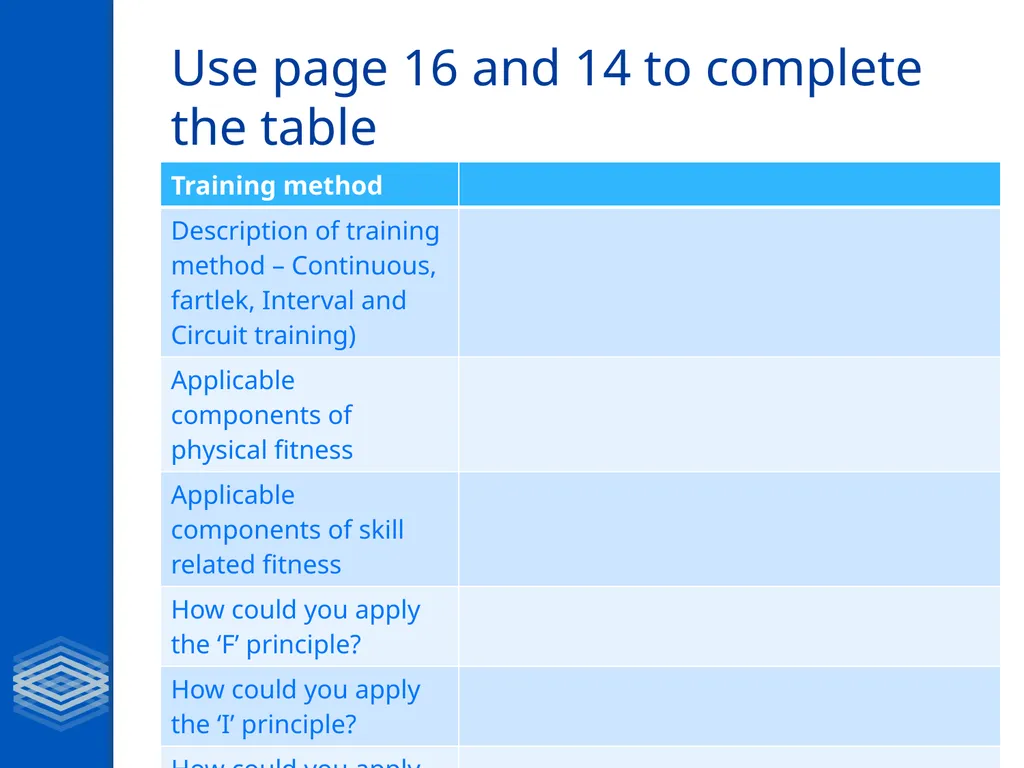
Use page 16 and 14 to complete the table<br>
06
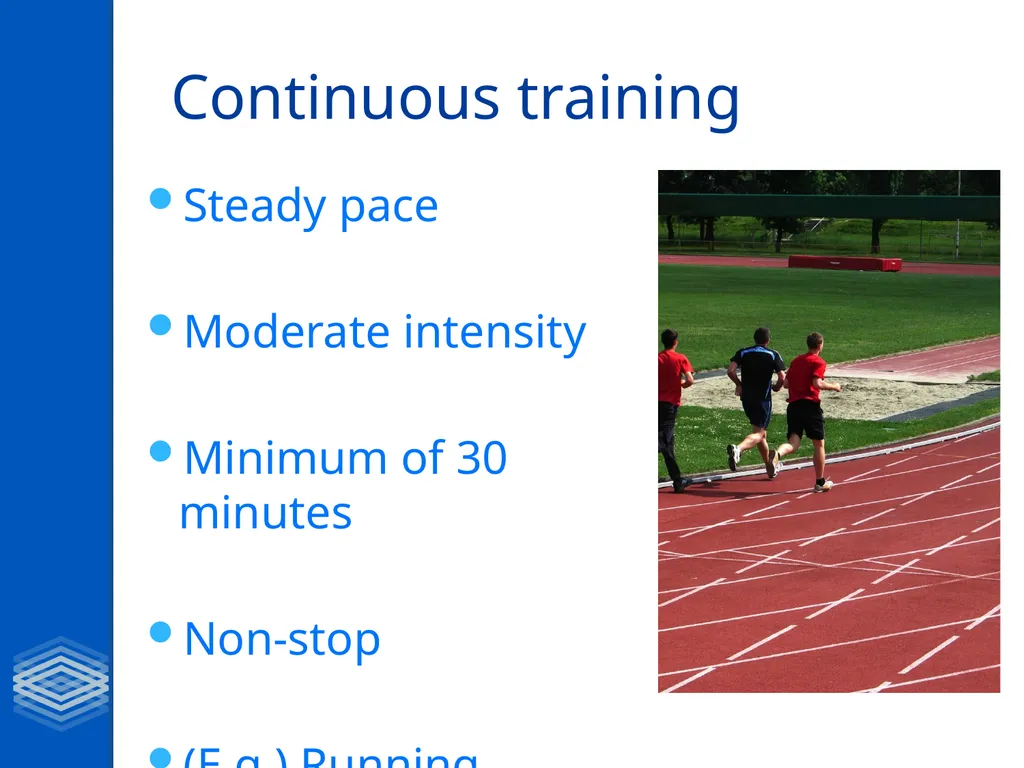
Continuous training Steady pace
Moderate intensity
Minimum of 30 minutes
Non-stop
(E.g.) Running, swimming<br>
07
Advantages/Disadvantages Advantages
Running is cheap/free
Can really improve aerobic endurance
Can be done without equipment
Disadvantages
Individuals can have problems with motivation<br>
08
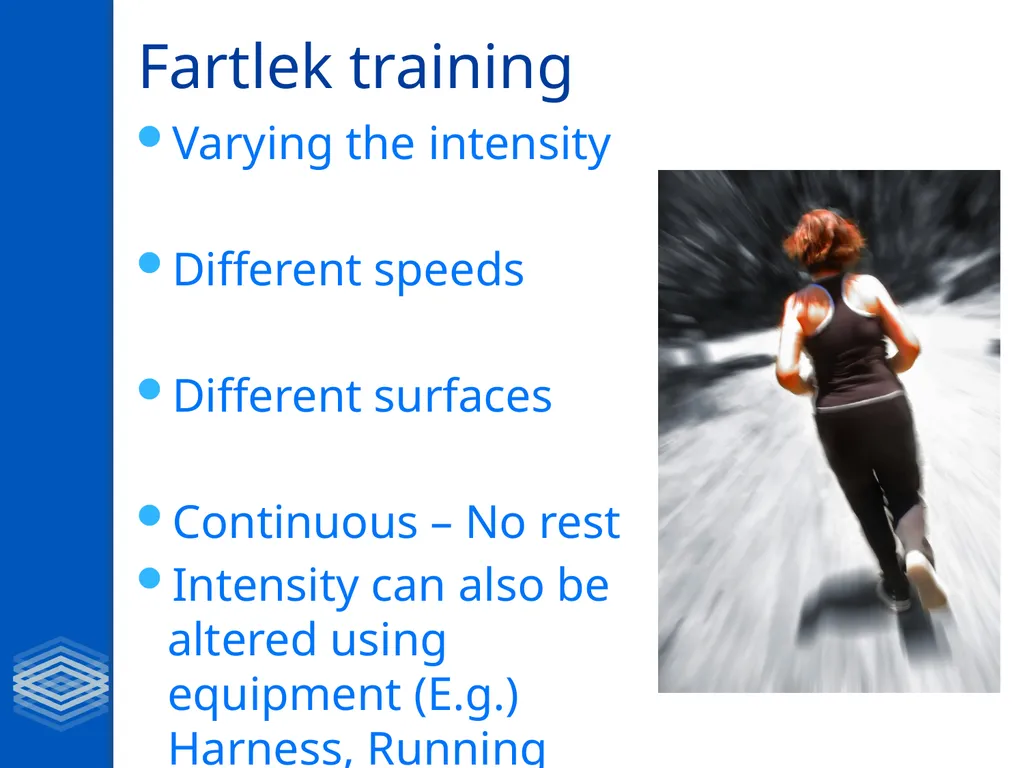
Fartlek training Varying the intensity
Different speeds
Different surfaces
Continuous – No rest
Intensity can also be altered using equipment (E.g.) Harness, Running with weights<br>
09
Advantages/Disadvantages Advantages
Low cost/free
Varying the training can motivate
Disadvantages
Accessing different surfaces/terrains may be difficult in some parts of the country<br>
10
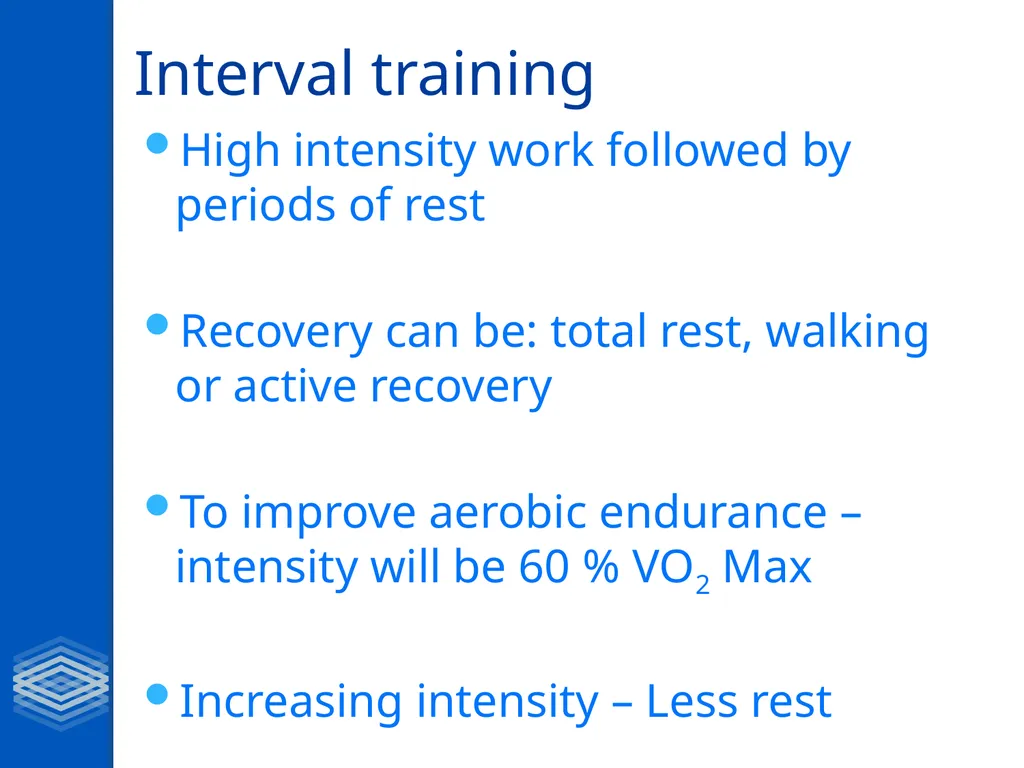
Interval training High intensity work followed by periods of rest
Recovery can be: total rest, walking or active recovery
To improve aerobic endurance – intensity will be 60 % VO2 Max
Increasing intensity – Less rest<br>
11
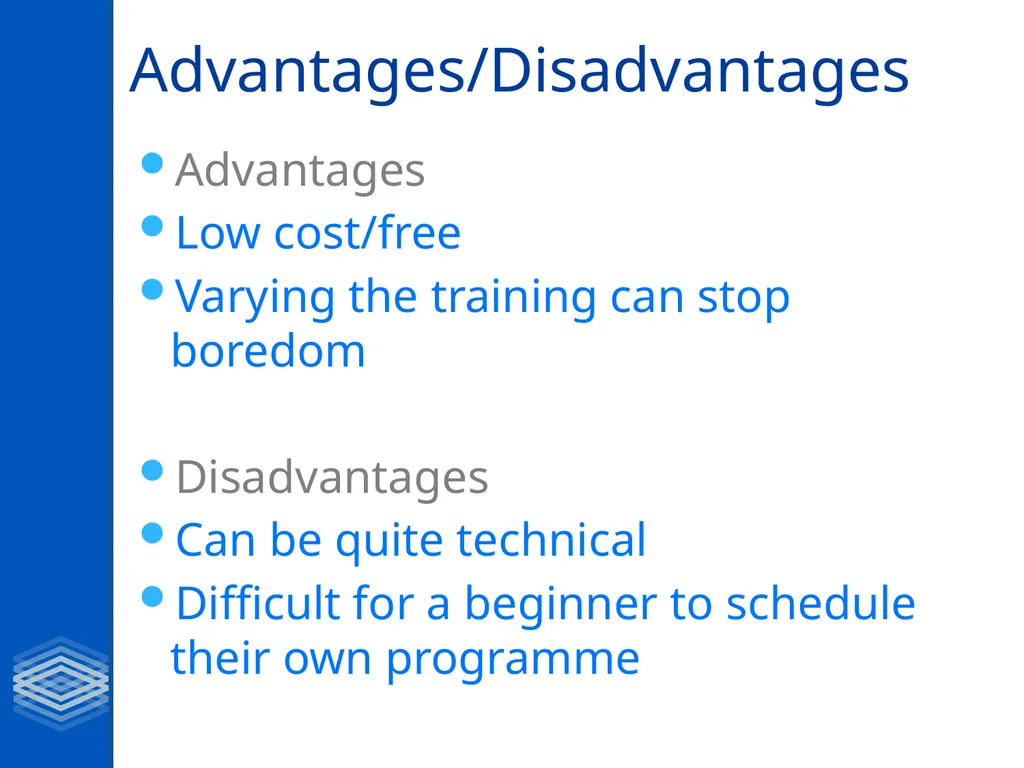
Advantages/Disadvantages Advantages
Low cost/free
Varying the training can stop boredom
Disadvantages
Can be quite technical
Difficult for a beginner to schedule their own programme<br>
12
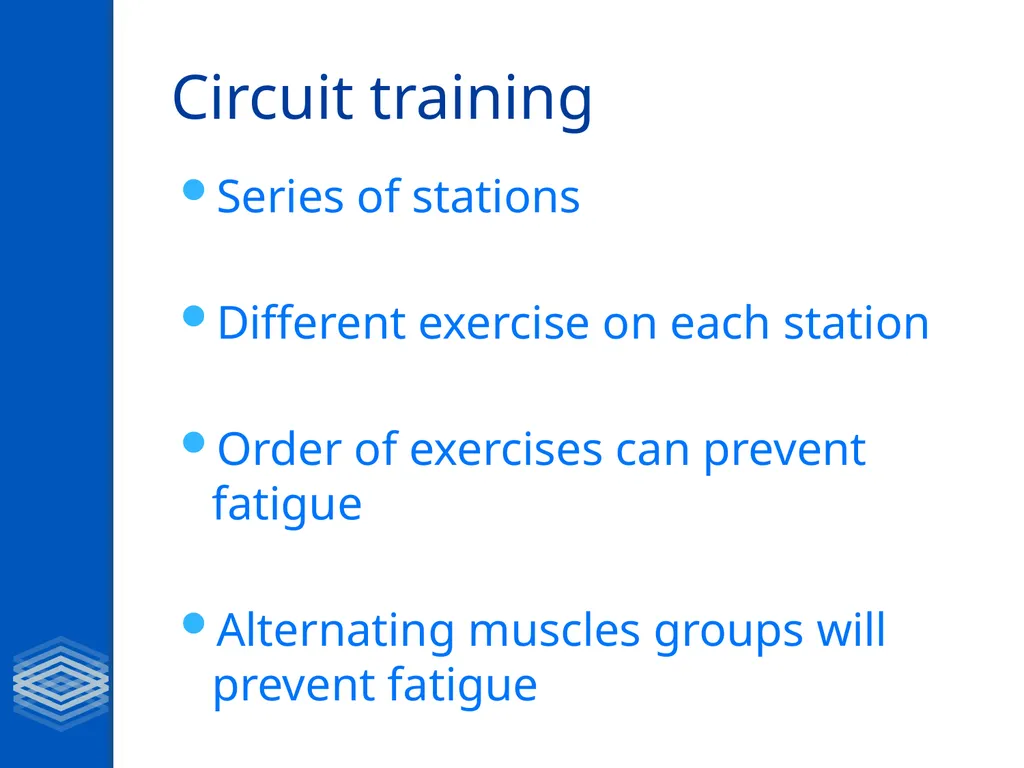
Circuit training Series of stations
Different exercise on each station
Order of exercises can prevent fatigue
Alternating muscles groups will prevent fatigue<br>
13
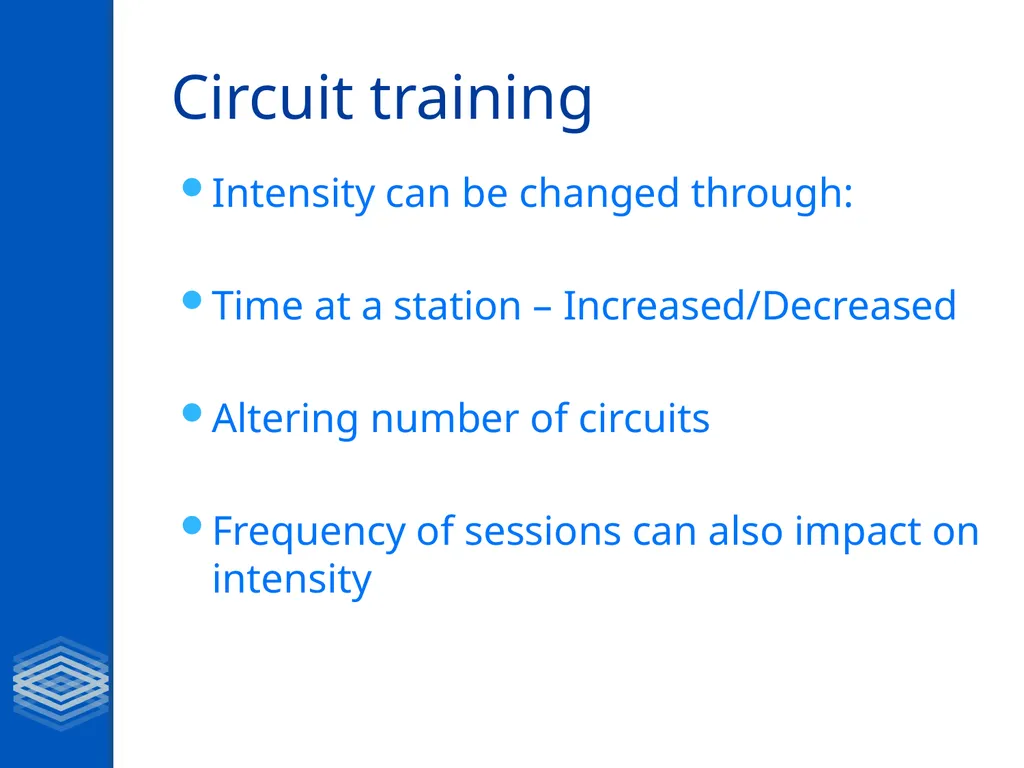
Circuit training Intensity can be changed through:
Time at a station – Increased/Decreased
Altering number of circuits
Frequency of sessions can also impact on intensity<br>
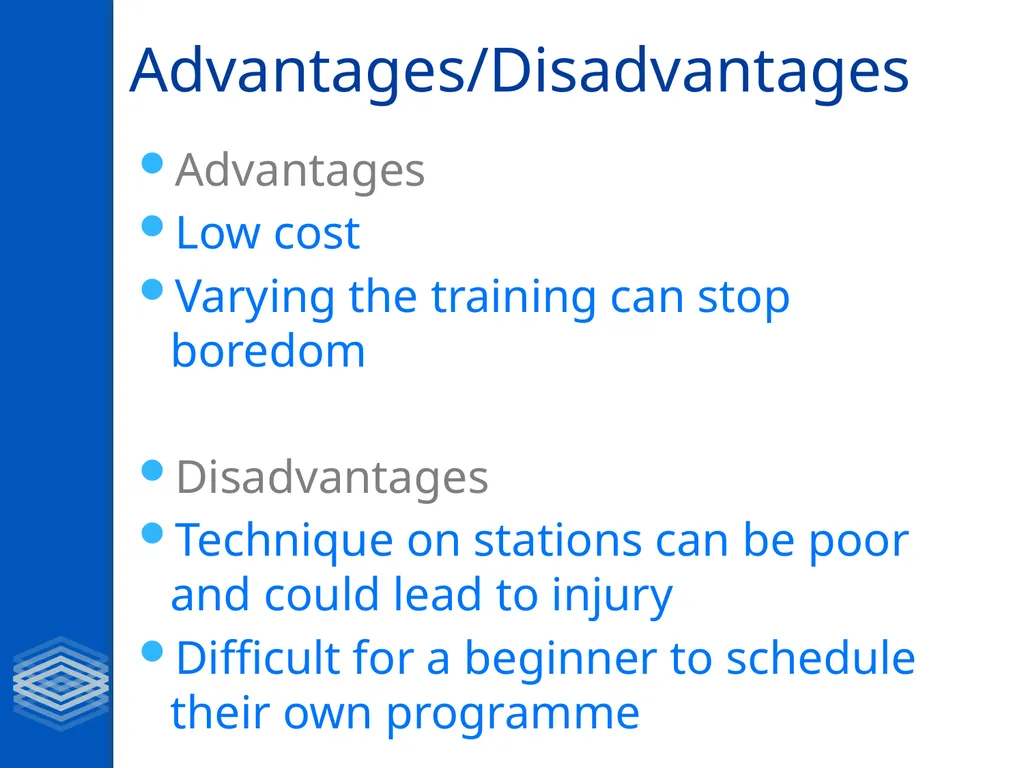
14
Advantages/Disadvantages Advantages
Low cost
Varying the training can stop boredom
Disadvantages
Technique on stations can be poor and could lead to injury
Difficult for a beginner to schedule their own programme<br>
15
Watch the video Could you improve his answers?<br>
16
Prove it review Test your partner by asking them two challenging question. Consider the 5 Ws.<br>