MHC Major Histocompatibility Complex Unit III Under topic: MHC Subject Name: Immunology Subject Code: 17UMBC41 Dr. A Sajith Ahamed Assistant Professor Department of Microbiology H.K.R.H. College Introduction It refers to a cluster of genes
"MHC Major Histocompatibility Complex Unit III" is the property of its rightful owner. Permission is granted to
download and print the materials on this website for personal, non-commercial use only, and to display it
on your personal computer provided you do not modify the materials and that you retain all copyright
notices contained in the materials. By downloading content from our website, you accept the terms of this
agreement.
Presentation Transcript
01
MHC Major Histocompatibility Complex Unit III
Under topic: MHC
Subject Name: Immunology
Subject Code: 17UMBC41 Dr. A Sajith Ahamed
Assistant Professor
Department of Microbiology
H.K.R.H. College<br>
02
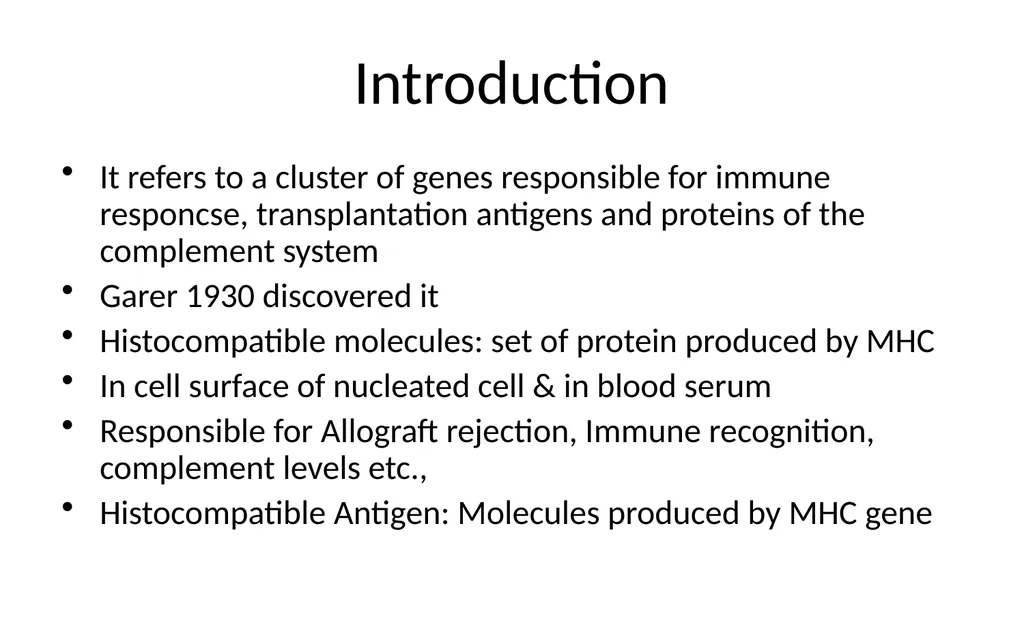
Introduction It refers to a cluster of genes responsible for immune responcse, transplantation antigens and proteins of the complement system
Garer 1930 discovered it
Histocompatible molecules: set of protein produced by MHC
In cell surface of nucleated cell & in blood serum
Responsible for Allograft rejection, Immune recognition, complement levels etc.,
Histocompatible Antigen: Molecules produced by MHC gene<br>
03
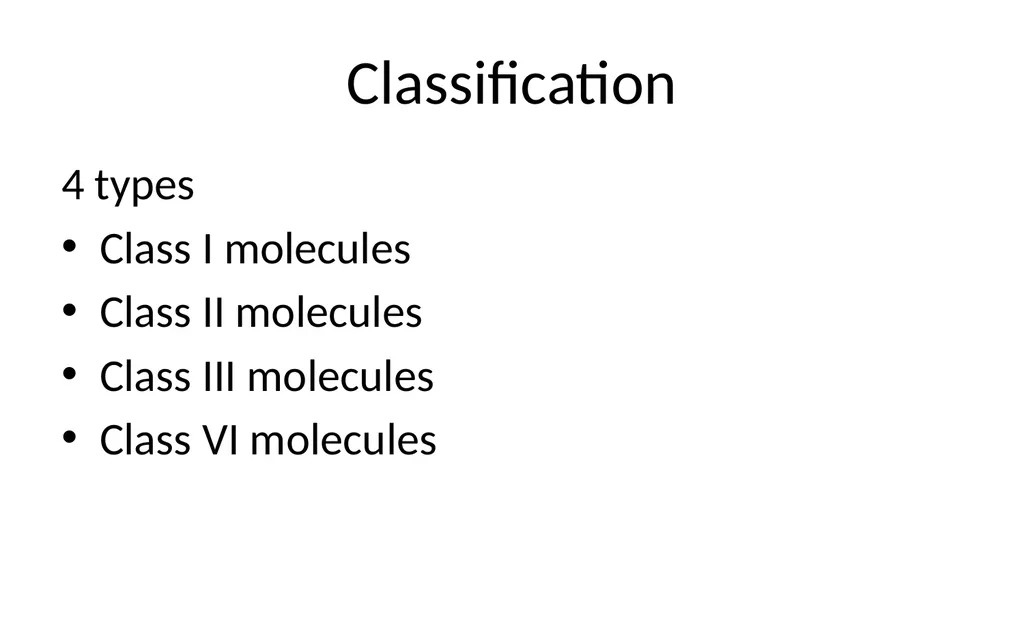
Classification 4 types
Class I molecules
Class II molecules
Class III molecules
Class VI molecules<br>
04
Class I molecules<br>
05
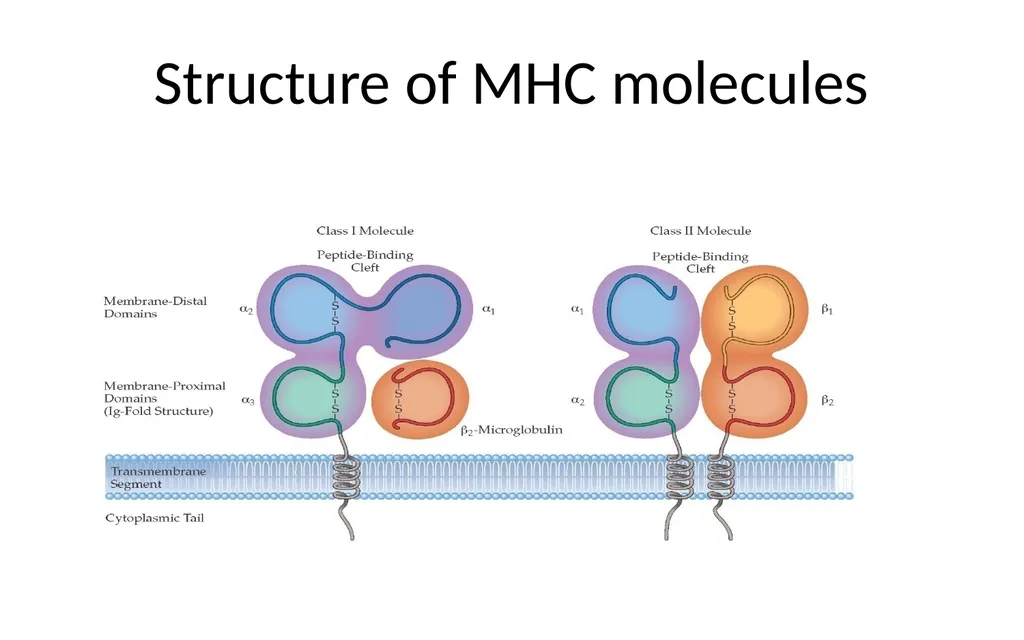
Structure of MHC molecules<br>
06
MHC class-I Class-I MHC gene encodes glycoprotein molecule which expressed on the surface of all nucleated cells and platelets.
MHC-I molecule contains a 45KDa α-chain associated non-covalentely with a 12KDa β2 microglobulin molecule.
Association of α-chain and β2 microglobulin is required for expression of class-I MHC molecule on cell membrane.<br>
07
α-chain of MHC-I The α-chain is a transmembrane glycoprotein encoded by polymorphic gene within A, B and C region of Human HLA complex
The α-chain is anchored in the plasma membrane by its hydrophobic trans-membrane segment and hydrophilic cytoplasmic tail.
α-chain is made up of 3 domains (α1,α2 and α3). Each domain containing approximately 90 aminoacids, a transmsmbrane domain of about 25 hydrophobic aminoacids followed by short stretch of charged (hydrophilic) aminoacids of cytoplasmic tails of 3o aminoacids.
α1 and α2 domains interacts to form a deep groove on the top which is a peptide binding clift. It can binds antigen of 8-10 animoacids long.
α3 and β2 are organized into β-pleated sheets, each formed by antiparallel β-strand of aminoacids, this structure is known as immunoglobulin fold. Because of this structure α-chain and β2 microglobulin are classified as member of immunoglobulin super-family receptor.<br>
08
β2 microglobulin of MHC-I β2 microglobulin is a protein encoded by a highly conserved gene located on different chromosome
β2 microglobulin is similar in size and organization to α3 domain.
Β2 microglobulin does not contain transmembrane region and is non-covalently linked with α-chain<br>
09
Functions of MHC class I Major function of MHC-I is to bind peptide antigens and present to CD8+ T cells (T helper cells)
CD8 T cells are specific for MHC-I antigen
MHC-I binds endogenous antigen and present to T helper cells.
MHC-I molecules are found on surface of all nucleated cells.<br>
10
MHC class-II<br>
11
MHC class-II Class-II MHC is the glycoprotein molecule expressed primarily on antigen presenting cells such as macrophages, dendritic cells and B-cells.
MHC-II molecules contains two different polypeptide chains, 1 33 KDa α-chain and 28KDa β-chain which are associated by non-covalent interactions.<br>
12
α-chain and β-chain of MHC-II α-chain and β-chain of MHC-II is a membrane bound glycoprotein that contains external domains, atransmembrane segment and acytoplasmic tail.
α-chain and β-chain are made up of two domains (α1 and α2) and (β1 and β2) respectively.
The peptide biding cleft is a open ended groove formed between α-chain and β-chain at proximal end. The cleft can bind antigenic peptide of 13-18 aminoacids long.<br>
13
Functions of MHC class II Major function of MHC-II is to bind peptide antigen and present to CD4 T cells.
MHC-II are found on surface of Antigen presenting cells (APCs).
CD4+T-cells are specific for MHC-II
Activates B cells for antibody production
MHC-II plays a significant role in graft versus host response and in mixed lymphocyte reaction (MLR) because the immune response gene is identical to MHC-II in human.<br>
14
MHC class-III MHc-III are diverse group of molecules that serves a wide variety of functions in immune system.
MHC-III are not a marker on cell surface.<br>
15
Functions of MHC class-III Involved in complement activation
Involved in inflammation caused by cytokines, tumor necrosis factors etc<br>
16
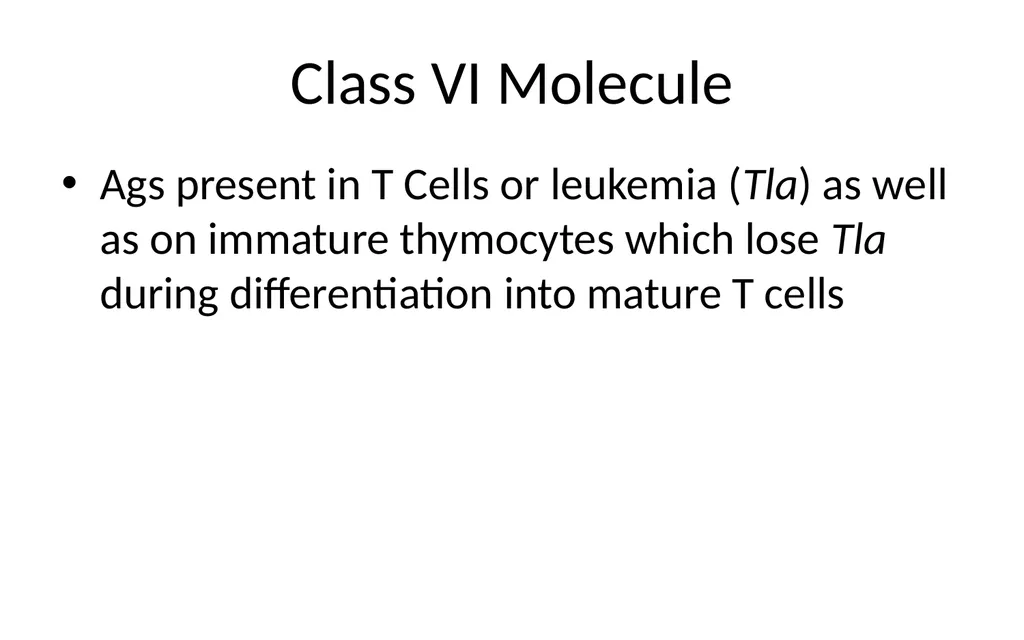
Class VI Molecule Ags present in T Cells or leukemia (Tla) as well as on immature thymocytes which lose Tla during differentiation into mature T cells<br>
17
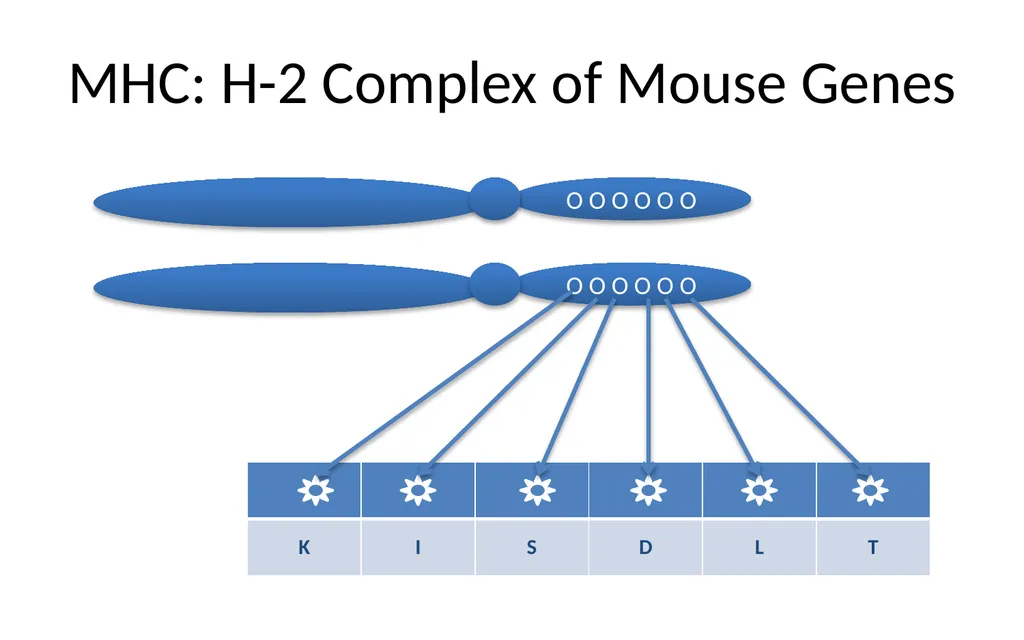
MHC: H-2 Complex of Mouse Genes O O O O O O O O O O O O<br>
18
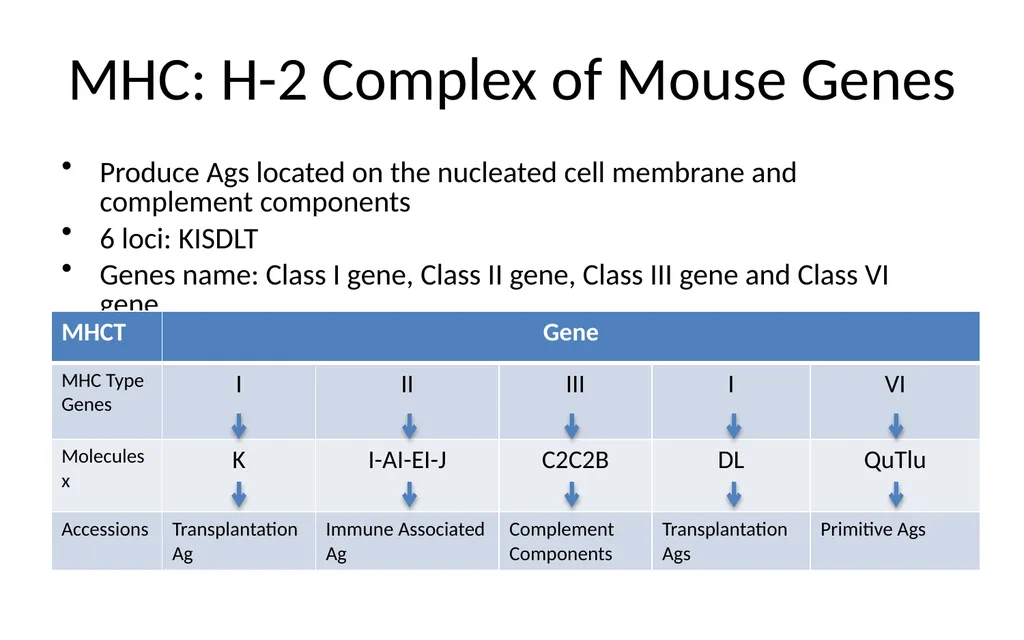
MHC: H-2 Complex of Mouse Genes Produce Ags located on the nucleated cell membrane and complement components
6 loci: KISDLT
Genes name: Class I gene, Class II gene, Class III gene and Class VI gene<br>
19
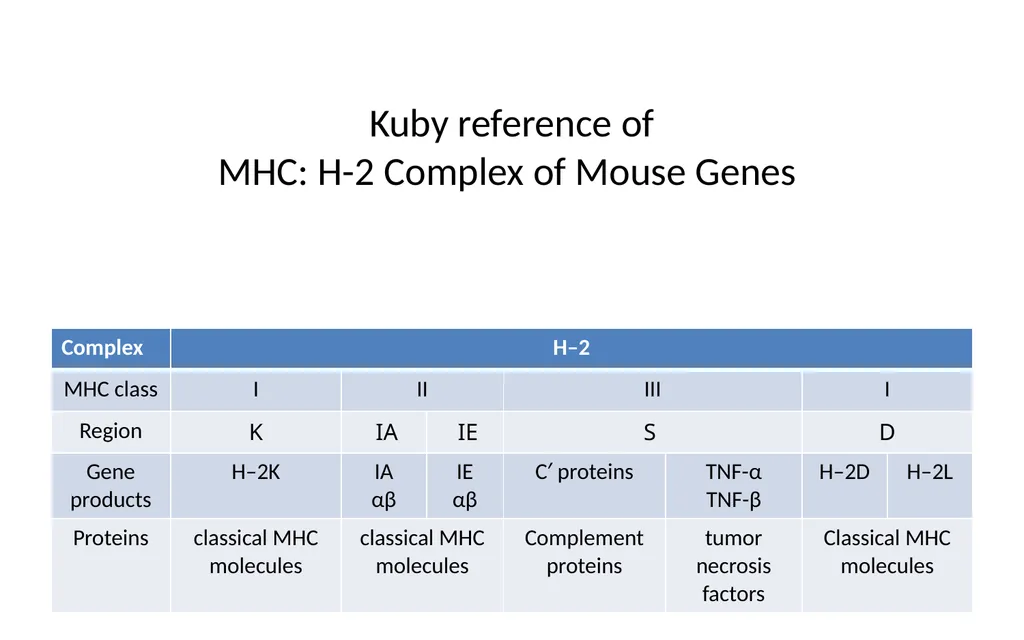
Kuby reference of MHC: H-2 Complex of Mouse Genes<br>