
Transfer and Feedback Building Assessments
Description: Transfer and Feedback Building Assessments Overview: Learning Process The Trouble with Transfer Near Transfer Transfer: Expecting that students will apply the course content or skills they have learned in our courses to novel situations
Related Topics
Download Presentation
"Transfer and Feedback Building Assessments" is the property of its rightful owner. Permission is granted to download and print the materials on this website for personal, non-commercial use only, and to display it on your personal computer provided you do not modify the materials and that you retain all copyright notices contained in the materials. By downloading content from our website, you accept the terms of this agreement.
Presentation Transcript
slide1. Transfer and Feedback Building Assessments<br>
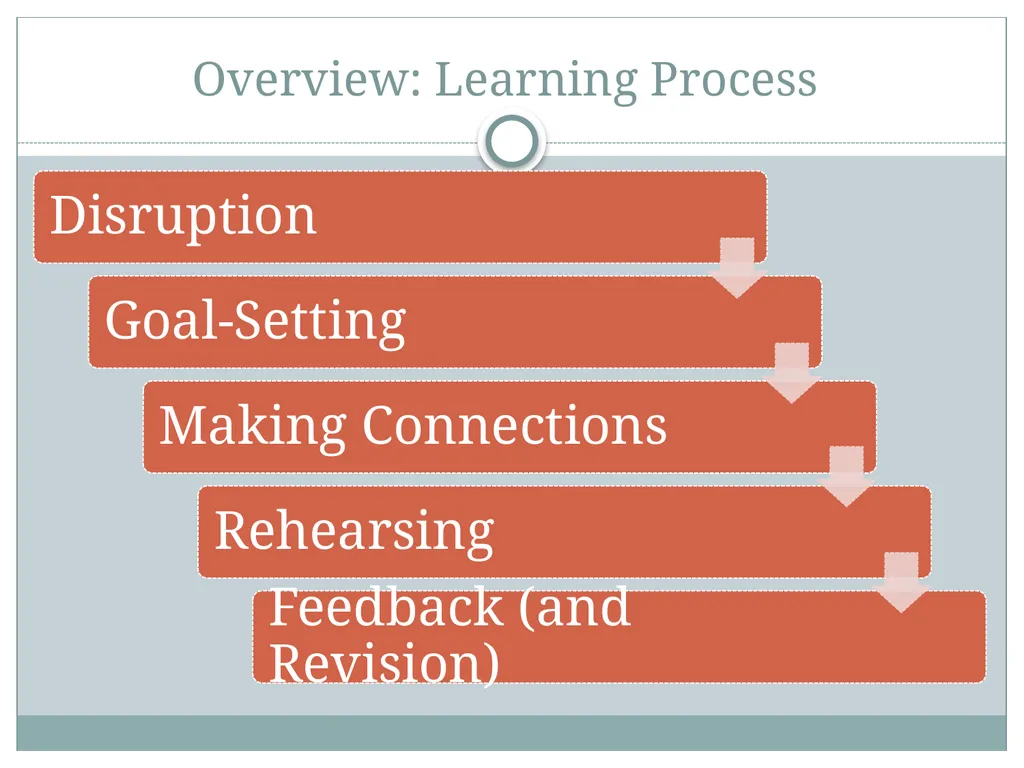
slide2. Overview: Learning Process<br>
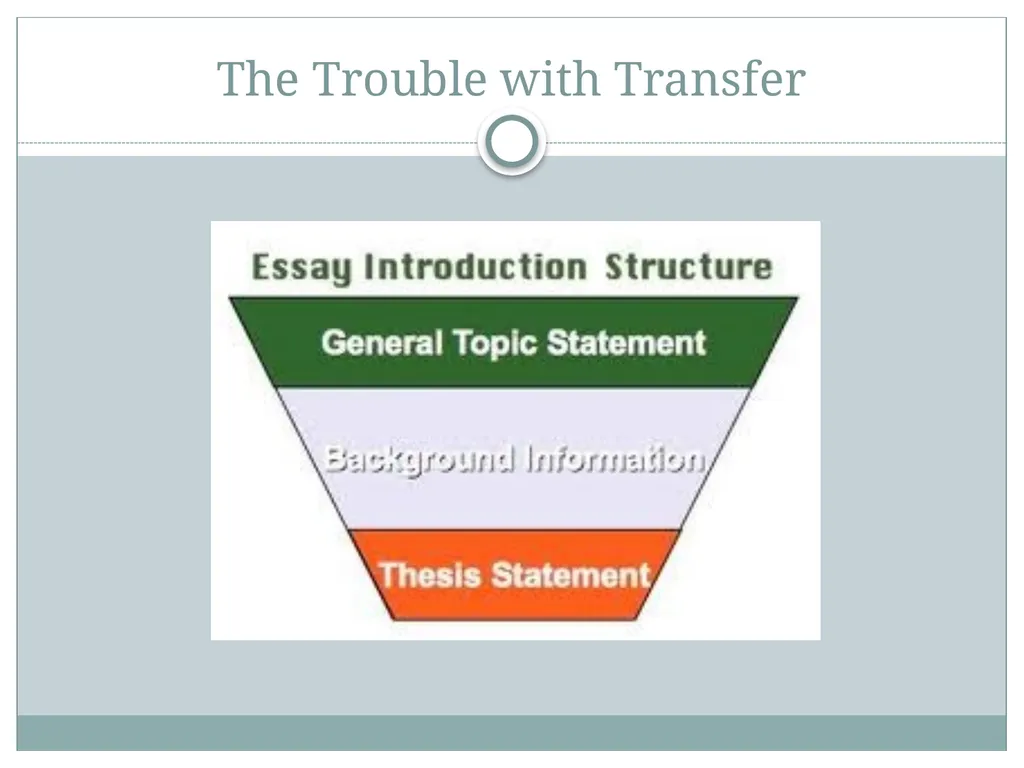
slide3. The Trouble with Transfer<br>
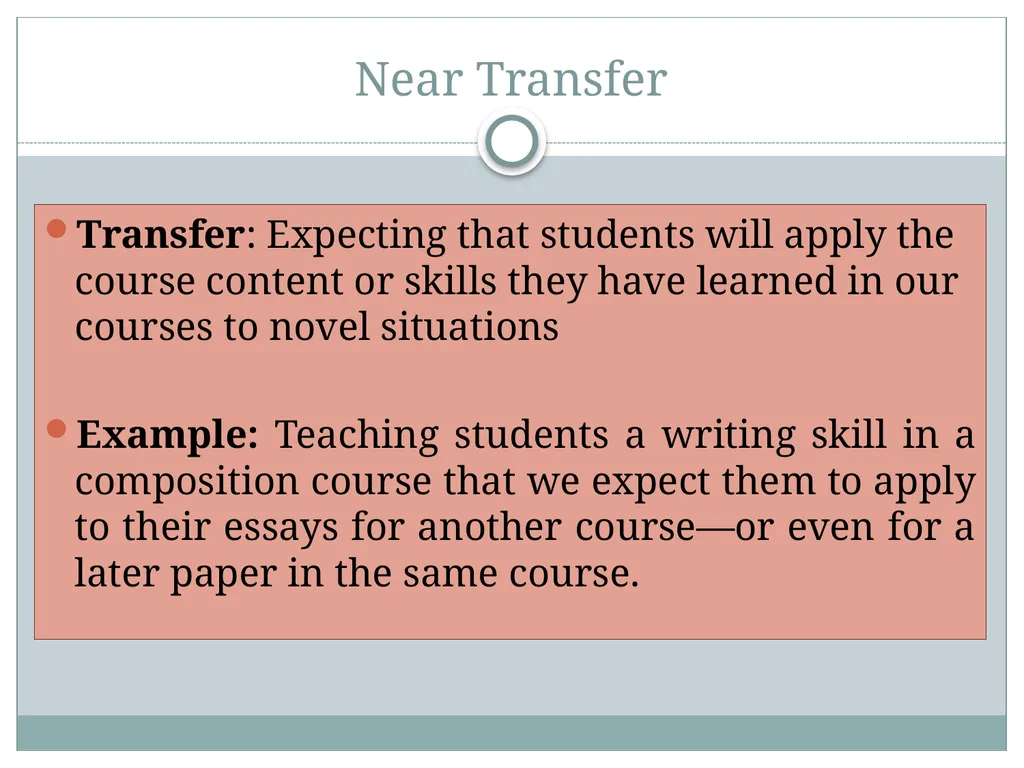
slide4. Near Transfer Transfer: Expecting that students will apply the course content or skills they have learned in our courses to novel situations
Example: Teaching students a writing skill in a composition course that we expect them to apply to their essays for another course—or even for a later paper in the same course.<br>
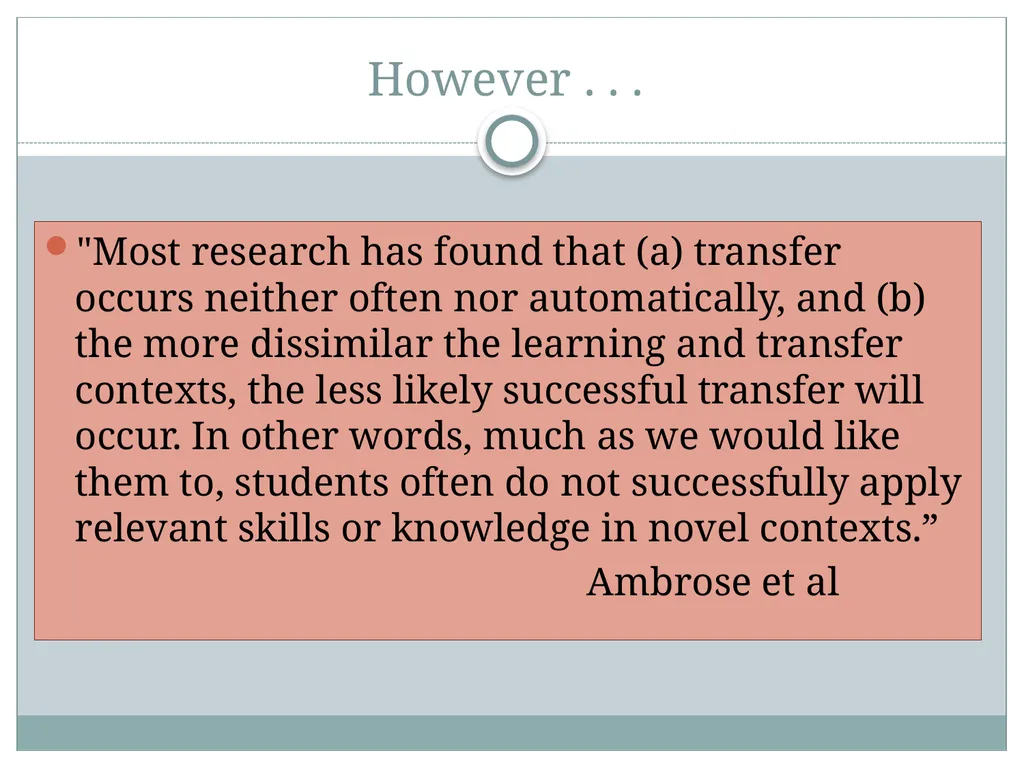
slide5. However . . . "Most research has found that (a) transfer occurs neither often nor automatically, and (b) the more dissimilar the learning and transfer contexts, the less likely successful transfer will occur. In other words, much as we would like them to, students often do not successfully apply relevant skills or knowledge in novel contexts.”
Ambrose et al<br>
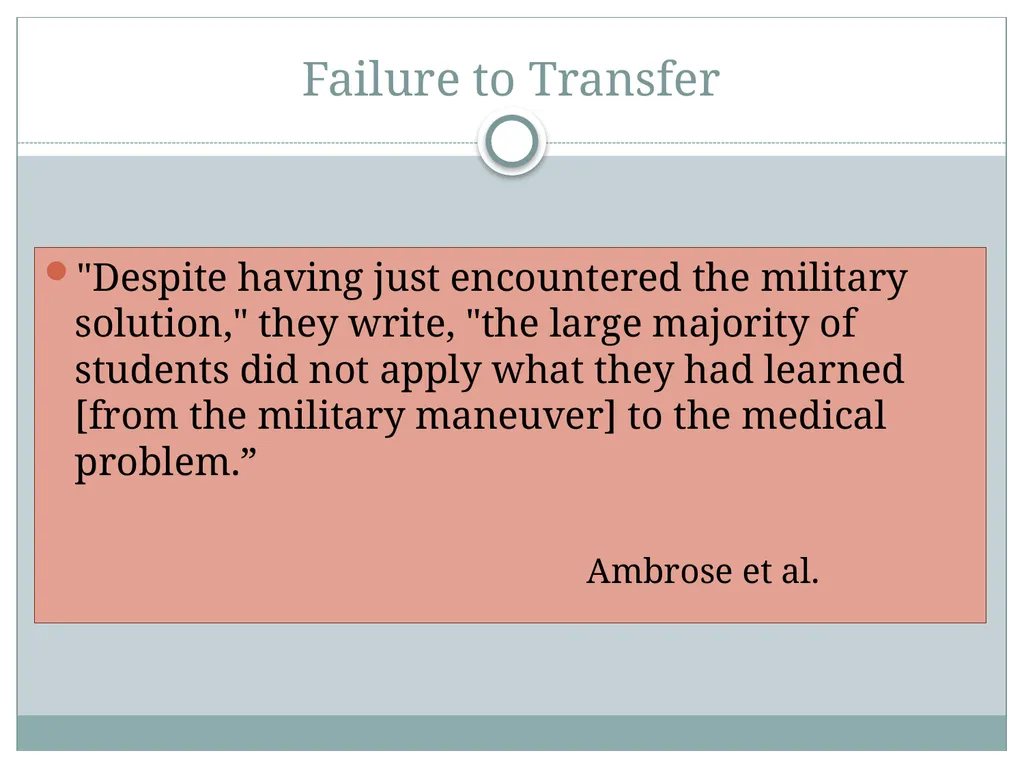
slide6. Failure to Transfer "Despite having just encountered the military solution," they write, "the large majority of students did not apply what they had learned [from the military maneuver] to the medical problem.”
Ambrose et al.<br>
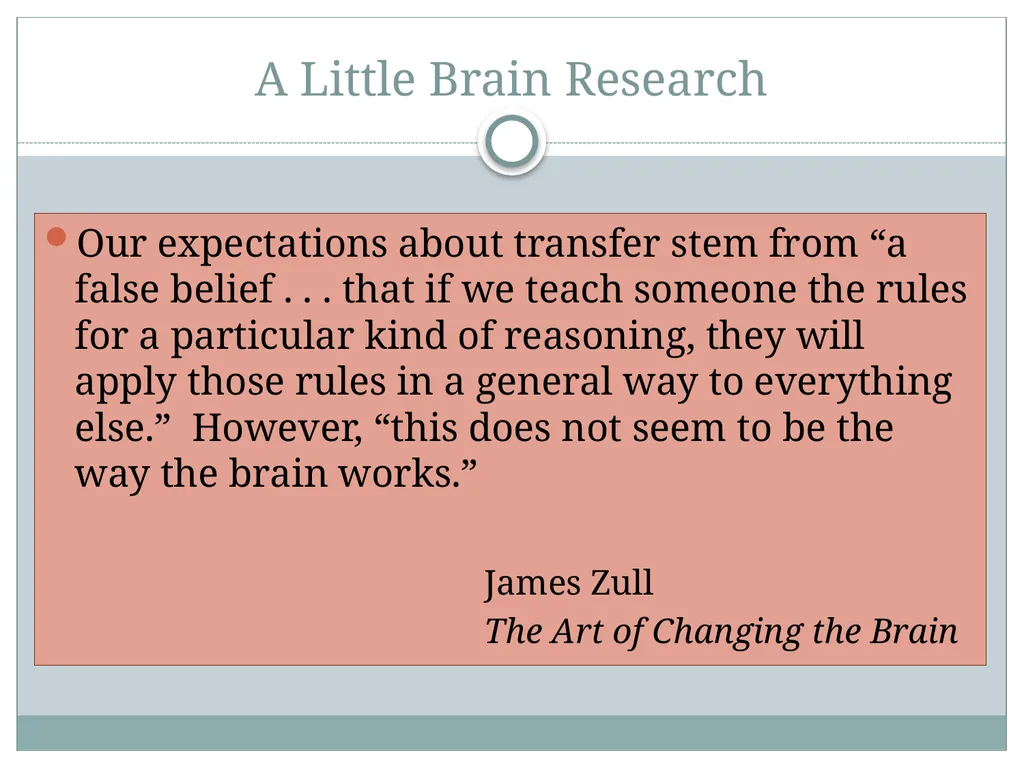
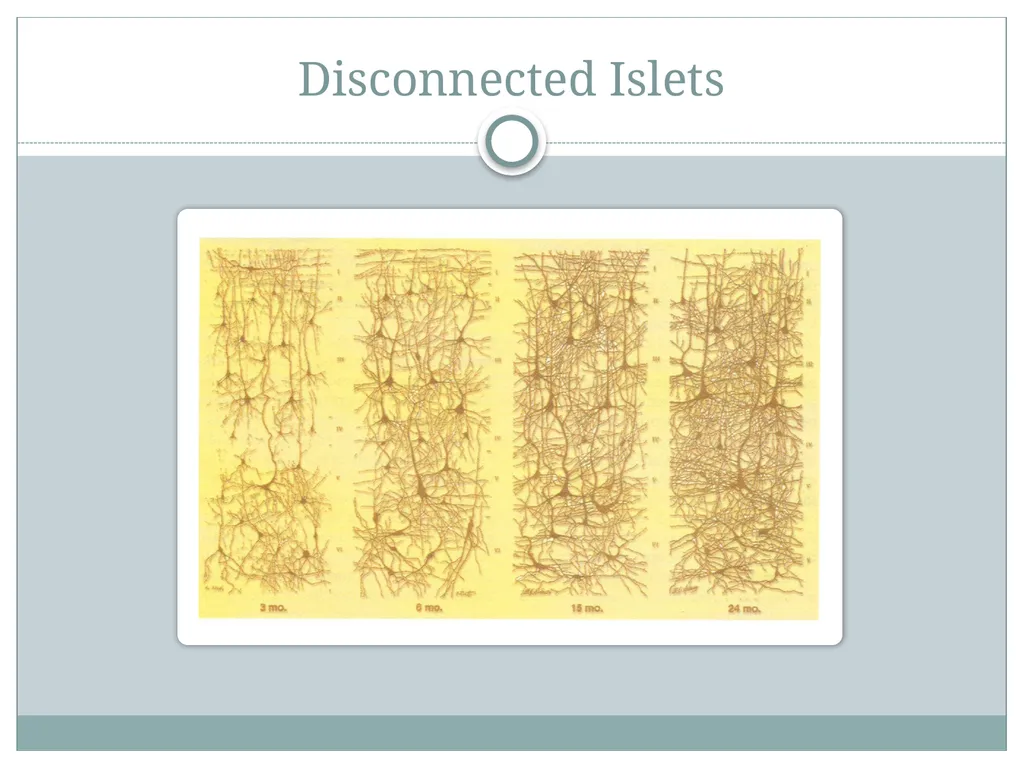
slide7. A Little Brain Research Our expectations about transfer stem from “a false belief . . . that if we teach someone the rules for a particular kind of reasoning, they will apply those rules in a general way to everything else.” However, “this does not seem to be the way the brain works.”
James Zull
The Art of Changing the Brain<br>
slide8. Disconnected Islets<br>
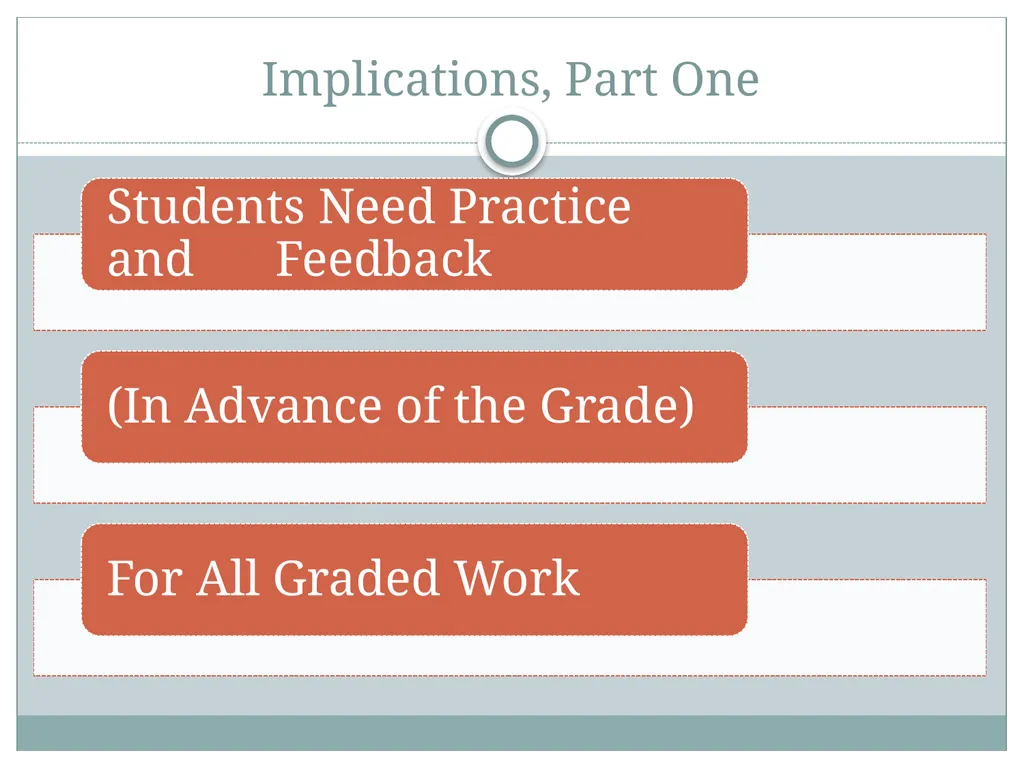
slide9. Implications, Part One<br>
slide10. Far Transfer “Far transfer is, arguably, the central goal of education: we want our students to be able to apply what they learn beyond the classroom.”
Susan Ambrose et al
How Learning Works<br>
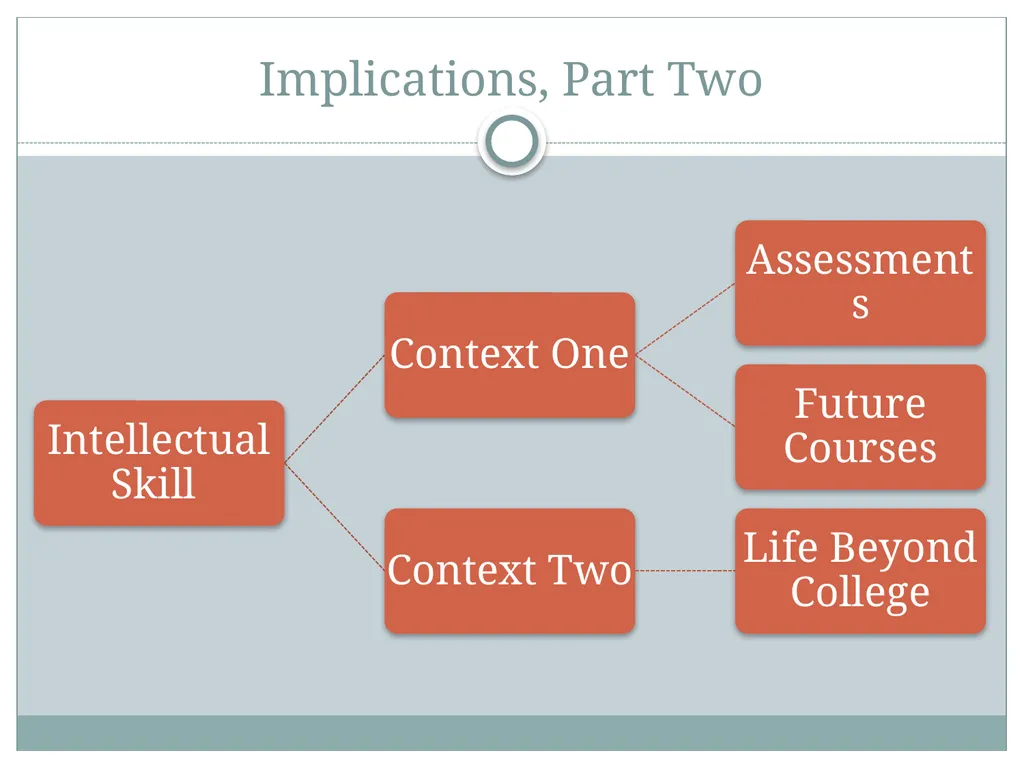
slide11. Implications, Part Two<br>
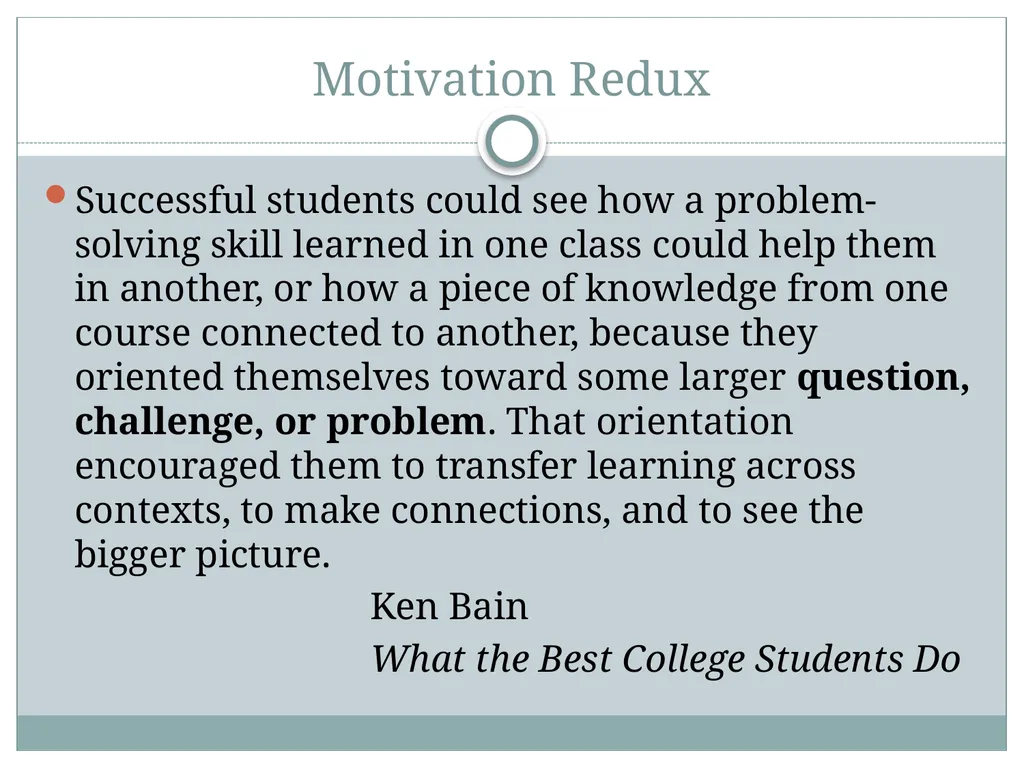
slide12. Motivation Redux Successful students could see how a problem-solving skill learned in one class could help them in another, or how a piece of knowledge from one course connected to another, because they oriented themselves toward some larger question, challenge, or problem. That orientation encouraged them to transfer learning across contexts, to make connections, and to see the bigger picture.
Ken Bain
What the Best College Students Do<br>
slide2. Overview: Learning Process<br>
slide3. The Trouble with Transfer<br>
slide4. Near Transfer Transfer: Expecting that students will apply the course content or skills they have learned in our courses to novel situations
Example: Teaching students a writing skill in a composition course that we expect them to apply to their essays for another course—or even for a later paper in the same course.<br>
slide5. However . . . "Most research has found that (a) transfer occurs neither often nor automatically, and (b) the more dissimilar the learning and transfer contexts, the less likely successful transfer will occur. In other words, much as we would like them to, students often do not successfully apply relevant skills or knowledge in novel contexts.”
Ambrose et al<br>
slide6. Failure to Transfer "Despite having just encountered the military solution," they write, "the large majority of students did not apply what they had learned [from the military maneuver] to the medical problem.”
Ambrose et al.<br>
slide7. A Little Brain Research Our expectations about transfer stem from “a false belief . . . that if we teach someone the rules for a particular kind of reasoning, they will apply those rules in a general way to everything else.” However, “this does not seem to be the way the brain works.”
James Zull
The Art of Changing the Brain<br>
slide8. Disconnected Islets<br>
slide9. Implications, Part One<br>
slide10. Far Transfer “Far transfer is, arguably, the central goal of education: we want our students to be able to apply what they learn beyond the classroom.”
Susan Ambrose et al
How Learning Works<br>
slide11. Implications, Part Two<br>
slide12. Motivation Redux Successful students could see how a problem-solving skill learned in one class could help them in another, or how a piece of knowledge from one course connected to another, because they oriented themselves toward some larger question, challenge, or problem. That orientation encouraged them to transfer learning across contexts, to make connections, and to see the bigger picture.
Ken Bain
What the Best College Students Do<br>