
2-1 Chapter Two Marketing Strategy: Where

Description: 2-1 Chapter Two Marketing Strategy: Where Marketing Really Begins With Duane Weaver 2-2 Strategic Planning Defined and the Process SBUs Marketing Positioning Tools: - The BCG Matrix and - The Product-Market Expansion Grid Partnering
Related Topics
Download Presentation
"2-1 Chapter Two Marketing Strategy: Where" is the property of its rightful owner. Permission is granted to download and print the materials on this website for personal, non-commercial use only, and to display it on your personal computer provided you do not modify the materials and that you retain all copyright notices contained in the materials. By downloading content from our website, you accept the terms of this agreement.
Presentation Transcript
slide1. 2-1 Chapter Two
Marketing Strategy: Where Marketing Really Begins With Duane Weaver<br>
slide2. 2-2 Strategic Planning Defined and the Process
SBU’s
Marketing Positioning – Tools: - The BCG Matrix and - The Product-Market Expansion Grid
Partnering
Strategy a& Marketing Mix
Segmentation
Differentiation & Positioning
Managing Effort, SWOTs, & ROI
A Marketing Plan OUTLINE<br>
slide3. What Is Strategic Planning? Strategic Planning is the process of developing and maintaining a strategic fit between the organization’s goals and capabilities and its changing marketing opportunities.<br>
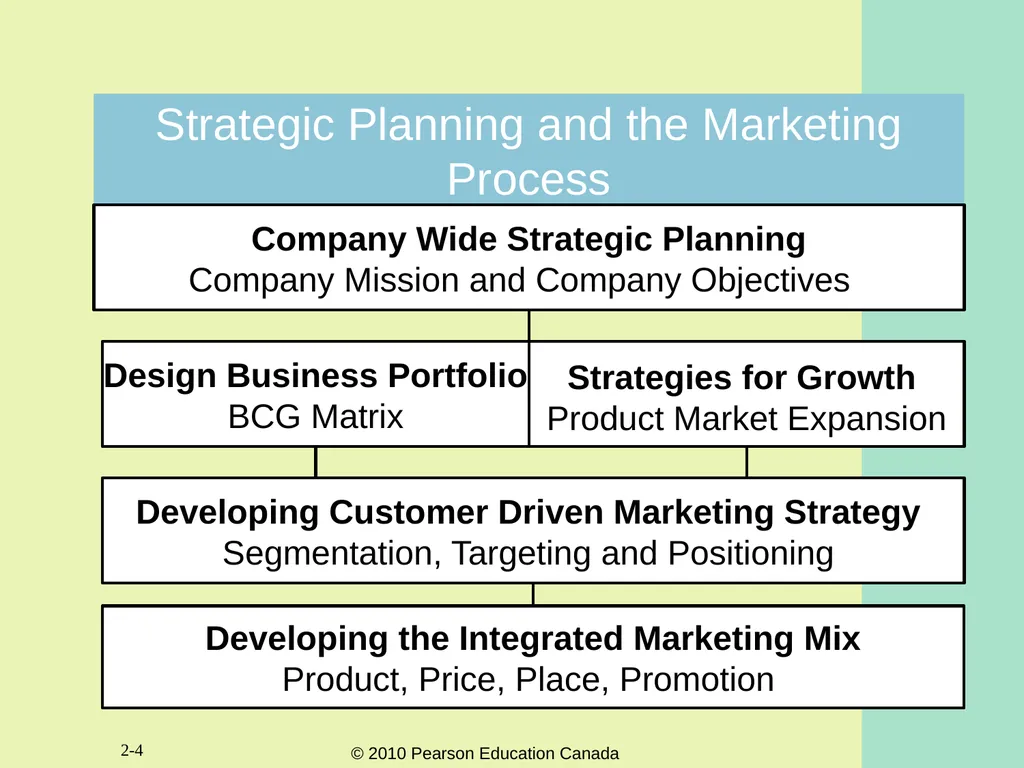
slide4. 2-4 Strategic Planning and the Marketing Process Company Wide Strategic Planning
Company Mission and Company Objectives Design Business Portfolio
BCG Matrix Strategies for Growth
Product Market Expansion Developing Customer Driven Marketing Strategy
Segmentation, Targeting and Positioning Developing the Integrated Marketing Mix
Product, Price, Place, Promotion<br>
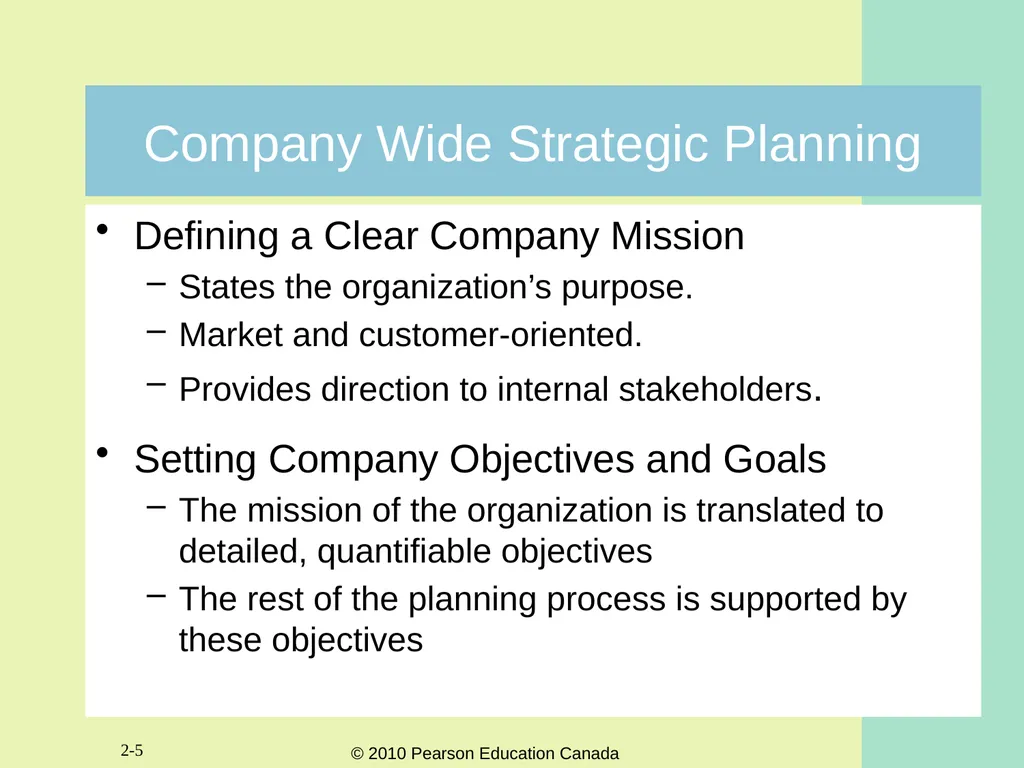
slide5. 2-5 Company Wide Strategic Planning Defining a Clear Company Mission
States the organization’s purpose.
Market and customer-oriented.
Provides direction to internal stakeholders.
Setting Company Objectives and Goals
The mission of the organization is translated to detailed, quantifiable objectives
The rest of the planning process is supported by these objectives<br>
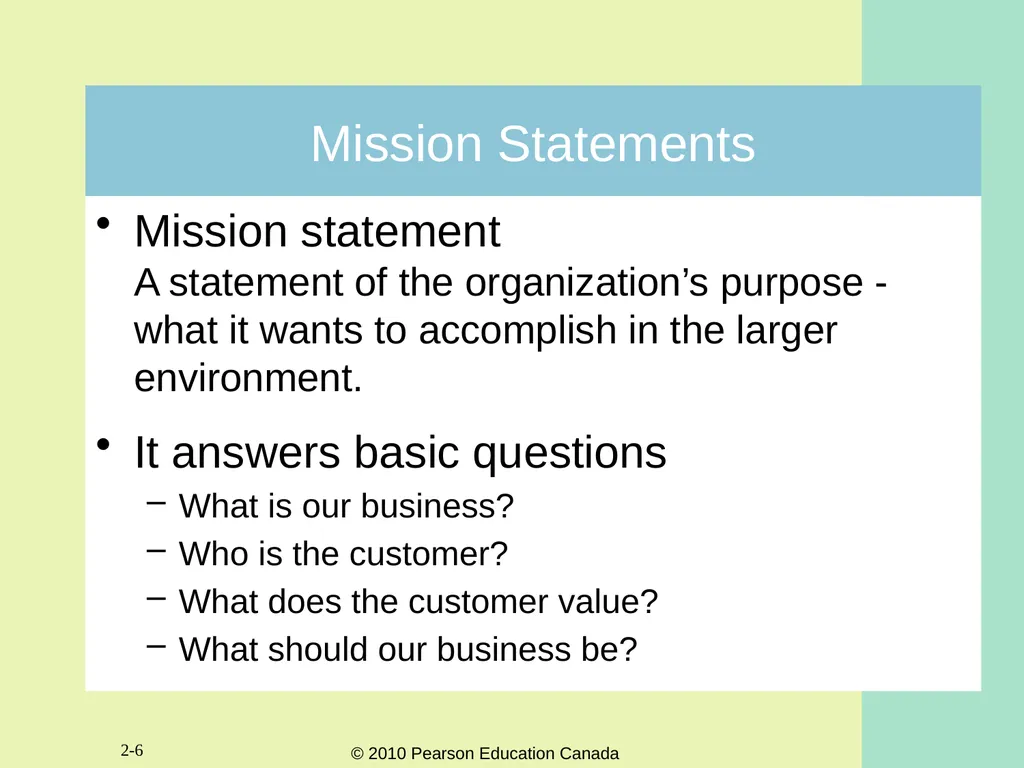
slide6. 2-6 Mission Statements Mission statement A statement of the organization’s purpose -what it wants to accomplish in the larger environment.
It answers basic questions
What is our business?
Who is the customer?
What does the customer value?
What should our business be?<br>
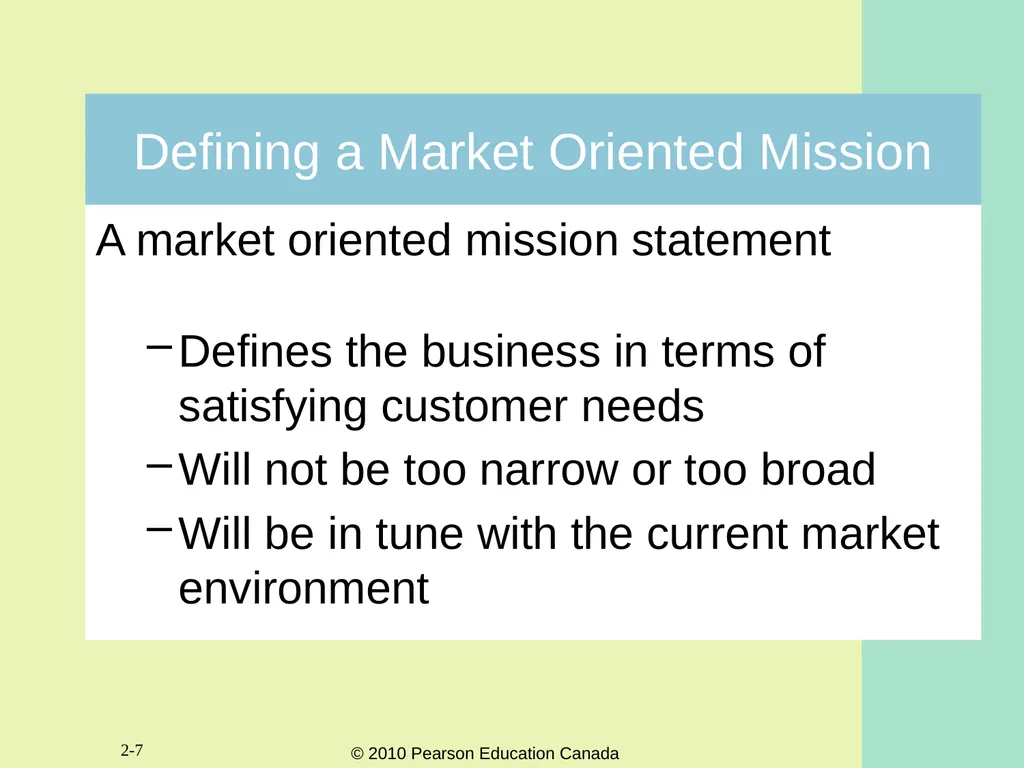
slide7. 2-7 Defining a Market Oriented Mission A market oriented mission statement
Defines the business in terms of satisfying customer needs
Will not be too narrow or too broad
Will be in tune with the current market environment<br>
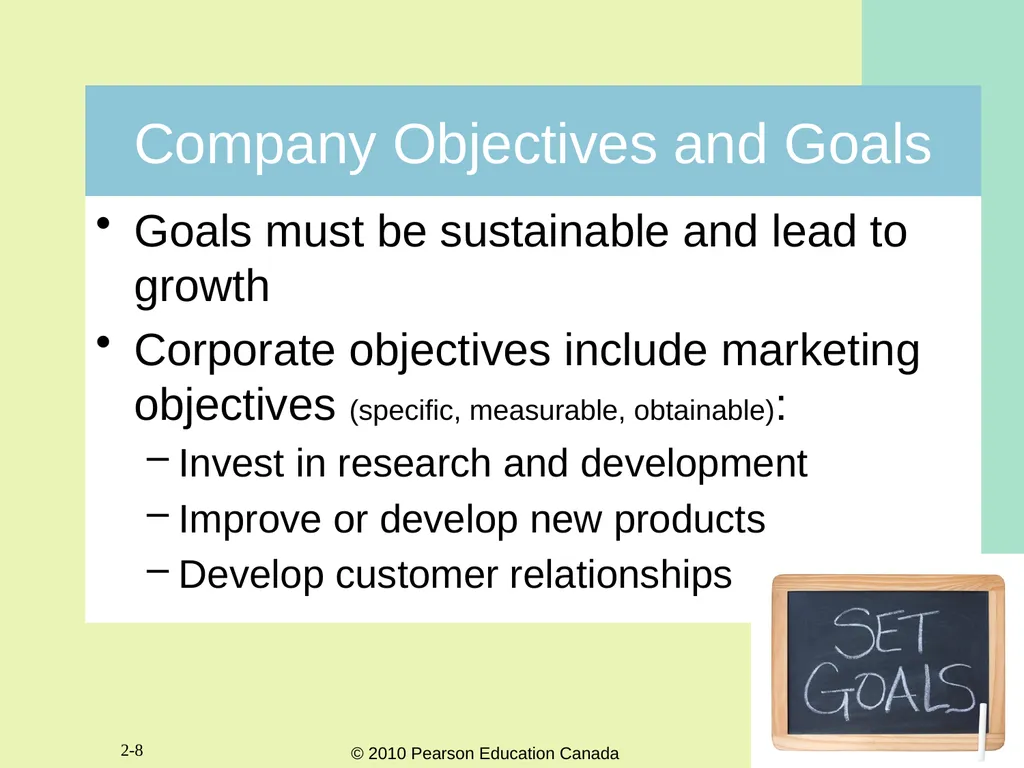
slide8. 2-8 Company Objectives and Goals Goals must be sustainable and lead to growth
Corporate objectives include marketing objectives (specific, measurable, obtainable):
Invest in research and development
Improve or develop new products
Develop customer relationships<br>
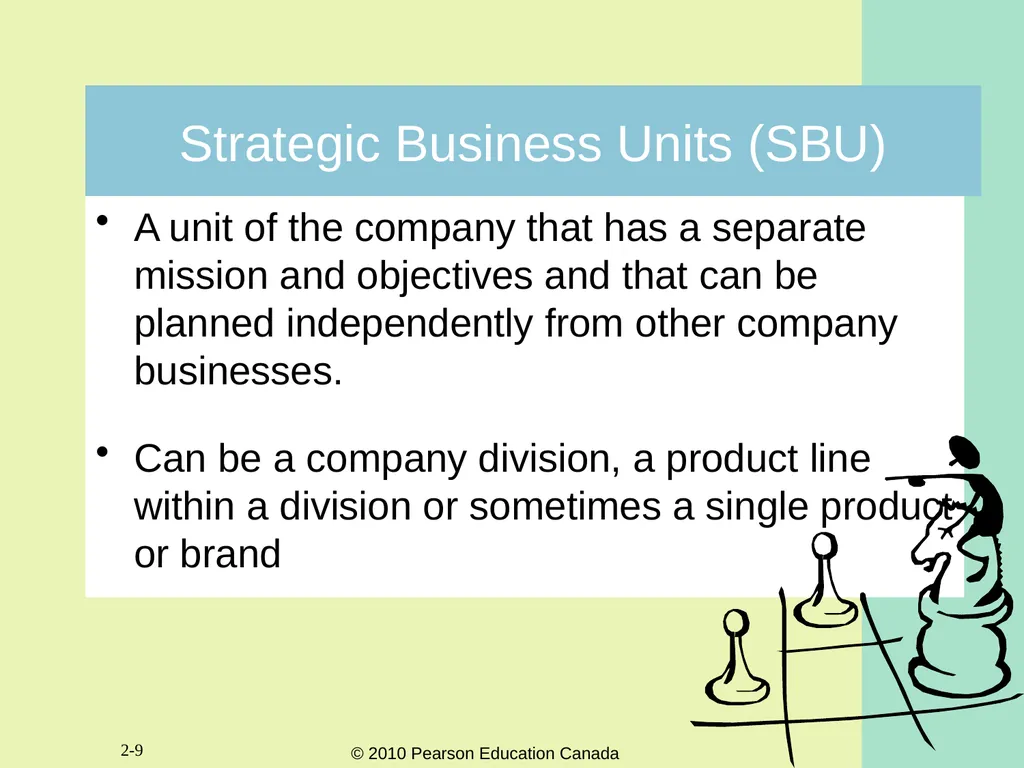
slide9. 2-9 Strategic Business Units (SBU) A unit of the company that has a separate mission and objectives and that can be planned independently from other company businesses.
Can be a company division, a product line within a division or sometimes a single product or brand<br>
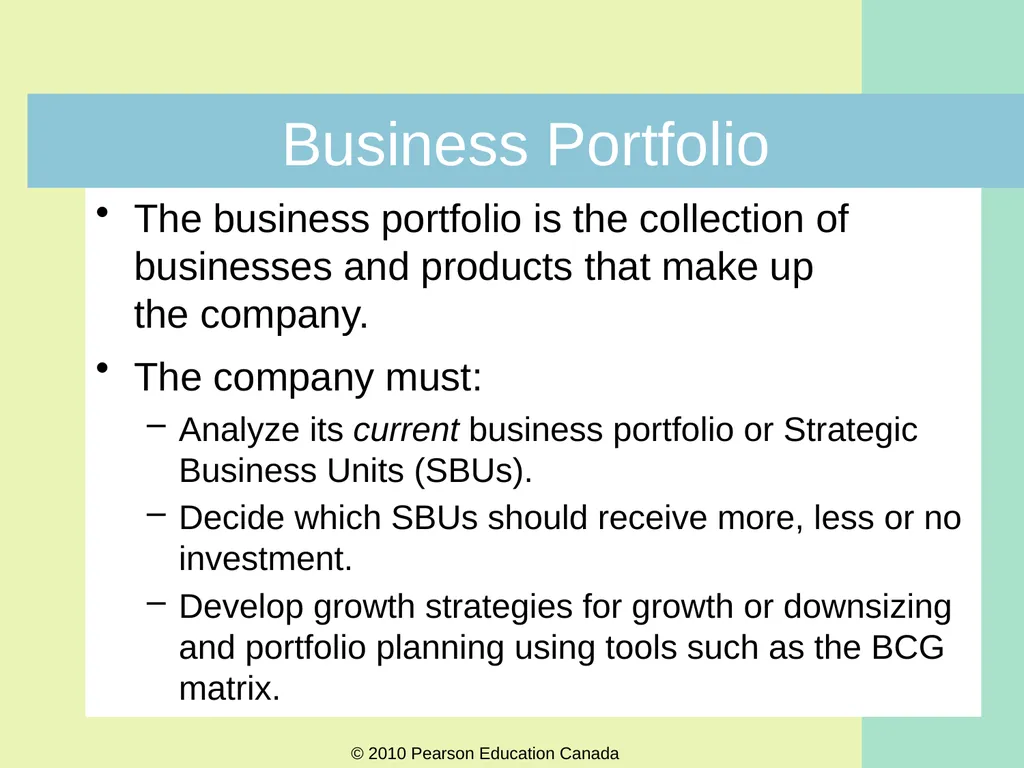
slide10. Business Portfolio The business portfolio is the collection of businesses and products that make up the company.
The company must:
Analyze its current business portfolio or Strategic Business Units (SBUs).
Decide which SBUs should receive more, less or no investment.
Develop growth strategies for growth or downsizing and portfolio planning using tools such as the BCG matrix.<br>
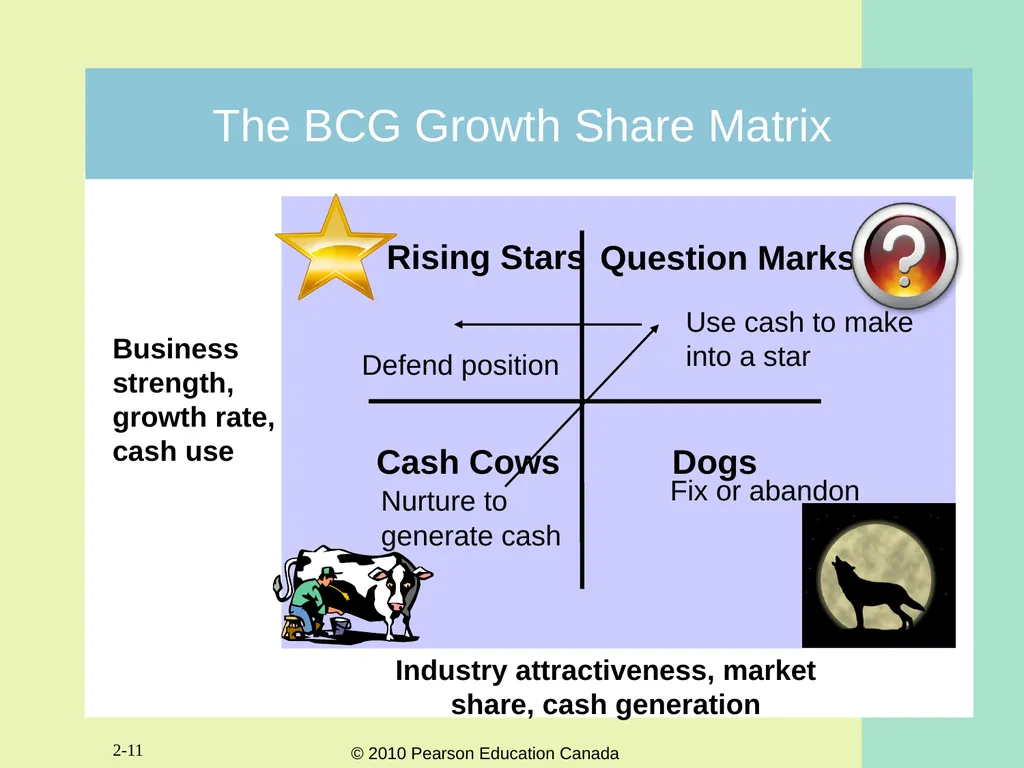
slide11. 2-11 The BCG Growth Share Matrix<br>
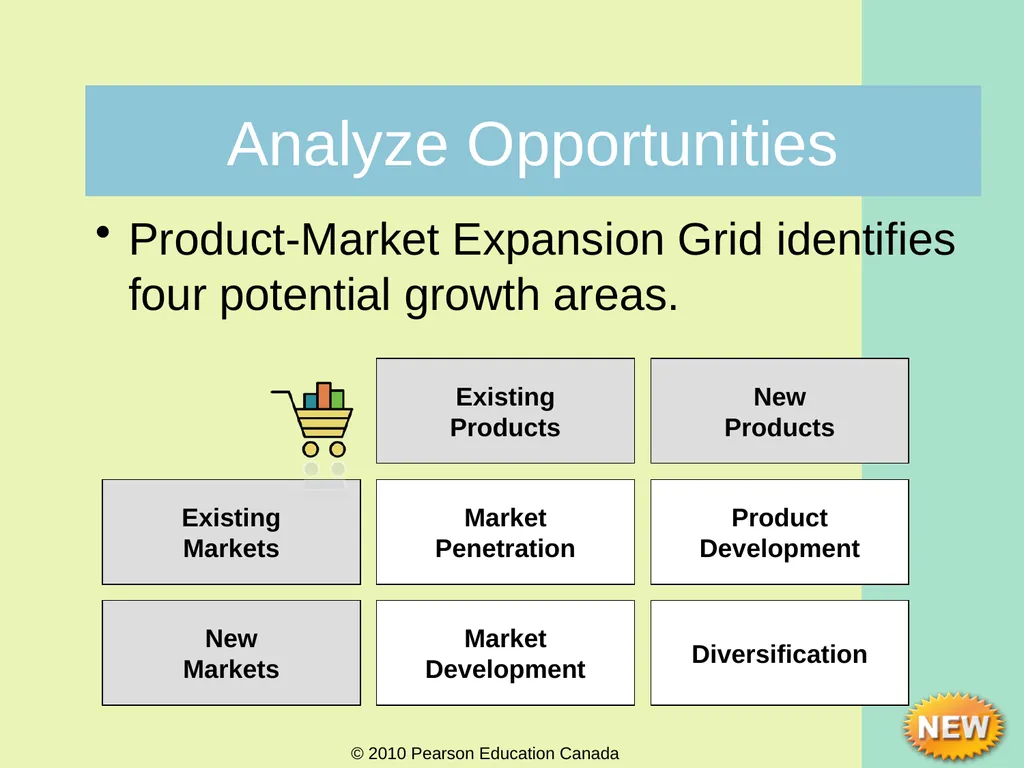
slide12. Analyze Opportunities Product-Market Expansion Grid identifies four potential growth areas.<br>
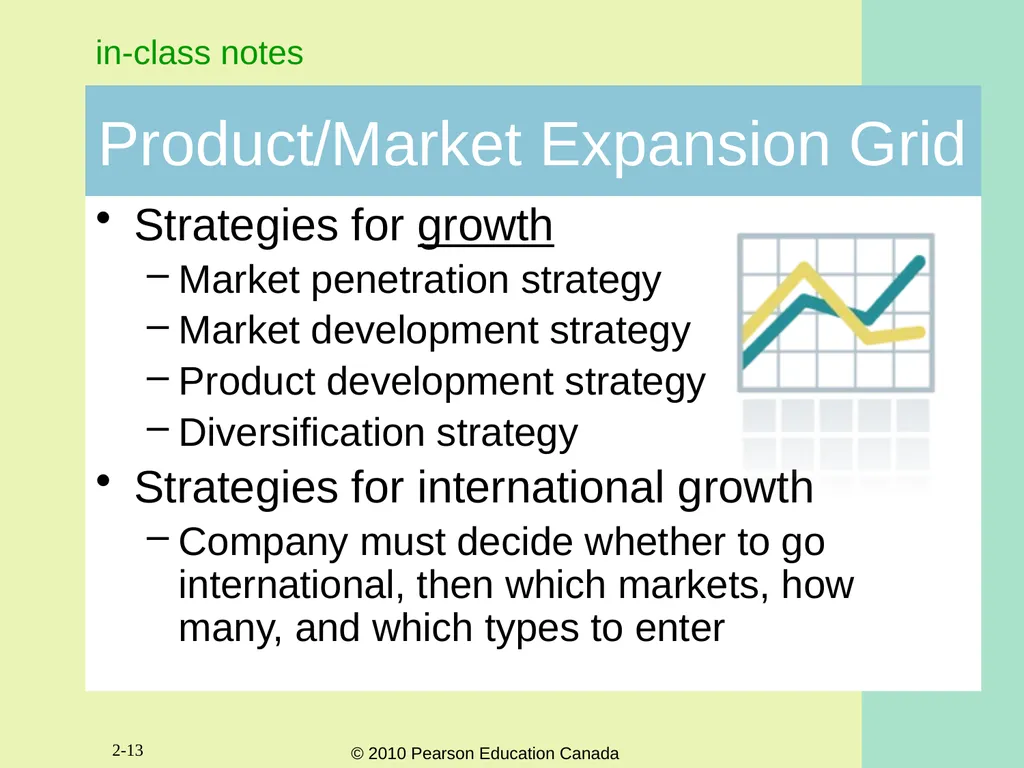
slide13. 2-13 Product/Market Expansion Grid Strategies for growth
Market penetration strategy
Market development strategy
Product development strategy
Diversification strategy
Strategies for international growth
Company must decide whether to go international, then which markets, how many, and which types to enter in-class notes<br>
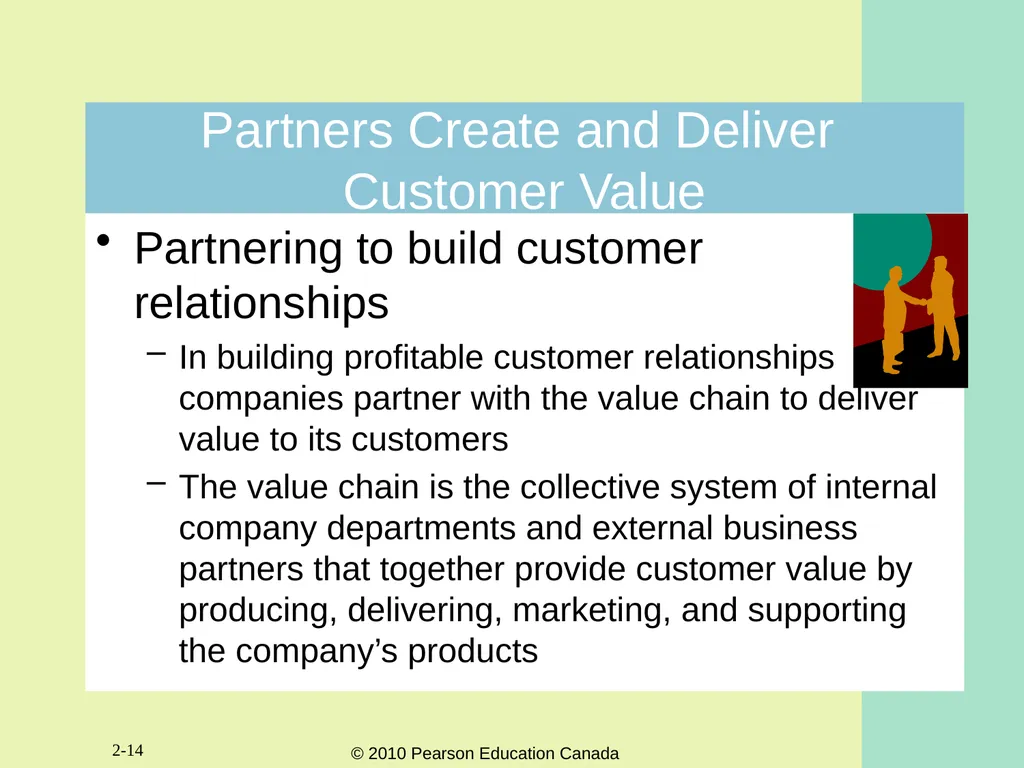
slide14. 2-14 Partners Create and Deliver Customer Value Partnering to build customer relationships
In building profitable customer relationships companies partner with the value chain to deliver value to its customers
The value chain is the collective system of internal company departments and external business partners that together provide customer value by producing, delivering, marketing, and supporting the company’s products<br>
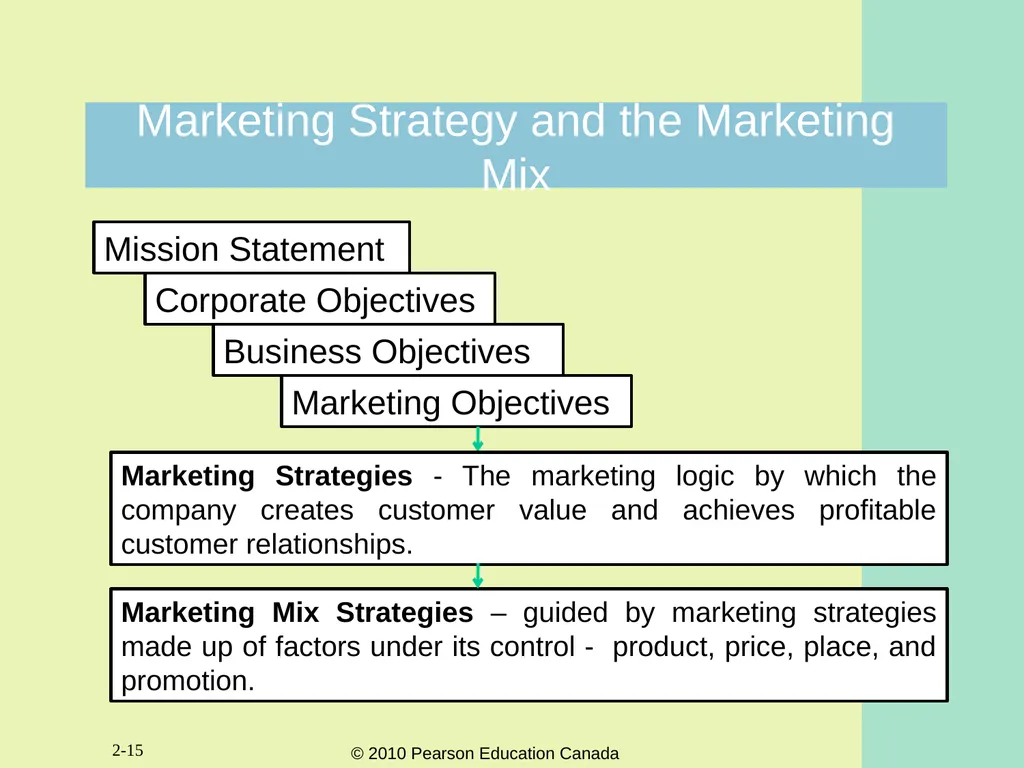
slide15. 2-15 Marketing Strategy and the Marketing Mix Mission Statement Corporate Objectives Business Objectives Marketing Objectives Marketing Strategies - The marketing logic by which the company creates customer value and achieves profitable customer relationships. Marketing Mix Strategies – guided by marketing strategies made up of factors under its control - product, price, place, and promotion.<br>
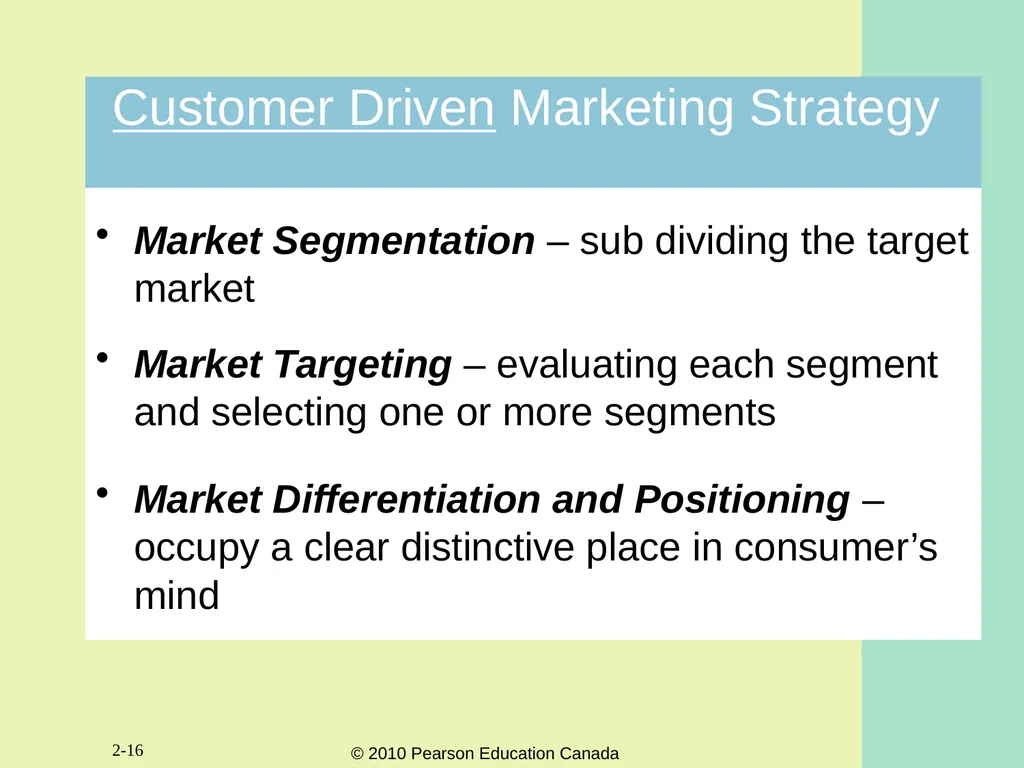
slide16. 2-16 Customer Driven Marketing Strategy Market Segmentation – sub dividing the target market
Market Targeting – evaluating each segment and selecting one or more segments
Market Differentiation and Positioning – occupy a clear distinctive place in consumer’s mind<br>
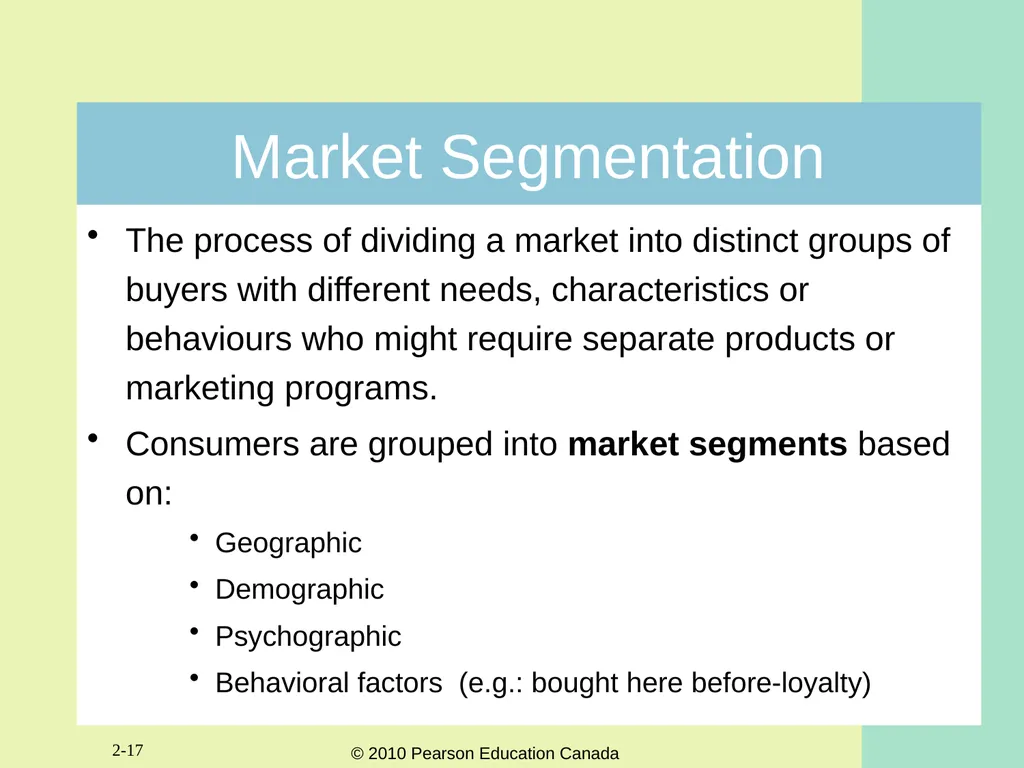
slide17. 2-17 Market Segmentation The process of dividing a market into distinct groups of buyers with different needs, characteristics or behaviours who might require separate products or marketing programs.
Consumers are grouped into market segments based on:
Geographic
Demographic
Psychographic
Behavioral factors (e.g.: bought here before-loyalty)<br>
slide18. 2-18 Market Segmentation - exercise PLEASE TAKE 5 MINUTES TO:
Get into your case team groups.
Choose a company you are familiar with as a team.
Identify one of the typical customers they sell to.
Determine what form of market segmentation would work for them best to reach this type of customer (as a group/segment)?
Be prepared to explain to the class why you think this type of segmentation is the best approach.<br>
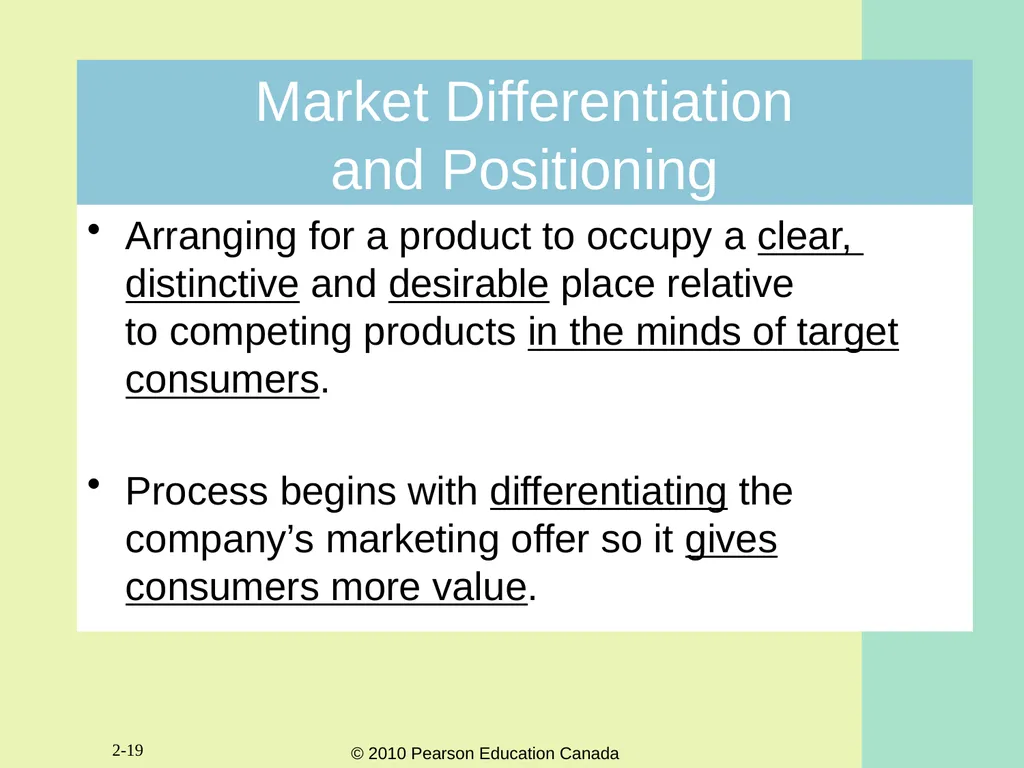
slide19. 2-19 Market Differentiation and Positioning Arranging for a product to occupy a clear, distinctive and desirable place relative to competing products in the minds of target consumers.
Process begins with differentiating the company’s marketing offer so it gives consumers more value.<br>
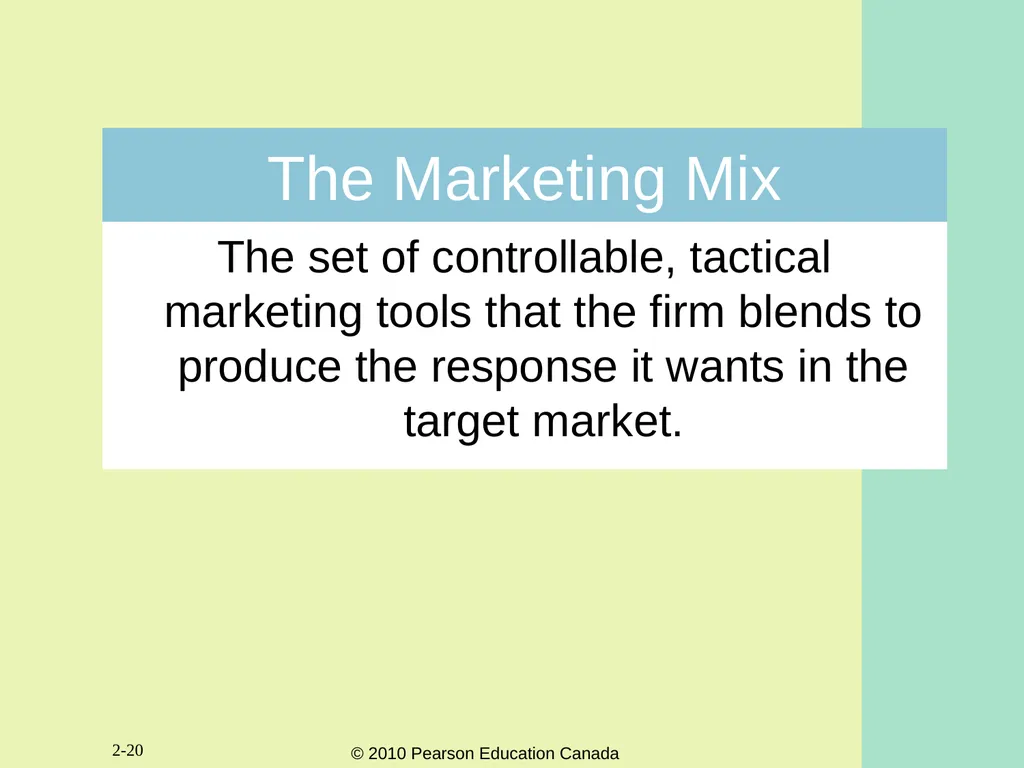
slide20. 2-20 The Marketing Mix The set of controllable, tactical marketing tools that the firm blends to produce the response it wants in the target market.<br>
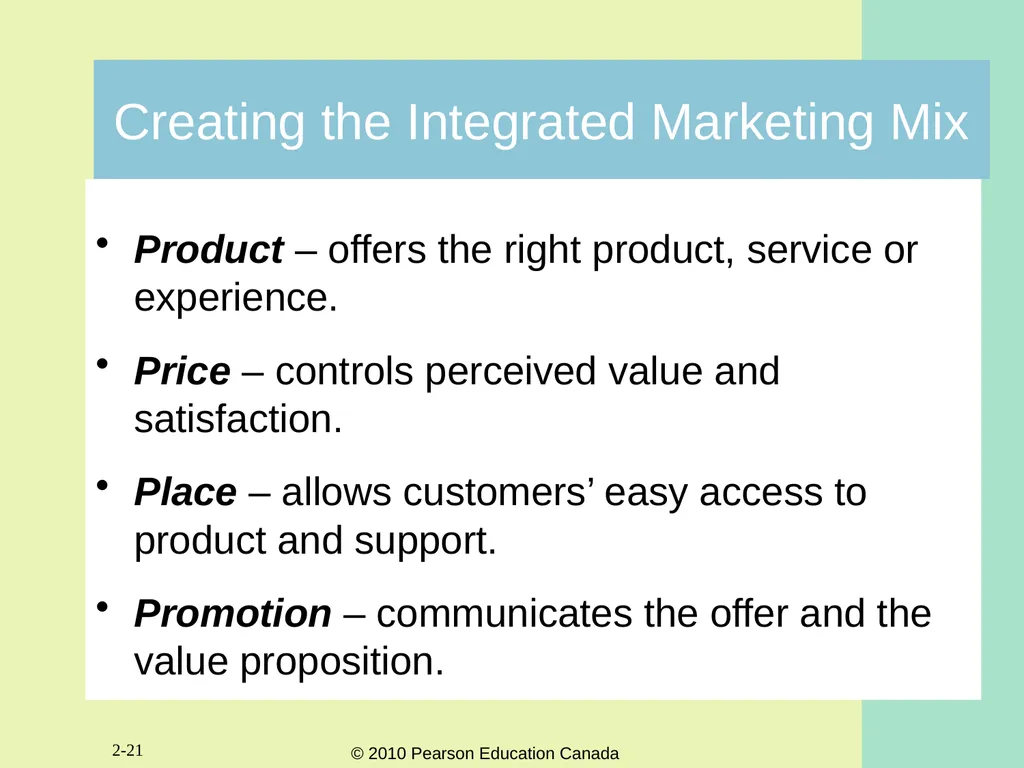
slide21. 2-21 Creating the Integrated Marketing Mix Product – offers the right product, service or experience.
Price – controls perceived value and satisfaction.
Place – allows customers’ easy access to product and support.
Promotion – communicates the offer and the value proposition.<br>
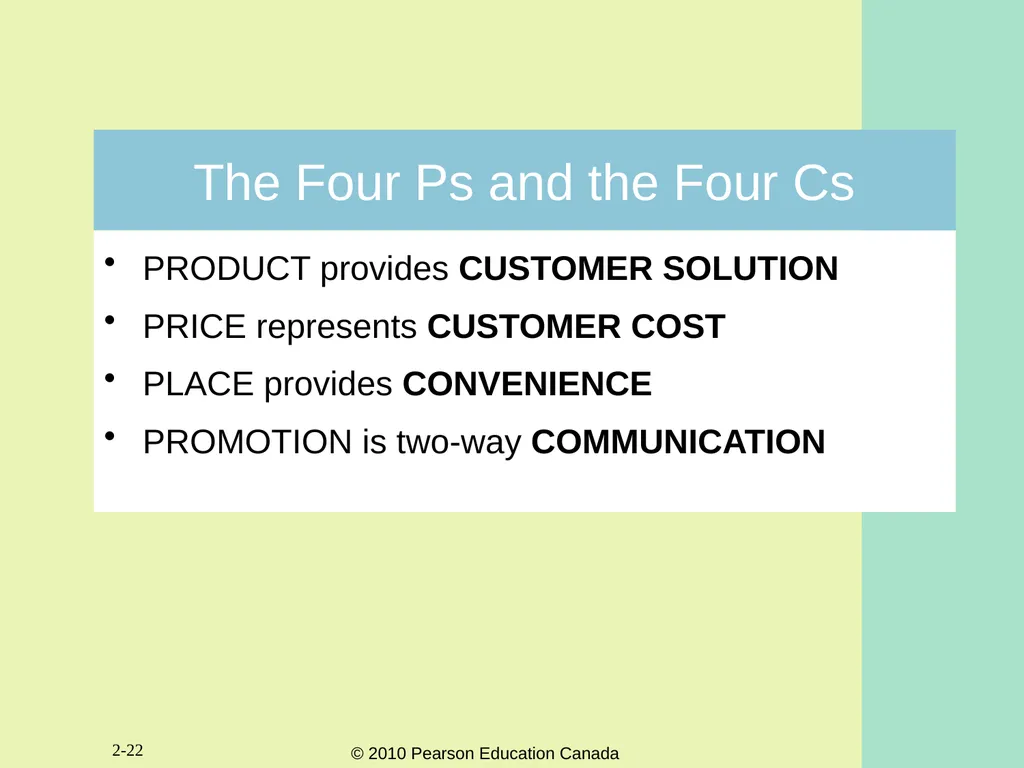
slide22. 2-22 The Four Ps and the Four Cs PRODUCT provides CUSTOMER SOLUTION
PRICE represents CUSTOMER COST
PLACE provides CONVENIENCE
PROMOTION is two-way COMMUNICATION<br>
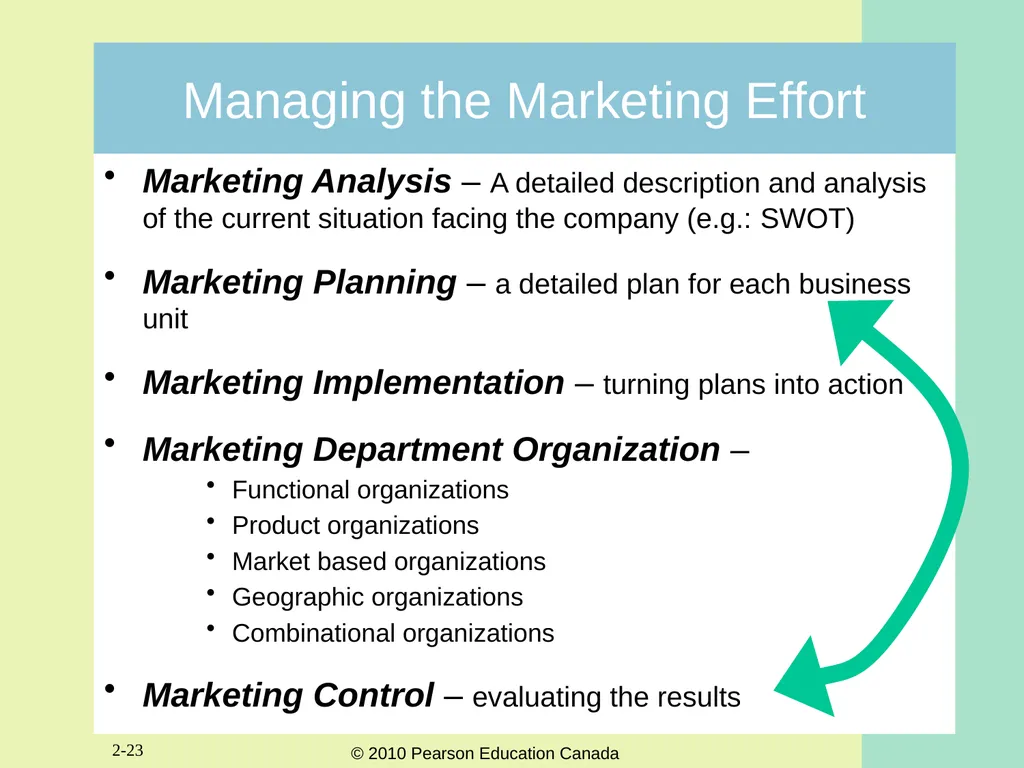
slide23. Marketing Analysis – A detailed description and analysis of the current situation facing the company (e.g.: SWOT)
Marketing Planning – a detailed plan for each business unit
Marketing Implementation – turning plans into action
Marketing Department Organization –
Functional organizations
Product organizations
Market based organizations
Geographic organizations
Combinational organizations
Marketing Control – evaluating the results 2-23 Managing the Marketing Effort<br>
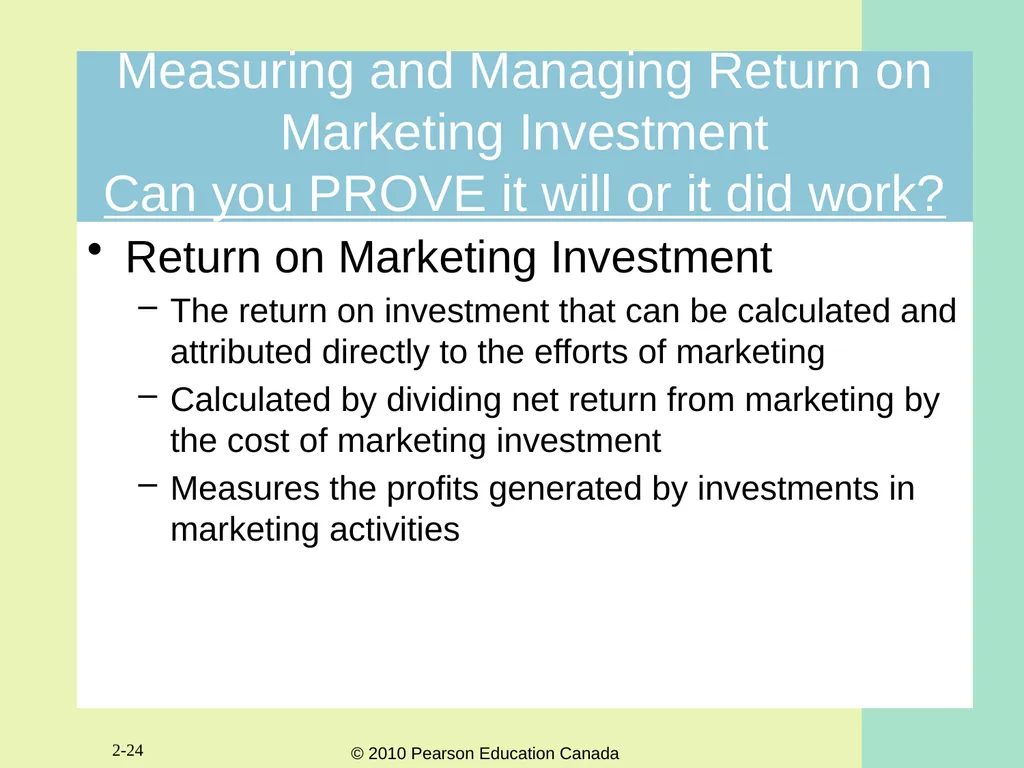
slide24. 2-24 Measuring and Managing Return on Marketing Investment Can you PROVE it will or it did work? Return on Marketing Investment
The return on investment that can be calculated and attributed directly to the efforts of marketing
Calculated by dividing net return from marketing by the cost of marketing investment
Measures the profits generated by investments in marketing activities<br>
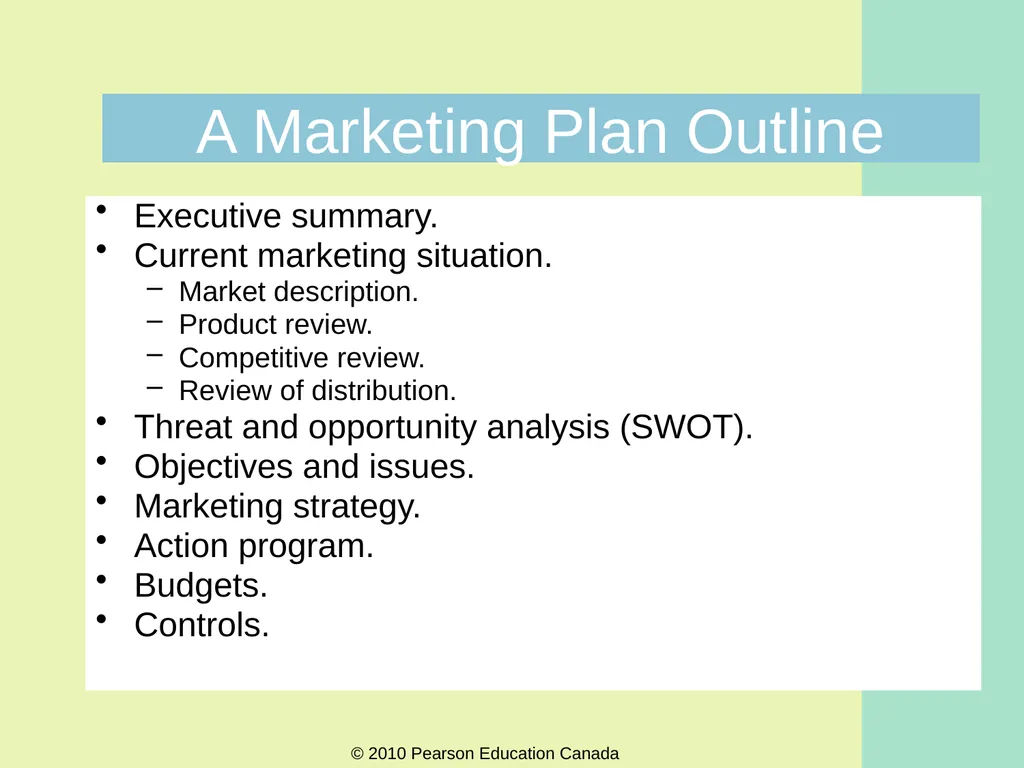
slide25. A Marketing Plan Outline Executive summary.
Current marketing situation.
Market description.
Product review.
Competitive review.
Review of distribution.
Threat and opportunity analysis (SWOT).
Objectives and issues.
Marketing strategy.
Action program.
Budgets.
Controls.<br>
slide26. Thanks!<br>
Marketing Strategy: Where Marketing Really Begins With Duane Weaver<br>
slide2. 2-2 Strategic Planning Defined and the Process
SBU’s
Marketing Positioning – Tools: - The BCG Matrix and - The Product-Market Expansion Grid
Partnering
Strategy a& Marketing Mix
Segmentation
Differentiation & Positioning
Managing Effort, SWOTs, & ROI
A Marketing Plan OUTLINE<br>
slide3. What Is Strategic Planning? Strategic Planning is the process of developing and maintaining a strategic fit between the organization’s goals and capabilities and its changing marketing opportunities.<br>
slide4. 2-4 Strategic Planning and the Marketing Process Company Wide Strategic Planning
Company Mission and Company Objectives Design Business Portfolio
BCG Matrix Strategies for Growth
Product Market Expansion Developing Customer Driven Marketing Strategy
Segmentation, Targeting and Positioning Developing the Integrated Marketing Mix
Product, Price, Place, Promotion<br>
slide5. 2-5 Company Wide Strategic Planning Defining a Clear Company Mission
States the organization’s purpose.
Market and customer-oriented.
Provides direction to internal stakeholders.
Setting Company Objectives and Goals
The mission of the organization is translated to detailed, quantifiable objectives
The rest of the planning process is supported by these objectives<br>
slide6. 2-6 Mission Statements Mission statement A statement of the organization’s purpose -what it wants to accomplish in the larger environment.
It answers basic questions
What is our business?
Who is the customer?
What does the customer value?
What should our business be?<br>
slide7. 2-7 Defining a Market Oriented Mission A market oriented mission statement
Defines the business in terms of satisfying customer needs
Will not be too narrow or too broad
Will be in tune with the current market environment<br>
slide8. 2-8 Company Objectives and Goals Goals must be sustainable and lead to growth
Corporate objectives include marketing objectives (specific, measurable, obtainable):
Invest in research and development
Improve or develop new products
Develop customer relationships<br>
slide9. 2-9 Strategic Business Units (SBU) A unit of the company that has a separate mission and objectives and that can be planned independently from other company businesses.
Can be a company division, a product line within a division or sometimes a single product or brand<br>
slide10. Business Portfolio The business portfolio is the collection of businesses and products that make up the company.
The company must:
Analyze its current business portfolio or Strategic Business Units (SBUs).
Decide which SBUs should receive more, less or no investment.
Develop growth strategies for growth or downsizing and portfolio planning using tools such as the BCG matrix.<br>
slide11. 2-11 The BCG Growth Share Matrix<br>
slide12. Analyze Opportunities Product-Market Expansion Grid identifies four potential growth areas.<br>
slide13. 2-13 Product/Market Expansion Grid Strategies for growth
Market penetration strategy
Market development strategy
Product development strategy
Diversification strategy
Strategies for international growth
Company must decide whether to go international, then which markets, how many, and which types to enter in-class notes<br>
slide14. 2-14 Partners Create and Deliver Customer Value Partnering to build customer relationships
In building profitable customer relationships companies partner with the value chain to deliver value to its customers
The value chain is the collective system of internal company departments and external business partners that together provide customer value by producing, delivering, marketing, and supporting the company’s products<br>
slide15. 2-15 Marketing Strategy and the Marketing Mix Mission Statement Corporate Objectives Business Objectives Marketing Objectives Marketing Strategies - The marketing logic by which the company creates customer value and achieves profitable customer relationships. Marketing Mix Strategies – guided by marketing strategies made up of factors under its control - product, price, place, and promotion.<br>
slide16. 2-16 Customer Driven Marketing Strategy Market Segmentation – sub dividing the target market
Market Targeting – evaluating each segment and selecting one or more segments
Market Differentiation and Positioning – occupy a clear distinctive place in consumer’s mind<br>
slide17. 2-17 Market Segmentation The process of dividing a market into distinct groups of buyers with different needs, characteristics or behaviours who might require separate products or marketing programs.
Consumers are grouped into market segments based on:
Geographic
Demographic
Psychographic
Behavioral factors (e.g.: bought here before-loyalty)<br>
slide18. 2-18 Market Segmentation - exercise PLEASE TAKE 5 MINUTES TO:
Get into your case team groups.
Choose a company you are familiar with as a team.
Identify one of the typical customers they sell to.
Determine what form of market segmentation would work for them best to reach this type of customer (as a group/segment)?
Be prepared to explain to the class why you think this type of segmentation is the best approach.<br>
slide19. 2-19 Market Differentiation and Positioning Arranging for a product to occupy a clear, distinctive and desirable place relative to competing products in the minds of target consumers.
Process begins with differentiating the company’s marketing offer so it gives consumers more value.<br>
slide20. 2-20 The Marketing Mix The set of controllable, tactical marketing tools that the firm blends to produce the response it wants in the target market.<br>
slide21. 2-21 Creating the Integrated Marketing Mix Product – offers the right product, service or experience.
Price – controls perceived value and satisfaction.
Place – allows customers’ easy access to product and support.
Promotion – communicates the offer and the value proposition.<br>
slide22. 2-22 The Four Ps and the Four Cs PRODUCT provides CUSTOMER SOLUTION
PRICE represents CUSTOMER COST
PLACE provides CONVENIENCE
PROMOTION is two-way COMMUNICATION<br>
slide23. Marketing Analysis – A detailed description and analysis of the current situation facing the company (e.g.: SWOT)
Marketing Planning – a detailed plan for each business unit
Marketing Implementation – turning plans into action
Marketing Department Organization –
Functional organizations
Product organizations
Market based organizations
Geographic organizations
Combinational organizations
Marketing Control – evaluating the results 2-23 Managing the Marketing Effort<br>
slide24. 2-24 Measuring and Managing Return on Marketing Investment Can you PROVE it will or it did work? Return on Marketing Investment
The return on investment that can be calculated and attributed directly to the efforts of marketing
Calculated by dividing net return from marketing by the cost of marketing investment
Measures the profits generated by investments in marketing activities<br>
slide25. A Marketing Plan Outline Executive summary.
Current marketing situation.
Market description.
Product review.
Competitive review.
Review of distribution.
Threat and opportunity analysis (SWOT).
Objectives and issues.
Marketing strategy.
Action program.
Budgets.
Controls.<br>
slide26. Thanks!<br>