04
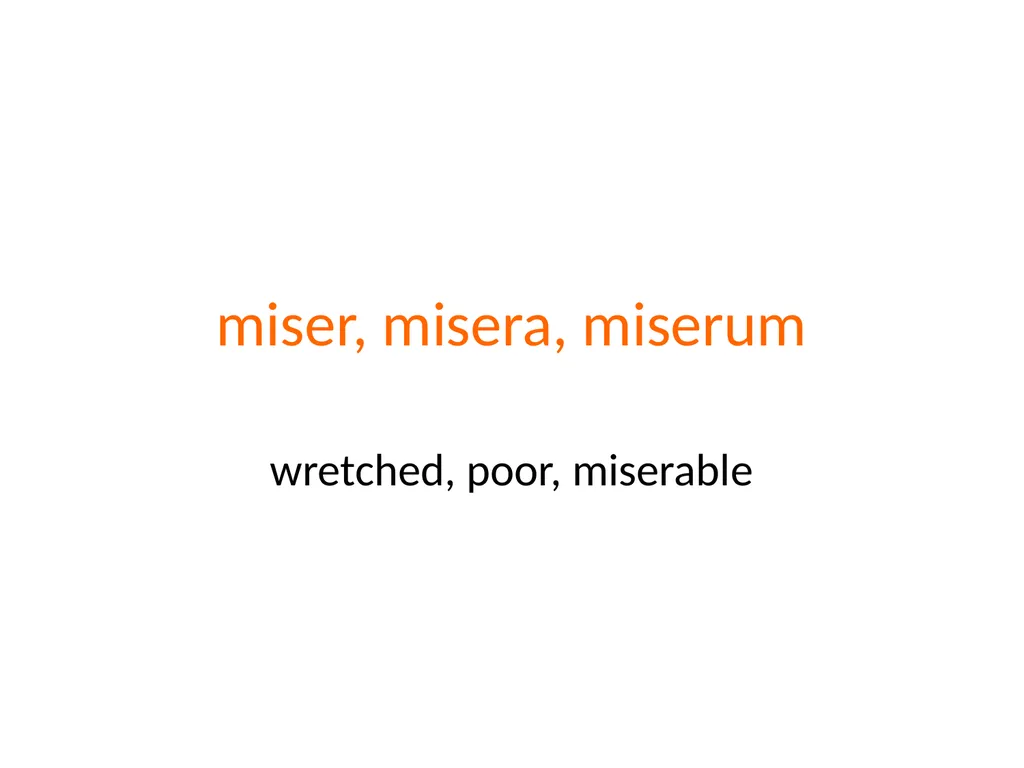
miser, misera, miserum wretched, poor, miserable<br>
05
noster, nostra, nostrum our, ours<br>
06
pulcher, pulchra, pulchrum beautiful, handsome; noble, fine<br>
07
sacer, sacra, sacrum sacred, holy<br>
08
vester, vestra, vestrum your, yours (you pl.)<br>
09
ante (+ acc.) before<br>
10
contrā (+ acc.) against<br>
11
inter (+ acc.) between, among<br>
12
ob (+ acc.) because of<br>
13
per (+ acc.) through<br>
14
post (+ acc.) after, behind<br>
15
propter (+ acc.) on account of<br>
16
trāns (+ acc.) across, over<br>
17
2-1-2 –ER Adjectives<br>
18
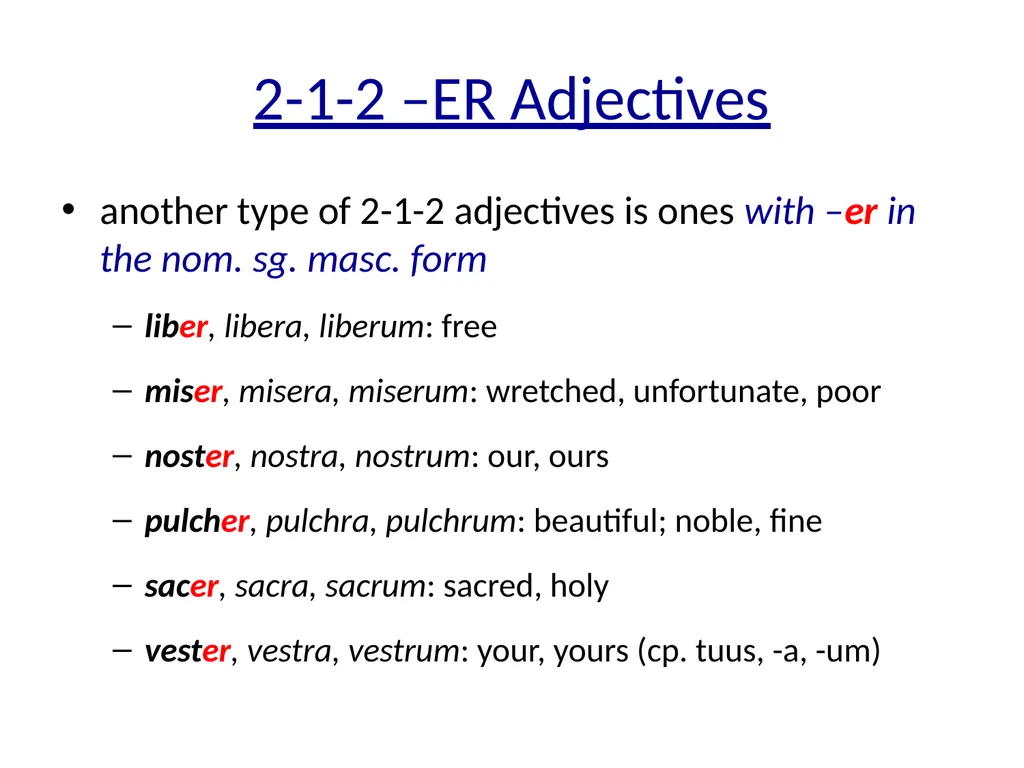
2-1-2 –ER Adjectives another type of 2-1-2 adjectives is ones with –er in the nom. sg. masc. form
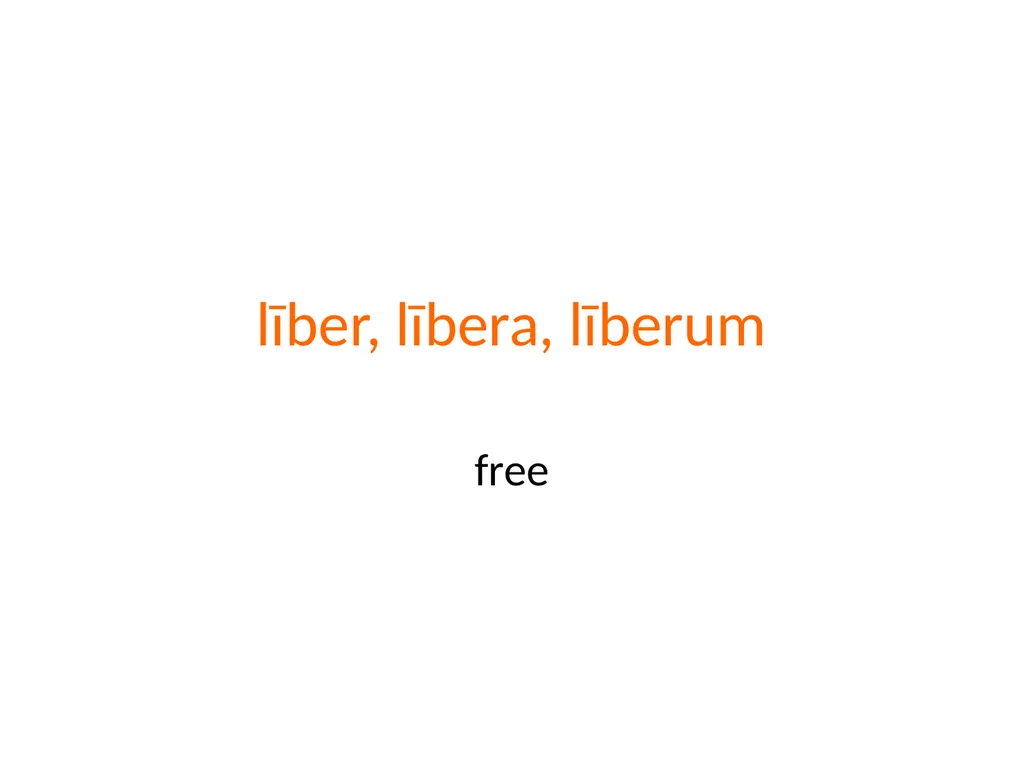
liber, libera, liberum: free
miser, misera, miserum: wretched, unfortunate, poor
noster, nostra, nostrum: our, ours
pulcher, pulchra, pulchrum: beautiful; noble, fine
sacer, sacra, sacrum: sacred, holy
vester, vestra, vestrum: your, yours (cp. tuus, -a, -um)<br>
19
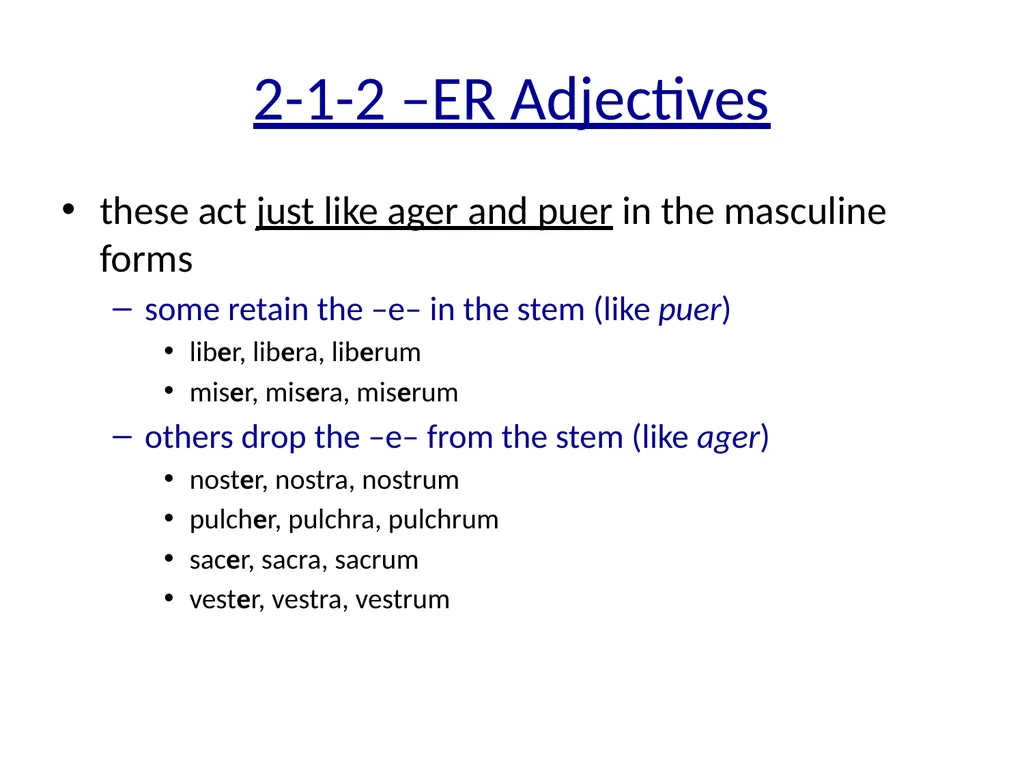
2-1-2 –ER Adjectives these act just like ager and puer in the masculine forms
some retain the –e– in the stem (like puer)
liber, libera, liberum
miser, misera, miserum
others drop the –e– from the stem (like ager)
noster, nostra, nostrum
pulcher, pulchra, pulchrum
sacer, sacra, sacrum
vester, vestra, vestrum<br>
20
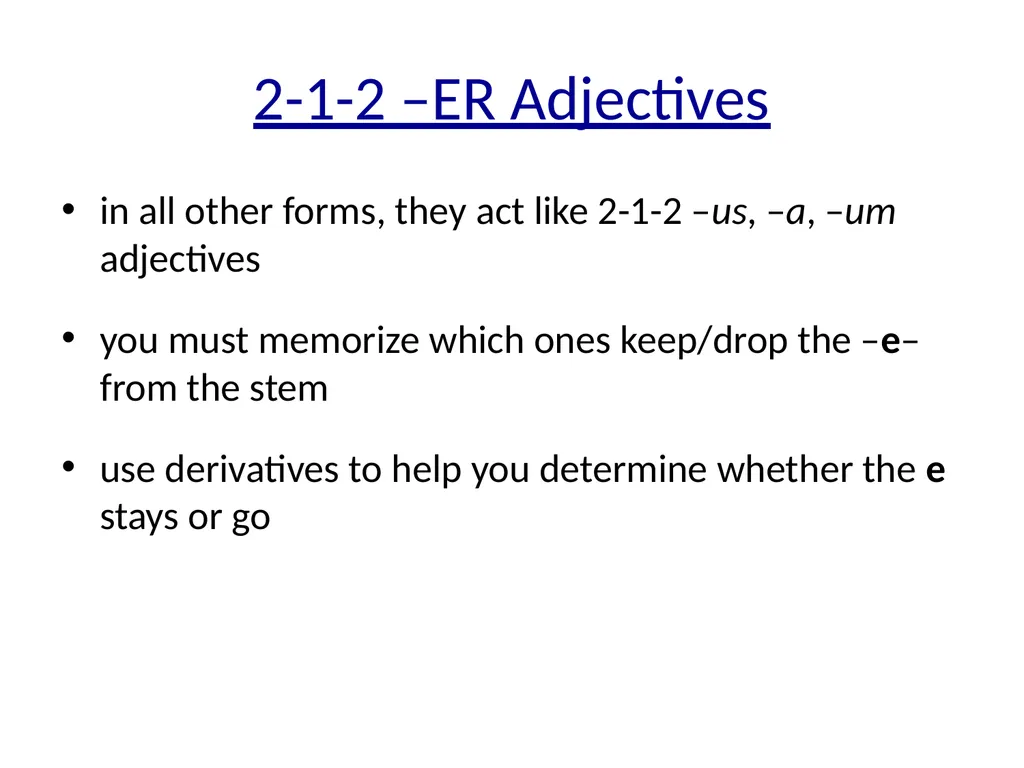
2-1-2 –ER Adjectives in all other forms, they act like 2-1-2 –us, –a, –um adjectives
you must memorize which ones keep/drop the –e– from the stem
use derivatives to help you determine whether the e stays or go<br>
21
Declining a 2-1-2 –ER Adjective�pulcher, pulchra, pulchrum<br>
22
Declining a 2-1-2 –ER Adjective�pulcher, pulchra, pulchrum Stem: ________<br>
23
Declining a 2-1-2 –ER Adjective�pulcher, pulchra, pulchrum Stem: pulchr–<br>
24
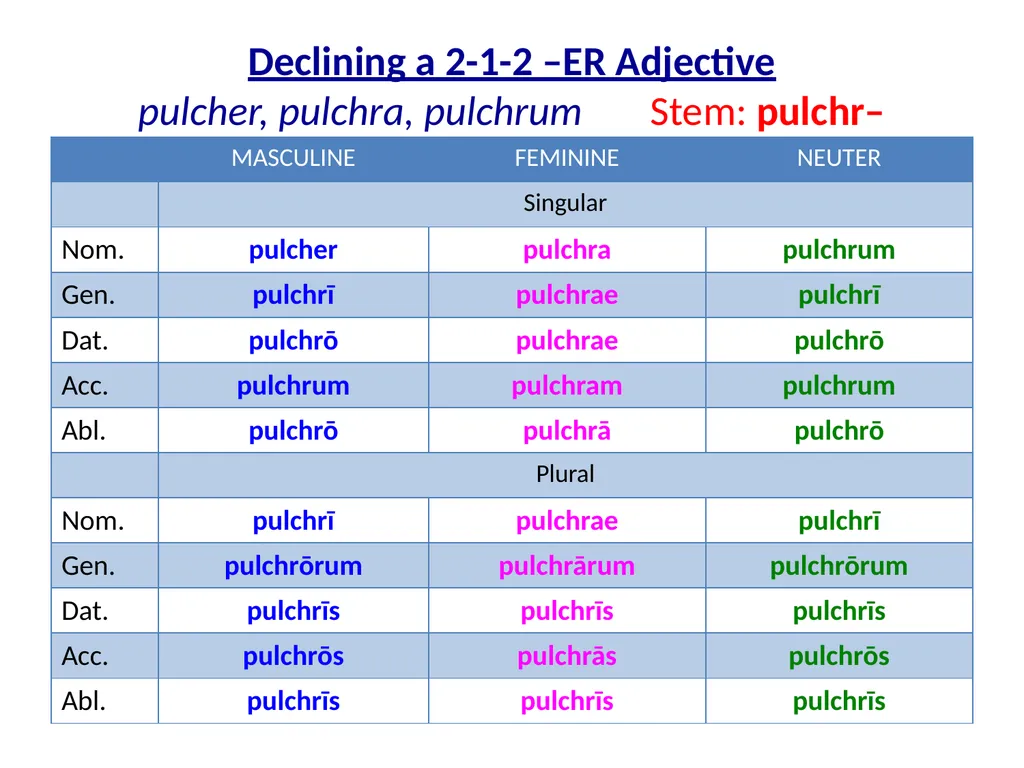
Declining a 2-1-2 –ER Adjective�pulcher, pulchra, pulchrum Stem: pulchr–<br>
25
The Dative Case:�Dative of Indirect Object<br>
26
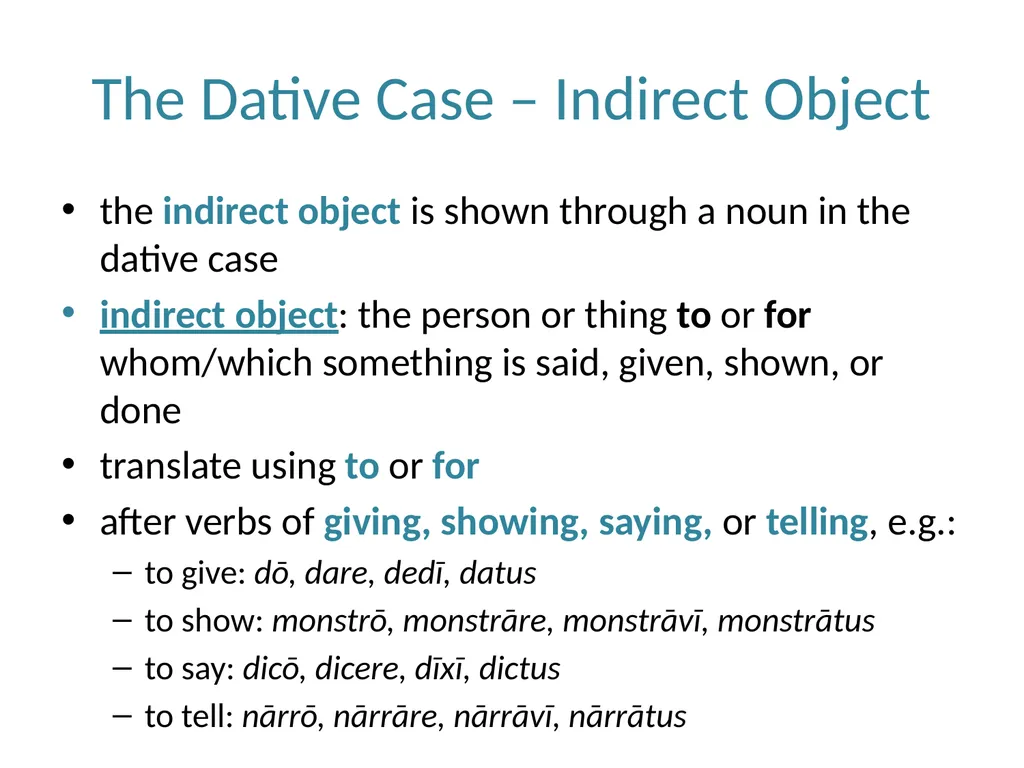
The Dative Case – Indirect Object the indirect object is shown through a noun in the dative case
indirect object: the person or thing to or for whom/which something is said, given, shown, or done
translate using to or for
after verbs of giving, showing, saying, or telling, e.g.:
to give: dō, dare, dedī, datus
to show: monstrō, monstrāre, monstrāvī, monstrātus
to say: dicō, dicere, dīxī, dictus
to tell: nārrō, nārrāre, nārrāvī, nārrātus<br>
27
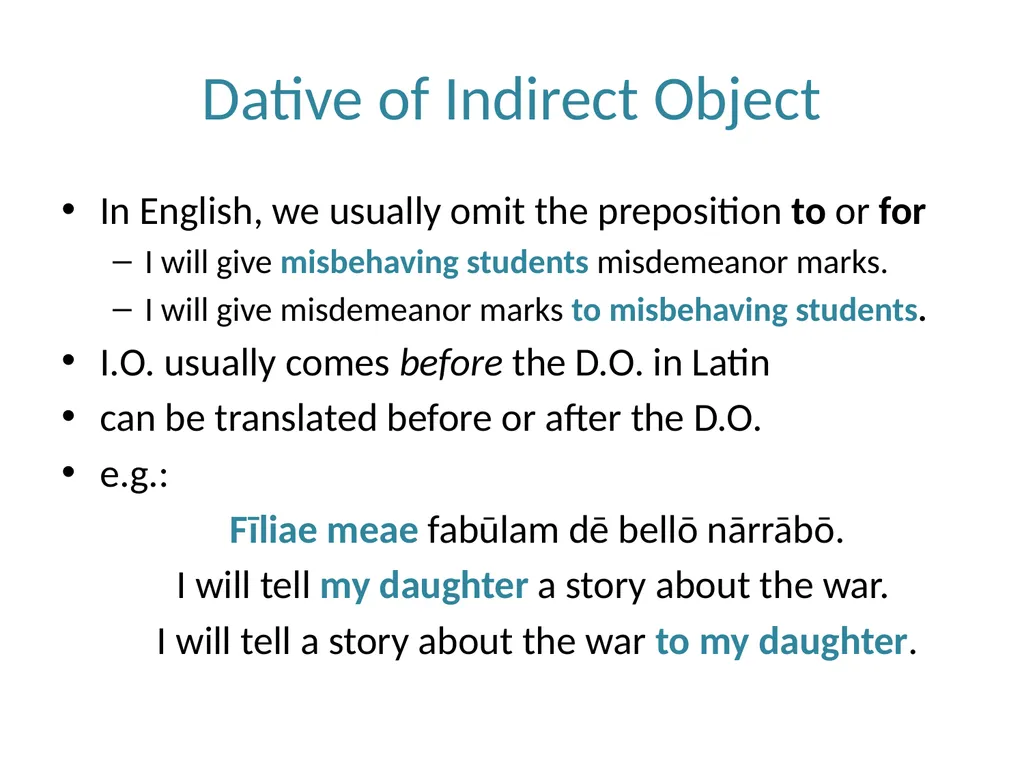
Dative of Indirect Object In English, we usually omit the preposition to or for
I will give misbehaving students misdemeanor marks.
I will give misdemeanor marks to misbehaving students.
I.O. usually comes before the D.O. in Latin
can be translated before or after the D.O.
e.g.:
Fīliae meae fabūlam dē bellō nārrābō.
I will tell my daughter a story about the war.
I will tell a story about the war to my daughter.<br>
28
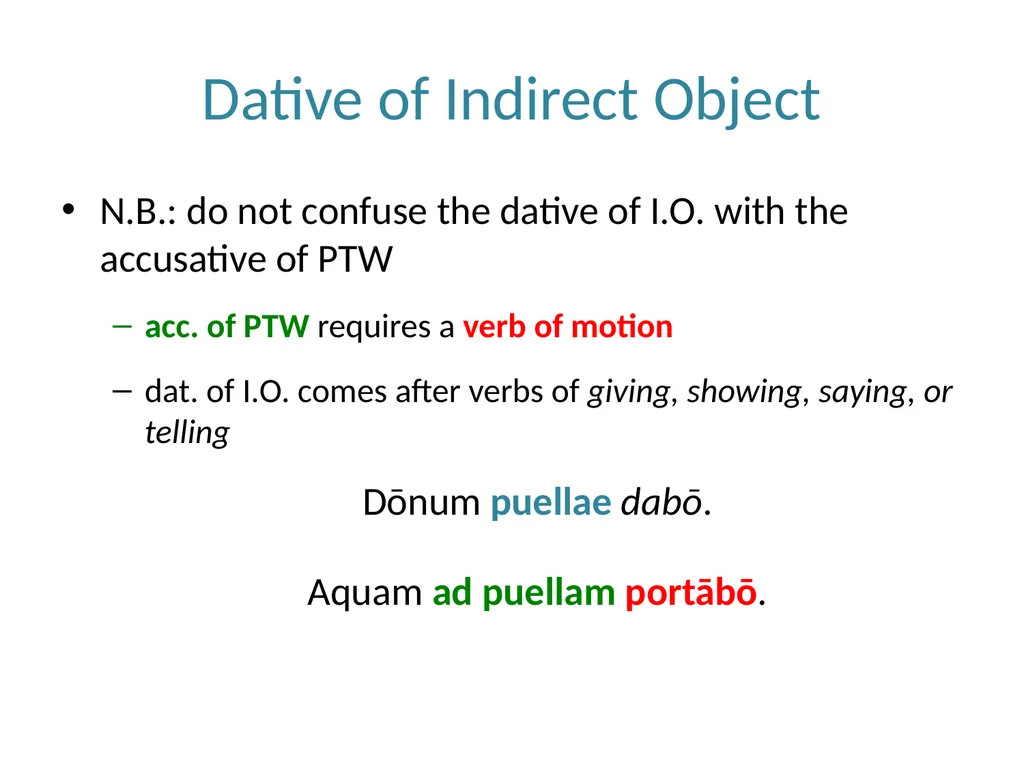
Dative of Indirect Object N.B.: do not confuse the dative of I.O. with the accusative of PTW
acc. of PTW requires a verb of motion
dat. of I.O. comes after verbs of giving, showing, saying, or telling
Dōnum puellae dabō.
Aquam ad puellam portābō.<br>
29
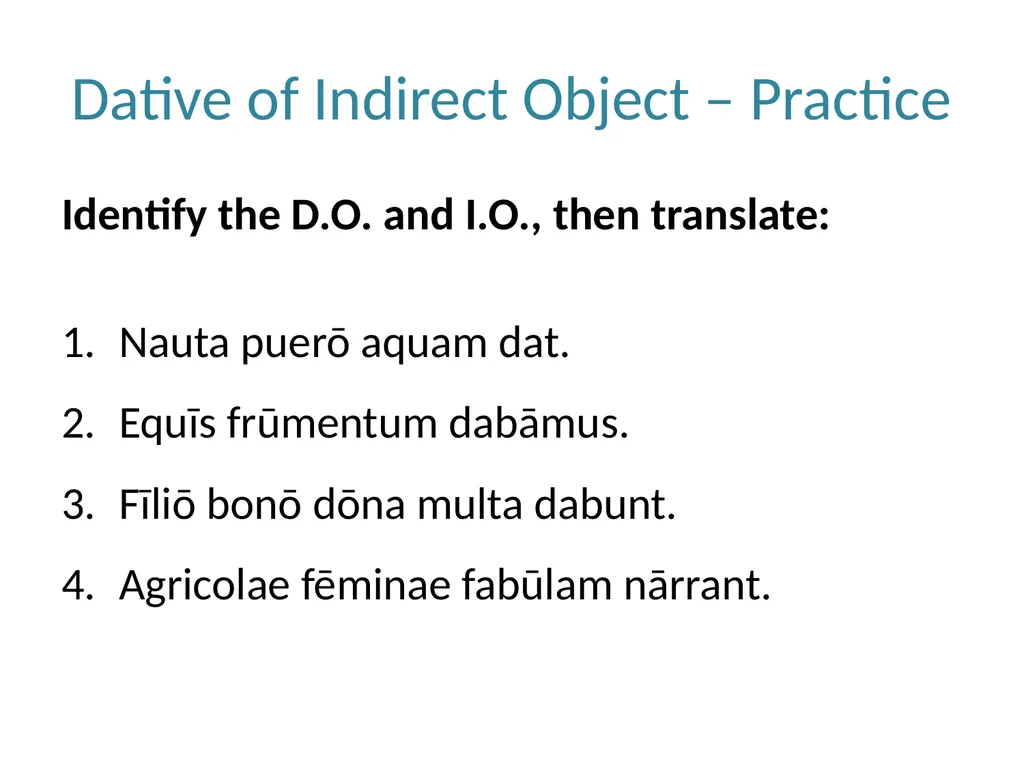
Dative of Indirect Object – Practice Identify the D.O. and I.O., then translate:
Nauta puerō aquam dat.
Equīs frūmentum dabāmus.
Fīliō bonō dōna multa dabunt.
Agricolae fēminae fabūlam nārrant.<br>