Classical Conditioning Learning Learning is a key process. Learning is when you learn something. Learning is a any relatively permanent change in behavior that occurs as a result of practice or experience. So we can say learning is-
"Classical Conditioning Learning Learning is a key" is the property of its rightful owner. Permission is granted to
download and print the materials on this website for personal, non-commercial use only, and to display it
on your personal computer provided you do not modify the materials and that you retain all copyright
notices contained in the materials. By downloading content from our website, you accept the terms of this
agreement.
Presentation Transcript
01
Classical Conditioning<br>
02
Learning Learning is a key process.
Learning is when you learn something.
“Learning is a any relatively permanent change in behavior that occurs as a result of practice or experience.”<br>
03
So we can say learning is-
Relatively permanent
Change in a behavior (for better/worse)
It does not apply on temporary change in behavior ( illness, fatigue, drugs)
It does not refer to change resulting from maturation or growth<br>
04
Stimulus Vs. Response
Stimulus
Any event or situation that evokes a response / Stimulus is anything in the environment that can be detected by the senses.
Response
An response is a reaction to an experience, or some other type of stimulus and results in a change behavior<br>
05
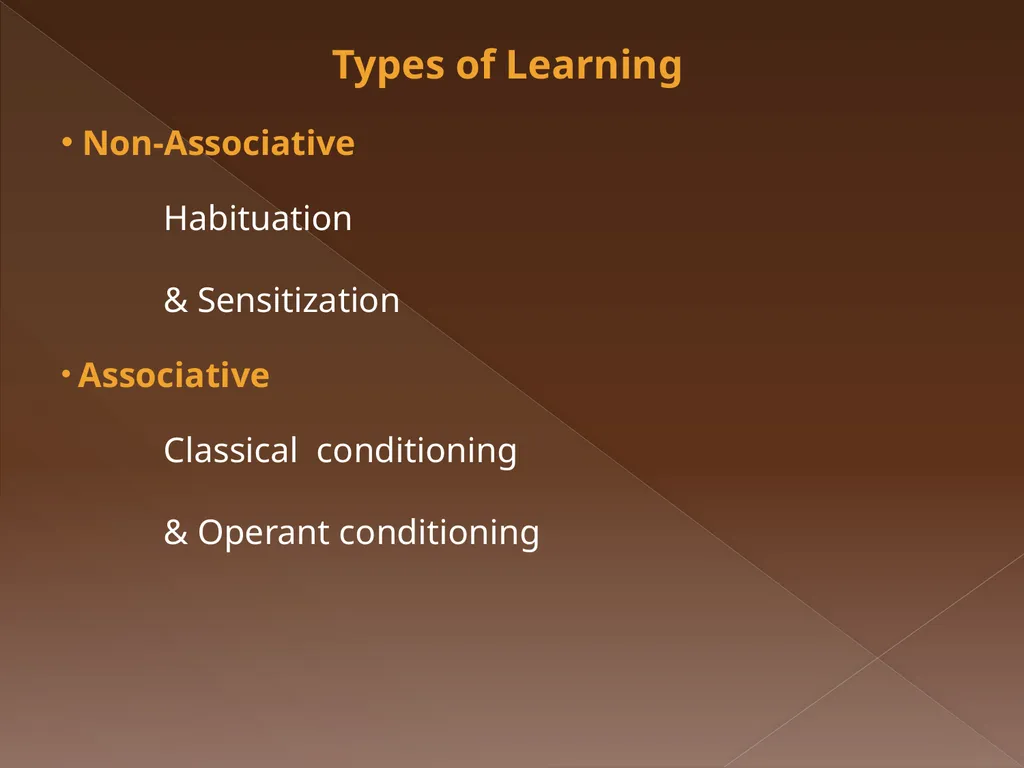
Types of Learning
Non-Associative
Habituation
& Sensitization
Associative
Classical conditioning
& Operant conditioning<br>
06
Non Associative Learning
-- As the name suggest this type of learning does not rely on the association between two or more objects or events but rather occurs when repeated exposure to the same stimulus alters how an person/animal responds to that stimulus.
Two major types
Habituation
The process of habituating, in which individuals pay less attention to a stimulus after it is presented to them over n over again.
(b) Sensitization
The process of sensitization occurs when repeated exposure to a stimulus increases responsiveness this process is called sensitization.<br>
07
Associative Learning
--Occurs when one object or event becomes associated with another object or event.
-- It is more complicated than non-associated learning because it involves learning relationship among events
Classical Conditioning
In classical conditioning an organism learn that one event follow another.
Instrumental/ Operant Conditioning
In operant conditioning an organism learn that a response it makes will be followed by a particular consequence.<br>
08
Classical Conditioning Classical Conditioning
-Ivan Pavlov
John B. Watson (Behaviorism)<br>
09
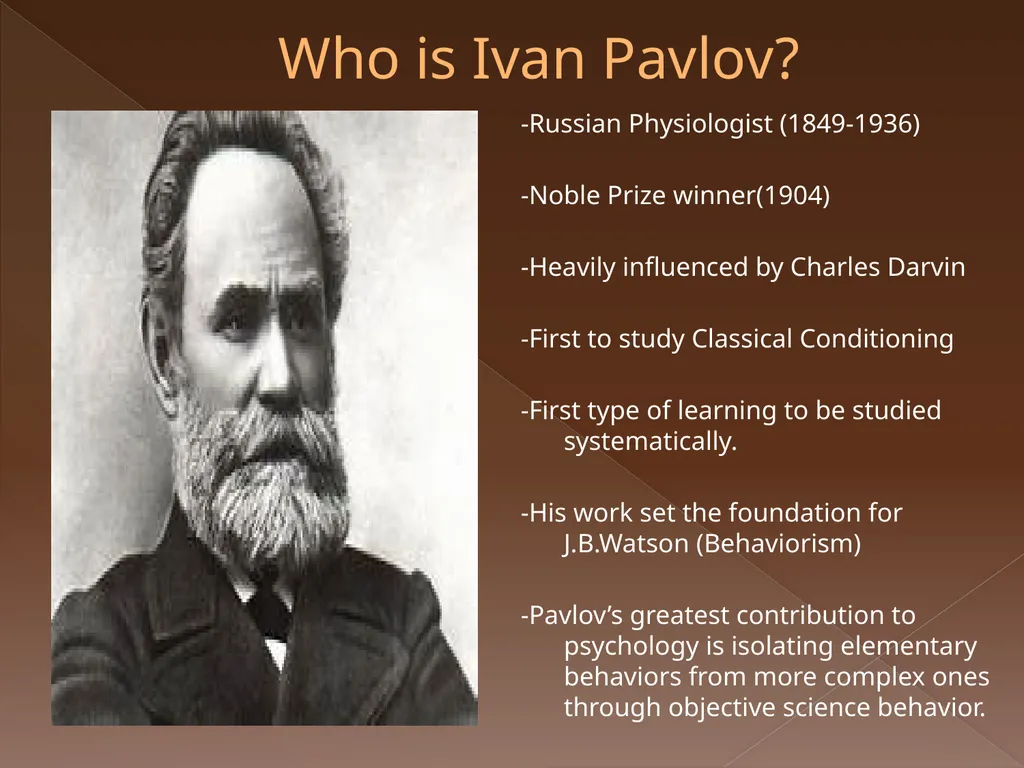
Who is Ivan Pavlov? -Russian Physiologist (1849-1936)
-Noble Prize winner(1904)
-Heavily influenced by Charles Darvin
-First to study Classical Conditioning
-First type of learning to be studied systematically.
-His work set the foundation for J.B.Watson (Behaviorism)
-Pavlov’s greatest contribution to psychology is isolating elementary behaviors from more complex ones through objective science behavior.<br>
10
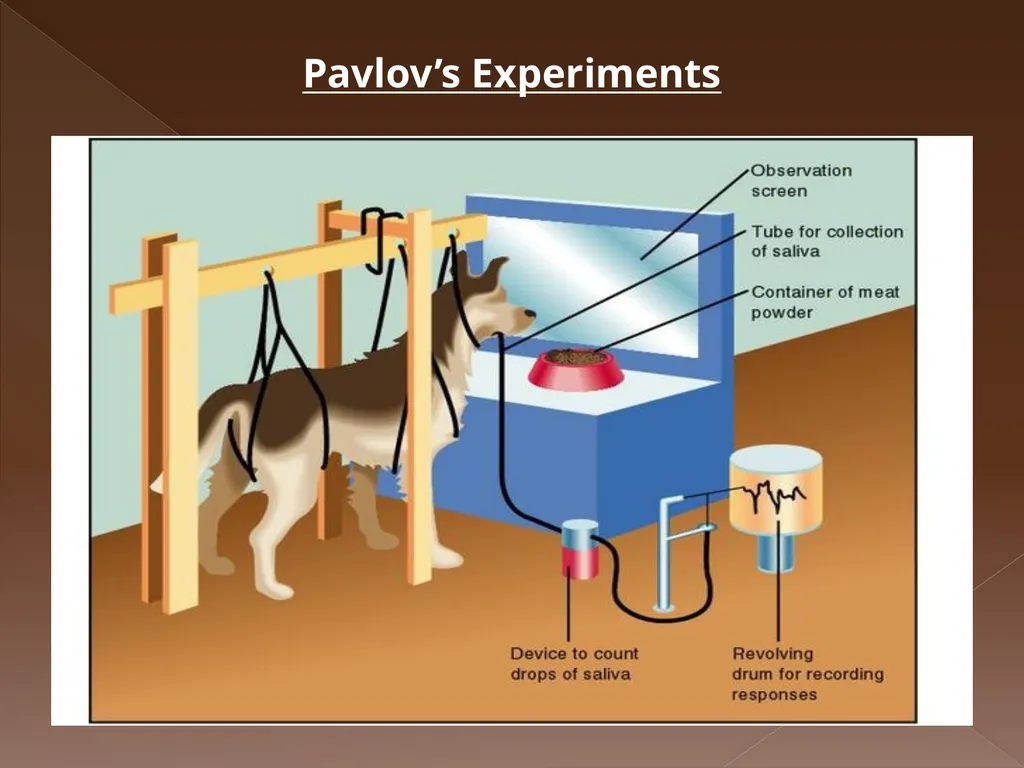
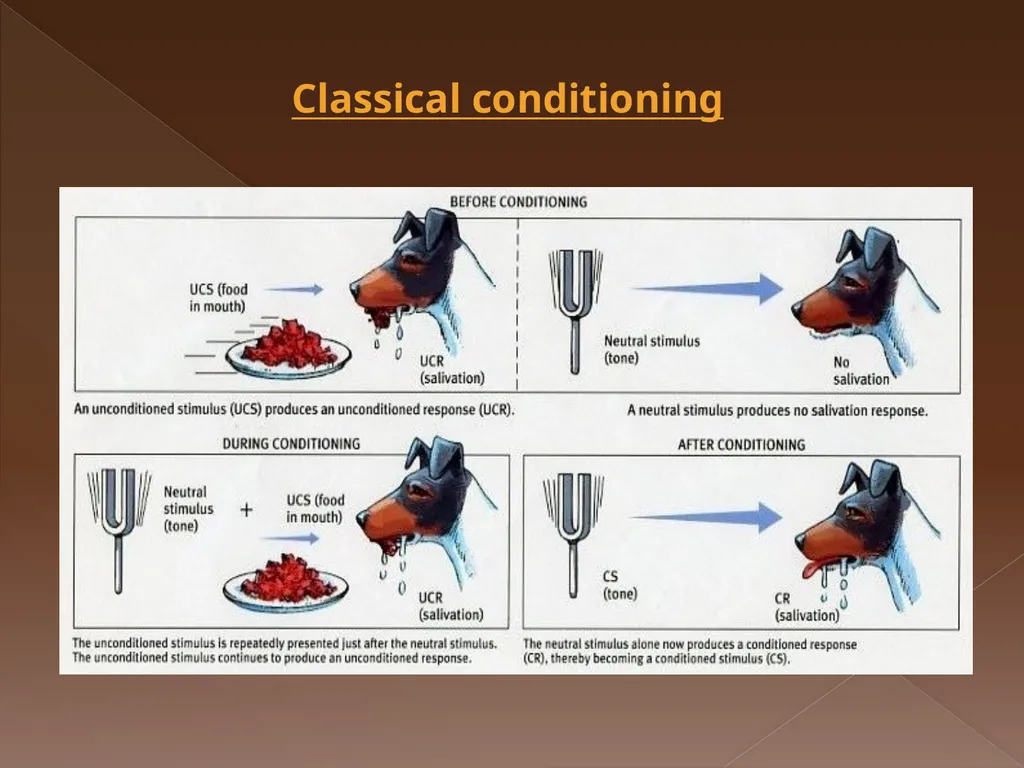
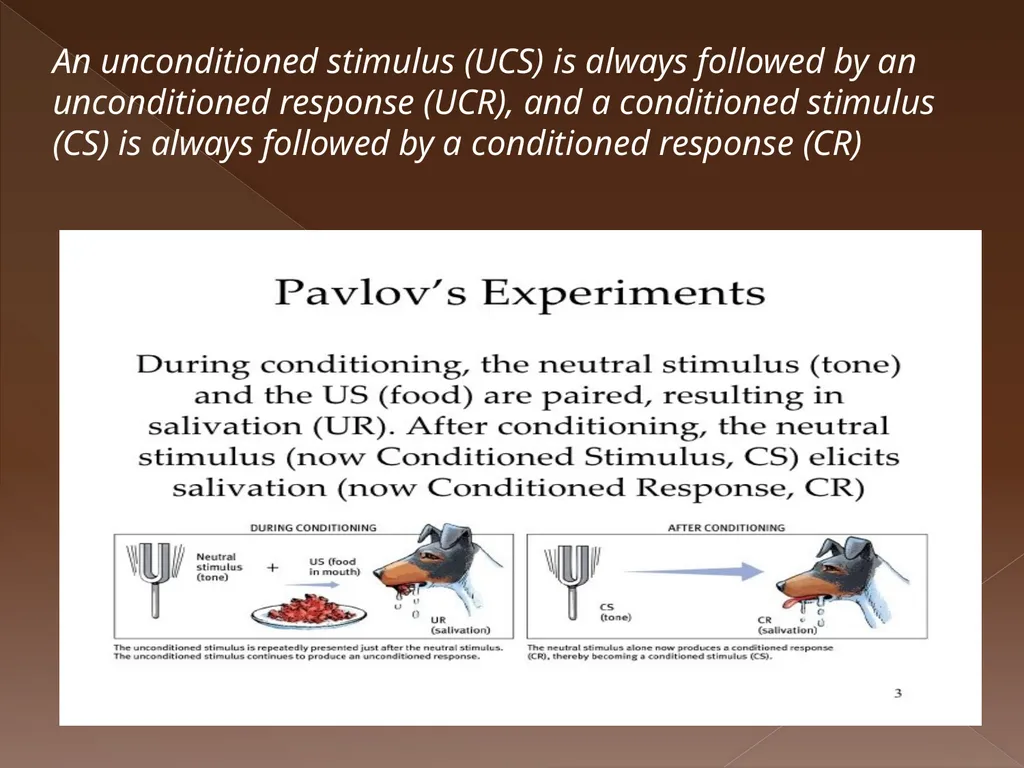
It makes your mouth watering : Classical Conditioning Pavlov associated the ringing bell with the presence of powdered meat .
He rang the bell every time the dog were served food.
Pavlov started ringing the bell and the dog would salivate without the powdered meat being present.
Thus, a learned reflex.
Reflex– An unlearned, involuntary response that is not under personal control or choice, one of many that occur both animals and in humans.
Eg.The food cause a particular reaction, the salivation .
Classical conditioning-
learning to make an involuntary response to a stimulus other than the original, natural stimulus that normally produce the response<br>
11
Pavlov’s Experiments<br>
12
Classical conditioning<br>
13
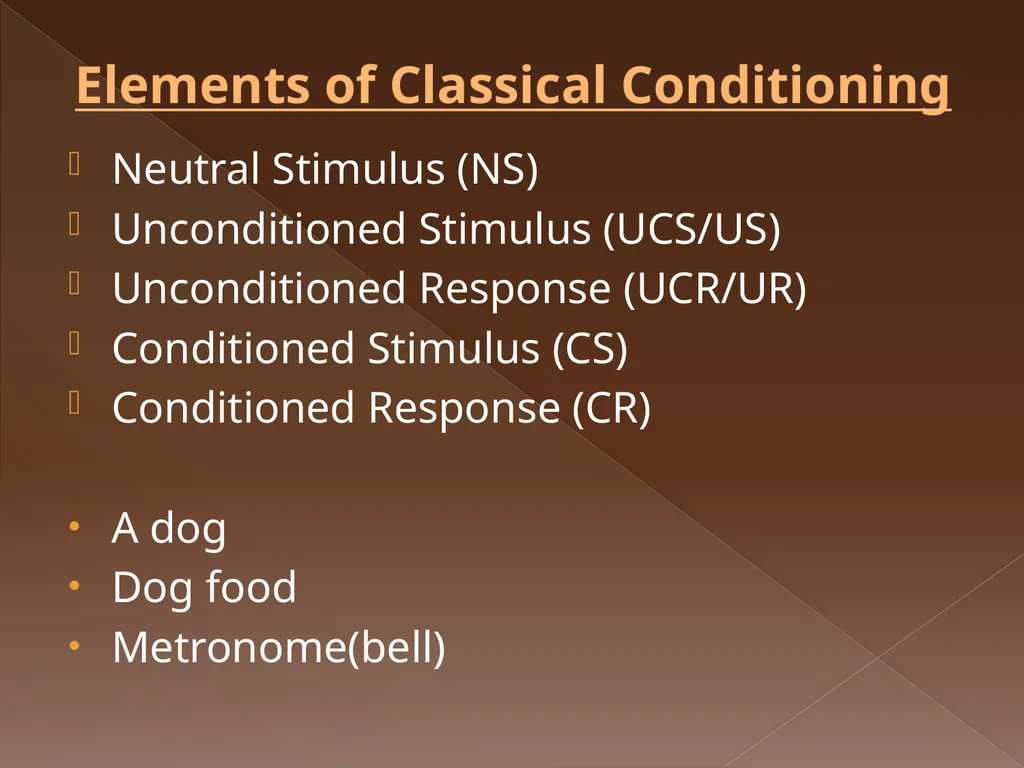
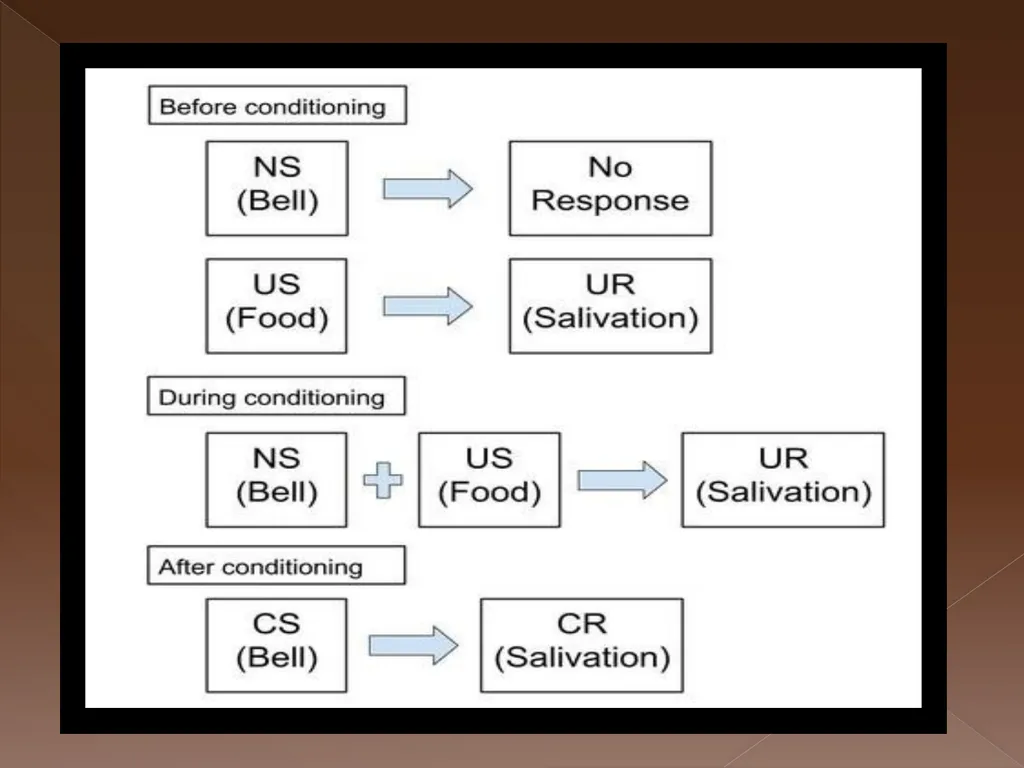
Elements of Classical Conditioning Neutral Stimulus (NS)
Unconditioned Stimulus (UCS/US)
Unconditioned Response (UCR/UR)
Conditioned Stimulus (CS)
Conditioned Response (CR)
A dog
Dog food
Metronome(bell)<br>
14
Neutral Stimulus In classical conditioning a stimulus that elicits no response before conditioning..
e.g. the bell sound<br>
15
Unconditioned Stimulus (UCS) In classical conditioning, a naturally occurring stimulus that leads to an involuntary and unlearned response.
Eg. The powdered meat<br>
16
Unconditioned Response (UCR) In classical conditioning an involuntary and unlearned response to a naturally occurring or unconditioned stimulus.
Eg Salivation.<br>
17
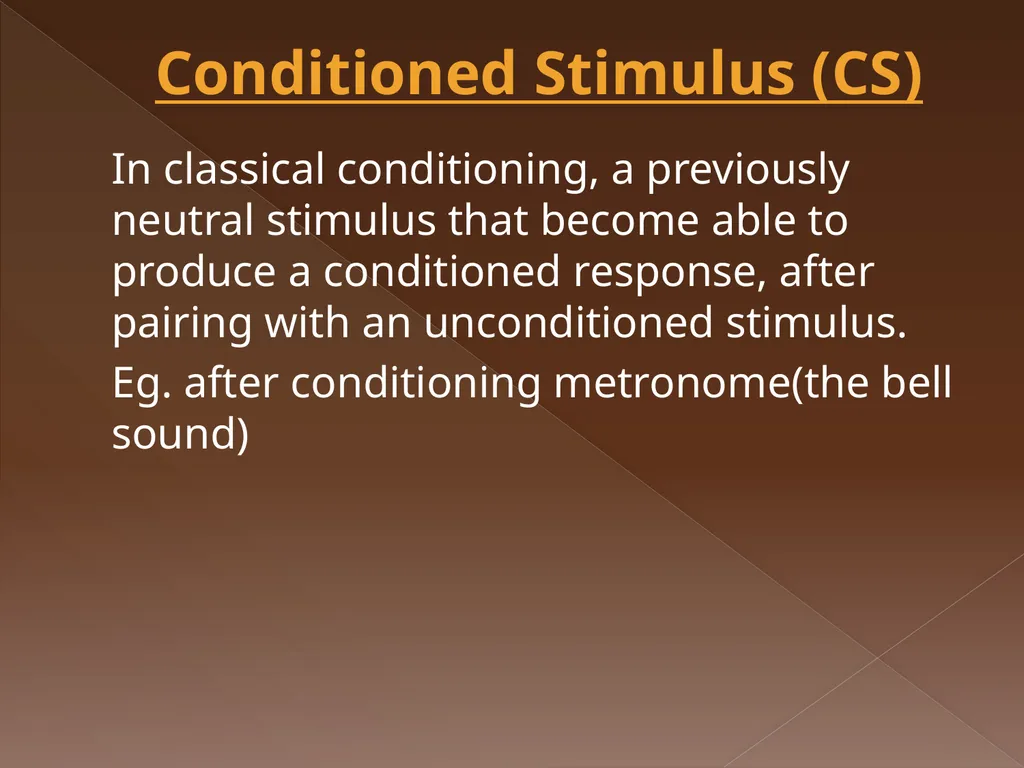
Conditioned Stimulus (CS) In classical conditioning, a previously neutral stimulus that become able to produce a conditioned response, after pairing with an unconditioned stimulus.
Eg. after conditioning metronome(the bell sound)<br>
18
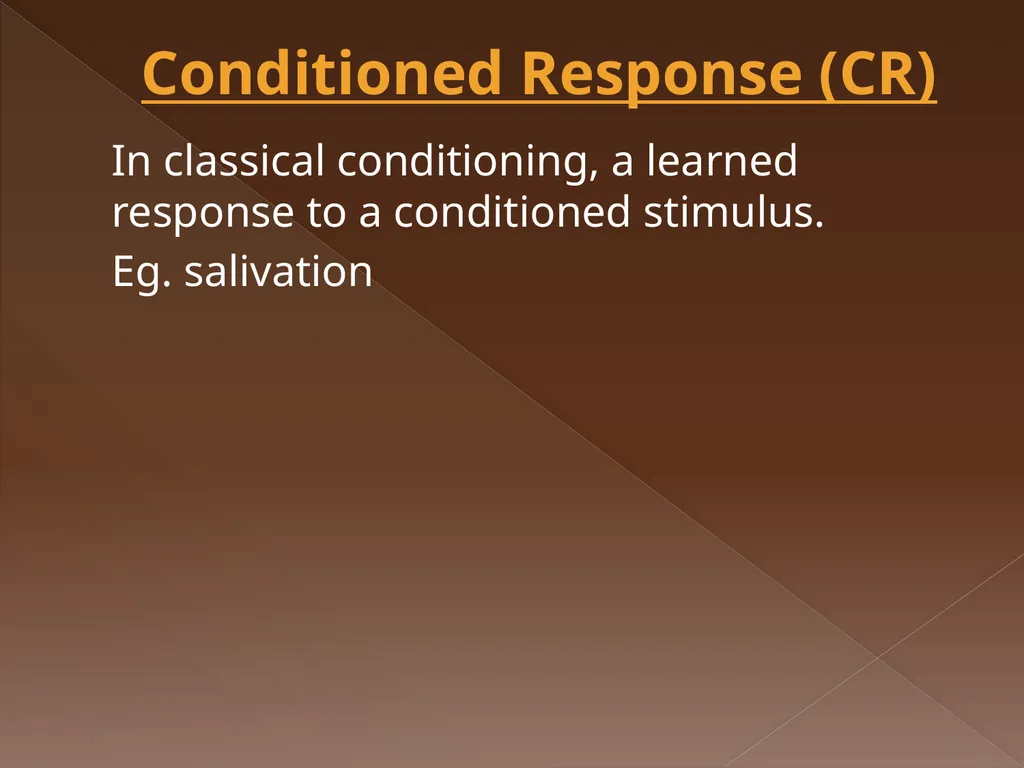
Conditioned Response (CR) In classical conditioning, a learned response to a conditioned stimulus.
Eg. salivation<br>
19
An unconditioned stimulus (UCS) is always followed by an unconditioned response (UCR), and a conditioned stimulus (CS) is always followed by a conditioned response (CR)<br>
20
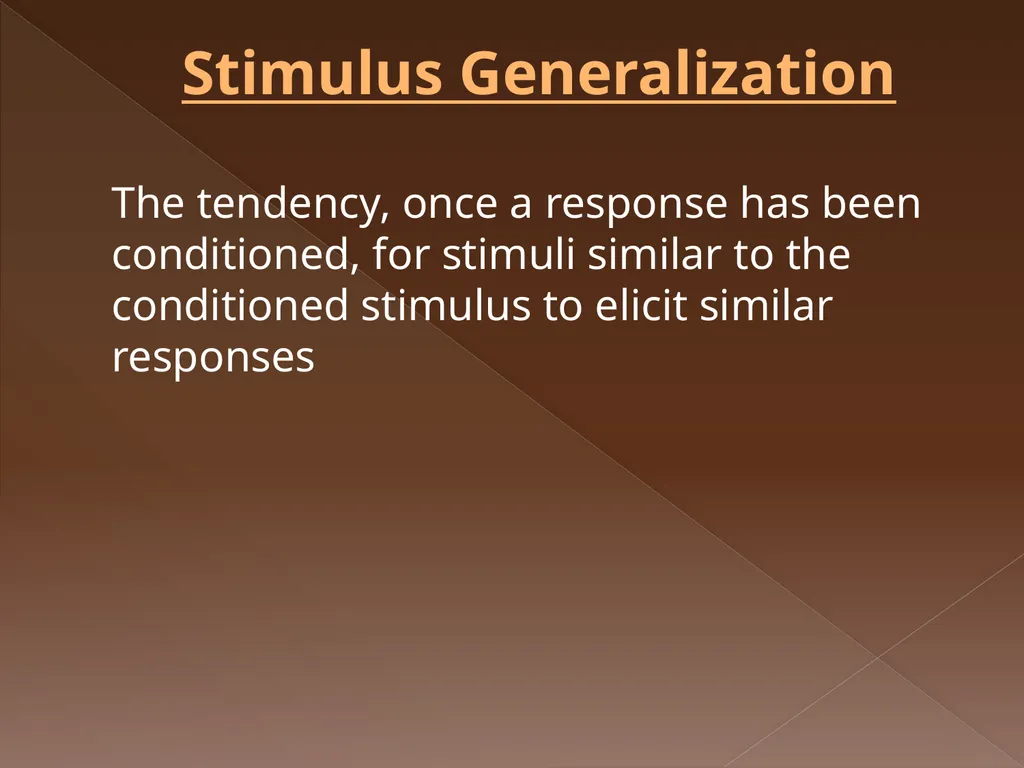
Stimulus Generalization The tendency, once a response has been conditioned, for stimuli similar to the conditioned stimulus to elicit similar responses<br>
21
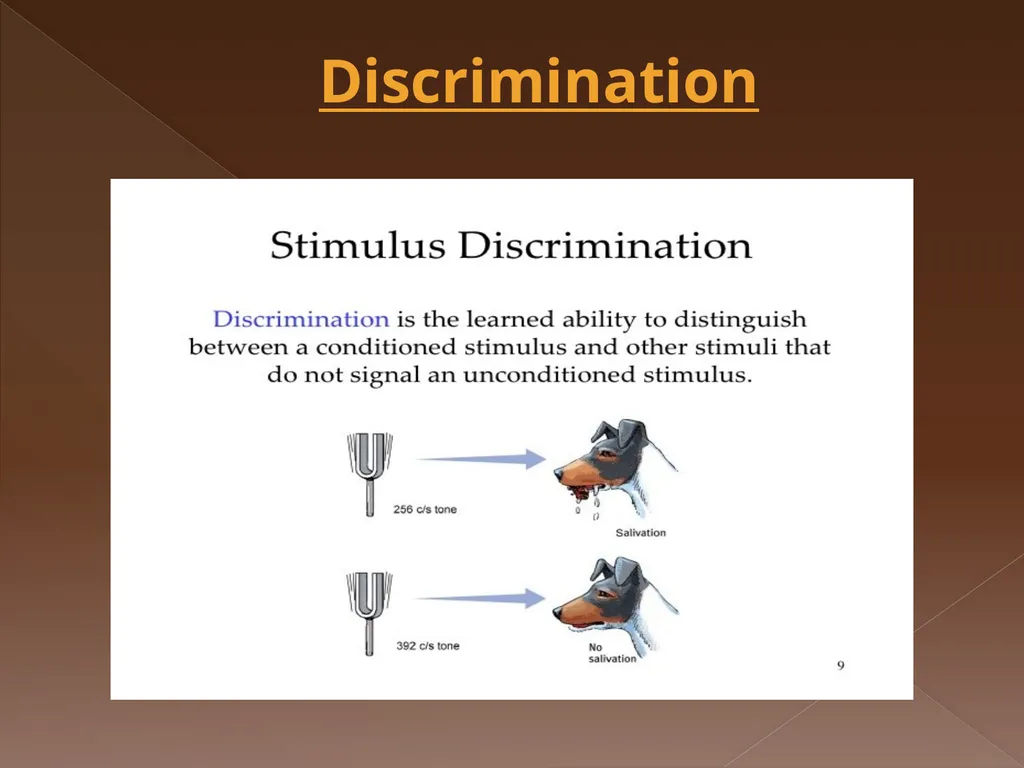
Discrimination<br>
22
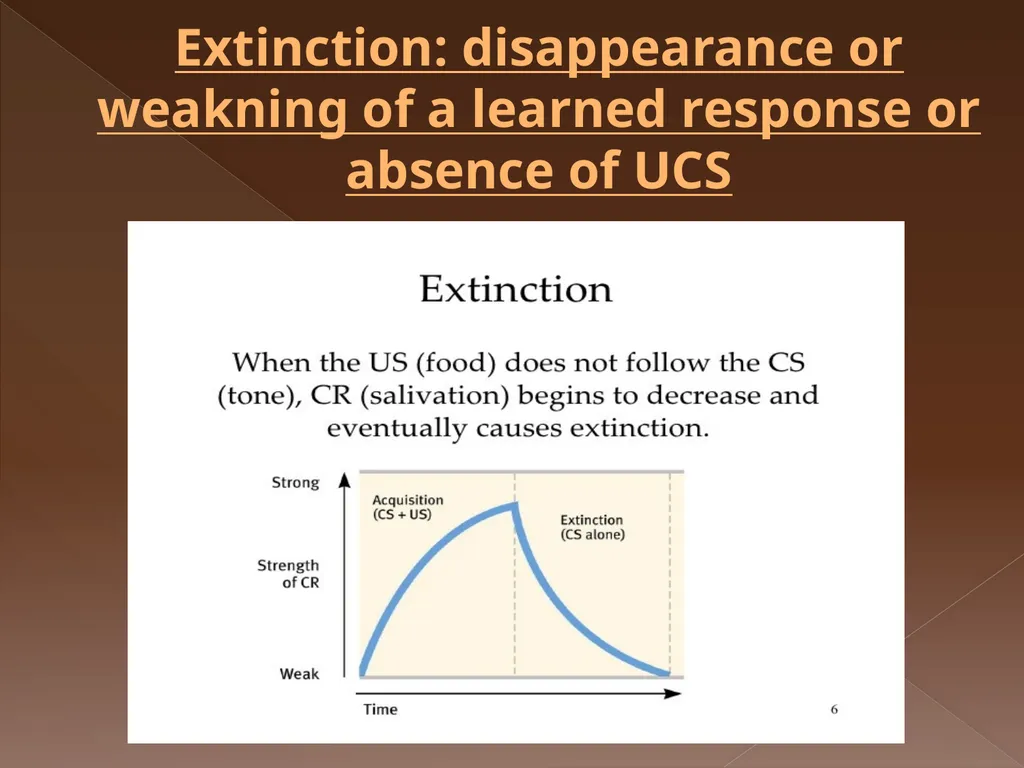
Extinction: disappearance or weakning of a learned response or absence of UCS<br>
23
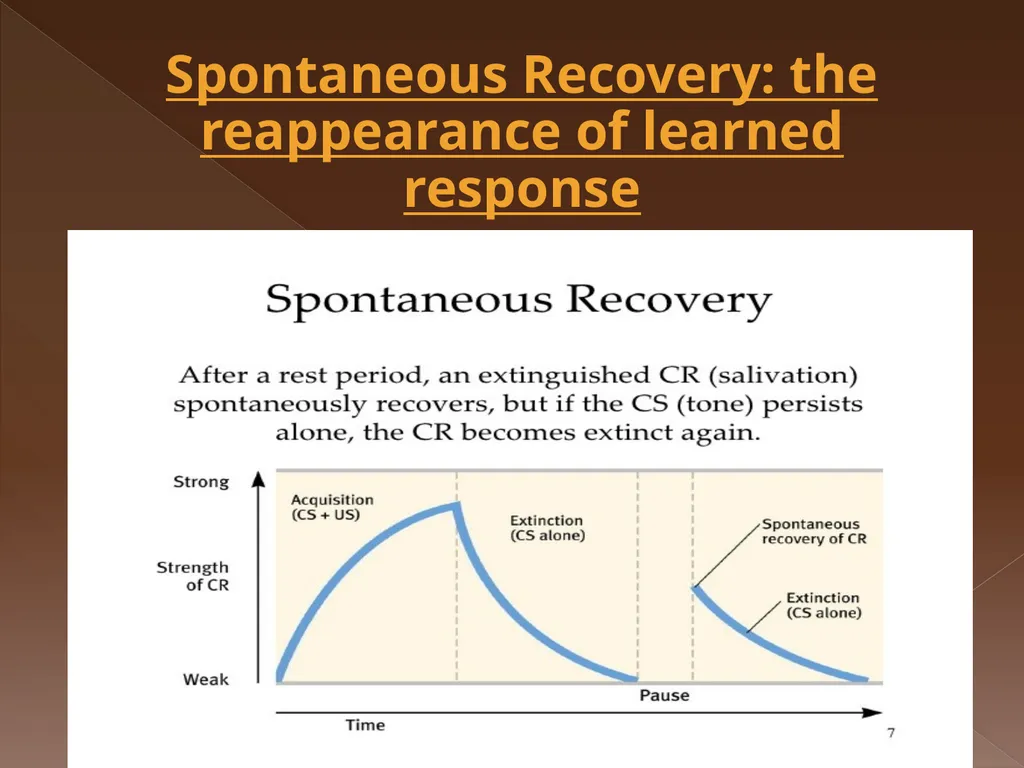
Spontaneous Recovery: the reappearance of learned response<br>
24
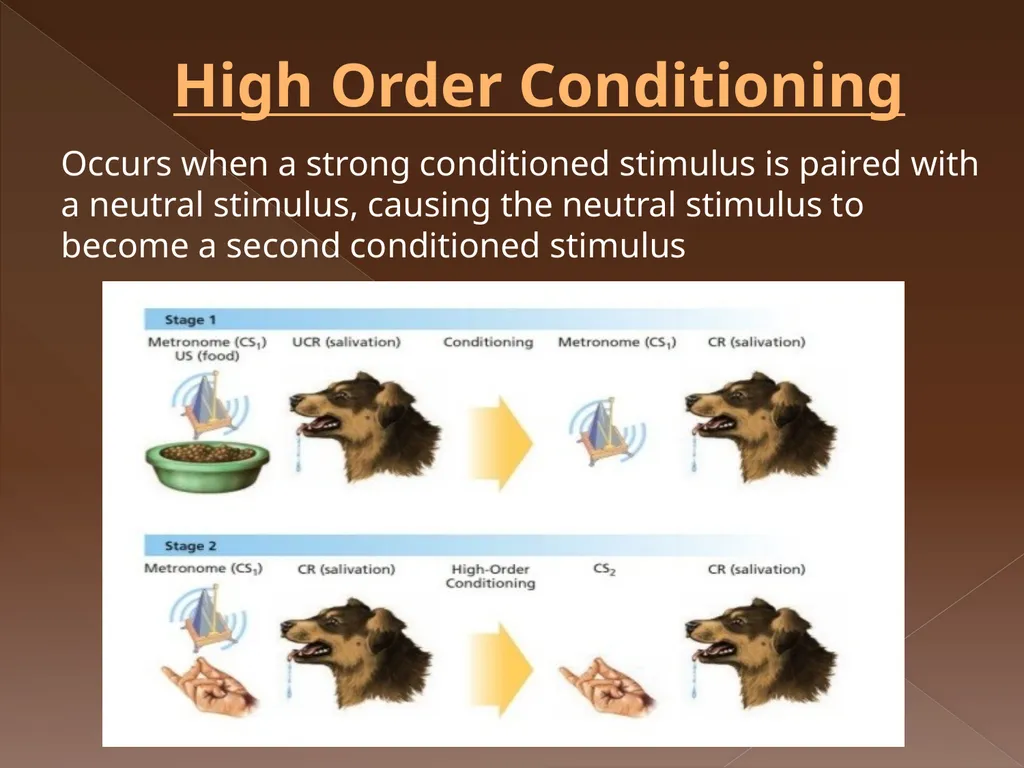
High Order Conditioning Occurs when a strong conditioned stimulus is paired with a neutral stimulus, causing the neutral stimulus to become a second conditioned stimulus<br>
25
Classical Conditioning applied to Human Behavior Phobias
Conditioned emotional response
Desensitize<br>
26
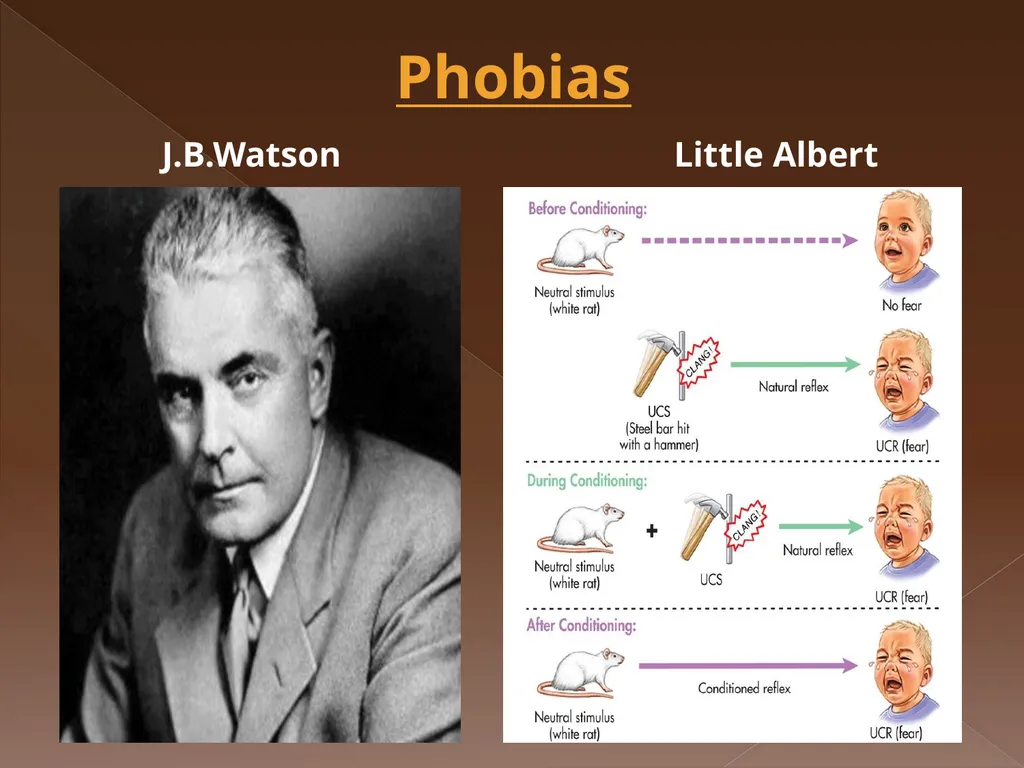
Phobias Little Albert J.B.Watson<br>
27
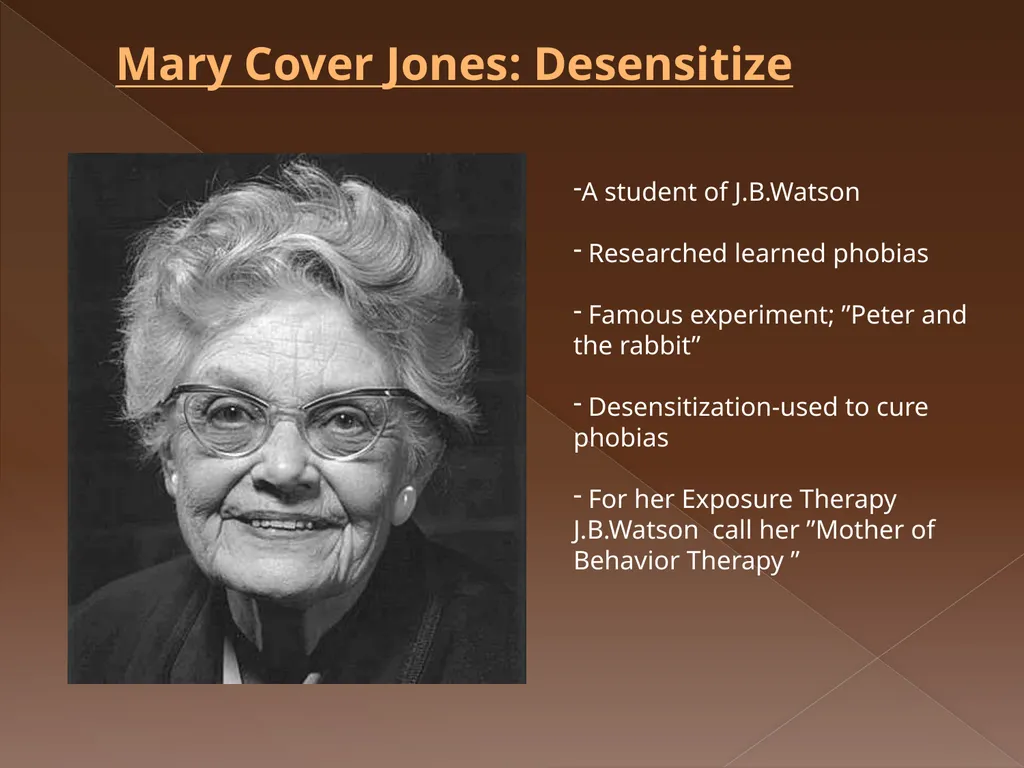
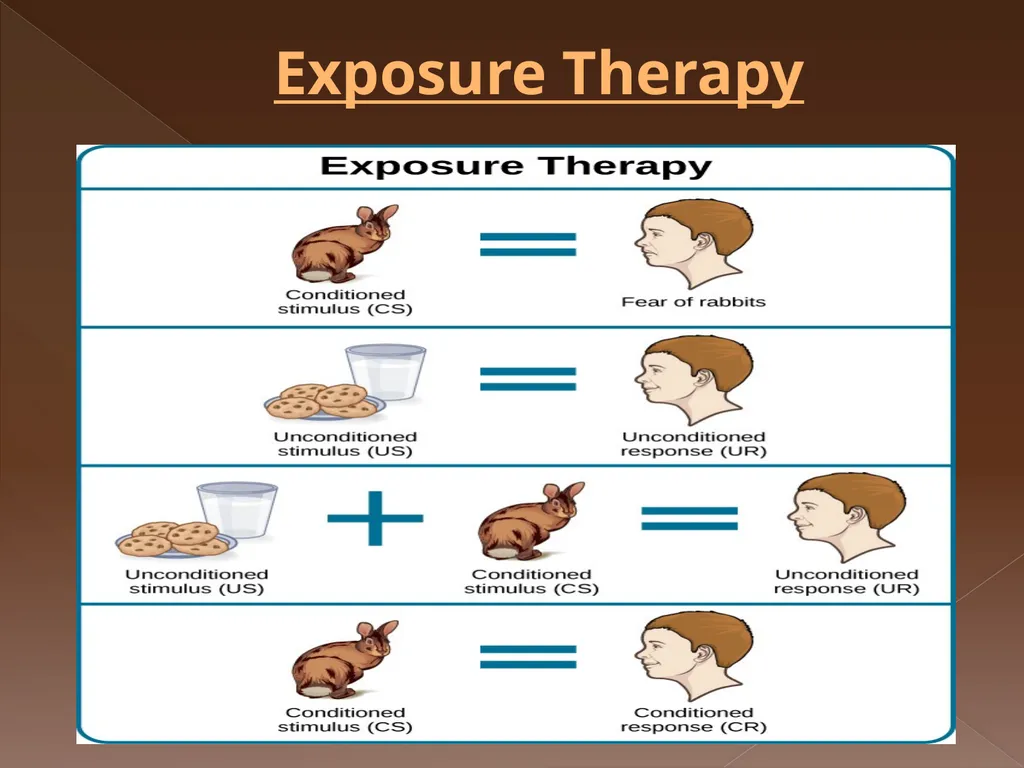
Mary Cover Jones: Desensitize A student of J.B.Watson
Researched learned phobias
Famous experiment; ”Peter and the rabbit”
Desensitization-used to cure phobias
For her Exposure Therapy J.B.Watson call her ”Mother of Behavior Therapy ”<br>